IN THIS ISSUE
- Retail Reopening Survey - We want to hear from you!
- As consumer confidence grows, uncertainty lingers
- New capital gains tax faces court challenges
- Retail is transforming and so is its workforce
- Job search requirements to be re-instated by Employment Security
- Governor Inslee appoints Cami Feek as new ESD Commissioner
- How to shake off the ‘retail apocalypse’ with hope and real data
- Retail sales expected to exceed $4.44 trillion in 2021
- Retailers join campaign to help combat bad behavior
- You only get one back, use it wisely
|
|
Retail Reopening Survey - We want to hear from you!
June 30 marks the full opening for in-store retail at 100% capacity. Take this short survey below to tell us how preparations are going for your business.
|
|
As consumer confidence grows, uncertainty lingers
Renée Sunde, President & CEO
There are signs everywhere of economic recovery in Washington State as we anxiously wait for June 30 to fully open up our economy. But the outlook is still somewhat uneven and riddled with unknowns.
Some retailers have experienced one of their most profitable years in decades while other mostly small businesses have struggled to get shoppers back in their doors with limited capacity limits. Maybe it was the essential/non-essential designation early on, fear of the virus, or the digital demand for online access but recovery has not been equal for all retailers.
With a growing percentage of Washingtonians who have been vaccinated and household savings topping 20% of disposable income as of qtr. 1, it appears we are headed for a strong recovery in the coming year, according to Cailin Birch, a global economist at The Economist Intelligence Unit.
It’s not just economists but consumers who seem to feel that way too but it doesn’t mean that the uncertainty faced last year has completely vanished. According to recent studies through the Espos-Forbes U.S. Consumer Confidence Tracker, sentiment is still a bit shaky especially around the expectations of jobs.
As consumers spend more of their time and money on services and experiences this could add complications for our small retailers. The biggest challenge may be more about a scarcity mindset and worries that inflation may trickle down to the shopper and their personal family finances.
“Retailers may be encouraged by the green shoots they are seeing now that many places are reopening, but it would be foolish to assume that everything will magically revert to the way things were in 2019 or early 2020,” First Insight CEO Greg Petro said in a statement.
Uncertainty remains but it’s a different sort. It’s not like last spring but there still is a lot of newness and change which has brought a different kind of caution as we continue through the year. All in all, 2021 brings opportunity and consumers seem to agree that there are blue skies ahead. It will take some time for “certainty” to become the new default for retailers and shoppers across the state.
|
|
New capital gains tax faces court challenges
Mark Johnson, Senior Vice President of Policy and Government Affairs
The highly controversial new capital gains tax has already picked up two separate court challenges. Both court challenges have been filed in superior court and are awaiting action.
During the 2021 Legislative Session, the Legislature and Governor narrowly adopted a 7% tax on capital gains over $250,000. WR opposed this measure on behalf of its small business members. The new tax was sold as only impacting the super-rich – this is not the case. It impacts many hard-working small business owners.
Here is the problem. Many small business owners work their entire life, often with great sacrifice and enormous financial risk, building up and growing their businesses. Their hope is someday to sell the business for a profit so that they can retire. The business “is” their retirement or a significant part of it. They have been paying Business and Occupation Tax, workers’ comp tax, unemployment tax, property tax, collecting the state sales tax, for years. Additionally, the business owners are often very active in their local communities, sponsoring youth athletics, faith-based organizations, local festivals, and other charitable operations. Now the state is asking them for an additional 7% when it comes time to sell and retire. This is wrong.
I expect whatever the superior court judges’ rule will be appealed by the losing party. That means the challenge will be before the State Supreme Court, where nine justices will have to decide if the capital gains tax stands. One of the chief arguments or debates is whether or not the capital gains tax is actually an income tax or an excise tax? Our state constitution clearly forbids a state income tax. Many attempts have been made to enact an income tax – all have failed. The City of Seattle tried recently and they were challenged and lost.
WR’s Board of Directors will soon be reviewing the merits of the court challenges and deciding whether the association will join the efforts to overturn this ill-guided new tax.
|
|
Retail is transforming and so is its workforce
Rose Gundersen, VP of Operations and Retail Services
Retailers have been innovative during the pandemic to meet customers’ needs and the accelerated digital transformation required by buy-online-pickup-in-stores (BOPIS), touchless purchases, curbside pickups, and supply chain inventory issues. Moving forward, workforce upskilling and labor shortages are the top concerns for retailers.
“The pandemic exposed a shortage of digital skills in retailing,” according to a Wall Street Journal article. Workers who were laid off due to restrictions in capacity are rehired, but the jobs they have returned to have changed.
- Choice Market has to retrain some employees to do product data entry instead of cashiering. Their retraining includes creating detailed drawings of the store layout on the computer to track product locations and inventories.
- Verizon Communications plans to train its returning employees' new skills related to 5G technology.
-
Walmart announced giving smartphones to its 740,000 frontline workers to manage their own time schedule, and to provide on-the-spot customer service to shoppers with data on sales, inventory and pricing.
In terms of labor shortage, 90% of local chambers reported businesses facing this challenge according to the US Chamber. Retailers, the third-largest employer in our state, and the food industry are facing such an acute shortage that would make full reopening impossible by June 30. A Seattle Times article and KOMO news reported acute labor shortage statewide and that 46% of employers lack qualified applicants.
Possible reasons for the labor shortage problem include childcare access, workers moved to alternative industries, the additional $300/benefit per week unemployment benefit, and possibly more.
To date, 25 states are scheduled to end supplemental unemployment benefits from the federal government to help businesses struggling to hire employees. Both Vermont and Massachusetts which are not one of the 25 states are restating work search requirements for unemployment benefit recipients. Employment data in these states in the next couple of months will inform whether these measures are effective in reversing the labor shortage concern.
With workforce as the primary concern for retailers and a focus under Washington Retail’s JEDI Initiative launched in 2020, we are looking forward to continuing to share resources and developing partnerships with stakeholders to advance opportunities for retail workers in the near future. Stay tuned!
|
|
Job search requirements to be re-instated by Employment Security
On June 9th, the Washington Employment Security Department (ESD) announced that job search requirements will be reinstated for all unemployment insurance claimants effective July 4th. Reinstatement of the requirement will ensure that workers collecting unemployment insurance are actively seeking work while collecting benefits. The requirement was eased this past year in response to closures and curtailments related to COVID-19.
The Washington Retail Association has been encouraging reinstatement of job search requirements as we move towards the June 30th reopening of all businesses. We have urged ESD to move quickly on reinstatement to help ease the challenges employers are facing today to prepare for the June 30th reopening.
ESD indicated they will be posting additional information on their website this week and initiating an aggressive communications effort to alert unemployed workers, employers, and Work Source locations of the change in the requirements. One challenge facing ESD is the need to train their workforce on administering job search requirements.
The requirement that individuals receiving unemployment benefits must be “able and available for suitable work” will not change. See ESDWAGOV - Refusal to work for detailed information for both employers and workers. Those requirements include a handful of “good cause” reasons that a worker can continue to collect federal unemployment benefits and turn down suitable work. Those reasons include:
- Being at higher risk for severe COVID-19 related illness
- Living in a household with a person at high risk.
- Providing direct care for a high-risk person.
- Being asked to work at a worksite that does not follow guidelines published by the U.S. Department of Labor or Washington’s Department of Labor and Industries, or
- Care for a child who is unable to attend school or daycare because it has been closed as a direct result of the COVID-19 pandemic.
Claimants cannot turn down suitable work because they will make more on unemployment, they do not want to work, or are simply nervous about returning to work.
|
|
Governor Inslee appoints Cami Feek as new ESD Commissioner
Yesterday in a press conference Governor Inslee announced the appointment of Cami Feek as the new Employment Security Department (ESD) Commissioner effective immediately.
Feek has been with ESD since 2017 when she was hired to design and launch the Paid Family and Medical Leave program. She began her state government career 25 years ago in a non-permanent role in a mailroom.
Prior to coming to ESD, Cami worked at the Department of Financial Institutions, General Administration (now Department of Enterprise Services), Washington State Patrol and the Attorney General’s Office under both Republican and Democratic attorneys general.
|
|
How to shake off the ‘retail apocalypse’ with hope and real data
The Retail Doctor Bob Phibbs’ recent blog encourages retailers to have hope as data shows the ‘retail apocalypse' is a misconception. According to Phibbs “the data is strong and growing stronger every day that shows a true resurgence and evolution in in-store shopping...brick-and-mortar retailers may have the last laugh in 2021”.
The Wall Street Journal reported that the U.S. GDP “grew at a record pace in the third quarter—increasing 7.4% over the prior quarter and at a 33.1% annual rate—recovering about two-thirds of the ground it lost earlier in the coronavirus pandemic.”
|
|
Retail sales expected to exceed $4.44 trillion in 2021
According to a recent forecast by the National Retail Federation, retail sales are expected to grow between 10.5% and 13.5% to more than $4.44 trillion this year as the economy recovers from the pandemic. This revised forecast surpasses NRF’s initial projection of at least 6.5% growth made in February of this year.
In addition, NRF now expects GDP growth to approach 7%, compared with the 4.4% and 5% forecasted earlier this year.
NRF’s Chief Economist Jack Kleinhenz says, “Given the strength of consumer spending, he anticipates the fastest growth the U.S. has experienced since 1984”.
|
|
Retailers join campaign to help combat bad behavior
Throughout the pandemic, retail workers have been asked to go above and beyond their roles to help enforce ever shifting business policies and health guidelines. The resulting confusion created an atmosphere of frustration for many customers, and in some cases escalated to abuse and violence against retail workers. Among those who have been the targets of abuse are people of color, those with disabilities and those who identify as LGBTQ.
A coalition of about 600,000 retailers and businesses called “Open to All” has launched a campaign to enlist shoppers to help stop bad behavior against retail employees. The campaign is not asking customers to step in to physically stop altercations, but rather to help de-escalate the situation and show support and appreciation for workers.
Even as the spread of COVID-19 slows, retailers fear this behavior will worsen as stores anticipate big crowds for the back-to-school and holiday seasons. With many states and businesses relaxing mask mandates and customers experiencing pandemic fatigue, workers worry about their safety.
|
|
You only get one back, use it wisely
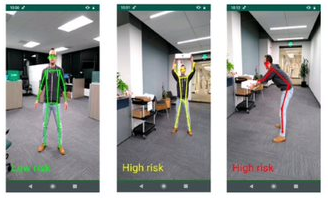
About 35% of workers' compensation claims are in the Overexertion category. The types of injuries in this group are; lifting repeated bending at the waist with twisting, long-term bending at the waist, pushing/pulling, carrying, reaching and long-term poor posture (either sitting or standing). These claims result in reduced productivity, increased costs with overtime and insurance premiums.
How can you reduce these types of claims? WR has partnered with the University of Washington's Engineering Department to create an ergonomics risk assessment app that will help you fine-tune lifting techniques just by using your smartphone! This free tool records your movements and shows you when you are not lifting correctly with a stickman overlay - Green is good, Yellow you are trending the wrong way, and Red you need to re-evaluate what you are doing.
|
|
Looking to improve productivity? Lower your L&I premiums? Have better shop morale? Then get the free Ergo Appvantage here.
Remember you only get one back so use it wisely!
WR employs Rick Means as Director of Safety and Education who is available to members to help draw up safety plans and suggest topics for safety meetings. Contact him at 360-943-9198, Ext. 118 or rmeans@waretailservices.com
|
|
WR diversity statement
WR is committed to the principles of justice, equity, diversity and inclusion. We strive to create a safe, welcoming environment in which these principles can thrive.
We value all people regardless of race, ethnicity, gender, religion, age, identity, sexual orientation, nationality or disability and that is the foundation of our commitment to those we serve.
|
|
Renée Sunde
President/CEO
360.200.6450
|
|
Rose Gundersen
VP of Operations & Retail Services
360.200.6452
|
|
Mark Johnson
Senior VP of Policy,
Government Affairs
360.943.0667
|
|
|
|
|
|
|