In This Issue
Research Spotlight: April is STD Awareness Month
CPCE In the News:
Is anybody tracking health issues from mold and other military housing hazards?
CPCE In the News:
Pediatric Research Day inspires next generation of medical investigators
Upcoming Events
Recent Publications
|
|
April is STD Awareness Month
April is sexually transmitted diseases (STD) awareness month, and we're highlighting work by
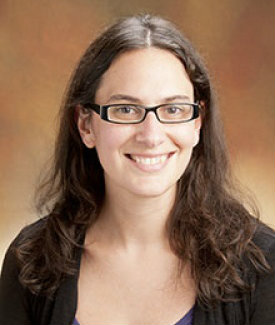
Nadia Dowshen, MD, MSHP to treat and prevent HIV among adolescents and young adults.
Dr. Dowshen serves as Director of Adolescent HIV Services in the Craig Dalsimer Division of Adolescent Medicine at CHOP. Her research focuses on using youth-friendly technology to improve adherence to antiretroviral therapy and improve other health outcomes for adolescents living with HIV/AIDS. She is also interested more broadly in research around issues of STD and HIV prevention and treatment as well as achieving health equity for other marginalized youth including LGBT and homeless adolescents.
Some of her recent work has uncovered the pivotal role of
insurance coverage in reducing HIV transmission potential among youth living with HIV and pilot-tested a
cell phone support program among a similar population. Cell phone support reduced stress, depression, and illicit substance use, and increased self-efficacy as compared to the usual care. Another recent project in collaboration with CHOP colleagues Nellie Riendeau Lazar, MSN, MPH and Sarah Wood, MD, MSHP used retrospective chart review to identify
high rates of missed opportunities for HIV screening and sexual history documentation in the year prior to HIV diagnosis in a population of predominantly African American men who have sex with men ages 14-26. These results underscore the need for routine HIV screening in adolescents.
For more information on STD Awareness Month, the Centers for Disease Control and Prevention (CDC)
website provides a variety of resources for patients and healthcare providers.
|
|
Is anybody tracking health issues from mold and other military housing hazards?
CPCE Core Faculty member and PolicyLab Director
David Rubin, MD, MSCE discussed indoor environmental quality issues for children living on military bases at a meeting of the DoD Military Family Readiness Council. Dr. Rubin has been appointed to the council since 2016. Some of Dr. Rubin's prior research described the
risk for maltreatment among toddlers of U.S. Army soldiers over different deployment cycles and revealed
under-reporting of child abuse with the Army Family Advocacy Program. An overarching goal of this work is to ensure that military families receive the appropriate support.
|
|
Pediatric Research Day inspires next generation of medical investigators
CPCE Core Faculty member
Heather Burris, MD, MPH was an invited speaker at Penn State's College of Medicine's 10th Pediatric Research Day, where she addressed the intersection of social and physical environmental exposures and their contributions to racial disparities in preterm birth. Dr. Burris is a neonatologist and perinatal researcher motivated by unequal birth outcomes across populations in the U.S.
|
|
Upcoming Events
6th Annual Public Health Day Symposium
Date: April 1, 2019
Time: 8:00 am - 12:00 pm
Location: The College of Physicians of Philadelphia, 19 South 22nd Street
The Public Health Day Symposium kicks off Public Health Week and provides a unique collaborative environment for all academic, community, and government public health professionals in the greater Philadelphia region.
Learn more.
CHOP’s MEDTalks: A Teen Health Showcase
Date: April 2, 2019
Time: 2:00 - 3:30 pm
Location: Abramson, Room 123
The second-ever national Teen Health Week is just around the corner! Stop by a TED-talk style event to celebrate and learn little bit more about adolescent and young adult health in Philadelphia. We’re hosting a lineup of lightning-round presentations to showcase how CHOP is making a difference for teens in our clinics and community. This event is free and open to the public and will conclude with an informal networking session. For more information,
click here.
Career Pathways in Global Health
Date: April 6, 2019
Time: 10:00 am - 1:00 pm
Location: Perry World House, 3803 Locust Walk, Philadelphia, PA
Global health is less about geography and more of a lens through which one approaches health care delivery and outcomes in the larger global context. The career paths in this field are as vast as the topic itself. Come learn about the career trajectories and work lives of featured speakers regarding local and global public health research and practice. More details available
online.
National Institute for Children’s Health Quality (NICHQ) Webinar: “Pursuing Health Equity: Start Where You Are, A Conversation About Individual Implicit Bias”
Date: April 10, 2019
Time: 3:00 - 4:00 pm
All children deserve an equal chance to grow and thrive, but too often, obstacles to health, such as poverty, access to quality education and health care, discrimination, and personal bias get in the way. This is why NICHQ is launching a series of webinars to support individuals who are pursuing equity within the health system. If you have ever felt overwhelmed on where to begin with tackling such a complex subject, NICHQ invites you to register for their first webinar and join them in what will be an ongoing conversation. Specifically, this webinar will provide an overview of health equity and implicit bias, and their impact on children's health; a modeling exercise to explore how to recognize and address individual implicit bias; and resources and guidance to help attendees continue this journey after the webinar. For more information,
click here.
|
Recent Publications
Parents of children in the pediatric cardiac intensive care unit (CICU) often report insufficient communication and conversations with clinicians that lack empathy. Faculty members
Jennifer Walter and
Chris Feudtner and their team at CPCE studied the types of contributions of team members from a variety of professions during conversations with families. In 10 meetings analyzed, physicians spoke most, an average of nearly 80% of meetings. Non-physicians spoke for almost 10%, and parents, 17%. Conversations were primarily between parents and physicians, until physicians indicated that other team members could contribute. Parents expressing emotion (on average 4.2 times per meeting) were met with an empathetic response 2.2 times per meeting, on average, from the clinical team. To improve communication between parents and their team, this study suggests that coordinating team members’ roles in the meeting may be helpful in increasing parental engagement to facilitate decision-making, as well as identifying opportunities for the clinical team to provide more empathetic responses to parents.
For children with congenital heart disease and ductal-dependent pulmonary blood flow (PBF), their prognosis and survival have been greatly improved through the use of prostaglandin-E1 and subsequent creation of the modified Blalock-Taussig shunt (BTS). Despite advances in these procedures, significant morbidity and mortality after BTS remain. CPCE faculty member
Andrew Glatz, along with his team, investigated recent advances in this technique. They found that attention to anatomic and technical details optimized the success of this procedure, but future improvements are inevitable.
Iron is an essential element throughout the body, found in a variety of tissues and cells. Some conditions, which increase intestinal iron absorption or require chronic intravenous blood transfusions, are associated with iron overload in children. Although many organs are impacted by iron levels, the heart and liver are the most at risk for toxicity. The current process for estimating cardiac and hepatic iron content entails separate MRIs for each organ, which results in redundant scans and unnecessarily long exams. By optimizing the cardiac MRI, expenses and scanner time could be reduced and patient experience could be improved without losing diagnostic value. In a retrospective study, CPCE faculty member
Hansel J. Otero and a team of CHOP researchers, compared the different sequences for liver and cardiac iron estimation in children, and found that MRI protocols could be simplified to a single sequence for children.
In an inpatient setting, patients at risk for clinical deterioration may not be identified efficiently or effectively by providers. There are early warning systems that may allow for improved outcomes, but they need to be studied further. To better understand the relationship between early warning system acuity alerts and clinical practice,
Chris Bonafide of CPCE, and others, studied a cohort of hospitalized patients who experienced a critical deterioration event (CDE) and who would have triggered a preceding pRI (pediatric Rothman Index) alert. The team evaluated whether the alert would have preceded evidence that clinicians recognized deterioration or escalated care. They found that 90% of CDE events that generated “true positive” pRI alerts had evidence suggesting that clinicians had already recognized deteriorization and/or were already escalating care before most pRI alerts would have been triggered.
Lyme disease, a tick-borne disease that results from an infection with the Borrelia burgdorferi bacterium, is primarily diagnosed via serology. Serology has limitations, including false-negative results in early disease and false-positive results after previous infection, but it is the best available test for diagnosing a patient with noncutaneous Lyme disease. The team of researchers, which includes CPCE faculty member
Fran Balamuth, sought to fill a gap in knowledge about how these types of tests can vary and disagree. New ways to diagnose Lyme disease are needed, in order to rapidly and accurately identify children with or without the disease.
|
|
About CPCE
We are a pediatric research center dedicated to discovering and sharing knowledge about best practices in pediatric care by facilitating, organizing and centralizing the performance of clinical effectiveness research -- research aimed at understanding the best ways to prevent, diagnose and treat diseases in children. CPCE’s multidisciplinary team conducts research on a diverse range of clinical effectiveness topics.
CPCE E-News is edited by
Holly Burnside. Please feel free to contact us with questions or feedback.
|
|
|
|
|
|
|