|
Written By: God through Inspiration
Penned By: David, Asaph, Solomon, Heman, Ethan, Moses, and the Sons of Korah
Date Penned: (1440-586 BC)
Overview: Poetry for the Expression of Praise and Worship to God (c 1-150)
Theme: The First Book of Psalms (c 1-41)
Message: Rejoicing in God's Protection and Peace (v 1-8)
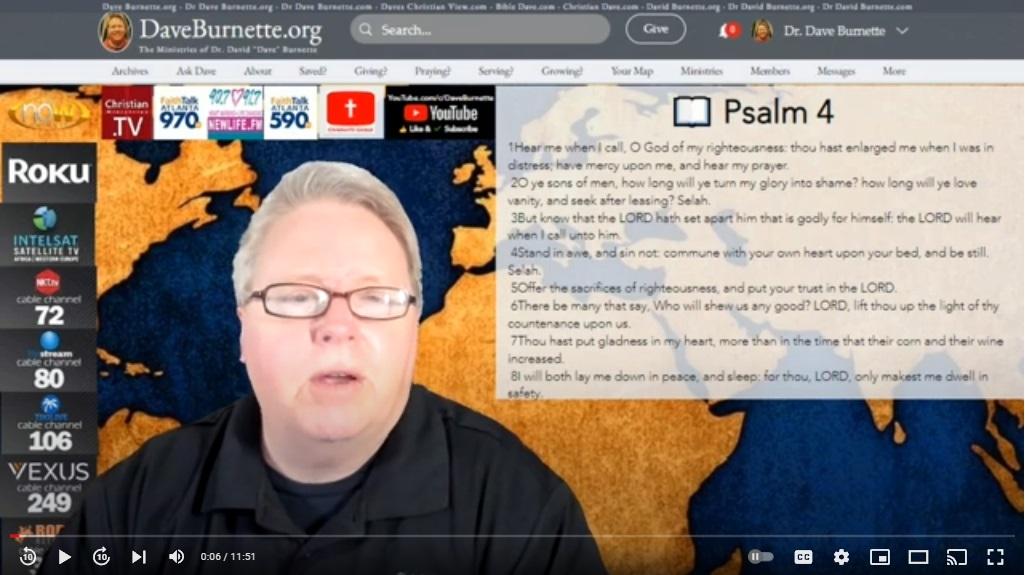
Psalms 4 Commentary
(4:1) David Pleads to his Enemies - This psalm may have been written as David was asking his enemies to reconsider their support of Absalom. Others see this psalm as a prayer for relief from a calamity such as a drought (see 4:7). It was probably written shortly after Psalm 3 was.
(4:2) The Lord is Always Present - The term rendered "leasing" could be translated "lies," or perhaps "false gods." Throughout history, most people have preferred to believe delusions, lies, and false accusations over God's truth. This is especially true of God's enemies as they seek to destroy God's people. When we experience the brunt of this kind of attack, the onslaught can seem endless. As this verse ends, we pause in despair, but in the following verse, words of hope await. As we face our moments of despair, we should remember that there is always hope. God is always present and able to help.
(4:3) The Lord Listens - God listens to those who are faithful and devoted to him. David knew that God would hear him when he called and would answer him. We, too, can be confident that God listens to our prayers and answers when we call on him. Sometimes we think that God will not hear us because we have fallen short of his high standards for holy living. But if we have trusted Christ for salvation, God has forgiven us, and he always listens to us. When you feel as though your prayers are bouncing off the ceiling, remember that as a believer you have been set apart by God and that he loves you. He hears and answers you, although his answers may not be what you expect. Look at your problems in the light of God's power instead of looking at God in the shadow of your problems.
(4:4) Control Your Anger - How quickly anger springs up when we are falsely accused, opposed, or ignored. The greater the cause or the higher the principle involved, the more likely we are to be outraged. In these situations, David says to take a time-out and reconsider quietly, not to lash out. Constrain your anger until you can respond in a way that speaks truth while also honoring God.
(4:5) Obedience and Sacrifice - Worship in David's day included animal sacrifices by the priests in the tabernacle. An animal's blood covered the sins of the person who offered the animal. Specific rules had been given for offering sacrifices, but more important to God than ceremony was the offerer's attitude of submission and obedience (1 Samuel 15:22-23). Though we no longer sacrifice animals, sacrifices of our time, resources, and energy offered in the right spirit are still pleasing to God. However, he wants our obedience and our praise before our gifts (Hebrews 13:15). Offer God your sacrifice of total obedience and heartfelt praise.
(4:7) True Joy - Two kinds of joy are contrasted here -joy that comes from knowing and trusting God, and joy that comes as a result of pleasant circumstances. Both are good, but the joy that comes from a deep relationship with God is strong and steady and can't be shaken. There is nothing wrong with being happy about pleasant circumstances (for example, a family gathered around a table with plenty of good food. But pleasant circumstances are unpredictable; they come and go. And when they go, can you still be happy? Can you still have that strong and steady joy that defeats discouragement? Make sure you have the kind of joy in the Lord that is lasting, and then you can be happy no matter what circumstances come your way.
|