|
The GRTICN Annual Report for FY25-26 will soon be available! The report includes highlights from GRTICN meetings, projects and initiatives, goals for the coming year, and more. Committee chairs also provide summaries of their work from the year, and those are presented (edited for space) below. Thank you so much to everyone who participates in our committees and makes all this wonderful work possible!
Community Resilience Committee
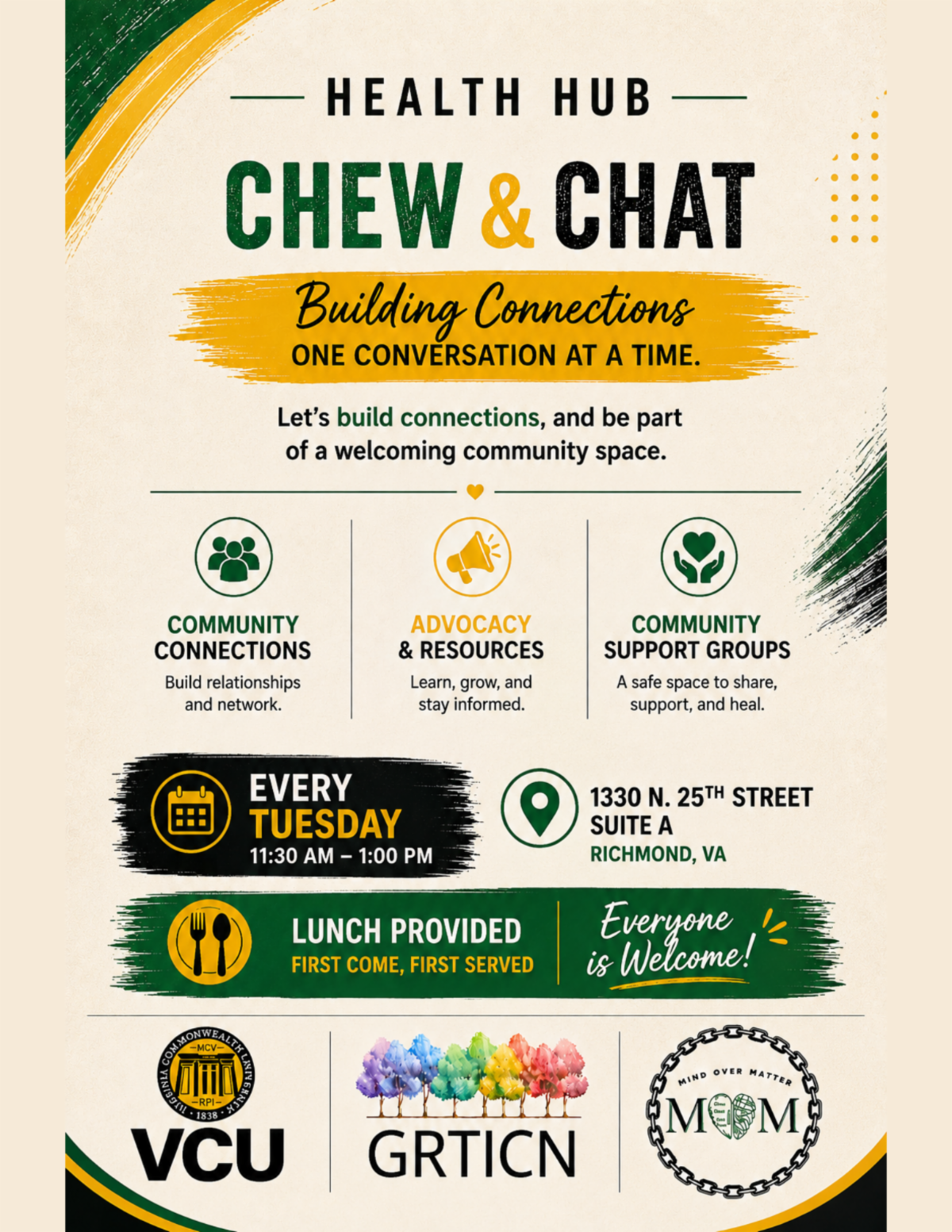
The Community Resilience Committee strengthened community connections by creating welcoming spaces where individuals and families could build authentic relationships, access resources, and increase resilience. A major highlight of the year was the continued growth of Community Chat and Chew, which expanded through a new partnership with the VCU Health Hub. This collaboration increased access to health, wellness, and community resources while creating opportunities for meaningful conversations that reduce isolation and strengthen protective factors. The committee also established a new partnership with Coventry Gardens, creating additional opportunities for outreach and community collaboration. The 4th Annual Community Resilience Block Party, held in partnership with Coventry Gardens and Feed More, brought together more than 70 community members and connected families with resources in real time through partnerships with Greater Richmond SCAN, PlanRVA, VCU, Richmond Police Department, Atron Foundation, Preferred Choice Driving Academy, Arie's Icees, and others. Guided by an "It Takes a Village" approach, the committee continued strengthening partnerships that promote resilience, belonging, and community well-being.
Early Childhood Committee
The Early Childhood Committee has continued to focus on the development of a trauma-focused toolkit for professionals working directly with families and young children to pull from as needed, that are easily read and culturally responsive, as well as keeping informed of what services are currently being provided to the early childhood population by members sharing updates. Members identified that there does not seem to be a specific location to list what is available to childcare centers and preschools to support children with behavioral concerns at different levels, such as training versus in-person support. The committee is planning to look more into this as a goal to explore what is available and who might help with this information. Towards the end of the fiscal year, the committee began focusing on how to re-engage members and draw in new members. The Co-Chair accepted a new position as Clinical Coordinator of Circle Preschool with Greater Richmond SCAN and the time of meetings needed to be shifted due to work responsibilities. The committee also decided to try switching to a different day after completing a survey to identify a better day for committee members to increase attendance.
Healthcare Committee
The Healthcare Committee continued its development as a learning collaborative for healthcare and community partners to share strategies, challenges, and resources related to trauma-informed care, and this year evolved toward identifying a concrete opportunity for cross-sector collaboration. Meetings focused on prevention-oriented approaches in pediatric settings, trauma screening in healthcare settings, and access to behavioral healthcare before focusing in on opportunities for multidisciplinary, trauma-informed work in the Richmond region, education for pediatric providers, and community mapping. The Richmond Resilience Resource Map project would involve creating an accessible, user-friendly, interactive map connecting families and providers with a curated set of Richmond-area resources organized around evidence-based resilience-building domains adapted from the ACEs Aware Stress Busters framework. The project is intended to help bridge the gap between trauma screening, referral, and community support while also providing education about mitigating toxic stress and building resilience. Members discussed accessibility, language access, sustainability, keeping information current, and opportunities to partner with the VCU da Vinci Center using a human-centered design process that includes input from providers and families.
Legal and Courts Committee
Legal and Courts Committee meetings began with time for connection and space to share updates. Topics in meetings included onboarding for those interested in joining the committee, defining active members, identifying resources, and providing training opportunities. Members talked about agency AI policies, leadership coaching, staff development, and trainings provided by members. Members also discussed challenges that are present for many agency leaders where there is a high demand on providing support for staff members and navigating staffing transitions. One committee member shared about a Behavioral Health Collaborative that convenes within the Henrico Juvenile and Domestic Relations court and is focused on trauma-informed approaches for court involved youth. Members agreed to explore the idea for a court trauma assessment with leaders in the Behavioral Health Collaborative. The Committee invited speakers to meetings, including a guided wellness practice from Marisa Gitchel with Leeward Consulting LLC, and a presentation on Reflective Leadership from Margo Tacey with Upstream Therapy and Consulting.
Outcomes Committee
The Outcomes Committee produced the GRTICN Community Resource Guide, which involved compiling resources from the GRTICN Community Resource Mapping Event along with GRTICN Member Agencies into a PDF document organized by sector. The committee continued refining the GRTICN member agency and informational surveys and compiled results to share with GRTICN leadership and members. The committee also continued measuring impact through GRTICN Member Agency Spotlights shared in the GRTICN eNote; this year highlighted Thrive Birth to Five, Hanover Safe Place, Virginia Mental Health Access Program, Family Lifeline, REAL LIFE, and Legal Aid Justice Center. The committee continued discussions around evaluating membership within the TICN, adding committee participation to the criteria considered to be an engaged member agency. The committee also discussed additional ways to measure impact, such as documenting the activities and history of a TICN and tracking trauma-informed policy change at the local and state level, and agreed to continue these discussions into the next fiscal year.
Prevention and Awareness Committee
The Prevention & Awareness Committee continued its mission of empowering parents, caregivers, and professionals through education, collaboration, and community engagement. Presentations during meetings included bullying prevention, school readiness, child development, and child safety. During Child Abuse Prevention Month, the committee held the "Let's Go Back and Play" Playground Tour, promoting the benefits of child-led, play-based experiences and raising awareness of the importance of reducing screen time and increasing Positive Childhood Experiences (PCEs). The committee also introduced a more interactive approach to community outreach by transforming traditional tabling events into engaging conversations and mini-workshops that encouraged meaningful dialogue and parent education. Throughout the year, the committee strengthened community partnerships, reinforcing the committee's commitment to increasing awareness, strengthening protective factors, and equipping families with practical tools that promote safe, nurturing environments for children.
|