Image Credit: Sony Pictures Entertainment | |
Hello
August began with something the cinema industry has spent several years waiting to see: a demand problem in reverse.
Spider-Man: Brand New Day arrived while The Odyssey was still drawing extraordinary audiences, helping generate roughly $430 million across the domestic marketplace in a single weekend, the largest collective box office weekend on record. Marcus Theatres recorded the highest total weekend revenue in its history, along with records for box office, concessions, food and beverage, merchandise and premium large-format attendance.
But the more interesting August story may be what the industry is doing with that momentum.
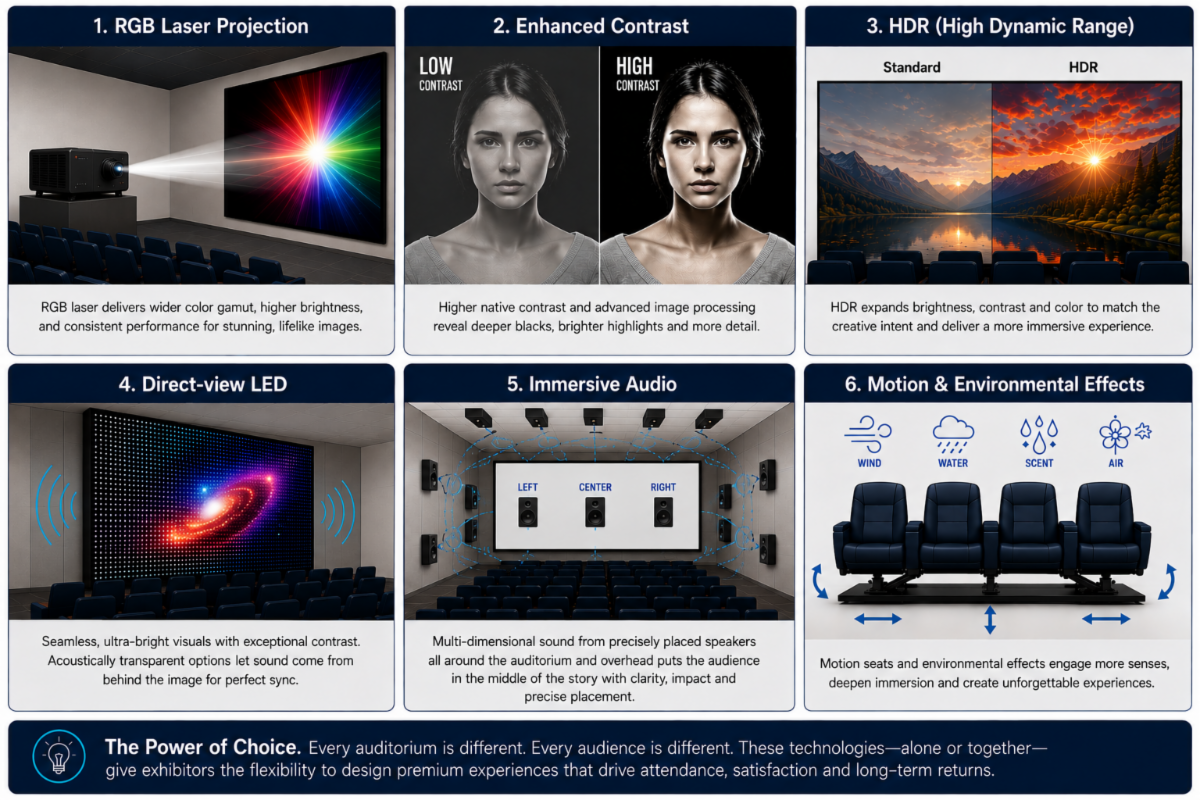
Exhibitors are investing across an increasingly wide spectrum of experiences: RGB laser, enhanced contrast, HDR, direct-view LED, immersive formats, accessibility and centralized operations. In India, some of those technologies competed for attention almost side by side at Big Cine Expo. In Arizona, every showing of a new 4D auditorium reportedly sold out as soon as it was posted. And the industry's conversation around AI has moved noticeably closer to the projection booth, operations center and back office.
Last month, we wrote that demand was no longer the industry's problem. Capacity was.
August adds the next chapter. The industry is deciding what kind of capacity to build, and it has more than one credible answer to choose from.
Our promise remains the same:
👉 One place for people who love cinema technology.
👉 Only the insights that help you run better, more future‑proof theatres.
| | Cinemark Breaks $1 Billion as Marcus Margins Jump | | |
Confidence is easy to assert and harder to evidence. Two sets of quarterly results, both reported 30 July, provide it.
Cinemark crossed $1 billion in a single quarter for the first time in company history, reporting worldwide revenue above $1.1 billion and beating its previous record of $958 million set in 2019. More than 60 million moviegoers. All-time high admissions revenue of $540 million and concession revenue of $433 million. Adjusted EBITDA reached $294 million, the highest quarterly figure in company history and 20 percent above the prior record, at a 27.1 percent margin, with $298 million in free cash flow.
The composition matters more than the total. Cinemark reported all-time high sales across Cinemark XD, SCREENX and D-BOX motion seats simultaneously, alongside record in-theatre mobile ordering.
Marcus Theatres delivered division revenue of $150.6 million, up 14.4 percent, with operating income up 69.8 percent to $26.7 million and operating margin expanding from 12.0 to 17.8 percent. Same-store admission revenue rose 16.6 percent, outperforming the industry by 5.1 percentage points on Comscore data. Concession revenue per person rose 2.4 percent on movie-themed merchandise and price optimisation.
Why it matters: A circuit reporting records across three different premium formats in the same quarter is not making a bet on premiumisation. It is reporting the result of one made five years ago. That is what turns a technology conversation into a capital-allocation conversation, and it is why the Christie and Marcus rollout reads as a pattern rather than a one-off.
The concession-per-person figure deserves its own note. Merchandise and pricing lifted per-cap without adding a seat. For suppliers, the shortest-payback revenue lever in the building right now may not be in the auditorium at all.
Sources to read more:
Cinemark Investor Relations
https://ir.cinemark.com/news-events/press-releases/detail/646/cinemark-celebrates-record-breaking-q2-2026-results
US Securities and Exchange Commission, Marcus Corporation Form 8-K
https://www.sec.gov/Archives/edgar/data/0000062234/000006223426000038/mcs-2026730xex991.htm
Celluloid Junkie, Marcus results
https://celluloidjunkie.com/wire/marcus-corporation-reports-second-quarter-fiscal-2026-results/
| | The Big Picture: There's More Than One Way to Go Premium | | |
Strong box office is arriving just as exhibitors have more ways than ever to invest in premium presentation. Today's premium auditorium is built by combining the right technologies to create the experience an audience expects. Exhibitors have more tools than ever to elevate image, sound and immersion - and deliver measurable results.
Marcus Theatres is one example. Twenty-five of its PLF auditoriums are receiving Christie 4K RGB pure laser projection and Christie VDR, including 20 UltraScreen and five SuperScreen DLX auditoriums, with CES Plus serving as technology partner for design, procurement, installation, calibration and ongoing remote service. Marcus is the first exhibitor to implement a large-scale rollout of VDR in PLF auditoriums. The announcement came just days before Marcus recorded its highest opening-weekend PLF attendance ever.
Meanwhile, direct-view LED continues moving beyond showcase installations. In Chennai, Vettri Theatres installed India's first acoustically transparent cinema LED screen, a Tricorne Premium LED system from GDC Technology with an ultra-fine 3.3mm pixel pitch, in its 200-seat VOLT auditorium. A second auditorium received DTS:X for IAB immersive audio and pure RGB laser projection. Last month we reported on an even larger 30-metre Tricorne installation planned for CINECITTA' in Nuremberg. Boxoffice Pro has described 2026 as LED cinema's biggest year yet.
Acoustically transparent designs matter because they remove one of direct-view cinema's stubborn obstacles, allowing traditional behind-screen audio placement. At the same time, projection manufacturers continue improving contrast, efficiency and laser lifetime.
And HDR by Barco is developing the other piece any premium format needs: content. Its slate now includes Spider-Man: Brand New Day, The Dog Stars, Insidious: Out of the Further, Resident Evil and Pan's Labyrinth, with more scheduled through the end of 2026. More tellingly, Neon has selected HDR by Barco as one of six premium formats for the early-access launch of Na Hong-jin's Hope on 7 September, alongside Dolby Cinema, 4DX, ScreenX, D-BOX and Dolby Atmos across 175 locations. A distributor is now marketing the format by name, on equal billing with Dolby and ScreenX, as a reason to buy a ticket two days early.
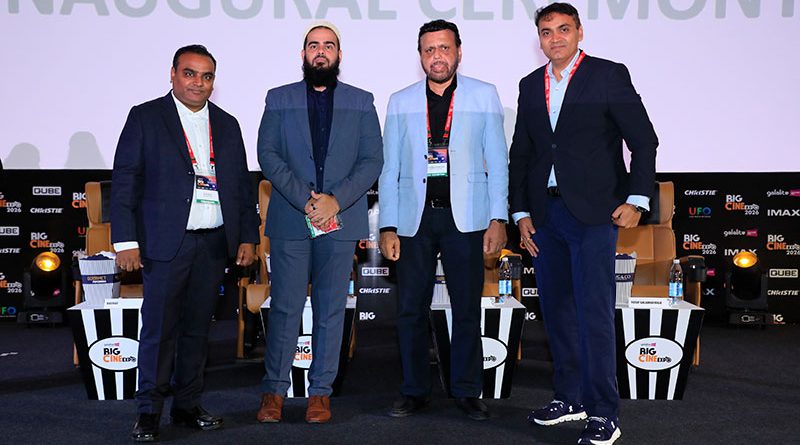
The same question was on the agenda in Chennai in August, where ICTA served as Knowledge Partner for Big Cine Expo. Christie was official projection partner and Qube Cinema server and content partner, and the programme included a session asking directly whether premium technology delivers a premium experience.
Why it matters
These are not three stages of one transition. They are three live options, and August produced credible evidence for each.
The industry isn't converging on one replacement for conventional cinema presentation. Exhibitors are choosing among an expanding portfolio of RGB laser, enhanced-contrast projection, HDR, direct-view LED, immersive audio, motion and proprietary PLFs, each with different economics, content requirements and service needs.
For ICTA members, that changes the sales conversation. The next technology decision may be won as much on lifecycle economics, content availability, serviceability and measurable audience response as on specifications.
It also makes independent technology evaluation more important, not less.
Sources to read more:
Christie, Marcus RGB and VDR deployment
https://www.christiedigital.com/press-releases/marcus-theatres-acquisition/
Boxoffice Pro, Vettri Theatres installation
https://www.boxofficepro.com/india-makes-cinema-history-with-first-acoustically-transparent-led-screen-and-dtsx-audio-upgrade-at-vettri-theatres-chennai/
GDC Technology
https://www.gdc-tech.com/press-release/india-makes-cinema-history-with-first-acoustically-transparent-led-screen-and-dtsx-audio-upgrade-at-vettri-theatres-chennai/
Boxoffice Pro, the state of cinema LED in 2026
https://www.boxofficepro.com/let-there-be-light-led-cinema-screens-have-their-biggest-year-yet/
The Hollywood Reporter, HDR by Barco and the Hope launch https://www.hollywoodreporter.com/movies/movie-news/neon-premium-format-release-na-hong-jin-hope-1236678228/
TheWrap
https://www.thewrap.com/creative-content/movies/hope-premium-large-format-early-screenings/
| |
ICTA on the move: From Milwaukee to Chennai to Texas | |
It has been a busy summer for ICTA.
Following The Barcelona Experience and July's Summer Convention in Milwaukee, ICTA headed to Big Cine Expo in Chennai, India, where the association served as Knowledge Partner and presented ICTA's Cinema 2030: Operating Model of the Future. The two-day event brought together cinema operators and technology providers across projection, sound, servers, screens, seating, automation and other parts of the theatrical ecosystem.
Then it was on to CinéShow in Texas, where ICTA President Carrie Dietrich joined the Blue Ribbon Recognition panel, continuing ICTA's presence wherever exhibitors and cinema technology professionals are gathering to talk about what's next.
Different markets. Different conversations. The same underlying question:
How do we keep making the cinema experience better?
| | | |
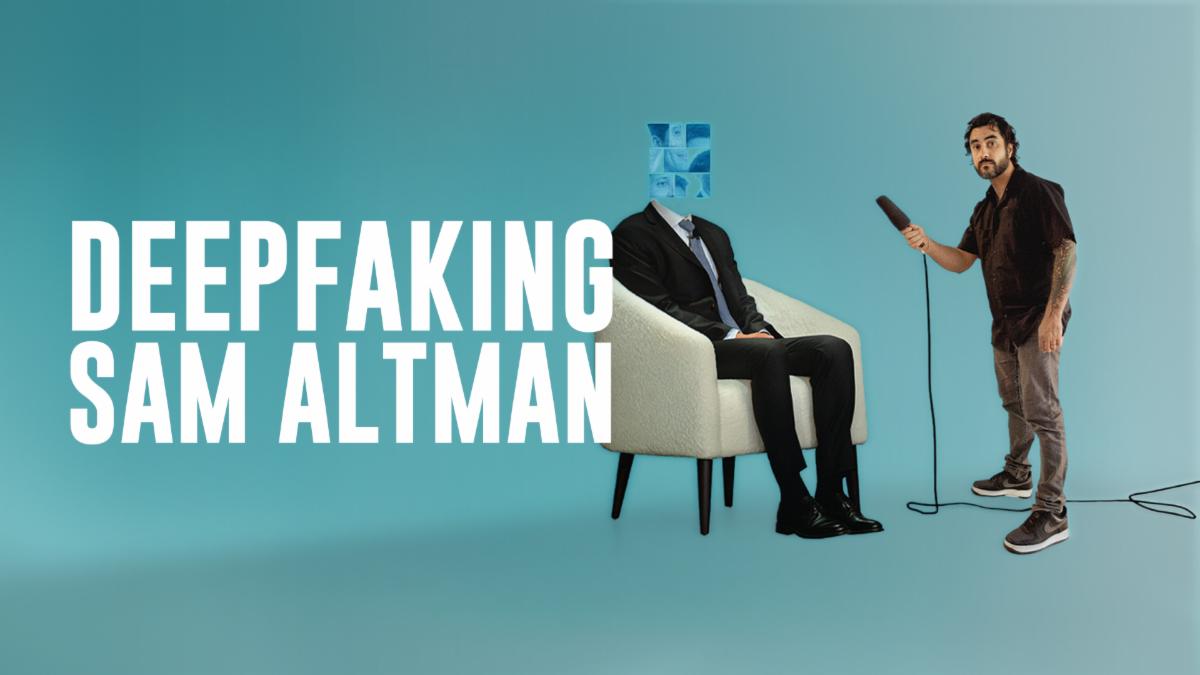
NEXT WEEK: ICTA FutureScript | In Conversation: Adam Bhala Lough, Director of Deepfaking Sam Altman
Explore What AI means to storytelling & share your latest AI builds.
| |
The next FutureScript brings one of documentary filmmaking's sharpest voices to the cinema industry.
Adam Bhala Lough is the Emmy-nominated filmmaker behind HBO's Telemarketers, Lil Wayne's The Carter, and three Sundance selections. His latest, Deepfaking Sam Altman, is a hybrid comedy-documentary about artificial intelligence, produced by Kevin Hart and New York Magazine. Deepfaking Sam Altman Official Website.
He'll be in conversation with Keerthana Mahadevan, Founder of Segmentide and host of the FutureScript series, exploring what AI means for storytelling, cinema, and the industry's future.
Live on Zoom. Practical, candid, and built for cinema professionals worldwide. Bring your questions.
Date: September 9th | Live on Zoom | Open Q&A + Show & Tell | Breakout Rooms
| | | |
|
Share what you know. Tell us what you want to know.
The ICTA Los Angeles Seminar Series returns January 11–13, 2027
🎤 What do you want to learn? Is there a specific technology you'd like us to explore in depth? Have expertise, a case study or hard-earned lesson to share? Know someone we should hear from?
And while we're in Los Angeles...
🎬 Where should ICTA go?
We're also looking for creative ideas for technical tours and field trips.
You don't need a finished presentation or panel.
💡 You bring the idea. We'll help build the conversation.
| | | | Premium Cinema: The Weekend That Proved It | | Sony and CJ 4DPLEX: A Brand New Day for Every Format But One
| |
|
Tom Holland as Spider-Man
Sony Pictures
| |
August did not only give exhibitors more ways to build a premium room. It gave them, in a single weekend, the clearest evidence yet that audiences will fill all of them.
Spider-Man: Brand New Day set the second largest domestic opening in history without playing on a single IMAX screen. Universal held the entire global IMAX network for The Odyssey for three weeks.
Watch where the audience went instead.
SCREENX and 4DX combined delivered a record $31 million global opening from 1,111 screens, $14.4 million in SCREENX and $17 million in 4DX, the biggest opening weekend in CJ 4DPLEX history. The previous combined record was Jurassic World: Rebirth at $15.7 million. SCREENX set records in 34 countries and 4DX in 19. Domestically SCREENX took $7 million, 2.6 times its previous all-time high, and 4DX took $5.2 million from 77 locations at a $68,000 per-screen average, the highest of any premium format on the film.
Dolby Cinema posted its biggest domestic opening ever, more than $10 million from 177 sites at a record $56,000 per screen, with nearly two thirds of available tickets sold before Thursday previews began.
Premium large formats accounted for 24 percent of the weekend, with 3D driving a further 17 percent.
Premium demand did not evaporate when the flagship was full. It moved to the next-best room and paid the surcharge anyway.
Why it matters: For years the argument against building a second or third premium auditorium in the same building has been cannibalisation. August's numbers say otherwise. In a capacity-limited market, additional premium rooms are not competing for the same customer. They are catching the customer the flagship turned away.
The occupancy figures make the point sharper than the grosses do. Cineplex Laval was the top domestic SCREENX location at $315,000 and 91 percent occupancy. Regal Times Square 4DX, the world's largest 4DX auditorium, led all domestic 4DX sites at $200,000 and 94 percent occupancy. Those rooms were not taking overflow. They were full.
| | | | | GDC and Vettri Theatres: LED Learns to Let Sound Through
| |
|
Last month we followed GDC Technology's planned 30-meter Tricorne Premium LED installation at CINECITTA' in Nuremberg, particularly because acoustical transparency addressed one of direct-view cinema's stubborn technical challenges.
August gave us another important data point.
Vettri Theatres in Chennai has installed India's first acoustically transparent cinema LED screen, a Tricorne Premium LED system from GDC Technology with an ultra-fine 3.3mm pixel pitch, in its 200-seat VOLT auditorium. A second auditorium, the 100-seat Krish, received DTS:X for IAB immersive audio and pure RGB laser projection.
That arrived during a particularly active month for premium cinema technology in India, where Big Cine Expo brought together competing approaches to the next-generation auditorium. Christie served as official projection partner and Qube Cinema as server and content partner, while the program included a dedicated presentation on making the big-screen experience more premium.
Why it matters: The LED question is changing.
A year ago, the conversation was often, can direct-view LED work for cinema?
Increasingly the question is, where does it make economic and architectural sense compared with the rapidly improving alternatives?
Acoustically transparent designs remove an important obstacle by allowing traditional behind-screen audio placement. Meanwhile, projection manufacturers continue improving contrast, efficiency and laser lifetime. The result isn't necessarily one technology replacing another. It may be a much more segmented cinema market in which the auditorium, screen size, content strategy and desired guest experience determine the display architecture.
For ICTA members, that makes technology evaluation more important, not less.
| | | | | The Odyssey Makes IMAX 70mm History | |
|
On 10 August, IMAX confirmed that The Odyssey had become the highest-grossing IMAX release of all time at $289 million in under a month of play, passing Avatar's $271 million. IMAX screens accounted for more than 26 percent of the film's global box office.
The consecutive-weekend record is the number to sit with. The Odyssey delivered four straight $50 million-plus IMAX weekends. Before this film, IMAX had never delivered two in a row.
The 41 IMAX 70mm film locations worldwide, the 18K gold-standard presentation, grossed $37.5 million, more than 13 percent of IMAX's total on the title. The TCL Chinese Theatre in Los Angeles alone took $2.8 million, the highest single-title gross for any IMAX location in North America. With nearly $40 million in advance sales and sellouts weeks ahead, the film ran on the IMAX network through at least September 17th, opening in China on nearly 800 IMAX screens.
The film crossed $1 billion worldwide, reaching $1.1 billion, making it Christopher Nolan's highest-grossing film ever.
Why it matters: Forty-one screens produced more than thirteen percent of IMAX's gross on this title. That ratio is the clearest available argument for investment at the top of the premium ladder, and it is simultaneously the constraint. IMAX CEO Rich Gelfond has been explicit that expanding the 70mm count is limited by finding auditoriums large enough and projectors that can be refurbished.
For members with film handling, projector refurbishment or large-format servicing capability, that is demonstrated and quantified unmet demand.
| | | | | HDR by Barco: The Format Starts Selling Tickets | |
Na Hong-jin’s Monster Movie ‘Hope’ Coming to Theaters Early for Premium Format Screening Event | |
Another premium technology is beginning to cross an equally important threshold.
HDR by Barco isn't simply accumulating installations. It is accumulating movies.
The current and announced slate includes Spider-Man: Brand New Day, The Dog Stars, Insidious: Out of the Further, Resident Evil, Pan's Labyrinth and additional releases extending through the end of 2026. Neon has also selected HDR by Barco as one of six premium formats for the early-access launch of Na Hong-jin's Hope on 7 September, alongside Dolby Cinema, 4DX, ScreenX, D-BOX and Dolby Atmos across 175 locations.
That distinction matters.
Cinema technology only becomes a format when equipment, mastering, distribution, exhibition and consumer awareness begin operating as an ecosystem. The growing title pipeline gives exhibitors something far more valuable than a demonstration reel: repeat opportunities to market the experience to moviegoers.
Why it matters: The premium-format competition is increasingly being fought on two fronts. One is technical performance. The other is content differentiation. The Hope event is the clearest signal yet. A distributor is now marketing HDR by Barco by name, on equal billing with Dolby and ScreenX, as a reason to buy a ticket two days early.
July gave us the first Spider-Man sequences shot specifically for SCREENX and extraordinary demand for The Odyssey in IMAX 70mm. August reinforces the pattern: the most valuable premium technologies may ultimately be the ones audiences learn to seek out by name.
| | | | | Business: Exhibition Defines Its Priorities | | Cinema United: Four Conditions on the Table | |
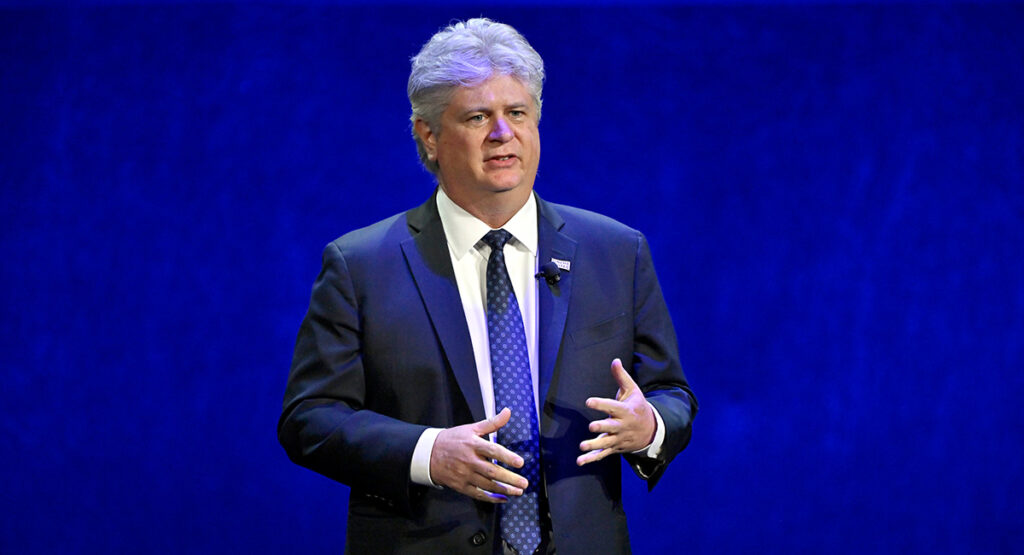
Michael O’Leary, President & CEO, Cinema United, speaks onstage during CinemaCon 2026 – The State of the Industry at The Colosseum at Caesars Palace during CinemaCon on April 14, 2026 in Las Vegas, Nevada. (Photo: David Becker – Getty Images for CinemaCon) | |
The Paramount and Warner Bros. Discovery story we followed in July has moved into a new phase.
Cinema United has still not endorsed the merger. On 18 August its leadership urged California Attorney General Rob Bonta and Paramount leadership to negotiate a settlement, and set four conditions for any resolution. But the important part for this readership is not the legal maneuvering. It is what exhibitors asked to protect.
Cinema United identified four core priorities: continued or expanded wide-release theatrical production with meaningful exclusivity and marketing; protections against merger-driven increases in film rental terms; broad film access for theaters of all sizes; and continued reasonable access to both studios' film libraries.
The letter's signatories include Regal CEO Eduardo Acuña, Cinemark CEO Sean Gamble and Executive Vice President Wanda Gierhart, and Cinema United board chair Mike Bowers, president and chief executive of regional circuit Harkins Theatres. AMC did not sign. Cinema United has 196 members operating in the twelve states challenging the merger. Of those, 130 operate fewer than ten screens, 90 have fewer than five, and 30 run a single screen.
Why it matters: These are technology issues hiding inside distribution economics.
Release volume, theatrical exclusivity and film rental terms influence how confidently an exhibitor can commit to a five-, seven- or ten-year capital program. A healthy equipment market ultimately requires healthy exhibition economics.
As opinions about the proposed merger continue to evolve across exhibition, Cinema United’s August letter puts several of the industry’s core concerns into practical terms: film supply, theatrical windows, access and sustainable economics.
Those are issues technology companies should be watching regardless of how the transaction is ultimately resolved.
| | | | | Cleared in the UK, Still Tied Up in California | |
Source: miss.cabul / Shutterstock.com | |
The regulatory picture moved in August, in two directions at once.
On 6 August the UK Competition and Markets Authority formally cleared Paramount Skydance's acquisition of Warner Bros. Discovery. On theatrical film distribution the CMA concluded that while the merged entity would become the UK's largest distributor, it would continue to face competition from Universal, Disney and Sony and a range of smaller studios. No specific theatrical commitments were required. Separately, Paramount entered a deed of covenant with the UK Department for Digital, Culture, Media and Sport covering editorial independence, Channel 5's public service status, children's programming and continued UK production investment.
In the United States the position is unchanged. Following the July temporary restraining order, Paramount agreed to postpone closing until after the antitrust trial. From 1 October Paramount owes Warner shareholders roughly $650 million per 90 days, and $7 billion if the transaction is not consummated by 4 June 2027.
Why it matters: Note the divergence. The European Commission required a structural remedy, Paramount exiting the United International Pictures joint venture with Universal in the EEA. The UK required behavioural undertakings and nothing at all on theatrical.
Two regulators examined the same theatrical market and reached opposite conclusions about whether a remedy was needed.
For exhibitors and their suppliers, the practical consequence is a timeline. Uncertainty now runs into 2027 with a hard financial clock attached, and it sits underneath every 2027 slate assumption being used to justify capital commitments today.
| | | | | AI: The Booth Finally Gets a Turn | | ICTA at Big Cine Expo: AI Finally Walks Into the Booth | |
|
July's newsletter noted something conspicuous about AI: while generative AI had already become part of production economics, there was relatively little reporting about its use in cinema operations.
August began filling in that blank.
At Big Cine Expo in Chennai, ICTA presented "Cinema 2030: Operating Model of the Future," a panel focused specifically on how artificial intelligence, smart automation and data-driven analytics can streamline operations, improve profitability and help cinemas engage modern audiences.
That framing is important because some of AI's most useful cinema applications may also be its least theatrical.
Predictive maintenance. Staffing forecasts. Energy management. Inventory. Scheduling. Pricing. Marketing. Equipment monitoring. Presentation quality control.
None makes a particularly dramatic robot movie trailer.
Together, however, they could materially change the economics of running a circuit.
Why it matters: Cinema's first major AI dividend may come from reducing friction rather than creating spectacle.
For exhibitors, the question becomes where automation can lower cost or improve consistency without degrading hospitality. For technology suppliers, software architecture, data interoperability and cybersecurity become increasingly important parts of systems traditionally evaluated primarily on hardware performance.
The cinema operating system is becoming a technology category of its own.
| | | | | The MPA and ByteDance: Hollywood Writes Its First AI Rulebook | |
|
While the cinema's AI conversation moved toward the booth, the content side signed its first agreement.
On 17 August the Motion Picture Association and ByteDance announced a Memorandum of Understanding establishing a shared framework for guardrails on generative AI video and image models, specifically Seedance and Seedream, offered through TikTok, CapCut and Dreamina.
The agreement follows a cease and desist letter the MPA sent in February over earlier model versions, after studios raised concerns the tools could generate copyrighted characters and celebrity likenesses without authorisation. Subsequent releases added watermarking, C2PA content credentials, face-blocking and filters. MPA Chairman and CEO Charles Rivkin said the agreement illustrates the association's belief that copyright is a cornerstone of the film and television industry.
Why it matters: This is the first negotiated AI framework between the studios and a major model developer, and it sets an informal benchmark for what rights holders will expect from every other AI video company.
For members in mastering, localisation, content delivery and versioning, the practical consequence arrives as provenance. Watermarking, content credentials and chain-of-custody expectations move down the pipeline toward the point of exhibition. If a studio has committed to guardrails upstream, the downstream workflow has to be able to demonstrate them.
| | | | | ICTA Sustaining Member Highlight | | |
Applying Light to Life
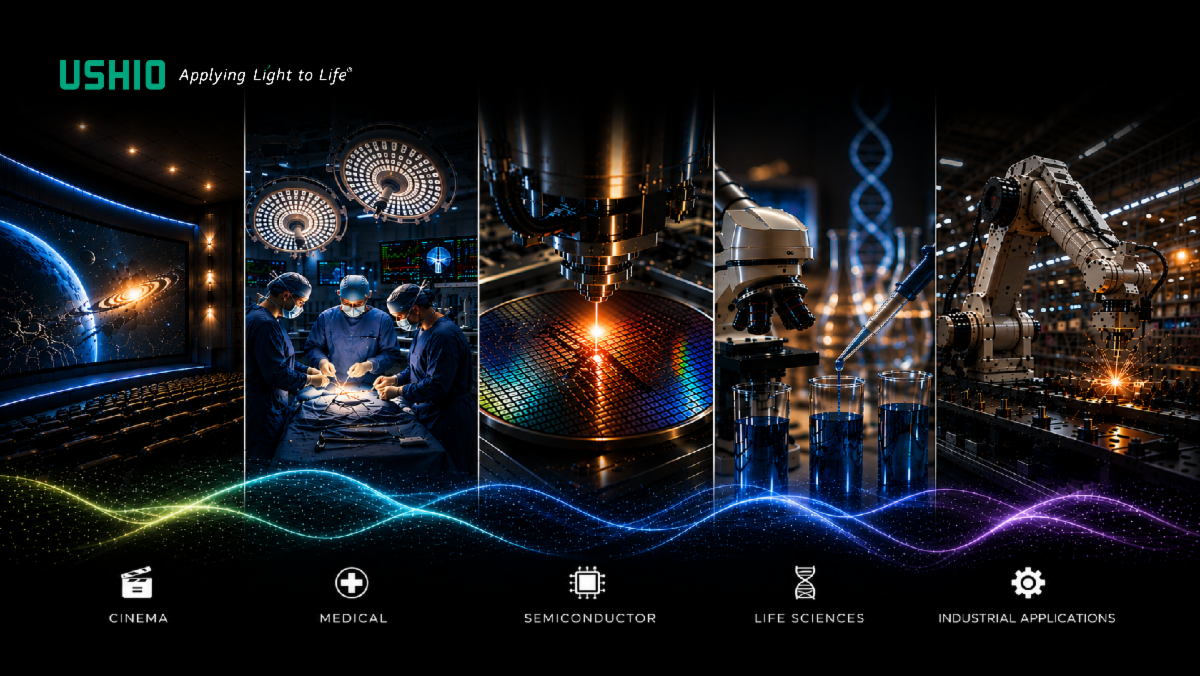
At Ushio America, our mission is simple yet powerful: Applying Light to Life. We use advanced light-based technologies to help people live, work, heal, communicate, and experience the world around them. While Ushio is widely recognized as a trusted leader in the cinema industry, our impact extends far beyond the theater.
Our solutions support a diverse range of markets, including cinema exhibitions, medical and healthcare, semiconductor manufacturing, life sciences, industrial processing, and specialty lighting applications. From enabling life-saving medical procedures and supporting cutting-edge semiconductor production to advancing scientific research and powering critical industrial processes, Ushio technologies help drive innovation across industries worldwide.
This broad market presence reflects our commitment to delivering reliable, high-performance solutions that address our customers’ evolving needs. By combining innovation, quality, and expertise, Ushio continues to illuminate possibilities and create value for customers while truly Applying Light to Life every day.
| | Accessibility: Bring Your Own Device Gets Real | | Vue, Ampetronic and Listen: From the Milwaukee Session to 200 Screens | |
Source: www.installation-international.com | |
Last month we reported on Vue's large-scale deployment of Auracast-enabled assistive listening across the UK and Ireland. August brought the full picture, and the numbers grew.
The system is Auri, co-developed by Ampetronic and Listen Technologies, built on Auracast broadcast audio. Vue has now installed it across 20 cinemas and more than 200 screens in the UK and Ireland, covering more than 28 percent of the circuit's total admissions. Auri also carries audio description for visually impaired guests and supports neurodivergent visitors who prefer a quieter listening environment. Dedicated receivers are available for guests without Auracast-enabled devices.
Craig Davey, national sales manager for the UK and Ireland at Ampetronic and Listen Technologies, called it one of the first large-scale deployments of Auracast in cinema, and said the ambition is to make the technology available on every cinema screen in the UK.
But for ICTA members, there is another part of this story.
At the ICTA Summer Convention in Milwaukee, attendees had an opportunity to explore the technology directly during "Bring Your Own Device," a session examining how emerging technologies such as Auracast Bluetooth LE Audio could change the cinema accessibility experience.
The concept is deceptively simple. Instead of requiring every guest to use dedicated theater-owned listening hardware, compatible broadcast audio can potentially reach hearing aids, earbuds, headphones and other personal devices.
The operational implications are much larger.
Why it matters: Accessibility is beginning to intersect with the consumer technology ecosystem.
For exhibitors, BYOD could ultimately create a more personal and intuitive experience while reducing some of the friction associated with maintaining, distributing and sanitizing dedicated receivers. For integrators and manufacturers, it introduces questions around infrastructure, interoperability, installation, support and device compatibility.
And there is a larger reason we're continuing to follow this story.
ICTA members aren't simply reading about the transition. They're already participating in the conversation about how it gets implemented.
| | | | | Also on our Radar: Two Signals Worth Watching | | Laser's Next Competition Is the Electric Bill | |
|
At BIRTV in Beijing, Christie showcased new RGBH hybrid and RGB pure-laser cinema projectors while emphasizing efficiency and total cost of ownership. Its CP2411-RBe is rated by Christie at 170% greater energy efficiency than comparable Xenon systems, with potential total-cost-of-ownership reductions of up to 59%.
Why we're watching: The laser conversion story is maturing from brightness and lamp replacement into power consumption, maintenance, uptime and lifecycle economics. That could be particularly important to independent and mid-sized exhibitors evaluating their next refresh.
| | |
Sources to read more:
Christie, BIRTV 2026 cinema lineup https://www.christiedigital.com/
| | | |
|
The domestic summer box office crossed $4 billion on 10 August, only the second time since the pandemic. By 30 August it stood at $4.598 billion from the first Friday in May, the second-highest summer ever behind 2013, with eight days still to run through Labor Day.
Ticket sales are running 18.5 percent ahead of last year, and the annual domestic box office is on pace to cross $10 billion for the first time in seven years.
Why we're watching: Five titles account for roughly half the season, and Spider-Man and The Odyssey together represent close to a third. The recovery is real and it justifies the capital being committed. A season where five films carry half the revenue is also a season with a supply risk attached, which is precisely what exhibition asked to have written down in August.
| | | | |
Around the ICTA Community
CES Plus and LOOK Dine-In Cinemas: Operations Move Off-Site
CES Plus and LOOK Dine-In Cinemas have announced a strategic partnership providing 24/7 Network Operations Center monitoring and comprehensive content management across LOOK's circuit.
CES Plus will remotely monitor projection, audio and network systems while managing content ingest, playlist creation, scheduling and KDM distribution across LOOK auditoriums. The goal is straightforward: reduce downtime, maintain presentation consistency and allow theater teams to spend more time on guests.
There is also a larger operational story here. As circuits become more technologically complex, centralized monitoring can shift technical operations from reactive troubleshooting toward proactive intervention.
Read the Boxoffice Pro story
https://www.boxofficepro.com/look-dine-in-cinemas-partners-with-ces-plus-for-circuit-wide-noc-monitoring-and-content-management/
Harkins and Lumma Bring 4D E-Motion to Arizona
Harkins Theatres and Lumma launched Arizona's first 4D E-Motion auditorium at Harkins Norterra with Spider-Man: Brand New Day. Harkins says every show sold out as soon as it was posted. At least six 4D E-Motion auditoriums are expected across Phoenix and other U.S. markets.
The new auditorium combines synchronized motion seating with environmental effects, and the companies say additional installations are planned. The opening-weekend sellouts make this more than a technology announcement. They give the industry an early audience-response data point for another emerging premium experience.
Read the Boxoffice Pro story
https://www.boxofficepro.com/harkins-and-lumma-open-arizonas-first-4d-e-motion-theater/
Christie, CES Plus and Marcus Theatres: 25 PLF Auditoriums
Christie and CES Plus will install 4K RGB pure laser projection with Christie VDR across 25 Marcus Theatres premium large-format auditoriums, comprising 20 UltraScreen and five SuperScreen DLX. Marcus is the first exhibitor to implement a large-scale rollout of Christie VDR technology in PLF auditoriums. CES Plus is responsible for project design, equipment procurement, installation, calibration and ongoing remote service.
Read the Christie release
https://www.christiedigital.com/press-releases/marcus-theatres-acquisition/
GDC Technology and Vettri Theatres: India's First Acoustically Transparent LED
GDC Technology has installed India's first acoustically transparent cinema LED screen at Vettri Theatres in Chromepet, Chennai, alongside a DTS:X for IAB immersive audio upgrade in a second auditorium.
Read the GDC release
https://www.gdc-tech.com/press-release/india-makes-cinema-history-with-first-acoustically-transparent-led-screen-and-dtsx-audio-upgrade-at-vettri-theatres-chennai/
Have member news to share?
Send ICTA your company announcements, installations, partnerships, product developments and other industry updates for consideration in an upcoming issue.
| |
|
In July we wrote that demand was no longer this industry's problem. Capacity was.
August answered the obvious next question: what kind of capacity, and who is paying for it.
The answer arriving from every direction is that there is no longer one premium answer. RGB laser with enhanced contrast. Direct-view LED, now acoustically transparent. HDR with a real title pipeline behind it. Motion and environmental effects. Immersive audio. Proprietary large formats. Each carries a different capital cost, a different content requirement and a different operating model, and August produced credible evidence for all of them.
That is good news for this membership and it raises the bar. When an exhibitor has many defensible ways to build a premium room, the sale is no longer won on specification. It is won on lifecycle economics, content availability, serviceability and measurable audience response.
The technology conversation has become a business-case conversation. Members who can make that case, with numbers, will define the next investment cycle.
| | | | You're reading the ICTA Monthly Newsletter | |
Thank you for supporting us!
With 4,100+ engaged readers, this newsletter has become something bigger than we imagined; a growing community of cinema professionals staying curious, connected, and ahead of what’s next. If something in this edition sparked an idea or added value, share it with someone who should be part of this journey. Every share helps bring more voices into the future of cinema.
If you received this email as a forward, you can join the list directly!
Subscribe now to receive future issues straight to your inbox.
| |
If you want to be featured in our future editions, please get in touch!
Thank you for being part of the ICTA community, and for helping shape the future of cinema technology.
Carrie Dietrich
President, ICTA
| | | | |