|
| |
School Hours
Monday through Thursday
9:30 a.m. to 5:00 p.m.
Friday 9:30 a.m. to 2:00 p.m.
| | |
|
Upcoming Events
March
3/12/26 Last day of Quarter 3
3/13/26 Report Card Day (NO STUDENTS)
3/16/26 - 3/20/26 SPRING BREAK (NO STUDENTS OR STAFF)
April
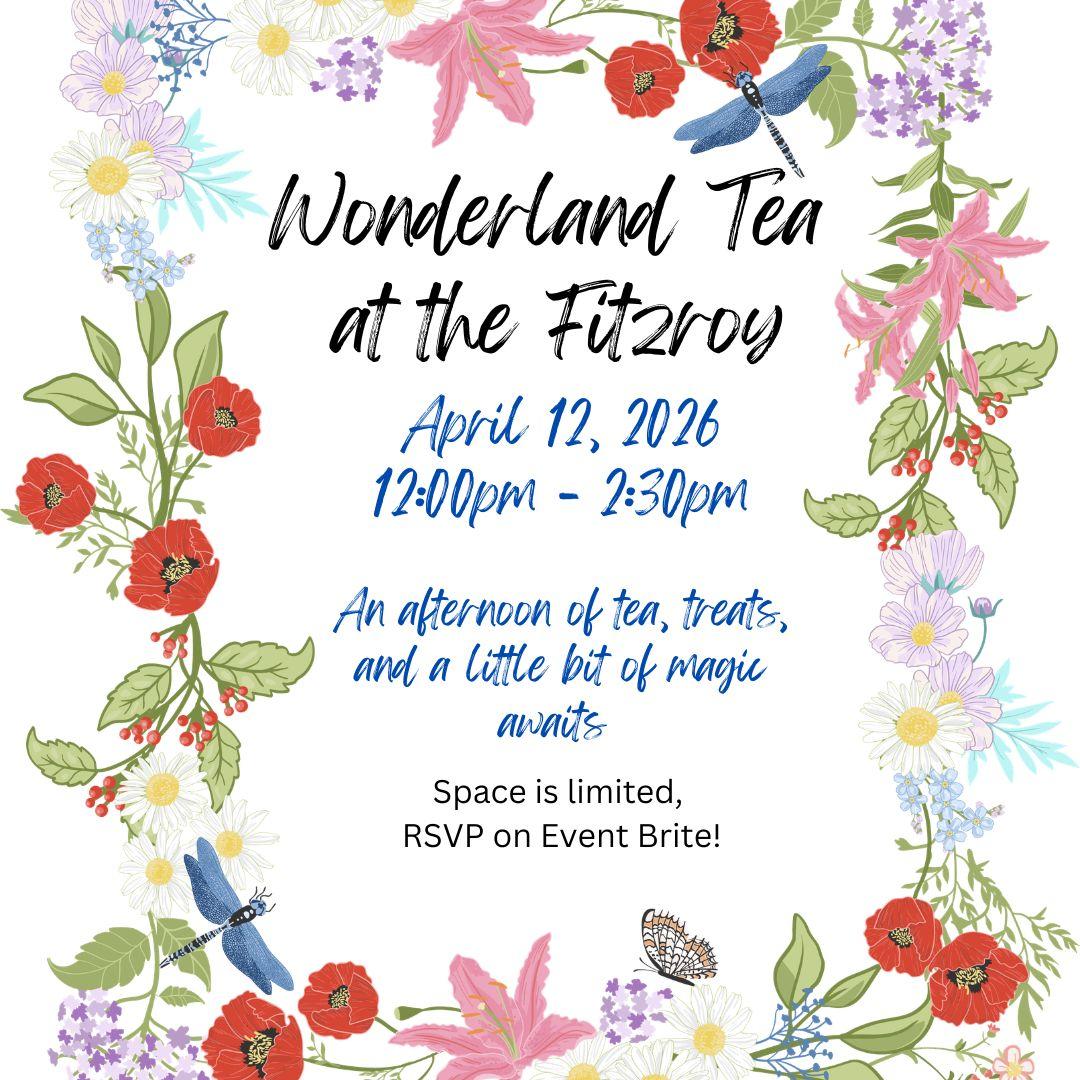
4/12/26 "Wonderland Tea at the Fitzroy" Fundraiser
Awards Night (Date Pending)
| | |
Accelerated Schools presents the 3rd Annual Wonderland Tea at the Fitzroy Mansion!
Join us for an enchanting afternoon filled with delicious tea, delectable treats, and whimsical entertainment.
Step into the magical world of Wonderland as you sip on tea in the beautiful surroundings of the historic Fitzroy Mansion. Get ready to be transported to a land of wonder and delight!
Date: Sunday, April 12th 2026
Time: 12:00 PM - 2:30 PM
Location:
Fitzroy Mansion
2160 S Cook St. Denver, CO, 80210
Come dressed in tea attire and immerse yourself in the charm of Wonderland. Don't be late for this important date!
Seating is limited, so reserve your spot now for an unforgettable experience at the Wonderland Tea at the Fitzroy Mansion.
Ticket Price includes: bottomless N/A beverages (tea, water, cocoa, and juice), finger sandwiches and select desserts.
- Mimosas for purchase at the event for guests 21+ with a valid ID.
**All proceeds from this event go towards fixing and restoring the beautiful Fitzroy Mansion**
Purchase tickets here!: PURCHASE TICKETS
| | |
Decluttering?
Accelerated Schools is always looking for gently used items we can use, such as sports equipment, art supplies, books, bikes, ski/snowboard gear, or even fresh ingredients for our cooking class! Please keep us in mind if you are downsizing or clearing out your space.
We also rely on donations for our silent auctions during annual fundraising events such as our event in December!
Email us at info@acceleratedschools.org for more information. We provide receipts for tax purposes for donations.
| | |
Lunch and Snack Reminder from Accelerated Schools
We’ve noticed more students lately needing to borrow from our “emergency” ramen noodle and snacks stash at lunchtime—even some who already have lunch with them that day. While we always want to make sure no one goes hungry, our supply is meant for true emergencies and unexpected situations.
Please make sure your student comes to school each day with a full lunch and a few snacks to help them stay energized throughout the day. A granola bar, fruit, or crackers can make a big difference in keeping students focused and feeling their best!
Thank you for helping us keep our emergency food supply available for when it’s truly needed. Your support ensures all our students can stay fueled, focused, and ready to learn!
-Accelerated Schools
| |
|
January and February 2026
Activities
| |
No Shortcuts to Strength
Josh Warren, Mathematics Instructor
I get it. Kids love a trick. A shortcut. A little magic move that gets the answer fast.
But here is the thing, I do not teach magic; I teach math.
In my classroom, shortcuts are earned. They are not handed out on day one like party favors. A student has to show full mastery before we even talk about the quicker way. Why? Because shortcut methods do not build on themselves.
When a student memorizes a trick without understanding the structure underneath, it works for exactly one type of problem. The moment the numbers change shape or the problem adds a twist, the trick falls apart. And then so does their confidence.
Real math builds. Each idea stacks on the next. Solving equations leads to systems. Understanding area leads to integrals. Factoring leads to solving quadratics, which leads to deeper algebra, which leads to everything else. When students understand why something works, they can adapt, they can problem solve. They can recover when they make a mistake.
A shortcut skips the scaffolding.
I am not anti-efficiency, I am anti-fragile-understanding.
Once a student can explain the concept clearly, model it correctly, and apply it in multiple contexts, then yes, let us talk about the faster way. At that point the shortcut is not a crutch. It is a compression of understanding. It rests on something solid.
My goal is not to get students to answers quickly, my goal is to build thinkers who can handle complexity without panicking.
There are no shortcuts to strength.
| |
The Art of Making Friends
Kate Oh, Instructor and Enrollment Counselor
As we step into March, a season that represents growth and new beginnings, I would like to share something that has been on my heart recently which is friendship. One of our students recently asked me, “How do I approach someone to make friends?” It is such an honest and brave question. And it reflects something many students feel but may not always say out loud.
Friendship in This Generation
The generation our students are growing up in is different from what many of us experienced. Social media, fast communication, and constant digital interaction can sometimes make real-life connection feel harder even though we are more “connected” than ever.
Because of this, intentional connection matters more than ever.
Find Your Uniqueness and Shared Interests
Sometimes students think they must “fit in” to make friends. In reality, friendships often begin with:
- Discovering what makes you unique
- Finding others who share similar interests
- Being involved in activities that naturally create connection
Team sports, clubs, cooking class collaborations, Korean class group work, creative projects — these environments give students opportunities to build friendships through shared experiences.
When students work together toward a goal, they naturally begin to trust and understand one another.
Being Likable Starts with Kindness
At Accelerated Schools, we are proud to be a community that:
- Accepts students with differences
- Welcomes new adventures
- Encourages empathy and understanding
Being “likable” does not mean being perfect. It means:
- Listening
- Showing respect
- Including others
- Being genuinely curious about people
Friendship is not about popularity, it is about connection.
Discover Yourself First
Before making strong friendships, it helps to know:
- Who am I?
- What do I enjoy?
- What makes me happy?
- What kind of friend do I want to be?
When students understand themselves, they naturally attract peers who appreciate them for who they truly are. You learn so much from others — their culture, their stories, their strengths, their challenges. But you also learn about yourself in the process.
March is a month of growth.
Let’s encourage our students to:
- Take small social risks
- Join a group activity
- Start one conversation
- Be open to someone new
Friendship begins with one small step.
Thank you for continuing to partner with us as we help our students grow not only academically, but socially and emotionally as well.
| |
Read Across America Month
Debby Sharp, Middle School Instructor
Read, Read, Read…That’s what it’s all about in Middle School English. Both Middle School reading groups are about halfway through our books and extremely into the theme of both stories.
Speaking of reading, March 2nd is National Read Across America Day. When I taught in Public Schools we would actually come to school in pajamas and have an actual read- in which all we did was read most of the day. What a marvelous way to spend a school day! Unfortunately, I don’t have all students all day so we can’t enjoy reading like that but we will spend some time reading independently and discussing our favorite books. March 2nd is also inexplicably, Dr Seuss Day. What better way to celebrate Dr. Seuss than to write something all in rhymes. We will honor Dr. Seuss by constructing a text message out in rhymes to someone.
March 4th is national grammar day so what better time to practice grammar than on national grammar day. We will spend the whole period practicing grammar and spelling with Kahoots. We usually do this on Friday but we’ll also have fun with grammar and spelling on March 4th.
| |
A Day in Ms. Raechel's Middle School Art Class
Raechel Kimsey, Instructor
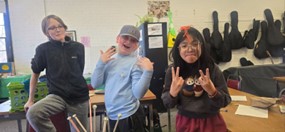
Our middle school art class is a vibrant, creative space where students are empowered to explore their artistic interests in a safe community environment with the guidance of a classically trained artist (me). For this month’s Article, I decided I was going to do an interview with one of Accelerated Schools young artists to publish in the newsletter this month. However sometimes the reality of a situation warrants a different approach. This was certainly the case on the day I decided to interview Weston Wheeler for a spotlight in this month’s newsletter. Excitement over the prospect of being interviewed radiated from all around the room, and before I knew it, I was surrounded. The following interactions are a great encapsulation of our art class community.
Me: Okay, class! From here on out, everybody who talks is going to be on record.
Hang: What (does) that mean?
John: (laughing) The bodies are under the van.
Me: It means that I’m recording all the words you are saying right now and it’s going to be on a file that I can listen to later.
Hang: (Jokingly) I don’t care.
Weston: Are you going to ask me questions for the newsletter?
Me: Yeah, well, since everybody is here, I’m going to ask everybody questions.and so that might end up being the article…
Weston: Okay! That’s fun!
Me: Yayyyy I’m glad you think it’s fun!
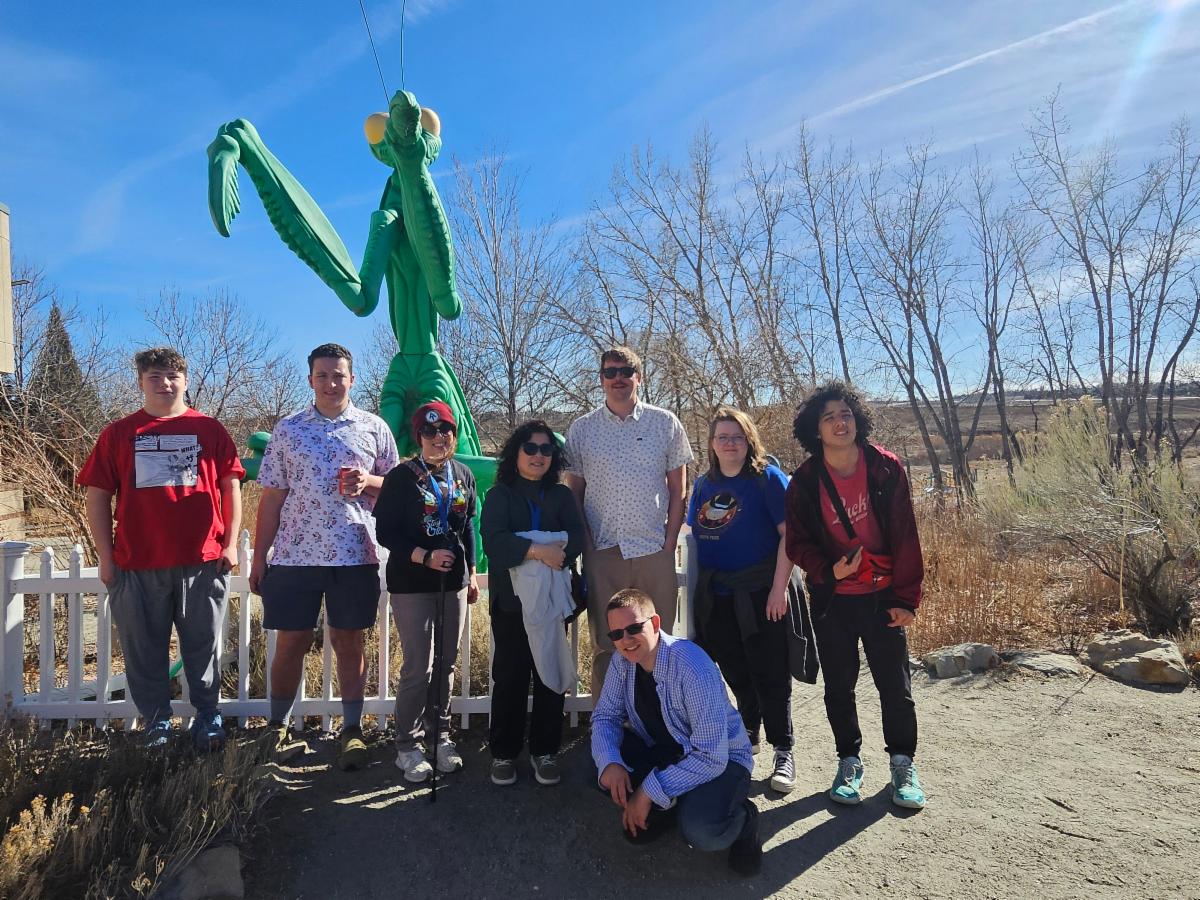
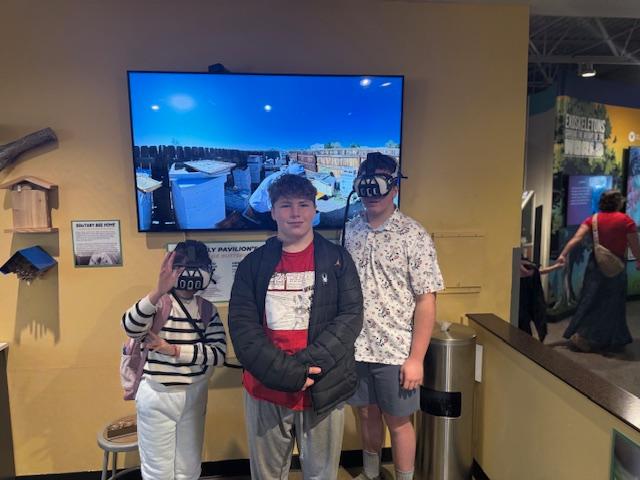
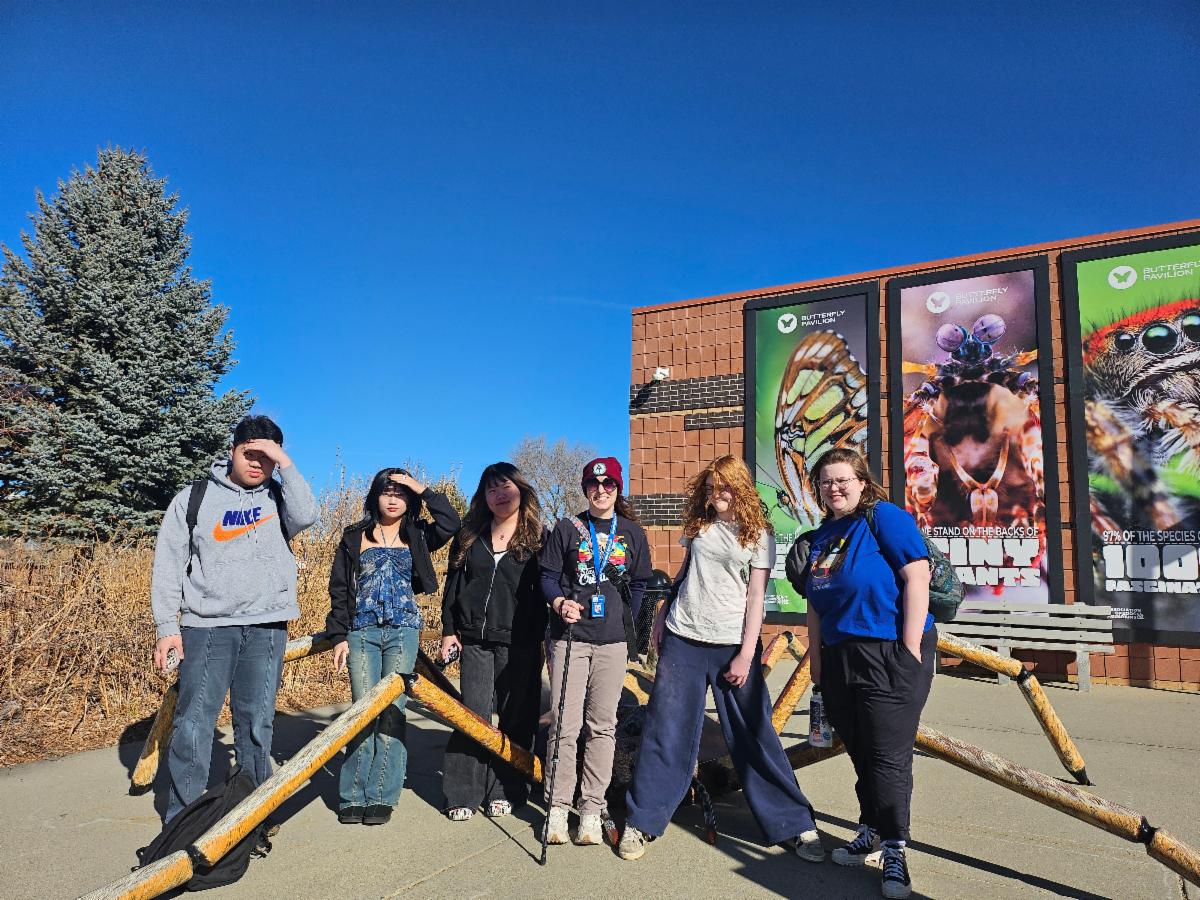
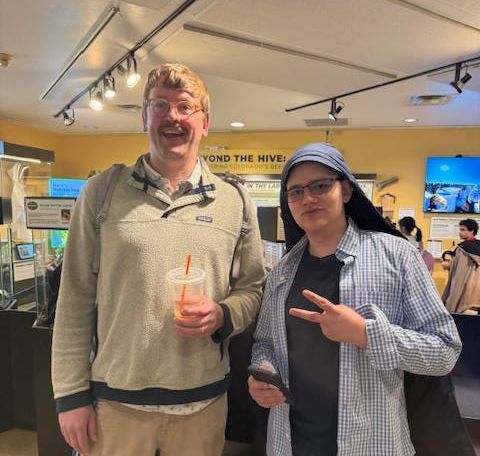
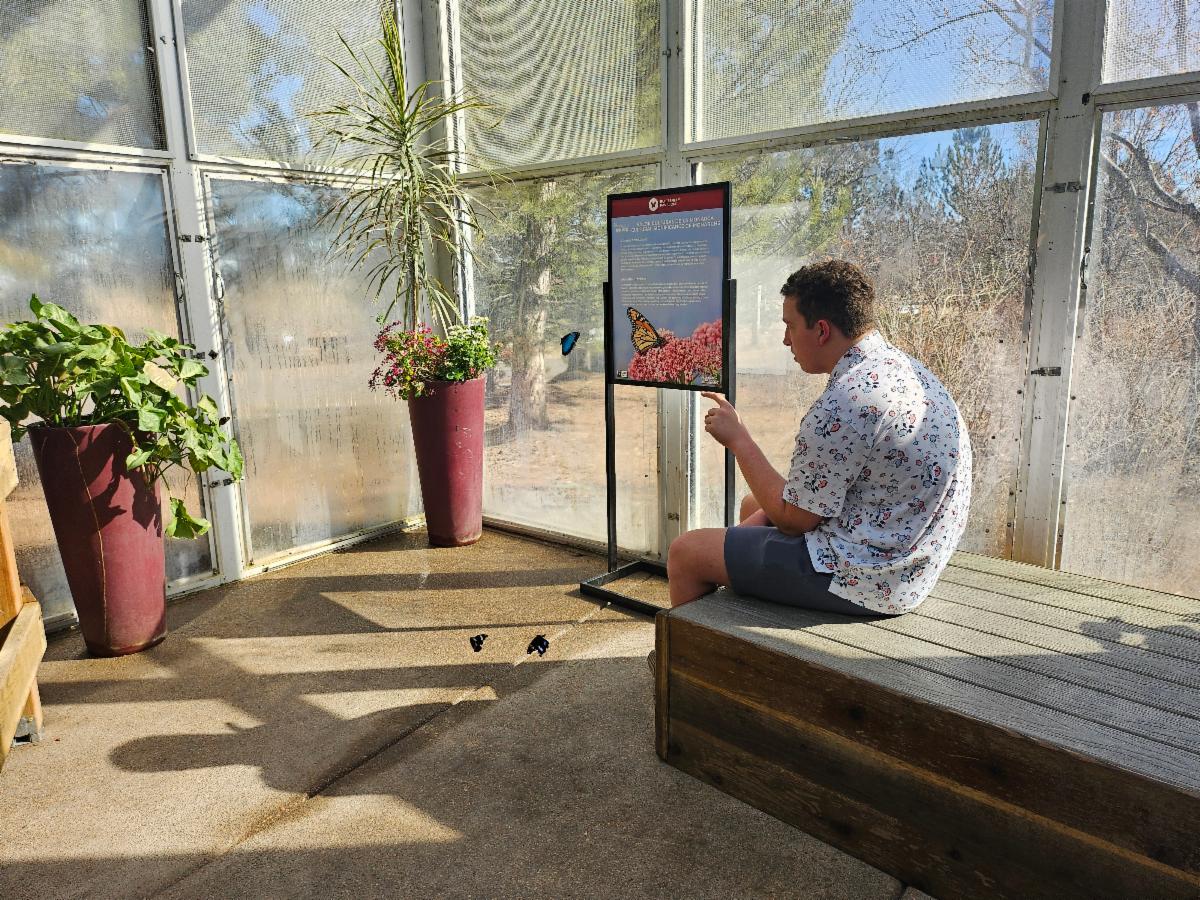
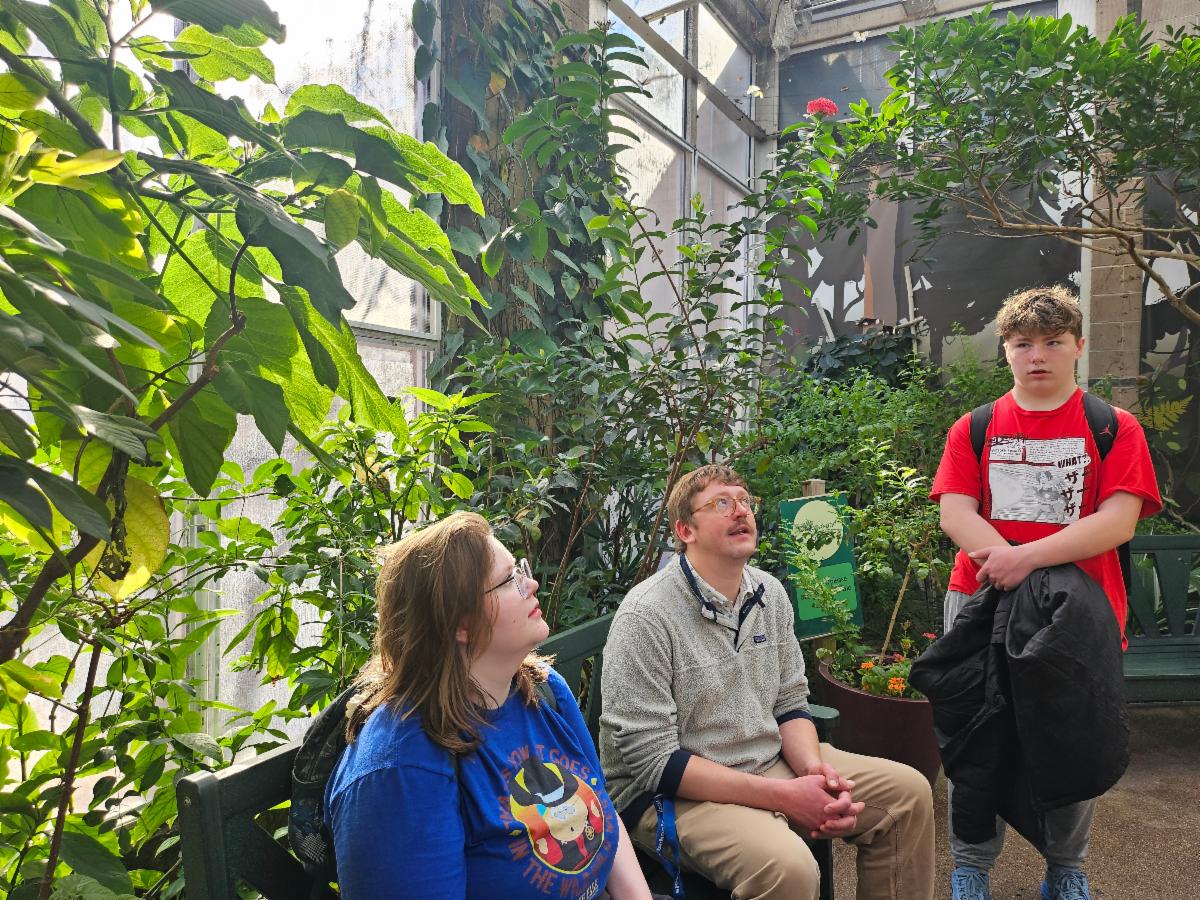
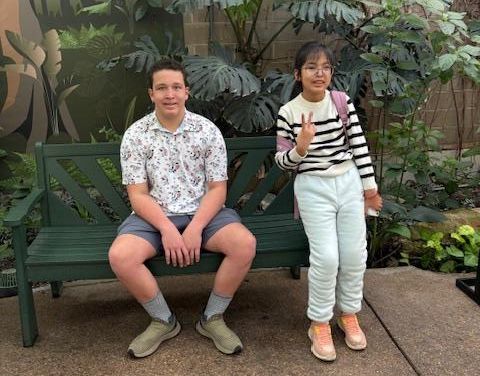
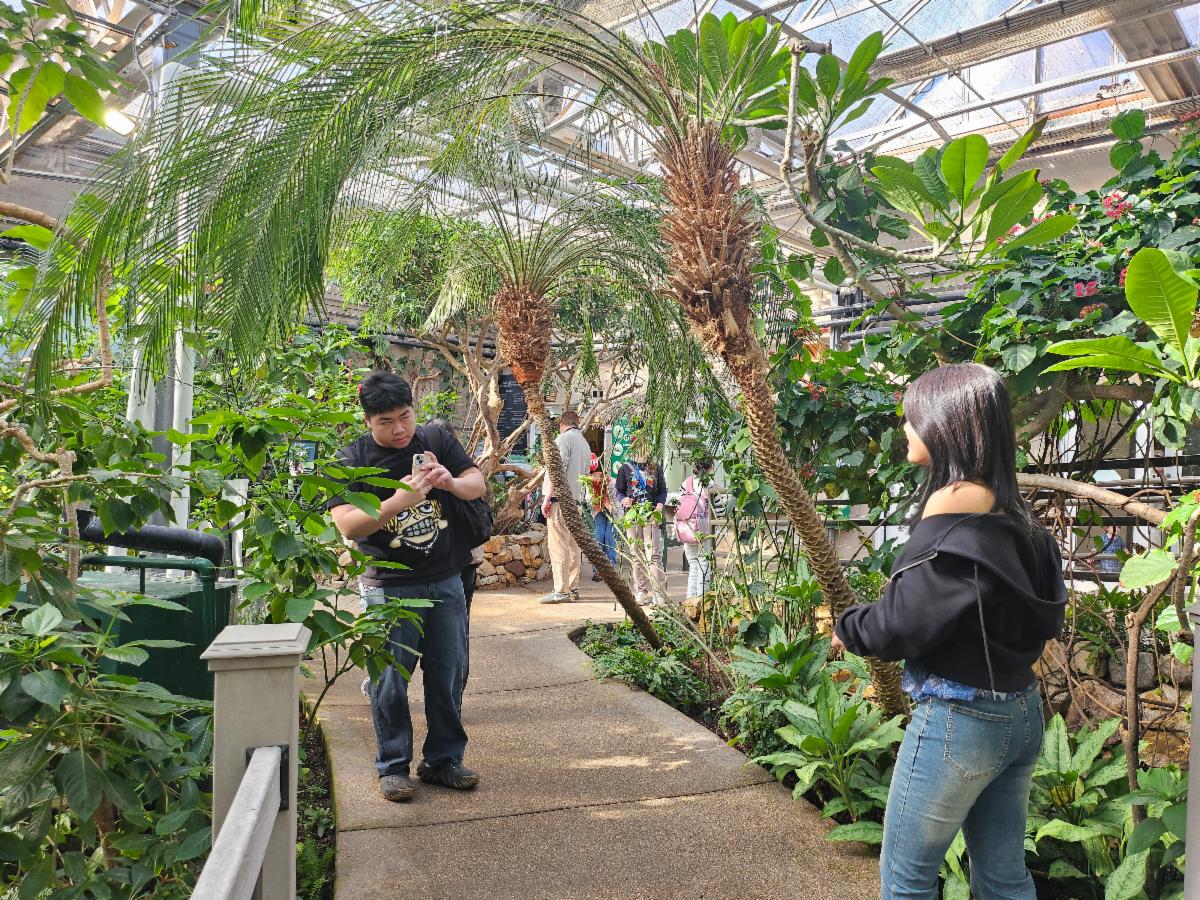
Owyn is sitting in a chair near the commotion, he is upset because he accidentally stained the new shirt he got on the school’s recent trip to the Butterfly Pavillion with black ink. The incident has soured his mood considerably. He says he hates this school and wishes he could just go home. Some time elapses as I assure him his feelings of frustration are valid, but at the same time, everyone is happy that they get to hang out with him at school.
Me: Class, I am still recording.
John: (smiling) Um, all the times we went to the creek with Dan last year, um. We were trying to hide the body.
Me: (Laughing) Can you take it seriously, you guys? C’mon. How do you like your time at accelerated schools?
Hang: Skibidi.
Weston: I love my time at Accelerated Schools, honestly. It’s my favorite school I’ve ever been to.
Owyn: I do too. Maybe it’s just this day.
Me: Yeah, Owyn! You know what? That’s a good insight. Just because a day is bad, doesn't mean the whole thing has to be bad. I like that! What about you, Hang? How do you like your time at Accelerated Schools?
Hang: I love this school and it’s great. Better than any school that I went (to)...There’s no bully and there’s no teacher for money…(at my old school) it was like somebody give the teacher twenty bucks or something to keep the student exam that is supposed to be tomorrow.
Me: Well those are all great reviews!
At this time John had occupied himself by working on his painting. He asked Owyn if he should make it more blue and Owyn assessed the painting thoughtfully. The interview goes on for another six or seven minutes. Too long to put into one little newsletter article. I hope you have enjoyed this snapshot of time in 5th Period Middle School Art Class.
| |
Current Happenings in Science Lab
Julia Potocnjak-Overn , Science Instructor
Students in Biology are learning about our body systems and about how all of these systems work together to keep our bodies functioning at an optimal level or homeostasis. Homeostasis is an important place for our body to stay, so that we maintain healthy systems and avoid getting sick or run down.
Students in Environmental Science have been learning about how environmental disasters caused by humans and/or climate change can drive evolutionary changes in species living in the exclusionary zone outside of Chernobyl. Students have learned that species in the zone are thriving and may even hold clues as to how species can survive despite being exposed to radiation.
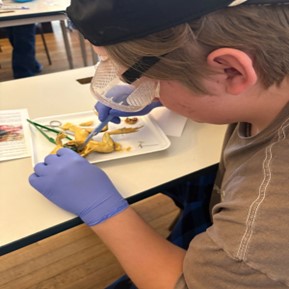
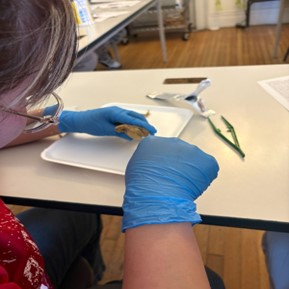
Both Biology and Environmental Science students recently completed a frog dissection in which they analyzed and examined bull frog specimens to understand their specific adaptations and how their systems are similar and different to our own systems.
| |
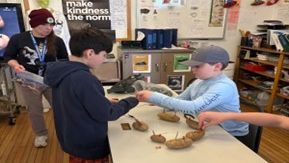
Middle School students are moving into learning about body systems; our electricity unit has prepared us for the idea that we can generate electrical signals within our bodies and how sending those electrical signals to different parts of our body can help us to move and complete daily tasks-something we don’t often stop to think about. We successfully connected a series circuit and powered on an LED bulb! To encourage us to think critically about how the physics of electricity translates to electrical signals our brains send out, students created clay models of neurons this week in order to understand how neuronal structures work to send and receive signals. Student Nathan was a gusset in our class for the neuron model activity, you can see his contribution below
| | Helpful Forms and Links for Accelerated Families | | | |  | |
For more than 40 years, concerned parents have turned to Accelerated Schools for individualized learning programs helping students overcome challenges, and excel academically. The fact is, a traditional school system is not designed to meet the needs of every child. When a student is not being successful, or is not thriving in a traditional environment, parents must often look elsewhere for a solution. This is were Accelerated Schools comes in.
Accelerated Schools begins by creating a learning program designed specifically for a student. Our work points are toward changing the ratio of failure to success and by cultivating an environment of accountability. Our students are given attainable goals and are rewarded by celebrating their accomplishments. Once a student starts experiencing success, their attitude, motivation and effort improve dramatically. This ends the negative cycle and leads to positive academic progress and positive self-esteem.
| | If you have comments and/or suggestions about our newsletter, email Kayla Presnal | | | | |