e-Newsletter | January 15, 2021 |
|
The Amazing Life of William Wheelwright
William Wheelwright was a notable son of Newburyport who spent his life developing industries and trade systems in South America. He was an entrepreneur and a technological visionary who possessed considerable shipping and commercial experience. With a particular knack for being in the right place at the right time, Wheelwright built a solid reputation on efficiency and dependability by introducing and delivering on new, effective ideas.
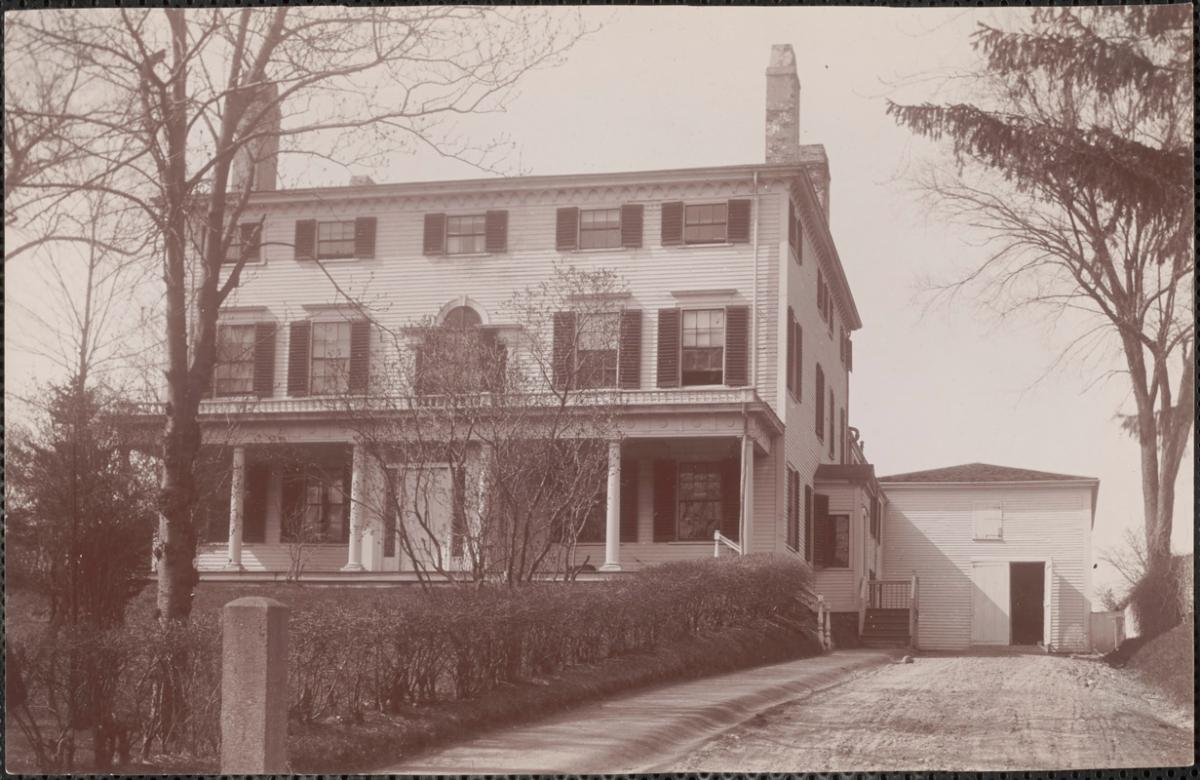
Born in Newburyport in 1798 to Ebenezer and Anna Coombs Wheelwright, William was one of nine children. His father, who was a ship master and successful merchant, built 73 High Street in 1800 during a time of rising fortunes and commercial opportunity in Newburyport.
|
|
The Wheelwright House, 75 High Street. Built in 1797 by Ebenezer Stocker, William Wheelwright purchased this house in 1841 for use by his parents and sister. After becoming a widow, Martha Wheelwright occupied this house. Upon her death, it was bequeathed to Newburyport Society for the Relief of Aged Women. It is now a private residence. From the collections of the Museum of Old Newbury.
|
|
After graduating from Phillips Academy at Andover, sixteen-year-old William enthusiastically followed in his father’s footsteps and shipped out to sea as a cabin boy. Three years later, he had risen rapidly through the ranks and became a captain at the age of only nineteen.
Wheelwright was mainly engaged in shipping in the West Indies, exchanging things like timber and fish for sugar and molasses. He was very successful for the first six years or so, until a maritime disaster off the coast of South America changed the course of his career and his life.
In 1823, Wheelwright was in command of the “Rising Empire,” a ship owned by William Bartlet, Esq. of Newburyport. The vessel wrecked near the mouth of the Rio de La Plata and the entire crew was forced to abandon it. After a harrowing 24 hours in open water in a small boat, the captain and crew reached shore, but not until after losing one of their members. They made their way upriver to the city of Buenos Aires where Wheelwright was fortunate to find a ship that would take him on as “supercargo,” an extra person who was responsible for overseeing the ship’s enterprises.
The vessel, however, was not returning to New England. Instead, it was headed to Valparaiso, Chile on the opposite coast of the continent. This 5,000-mile journey, which took about five-months, took Wheelwright around Cape Horn and exposed him to many new cities and ports.
Wheelwright was determined to make up for the failure of the “Rising Empire” before returning to his Newburyport home. The burgeoning businessman saw new opportunities for shipping on the west coast of South America and decided to settle in Ecuador’s seaport (then Gran Columbia), Guayaquil.
In Guayaquil, Wheelwright established an import/export business. He gathered partners for a new enterprise and opened an agency on the waterfront, which specialized in trading cacao and timber. The business became lucrative with his construction of a steam sawmill, which increased speed and efficiency. This was the first of many technological advances that he would introduce to the region.
|
|
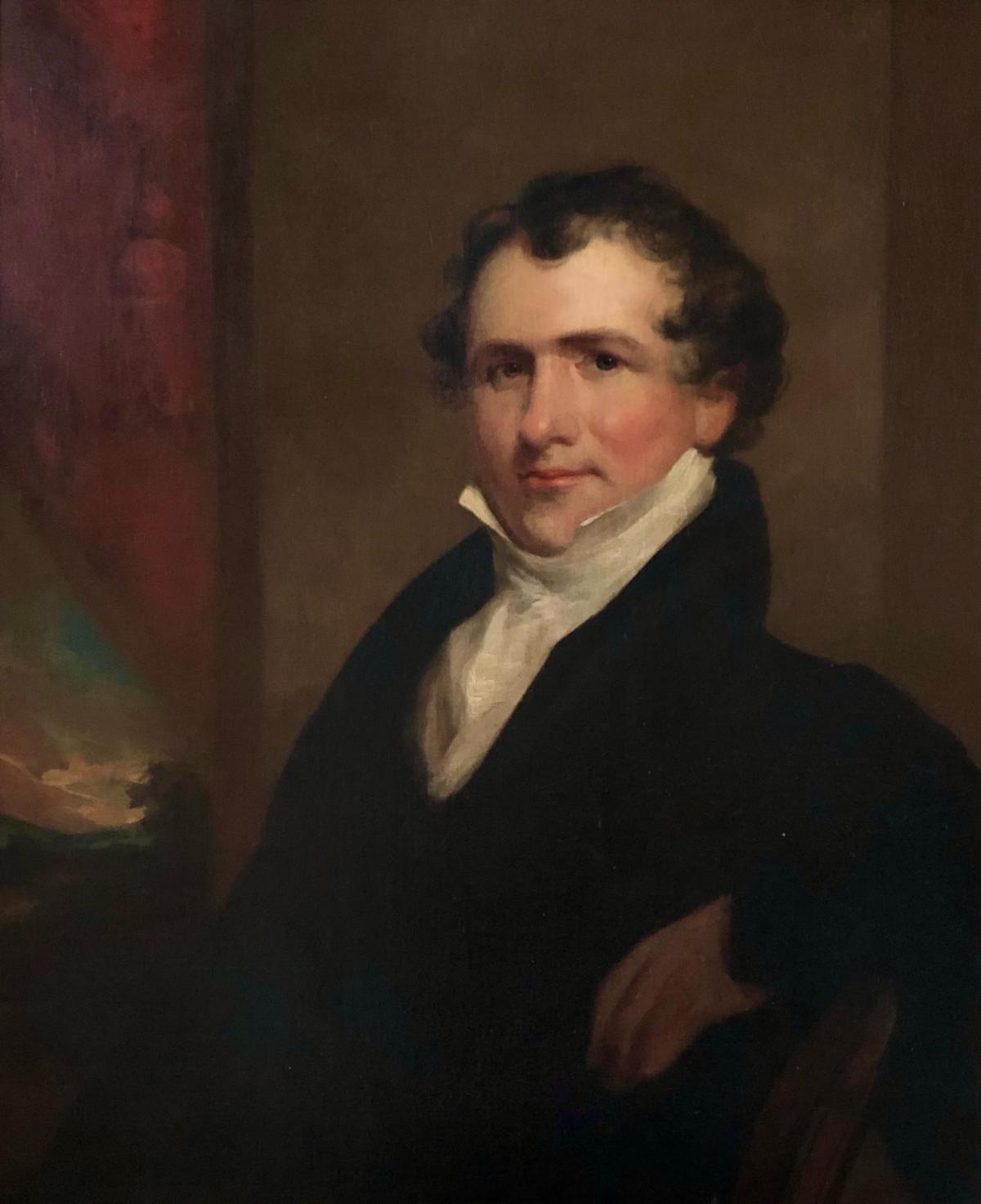
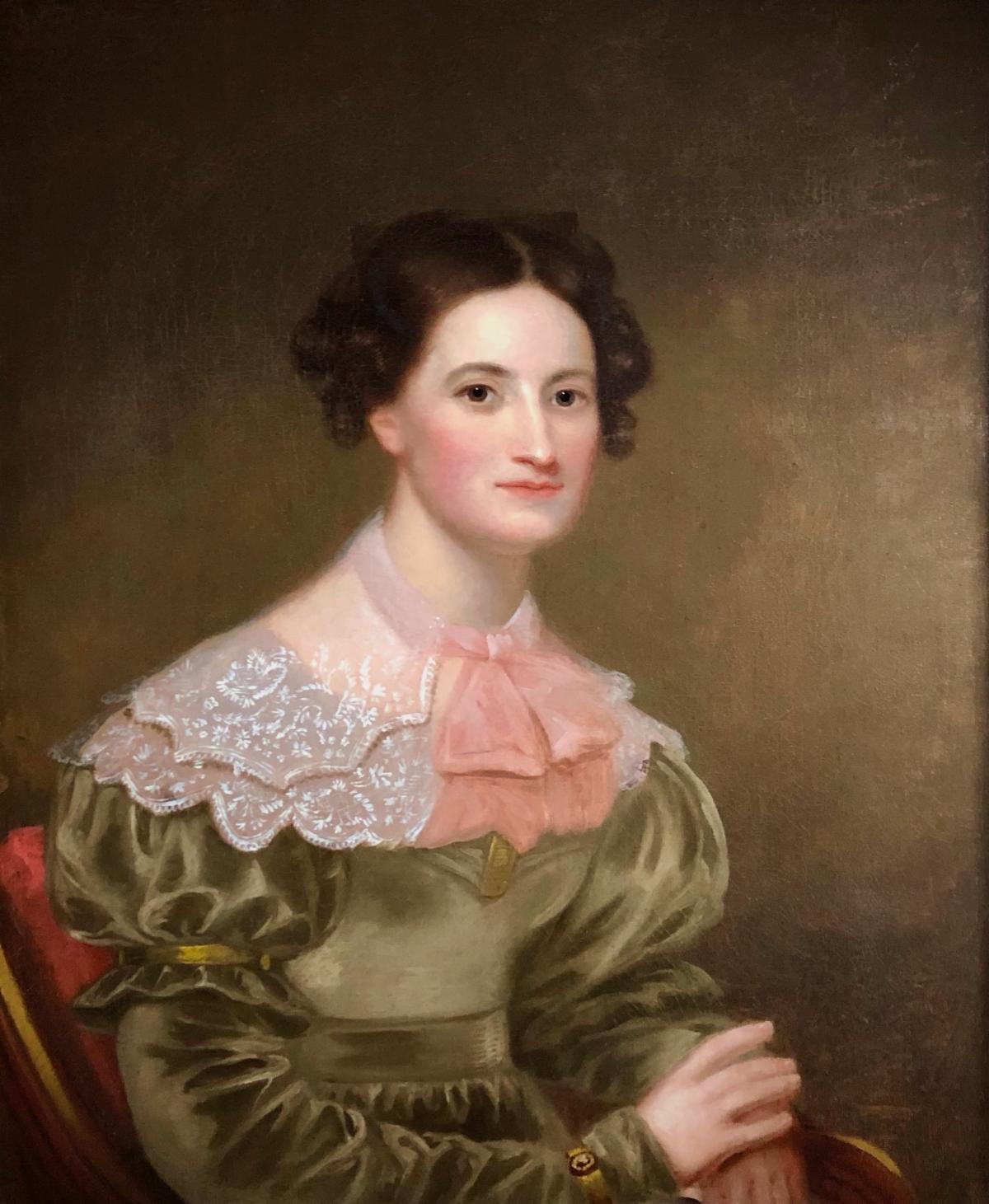
Portraits of William Wheelwright and Martha Gerrish Bartlet Wheelwright, made at the time of their marriage in 1829. The two portraits hung in the Wheelwright House, 75 High Street, Newburyport. From the collections of the Museum of Old Newbury.
|
|
With an extremely successful business finally established, Wheelwright returned to Newburyport to marry Martha Gerrish Bartlet in 1829. Their honeymoon consisted of a series of mule rides across Panama and leaky boat voyages down the coast of South America.
Through the heat and rain, Martha took these challenges in her stride. However, upon the newly minted couple’s arrival back in Guayaquil, they found Wheelwright’s hard-earned success crumbling due to mismanagement by his partner. Most of his property was gone and the business was in shambles.
Ever tenacious and unwilling to bow to defeat, Wheelwright abandoned the venture and he and Martha traveled to Valparaiso, a city on the upward swing. There he purchased a small schooner and set about rebuilding his fortune and establishing a new life for his wife and himself.
The schooner, named the Velos Manuela, became their home for the next two years. It traded up and down the west coast, carrying mail and passengers into many of the small ports. Soon enough, he purchased a second ship, patriotically dubbed The Fourth of July, and expanded his trade inventory and voyage length.
Wheelwright, however, was never one to rest on his laurels and possessed a shrewd business sense. He recognized a move towards steam engines in the shipping industry and capitalized on the technology quickly. By 1834, he was involved in developing trade in coal and a few years later raised the capital to establish the Pacific Steam Navigation Company. While the early years of this business were fraught with political and social controversies, Wheelwright prevailed and it eventually became one of the largest steamship companies in the world, linking South America to Europe.
Concurrently, Wheelwright was engaged in another lucrative project. In 1832, silver mines were discovered north of Valparaiso. The treacherous terrain made transportation of this valuable resource difficult, so Wheelwright established the Copaipo Railroad Company.
By 1850, tracks were built from the mines to the coast. This meant that shipping costs were halved, and labor costs were cut by a third. In a stroke of genius, the ever-shrewd businessman also created an entirely new shipping port called Caldera, which was connected to the inland silver source by tracks.
While Wheelwright regularly returned to Newburyport to visit family, secure business connections, and purchase property, he was also a great patron of his South American home. He worked tirelessly to improve Valparaiso’s urban development, creating a water system, lowering fire risks and insurance costs, establishing a telegraph system, and introducing the idea of a gas lighting system.
Later in life, Wheelwright turned his attention almost exclusively to railroads, which he saw as essential transportation throughout the interior of the continent. He successfully connected Santiago and Valparaiso, and then moved his family to Buenos Aires to develop a system for Argentina, connecting Cordoba and Rosario. He also laid telegraph lines beside the rail system, developing an incredibly important and efficient form of communication between major cities.
In 1872, national holidays were declared in Chili and Argentina in honor of the development in their countries. William Wheelwright was a guest of honor at the official celebration in Buenos Aires, where he was praised for his pioneering work in developing telegraphs, steam ships and railroads.
|
|
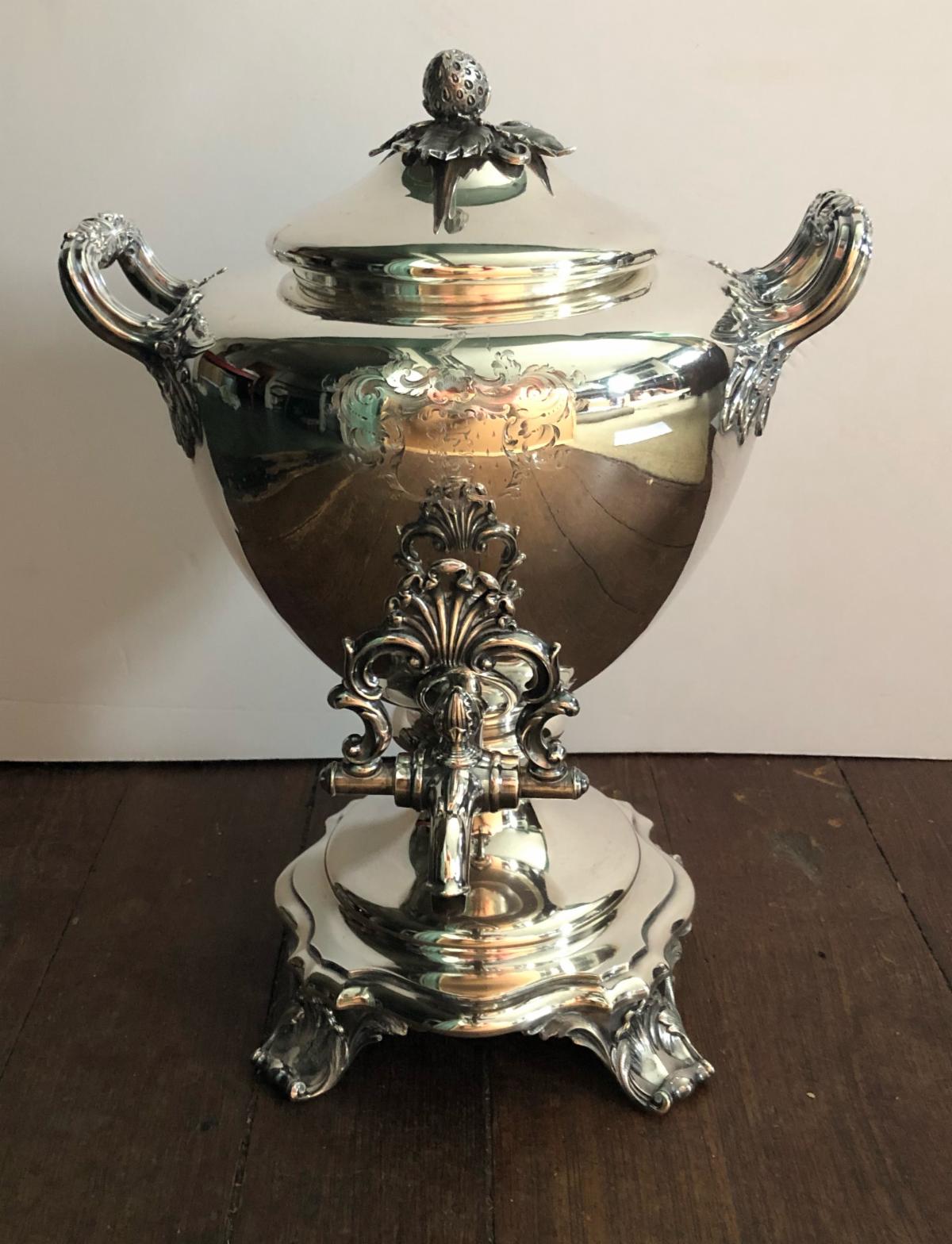
The silver coffee urn presented to Wheelwright in Valparaiso in 1842. The engraving on the back reads, "Presented by the Commercial Community of Valparaiso to William Wheelwright, Esq., Chief Superintendent of the Pacific Steam Navigation Company, as a testimonial of their respect and esteem for his character, and their admiration of his merits. VALPARAISO, January 15th 1842." From the collections of the Museum of Old Newbury. |
|
He passed away in 1873 after 50 years of living in South America. His body was transported to Newburyport for a private service at the family home.
On October 17, a public service was held at Old South Church where he had been baptized, attended services and was married.
With bells tolling in Newburyport, a procession of mourners followed the coffin to Oak Hill Cemetery. His wife, Martha, made her home at the family home her husband had bought in 1841, 75 High Street. She died in 1888 at age 84. The building became the Newburyport Society for the Relief of Aged Women and is now a private residence.
(Emily Hoffman contributed to this story. Some of the material used in this story is taken from "William Wheelwright: Steamship and Railroad Pioneer" by J. Valerie Fifer (published by the Historical Society of Old Newbury/Museum of Old Newbury.)
Editor's note: Inconsistencies in spelling of names, etc., are from the historical record and not a typographical error.
|
|
Learn about upcoming programs, register, find Zoom links and catch up on previous presentations here. |
|
Miss a Recent MOON Program? Watch here. |
|
Thanks to the wonder of the Zoom platform, all of our programs are recorded and available online shortly after presentation. Click on the images below to view January's programs.
Visit our website for previous recordings, including the four 2020 Virtual Garden Tours, our Annual Meeting, children's and holiday programs, as well as all episodes of "Yeat Yeat, Don't Tell Me!"
More events coming every month, so check in often at www.NewburyHistory.org.
|
|
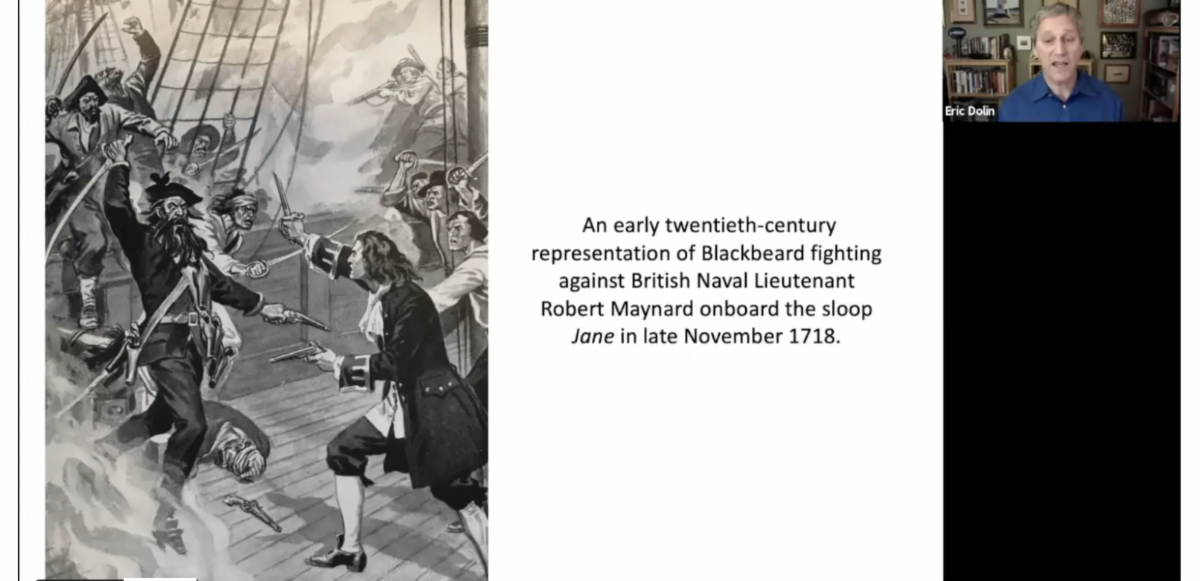
January 14, 2021: "Black Flags, Blue Waters: The Epic History of America's Most Notorious Pirates with Eric Jay Dolin. |
|
January 8, 2021: "Yeat Yeat, Don't Tell Me!" with Jack Santos, Custom House Maritime Museum, and Colleen Turner Secino, Museum of Old Newbury. |
|
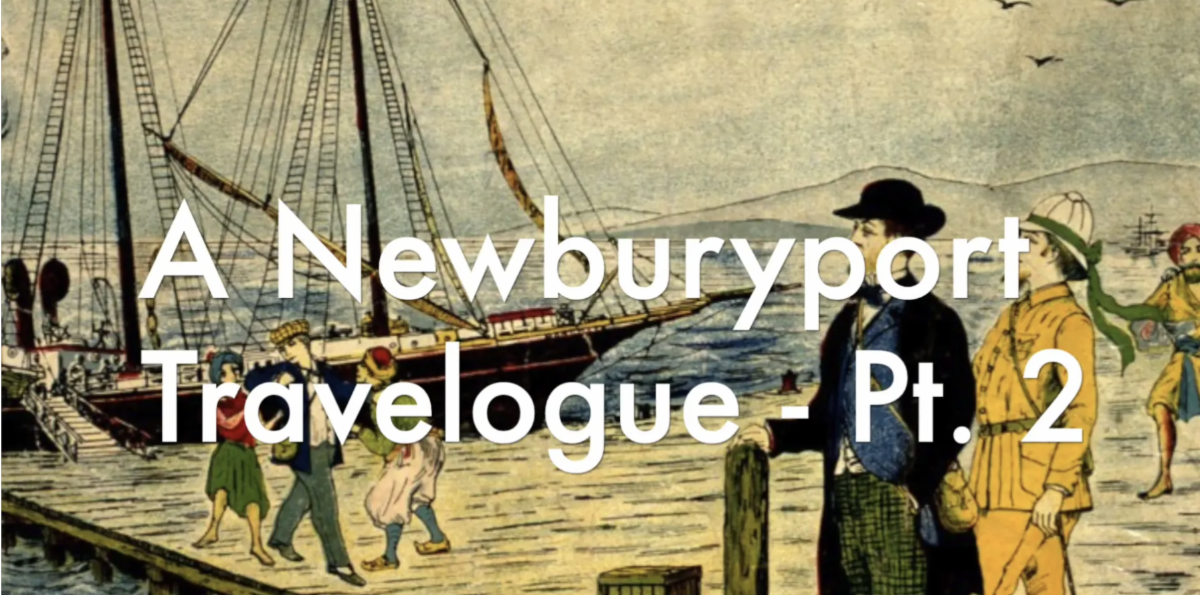
January 5, 2021: A Newburyport Travelogue - Part 2 with Jack Santos (view Part 1 here). |
|
Something is Always Cooking at the Museum
If a weekend of sports or perhaps binge watching the popular period drama "Bridgerton" is on your radar, consider whipping up this tasty appetizer from Diane May.
Tangy Wings
2 1/2 lbs. chicken legs, wings or pork ribs
1 2/3 tablespoons olive oil
1/2 cup soy sauce
1 2/3 tablespoons ketchup
3/4 cup honey
2-3 garlic cloves, minced
Salt and pepper to taste
Preheat oven to 350ºF. Place chicken or pork in a 9x13-inch baking dish. Mix together oil, soy sauce, ketchup, honey, garlic, salt and pepper. Pour over the meat. Bake in the preheated oven for 1 hour, or until sauce is caramelized. Serves 6-8.
|
|
|
|
Puzzle Me This...
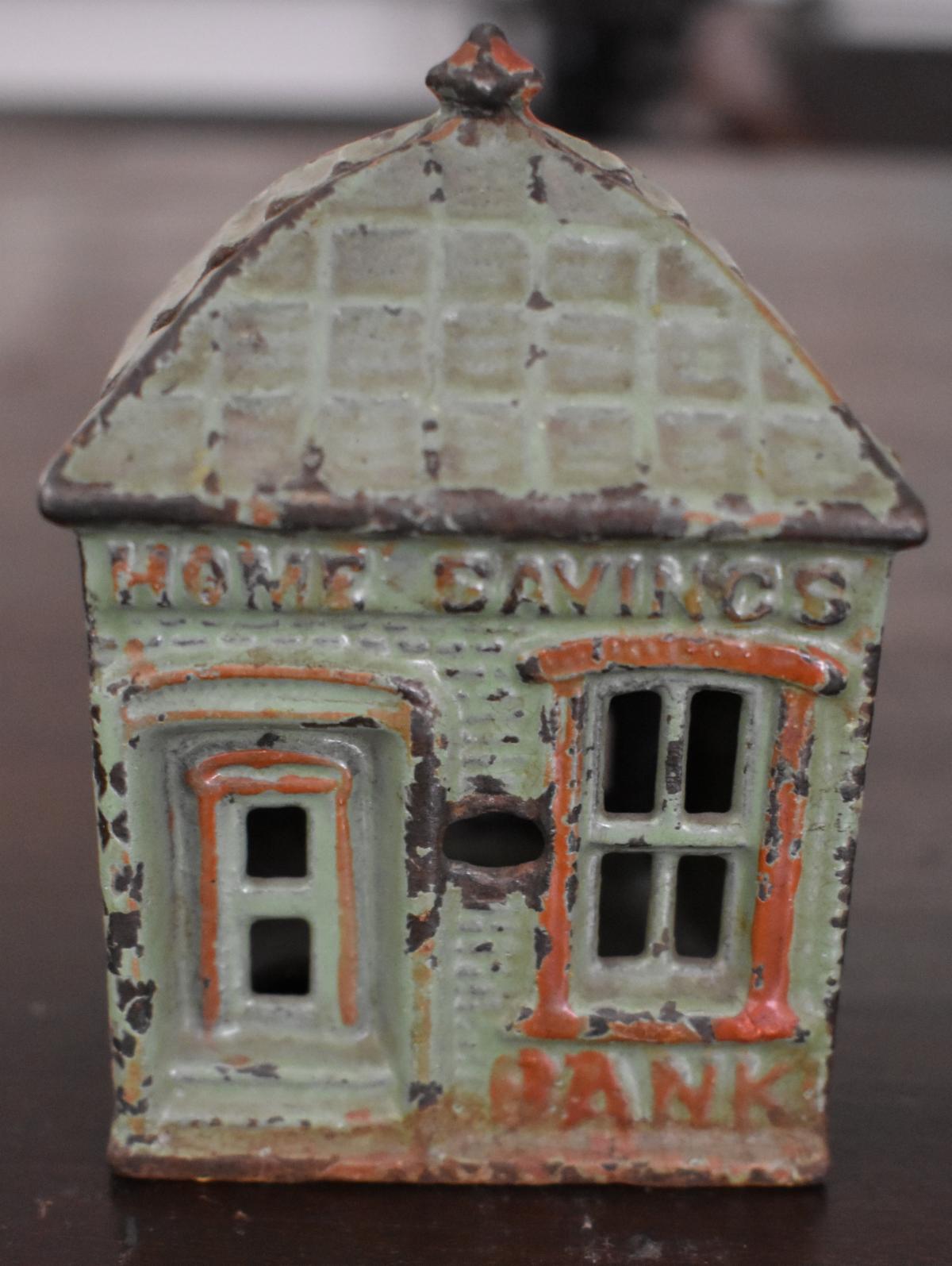
Cast iron "Home Savings" still Bank with original green and red paint.
Toy banks such as this one were popular during the last quarter of the 19th century. Many were made by the J. & E. Stevens Company of Cromwell, CT, established in 1843 for making cast iron hardware, hammers and iron toys.
By the mid 1860s, the company focused almost exclusively on toy production.
In 1869, J. & E. Stevens produced their first cast iron mechanical bank and became nationally known for their innovative designs of mechanical and still banks.
Click on the image to begin.
|
|
During this difficult period of COVID-19, we rely on your support more than ever. We are working to reschedule many of the programs that we have had to postpone, as well as develop new, online programs for you to enjoy and keep us connected. We hope, if you are able, that you will consider a donation to the museum. Thank you for your continued support.
|
|
Museum e-Newsletter made possible through the
generosity of our sponsors:
|
|
|
Museum of Old Newbury
98 High Street
Newburyport, MA 01950
978-462-2681
|
|
|
|
|
|
|
|