Ohio-ACC Newsletter, March 2020
|
|
Sanjay Gandhi, MD, MBA, FACC
|
|
Dear Ohio-ACC Colleague,
I recently returned from the American College of Cardiology Board of Governors Meeting. I am pleased to report that our Ohio-ACC Chapter was awarded the
2019 American College of Cardiology Chapter Recognition Award for Excellence in Member Wellness! Special thanks to our goal champions working on "Advocate for Provider Well-Being:"
Ashish Aneja, MD, FACC,
Laxmi Mehta, MD, FACC and
Heather Sedlacek, ACSM-CES, M.S. and to
Jennifer Dicken, BSN, RN-BC, AACC for being part of the Wellness Townhall panel at our annual meeting this past October. Their article, which appears below, summarizes the work that the Ohio-ACC has done in the area of clinician well-being. We hope that you will take a moment to learn more about
ACC's work on Clinician Well-Being. You may also be interested in the recent
JACC article
The Imperative of Addressing Clinician Well-Being.
Additionally, we engaged our PharmDs to create a new task force on Prior Authorization Best Practices, which developed a Resource List, Sample Documentation Templates for New Drug Starts, and Sample Appeal Letters to address some of the prior authorization issues that contribute to clinician burnout:
https://www.ohioacc.org/prior-authorization/.
|
|
Highlights from the ACC Cardiovascular Summit
|
I also had the opportunity to attend the
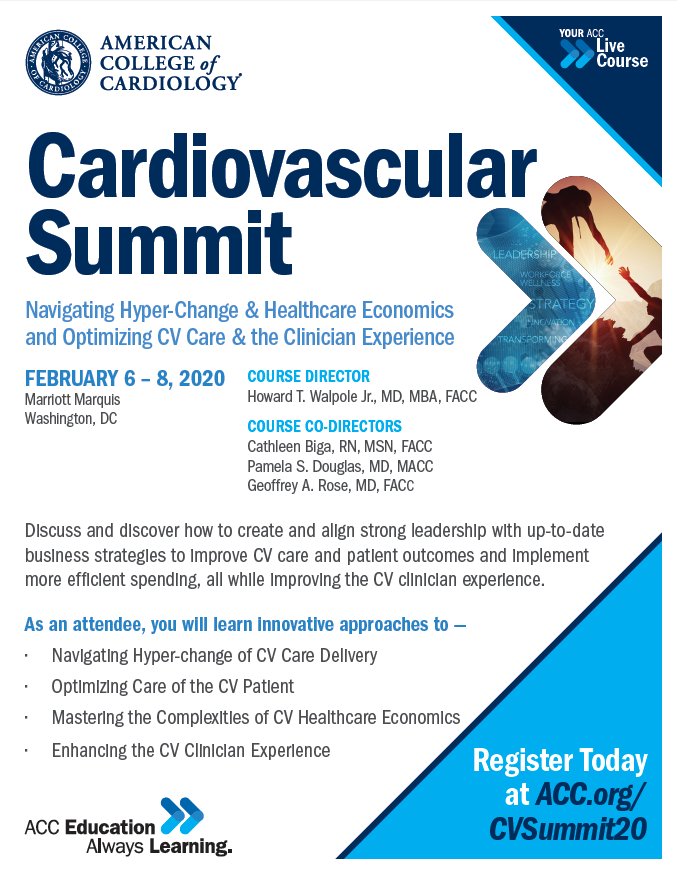
ACC's Cardiovascular Summit in Washington, DC. The meeting was a terrific one to learn about navigating hyper-change & health care economics and optimizing CV care & the clinician experience. Additionally, challenging topics such as
Site Neutrality and What It Means to My Service Line were among the highlights. Here are
ACC's principles regarding site neutral payments within Medicare. If you get a chance to attend this meeting next year, it is well worth your while. In the meantime,
here are some cardiovascular management resources that may be useful to you.
|
|
|
UPCOMING EVENTS:
Ohio-ACC Spring Summit on April 18, 2020
|
Join your colleagues on
Saturday, April 18, at The Ritz-Carlton, Cleveland for the
Ohio-ACC Spring Summit: 13th Annual Cardiovascular Team Update & 57th Annual Carl J. Wiggers Memorial Lecture.
Register today!
Topics include:
- Advanced Therapies & Management for Acute Decompensated Heart Failure: Case Studies
- Managing Atrial Fibrillation After Left Atrial Appendage Closure-Cardioversions Antiarrhythmics, and Ablation
- SYNTAX Extended Survival PCI vs. CABG
- A Review of Cardiovascular Outcome Trials with Diabetes Therapies
Deepak Bhatt, MD, FACC will present the 57th Annual Carl J. Wiggers Memorial Lecture:
Residual Cardiovascular Risk in Statin-Treated Patients with Elevated Triglycerides: Now We Can REDUCE-IT
|
|
Ohio-ACC Legislative Day on May 12, 2020
You are cordially invited to join the Ohio-ACC for a special
Legislative Day in Columbus, on May 12. This will be a day of visiting your Ohio representatives and senators to introduce them to cardiology issues facing you and your patients. Building relationships with your state lawmakers will help ensure that the Ohio General Assembly remains informed of issues facing providers and patients. There is no charge for the event, and appointments with your lawmakers will be made for you. Parking will be validated.
TRAVEL STIPENDS AVAILABLE
Ohio-ACC Legislative Day travel stipends are available on a first-come, first-served basis, which include overnight accommodations for May 11 and parking. One member from each district will be awarded a travel stipend. Simply be the first to register from your district! (District 1 Cleveland area, District 2 Toledo area, District 3 Akron area, District 5 Dayton area, and District 6 Cincinnati area).
|
|
Ohio-ACC Women in Cardiology Dinner on May 19, 2020
|
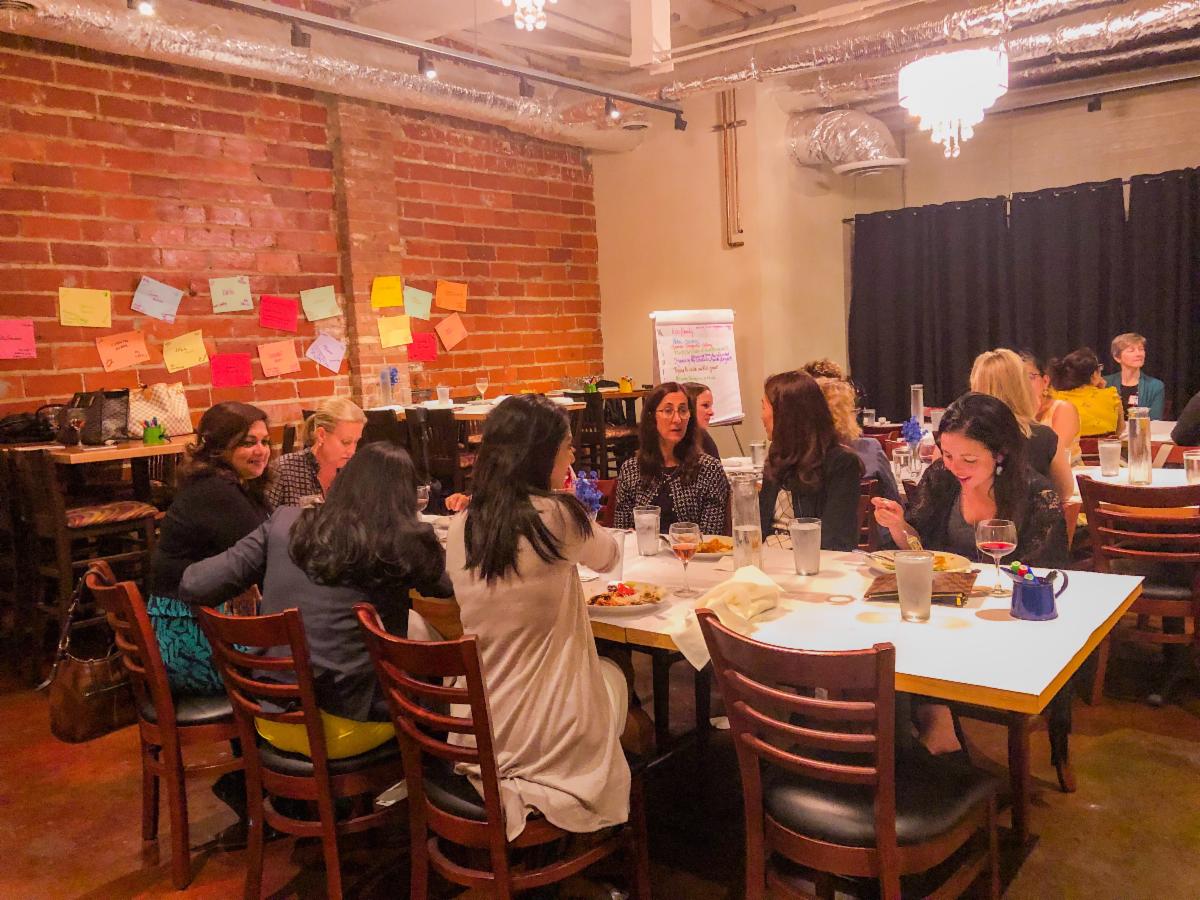
Ohio-ACC female cardiologist (MD, DO) colleagues for an evening dinner meeting in Cleveland.
Building up Yourself and the Women around You: Sponsoring and Supporting Women
led by:
Katarzyna Niewiadomska, PhD
Member Leadership Development
American College of Cardiology
|
|
|
Contact Us
If Gwen Goldfarb, our chapter executive, or I can be of assistance to you,
please let us know.
Sincerely,
Sanjay
|
|
Spotlight on Ohio Women in Cardiology:
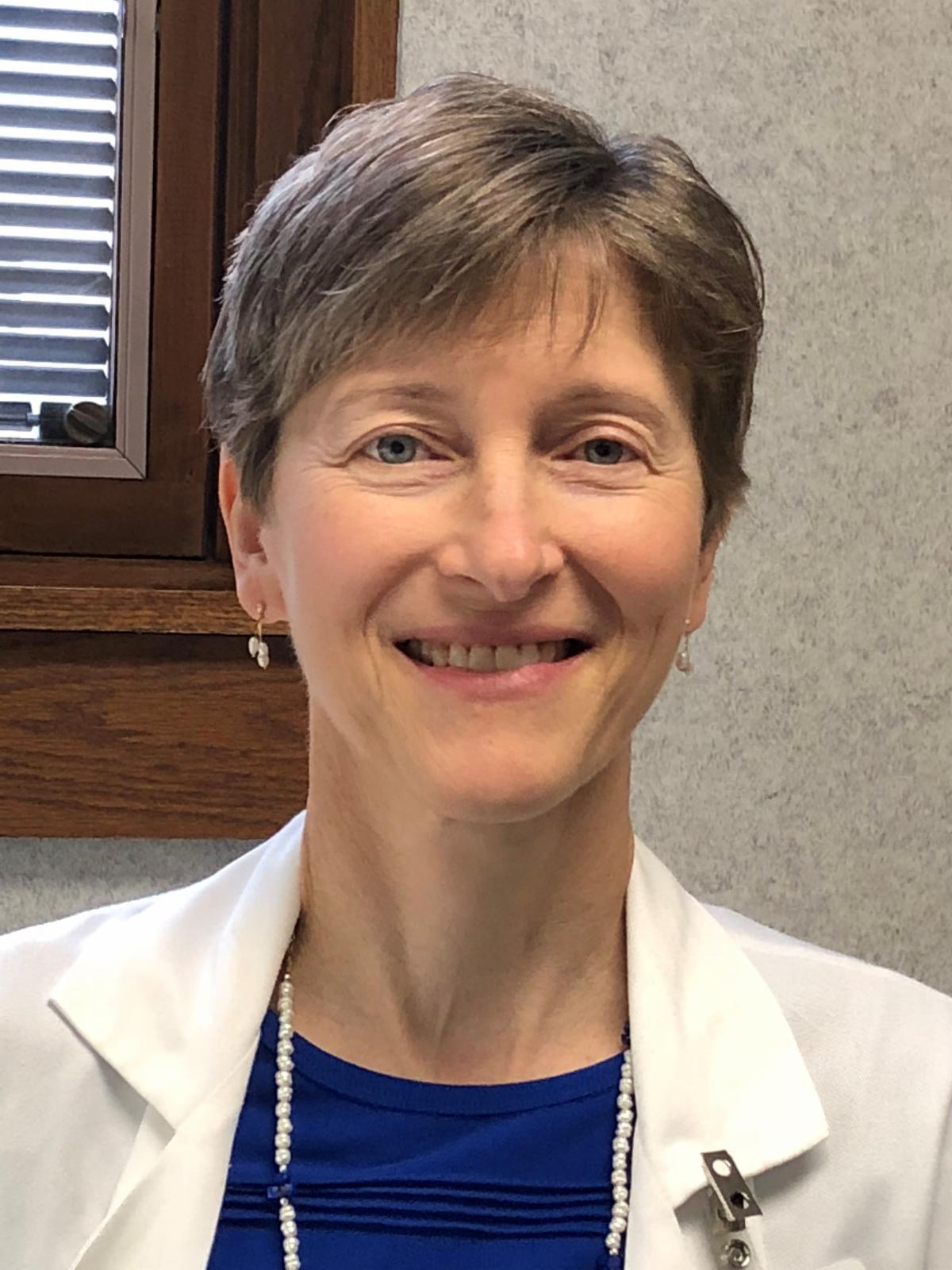
Elizabeth S. Kaufman, MD, FACC
Meera Kondapaneni, MD, FACC
|
|
The Ohio-ACC is pleased to launch a series called
Spotlight on Ohio Women in Cardiology. We will pose interesting questions to each of the featured female cardiologists and present their responses. Please
let us know about a female cardiologist at your institution whom you would like to spotlight.
MK:
What was your inspiration to pursue Cardiology and then Electrophysiology as a subspecialty?
EK: I liked cardiology because the patients had interesting problems yet could usually expect to live high-quality lives. You get to have a long-term relationship with your cardiology patients. I liked electrophysiology because I like puzzles. Figuring out arrhythmias and pacemaker behavior is like solving puzzles.
MK:
Did you have a mentor that influenced your decision to pursue cardiology?
EK: I can’t say that I had a particular mentor who influenced my decision. But once I became involved in my cardiology fellowship, the electrophysiologists inspired me most. They enjoyed sitting in a room together and pondering interesting electrocardiograms and electrograms.
MK:
What do you enjoy most about your career in cardiology?
EK: I enjoy the people: my co-workers and my patients. I like the variety of my life: some outpatient clinic, some inpatient consults, some procedures, teaching, research, and other academic work.
MK:
Knowing what you do now and based on your experiences, would you do anything differently along your career path?
EK: If I were going into cardiology now, I would consider a dedicated research fellowship in addition to my clinical training. These days, if you want to be able to compete successfully for grant support, you ought to have a unique skill set.
MK:
Did you have any hesitancy in pursuing cardiology as a specialty and if so, how did you manage or overcome this?
EK: I did not hesitate to pursue cardiology—it interested me most.
MK:
What advice would you give for women considering a career in cardiology?
EK: Go for it! And don’t put your personal life on hold. Training takes a lifetime, so if you want to have children, do it at the time of life that is right for you. Splurge on high quality child care, house cleaning, anything else that you can afford that will allow you to optimize your family time and your work time.
MK:
What would you do instead if you did not pursue a career in medicine?
EK: I might have been a choir director or an algebra teacher.
MK:
In your opinion what is the biggest barrier to women pursuing cardiology and how can we work to change this?
EK: There seems to be a perception that the lifestyle is too hard. Well, everything about being a physician is challenging—the training, the responsibility, the deep connection with people who are experiencing fear and grief. Hopefully you chose medicine because you find all of this fascinating and life-giving. If cardiology is what turns you on, you should pursue it.
MK:
What do you think is the most important progressive development that would allow more women to progress in their careers as cardiologists and attract more women to the field?
EK: The culture is changing. I’m not mistaken for a nurse as often anymore.
MK:
Can you share a fun fact or unique quality about yourself?
EK: I love to run, swim, and sing early music.
|
|
Clinician Well-Being
Laxmi Mehta, MD, FACC and Ashish Aneja, MD, FACC
|
|
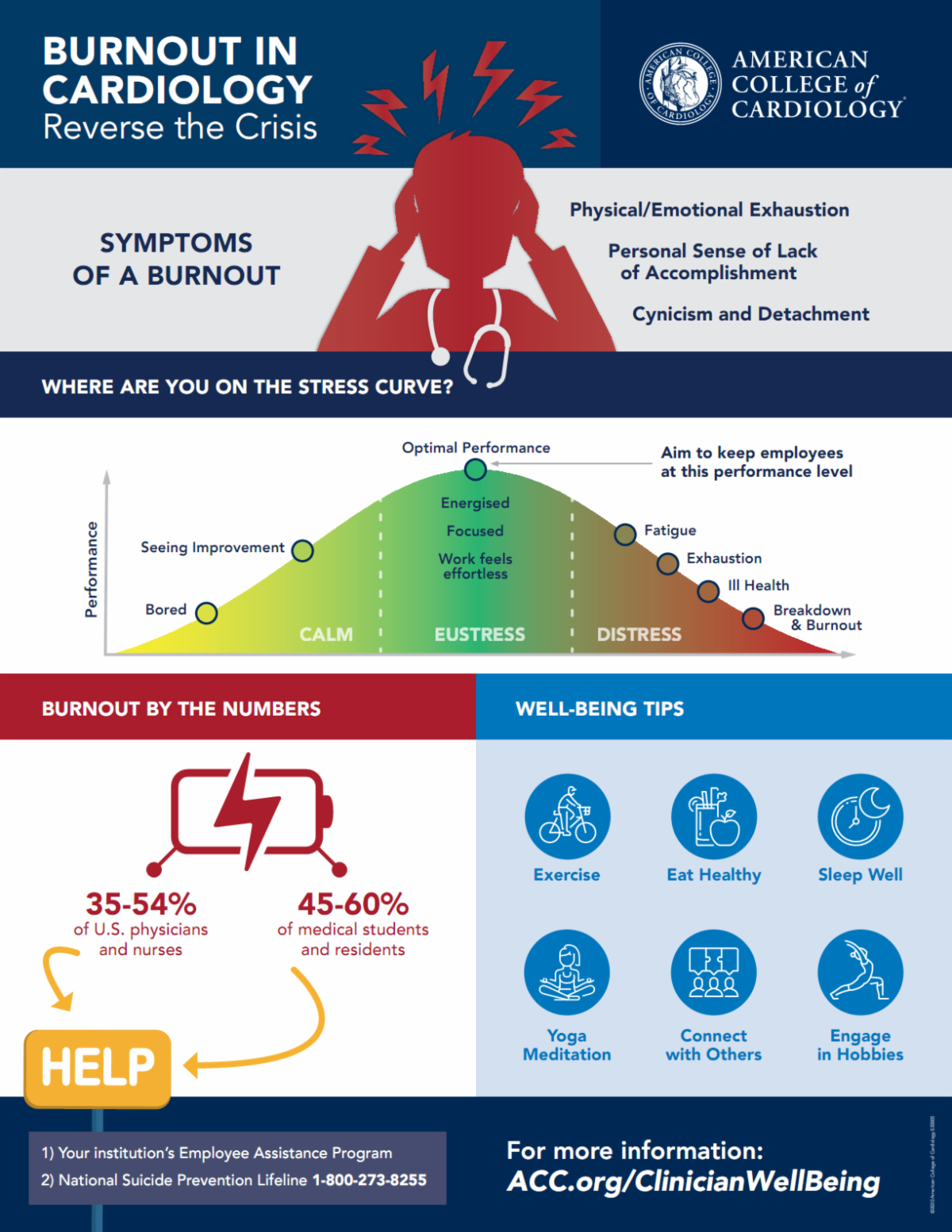
Clinician burnout is pervasive and occurring at alarming rates within the United States. Burnout is defined as physical or emotional exhaustion, cynicism, and lack of accomplishment in a perceived high stress environment. Burnout is associated with both personal (substance/alcohol abuse, broken relationships, depression, suicide) and professional (low quality, high turnover) repercussions.
Approximately 27% of cardiologists nationally reported feeling burned out, and almost 50% reported feeling very stressed.
Given the burnout crisis in healthcare, the Ohio-ACC sought to address clinician burnout in 2019. As a first step, the broad membership of ACC was asked to participate in a brief survey in the spring of 2019. There were 70 respondents, of which 73% were cardiologists and 13% fellows in training, whereas 59% were male and 41% female respondents. Approximately 39% of the respondents have practiced for greater than 20 years, 14% greater than 10 years, 20% for 5-10 years, and 13% for less than 5 years. Almost 75% of the respondents reported experiencing long-term, unsolvable job stress that led to exhaustion, cynicism, job detachment, or lack of personal accomplishment in the last 12 months. Some of the key contributors to stress included bureaucratic tasks, long work hours, lack of respect, insufficient compensation, lack of control and the feeling of emphasis on profits over patients. It is concerning that among the 70 respondents, 37% had experienced mental health issues (depression, anxiety) because of their job, and only 24% considered seeking help in the form of counseling.
As part of the Ohio-ACC Annual Meeting in October 2019, a town hall meeting was conducted regarding clinician burnout and wellness. This session included speakers/panelists who spoke from the perspective of academic and private practice physicians, administrators, and cardiovascular team members. Audience members voiced their concerns about burnout and administrative burdens during fellowship training and early career as well as pressures experienced from hospital/employee administrators and insurance companies. Participants also discussed national ACC endeavors in improving clinician wellness. More information regarding national ACC’s efforts are outlined in the recent
JACC article on “The Imperative of Addressing Clinician Well-Being ”and on the
ACC website portal on Clinician Wellness.
|
|
Understanding the Expanded Indications of SGLT-2 Inhibitors in Patients with Type 2 Diabetes Mellitus
Megan Valente, PharmD, BCACP
|
|
Sodium glucose ligand transport 2 inhibitors (SGLT-2 Inhibitors) have been used to treat type 2 diabetes mellitus (T2DM) since the Food and Drug Administration (FDA) first approved canagliflozin (Invokana®) in 2013. There are currently four SGLT-2 inhibitors available in the United States. Three have been evaluated from a cardiac risk and benefit standpoint through the FDA mandated cardiovascular outcome trials (CVOTs) for investigative diabetic therapies. The results of these trials have expanded the role of select SGLT-2 inhibitors into cardiovascular disease (CVD) reduction, improving heart failure outcomes and providing renal benefit in patients with T2DM.
1
The exact mechanisms are not fully elucidated as to how these agents provide cardiovascular (CV) and renal benefits, but it is thought to differ from the mechanism that provides glycemic control.
2 Presumed mechanisms impacting heart failure include osmotic diuresis, inhibition of Na+/Hydrogen exchanger 1 and reduction of sympathetic nervous system overdrive, amongst others. Reduction in inflammation, oxidative stress and improvement in endothelial function are just a few examples of their potential impact on atherosclerosis. Reduction in blood pressure and vascular stiffness likely lead to their renal benefits.
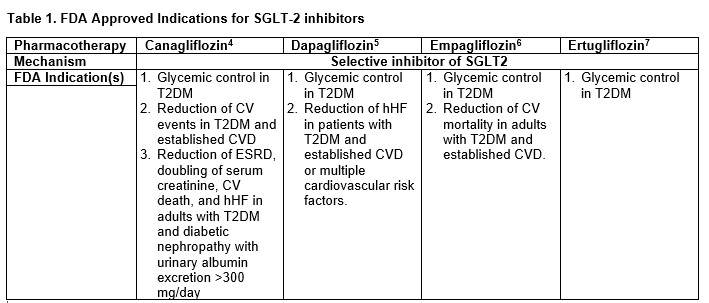
3 Understanding the differences amongst the FDA approved indications for each SGLT-2 inhibitor may be helpful when choosing one of these agents for a patient. The full indications are listed in Table 1.
4-7 Canagliflozin, dapagliflozin and empagliflozin each carry indications for CV benefit in type 2 diabetics with established CVD. Canagliflozin is the only agent approved to reduce ESRD in patients with diabetic nephropathy. Dapagliflozin is indicated for reduction of hospitalizations for heart failure (hHF) in T2DM and established CVD or multiple risk factors.
Due to the substantial evidence of cardiovascular benefit, SGLT-2 inhibitors are being studied in non-diabetics. DAPA-HF, a large randomized controlled trial in patients with reduced ejection fraction heart failure, found that dapagliflozin lowered the risk of worsening heart failure or death from CV causes compared to placebo regardless of presence or absence of diabetes.
8 Additional trials are underway. EMPEROR-Reduced
9 and EMPEROR-Preserved
10 are evaluating empagliflozin in non-diabetics with heart failure with reduced ejection fraction (HFrEF) and preserved ejection fraction (HFpEF), respectively. In October 2019, the FDA granted fast track designation to review the indications for both dapagliflozin and empagliflozin to reduce CV death or worsening heart failure in adults with HFrEF and HFpEF. These indications are still being reviewed by the FDA and a decision is expected in 2020. Interestingly, Dr. Dominique Monteleone, pharmacist from Metrohealth, recently presented a
comprehensive review of SGLT-2 inhibitors in heart failure which can be found via this link. SGLT-2 inhibitors play a dynamic role in diabetes management. Understanding the various FDA indications and how they may benefit individual patients is an important consideration.
|
|
References
1) Scheen A. Diabetes Res Clin Pract. 2018;43: 88-100.
2) Uthman L, at al. Diabetologia. 2018;61:772-726.
3) Zelniker T, et al. J Am Col Cardiol. 2020;75:422-34.
4) Invokana [package insert]. Titusville, NJ: Janssen Pharmaceuticals, Inc; 2013.
5) Farxiga [package insert]. Princeton, NJ: Bristol-Myers Squibb Company; 2014.
6) Jardiance [package insert]. Ridgeville, CT: Boehringer Ingelheim Pharmaceuticals, Inc; 2014.
7) Steglatro [package insert]. Whitehouse Station, NJ: Merck and Co., Inc; 2017.
8) McMurray J, e al. N Engl J Med. 2019;doi: 10.1056/NEJMoa1911303
9) Packer M, et al. Eur J Heart Fail. 2019: doi: 10.1002/ehjf.1536
10) Anker SD, et al. Eur J Heart Fail. 2019; doi: 10.1002/ehjf.1596
|
|
The Ohio-ACC is committed to promoting the clinical and academic growth of its members across the state and facilitating interaction between members and their hospital systems and practices. To that end, we have set up a
Grand Rounds Hub on
https://www.ohioacc.org. If you have a lecture that you would be willing to give for grand rounds or other meetings to audiences across Ohio, then we welcome you to be a part of our Grand Rounds Hub.
Please respond via this link.
|
|
|
|
|
|
|