NEW Afterschool STEM Quarterly Research Review


The Fall 2025 issue of the Afterschool STEM Quarterly Research Review (ASQRR) is now available! This edition focuses on how afterschool programs are promoting artificial intelligence (AI) literacy. The article reviewed demonstrates how afterschool STEM programs are uniquely situated to provide opportunities for youth to explore and engage with emerging technologies such as AI.


Read the research review here.


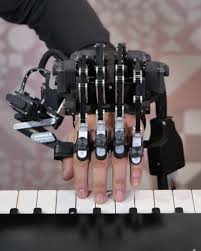
Did you ever try to play a musical instrument and get frustrated because you couldn’t move your fingers fast enough?


One researcher who used to play piano decided to try using a robotic hand to help musicians play faster. First he had the musicians try playing a complicated piece of music. Then he attached a wearable robotic machine, or exoskeleton, onto the hands of some of the piano players. The machines moved their fingers faster than normal finger movement. When the musicians tried playing the music again after wearing the robotic hand, they were able to move their fingers faster! Doctors have used robotic exoskeletons like this to help patients improve movement after injuries. What other ways could something like this be used? Who could be helped by robotics like this?


Learn more: bit.ly/47yuQsw


WHAT IS A BLACK HOLE?


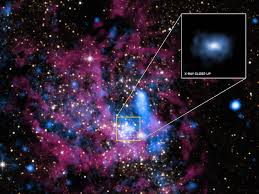
A black hole is a region in space where the pulling force of gravity is so strong that light is not able to escape. The strong gravity occurs because matter has been pressed into a tiny space. This compression can take place at the end of a star’s life. Some black holes are a result of dying stars.


Because no light can escape, black holes are invisible. However, space telescopes with special instruments can help find black holes. They can observe the behavior of material and stars that are very close to black holes.


Read more about black holes


ACTIVITIES

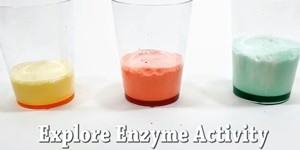
Exploring Enzymes

Have you ever wondered how all the food that you eat gets digested? It is not only the acid in your stomach that breaks down your food—many little molecules in your body, called enzymes, help with that too. Enzymes are special types of proteins that speed up chemical reactions, such as the digestion of food in your stomach. In fact, there are thousands of different enzymes in your body that work around-the-clock to keep you healthy and active. In this science activity you will investigate… 

Read more

How Do We Breathe?

We breathe a lot—roughly 12 to 16 times a minute for adults and even more for children! Have you ever wondered how the process of breathing works so smoothly? Our lungs allow us to inhale the oxygen our body needs, but they do much, much more. They also allow us to get rid of carbon dioxide, the waste product created in the body, and they play a vital role in singing, shouting and even giggling. In this activity you will make a model of a lung and use it to discover how air flows in…

 Read more


Facebook  Twitter  Linkedin  Instagram  

website | email | 602.734.5434