News from the Indiana Chapter of the American College of Cardiology | | Indiana-ACC Newsletter, December 2025 | | |
Dear Indiana-ACC Colleague,
Annual Meeting Showcases Excellence in Cardiovascular Care
Our annual meeting, held on September 13, 2025, at the Marriott Indianapolis North, brought together 130 colleagues and 29 exhibiting companies for an exceptional day of collaboration, learning, and innovation. The event delivered on its promise of wonderful networking opportunities and top-notch cardiovascular science.
The day kicked off with the 2025 Indiana-ACC Career Achievement Award presentation to Raymond Dusman, MD, MBA, FACC. The meeting's robust agenda addressed the most pressing topics in cardiovascular medicine: ACC Insights for 2025, GLP-1RAs in Cardiology, Atrial Fibrillation Management, Heart Failure Mechanical Therapies, Pulmonary Hypertension, and CTO Interventions.
A highlight of the gathering was the poster session, featuring impressive research from 11 residents alongside contributions from 2 CV team members. This showcase of emerging talent and expertise generated meaningful discussions throughout the day. The success of this year's meeting reflects the dedication of our community to advancing cardiovascular care and supporting the next generation of practitioners.
Mark your calendar for our 2026 meeting: Saturday, September 26, 2026, at the Marriott Indianapolis North.
| | |
Indiana-ACC Legislative Day: You're Invited
Indiana Chapter-ACC Legislative Day
Monday, January 26, 2026 | 10:00 a.m. – 2:00 p.m.
Indiana Statehouse | Indianapolis, IN
You are cordially invited to join the Indiana-ACC for a special legislative day in Indianapolis to speak with Indiana legislators in a strong, unified voice about the importance of fighting heart disease. We will join Tobacco-Free Indiana at the Statehouse for a program in the morning and will then meet with your legislators. The ACC legislative team will provide us with the bills/topics we will advocate for, and no prior experience is necessary.
| | |
ACC Legislative Conference in Washington, DC
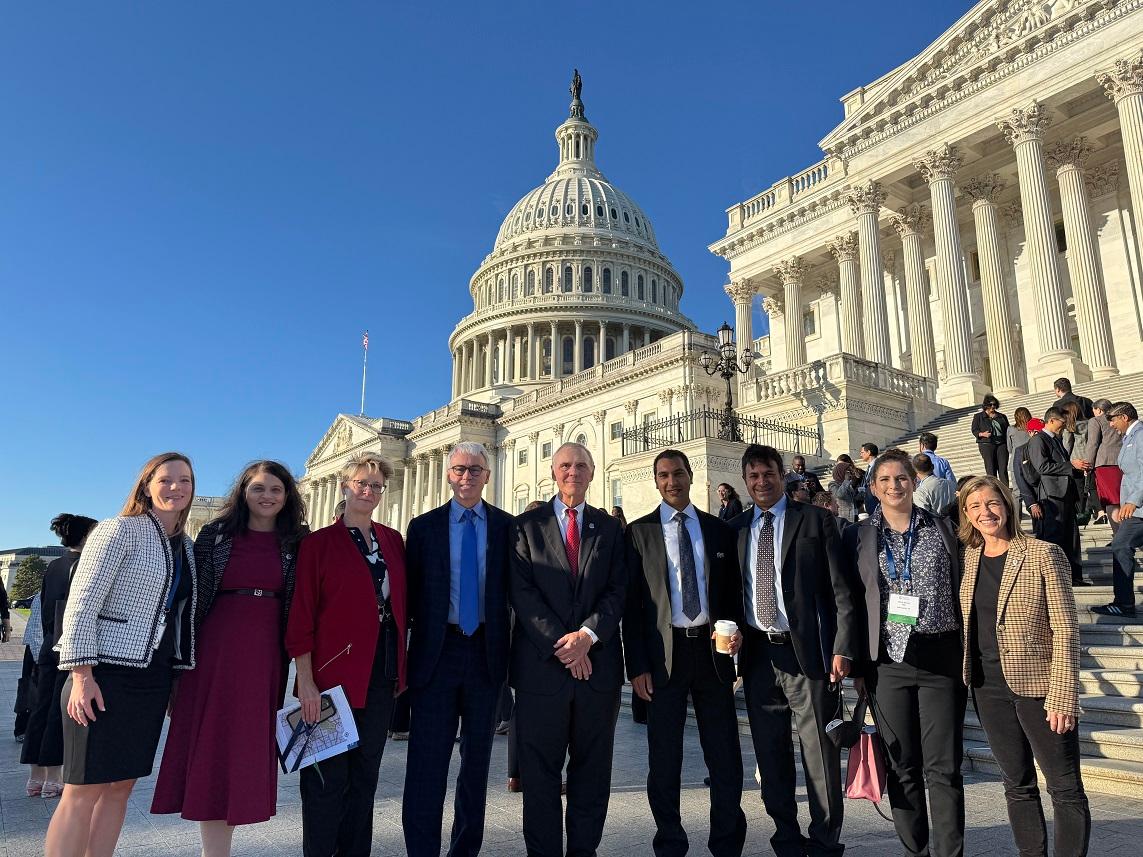
We had a great showing at the annual ACC Legislative Conference with more than 425 ACC members from across the country. Our advocacy priorities included:
1. Enact a sustainable and long-term solution to Medicare reimbursement
2. Provide financial relief for residents by seeking deferment of loan interest during medical residency training (REDI Act, HR 2028/S942)
3. Improve access to cardiovascular maternal monitoring tools (MOM Act HR 4977/S141)
4. Streamline prior authorization with the Improving Seniors Timely Access to Care Act (HR 3514/S1816)
5. Reinstate and maintain critical telehealth flexibilities (CONNECT HR 4206/S1261)
6. Seek Medicare coverage for home-based cardiac rehabilitation (HR 783/S248)
Best Practices Series
Have you checked out our latest Best Practices Series?
TEE vs. CT in the Evaluation of the Left Atrium
In conversation with Ryan Daly, MD, FACC; Bruno Lima, MD, PhD, FACC; and Parin Patel, MD, FACC
Pharmacist-Led Heart Failure GDMT Clinic
In conversation with Josh Rajkumar, PharmD, BCPS and Vijay Rao, MD, PhD, FACC
Same-Day Discharge in EP Procedures
In conversation with Chandrashekar Kumbar, MD, FACC and Parin Patel, MD, FACC
| | |
Contact Us
If Gwen Goldfarb, our chapter executive, or I can be of assistance to you, please let us know.
Sincerely,
Parin
| | Congratulations to New Board Members | | |
Congratulations to the Winners of the 2025-2027 Council Election!
Northern District
- Issa Kutkut, MD, FACP, FACC, FSCAI, Lutheran Hospital of Indiana
Central District
- Sashi Adigopula, MD, FACC, FHFSA, Community Health Network (2nd term)
- Michael D. Barron, MD, FACC, Franciscan Health Indianapolis (2nd term)
- Kyle A. Frick, MD, FACC, FSCAI, Indiana University Health, Methodist Hospital (2nd term)
- Onyedika Ilonze, MD, FACC, Indiana University
- Kathleen L. Morris, DO, FACC, Ascension St. Vincent (2nd term)
- Roopa Rao, MD, FACC, Indiana University (2nd term)
- Ashwin Ravichandran, MD, MPH, FACC, Ascension St. Vincent
- Keyur Vora, MD, FACC, Indiana University
Southern District
- Kunal Jha, MD, Baptist Health Floyd
- Chandrashekar Kumbar, MD, FACC, Deaconess Health System (2nd term)
Secretary-Treasurer
Deepak Bhakta, MD, MBA, FACC, Indiana University Health Physicians
*Special thanks to those members who rotated off the council:*
Secretary/Treasurer: Abhishek Khemka, MD, MBA, FACC
Northern District: Ankur Kalra, MD, FACP, FACC, FSCAI; James P. MacKrell, MD, FACC
Central District: Julie Clary, MD, MBA, FACC; Ryan P. Daly, MD, FACC, FASE, FSCCT, FSCMR; Amit C. Patel, MD
Southern District: Rana Zouveenoor Tariq, MD
| | Fellows in Training Networking Dinner | | |
Indiana-ACC Fellows in Training Networking Dinner
6:30-8:15 p.m. | Thursday, February 19, 2026
Ambrosia, 5903 N College Ave, Indianapolis, IN 46220
Join your colleagues to learn about
The Scientific Review of Finerenone in Heart Failure
led by
Michael Kloos, Lead Medical Science Liaison, Bayer
Register Today!
Don't miss this opportunity to network and learn with your colleagues!
Thank you to Bayer for their support.
| | Pharmacy Corner: Improving Obesity Medication Access for Indiana's CV Patients Joshua Rajkumar, PharmD, BCPS | | |
Obesity is a major risk factor for cardiovascular disease with obesity related cardiovascular death (CVD) significantly increasing in the past 20 years. Glucagon-like peptide 1 receptor agonists (GLP1-RAs) have been used to treat patients with obesity and type 2 diabetes mellitus (T2DM) with impacts on reduction of major adverse cardiovascular events (MACE). Recent literature has demonstrated their utility in treating patients with obesity and CVD, obstructive sleep apnea (OSA), and heart failure with preserver ejection fraction (HFpEF), regardless of T2DM status. Despite the overwhelming positive evidence of these therapies, navigating insurance approval remains a significant barrier for patients and providers alike.
The goal of this article is to streamline access to GLP-1-RAs and reduce the administrative burden by outlining key steps, appropriate supporting documentation, common misconceptions, and tips for appealing denials.
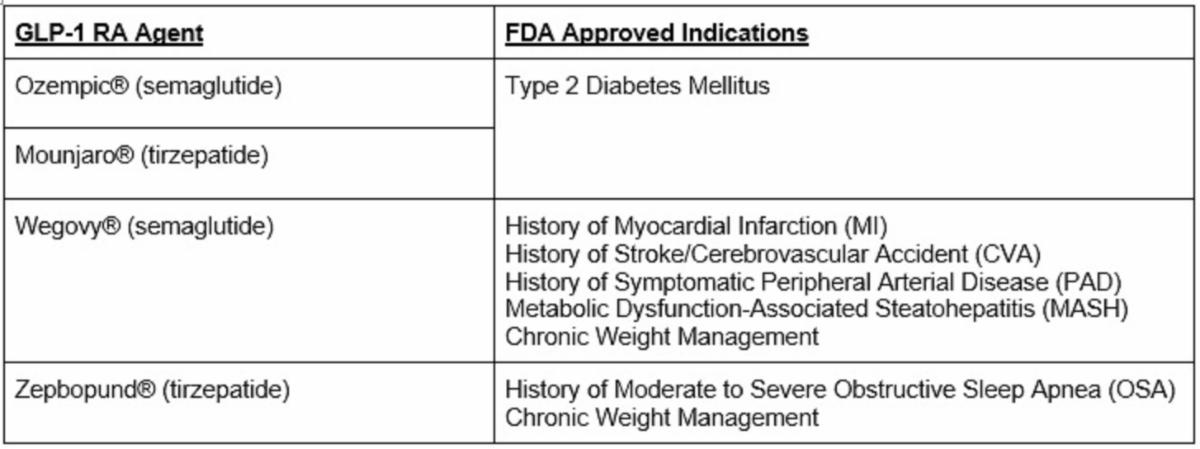
Associating the Primary Diagnosis: The majority of insurance plans will need the primary diagnosis to align with the Federal Drug Administration (FDA) approved indication for the product – regardless of the comorbidities that may be targeted in cardiology.
| | |
While there has been evidence for semaglutide and tirzepatide in HFpEF, the FDA considers these as off-label indications at the time of this writing. Even when targeting HFpEF, weight-related cardiometabolic risk, or reduction in CV events, plans still anchor approval to the drug’s labeled indication, not the clinical intent. Linking the drug with the appropriate FDA approved indication sets up authorization for success.
Appropriate Documentation: Including supporting evidence for the FDA approved indication will increase the likelihood of an insurance approval. When submitting for indication of T2DM, include in your note most recent hemoglobin A1c, recent T2DM medications trialed, and/or home glucose readings. If using history of established CVD, ensure that your note has the history of MI, stroke, or PAD clearly listed in the past medical history section. If pursuing under an OSA diagnosis, include sleep study results and continuous positive airway pressure (CPAP) usage history. Attaching this to the prior authorization reduces the back-and-forth with insurance to streamline the process.
Appealing Denials: Following the above two steps will increase the chance of approval, but denials are still common with these medications. Currently, Medicare plans reject GLP-1RAs outright for weight management indications, and HFpEF is not recognized as an FDA approved indication. In formatting your appeal, make sure to draw attention to the primary FDA-approved indication and supporting laboratory/testing data that was included. If attempting for a HFpEF or weight management indication, be sure to include weight data, trial of calorie-restricted diet and increased exercise activity levels, and the supporting landmark trials demonstrating key benefits in the disease pathway. Most guidelines are beginning to adopt the use of GLP-1RAs in their recommendations, which is also useful to include in the denial. Highlighting the key benefits and providing documentation will improve the success of an appeal.
Cash Pay Options: If the insurance will not approve the therapy or if the approved price is too high for the patient, there are cash pay options through the manufacturer that can offer affordable options. This strategy is useful in waiting for a patient to obtain a supplement plan, switch to a plan that offers coverage for the therapy, or wait for expanding coverage as more robust evidence comes out.
GLP-1RAs are becoming fundamental in the care of patients with CVD and cardiometabolic risk factors. Obtaining sustainable medication access is a challenge, and by aligning documentation with payer expectations and using a consistent workflow, we can greatly improve approval rates and improve patient satisfaction. Please reach out should you have further questions, or coordinate with your local pharmacist on best practices for your organization.
| |
Tobacco-Free Insights
Angela Raymer, MBA, CV Team State Representative
| | |
Part of my focus on prevention and early detection of heart disease has been to expand my professional network by engaging with groups focused on smoking cessation and tobacco-free policy.
As a Program Coordinator, it is common for me to blur the lines between organizations and build better bridges that lead to more collaborative outcomes. I have become an active participant with Tobacco-Free Allen County and am now a member of the Tobacco-Free Indiana Grassroots committee.
I was first introduced to Tobacco-Free Indiana through my participation with the Indiana-ACC Legislative Days. We echo each other’s mission to persuade young people to avoid picking up smoking/vaping habits, and to help current smokers to quit. I was invited to join the coalition in attending the National Conference on Tobacco or Health in August. It was there that I really began to expand my understanding of the complexity of the commercial tobacco industry and the hurdles of cessation efforts.
Like much of what we focus on in heart disease prevention, smoking is directly connected to socioeconomic determinants of health. Unfortunately, the marketing of these products takes full advantage of underserved communities and the underdeveloped minds of youth across all classes.
“Stress” is the overwhelming reason given when asked why one smokes, even when talking with minors. The sources of stress vary from financial struggles and relationship problems to health concerns and family dynamics. This unhealthy coping mechanism is misguided as the stress and anxiety experienced by the smoker can likely be attributed to or amplified by nicotine withdrawal.
The African American community is without a doubt the largest consumer of menthol cigarettes. The commercial tobacco industry continues to target marketing campaigns of their menthol-flavored product within areas with a high concentration of African American residents. What makes this so disturbing is that successful work to prevent the sales of flavored tobacco products has excluded menthol as a flavor.
The second disturbing discovery is the unethical ways vape makers are targeting children. Not only do they offer many tantalizing sweet, candy-like flavors, but the vape dispensers can even have enticing electronic games worked into the packaging. Some even incorporate awarding points per puff, thus encouraging even greater consumption of nicotine and ensuring a deeper dependence on their products.
Another topic that has inspired deeper thought is the relationship different cultures have with tobacco. Some Native American tribes have a deeply sacred connection with tobacco where there is much ritual around the plant. Smoking is more ceremonial than habitual. This brings an understanding of the importance of not demonizing the tobacco plant, but rather the commercial tobacco industry that preys on the public to consume more and more of their harmful, addictive product by normalizing routine and habitual abuse.
It would be interesting to learn how cultures specific to Fort Wayne consume tobacco products. I wonder what products the Burmese community uses, and in what settings?
My overall takeaway is that there is still much work to be done to address the number one controllable risk factor that contributes to the deadliest and most expensive diseases to treat. I look forward to being part of that work.
| | The Indiana-ACC is delighted to bring you a series of brief, accessible & impactful videos to provide you with knowledge beyond traditional clinical content. Take a look at the two videos below, and let us know what you think. | |
World’s First Clinical Classification of Heart Attacks Based on Tissue Damage
Resources:
| | |
How to Thrive in Community Practice
| | | |
Renew Your ACC Membership For 2026
Transform the future of cardiology – and your career – by renewing your ACC membership for 2026. With your renewal, you’ll enjoy access to the full suite of JACC Journals, exclusive discounts for ACC.26, collaboration through DocMatter, as well as the power of ACC’s global network and the many tools and resources that help you improve patient care. Renewals are due by Wednesday, Dec. 10. Renew your membership now.
New ACC Concise Clinical Guidance Addresses Evaluation and Management of ATTR-CM
A new ACC Concise Clinical Guidance report on “Transthyretin Cardiac Amyloidosis Evaluation and Management” provides updated strategies and best practices for clinicians, taking into account expanding disease-modifying therapies, heart failure therapies and potential future opportunities. The document summarizes challenges associated with the diagnosis, evaluation and management of transthyretin amyloid cardiomyopathy (ATTR-CM), includes an algorithm for cardiac amyloidosis and more. Read more.
New ACC Scientific Statement Details Role of Inflammation in CVD
A new ACC Scientific Statement on Inflammation and Cardiovascular Disease highlights new groundbreaking research linking inflammation atherosclerotic cardiovascular disease and provides consensus-based recommendations for evaluation, treatment and prevention reflecting this new era. Read more.
ACC Releases Expert Consensus Decision Pathway on TR Evaluation and Management
The ACC has released a new Expert Consensus Decision Pathway addressing "10 issues for the clinician in tricuspid regurgitation (TR) evaluation and management." Published in JACC, the document focuses specifically on patients with secondary TR in the chronic setting and is intended to serve as a bridge to a future update of the ACC/AHA Valvular Heart Disease Guideline. Read more.
New ACC Pocket Guide on Adult Immunization in CV Care
Clinicians’ strong recommendations for vaccination is one of the most powerful drivers of vaccine uptake and, in turn, can also help reduce serious cardiovascular complications. The ACC has recently developed a concise, point-of-care tool outlining recommended vaccines and key considerations for patients with cardiovascular disease, distilling and supporting recommendations set forth in the recent ACC Concise Clinical Guidance document. Download the new free pocket guide today and pair it with NCD Academy’s infographic on vaccine-preventable diseases to support meaningful conversations about the importance of adult immunization.
Cardiology Magazine: Exploring AI in CV Care, New ACC/AHA BP Guideline, More
Artificial intelligence (AI) is now commonplace and the latest issue of Cardiology magazine delves into its transformative role in cardiovascular care. The cover story explores how clinicians can harness AI as a powerful ally – using clinical expertise to guide emerging tools, generate actionable insights, and improve both patient outcomes and clinician well-being. Also in this issue, hear from Megan Coylewright, MD, MPH, FACC, about her time as CardioSmart editor and the growing impact of the platform on supporting shared decision-making; get up to speed on the ACC/AHA high blood pressure guideline; and more. Read the full issue.
CardioSmart is the ACC’s dedicated home for patient tools and resources, including infographics, shared decision-making aids, and more. Find information on specific clinical conditions, health lifestyle choices and more at CardioSmart.org.
| | | | |