End of Session Review
Large Strategies
Health Care
Capitol Update
Bills passed by the Florida Legislature and before the Governor for his consideration.
|
|
WHAT PASSED *numeric order
|
|
The bill provides that it is a third degree felony to knowingly and willfully make a materially false or misleading statement or to knowingly and willfully disseminate false or misleading information relating to the characteristics, authenticity, effectiveness, or availability of personal protective equipment in any marketing or advertising material; on a website, social media platform, or other media; or by telephone, text message, mail, or e-mail, with the intent to obtain or receive any money or other valuable consideration.
The bill also provides that it is a third degree felony to knowingly and willfully make a materially false or misleading statement or to knowingly and willfully disseminate false or misleading information regarding the availability of, or access to, a vaccine for the novel coronavirus “COVID-19” or a vaccine for any other pandemic disease in any marketing or advertising material; on a website, social media platform, or other media; or by telephone, text message, mail, or e-mail, with the intent to obtain another person’s personal identification information, or to obtain or receive any money or other valuable consideration.
A second or subsequent violation of the previously-described offenses is a second degree felony. Prosecution for either offense may be brought on behalf of the state by any state attorney or by the statewide prosecutor. Further, if the Attorney General reasonably believes that a person has committed either offense, the Attorney General may institute a civil action for a violation or to prevent a violation. An action for relief may include a permanent or temporary injunction, a restraining order, or any other appropriate order.
The bill also amends the offense severity level ranking chart of the Criminal Punishment Code to rank the new offenses.
|
|
The bill modifies three aspects of podiatric medicine.
The bill amends s. 461.007, F.S., to require that a minimum of two continuing education (CE) hours related to the safe and effective prescribing of controlled substances must be added to the CE hours that the Board of Podiatric Medicine may require as a condition of podiatric physician licensure renewal.
The bill creates s. 461.0155, F.S., to specify that podiatric physicians, when supervising medical assistants, are governed by s. 458.3485, F.S.
Finally, the bill amends s. 624.27, F.S., to add podiatric physicians to the list of health care providers who are authorized to enter into direct health care agreements with patients for the provision of health care services, without such agreements being considered insurance.
|
|
SB 54 retains a $5k physician set-aside within the medical payments (Med Pay) similar to what is in PIP now, assuring payment for care provided within the first 30 days to an auto-injury patient for inpatient care provided by a physician or for hospital emergency care provided by a physician. Med Pay is required to be offered at both $5k & $10K, and if an insured driver does not opt out in writing, they will be purchasing coverage at the $10K Med Pay level. Med Pay is an “opt-out” coverage, meaning that the policy will be presumed to have $10,000 in MedPay without a deductible unless the insured declines coverage, selects an alternative coverage limit, or selects a deductible. A driver will also be required to purchase mandatory bodily injury coverage.
SB 54 in summary:
- Repealing the Florida Motor Vehicle No-Fault Law, and thus repealing the requirement to purchase personal injury protection (PIP) insurance.
- Requiring owners and operators of motor vehicles that must be registered in Florida to maintain financial responsibility of at least $25,000 for bodily injury or death of one person, and subject to such limit, $50,000 for bodily injury or death of two or more persons. ($25,000/$50,000 BI requirement)
- Establishing a $10,000 setoff on noneconomic damages recovered by an uninsured driver (does not apply in wrongful death actions).
- Allowing a claimant to recover attorney fees and costs if an insurer does not timely provide the liability disclosure required by s. 627.4137, F.S.
The legislation also governs actions for bad faith failure to settle third-party claims, including the establishment of claim handling best practices for insurers. The amendment adds a statement that the statute governing these bad faith actions is not intended to expand or diminish any cause of action currently available against insurance agents who sell motor vehicle liability insurance policies in this state.
|
|
HB 157 requires school districts to provide basic training in first aid, including one hour of cardiopulmonary resuscitation (CPR) instruction, for public school students in grades 9 and 11. Basic CPR instruction for students is currently encouraged but not required by state law. The bill provides that the CPR training must be based on a nationally recognized program that uses the most current evidence-based emergency cardiovascular care guidelines. The instruction must allow students to practice the psychomotor skills associated with performing CPR. If a school district has the necessary equipment, students must also be provided instruction in the use of an automated external defibrillator. The bill encourages school districts to provide basic first aid training, including CPR instruction, to students in grades 6 and 8.
|
|
In Florida, minority populations experience higher rates of illness and death from health conditions such as heart disease, stroke, specific cancers, diabetes, HIV/AIDS, mental health, asthma, and obesity. The Office of Minority Health and Health Equity (Office), housed within the Department of Health (DOH), is responsible for helping to improve health and healthcare outcomes for racial and ethnic minority communities by developing or advancing policies, programs, and practices that address health, social, economic, environmental, and other factors which impact health. Under current law, the Office must be headed by a Senior Health Equity Officer, who must administer the Closing the Gap grant program in a manner that maximizes the impact of the grants in achieving health equity.
HB 183 requires the Office to develop and promote the statewide implementation of policies, programs, and practices that increase health equity for racial and ethnic minority populations in Florida. The bill requires the Office to work with other state agencies, organizations, and providers to improve the health of racial and ethnic minority populations through data analysis and the development of health policies and programs that will help eliminate health disparities. The bill requires one representative from each county health department to serve as a minority health liaison and requires minority health liaisons to assist the Office in the implementation of the bill. The bill also authorizes the Office to serve as a liaison to and assist the federal Offices of Minority Health and Regional Health Operations, as appropriate.
|
|
HB 241 creates Chapter 1014, Florida Statutes, as the “Parents’ Bill of Rights.” Chapter 1014, F.S., enumerates parental rights with respect to his or her minor child for education, health care, and criminal justice procedures. The bill prohibits the state, its political subdivision, any other governmental entity or any other institution from infringing upon the fundamental right of a parent to direct the upbringing, education, health care, and mental health of his or her minor child.
The bill requires state action that infringes upon this fundamental right to be reviewed with strict scrutiny. For education-related parental rights, the Florida K-20 Education Code currently includes s. 1002.20, F.S., relating to K-12 Student and Parents Rights. This section enumerates 24 rights of students and parents, most of which are duplicated in the bill. The bill requires school districts to adopt policies that govern the plans and procedures by which each school district must promote parental involvement. School districts must also adopt notification procedures for specific parental rights. The bill establishes parental consent requirements for, among other things, the collection of certain identifying information for a minor child. The bill requires parental notification when a state actor suspects a child is the victim of a criminal offense but provides exceptions including when a suspected offense has been reported to law enforcement or the Department of Children and Families.
The bill further requires a parent’s permission before a health care practitioner may provide services, prescribe medicine to the child, or perform a medical procedure, unless otherwise provided by law. The bill provides a misdemeanor penalty for a health care practitioner or similar person who violates the health care provisions and subjects these persons to disciplinary actions.
The Senate bill contained an exemption for acute care or care provided by a volunteer team physician, but the Senator sponsor took up the House bill, thus excluding the exemption. Current law does include an exemption from written consent for emergency care in a hospital emergency department or provided by EMS.
|
|
SB 262: Currently, an authorized prescriber may dispense up to a 24-hour supply of a medicinal drug to an emergency department patient of a hospital that holds an appropriate institutional pharmacy permit, provided that the treating physician determines that the medicinal drug is needed and that community pharmacy services are not readily accessible to the patient. If the patient needs more than a 24-hour supply of a drug, the prescriber must provide the patient with a prescription for use after the initial 24-hour period.
SB 262 extends patient eligibility to include a patient discharged from a hospital (inpatient). The bill also authorizes a hospital pharmacy to dispense the greater of a 48- hour supply of a medicinal drug or a supply of a medicinal drug that is sufficient to last a patient until the end of next business day. The bill also authorizes a hospital pharmacy to dispense up to a 72-hour supply of a medicinal drug if the patient is located in an area in which a state of emergency is declared. The bill corrects current statutory language to reflect that it is the hospital pharmacy that dispenses the medicinal drug, rather than the prescriber.
|
|
SB 272 creates section 381.99, Florida Statutes, to establish the Rare Disease Advisory Council (Council) adjunct to the Department of Health (DOH). The Council is tasked with providing recommendations to improve the health outcomes of Floridians who have a rare disease, defined as a disease that affects fewer than 200,000 people in the United States. The bill establishes the membership of the Council, and requires that the Council first meet by October 1, 2021, and provide its recommendations to the Governor and the State Surgeon General by July 1 of each year beginning in 2022. The Council must:
- Consult with experts on rare diseases and solicit public comment to assist in developing recommendations on improving the treatment of rare diseases in this state.
- Develop recommended strategies for academic research institutions in this state to facilitate continued research on rare diseases.
- Develop recommended strategies for health care providers to be informed on how to more efficiently recognize and diagnose rare diseases in order to effectively treat patients.
- Provide written input and feedback to the DOH, the Medicaid program, and other state agencies on specified matters.
|
|
SB 388 authorizes an emergency service transport vehicle permit holder to transport a police canine injured in the line of duty to a veterinary clinic or similar facility if no person requires medical attention or transport when the canine needs it. The bill authorizes emergency medical technicians (EMTs) and paramedics to provide emergency medical care to an injured police canine at the scene of an emergency or while the canine is being transported. The bill provides civil and criminal immunity for EMTs and paramedics providing emergency care to an injured police canine and exempts them from the application of the veterinary practice act for providing medical care to a police canine injured in the line of duty.
|
|
HB 431 no longer grants independent practice to PAs, but instead increases the number of PAs a physician can supervise (1:10).
The bill allows a PA to do the following:
- Prescribe psychiatric mental health controlled substances to minors under certain circumstances;
- Procure certain medical equipment and devices;
- Supervise medical assistants; and
- Sign and certify documents that currently require a physician’s signatures including, but not limited to, Baker Act commitments, do-not-resuscitate orders, school physicals, and death certificates. The bill specifies that a PA may not sign for medical marijuana certifications under s. 381.986, F.S., or workers compensation medical examinations required to determine maximum medical improvement under s. 440.02, F.S., and an impairment rating under s. 440.15, F.S.
Current law requires that an applicant for a PA license must provide a certificate of completion of a board approved PA program. The bill establishes new educational requirements for PA licensure, based on an applicant’s year of graduation from an approved PA program.
The bill also authorizes physician assistants to directly bill for and receive payments from public and private insurance companies for the services they deliver.
Current law limits the number of physician assistants a physician can supervise to four. The bill expands the number of PAs that a physician can supervise to 10.
|
|
HB 519 revises the required comprehensive health education curriculum for K-12 public schools to include instruction on the prevention of child sexual abuse, exploitation, and human trafficking. The bill clarifies that the comprehensive health curriculum must be age and developmentally appropriate. The bill limits the existing requirement to provide instruction to all students on abstinence and the consequences of teen pregnancy so that it is only provided to students in grades 6 through 12.
|
|
SB 530 amends s. 456.44, F.S., to allow a specific educational pamphlet, which must be provided to health care patients or their representatives under certain circumstances, to be provided electronically or in printed form, instead of only in printed form as required under current law. The pamphlet contains information on the use of nonopioid alternatives for the treatment of pain and must be provided when a patient will receive anesthesia or will be prescribed certain opioid medications.
|
|
HB 545 amends ss. 1002.20 and 1003.42, F.S., to provide that each school district must notify parents of the right to make a written request to exempt his or her child from the teaching of reproductive health or any disease, including HIV/AIDS. This notification must be through publication on the district’s website homepage and include the process for a parent to exercise this right. The notification must also include a link for a student’s parent to access and review the instructional materials, as defined in s. 1006.29(2), F.S., used to teach the curriculum.
The bill amends s. 1003.42, F.S., to provide that all instructional materials, as defined in s. 1006.29(2), F.S., used to teach reproductive health or any disease, including HIV/AIDS, its symptoms, development, and treatment, as a part of a required course must be annually approved by a district school board in an open, noticed public meeting.
The bill amends s. 1006.40, F.S., to provide that each district school board is responsible for the content of instructional materials used to teach reproductive health or any disease, including HIV/AIDS, under ss. 1003.42(3) and 1003.46, F.S. Each district school board must adopt rules and each district school superintendent must implement procedures that provide a process for public review, public comment on, and the adoption of such materials.
|
|
HB 673 creates “Gail’s Law” to require FDLE, subject to an appropriation and no later than July 1, 2023, to create and maintain a statewide database tracking the location, processing status, and storage of each Sexual Assault Kits (SAK or rape kits) collected after the database is implemented.
The database must be accessible by law enforcement, alleged victims, and alleged victims’ parents, guardians, or other representatives. The database must track the status of a SAK from its collection throughout the criminal justice process all the way through the kit’s destruction. The bill requires FDLE to adopt rules and specified entities to participate in the database in accordance with those rules. The bill also requires FDLE to ensure that every victim or victim’s representative is notified that the database exists and is provided with instructions on how to use it. Under the bill, a victim must be notified when the analysis of his or her SAK results in a DNA match, but such notification must not release any identifying information of the match. Such notification may only be delayed up to 180 days if notifying the required persons would negatively affect an investigation. The bill authorizes FDLE to phase in participation according to region, volume of kits, and other criteria, but requires all entities in the chain of custody to fully participate in the statewide database no later than one year after it is created. The bill also requires FDLE to apply for any available grant funds to assist in implementing the database.
|
|
The bill requires the Department of Financial Services (DFS) to submit a report, by January 31, 2022, to the Legislature and the Governor regarding complaints received from insureds and subscribers about the adequacy of coverage and access to mental health services through their individual or group health insurance policies or health maintenance organization (HMO) contracts.
Further, the bill requires insurers and HMOs to provide insureds and subscribers a direct notice regarding the federal and state coverage requirements for mental health services, as well as contact information for the Division of Consumer Services within the DFS. Insurers and HMOs are also required to make this information available on their website.
|
|
SB 714 directs the Agency for Persons with Disabilities (the APD) to provide individuals applying for Medicaid Home and Community-Based Services (HCBS) Waiver services, regardless of eligibility for such services, with the following information:
- A brief overview of vocational rehabilitation services offered through the Florida Division of Vocational Rehabilitation;
- A brief overview of the Florida ABLE program;
- A brief overview of supplemental social security and social security disability benefits;
- A statement indicating that an applicant’s local public school district may provide specialized instructional services, including transition programs, for students with special education needs;
- A brief overview of programs and services funded through the Center for Students with Unique Abilities, including contact information for each state approved Florida Postsecondary Comprehensive Transition Program
- A brief overview of decision-making options for persons with developmental disabilities, guardianship programs, and alternatives to guardianship;
- A brief overview of referral tools made available through the APD; and
- A statement indicating that some waiver providers may serve private pay individuals.
|
|
SB 716:
- Amends, narrows, and simplifies the definition of “pelvic examination”;
- Amends current law requiring written consent for all pelvic examinations performed by health care practitioners and trainees to require written consent for anesthetized or unconscious patients and to require verbal consent from any conscious patient, with exceptions;
- Modifies the current exception allowing an examination to avert a serious risk of bodily impairment to simply refer to the statute on emergency services and care;
- Adds three new exceptions, thereby allowing an examination without consent, related to emergency medical conditions, a child protective investigation, and certain criminal offenses against a child; and
- Provides that a single written consent for a pelvic examination may authorize multiple health care practitioners or students to perform a pelvic examination on a pregnant woman having contractions.
|
|
SB 768 authorizes pharmacists and pharmacy interns who are certified by the Board of Pharmacy (BOP) to have completed specified educational and other requirements, to administer to adults any immunization or vaccine that is:
- Listed in the federal Centers for Disease Control and Prevention’s (CDC) Adult Immunization Schedule as of April 30, 2021;
- Recommended by the CDC for international travel as of April 30, 2021; or
- Licensed for use in the United States, or authorized for emergency use, by the federal Food and Drug Administration (FDA) as of April 30, 2021.
The BOP may authorize additional immunizations and vaccines that may be administered to adults by certified pharmacists and pharmacy interns as they are added to the lists of approved immunizations and vaccines as denoted in the paragraph above.
Additionally, the bill authorizes pharmacists who are certified to administer vaccines and immunizations to adults to also administer influenza vaccines to children seven years of age or older.
|
|
SB 804 makes several changes to provisions governing the licensure and regulation of substance abuse treatment programs, including recovery residences. The bill also broadens the eligibility for exemption from employment disqualification for certain prior criminal offenses to specified employees of an applicant recovery residence and to applicant recovery residence administrators. The bill also makes it a third degree felony to falsify information, or to withhold material facts, on an application for licensure as a substance abuse service provider. Authorization is also given to DCF to suspend a service provider’s license for failing to pay, within 60 days of a date set by DCF, administrative fines and accrued interest related to disciplinary action taken against the service provider. The bill also mandates that a service provider pay fines and accrued interest resulting from violations of patient referral prohibitions within 60 days of a date specified by DCF. If a service provider fails to remit payment within 60 days, the bill requires DCF to immediately suspend the service provider’s license.
|
|
The bill authorizes vehicles of certain not-for-profit faith-based volunteer ambulance services (“volunteer ambulance services,”) as authorized by the chief of police of an incorporated city or any sheriff of any county, to display red lights and operate emergency lights and sirens while responding to an emergency. The bill also authorizes privately owned vehicles belonging to medical staff physicians and technicians of volunteer ambulance services to use red lights on privately owned vehicles and to disregard specified traffic laws and ordinances while responding to an emergency. Under the bill any emergency medical technician, doctor, or paramedic who is using his or her personal vehicle with a red light to respond to an emergency call must have completed a 16-hour emergency vehicle operator course.
The bill provides a legislative finding that is in the public interest to foster the development of emergency medical services that address religious sensitivities and recognizes the value of augmenting existing county and municipal emergency medical services with those provided by volunteer service organizations.
Under current law, to be licensed as a basic or advanced life support service by the Department of Health, an applicant must obtain a certificate of public convenience and necessity (COPCN) from each county in which it will operate. The bill exempts certain not-for-profit faith-based volunteer first responder agencies who have been operating in this state for at least 10 years, and which provide advanced or basic life support services solely through at least 50 unpaid licensed emergency medical technician or paramedic volunteers, from COPCN requirements. To be exempt from the COPCN requirements, the volunteer ambulance service must also provide services free of charge, not receive government funding (excluding specialty license plate proceeds), provide a disclaimer on all written materials that the volunteer ambulance service is not associated with the state’s 911 system, and meet other requirements as outlined in the bill. The COPCN exemption created in the bill may be granted to no more than four counties.
The bill requires an applicant to take all reasonable efforts to enter into a memorandum of understanding with the emergency medical services licensee within whose jurisdiction the applicant will provide services in order to facilitate communications and coordinate emergency services for situations beyond the scope of the applicant's capacity and for situations of advanced life support that are deemed priority 1 or priority 2 emergencies.
The bill prohibits county and municipal governments from limiting, prohibiting, or preventing volunteer ambulance services from responding to emergencies or providing emergency medical services or transport; and from requiring volunteer ambulance services to obtain a license or certificate or pay a fee.
Under the bill, an emergency medical services provider or fire rescue services provider operated by a county, municipality, or special district is responsible for the care and transport of an unresponsive patient if a volunteer ambulance service arrives at the scene of an emergency simultaneously with such a provider and a person authorized to consent to the medical treatment of the unresponsive patient is not present.
|
|
The bill creates the “Protecting DNA Privacy Act.” The bill creates new crimes prohibiting a person from willfully, and without express consent:
- Collecting or retaining another person’s DNA sample with intent to analyze such sample, as a first degree misdemeanor.
- Submitting another person’s DNA sample for analysis or conducting or procuring the conducting of such analysis, as a third degree felony.
- Disclosing another person’s DNA analysis results to a third party, unless such results were previously voluntarily disclosed by the person whose DNA was analyzed, as a third degree felony.
- Selling or otherwise transferring another person’s DNA sample or analysis results to a third party, as a second degree felony.
Under the bill, express consent means authorization from a person or his or her legal guardian or representative, evidenced by an affirmative act demonstrating an intentional decision, after receiving a clear and prominent disclosure regarding the specified purpose for the collection, use, retention, maintenance, or disclosure of the DNA sample or analysis thereof.
The bill clarifies current law by providing that “exclusive property” means a person’s right to exercise control over his or her DNA sample or analysis with regard to the collection, use, retention, maintenance, disclosure, or destruction of such sample or analysis.
The bill defines the terms “DNA analysis” and “DNA sample” and authorizes a separate criminal penalty for each instance of unlawful collection or retention, submission or analysis, disclosure, or sale of a person’s DNA sample or analysis results.
The bill applies only to the use, retention, maintenance and disclosure of a DNA sample collected from a person in Florida after the bill is effective and does not apply to a DNA sample, analysis, or analysis results when used for specified purposes such as criminal investigation, determining paternity, complying with a court order, conducting specified research, or other healthcare purposes.
|
|
Under s. 39.201(2)(a), F.S., suspected child abuse, neglect, or abandonment by a parent, caregiver, custodian, or guardian of a child is reported to the Department of Children and Families (DCF). DCF has a central abuse hotline that is available twenty-four hours a day for reporting such abuse, neglect, or abandonment. A Child Protection Team (CPT) is responsible for receiving referrals from DCF to provide specialized support and services in processing child abuse, neglect, and abandonment cases. CPT services are funded by state general revenue and social services block grant funds through DCF.
The Florida Department of Health’s (DOH) Division of Children’s Medical Services (CMS), Bureau of Child Protection and Special Technologies staff provides oversight of the statewide CPT system. A CPT generally consists of a group of physician-directed professionals who evaluate allegations of abuse, neglect, or abandonment; assess risks; and provide recommendations for child safety and support services.
Currently, individual government employees, officers, and agents are immune from civil liability for damages caused by an action arising within the scope of employment. Such immunity from civil liability does not extend to actions made in bad faith, with malicious purpose, or in a manner exhibiting wanton and willful disregard for human rights, safety, or property. The government entity is not liable for tortious actions arising outside the scope of the employee’s employment. Case law indicates that contracted CPT physician consultants have immunity from civil liability under certain circumstances because in those situations the physician consultants are acting as agents of the state.
There are approximately 238 CPT members who are independent contractors. DOH acknowledges that any CPT members acting within the scope and direction of their contractual duties may assert a claim of sovereign immunity as a defense to an action against that CPT member. However, if the trier of fact rejects the sovereign immunity claim, DOH’s indemnification and hold harmless contract provisions would presumably apply, requiring the contractor to indemnify and defend DOH.
HB 871 expands the immunity from civil liability to include any member of a CPT, which includes independent contractors. Therefore, any member of a CPT is immune from civil liability for actions arising out of the scope of his or her employment.
|
|
HB 1057 is the Agency's package for the 2021 Session, and includes mostly clean-up to the statutes that govern the Medicaid program. Issues of note within the larger bill:
- Clarifies that AHCA must timely respond to requests for prior authorization associated with prescribed drugs under the FFS program, rather than responding to requests for “consultations”;
- Eliminates the Organ Transplant Advisory Council but keeps the Bone Marrow Transplant Advisory Committee
|
|
SB 1080 relates to the regulation of the retail sale of tobacco products and nicotine products, and is known as the T-21 legislation, implementing the federal increase to smoke or vape in Florida.
The bill:
- Increases the minimum age to lawfully purchase and possess tobacco products and nicotine products from 18 years of age to 21 years of age.
- Creates a new part of ch. 569, F.S, to regulate the sale of, and create a separate licensing structure for, the sale of “nicotine dispensing devices” and nicotine products.
- Regulates tobacco products under part I of ch. 569, F.S., which consists of the current-law provisions.
- Regulates nicotine products under part II of ch. 569, F.S., which includes the requirements in current law for the sale of nicotine products, and additional provisions for the regulation of nicotine product sales the same as currently apply to the regulation of tobacco product sales.
- Excludes tobacco products from the definition of nicotine products.
- Requires retail dealers of nicotine products to have a permit issued by the Division of Alcoholic Beverages and Tobacco, but does not require a fee for the permit. However, the holder of a retail tobacco products dealer permit may sell nicotine products without an additional permit.
- Preempts to the state the establishment of a minimum age for purchasing or possessing tobacco or nicotine products as well as regulation of the marketing, sale, or delivery of tobacco or nicotine products.
- Prohibits smoking and vaping by any person under 21 years of age on or near school property. (Current law applies the prohibition to persons under 18 years of age).
- Keeps the exemption in current law for underage persons in the military and persons acting in the scope of lawful employment.
- Requires age verification before a sale or delivery of tobacco products to person who appear to be under 30 years of age. (This complies with federal law.)
|
|
HB 1189 amends s. 943.326, F.S., to require that the Florida Department of Law Enforcement (FDLE) create and begin to maintain a statewide database, the purpose of which is to track the location, processing status, and storage of sexual assault evidence kits (SAKs). Beginning with SAKs collected after the database is implemented, they will be tracked from evidence collection throughout the criminal justice process. The database must be created no later than July 1, 2023, and is subject to appropriation by the Legislature.
Law enforcement agencies will have access to the database. In addition, the alleged victim, who has reported the crime to law enforcement, will have the ability to access the database. The victim will be able to follow his or her SAK from the collection site, to law enforcement agency storage, then to the crime laboratory for forensic testing and possible destruction after testing, or back to law enforcement agency storage. If the alleged victim is a minor, his or her parent, guardian, or legal representative will have access to the database. If the alleged victim is deceased, his or her personal representative will have access. The FDLE is required to ensure that each alleged victim or his or her representative is notified of the existence of the database and provided with instruction on how to access and utilize the database.
If there is a DNA match between the SAK evidence and a person whose DNA is stored in a local, state, or federal database and who may be a suspect or person of interest in the case, the alleged victim will be notified of the match, but not the person’s genetic or other identifying information, via the newly-created statewide database. Notification of a match may be delayed for up to 180 days if notification would, in the opinion of the investigators, negatively affect the investigation.
Law enforcement agencies, medical facilities, crime laboratories, and any other facilities in the chain of custody of the SAKs must fully participate in the statewide database no later than 1 year after its creation. The FDLE must adopt rules establishing requirements for each of the entities participating in the database.
The FDLE may phase in initial participation and access to the new statewide SAK tracking database at its discretion and in the manner it chooses. All entities in the chain of custody of SAKs must fully participate in the statewide database no later than one year after its creation. The FDLE must apply for any available grant funds to assist in implementing the database.
The bill states that the act may be cited as “Gail’s Law.”
|
|
HB 1157 addresses the issue of identity transparency by requiring a FED to post certain information in and around the facility that clearly identifies it as a FED. The bill also includes identity transparency requirements for all FED advertising. The bill requires AHCA to publish the following information on its website, which must be updated at least annually:
- A description of the differences between a FED and an urgent care center;
- At least two examples illustrating the cost differences between non-emergent care provided in a hospital emergency department setting and an urgent care center;
- An interactive tool for consumers to locate local urgent care centers; and
- Steps to take in the event of a true emergency. Hospitals must post a link to the information provided by AHCA on a prominent location on their websites.
The bill requires a health insurer to post on its website a link to the information provided by AHCA and a comparison of statewide average in-network and out-of-network urgent care center and FED charges for the 30 most common urgent care center services. The information must be updated at least annually.
|
|
HB 1381 allows the CTG grant program to fund projects directed at decreasing racial and ethnic disparities in severe maternal morbidity and other maternal outcomes. The bill also adds maternal health programs to existing community-based programs the DOH is required to coordinate. The bill creates telehealth minority maternity care pilot programs in Duval and Orange Counties to expand the capacity for positive maternal health outcomes in racial and ethnic minority populations. The pilot programs are required to use telehealth or coordinate with prenatal home visiting programs to provide services and education to eligible pregnant women and provide training to participating health care practitioners and other perinatal professionals. The bill requires that legislative appropriated funds for the CTG grant program be used to fund the pilot programs. The bill also requires that the DOH’s Division of Community Health Promotion and Office of Minority Health and Health Equity work together to apply for available federal funds to assist in the implementation of the bill.
|
|
SB 1770 creates a new licensed and regulated profession, genetic counseling, within the Department of Health (DOH) in part III of ch. 483, F.S., and authorizes the new practice act to be cited as the “Genetic Counseling Workforce Act.” The bill provides:
- Legislative intent and findings to establish a new profession and definitions for: Genetic counselor; and Scope of practice of genetic counseling.
- Requirements for initial licensure, renewal, and continuing education; Grounds for disciplinary action and penalties; and
- Exemptions from genetic counseling regulation for: Commissioned medical officers of the United States Armed Forces or Public Health Service while on active duty; and Health care practitioners as defined in s. 456.001, F.S., other than genetic counselors, who are practicing within the scope of their education, training, and licensure.
|
|
SB 1786: The Florida Birth-Related Neurological Injury Compensation Plan (Plan) was part of the Legislature's efforts to manage both rising medical malpractice costs and diminishing availability of liability insurance by creating a hybrid no-fault and tort medical liability system. The Plan pays for the care of infants born with certain neurological injuries and is available to eligible families without litigation.
The legislation makes several changes to the Plan. Specifically, the bill:
- Increases the maximum award to parents or legal guardians of an infant who has sustained a birth-related neurological injury from $100,000 to $250,000 for pending petitions or claims filed on or after January 1, 2021. This provision applies retroactively to claims filed before January 1, 2021, to provide a payment to current plan members sufficient to bring the payment up to $250,000 by July 1, 2021. Thereafter, the $250,000 limit on the maximum award increases by three percent annually.
- Increases the death benefit from $10,000 to $50,000. Parents or legal guardians of a child that died since the inception of the plan must receive a retroactive payment in an amount to bring the total award paid to the parents or legal guardian to $50,000 by July 1, 2021.
- Provides up to $10,000 in annual psychotherapeutic services for immediate family members who reside with the plan participant.
- Specifies benefits for transportation, including providing parents or legal guardians with a reliable method of transportation for the care of the child or reimbursing the cost of upgrading an existing vehicle to accommodate the child's needs when it becomes medically necessary for wheelchair transportation. The plan must replace any vans purchased by the plan every 7 years or 150,000 miles, whichever comes first.
- Authorizes housing assistance of up to $100,000 for the life of the child, including home construction and modifications.
- Provides that the parents or legal guardians of a plan participant may file a petition with the Division of Administrative Hearings to dispute the amount of actual expenses reimbursed or a denial of reimbursement.
- Directs NICA to furnish by mail or electronically a list of expenses compensable under the plan to each parent or legal guardian of a plan participant
Governance of NICA
- Directs NICA to administer the plan in a manner that promotes and protects the health and best interests of children with birth-related neurological injuries.
- Creates code of ethics for specified staff and the board of directors of NICA.
- Increases members on the board of directors from five to seven members by adding a parent or a legal guardian representative of a plan participant and a representative of an advocacy organization for children with disabilities, and authorizes the Chief Financial Officer (CFO) or Governor to remove a director for cause.
- Prohibits the appointment of a participating physician to the board who is named in a pending petition for a claim and prohibits an appointed director who is a participating physician from voting on any board matter related to a claim accepted for an award for compensation if the physician is named in the petition for the claim.
- Limits the term a member of the board may serve to no more than six consecutive years and prohibits the citizen representative on the board from having an affiliation with any one of the groups providing lists of names to the CFO for consideration as a board member.
- Clarifies that board meetings are subject to public meeting requirements of s. 286.011, F.S., and requires advance notice of board meetings, with exceptions, and the posting of information relating to such meetings on NICA’s website
Studies and Reports
- Requires the Auditor General to conduct an operational audit of NICA once every three years. The Auditor General must complete the first audit report by August 15, 2021.
- Requires NICA to report by November 1, 2021, and by November 1 thereafter, to the Governor, the President of the Senate, the Speaker of the House of Representatives, and the CFO regarding claims, reimbursement, and other information.
- Directs NICA to publish an annual report on its website January 1, 2022, and every January 1, thereafter that includes information about the board members and employees, staff compensation, a summary of reimbursement disputes and resolutions, a list of expenses for attorney and lobbying fees, and other expenses to oppose each plan claim.
- Directs the Agency for Health Care Administration (agency) to review its third-party liability functions and rights under Medicaid, relative to the plan, and include in its review the extent and value of liabilities owed by the plan as a third-party benefit provider. Based on its findings, the agency must provide recommendations regarding the development of policies and procedures to ensure implementation of agency functions and rights to the primacy of the plan's third-party benefits payable and recoveries due to the agency under Medicaid. The agency is required to submit a report to the President of the Senate, the Speaker of the House of Representatives, and the CFO of its findings regarding the extent and value of the liabilities owed by the plan by November 1, 2021
|
|
SB 1826 creates s. 90.5037, F.S., establishing a privilege for communication between human trafficking victims and human trafficking advocates or trained volunteers. The bill provides that communication between a human trafficking victim advocate or trained volunteer and a human trafficking victim is “confidential,” if it is not intended to be disclosed to third persons, except to specified persons. A human trafficking victim has a privilege to refuse to disclose, and prevent any other person from disclosing such confidential communication or record made in the course of advising, counseling, or providing services to the victim. Additionally, the bill defines the terms “anti-human trafficking organization,” “human trafficking victim advocate,” “trained volunteer,” and “human trafficking victim,” and provides training requirements for human trafficking victim advocates and trained volunteers.
The bill amends s. 787.06, F.S., to expand the definition of “human trafficking,” to include the “purchasing, patronizing, [or] procuring” another person for the purpose of exploitation of that person. Additionally, the definition of “obtain,” is amended to mean “in relation to labor, commercial sexual activity, or services, to receive, take possession of, or take custody of another person or secure performance thereof.” The bill expands the scope of specified human trafficking offenses relating to children under 18 years of age to include an adult believed to be under 18 years of age. The bill provides that the Legislature encourages each state attorney to adopt a pro-prosecution policy for human trafficking offenses, and requires the state attorney to determine whether to file, nonfile, or divert criminal charges even when there is no cooperation from a victim or over the objection of the victim, if necessary.
The bill modifies s. 943.0583, F.S., to prohibit the clerk of the court from charging any fees, such as filing or copy fees, for a petition to expunge a criminal offense of a human trafficking victim. It clarifies that a human trafficking victim may petition to expunge a criminal history record that results from the arrest or filing of charges for one or more offenses in certain circumstances. Further, the bill requires the clerk to treat a human trafficking victim’s petition to expunge more than one eligible offense as a single petition. It also removes language that is required to be included in the sworn statement that must accompany such petition which states that the petitioner “does not have any other petition to expunge or any petition to seal pending before any court.”
The bill also expands the list of offenses in which a court must impose special conditions on probationers or community controllees who are placed under supervision or on community control or sex offender probation for committing a specified human trafficking offense on or after a certain date.
For purposes of incorporating the amendments made in the bill, ss. 39.01305, 464.013, 775.21, 943.0435, 943.0583, and 944.606, F.S., are reenacted.
|
|
- Amends s. 456.072, F.S., to add to the list of offenses that are grounds for disciplinary action against the license of a health care practitioner regulated by the Department of Health (DOH), for: Being convicted, found guilty, pleading guilty, or pleading nolo contendere, regardless of adjudication, to any of the crimes listed in s. 456.074(5), F.S., as amended; or Attempting, soliciting, or conspiring to commit an act that would constitute a crime listed in s. 456.074(5), F.S., or similar crime in another jurisdiction.
- Amends s. 456.074(1), F.S., to add homicide to list of offenses that require the DOH to issue an Emergency Suspension Order (ESO) and broadens the application to any health care practitioner, instead of those currently listed in statute, if he or she pleads guilty to, is convicted or found guilty of, or who enter pleads nolo contendere to, regardless of adjudication.
- Amends s. 456.074(2), F.S., to specify offenses that require the DOH to issue an ESO against any health care practitioner who is arrested for such offenses. The bill requires the DOH to issue an ESO if a health care practitioner is arrested for committing or attempting, soliciting, or conspiring to commit any one of the listed criminal offenses involving a child, an individual with mental or physical disabilities, or the elderly, or a similar offense in another jurisdiction.
- Directs the Office of Program Policy Analysis and Government Accountability (OPPAGA) to analyze state laws and rules relating to grounds for health care practitioner discipline and ESOs of licenses, specifically with respect to criminal offenses, and to report to Executive and Legislative Branch leadership by January 1, 2022.
|
|
The bill amends s. 893.03, F.S., which contains Florida’s controlled substance schedules, to remove the following substance from Schedule V: a drug product in finished dosage formulation which has been approved by the U.S. Food and Drug Administration (FDA) and contains cannabidiol (CBD) derived from cannabis and no more than 0.1 percent residual tetrahydrocannabinols. The bill also makes conforming changes to the definition of “cannabis” in s. 893.02, F.S.
In 2019, the Legislature placed the previously-described language in Schedule V. As of 2021, the scheduling language has only applied to Epidiolex®, the first pharmaceutical oral solution containing highly purified CBD to be approved by the FDA. It is used for the treatment of seizures associated with two rare and severe forms of epilepsy. While making Epidiolex® a Schedule V controlled substance was consistent with the federal scheduling in 2019, the substance has since been descheduled by the U.S. Drug Enforcement Administration. Therefore, the bill’s removal of the Schedule V language (and the descheduling of Epidiolex®) is consistent with federal descheduling action.
|
|
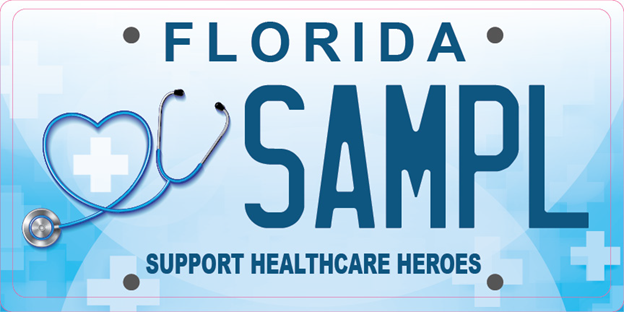
Support Health Care Heroes
Specialty License Plate
|
|
SB 676 passed the Florida Legislature with numerous specialty license plates, and we are happy to announce one specifically to support our Health Care Heroes!
Once they are available for pre-order, we encourage all of our health care community to purchase and show your support!
Funds generated from the sale will be deposited in the EMS Trust Fund.
|
|
The Conference Committee Amendment for SB 2518, relating to Health Care, conforms statutes to the funding decisions related to Health Care in the 2021-2022 General Appropriations Act.
The bill:
- Continues the personal needs allowance of residents of State Veterans’ Nursing Homes at $130 per month.
- Reduces the collection threshold for the Medicaid nursing home lease bond alternative from $25 million to $10 million.
- Requires nursing homes and their home offices to annually submit to the Agency for Health Care Administration (AHCA) financial data using a uniform system of financial reporting.
- Provides definitions for the terms Florida Nursing Home Uniform Reporting System and Home Office.
- Extends Medicaid eligibility for postpartum women from 60 days to 12 months.
- Continues the policy of retroactive Medicaid eligibility for non-pregnant adults to the first day of the month in which an application for Medicaid is submitted.
- Removes the nursing home Medicaid reimbursement rate freeze established on July 1, 2011, thereby allowing for the recurring rate increase provided in Fiscal Year 2020-2021, and continues the rate freeze for County Health Department’s reimbursement rates to the July 1, 2011 level.
- Requires the Letters of Agreement for the Low Income Pool program to be received by the AHCA by October 1 and the funds outlined in the Letters of Agreement to be received by October 31.
- Requires essential providers to contract with managed care plans to be eligible to receive supplemental payments, thereby making certain that those who receive supplemental payments treat Medicaid patients.
- Updates the years of audited data used to determine disproportionate share payments to hospitals, teaching hospitals, and specialty hospitals for children.
- Redesignates the West Florida Regional Medical Center memory disorder clinic to the Medical Center Clinic in Pensacola.
- Requires the Florida Healthy Kids Corporation to validate and calculate a refund amount for Title XXI providers who achieve a Medical Loss Ratio below 85 percent and to deposit any refunds into the General Revenue Fund, unallocated.
- Provides for technical corrections to statutory cross references.
- Authorizes the AHCA, upon federal approval, to contract with an organization that meets all specified requirements to be a site for the Program of All Inclusive Care for the Elderly (PACE) program and provide comprehensive long-term care services to up to:
- 200 enrollees who reside in Escambia, Okaloosa, and Santa Rosa counties;
- 100 enrollees who reside in Northwest Miami-Dade County;
- 500 enrollees who reside in Hillsborough, Pasco, and Hernando counties;
- 300 enrollees who reside in Broward County;
- 300 enrollees who reside in Baker, Clay, Duval, Nassau, and St. Johns counties. Enrollees in Alachua and Putnam Counties are also eligible, subject to a contract amendment with the AHCA; and
- 500 enrollees who reside in Seminole, Volusia, or Flagler counties.
- Authorizes the consolidation of 150 enrollee slots for Orange and Osceola counties and Lake and Sumter counties and 150 enrollee slots for Seminole County to provide services to up to 300 enrollees who reside in Orange, Osceola, Lake, Sumter, or Seminole counties.
- Authorizes the AHCA, upon federal approval, to contract with one public hospital operating in the northern two-thirds of Broward County to provide comprehensive services to up to 200 enrollees residing in the northern two-thirds of Broward County.
|
|
Signed into Law by the Governor |
|
COVID LIABILITY PROTECTIONS
SB 72 was singed into law by the Governor and is a plan to shield businesses and health-care providers from COVID-19-related lawsuits.
The plan offers protections from lawsuits related to the pandemic to all businesses, from general stores to nursing homes.
Protecting Front Line Health Care Providers
The liability protections for COVID-19-related claims against a health care provider mainly relate to claims:
- Arising from the diagnosis or treatment of a person for COVID-19;
- The provision of a novel or experimental COVID-19 treatment;
- The transmission of COVID-19; and
- The delay or cancellation of a surgery or medical procedure.
To prevail in a claim against a health care provider, the plaintiff must plead the claim with particularity and generally must prove by the greater weight of the evidence that the heath care provider was grossly negligent or engaged in intentional misconduct.
A COVID-19-related lawsuit against any type of defendant must be brought within 1 year after a cause of action accrues unless the cause of action occurred before the effective date of the bill. However, if a cause accrues before the effective date of the bill, the plaintiff has 1 year from the effective date of the act to bring the claim.
While the bill takes effect upon becoming a law, it applies retroactively. However, the bill does not apply in a civil action against a particular named defendant to a suit filed before the bill’s effective date.
|
|
By Devonta Davis, Rick Mayer © Health News Florida
An executive order by Gov. Ron DeSantis immediately suspends restrictions imposed by local communities during the pandemic. He also signed legislation giving his office sweeping powers to invalidate local measures, such as mask mandates. The law codifies actions DeSantis had already taken, such as a vaccine passport ban. Read more.
DeSantis Invalidates All Remaining Local COVID Orders;
'We Are No Longer in State of Emergency"
Gov. Ron DeSantis issued an executive order on Monday invalidating all remaining local COVID orders. DeSantis wrote in an executive order that the remaining orders still in place "are not narrowly tailored to serve a public health or safety purpose and unnecessarily restrict individual rights and liberties." The order says that it doesn't prevent local governments from pursuing regularly enacted ordinances aimed at COVID protections, only emergency orders. Executive Order / Miami Herald / USA Today Network / Orlando Sentinel
|
|
DeSantis Signs Legislation Banning 'Vaccine Passports'
DeSantis also signed legislation (SB 2006) on Monday that gives him the power to use executive orders to override local rules and bans businesses or governments from requiring proof of vaccination – or so-called "vaccine passports" – before they will serve people. "This legislation ensures that legal safeguards are in place so that local governments cannot arbitrarily close our schools or businesses," DeSantis said in a press release. "In Florida, your personal choice regarding vaccinations will be protected and no business or government entity will be able to deny you services based on your decision." Associated Press / Law 360 / DeSantis News Release
|
|
Florida Among Several States Extending Postpartum Care Through Medicaid
Florida’s move to extend Medicaid benefits to new mothers
for up to a full year after giving birth, rather than the minimum of 60 days
required by federal law, is part of a national move to take advantage of a new
Biden Administration rule that makes such a move easier. Pew Stateline
NICA Makes Changes in Operations Beyond Those
Required by Lawmakers
The Birth-Related Neurological Injury Compensation
Association, or NICA, which provides support to families of brain-damaged
children, is making additional changes going beyond those required by lawmakers
|
|
Health Trends: Pharmacies to Expand
Mental Health Services in Florida
Even before the pandemic, countless people were unable to
receive the mental health services they needed. Now, after over a year of
economic hardship, grief and isolation, people are still struggling to access
behavioral health professionals. Larger chain pharmacies are attempting to help
address the problem. CVS began a mental health pilot program this past January
in locations such as Tampa with the intent to expand. Providers offer mental
health assessments, referrals and counseling either in-person or via
telehealth. Walmart also offers similar services in certain areas. The company
announced this week it plans to expand Walmart Health counseling locations to
|
|
Simpson: Capitol to Open to Public Again
The Capitol will reopen to the public later this week and be open for the upcoming special session on gambling with reduced safety protocols and no mask mandate, Senate President Wilton Simpson announced Monday. The Capitol has allowed only limited in-person attendance since March 2020. Simpson issued a memorandum on Monday outlining updated COVID-19 protocols for the Senate. The Legislature is scheduled to hold a special session the week of May 17 to implement a new gaming compact with the Seminole Tribe of Florida. Simpson Memo / Florida Politics
|
|
|
|
|
|
|