|
A Message from the Executive Director
As November ends, the energy on campus is stronger than ever. Our fall cohorts — Professional Mariner Training 10-25 and Yamaha Marine Maintenance 10-25 — have officially reached the halfway point of their programs. Over the next several weeks, they’ll continue developing the seamanship, navigation, and technical skills they need to launch successful careers in the marine industry, all leading up to their graduation on December 19th.
| | | |
This month’s newsletter highlights the incredible people and partnerships driving Chapman forward. We’re proud to feature dedicated team members like David Gardner, whose commitment to maintaining our fleet ensures safe, reliable training vessels for every class that comes through our doors. We also spotlight students like BM3 Matthew Babby, whose journey from Marine veteran to Coast Guard Boatswain’s Mate is a powerful testament to perseverance, purpose, and the value of maritime education.
We’re excited to share updates on our expanding partnership with SDI, which is helping us develop modern, safety-focused curriculum for boaters, divers, and maritime professionals across the country. In this issue’s Tech Tip, Yamaha Master Technician, Shane Bowlin breaks down the most common cause of Yamaha engine problems: fuel contamination — a critical reminder for every boat owner.
Finally, we celebrate the recent graduation of Survey Class 10-25 and invite you to support our biggest fundraiser of the year, the 2026 Beacon Barbecue. This event fuels youth scholarships, boating safety programs, and workforce training that truly change lives. We really need your support — the countdown is on, and the kids are counting on you.
Thank you for being part of the Chapman community. Your engagement keeps our mission moving full speed ahead. If I can ever answer questions or assist in any way, please reach out to me directly at j.allen@chapman.org.
Warm Regards,
Jim Allen
Executive Director
| | | | |
A Message From The Director of Development
Save The Date! Our Beacon BBQ Fundraiser Returns February 2026
Fall is a season of generosity — and at Chapman, every act of giving fuels real impact. Whether you're supporting our scholarship fund, joining the Burgee Society, or sponsoring an event, your contribution helps shape the next generation of maritime professionals.
| | |
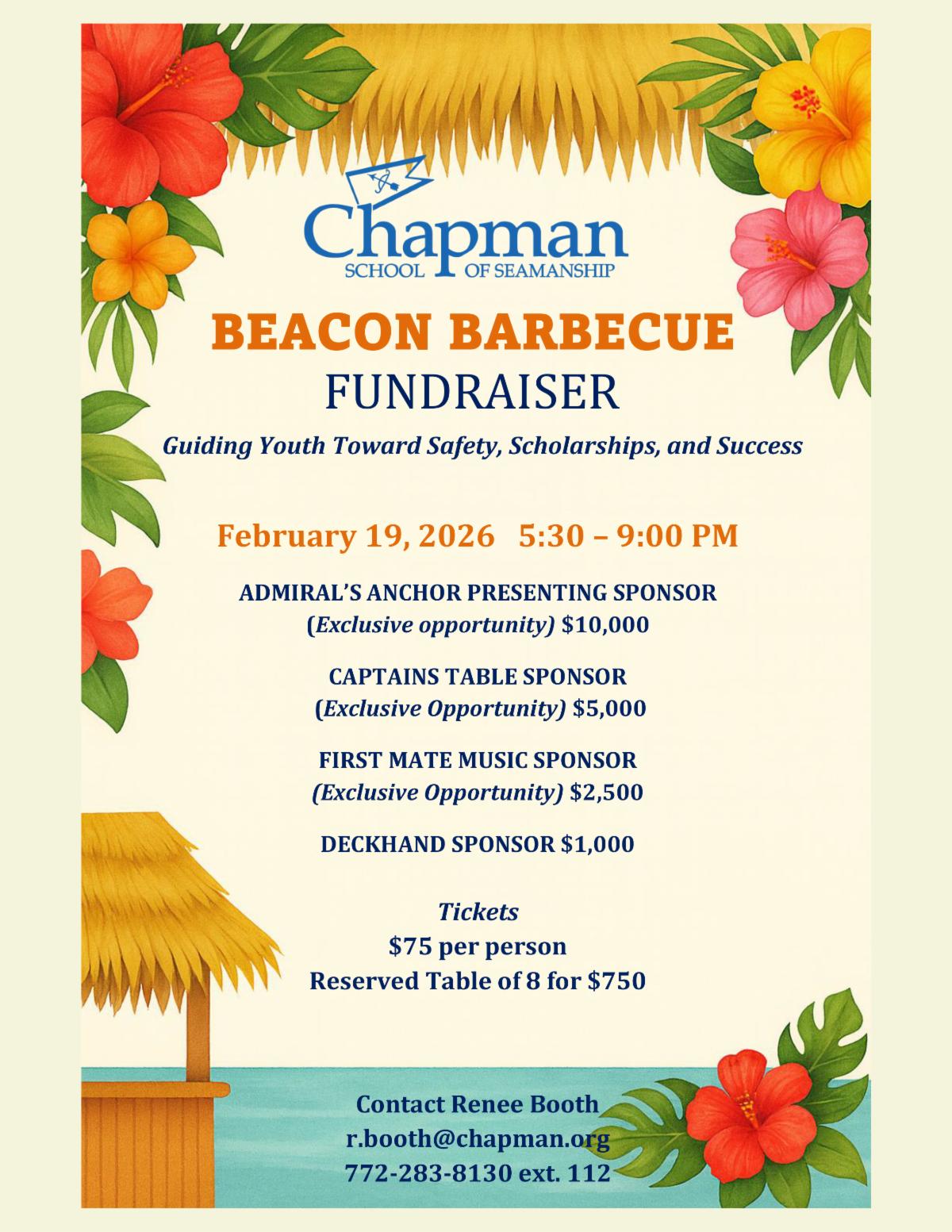
Beacon Barbecue Returns in 2026 — We Need Your Support!
February 19, 2026 • 5:30–9:00 PM
Chapman’s signature annual fundraiser supports youth scholarships, boating safety programs, and workforce training.
Sponsorship Opportunities:
Admiral’s Anchor Presenting Sponsor – $10,000
Captain’s Table Sponsor – $5,000 (FILLED)
The Leafy Greens Band Music Sponsor – $2,500
Deckhand Sponsor – $1,000
Tickets: $75 per person | $750 for reserved table of 8
To sponsor this event or purchase tickets, click the button below or reach out to:
Renee Booth
Director of Development
📧 r.booth@chapman.org | 📞 772-210-4711
| | |
Employee Spotlight: David Gardner
Facilities Maintenance Coordinator
If you have ever stepped into a spotless classroom, attended an event with a flawless setup, or walked the docks and noticed everything in perfect order, there is a good chance David Gardner played a key role behind the scenes.
As Chapman’s Facilities Maintenance Coordinator, David keeps the daily operations of our campus running smoothly. He oversees preventive maintenance, repairs, event preparation, and the overall care of our grounds, making sure every corner of campus is ready for students, staff, and visitors.
| | | |
David is known across campus for his can-do attitude and his detailed understanding of our infrastructure. He is the person everyone calls when something needs attention, and he consistently responds with steady reliability and quiet professionalism.
Born in Plantation, Florida, David spent most of his childhood in Fort Myers before moving to Fort Lauderdale as a teenager. Outside of work, he enjoys writing and recording music, cooking, playing golf, and racing RC trucks. And when football season rolls around, you will find him cheering on his favorite team, the Miami Dolphins.
| | | | |
Student Spotlight: BM3 Matthew Babby
From Marine Veteran to Coast Guard Boatswain's Mate
Born and raised along the shores of Lake Michigan, Matthew Babby grew up as a Milwaukee native with a natural love for the water. That early connection never left him. After high school, Matt enlisted in the United States Marine Corps, serving eight years—most of it, fittingly, near the water.
Following his Marine Corps service, Matt used the GI Bill to earn his degree from UC Berkeley, then cycled through several land-based jobs. But something was always missing: the water.
| | |
That pull brought Matt to Charleston Water Taxi, where he signed on as a deckhand and immediately felt at home again. Over two seasons, he saved nearly enough in tips to fund his Chapman education outright. Matt enrolled in Chapman’s Professional Mariner Training (PMT) Program, Class #10-22, completing the program from October 3 to December 16, 2022. He later returned to Charleston Water Taxi as a Captain.
During that season, a chance conversation with a Chief Petty Officer set him on an entirely new course: joining the U.S. Coast Guard—after a 20-year break in service. His old Marine buddies may think he’s a little crazy, but as Matt says, “only in the best, most jealous way.”
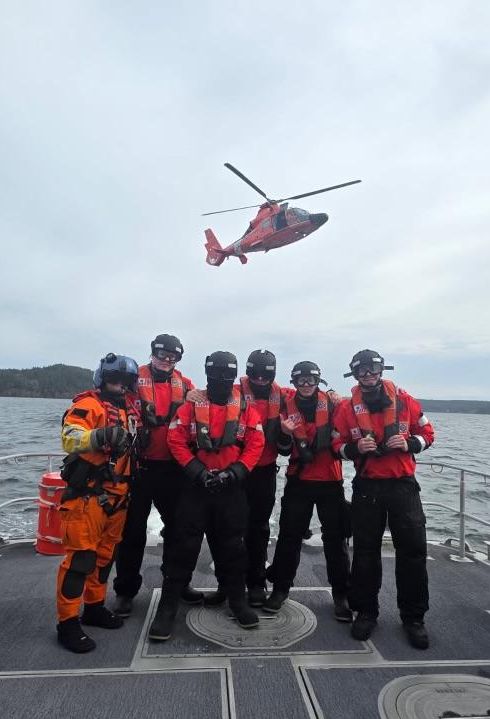
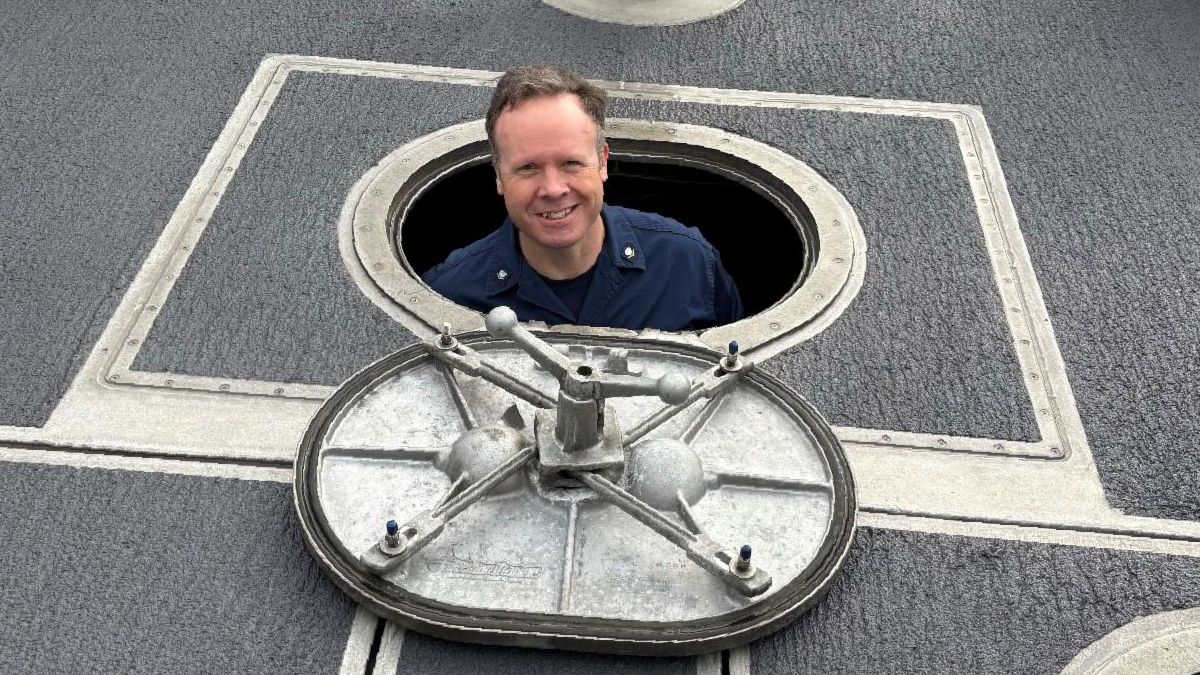
Today, Matt proudly serves as a Boatswain’s Mate Third Class (BM3) in the United States Coast Guard, continuing a life spent on the water. His first tour of US Coast Duty is the Maritime Force Protection Unit, Bangor in Silverdale, WA. Chapman is honored to be part of his journey and proud to celebrate his service.
| | |
Partnership Spotlight:
SDI & Chapman Strengthen Global Boating Safety
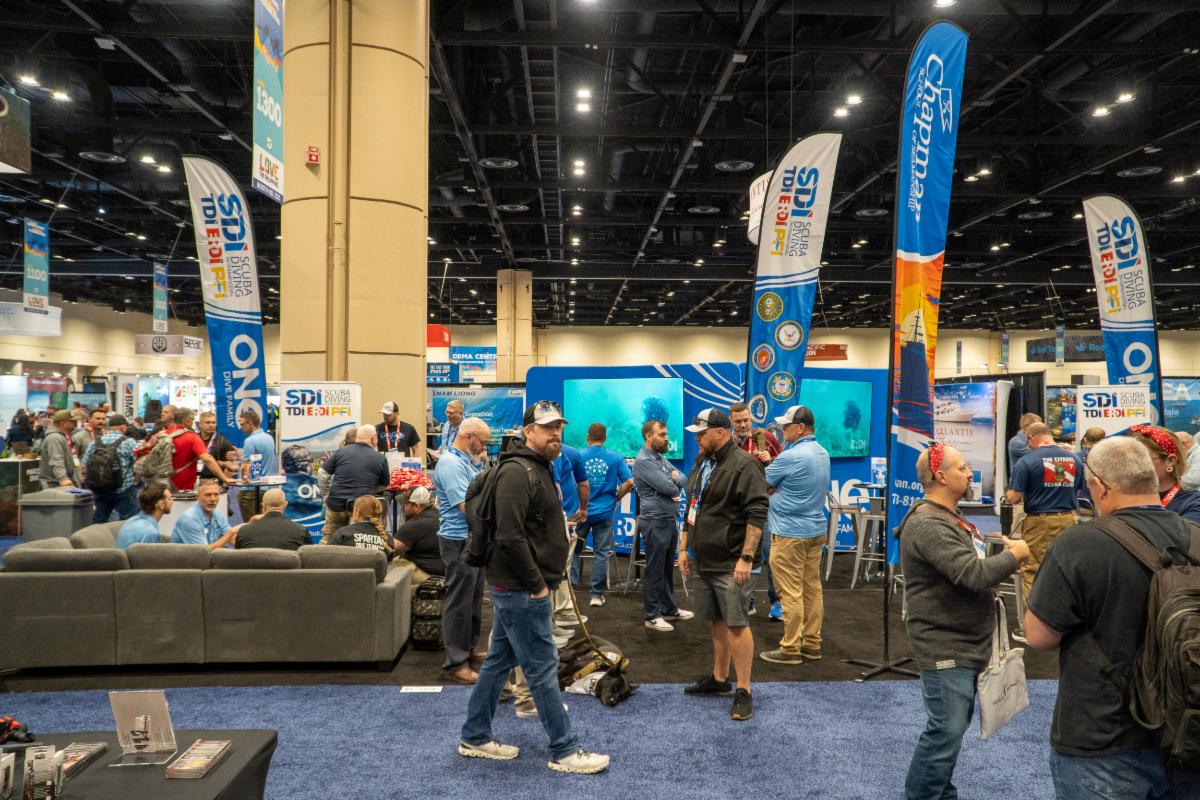
On November 7, 2025, Scuba Diving International (SDI) and the Chapman School of Seamanship announced a new strategic partnership to elevate boating safety and maritime education worldwide.
SDI, a global leader in scuba training and aquatic safety, is joining forces with Chapman’s five decades of hands-on seamanship expertise to develop modern, safety-focused curriculum for boaters, divers, and maritime professionals.
The collaboration blends Chapman’s acclaimed seamanship programs with SDI’s proven safety protocols, creating innovative training resources designed to meet the needs of today’s on-water community. This initiative supports global efforts to reduce preventable incidents, strengthen practical skills, and enhance safety standards across recreational and professional maritime sectors.
Follow us for our course collaborations coming soon.
| | | |
Tech Tips from Yamaha Master Technician Shane Bowlin
Fuel Problems: What I See as a Yamaha Master Technician
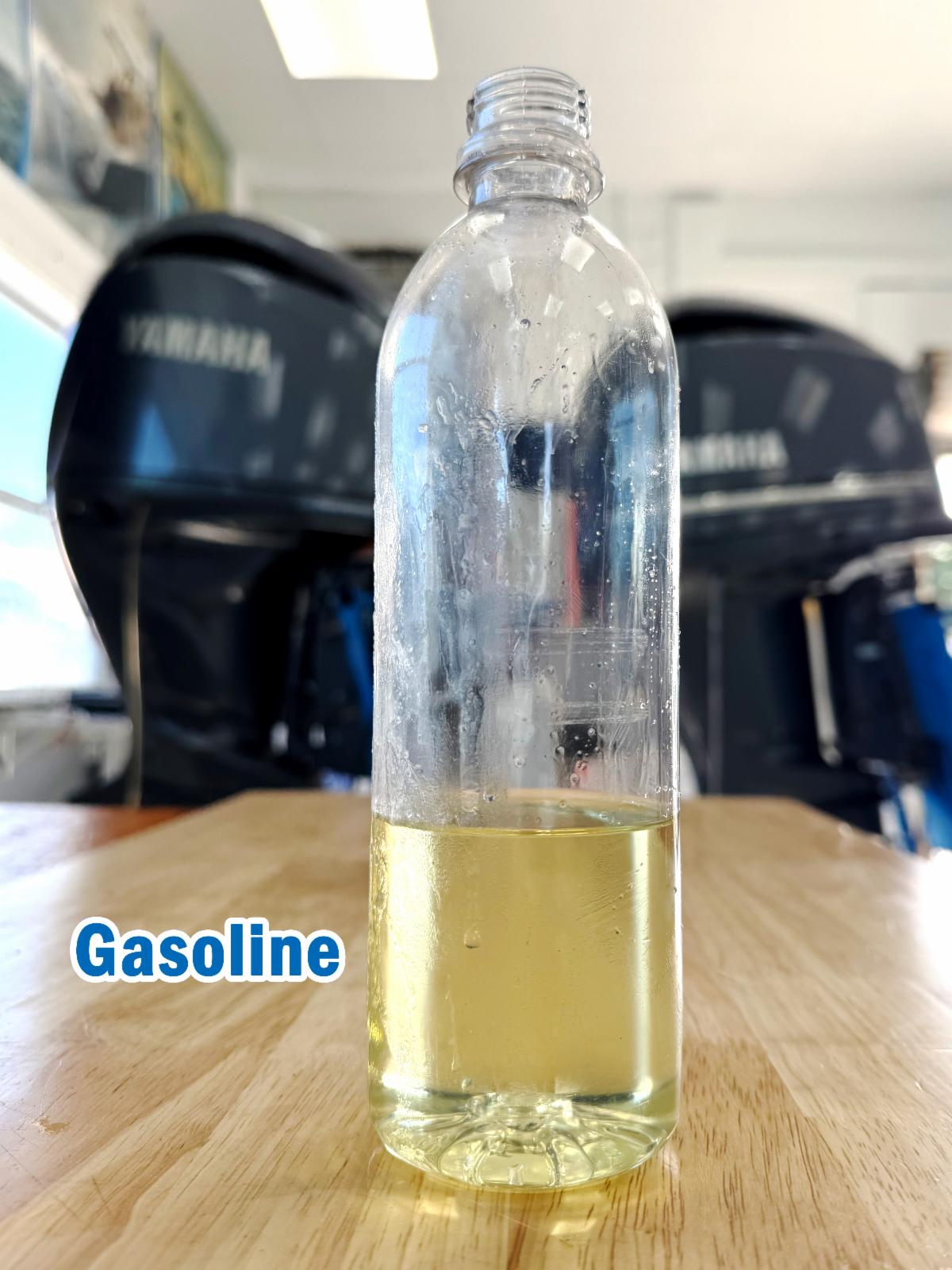
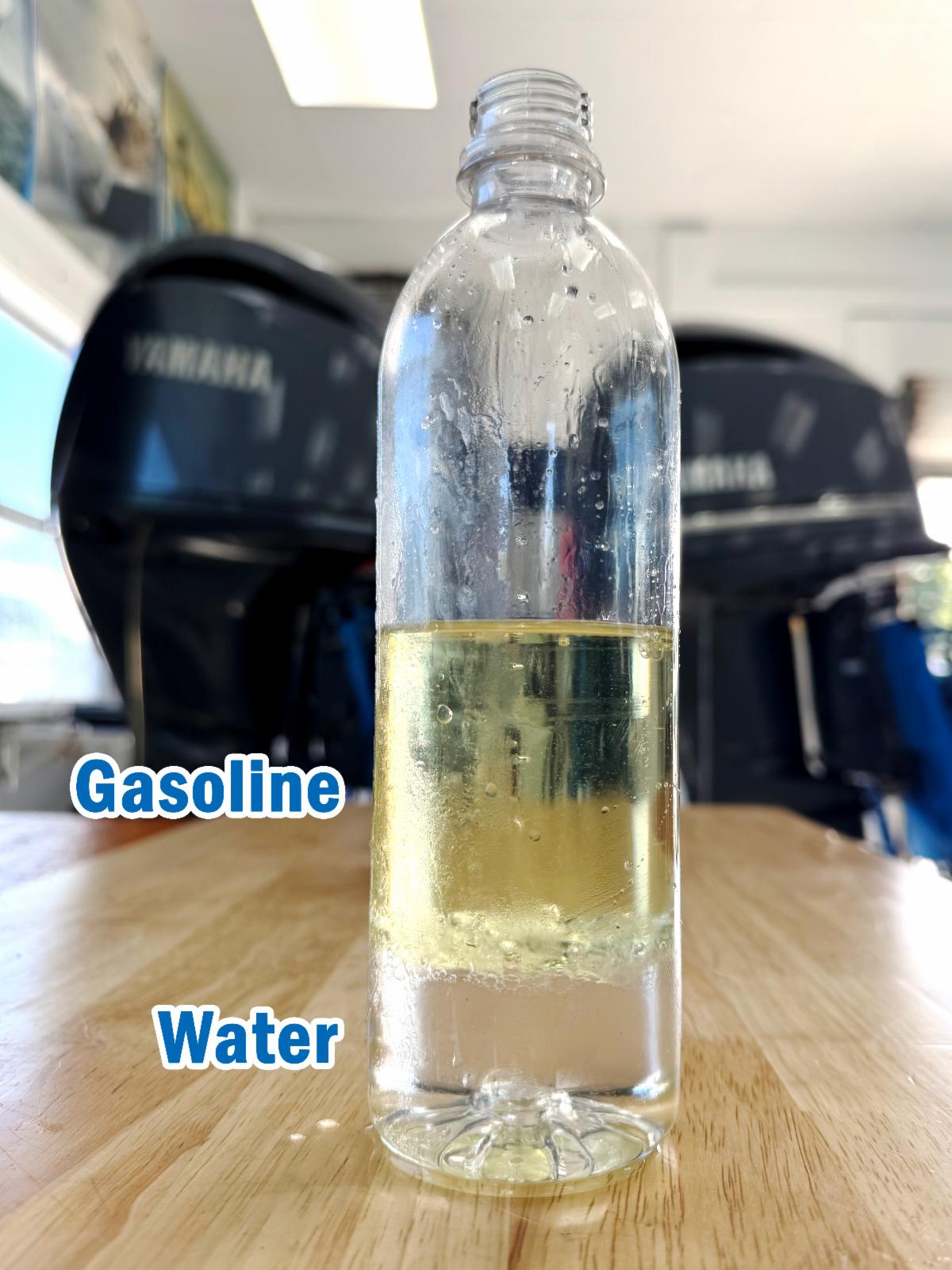
As a Yamaha technician, I can tell you the number one issue that brings engines into the shop isn’t electrical, mechanical, or even corrosion — it’s fuel. Most running problems start with bad, old, or contaminated gasoline.
Ethanol fuel (E10) absorbs water very quickly, especially here in Florida. Once water mixes into the fuel, it separates, weakens, and sends debris through the system. I see engines all the time that were running fine one week and barely idling the next — simply because the fuel went stale. In as little as 14 days, untreated fuel can begin to break down.
Another major problem is water in the tank. Whether it comes from condensation in a half-full tank or from a bad batch of fuel, water causes hard starting, rough running, loss of power, and can damage injectors and pumps. Many times when a boater tells me their engine “bogs down under throttle,” the real issue is a clogged water-separating fuel filter that’s starving the engine.
My advice is simple:
Keep your tank close to full, use a quality marine stabilizer, change your fuel/water separator every 50 hours, and run non-ethanol fuel whenever you can. And always buy fuel from busy stations where the gas is fresh.
If your Yamaha suddenly stops running the way it should, here’s my rule of thumb: start with the fuel — it’s almost always the reason.
| | |
Safe Boating Tip:
Know The Difference Between SOLAS and Recreational Flares
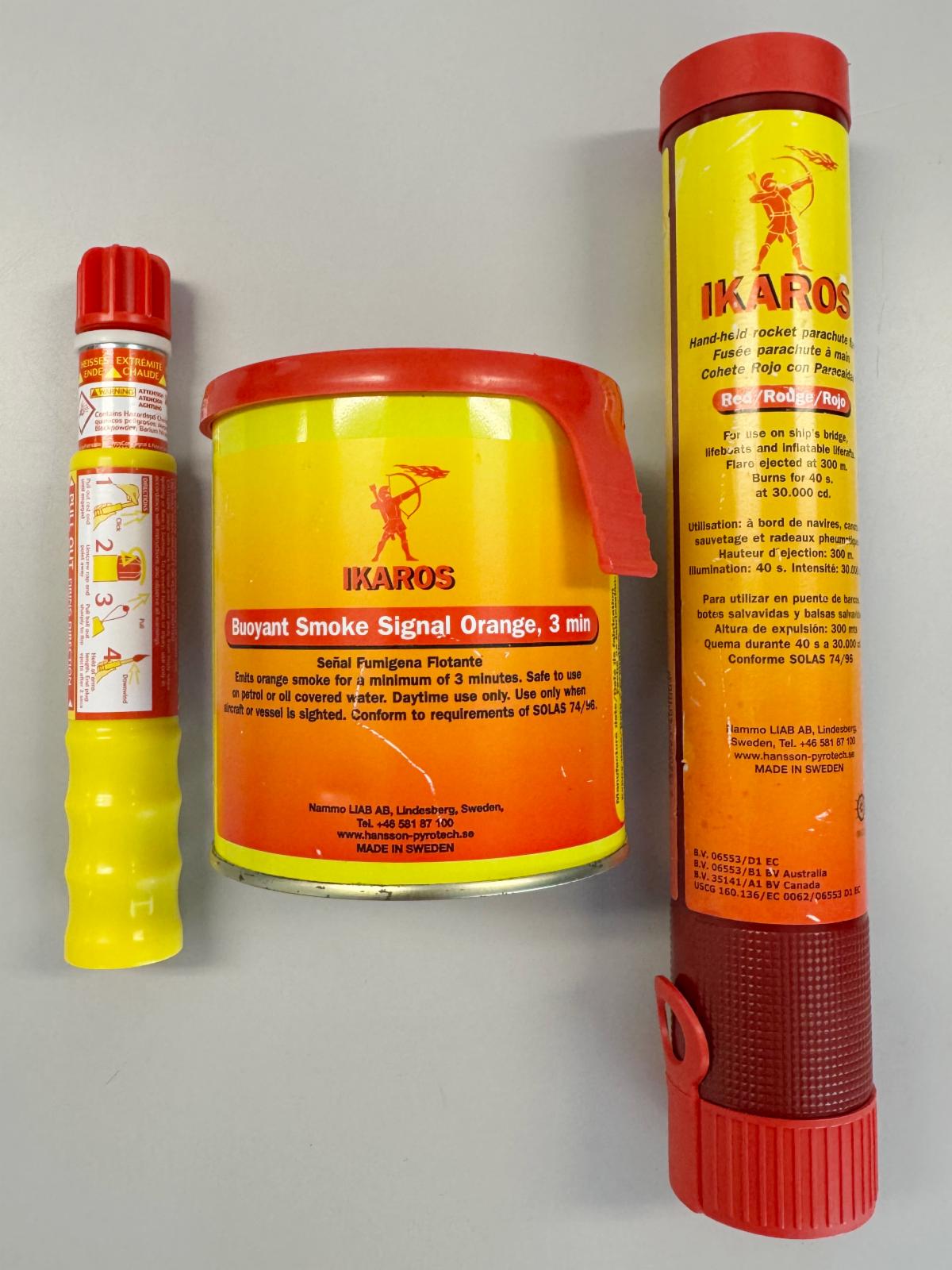
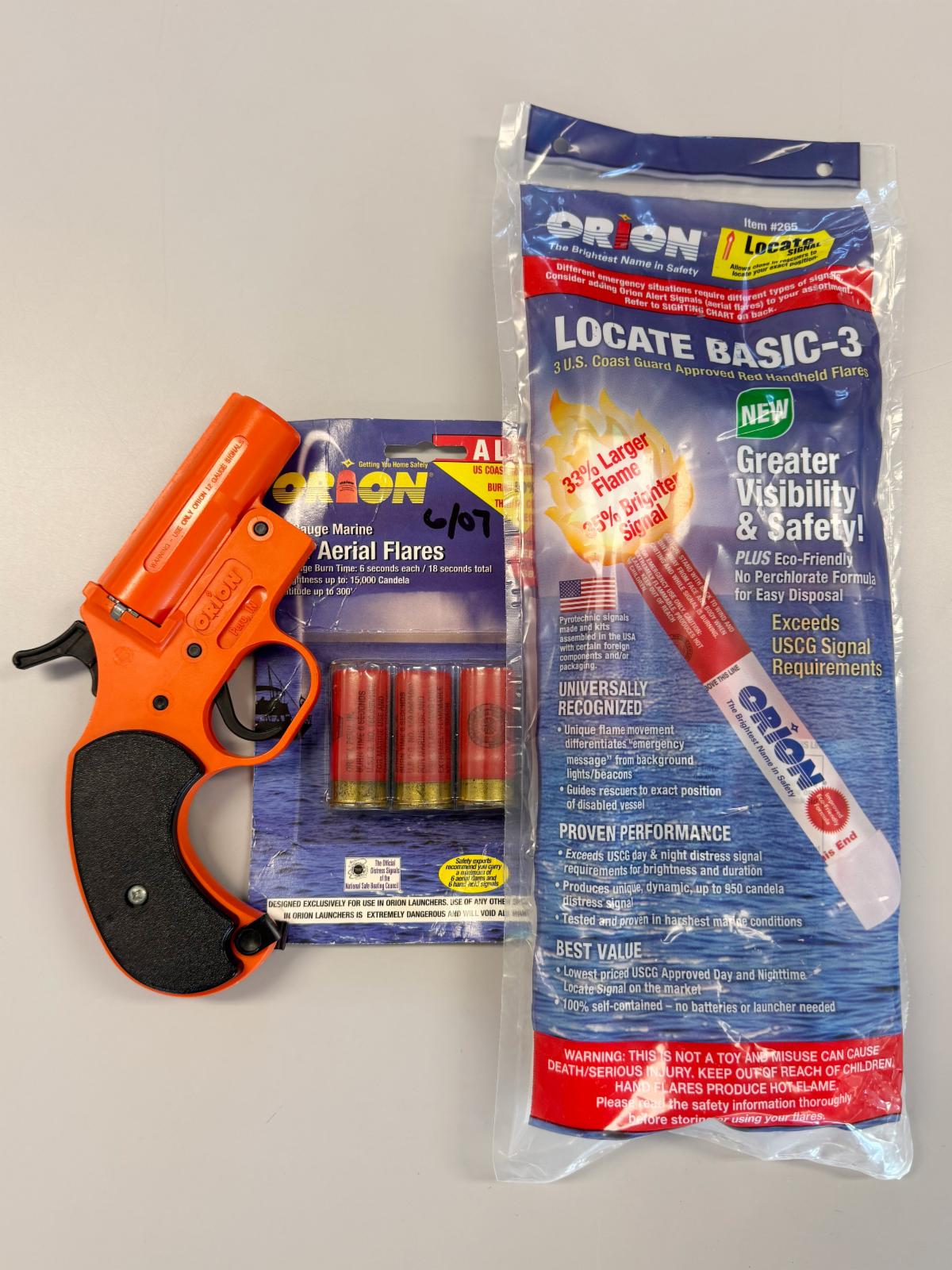
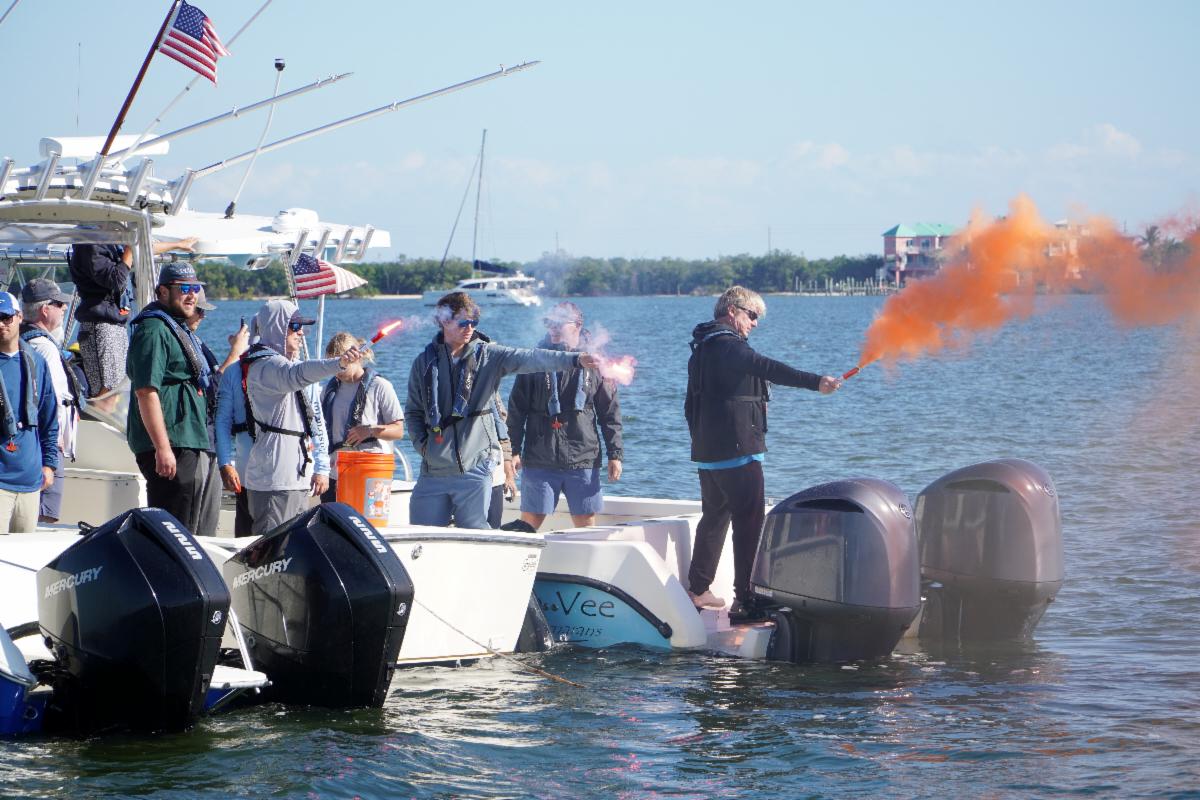
Flares are a vital part of every vessel’s emergency signaling kit — but performance varies widely between SOLAS-grade and Recreational (USCG-approved) flares. Knowing the difference can make all the difference in an emergency.
SOLAS Flares (Commercial-Grade)
Designed to meet the highest international safety standards, SOLAS flares offer superior visibility and reliability.
Key Features:
- Brightness: Extremely bright, visible up to ~30 miles in optimal conditions
- Height: Rocket flares launch significantly higher than recreational versions
- Burn Time: Longer, more consistent burn
- Intensity: High candela rating for maximum visibility
- Reliability: Perform consistently in wind, rain, and cold
- Expiration: Typically 36–42 months from manufacture (varies by manufacturer but often matches rec flares)
- Cost: More expensive, but unmatched performance
Recreational (USCG-Approved) Flares
These flares satisfy federal requirements for recreational vessels in U.S. waters.
Key Features:
- Brightness: Adequate for nearshore rescue but less intense than SOLAS
- Height: Rocket flares launch lower than SOLAS versions
- Burn Time: Shorter burn duration
- Intensity: Lower candela rating
- Expiration: Typically, 42 months (3.5 years) from the date of manufacture
- Cost: Affordable and widely available
Why It Matters
SOLAS flares dramatically outperform recreational flares, especially offshore or in poor weather. Recreational flares meet legal requirements, but SOLAS provides superior visibility when seconds matter.
Tip: Regardless of type, always check expiration dates and store flares in a dry, easily accessible location.
| | |
Program Highlight: Boating Essentials
NMEA Basic Installer & NMEA 2000 ® Installer Courses
Chapman is proud to offer the NMEA Basic Marine Electronics Installer and NMEA 2000 ® Installer courses — industry-standard certifications designed for technicians, surveyors, captains, and mariners seeking to expand their electronics skills.
These hands-on courses provide essential knowledge in marine electrical systems, wiring standards, troubleshooting, and modern NMEA 2000 ® network installation.
Next Course: January 12–16, 2026
Cost: $900 for both modules or $550 each (Basic Installer or NMEA 2000 ® Installer)
Whether you're building a career in marine service or upgrading your professional toolkit, these NMEA certifications give you a competitive edge and the confidence to work on today’s increasingly complex onboard systems.
Space is limited — Register early. Call our office at 772-283-8130.
| | |
Graduation Highlight: Yacht & Small Craft Surveying 10-25
This past Friday, Chapman proudly celebrated the graduation of Survey Class 10-25, marking another successful completion of our Yacht & Small Craft Surveyor program.
Over the course of six weeks, students engaged in rigorous, hands-on training—mastering ABYC standards, conducting vessel inspections, developing valuation skills, and building the professional competencies needed to enter the marine surveying field with confidence.
Family, friends, alumni, and supporters joined us on campus to recognize the hard work and dedication of these future surveyors as they take the next step in their maritime careers.
Valedictorian Recognition - Ronaldo Texidor
Ronaldo distinguished himself through exceptional academic performance, professionalism, and commitment to excellence throughout the Survey 10-25 program.
| | |
Introducing Our 2026
Youth Bridge Boating Program
Coming Spring Break | March 2026!
This limited-time program allows students who completed NSBC Modules 1-2 (previously called Summer Basic) or NSBC Modules 3-4 (previously called Summer Intermediate) during our 2025 program to complete the remaining modules necessary for full NSBC completion.
Once the Bridge Program is complete, students will then qualify for the State of Florida Boating Safety Enhanced Education ID Card.
- If your child completed our 2025 Youth Basic Boating Program last year (Modules 1-2), please sign them up for the Afternoon Session for our new Youth NSBC Bridge Program.
- If your child completed our 2025 Youth Intermediate Boating Program last year (Modules 3-4), please sign them up for the Morning Session of our new Youth NSBC Bridge Program.
Students who have completed the full NSBC Program (Modules 1, 2, 3 & 4) will then meet the prerequisite for admission to our new Youth Advanced Boating Skills Program coming in the summer of 2026.
If you would like full details and to apply, please click here.
| | Stay Connected With Chapman! | | | | |