|
Commission Newsletter • Fall 2026
| | Landmark Range-Wide Gray Whale Science Symposium | | |
Earlier this month, the Range-Wide Gray Whale Symposium gathered stakeholders from Alaska to Mexico for the first time in recent memory. The symposium was coordinated by the Marine Mammal Commission and hosted by the Marine Mammal Institute at Oregon State University in Newport, Oregon. This successful two-day scientific meeting focused on gray whale ecology and health across the Eastern North Pacific and Arctic. Scientists from Mexico, USA, and Canada synthesized current research and observations and identified priorities for future research, monitoring, and collaboration.
The Commission is working to develop recommendations for future directions following the meeting. Until then, visit the Commission website to dive into the newly published symposium proceedings, which summarize the presentations and the meeting program, catch up on the meeting recording, and view the symposium presentations.
| | Commission Announces Fiscal Year 2027 Grant Program! | | |
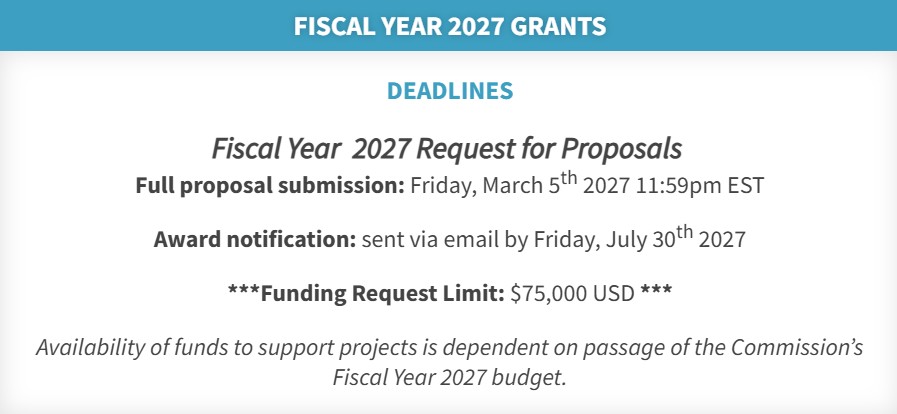
This year, the Commission requests proposals that focus on advancing range-wide gray whale science through partnerships and collaboration.
In response to research needs identified at the Range-Wide Gray Whale Science Symposium, the Commission is seeking proposals that focus on the population dynamics, distribution, foraging ecology, body condition, or health of North Pacific gray whales throughout their range. Proposed projects should address one of the following topic areas:
- Population Abundance, Demographics, and Dynamics;
- Foraging Ecology and Effects of Ecosystem Change; and
- Health
For more information:
visit our Current Funding Opportunities Website
| | |
Hot Topics in Marine Mammal Conservation:
Health Effects of Legacy Contaminant Exposure in Bottlenose Dolphins
| | |
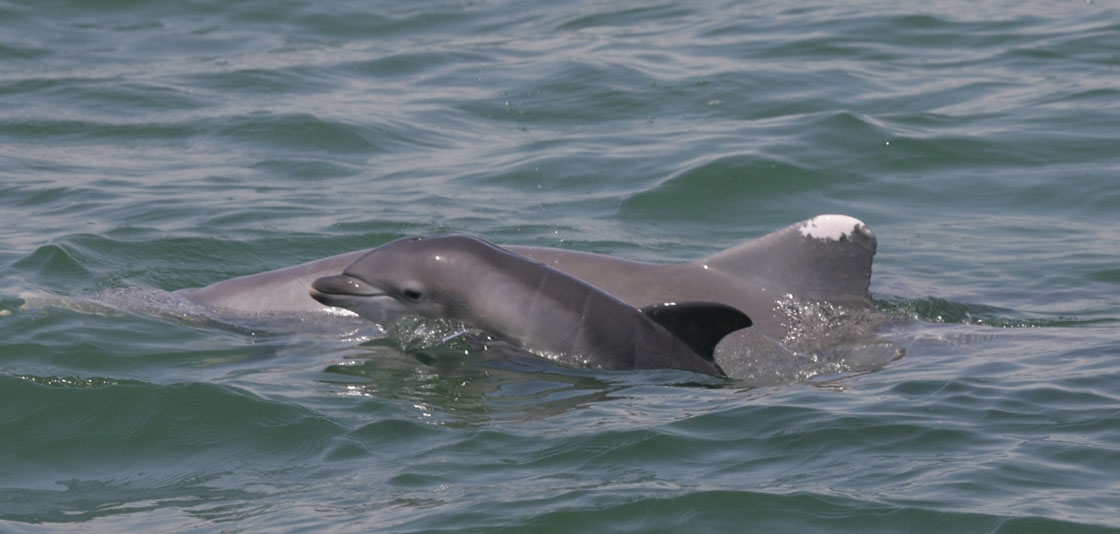
Commission Scientific Program Director, Dr. Lori Schwacke, and collaborators including Commission Scientific Advisor, Dr. Randall Wells, have been investigating how legacy contaminants, specifically polychlorinated biphenyls (PCBs), may affect survival and reproduction in bottlenose dolphins. They synthesized health data from six bottlenose dolphin populations along the southeast U.S. coast to determine whether health parameters changed in relation to PCB concentrations measured in the dolphins’ blubber.
They found strong associations of PCB concentration with several health parameters, including markers of inflammation that have been previously shown to be predictive of dolphin survival. Previous studies have shown that contaminant concentrations in females decrease substantially when they give birth because the mother’s contaminants are transferred to their calf via milk. The research team found that in a region where PCB concentrations in dolphins are known to be high, the contaminant decrease for female dolphins occurred at a much higher age (20.4 years as compared to 11.6 years in other populations). This suggests that these dolphins experience a number of failed breeding attempts prior to their first successful calf. The study was published in Frontiers in Marine Science as part of the special issue on The Dolphins of Sarasota Bay: Lessons from 50 years of Research and Conservation.
| | |
2026 Annual Meeting of the Marine Mammal Commission:
A Virtual Gathering of the Agency
| | |
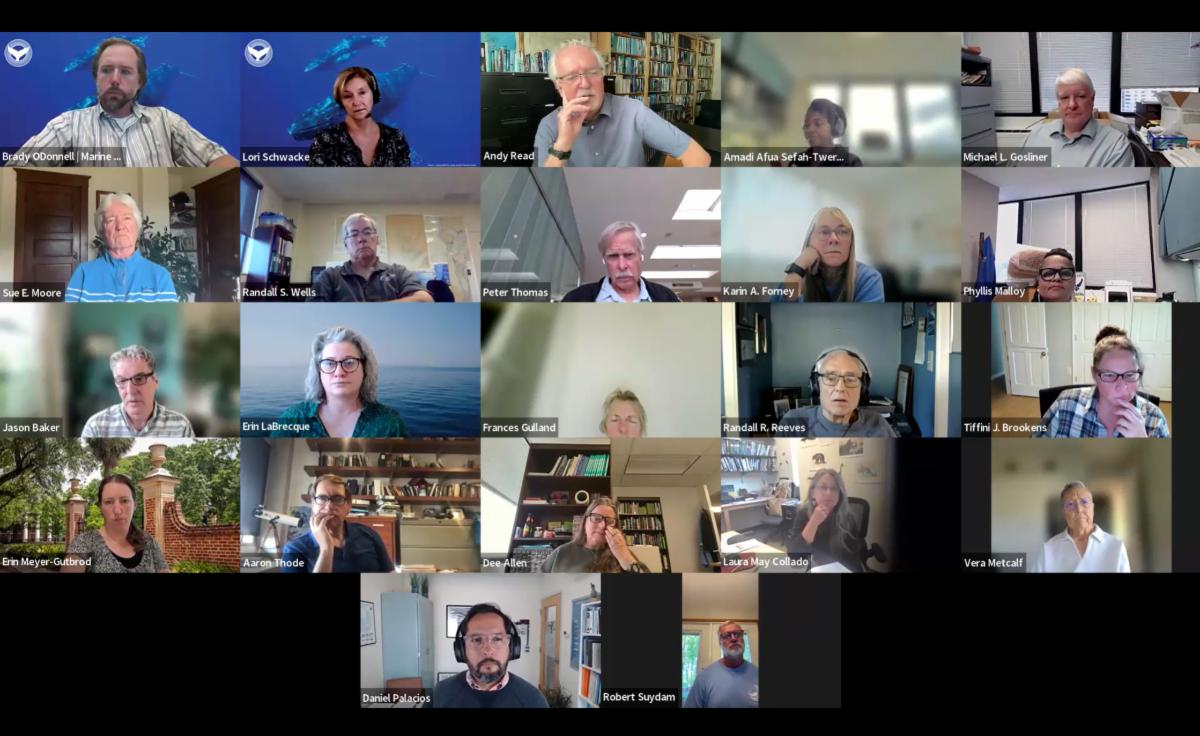
The Commission held a virtual 2026 Annual Meeting on Tuesday, 22 September 2026 and Wednesday, 23 September 2026.The Commission and its Scientific Advisors met to review and discuss outcomes of the recent Range-Wide Gray Whale Science Symposium and discuss progress updates with active Commission grantees. In addition, the Commission considered possible actions and initiatives in furtherance of its statutory duties.
The two-day meeting was public and well attended online. Presentations and video recordings are available on our 2026 Annual Meeting webpage.
| | Come Say Hello in Puerto Rico! | | |
On October 19-23, the Society for Marine Mammalogy will gather for the 26th Biennial Conference on the Biology of Marine Mammals. The Commission is a sponsor of the conference and there are numerous ways to engage with Commission scientists. For those attending, please visit our exhibition booth and check out our talks, posters, keynotes, and workshops!
Featured Work by Commission-affiliated Scientists:
- Plenary Talk by Commissioner Dr. Sue Moore, "Chasing Inter-species Communication: What Marine Mammals Are Telling Us About Our Oceans"
- Plenary Talk by Scientific Advisor Dr. Laura May-Collado,"Echoes of the Past: Decoding the Evolution of Toothed Whale Communication"
- Talk by Commissioner Dr. Andy Read, "A Field Experiment to Assess the Response of Goose-beaked Whales to Full-scale Operational Mid-frequency Active Sonar"
- Talk by Scientific Advisor Dr. Randall Wells, "The Little Dipper: Drone-based Eye in the Sky, Ear in the Sea"
- Talk by Commisison staff Tiffini Brookens, "Marine Mammal Auditory-weighted Kurtosis from Shallow-water Seismic Surveys Conducted Along the North Slope of Alaska"
- Poster by Commission staff Lauri Leach and Commission Chair Dr. Frances Gulland, "From Local Response to Global Impact: Enhancing Marine Mammal Conservation through the Global Stranding Network"
-
Poster by Commission staff Dee Allen, "Cross-sectional Analysis of Stress, Metabolic and Reproductive Hormones in Blue Whale (Balaenoptera musculus) Baleen"
-
Workshop co-organized by Scientific Advisor Dr. Daniel Palacios, "Blue Corridors Workshop - Lessons Learned Co-designing Global and Regional Collaborative Connectivity Conservation Strategies"
- Talks by Commission Chair Dr. Frances Gulland and Scientific Advisor Daniel Palacios at "A workshop on advancement, misconceptions, and future developments in applications of consolidated (type C) satellite tags to cetaceans"
- Workshop co-organized by Commission staff Lauri Leach, "Enhancing investigations of stranded marine mammals to detect pathogens and toxicants of One Health importance through global collaborators," also featuring a talk by Commission Chair Dr. Frances Gulland
| | Marine Mammal Commission scientific advisors, staff, and science in the news! | | Below are a few recent media highlights that reflect some of the ongoing scientific research, collaborations, and accomplishments of our world-renowned marine mammal scientists. For a reminder about our Commissioners, Committee of Scientific Advisors, and Staff, visit our website. | | | | |