Weekly Newsletter:

April 29, 2026


Communicating Your Caregiving Responsibilities to Others


In our first newsletter of the month, we talked about the many responsibilities of caregivers. These responsibilities are incredibly challenging, taking a huge physical and emotional toll on all involved. If someone hasn’t been a caregiver, it can be difficult to understand the full extent of the caregiving role. This can present challenges in communicating these responsibilities to family and friends, to your workplace, or to other social commitments. Caregivers may find themselves trying to explain the impossible, being misunderstood for what they do explain, or feeling forced to explain more than they wish. This can lead to arguments, communication breakdown, incorrect assumptions, and more. While there isn’t a one size fits all solution to make someone understand, there are a few communication tips you can try implementing and see if those in your life respond better to your attempts to explain the complexities of your life.

Managing Your Expectations

It is human nature to want to be understood. People can’t read our minds, so we do what we can to communicate what we are thinking. We want to be heard and understood, and when we aren’t it can be incredibly frustrating or hurtful. While we can’t control the ability for others to understand us, we can manage our expectations in terms of the outcome of our communication attempts. Approaching these conversations with a mentality that it could be very difficult for someone outside of your situation to understand what you are going through even if you explain it incredibly well can help mitigate some of the pain or frustration that can result from feeling misunderstood. When we are more emotionally grounded, we are better communicators. This cyclical effect can help improve communication with those around you to allow for a deeper understanding of your caregiving responsibilities over time.


Focus on “I” Statements Rather than “You” Statements

When we are feeling misunderstood, it can be easy to want to tell the other person they aren’t listening and that they don’t understand. While these emotions are completely valid to feel, they are less than helpful in trying to communicate. Using “I” statements like, “I feel like I am not being understood, can I try explaining this in a different way?” instead of a “you” statement like “You are not hearing what I am saying” encourages the conversation to continue rather than to put an end to it where both people may feel frustrated. Try focusing on how you feel and what you are trying to do rather than how the other person is responding.

Use Simple Language and Avoid Overexplaining

While this feels contradictory to the complexity of caregiving responsibilities, it can help facilitate understanding by having a common ground of language. Those who are not caregivers may not understand medical terms or what dementia is or just how much time these duties take. Using relatable language can help explain complex topics in a way that can be easily understood. Overexplaining things can cause the person you’re communicating with to lose the main point you are trying to make and thus diminish their understanding. One example of this is listed below:

  • Simple Language: “We recently had a test result come back positive; doctors gave us some steps we need to take so I am needing to prioritize my time on those until the next doctor appointment in hopes to get the test result back to normal.”


Compare this sentence to “Mom’s recent test results showed she has an infection. Her antibiotics can cause some symptoms I need to be around to watch for, we need to focus on her diet, and she needs to rest more than usual so I need to take up some more chores at her place. We have follow-up testing in a couple weeks so I can't take on more non-caregiving duties until we get this sorted out.”

  • Why does this simplification help? People who are not familiar with the medical system and the specifics of what is going on may not understand the severity of the issue if you explain details. People do understand a test result being positive is bad and that doctor’s orders are important to follow. This can help you get your point across efficiently and in a way others can understand.

In conclusion, communication may look different amongst the people in your life. Your communication may be able to evolve past these tips or it may need to stay the same. These tips may also not work for everyone. The best thing you can do is try; try different communication styles, try to be patient, and try to explain the complexities of your life in the best way you can. If you do have people in your life that understand your caregiving experience, consider asking them for advice if you run into communication challenges. You can also talk about these challenges in a caregiver support group or with a mental health therapist. Doing what you can to facilitate improved communication is an important step in working towards mutual understanding.

— Jayde Hart, BA

MCC Program Coordinator at DayBreak


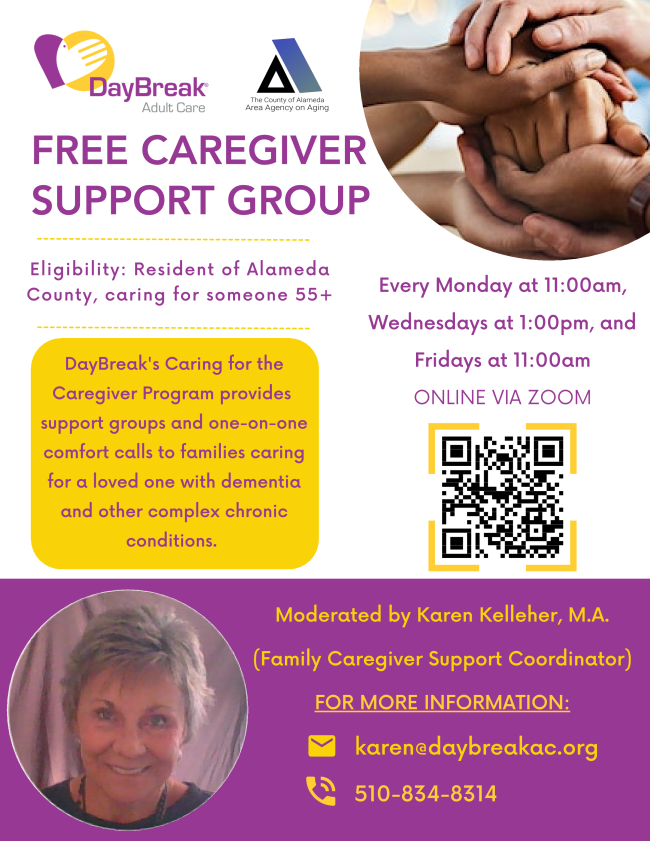
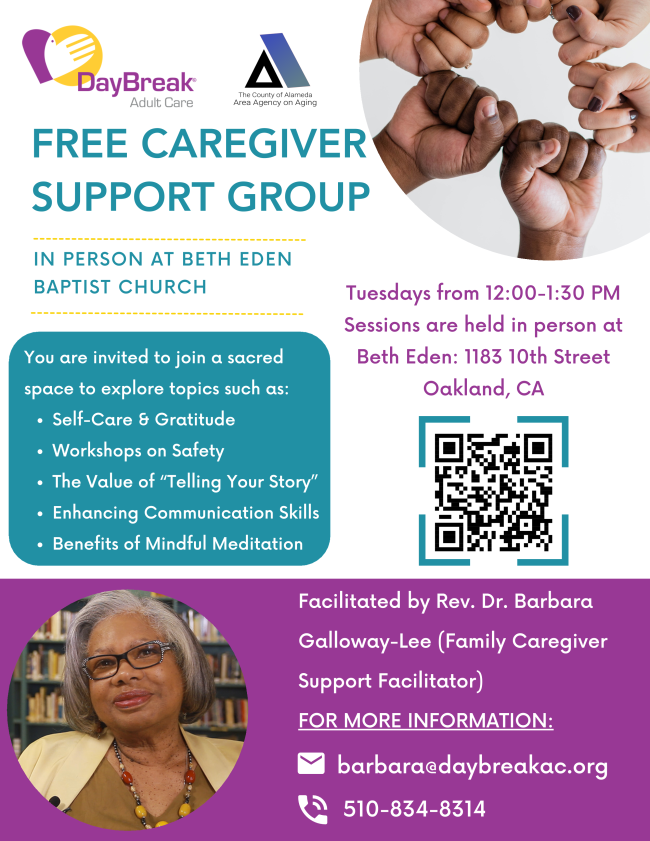
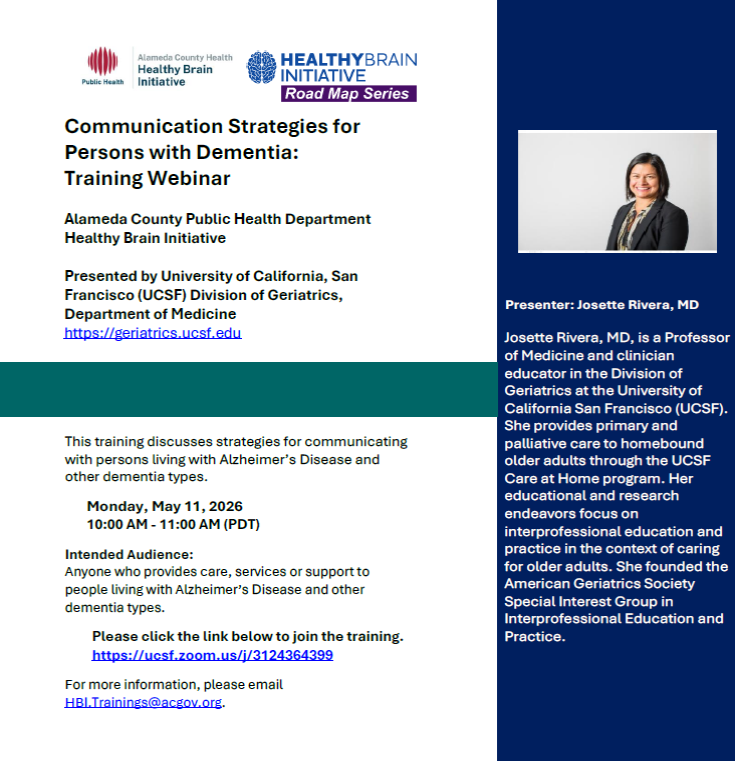
Upcoming Events & Workshops 📣


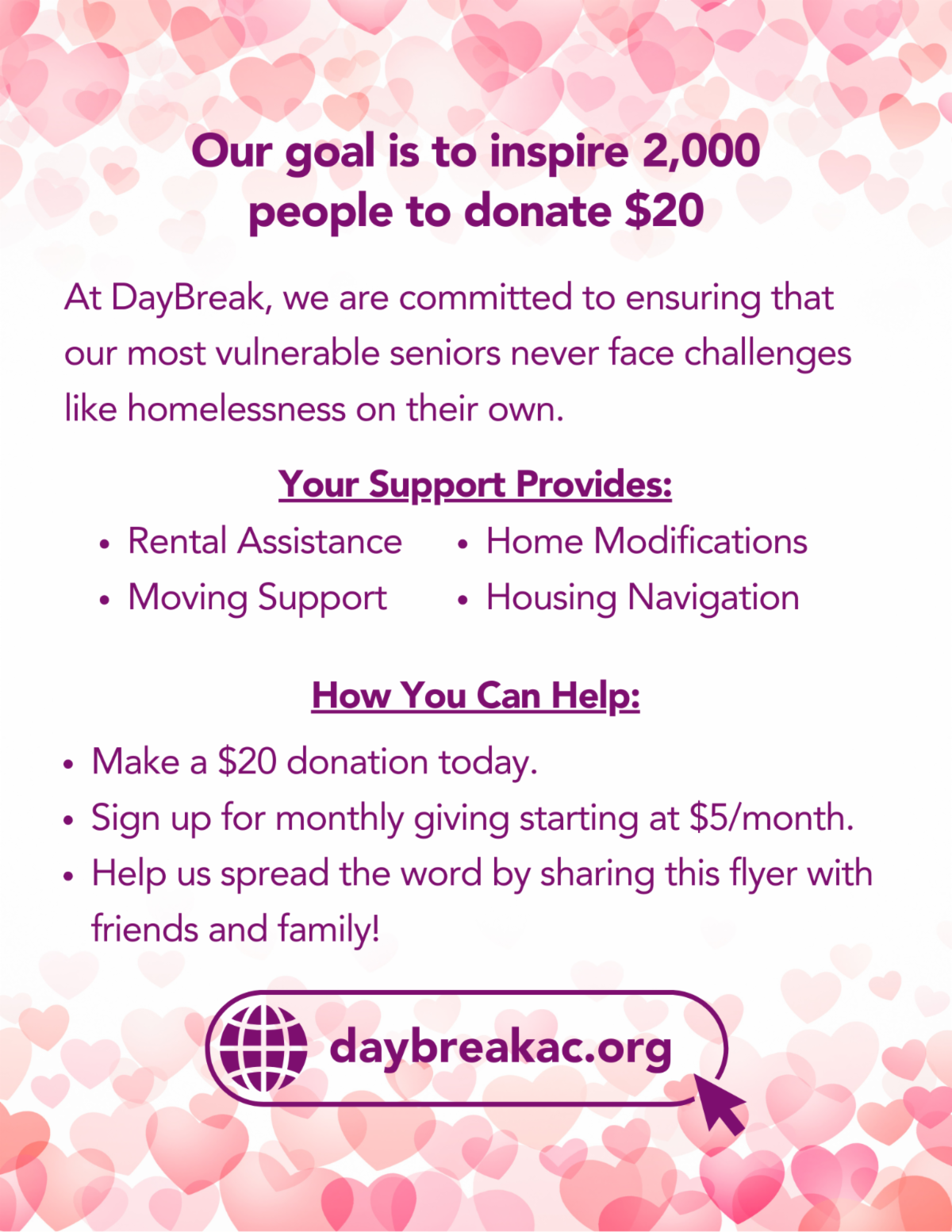
Help Us Reach Our Goal! 💜


Your gift helps ensure seniors have the safety of a secure home and the support they need to age with dignity. Thank you for being part of our mission to provide stability, care, and peace of mind to those who need it most.


If you know an elder in need of our care and coordination services, or a caregiver seeking support, please encourage them to reach out to us at: 

510-834-8314

Web  LinkedIn  YouTube  Facebook  Instagram