|
Published by the Association of WA Business, March 20, 2026
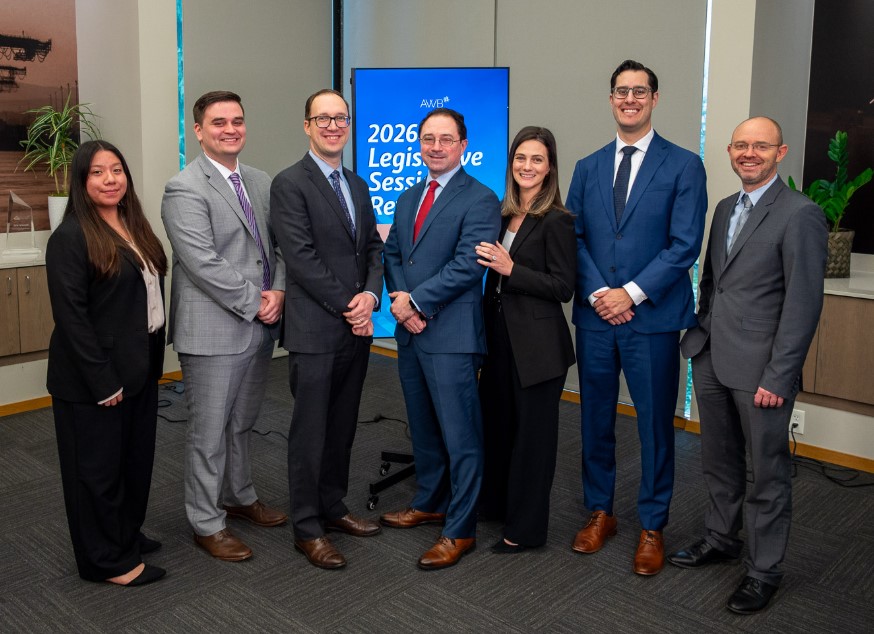
Photo courtesy of AWB
Washington’s 2026 legislative session will be remembered for the passage of a state income tax — the largest shift to Washington’s tax code in decades. As that debate took center stage, many other proposals stalled during the short, 60-day session.
During a webinar Wednesday, AWB’s Government Affairs team recapped what passed, what didn’t, and what is likely to return in 2027. Watch the video here.
Income tax to affect businesses
The passage of a state income tax marks the “most significant piece of tax policy we’ve seen in over a century,” AWB Tax & Fiscal Policy Director Max Martin said.
The 9.9% tax will apply to household income above $1 million. While aimed at high earners, the tax will also affect pass-through businesses such as LLCs, partnerships and S-corps. “It will absolutely have an impact on businesses,” Martin said.
The bill includes some tax relief, including expanded small business tax credits and a rollback of the sales tax on services beginning in 2029. While these measures are helpful, AWB remained opposed to the overall bill because it imposes an income tax, removing one of Washington’s key competitive advantages. Legal and ballot challenges are expected.
Meanwhile, a proposal for a new payroll tax on companies with employees earning more than $125,000 a year is likely to return next year.
AWB Government Affairs Vice President Morgan Irwin and his team gave a post-session roundup during a live webinar recorded and broadcast from AWB’s offices in Olympia on Wednesday, March 18, 2026.
State budget continues to grow
Lawmakers approved a supplemental operating budget that increases spending by about $2.3 billion — an 11.5% increase over the previous biennium.
The budget relies on a revenue package that pulls out roughly $2.2 billion from the economy and withdraws $800 million from the state’s rainy day fund, Martin said. That follows a $9.4 billion tax increase approved in 2025, the largest in state history. Lawmakers also rolled back several tax preferences relating to insurance premiums, prescription drug wholesaling, and data centers.
“We fundamentally see our state has a spending problem, not a revenue problem,” Martin said.
Read the full article here
|