Weekly Digest Number 24 - June 15, 2021 |
|
RWU is Hiring a Part-Time Staff Support Person! |
|
Railroad Workers United (RWU) has reached the point where the work of preparing membership cards and welcome packets for new members, soliciting membership renewals, fundraising, and all the other aspects of keeping the organization alive and well is beyond the capacity of volunteer labor.
One of the great strengths of RWU is that we are working railroaders; but that also means that most of us do not have the time - nor the expertise - to take on the necessary day-to-day clerical work of maintaining the organization.
We are currently accepting applications for this new part-time position, and will conduct interviews during the summer (July and August). We plan to hire in early September, with a start date sometime after Labor Day.
|
|
These Next 20 Days Could Determine If Canadian National Can Buy Kansas City Southern |
|
The Surface Transportation Board (STB) has established its timetable to consider an application by Canadian National to place merger target Kansas City Southern in a voting trust, a key development in the Canadian railroad's planned $33 billion acquisition.
Canadian National last month outbid Canadian Pacific for Kansas City Southern, but the deal must still pass regulatory scrutiny. The railroads expect a drawn-out process to win approval, and Canadian National hopes to use a trust to provide Kansas City Southern shareholders with their compensation prior to the deal winning approval.
Canadian Pacific had already won approval for such a trust structure, but with Canadian National being much larger than either of the other two railroads, there is no guarantee its trust plan will be accepted. The STB rejected Canadian National's initial request, but allowed the railroad to reapply.
The STB is allowing public comments on the proposal through June 28, and granted Canadian National until July 6 to respond to comments.
|
|
EDITOR'S NOTE: The legalities of and the carrier perversions of the Railway Labor Act have historically isolated the rail labor union's leaders & members from other organized labor unions and groups in this country. We have become accustomed to both ignoring the problems and successes of our union brothers and sisters in unions outside the rail industry.
In actuality, some unions have had successes we could learn from. They use methods that we could adapt to pressure rail carriers during contract bargaining and job protection. We could be developing relationships with other organized labor and community groups that would be mutually beneficial.
We do not have to stand alone.
|
|
What Your Boss Doesn't Want You to Know, and Where to Find It |
|
Traditional Bargaining vs. Strategic Bargaining Campaigns
For much of the postwar era, unions approached collective bargaining primarily in terms of what happened at the bargaining table. Union leaders saw bargaining as utilizing table skills to push companies to settle for better contracts.
This approach may have had some logic during strong economic times with stable industries and high union density—though even then it was often backed up by a willingness to strike. But that’s not the situation for most workers today. Few decent contracts can be achieved now by simply negotiating.
In a strategic bargaining campaign, a union carries out extensive research to identify the decision-makers, the company’s growth plan, its profit center (i.e. where it is making most of its profits), and key relationships (to help pick out secondary targets). The union then uses this information to build an escalating, multifaceted campaign to bring pressure to bear in all these areas.
None of this can be done without rank-and-file workers fueling and building this leverage. It’s through this strategic pressure that firms are brought to the table to make decent settlements.
|
|
Victims of San Jose rail yard shooting were ATU members attending a union meeting |
|
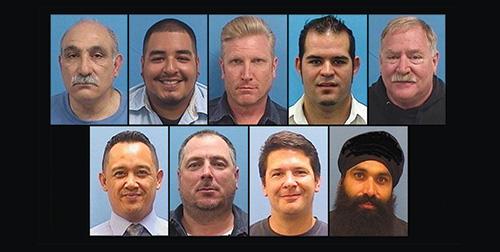
THE VALLEY TRANSPORTATION AUTHORITY provided these photos of the nine victims of the shooting at a VTA rail yard on Wednesday, May 26, in San Jose, Calif. Top row, from left, Abdolvahab Alaghmandan, Adrian Balleza, Alex Fritch, Jesus Hernandez III, Lars Lane. Bottom row, from left, Paul Megia, Timothy Romo, Michael Rudometkin and Taptejdeep Singh.
– Valley Transportation Authority via AP
|
|
The nine people who were killed in a mass shooting May 26 at the Valley Transportation Authority in San Jose were members of the Amalgamated Transit Union (ATU) Local 265. They were attending a union meeting when the shooting started.
ATU International President John Costa released the following statement: “We are shocked and deeply saddened by the multiple fatalities and injuries at a shooting today at a VTA rail facility in San Jose, California. Our hearts and prayers are with our sisters, brothers and their families at ATU Local 265. We are working to provide support and assistance to the victims’ families, and everyone impacted by this tragic event.”
“Every mass shooting is a tragedy. But this mass shooting hits close to home because the victims are our brothers and sisters,” said Richard Trumka, president of the AFL-CIO. “We still don’t know all the details, but we know this senseless act of violence happened at an Amalgamated Transit Union (ATU) meeting in San Jose. It’s hard to take in, I know. We’ve all been to those meetings. A place of solidarity and democracy turned into a target for carnage.
“I’m sad. I’m angry. But we are a family. Families grow together, celebrate together – and grieve together,” Trumka said. “And over this past year, our family has had way too much grief. It’s a reminder that our work is great, and our time together is never long enough. May God bless the memories of the brothers and sisters we lost today, and may God give their loved ones strength.”
|
|
INVEST ACT PASSES COMMITTEE WITH SAFETY MEASURES, INCLUDING TWO-PERSON CREW, INTACT |
|
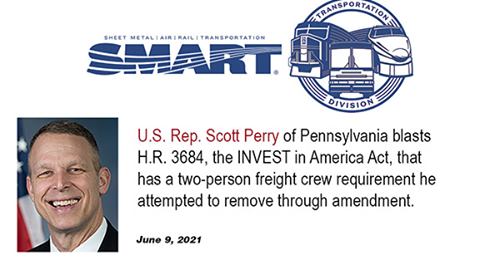
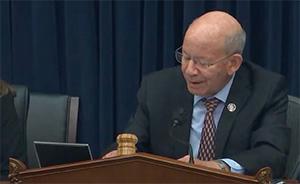
After a session that began the morning of June 9 and carried on overnight into the pre-dawn hours of June 10, the INVEST in America Act passed out of the U.S. House Transportation and Infrastructure Committee with two-person crew and other provisions important to SMART Transportation Division members intact.
“We are one step closer to success,” SMART Transportation Division National Legislative Director Greg Hynes said. “This was a marathon session, but one that had the best possible outcome for our members. We thank the committee members for their work and now turn our focus to getting the legislation’s passage in the full House.”
The bill, H.R. 3684, a five-year, $547 billion surface transportation reauthorization bill, now moves to the full House for consideration after passing the committee 38-26. Two Republicans, Brian Fitzpatrick of Pennsylvania and Jenniffer Gonzalez-Colon of Puerto Rico, voted along with 36 Democrats on the committee to pass the bill.
|
|
|
|
This from the Facebook post of BMWED Brother Jed Dodd...
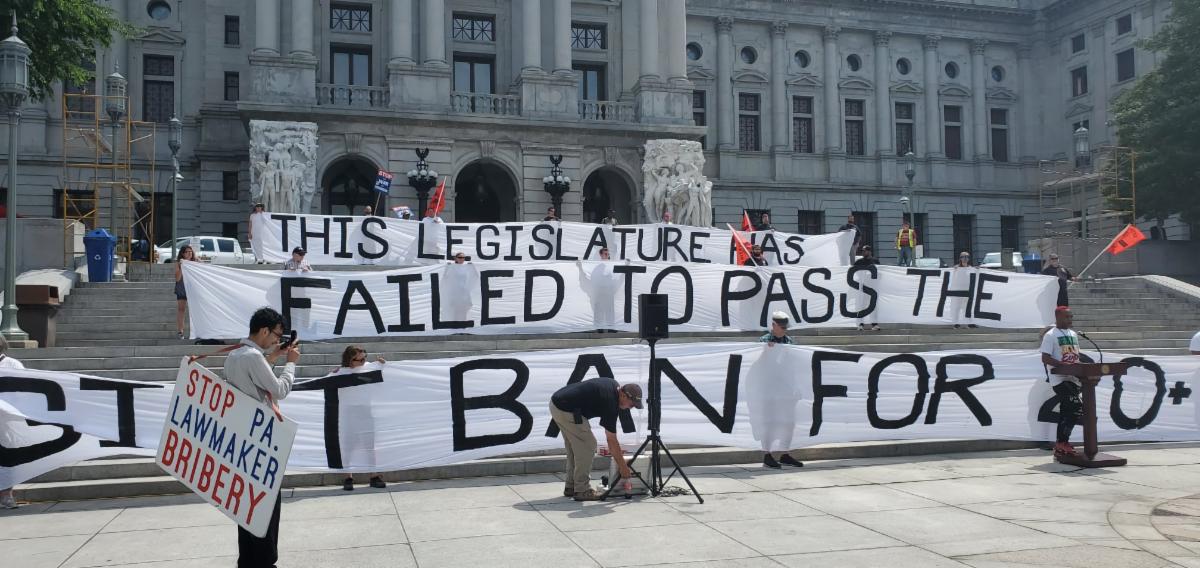
Today our Union (Railroad Teamsters) joined the March on Harrisburg to demand that the Pennsylvania State Government pass a ban on our elected officials accepting gifts (bribes). Pennsylvania is still one of 8 states that does not ban the practice of lobbyists and corporations giving gifts to our state elected officials.
Governor Wolf has banned the practice by administrative order but the House and Senate representatives continue to accept this legalized bribery. The bribes are sometimes substantial as State Senate Chairperson Corman knows as a lobbyist recently paid for him to take an all expense paid trip to the Bahamas with his family. There is no question that a bill banning gift giving (bribes) would pass both the Senate and the House and be signed into law by Governor Wolf but State Senate Chairperson Corman refuses to permit a vote on the matter.
Today we marched on his office in Harrisburg and stood side by side with other citizens demanding the restoration of decency and to make this bribery illegal.
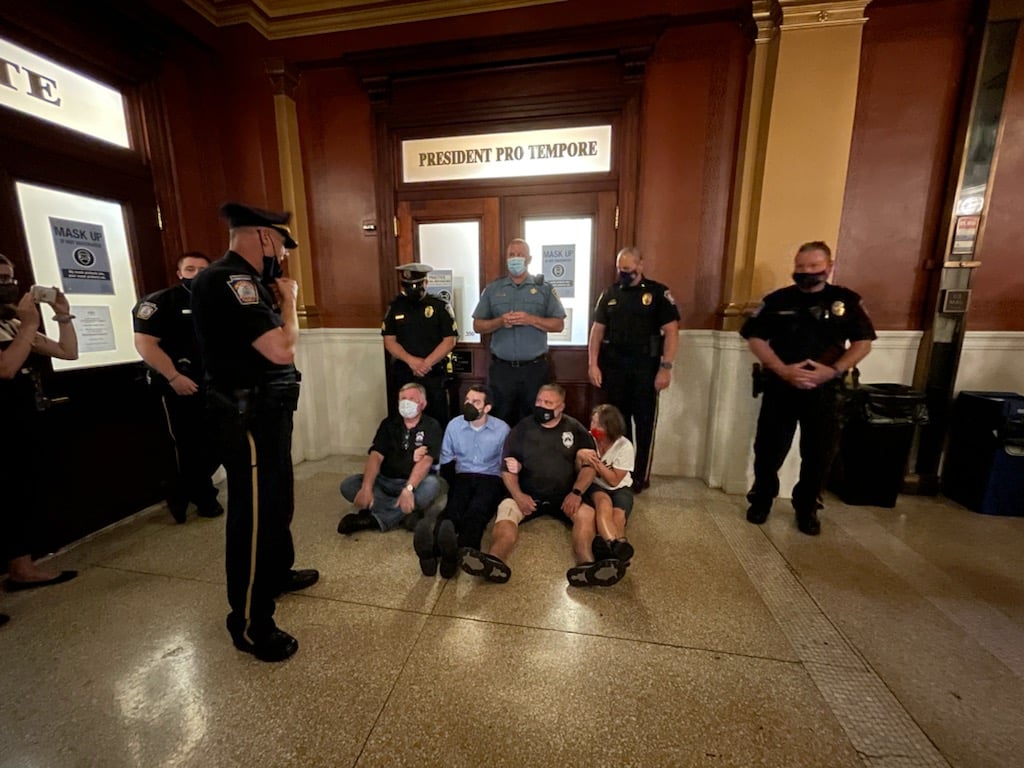
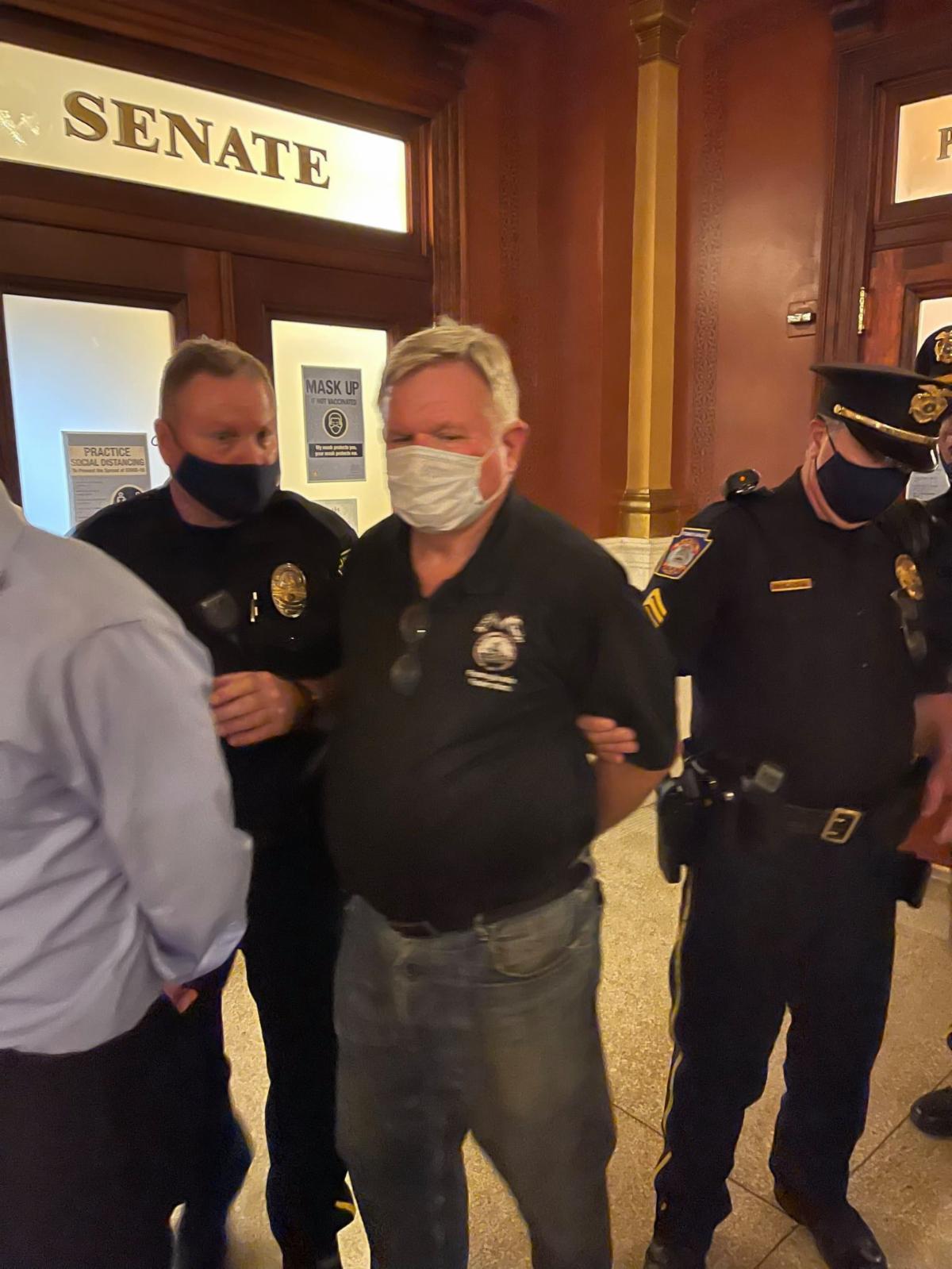
Our Union was there and four of us, two Teamsters, one Rabbi and one citizen were arrested when we demanded a meeting with State Senate Chairperson Corman on the subject. We are not finished and will continue the struggle until we remove this stain (Corman and the bribes) from state government. Power to the People!
|
|
U.S. rail traffic continued upward climb in Week 22 |
|
U.S. railroads logged 489,144 carloads and intermodal units for the week ending June 5, up 12.9% compared with the same week last year, according to Association of American Railroads (AAR) data.
Carloads for the week totaled 227,497 units, up 18.1%, while intermodal volume reached 261,647 containers and trailers, up 8.7%.
In some rail traffic categories, year-over-year percentage changes are inflated because of the widespread shutdowns — and subsequent large reduction in rail volumes — that impacted many economic sectors last year at this time, AAR officials said in a press release.
|
|
CP, BNSF tell federal regulators they can handle rising traffic volumes |
|
Canadian Pacific and BNSF Railway say they have enough crews, power, and other resources to handle surging demand for rail traffic.
CP and BNSF are the first two Class I railroads to respond to the Surface Transportation Board’s request for updates about their ability to meet demand. Citing rail service problems, STB Chairman Martin J. Oberman on May 28 asked the big railroads to provide information on their hiring plans, as well as current crew and locomotive availability.
Some 1,030 of CP’s 1,400 road locomotives are in service, with 46 units standing by as a surge fleet. The railroad plans to hire 110 train and engine service employees this year, and has 42 train crew personnel furloughed out of 1,034 in the U.S.
BNSF has sufficient crews for current volumes, Farmer says, noting that the railroad has more than 1,500 train, yard, and engine employees on furlough, down from just over 3,000 at the end of January. BNSF is hiring in many locations across the system, and has increased staffing at its intermodal terminals by 15% to 35% at various places on its network.
|
|
Union Pacific plans to add sidings in strategic areas |
|
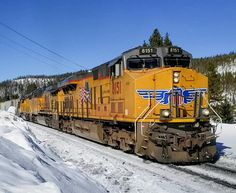
Among Union Pacific’s $2.8 billion in capital investments in 2021 are additions or extensions of sidings at a number of points along its network.
Sidings enable one train to meet and pass another. Adding sidings that can accommodate longer trains enables Union Pacific (UP) to improve the fluidity of the railroad, according to UP spokesperson Robynn Tysver.
According to UP’s 2020 sustainability report, UP has recently completed sidings along three routes: the Texas and Pacific route from El Paso to Shreveport, Louisiana, the Del Rio route from El Paso to Houston and the Golden State route from El Paso to Kansas City, Missouri.
The three routes serve a variety of markets, with intermodal and manifest being the two most predominant. The El Paso to Kansas City also handles “a fair amount” of bulk business, Tysver said.
Additional sidings on each of these routes will be completed in 2021, according to Tysver. Overall, 19 additional sidings will be constructed in 2021 at a cost of roughly $150 million.
|
|
New report describes how Custer train crash happened, and the FBI is investigating |
|
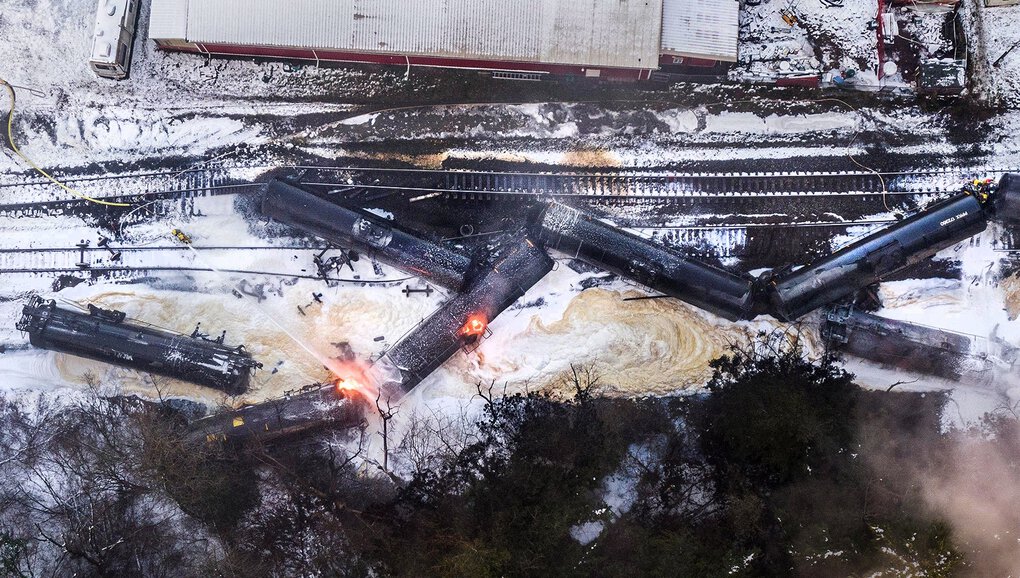
FBI investigators are in charge of an inquiry into how a BNSF oil train derailed and burned last year in rural Whatcom County, and a new report confirms previous allegations that the 106-car train had split into two sections before several cars jumped the tracks and ignited in a fireball.
In its report released Thursday, June 10, the National Transportation Safety Board did not determine the cause of the incident, where 10 tank cars loaded with highly flammable Bakken crude oil derailed at Portal Way and Main Street shortly before noon Dec. 22, 2020, as the BNSF train headed toward the Phillips 66 refinery at Cherry Point.
Three tank cars caught fire and 120 nearby residents were evacuated for several hours as firefighters brought the blaze under control.
Some 29,000 gallons of oil spilled and damages exceeded $1.5 million, according to the NTSB report.
|
|
What’s Really Going On in Memphis? |
|
Various logistics journalists and technical intermodal market experts have been selectively addressing some of the Midwestern, in particular the Memphis region, slowdown in intermodal rail fluidity. Like the coastal ports of LA/Long Beach out West and now the high-growth-rate Eastern ports like Savannah, this region has has a series of congestion problems, beginning in 2020.
These problems are rather ubiquitous at key intermodal terminals. They include:
- Lack of empty containers for certain export commodities such as specialty grains.
- Delays in assembling outbound railway container platform cars.
- Regional shortages of intermodal semi-trailer (TOFC) rail cars.
- Shortage of spaces for parking delayed pickup/returning regional containers.
- Random mismatch between TEUs (twenty-foot equivalent units), FEUs (forty-foot equivalent units) and the longer 53-foot higher-ceiling domestic containers and necessary chassis equipment.
Network fluidity has broken down in a variety of these ways. I left out health issues and occasional worker-related shortages.
The point is, this is a complex supply chain interaction. More than one problem needs resolving to return to normalcy. Should the railroads shoulder all the responsibility? No. That seems unreasonable, given the complexity of long supply chain distances and the multiple players involved in the movement of any one container across multiple-carrier network links and terminals.
|
|
Chemical shippers cite widespread rail service problems, particularly on CSX |
|
The trade association representing chemical shippers has asked federal regulators to put CSX Transportation under increased scrutiny due to what one company called an “operations meltdown.”
Members of the American Chemistry Council reported “significant and persistent” railroad service problems, particularly with CSX. But Kansas City Southern and Norfolk Southern also were cited for erratic service.
“U.S. chemical shippers are experiencing widespread and persistent rail service challenges. These failures and delays are harming manufacturing operations, supply chains, and our ability to compete globally,” American Chemistry Council CEO Chris Jahn wrote in a letter posted on the Surface Transportation Board website today. “While recognizing that the COVID-19 pandemic created daunting challenges for railroads, particularly with crew availability, we believe the current issues reveal systematic capacity constraints caused by cost cutting and major operational changes over the past several years.”
The chemical shippers’ complaints about CSX service largely mirror those raised by the railroad’s fertilizer customers in a letter to the STB earlier this week. [see “Fertilizer shippers single out CSX …,” Trains News Wire, June 8, 2021].
The chemistry association asked the STB to enhance its oversight of CSX, provide emergency service relief, hold railroads accountable for service failures, require railroads to suspend minimum volume requirements when service is poor, and boost competition among railroads.
|
|
|
|
|
|
|