|
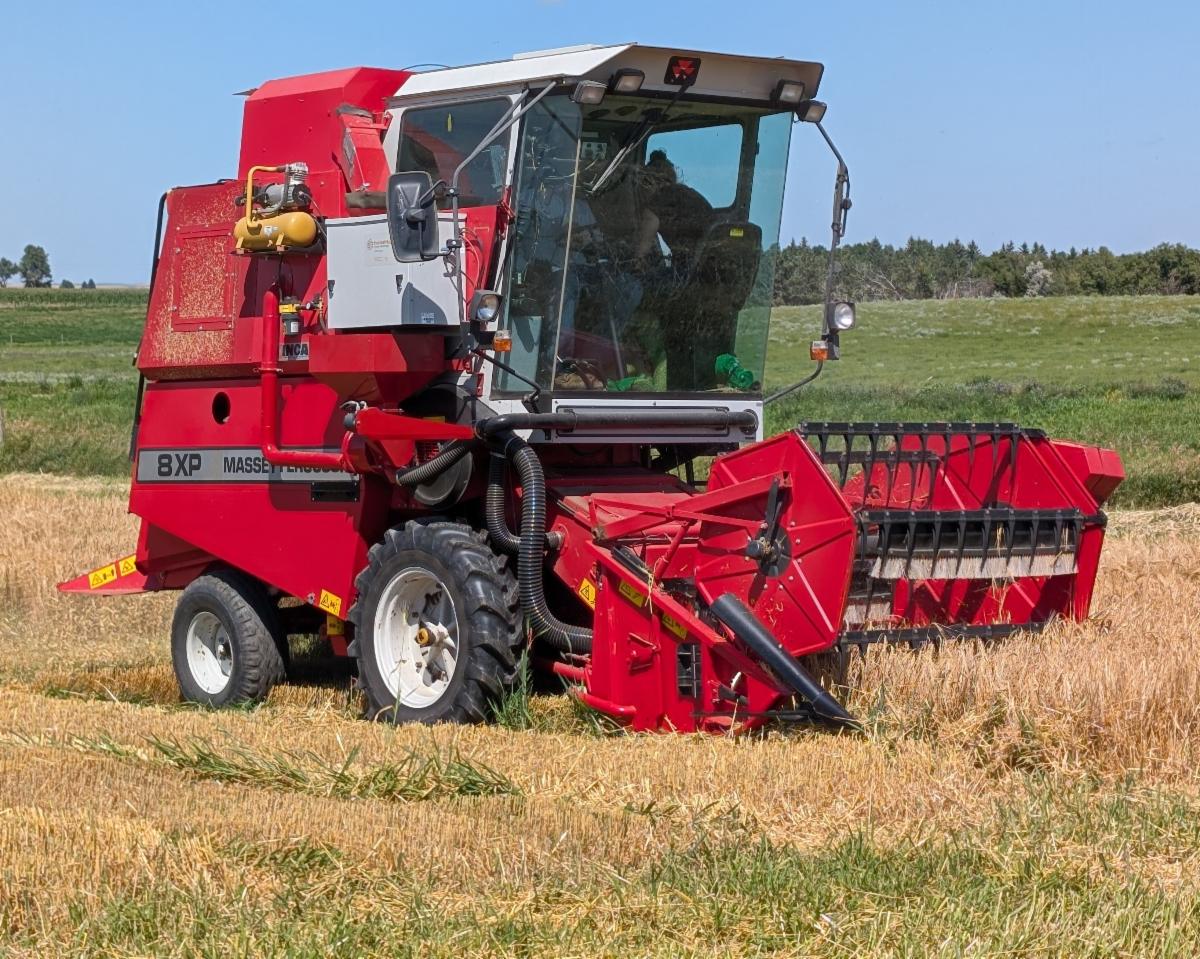
We are now in harvest season. Harvesting spring wheat in our region needs careful attention to timing, moisture content, and combine settings to maximize yield and quality.
· Harvest window: The optimal period is late summer to early fall once the crop reaches physiological maturity—when plants have turned golden yellow and kernels are hard.
· Moisture content: Harvest at 14-18% grain moisture to maintain quality and reduce losses.
· Harvest risks: Cutting too early can cause kernel damage and increase susceptibility to fungi and insects. Delaying harvest raises the risk of lodging, shattering, sprouting, and problems from green weeds.
· Combine adjustments:
1. Rotor/cylinder speed & concave clearance: Begin with slower rotor speeds, adjusting for adequate threshing while minimizing grain damage.
2. Draper belt speed: Match to ground speed for smooth crop flow.
3. Fan speed: Fine-tune to achieve a clean sample while limiting grain loss.
4. Chaffer & sieve settings: Adjust openings based on kernel size and field conditions to optimize separation and cleaning.
· Weed management: If green weeds are present, a pre-harvest desiccant or harvest aid herbicide may improve drying and harvest efficiency.
· Equipment sanitation: After harvesting weedy fields, clean combines and machinery thoroughly to prevent spreading weed seeds.
· Drying & storage: Post-harvest, reduce grain moisture to about 13.5% for long-term storage to minimize spoilage.
· Bin preparation: Clean and repair bins before filling, applying insecticides if necessary.
· Monitoring storage conditions: Keep grain temperature within 15–20°F of the average monthly air temperature to avoid condensation, moisture migration, and deterioration.
|