Weekly Digest Number 14 - April 4th, 2023 |
|
Welcome to the RWU Rail & Labor News! This news bulletin is produced and emailed out each Tuesday morning. We hope you find each week's news and information useful. If so, please share with co-workers, friends, and colleagues. If you like, you can sign them up to get all the news from RWU HERE. Or forward them the link. Note: If you read over this news bulletin each week, you will be sure to never miss the important news of what is going on in the railroad world from a worker's perspective!
|
|
(Editor's Note: Of all of the major derailments of the last week of March listed at the in this week's Rail & Labor News, this one might be the most significant yet least reported. Runaway train wrecks like this one should not be continuing to happen with such frequency. See the "Derailment Department" at the bottom of this newsletter for further information about this disastrous week in U.S. railroading.) |
|
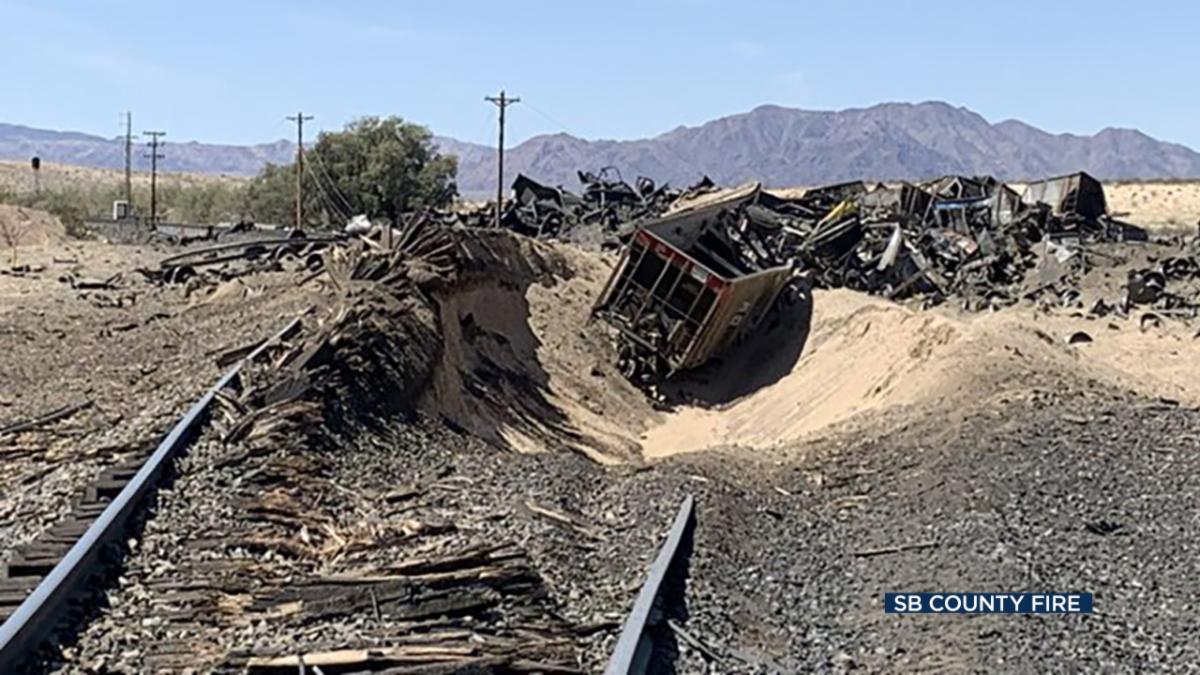
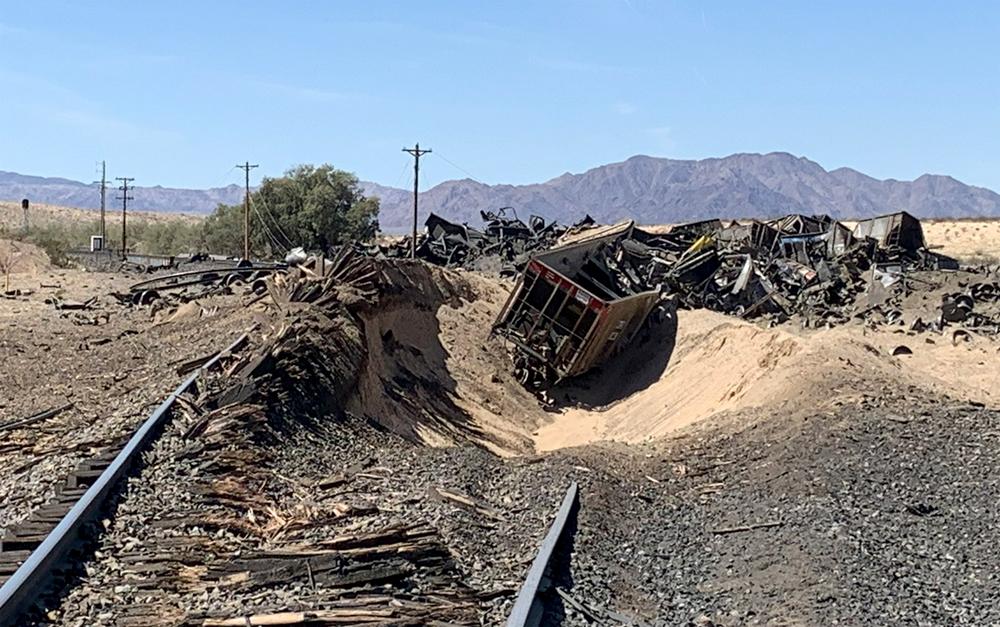
Train Carrying Iron Ore Derails in San Bernardino County, California
One locomotive suffered a minor leak, according to officials.
|
|
A train carrying raw material derailed in California on Monday, according to San Bernardino County fire officials. There were no passengers on the Union Pacific train, but multiple cars containing iron ore derailed, officials said.
According to Union Pacific officials, 55 train cars, including two locomotives, derailed at 8:30 a.m., local time.
One locomotive suffered a minor leak, which is being investigated by hazmat officials, county fire officials said.
There were no injuries and no active fires, as well as no threat to the public or the environment, San Bernardino County Fire tweeted.
In a statement to ABC News, Union Pacific confirmed that the derailed cars did have iron ore, which spilled, but that it isn't hazardous and that there were no hazardous materials on the train.
"The crew was not in the cab at the time of the derailment and there was uncontrolled train movement," Union Pacific said in a statement. "The crew was not injured."
The derailment is currently being investigated, Union Pacific said.
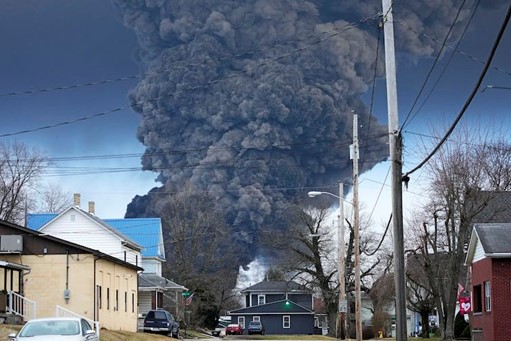
The incident comes more than a month after a Norfolk Southern foreign train derailed in East Palestine, Ohio, releasing vinyl chloride, ethyl acrylate and isobutylene into the environment.
Norfolk Southern officials had conducted a controlled burn of toxic chemicals from the train a few days after the derailment, which worried residents who expressed concerns they were exposed to high levels of the colorless gas vinyl chloride, which easily burns and is associated with an increased risk of several cancers, according to the National Cancer Institute.
Earlier this month, 28 cars of another Norfolk Southern train derailed near Springfield, Ohio, but no hazardous materials were involved, officials said.
|
|
(Editor's Note: Is this for real or just grandstanding? It is not every day that the U.S. government sues a Fortune 500 corporation. It remains to be seen if the DOJ keeps up the heat once the issue of East Palestine is out of the headlines. And what exactly is the dollar amount? One would think it would be in at least tens of millions? Time will tell.) |
|
US Department of Justice sues Norfolk Southern Over Ohio Train Derailment
Lawsuit reportedly seeks damages for alleged Clean Water Act violations following crash of train carrying hazardous materials
|
|
The US Department of Justice has filed a lawsuit against freight train giant Norfolk Southern over its 3 February train derailment in East Palestine, Ohio, seeking to ensure the company pays the full cost of cleanup and any long-term effects.
The lawsuit filed in the US district court in Ohio on behalf of the Environmental Protection Agency (EPA) seeks penalties and injunctive relief for the unlawful discharge of pollutants under the Clean Water Act and an order addressing liability for past and future costs.
Meanwhile, it emerged that a team of government officials became sick while investigating the health effects of the toxic train derailment, when they visited the Ohio site earlier this month, the US Centers for Disease Control and Prevention (CDC) told CNN.
The derailment of 38 cars including 11 carrying hazardous materials in the village of East Palestine caused cars carrying toxic vinyl chloride and other hazardous chemicals to spill and catch fire.
“With this complaint, the Justice Department and the EPA are acting to pursue justice for the residents of East Palestine and ensure that Norfolk Southern carries the financial burden for the harm it has caused and continues to inflict on the community,” the US attorney general, Merrick Garland,said on Friday.
EPA in February issued an order requiring Norfolk Southern to develop plans to address contamination and pay EPA’s response costs.
The EPA administrator, Michael Regan, said the suit will help “ensure Norfolk Southern cleans up the mess they made and pays for the damage they have inflicted as we work to ensure this community can feel safe at home again”.
The railroad did not immediately comment on the lawsuit.
Norfolk Southern’s CEO, Alan Shaw, told lawmakers last week that the railroad is “committed” to paying for cleanup costs and addressing potential long-term health issues and home value impacts from the derailment.
Shaw said the railroad will work with the community on programs to protect drinking water over the long term.
|
|
(Editor's Note: Recently retired NS locomotive engineer and longtime RWU member tells it like it is. Most every trainman and engineer in North America will no doubt be able to relate to Brother Scott's revelations.) |
|
Train Engineer Says He Saw Too Many ‘Safety-Shortcuts’ at Norfolk Southern
|
|
PITTSBURGH — For years, Scott Wilcox drove a train for Norfolk Southern, traveling between the Conway Pennsylvania rail yard and Toledo, Ohio.
“More times than I care to count,” says Wilcox.
“This has been something that’s going to happen for a long time” says the licensed locomotive engineer. “And now it happened.”
Now retired, Wilcox says he comes from six generations of rail road workers and spent nearly 20 years in the business, much of it with Norfolk Southern.
But along the way, Wilcox says things started to change and it worried him. He says, first, Norfolk Southern started increasing the length of the trains by adding car after car after car.
“They’ve gone from a mile and a quarter to 2 to 3 miles long” Wilcox says. The problem? It can make the train difficult to handle, especially on curves and hills.
At the same time, he says he saw a decrease of safety inspectors who are supposed to inspect the brakes and wheels of every car before it leaves.
The result?
“They used to have between five and 8 minutes per car” to the do the inspection, he says. “Now it’s down to between 30 seconds and a minute per car. There’s some of these cars that you’d have a hard time walking the length of them in 30 seconds.”
Just as alarming, says Wilcox, a train is supposed to be fully inspected every 1000 miles of travel. But he says instead, “mostly what they do is they drive alongside it in the pickup truck.”
|
|
(Editor's Note: The account relayed below could be replicated by thousands of car inspectors from all Class One railroads across the country. It is exciting to see more and more working railroaders come forward with their stories and testify as to just what the hell is going on out there. What about you? Railroad Workers United can hook you up with all sorts of media outlets so you can speak your truth. Contact us at info@railroadworkersunited.org. The time for silence is over.) |
|
A Carman's Perspective on the East Palestine Derailment and the Rail Industry as a Whole
“For those of us who work in the rail industry, it was only a matter of time before a disaster like this happened. Unfortunately, we were ignored, and the people of East Palestine (like, as of this week, the people of Raymond, Minnesota) are the ones paying for it.”
|
|
The catastrophic derailment of a Norfolk Southern train in East Palestine, Ohio, on Feb. 3 has devastated the local community and led to a wholly justifiable uproar by the public. The response by federal agencies and the rail carrier itself left residents frustrated and without any definitive answers on how to move forward. What is perhaps most devastating about the East Palestine disaster, though, is the fact that it was avoidable. Norfolk Southern has spent the last five years deferring maintenance, furloughing employees, rushing inspections, cutting corners on repairs, and threatening (and retaliating against) employees who didn’t comply with any of the directives put in place to accomplish their ultimate goal of an operating ratio below 60%. Those of us who work in the rail industry knew it was only a matter of time before a disaster like this happened. Unfortunately, we were ignored, and the people of East Palestine (like, as of this week, the people of Raymond, Minnesota) are the ones paying for it.
I am a carman who has worked at Norfolk Southern for nearly 20 years. During that time, I’ve had a front-row seat to the complete and utter degradation of this industry. When I was hired in the early 2000s, this company was a decent company to work for. Safety was the number one priority for Norfolk Southern—so much so that the company won the EH Harriman Award for Safest Class 1 Railroad from 1992 until the award was discontinued in 2012. In those days, we were paid well and had good benefits, and most of us actually enjoyed our jobs. There were times when we even looked forward to going to work. That’s not something you will hear anyone say now.
I am a carman who has worked at Norfolk Southern for nearly 20 years. During that time, I’ve had a front-row seat to the complete and utter degradation of this industry.
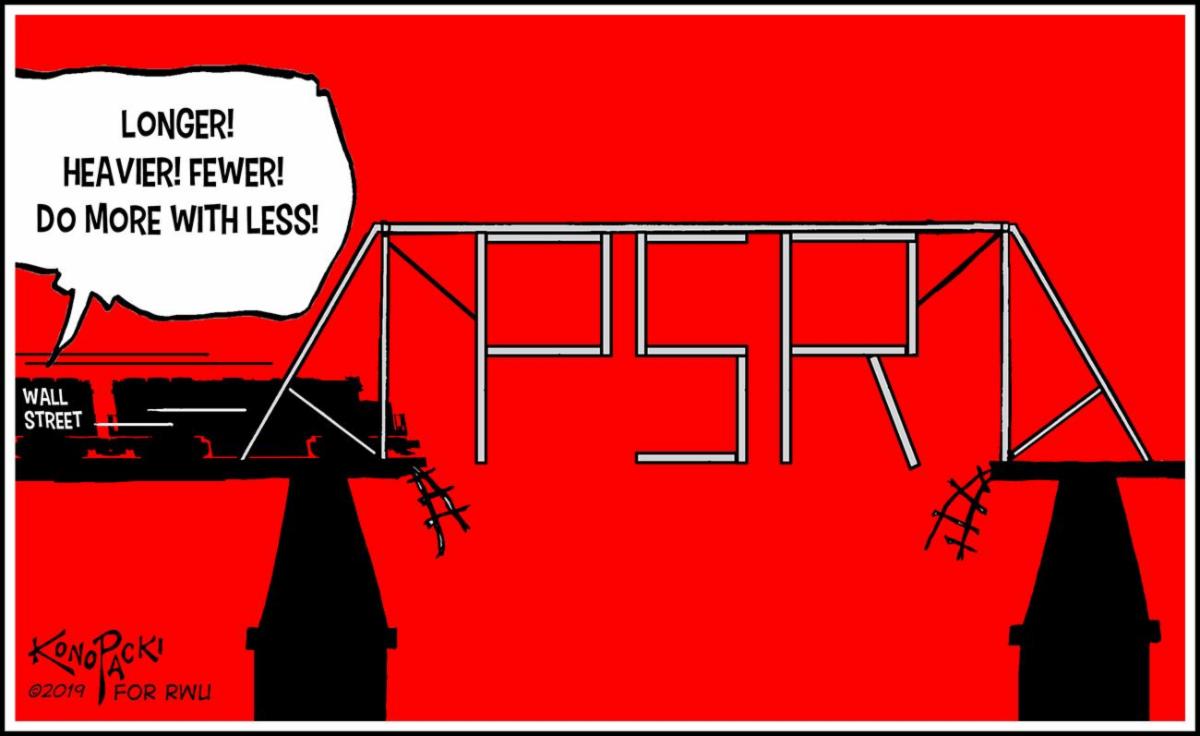
Over the past few years, as the Class 1 rail carriers have implemented the cost-cutting, job-automating, profit-maximizing scheme known as “Precision Scheduled Railroading” (PSR), working conditions on the railroads have gotten progressively worse.
|
|
(Editor's Note: It is all smoke and mirrors. The rail industry is not concerned with growth, unless it happens to be long unit trains that pay 40 cents or more on the dollar. The industry loves to talk about new customers and service lanes and so forth, but they conveniently omit to speak of the traffic they are simultaneously driving off the rails through poor customer service, and price gouging. The proof is in the numbers. In 2006, the rail freight industry moved 32.1 million carloads. In 2022 it moved just 25.4 million. Do the math. That is a 21% decline over 16 years! Wall Street is choking the rail industry.) |
|
Viewpoint: Railroads Talk About ‘Growth,’ But Where is It?
Railroads banking on uncertain trends to boost market share
By John Schmitter Tuesday, March 28, 2023
|
|
Have we seen much real growth? Not yet. So far, talking about growth seems to be the only thing that’s growing. With further consolidation among railroads from Canadian Pacific’s acquisition of Kansas City Southern, will we see real investment in growing volume or can we expect more of the same talk?
What do the railroads mean by ‘growth’?
The railroads usually talk of “smart and sustainable growth” while also reaffirming their commitment to operating ratio. How that has generally played out is: no new train starts, no new capacity and the same level of service they provide to their current customers. Some have taken new business in lanes where they perceive they have capacity. Some are hiring crews now to expand capacity, and maybe they will even keep some of these people on when volume drops. This is a start, but it only means the railroads can handle more of the volume their current customers want to ship. It’s not about expanding the customer base with new services. Most other businesses would not call that a growth strategy.
|
|
(Editor's Note: The U.S. government has violated practically every treaty ever made with Native Americans, after absconding with hundreds of millions of acres, a sizable portion of which was then handed over for free to the nation's railroads, a gang of scoundrels once known as the Robber Barons. These thieves went on the swindle workers, communities, businesses, and whole states - e.g. California. So really, this news should come as no surprise at all.) |
|
Judge Rules BNSF Oil Trains Violated Tribal Agreement
March 28, 2023
Federal ruling says railroad unilaterally exceeded limits ‘in pursuit of profits’
|
|
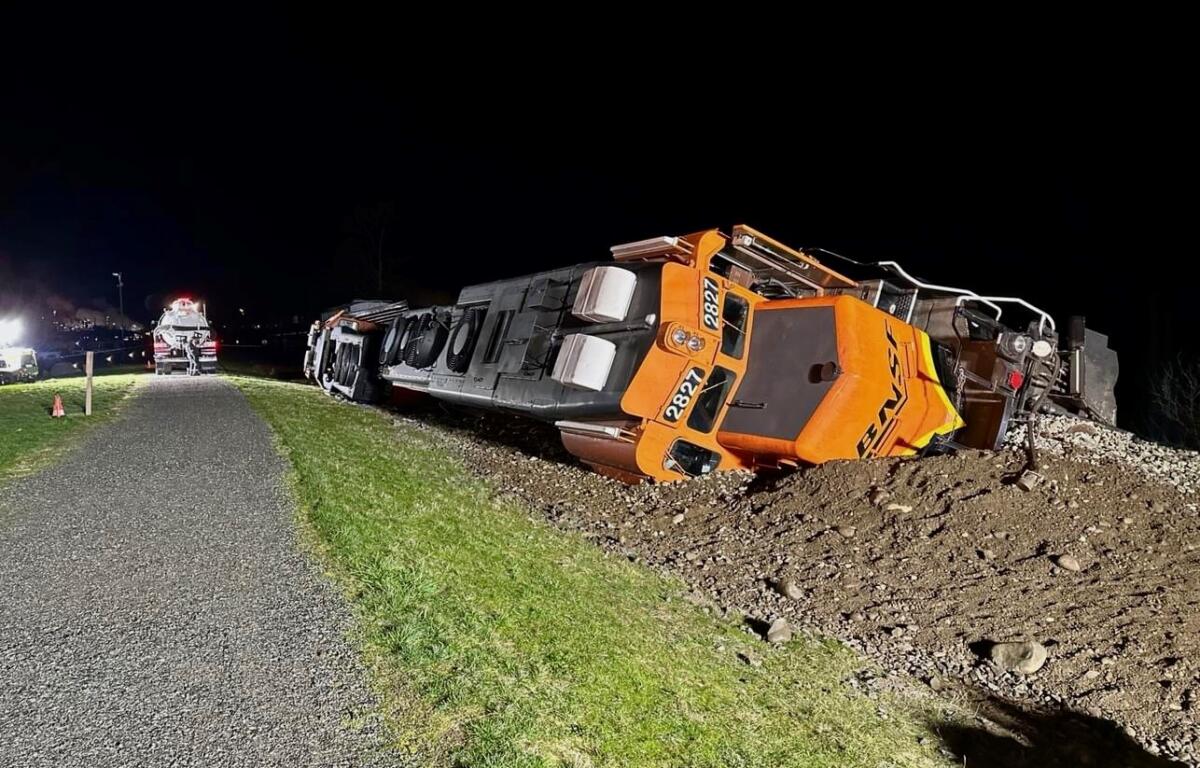
ANACORTES, Wash. — BNSF Railway violated terms of an easement agreement with the Swinomish Indian Tribal Community by running 100-car trains of crude oil across the Swinomish reservation in Anacortes for years, a federal judge ruled Monday.
The Seattle Times reports that U.S. District Court Judge Robert Lasnik said in a written order Monday that BNSF unilaterally decided to increase the number of trains and cars crossing the reservation, without the tribe’s consent, between September 2012 and May 2021 “in pursuit of profits.” A 1991 agreement allowed trains traveling in each direction to carry no more than 25 cars per day and required the railroad to tell the tribe about the “nature and identity of all cargo.”
A second phase of the trial will consider the tribe’s claim for damages.
The tribe learned a nearby refinery would begin receiving crude oil trains through a county planning document in 2011. BNSF first contacted the Swinomish about track usage the following year, according to court documents, but the tribe at no point approved the movement of unit oil trains, agreed to increase the limitations, or waived its right to approval, Lasnik wrote in his decision. He ruled that the railroad “trespassed on Indian lands and is liable for the damages caused by its overburdening of the easement.”
A BNSF spokeswoman declined to comment on the ruling, the Times reports.
The decision came just days after a BNSF train derailed on the Swinomish reservation, spilling diesel fuel from the locomotives [see “Improperly lined derail led to BNSF derailment …,” The tribe has said it is concerned a rail accident could foul waters along the right-of-way where it has treaty-protected fishing rights.
|
|
(Editor's Note: More rail safety legislation on the way. This time it remains to be seen if any Republicans will join the show. While this bill addresses a number of safety issues, like the RSA 2023, it leaves out many as well.) |
|
In Fiery Shadow of New Train Disaster, Fetterman Leads Railway Accountability Act
"This bill will implement commonsense safety reforms, hold the big railway companies accountable, protect the workers who make these trains run, and help prevent future catastrophes," said the Pennsylvania Democrat.
|
|
As a train derailment and fire forced evacuations in Minnesota on Thursday, a trio of Democratic U.S. senators introduced another piece of legislation inspired by the ongoing public health and environmental disaster in and around East Palestine, Ohio.
The Railway Accountability Act—led by Sens. John Fetterman (D-Pa.), Bob Casey (D-Pa.), and Sherrod Brown (D-Ohio)—would build on the bipartisan Railway Safety Act introduced at the beginning of March by Brown and Sen. J.D. Vance (R-Ohio) after a Norfolk Southern train carrying hazardous materials including vinyl chloride derailed in the small Ohio community on February 3.
While welcoming "greater federal oversight and a crackdown on railroads that seem all too willing to trade safety for higher profits," Eddie Hall, national president of the Brotherhood of Locomotive Engineers and Trainmen (BLET), also warned just after the earlier bill was unveiled that "you can run a freight train through the loopholes."
The new bill is backed by unions including the Transport Workers of America (TWU), the National Conference of Firemen & Oilers (NCFO), and the International Association of Sheet Metal, Air, Rail, and Transportation Workers-Mechanical Division (SMART-MD).
"Communities like Darlington Township and East Palestine are too often forgotten and overlooked by leaders in Washington and executives at big companies like Norfolk Southern who only care about making their millions."
|
|
(Editor's Note: We run this article not just to promote the struggle of our bothers and sisters in the airline industry, but because this article does a good job pointing out the objective conditions that are facilitating the advancement of unionization and workers' power in the airline industry. Note the parallels to the rail industry.) |
|
The Labor Movement Has Found A Strategic Advantage In The Airline Industry
Andy Hirschfeld March 27, 2023
|
|
In the early morning hours of Jan. 11, a hack shut down the FAA’s systems, grounding all flights nationwide. I had a flight that morning to Minneapolis–St. Paul with a tight connection to Boise, Idaho. Once the ground stop was lifted, my Delta flight left New York’s LaGuardia.
Unfortunately — because of the delay — there was no way I could make my connection in Minnesota. The next flight to Boise was a staggering ten hours later. I was one of seventeen people that needed to make that connection, and ended up stuck in the Twin Cities. I eventually made it to Idaho in the wee hours of the morning — more than 15 hours after I was supposed to.
It was my personal encounter with a problem you may have experienced — that many Americans have experienced — especially, it would seem, in the last few months. A version of it unfolded on a massive scale only weeks before my attempt to reach Idaho. Southwest Airlines’ outdated systems failed to keep up with demand in late December during the key holiday season — a development which airline insiders had warned would happen for years if the Dallas-based budget carrier did not change its ways.
The debacle led to thousands of canceled flights and left millions stranded in one of the busiest times for the industry. Southwest largely blamed a severe weather event for the meltdown. However, no other major carrier experienced such a robust and widespread disruption.
There are two factors at play in these episodes, which both speak to how thin and precarious America’s system of air travel has become.
First, consumers simply have fewer options available to them than they did a decade ago, and, as a result, airlines have considerably more power.
Second, America’s air travel network is easily disrupted. A single point of failure can have widespread ripple effects.
Both of these factors have caught the attention of an increasingly powerful force in the airline industry: organized labor. In 2023, unions are at the vanguard of providing a check on a set of corporations that Americans are fed up with.
|
|
(Editor's Note: Great to see rail worker perspectives on National Public Radio, even if they do waste a lot of time with the AAR chief.) |
|
How Precision Scheduled Railroading Played a Role in the Ohio Train Derailment
|
|
MARY LOUISE KELLY, HOST:
It's one of the biggest trends to shape the railroad industry in more than a century - precision scheduled railroading, or PSR. It's a business model that's propelled railroad companies to record-breaking profits, but some rail workers say PSR has made accidents like last month's derailment in East Palestine, Ohio, more likely. Adrian Ma and Darian Woods from our daily economics podcast The Indicator explain.
ADRIAN MA, BYLINE: For decades, the business of freight rail operated like this - the railroad companies brought in their trains, and the customers loaded them up with their corn or their coal or chemicals or whatever. And when that was done, the trains hauled the stuff away. And in this way, railroads were sort of like big taxis, right? Customers dictated the schedule.
DARIAN WOODS, BYLINE: Then in the 1990s came a railroad executive by the name of Hunter Harrison. He pioneered this new approach to the business - precision scheduled railroading, or PSR. It was all about cutting costs and making things more efficient.
MA: Under his system, freight trains became less like taxis and more like commercial airliners. Now railroad companies, not their customers, would dictate the schedule, and if the customers missed their departure time, tough noogies.
WOODS: Another aspect of PSR was doing more with less. It was reducing the number of employees and trains while making the remaining trains longer and loading them up with more cargo. Fewer employees, fewer trains, more cargo - that meant bigger profits. But we also wanted to know what the change felt like for the workers, so we called up Eddie Hall, who was a train engineer for about 25 years.
|
|
(Editor's Note: Ohio can be added to the list of states with two-person crew laws. The Supreme Court is considering hearing a case on the validity of such state laws in relation to blocked crossings. Perhaps the high court will also take up the question of these state laws that mandate minimum train crew size as well. Don't hold your breath for a positive outcome there.) |
|
Ohio Governor Signs Bill with Rail Safety Rules, Cincinnati Southern Provision
March 31, 2023
|
|
COLUMBUS, Ohio — Gov. Mike DeWine today (Friday, March 31) signed Ohio’s $13.5 billion transportation bill, which includes new rail safety requirements as well as a provision crucial to the city of Cincinnati’s plan to sell the Cincinnati Southern Railway to the Norfolk Southern Railway.
House Bill 23 requires two-person crews on freight trains within the state and requires wayside detectors every 10 to 15 miles on all railroads within the state, measures introduced following the Feb. 3 Norfolk Southern derailment in East Palestine.
“We are ensuring that Ohio’s railroads follow the best practices in monitoring the railroad equipment and holding them responsible for their actions,” DeWine said, according to an Associated Press report.
DeWine did not exercise his line-item veto power on any aspect of the bill, so it also includes language allowing Cincinnati to use the proceeds of its planned sale of the Cincinnati Southern for capital projects. That would allow the city to continue what it has done with funds during the years it has leased the railroad to NS. It otherwise would have had to use the funds for debt service [see “Legislative compromise may save Cincinnati Southern sale,” Trains News Wire, March 29, 2023].
|
|
(Editor's Note: Because of the high profile wrecks in recent weeks, we have a chance to convince the feds to go back to the pre-Trump era and restrict LNG by rail. Make sure to read another article further down this week's issue by DeSmog's Justin Mikulka.) |
|
Environmental Advocates Question PHMSA’s Inaction on LNG by Rail
Pipeline and Hazardous Materials Safety Association keeps missing deadlines to take action, Natural Resources Defense Council says
|
|
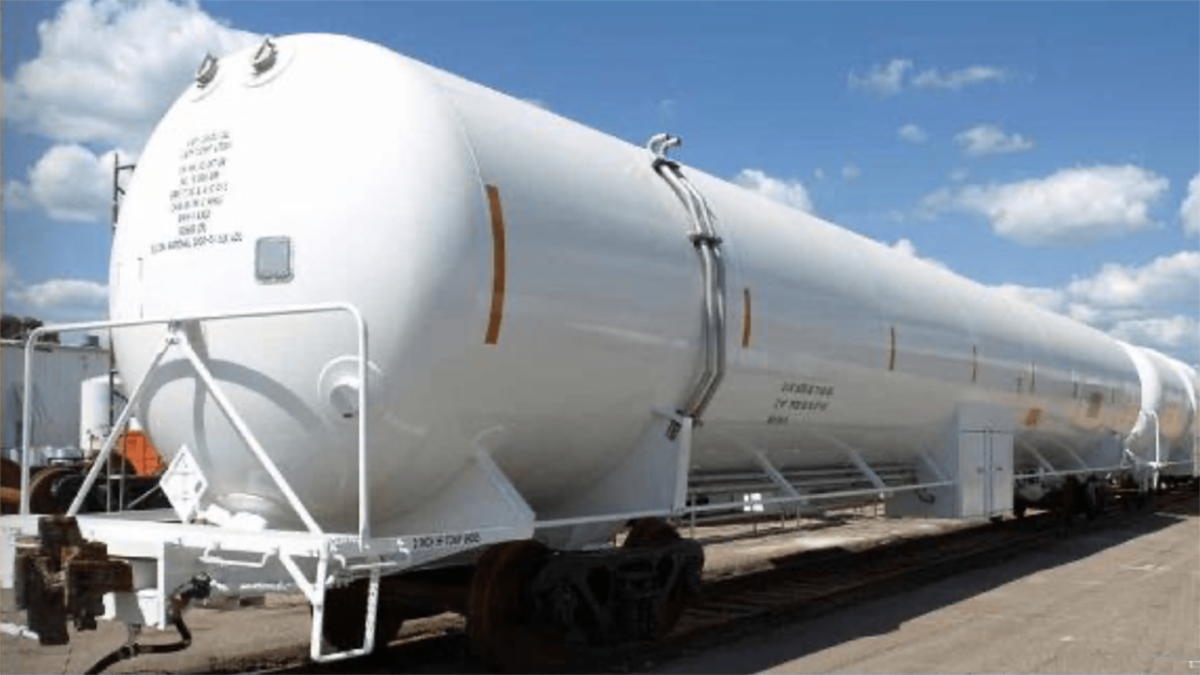
Environmental advocates are hoping the Pipeline and Hazardous Materials Safety Association (PHMSA) will soon release a proposed rulemaking that will become the new regulation governing the movement of liquefied natural gas by rail in the United States.
But advocates also say PHMSA has continuously missed its deadlines for both releasing the new proposed rule and suspending the current regulation set up by the Trump administration. That current rule, which allows companies to transport LNG without a special permit, is still technically in effect, although no companies have gone forward with transporting LNG via rail under that rule, according to Sahana Rao, an attorney with the Natural Resources Defense Council.
“As long as the Trump-era rule is not suspended, theoretically, LNG transport by rail can move forward. And that’s why it’s important from our perspective that this rule be suspended as soon as possible,” Rao recently told FreightWaves.
Transporting LNG by rail had been prohibited nationally unless a company obtained a special permit through PHMSA. But then-President Donald Trump issued a rule in 2020 that enabled the transport of LNG by rail without the need for a special permit.
While this was happening, energy producer New Fortress Energy applied for and was granted a permit for transporting LNG by rail from facilities in Pennsylvania to the Gibbstown export terminal in New Jersey. That permit expired in November 2021, although New Fortress Energy has applied to renew the permit.
|
|
(Editor's Note: At this stage of the game, it appears that all unions but the operating crafts have settled with Amtrak, emulating the pattern in national freight rail negotiations this past fall. Hopefully we will know the details soon.) |
|
Amtrak, 10 Unions OK Tentative Labor Pacts |
|
Amtrak and several unions have reached tentative labor agreements after 15 months of negotiations.
The Brotherhood of Maintenance of Way Employees Division and the Brotherhood of Railroad Signalmen as a coalition reached a tentative agreement for a seven-year contract that calls for a 28.5% general wage increase retroactive to 2022, BMWED officials said in a press release.
The tentative agreement will be sent to the unions' members over the next three weeks for ratification with a vote count scheduled for April 12.
The Shop-Craft Coalition, made up of eight unions, also reached a tentative agreement with Amtrak. The coalition includes Sheet Metal, Air, Rail and Transportation Workers-Mechanical Department (SMART-TD), Brotherhood of Railway Carmen, National Conference of Firemen and Oilers SEIU 32BJ, International Association of Machinists and Aerospace Workers, Transport Workers Union, American Railway Airline Supervisor Association, International Brotherhood of Boilermakers and Transportation Communications Union.
Terms of that tentative agreement were not disclosed. The unions' membership will vote on ratification in the coming weeks, SMART-MD officials said in a press release.
|
|
(Editor's Note: In the context of the swath of recent train wrecks and environmental disasters, the author's cautions about moving LNG by rail are more apparent than ever. Please read the article below and see the RWU statement to the Pipelines and Hazardous Materials Safety Administration from 2019 HERE.)
|
|
New Bigger Risks Await Poorly Regulated Rail Industry
The Biden administration must act to protect the public from the rail industry’s dangerous plans for the energy transition.
|
|
In July of 2013, a train carrying Bakken oil from North Dakota derailed and exploded in Lac-Mégantic, Quebec, killing 47 people and destroying the downtown. I spent the five years after that accident researching what happened, following the railroad regulatory process that spans the U.S.-Canada border, and publishing a book about that experience. The main lesson of that book was that the regulatory process in America is deeply flawed and controlled by industry — both rail and oil interests.
As we approach the 10-year anniversary of Lac-Mégantic, the disaster in East Palestine shows just how little was done to protect the public from these dangerous trains. Meanwhile, the public is facing new rail risks that are receiving scant attention — and once again federal regulators are allowing industry to move forward without proper consideration of the health and safety risks. I live three blocks from a busy rail line and what worries me the most when I hear the trains rumble past is not that they’re carrying vinyl chloride or even Bakken oil, but the looming risk of mile-long trains of liquefied natural gas (LNG) and hydrogen.
In 2019, then-President Trump issued an executive order to fast-track new regulations that would allow shipping liquefied natural gas by rail without any meaningful guardrails on its transport.
But Earthjustice and other organizations sued the administration over this move, citing the perils. “It would only take 22 tank cars to hold the equivalent energy of the Hiroshima bomb,” according to Earthjustice attorney Jordan Luebkemann.
Over the last year, Russia’s invasion of Ukraine has upset global energy markets, giving a big boost to plans to increase exports of American LNG overseas and placing pressure to move as much LNG as possible as quickly as possible — including by rail.
|
|
(Editor's Note: Due to the seeming increasing number of high profile derailments, we have decided to add this section to each week's Rail & Labor News as necessary. Note that 6 pretty major derailments have taken place since the last installment of Rail & Labor News.) |
|
This Week's Derailment Department
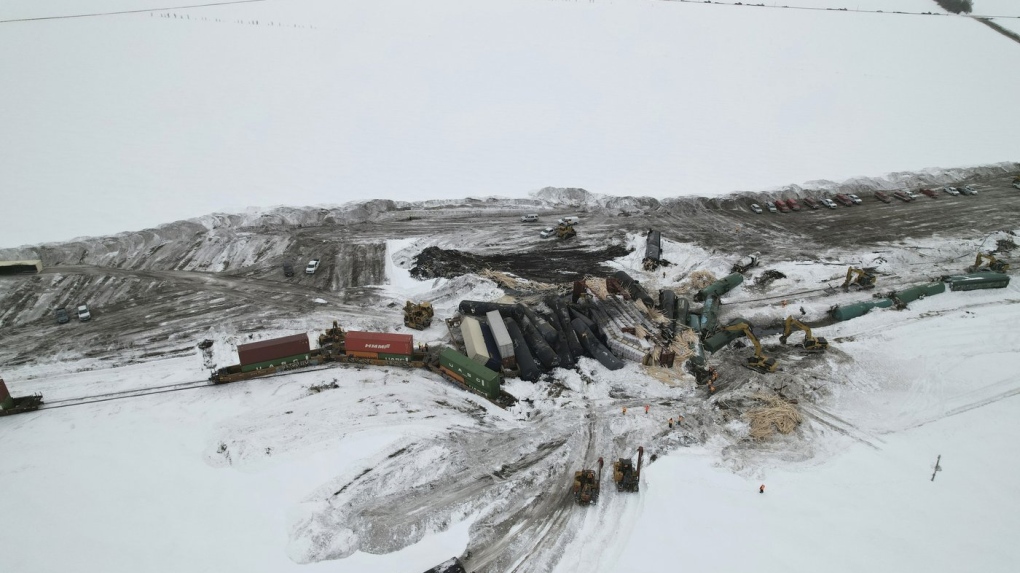
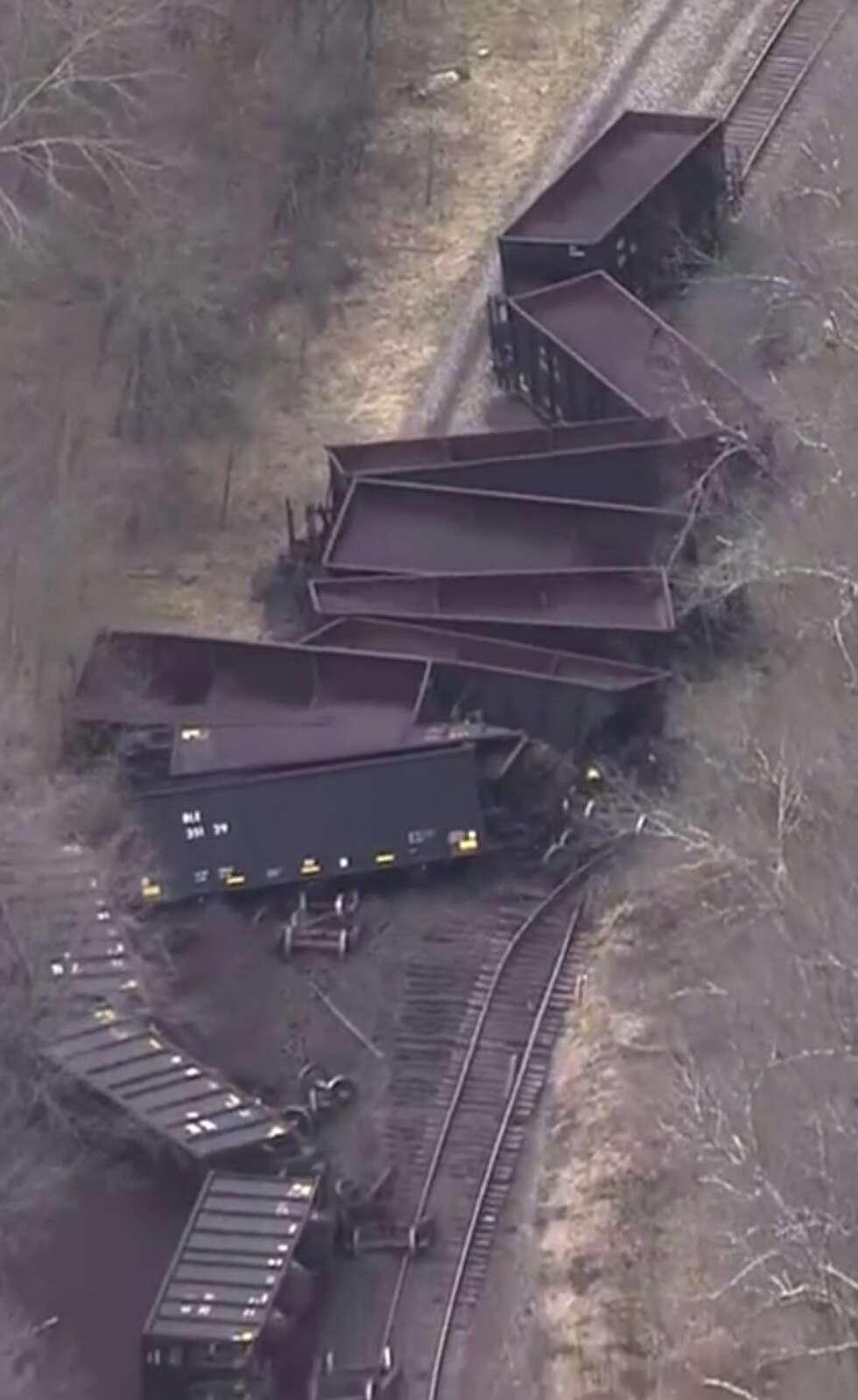
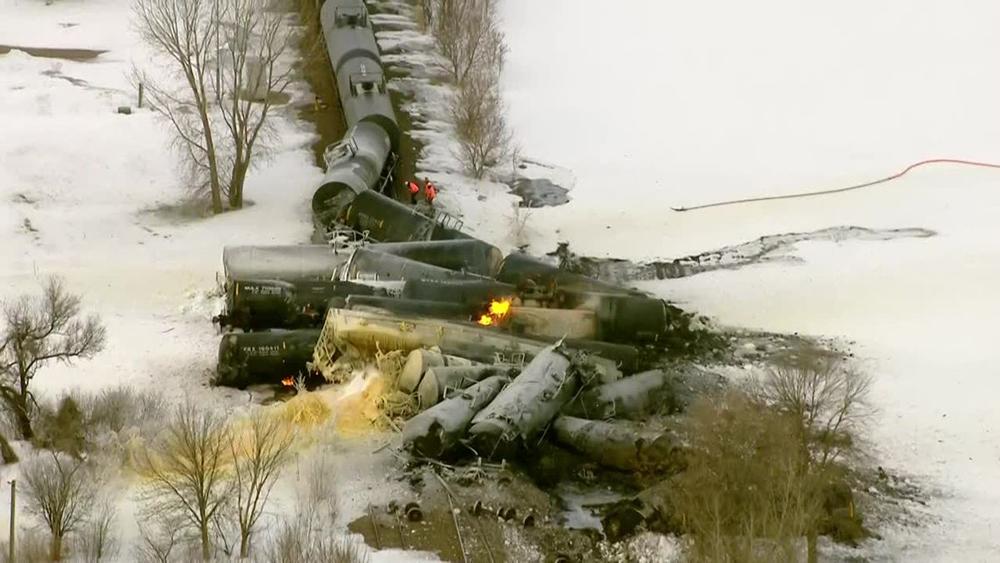
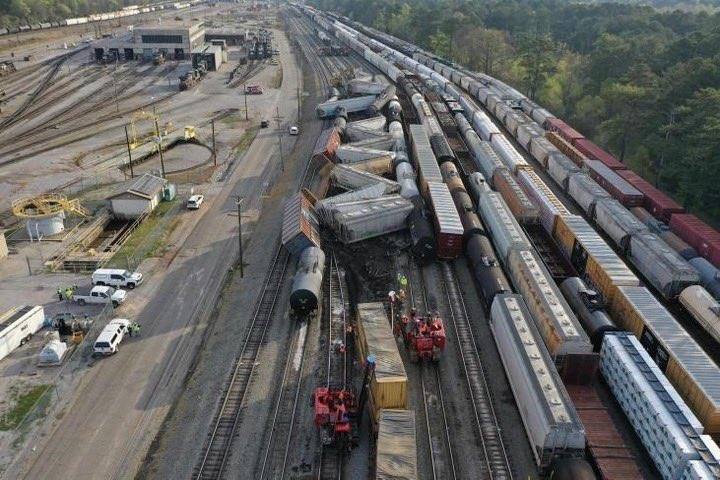
Well, as RWU launches our first installment of the weekly "Derailment Department" in this week's Rail & Labor News, there certainly is a lot of action out there! NOTE: These descriptions and visuals are not for the weak at heart.
|
|
|
|
|
|
|