Wednesday Weblog for January 21, 2026 | | |
I never did believe in miracles,
But I've a feeling it's time to try.
I never did believe in the ways of magic,
But I'm beginning to wonder why.
--Fleetwood Mac "You Make Loving Fun"
| | |
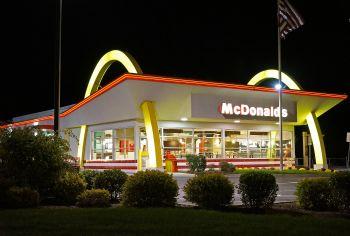
As referenced in other Weblogs, I spent seven years fresh out of college working for a McDonald’s franchisee. I learned a ton about a lot of things: people, marketing, problem solving, motivation, and hard work, as well as learning how to learn.
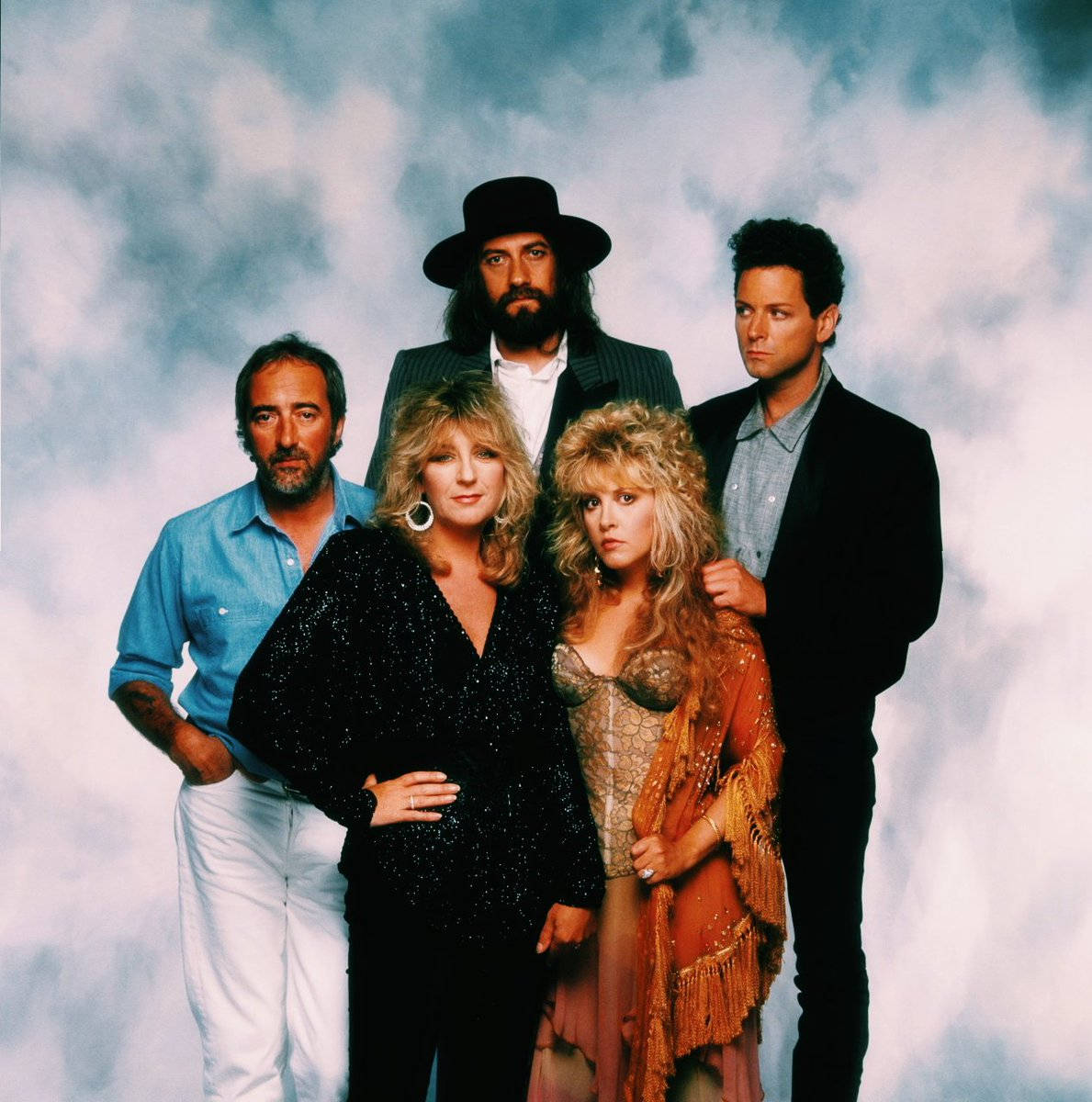
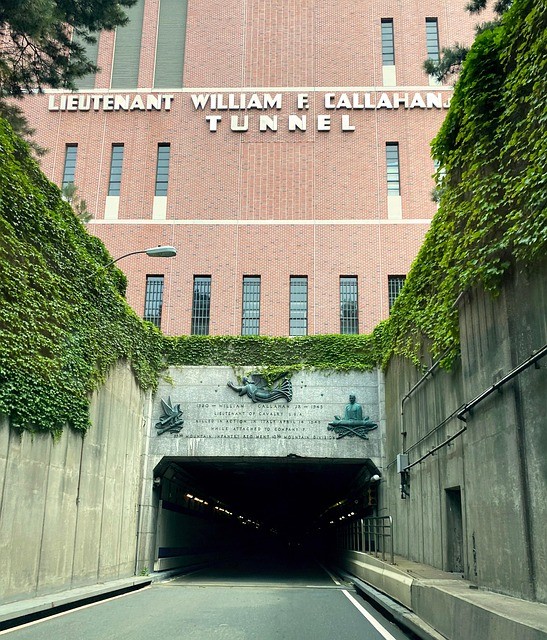
One of the most valuable lessons I learned started in the Callahan Tunnel connecting downtown Boston with East Boston and the airport and it started with a Fleetwood Mac song called ‘You Make Loving Fun’. But at the time I wasn’t loving my job, and it certainly wasn’t much fun.
But that night in the tunnel, it all changed and every time I hear the lines of the song about a miracle, I think back to that sad, depressed, discouraged, and lonely young man, away from home, supervising a disaster, who, beginning the next day, turned his world around.
Here’s the story.
| | Fleetwood Mac and Belief in Miracles | | |
After working for the franchisee for about two years, I was promoted to Store Manager of Store #343 in Fitchburg, Massachusetts.
It was a recently converted Golden Arches location with a crew of about 20-25, mostly part-time college and high school students.
It wasn’t considered a busy store, but it did ok, and I did ok.
| |
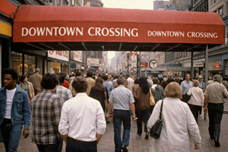
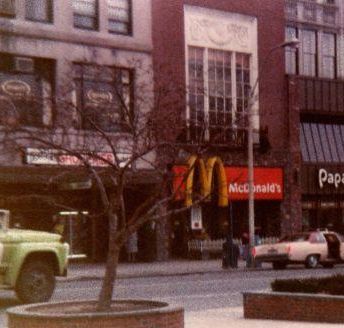
About a year into the job, the franchisee announced that they would be opening a store in Downtown Crossing in Boston, an area undergoing a renaissance with new businesses, wider sidewalks, brick streets, and so forth.
The location would be the third urban store in Boston, and one of only a handful in the United States.
In the seventies, McDonald’s was more ‘Fitchburg/Small City/Suburban’ than Big City/Urban.
| |
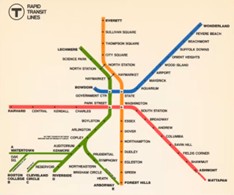
I was offered the job of opening the store because of my familiarity with Boston, including downtown. (At the time, I could name every stop on the Blue, Orange, Red and Green Lines, and still remember most of them).
The plan was for me to go to work in the McDonald’s on Tremont Street across from the Boston Common for a couple of weeks to get familiar with urban volume patterns and employees.
| |
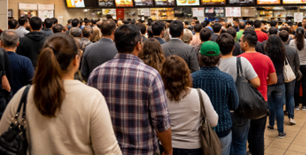
Honestly speaking, I was shocked at what I found. It was very different from the Fitchburg and Leominster stores I had worked at. The lunch rush was a lunch tidal wave. People came in and just kept coming. My first day, I was just a drink pourer and couldn’t keep up.
The biggest shock I had was at the end of the rush, and this is a true story, they brought a snow shovel up to the front counter to shovel up everything that had dropped on the floor behind the counter during the rush. A freakin’ snow shovel! What was on the floor? French fries, bags, lids, sandwiches, straws, napkins, cups, apple pies, you name it.
My first decision was that when MY Boston store opened, we were going to pick up every freakin’ thing that fell on the floor WHEN it fell on the floor.
| |
The rest of the week went ok, as a learned a rough and tumble way to operate a McDonald’s. In the afternoon, I went upstairs to an additional dining room to interview candidates for the new store. I interviewed more than 800 people that week. That is not a typo: 800 people.
To say I was overwhelmed would sell the experience short. At any given time there were 100 people waiting in line to interview. I had planned this elaborate questionnaire that I threw away after 5 minutes and I shortened the interview to four questions for speed. One of those questions I still use today. (If you ask me I will tell you what the question is, if you don't know).
| |
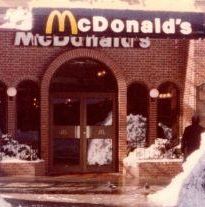
So, on May 7, 1977, the Washington Street McDonald’s opened and it was a complete and total disaster as measured by anyone’s standards. We had ten cash registers operating and by 12:01 we had customers ten to twelve deep at each register, a real mess, exacerbated (always wanted to use that word) by a fleet of professional pick pockets working their way through the crowd.
When the front doors were pulled open at the start of the lunch rush, they stayed open for two hours. They weren’t blocked open, they were kept open by the stream of customers coming and going.
| |
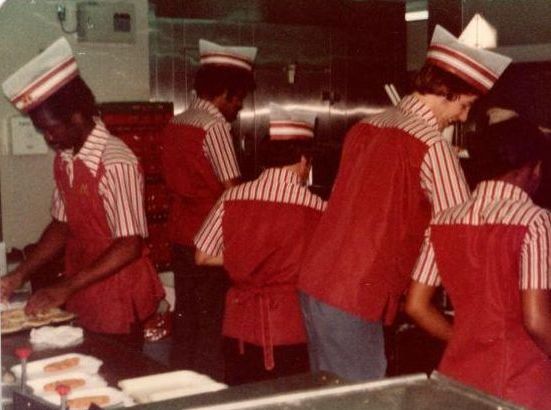
You can imagine how things were in the kitchen, with an all-new crew. There were a total of 140 employees on the payroll, a big jump for me from Fitchburg.
There were lunch rushes with thousands of customers, instead of the dozens in my previous store.
That first week was painful as I realized my understanding of a McDonald’s System that worked in high volume might be a tad different than I originally thought or thought I knew.
And of course, since it was a new store, I was there from open to close. I was temporarily staying at a hotel in East Boston. The restaurant opened at 7 am and closed at 9 pm.
From 7 am to noon we were busy. From noon to two we were slammed, as restaurant people like to say. And after 3 pm, we were dead.
We’d have 15-20 people on the floor in the morning, 30-45 during the lunch rush, and 8-10 during the evening. The store was meeting or exceeding revenue projections, but not coming close to meeting or exceeding food quality or service standards and it was all on me.
| |
After a week of pure hell, missing my wife and the peaceful Central Mass world we were used to, I again headed into the Callahan Tunnel to go back to the hotel when I heard Christine McVie of Fleetwood Mac sing:
I never did believe in miracles, But I've a feeling it's time to try.
I never did believe in the ways of magic,
But I'm beginning to wonder why.
I realized that I needed a miracle to happen if I was going to survive, and I realized that I was the one who needed to jumpstart the miracle.
| |
The next day, I showed up for work, but I didn’t work. I observed.
I stood in the lobby and watched the daily disaster unfold. I watched the counter activity. I watched the customers and tried to shoo some of the pickpockets away.
I went to the front door several times and counted how many people per minute entered the store. I watched the ebb and flow. In the process, I confirmed that the operating system was not built for this type of flow, and I needed to make some changes.
While I was in the middle of the disaster, I couldn’t see clearly: I was working too hard. By taking a step back and observing from the outside, even though I wanted to help, I was able to see things I never would have seen from the inside.
The one thing the staff did right all the time was picking up that French fry that fell on the floor. A minor victory when I needed a major win.
| |
Over the next week, we made major changes based on what I had seen.
When I was counting customers entering the front door, I realized that at its peak, more than 120 customers PER MINUTE were entering the building. That meant, with no one at the counter, in one minute they would be twelve deep.
My solutions:
We threw away the lobby trays for eat in patrons, and put everything in bags, which we had on the counter. We stopped asking ‘for here or to go’ which saved time. We also had ‘runners’ who grabbed the food almost as it was being ordered and delivered it to the cashier as she was announcing the total. This helped drop the average wait time at the counter from a minute to 15 seconds.
| |
We took all the napkins and straws off the counter in front of the registers, where they were supposed to be and moved them away from that area so that customers grabbing them didn’t impact service times by taking their time.
(Eventually, all McDonald’s did this).
| |
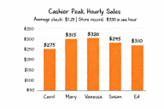
We put up a chart that all the cashiers could see with their name, and the peak hourly maximum they had rung in. When we started, someone bringing in $100 an hour was a star. When we were done, the store record was $330 for a single hour. This is with a $1.25 average check.
I personally maxed out at $310 for an hour, because sometimes I would work the counter due to staffing issues or to challenge members of the team or to lead by example. Eventually, we stopped using ten registers and started using only eight because the team members wanted to set personal bests. We did so with the same or better service times.
| |
We also changed my role during the lunch rush. On most days, when I wasn't running a register or filling in on the grill or fries, I stopped working and stood in the lobby watching. If things didn’t go as planned,
I would rush in and help, and then go back out and watch. The team didn’t want me helping, it was a sign they weren't performing to their standards, so they worked even harder to keep me out in the lobby.
But every French fry dropped on the floor was picked up immediately: self-enforced by the team.
| |
It was a miracle.
The store that opened as a disaster, within a few months, was now a great example of the power of leadership and motivation and miracles.
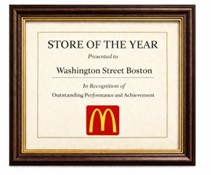
After the Annual Full Field Inspection by McDonald’s Corporate later that year or in early 2018, the service times and quality were off the charts, and that location was named a National Store of the Year.
It was a true miracle.
| |
Believe it not, thirty-five years later, I stopped in there for a burger and while I was there, I heard someone say, ‘pick up that fry on the floor’ and I smiled.
Some habits do last.
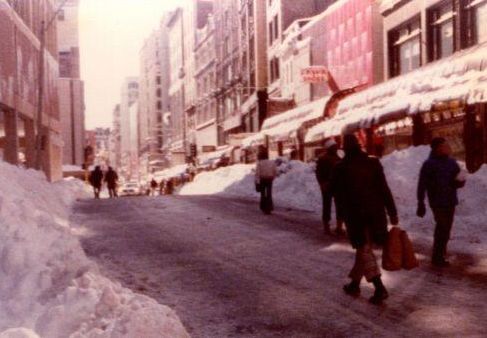
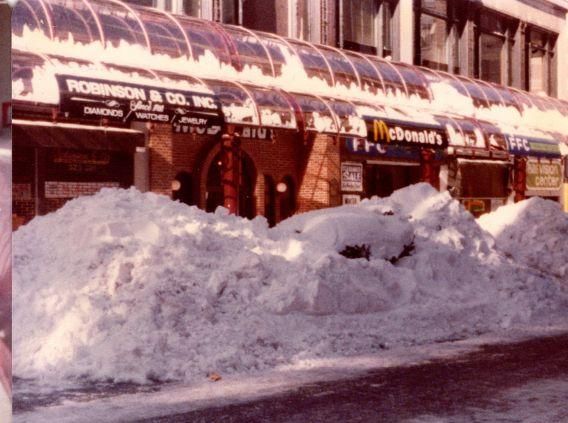
| | Surprise Photos at the End: Blizzard of '78 | | Joe's Positive Post of the Week | | Join the Smart Subscribers | | If you are reading this on a social media platform, click below and you'll automatically receive a 'different' story every week on Wednesday. | | |
The Roll Call of states and countries where readers reside: Arizona, California, Colorado, Connecticut, Delaware, Florida, Georgia, Hawaii, Illinois, Indiana, Iowa, Kansas, Kentucky, Louisiana, Maine, Massachusetts, Michigan, Mississippi, Missouri, Montana, New Hampshire, New Jersey, New Mexico, New York, North Carolina, North Dakota, Ohio, Pennsylvania, Puerto Rico, Rhode Island, South Carolina, South Dakota, Tennessee, Texas, Vermont, Virginia, Washington and Washington DC, Wisconsin plus Canada, Conch Republic, Australia and the United Kingdom
| | | |
Ed Doherty
774-479-8831
www.ambroselanden.com
ed-doherty@outlook.com
Forgive any typos please.
| | | | | |