|
Wednesday, April 8, 2026,
to support
Child Abuse Prevention Month.
| | |
COALITION MEETINGS
Ashtabula County Prevention and Suicide Prevention Coalition Meeting:
April 1st, 2026 @ 3:00PM
4717 Main Ave. (Lower Level)
Ashtabula, OH 44004
| |
MONTHLY BOARD MEETING
Ashtabula County Mental Health and Recovery Services Board Meeting:
No April meeting due to a professional development training for Board Members and MHRS Staff.
| | |
Representing Ashtabula County at
National Conference
| | |
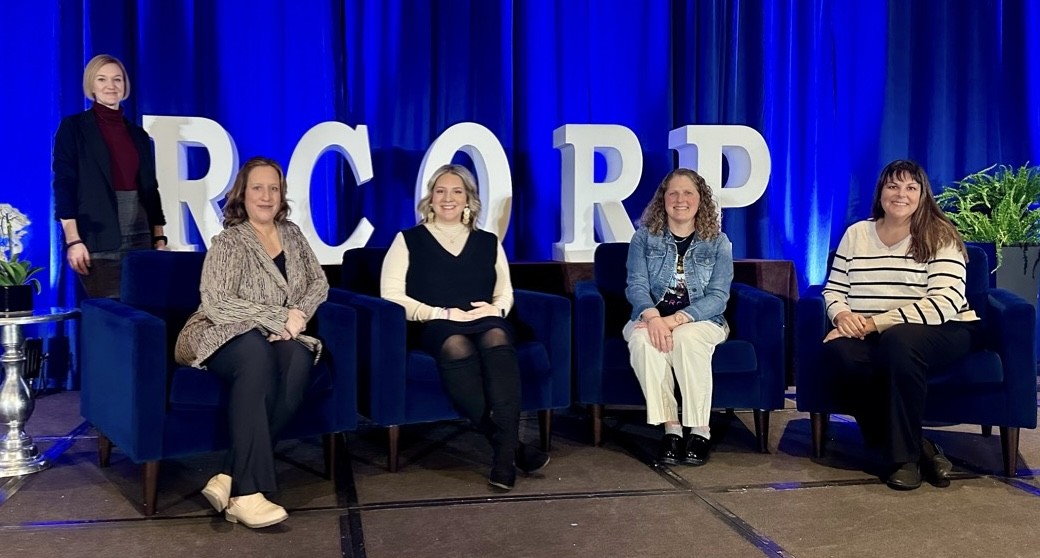
Pictured above from left to right; Miranda Gray from the Fairfield County ADAMH Board, Christy Fisher from Ashtabula County MHRS Board, Nicole Williams from the MHRS Board of Seneca, Sandusky, Ottawa and Wyandot Counties, Holly Raffle from Ohio University's Voinovich School of Leadership and Public Service, and Charlotte Stonerook from Sandusky County Public Health.
Christy Fisher, Director of Prevention and Community Engagement at the Ashtabula County Mental Health and Recovery Services Board, recently attended the Health Resources and Services Administration (HRSA) Rural Communities Opioid Response Program (RCORP) Conference held in Washington, D.C., from March 2–5.
The RCORP Conference is a national gathering focused on addressing the unique challenges rural communities face in responding to substance use disorders, particularly the opioid crisis. The event brings together public health professionals, community leaders, healthcare providers, and policymakers from across the country to share best practices, explore innovative strategies, and strengthen collaborative efforts aimed at prevention, treatment, and recovery support. Sessions emphasized data-driven approaches, cross-sector partnerships, and sustainable solutions tailored to rural populations.
During the conference, Christy also had the opportunity to present alongside fellow Community of Practice- RCORP colleagues from across Ohio. Their presentation focused on raising awareness of the National Maternal Mental Health Hotline and highlighted effective strategies for localizing outreach efforts for a national campaign. The session provided practical insights on how communities can adapt messaging to better connect with local audiences, reduce stigma, and increase utilization of critical mental health resources for mothers and families.
Christy shared that she was honored to serve as a presenter and contribute to a broader national conversation. “It was a valuable opportunity to not only learn from others doing this work across the country, but also to share what we’ve been able to implement locally in Ohio,” she noted. “Ensuring that national resources are accessible and meaningful at the community level is key to making a real impact.”
Her participation in the conference reflects the Ashtabula County Mental Health and Recovery Services Board’s ongoing commitment to staying at the forefront of mental health and recovery initiatives, while bringing back knowledge and strategies that can directly benefit Ashtabula County residents.
| | |
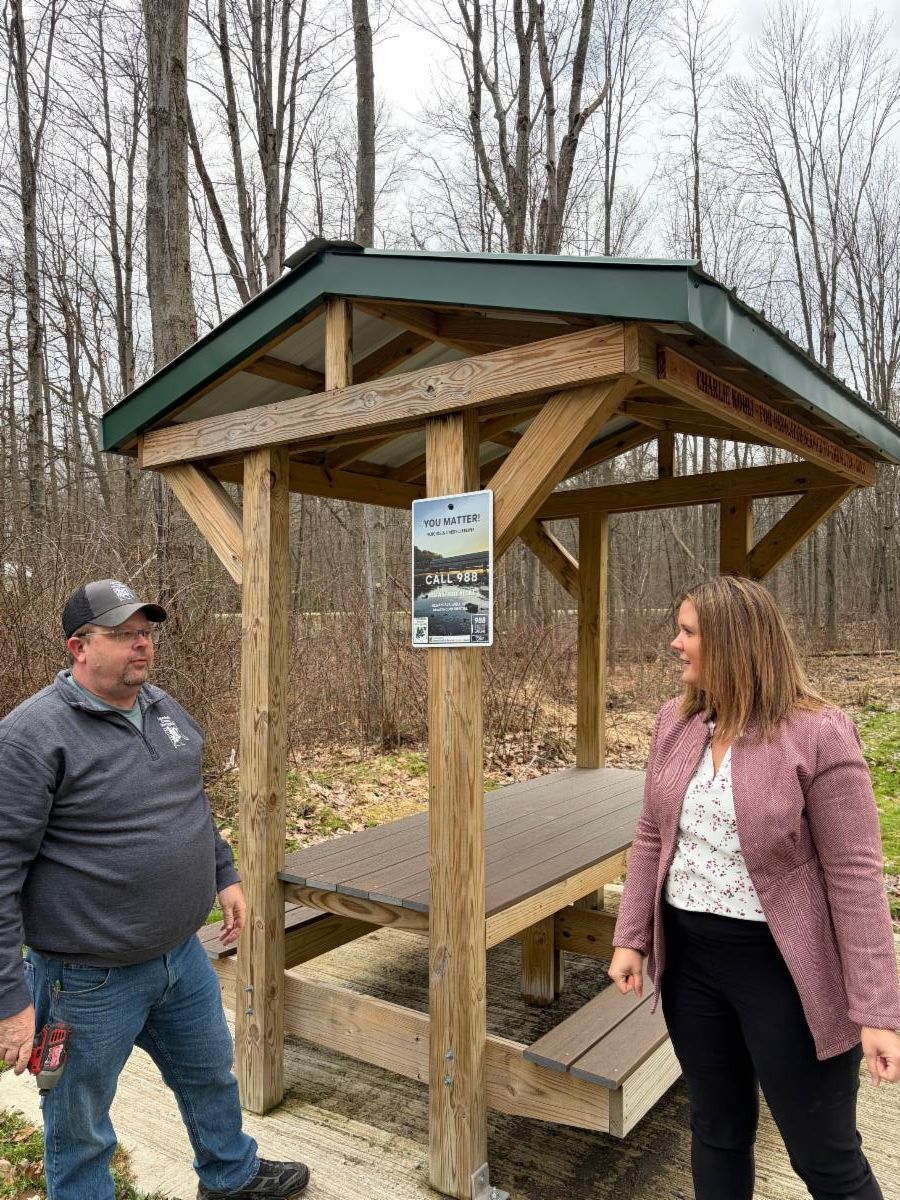
Signs for the 988 Crisis Lifeline Now at
Ashtabula County Metroparks
| |
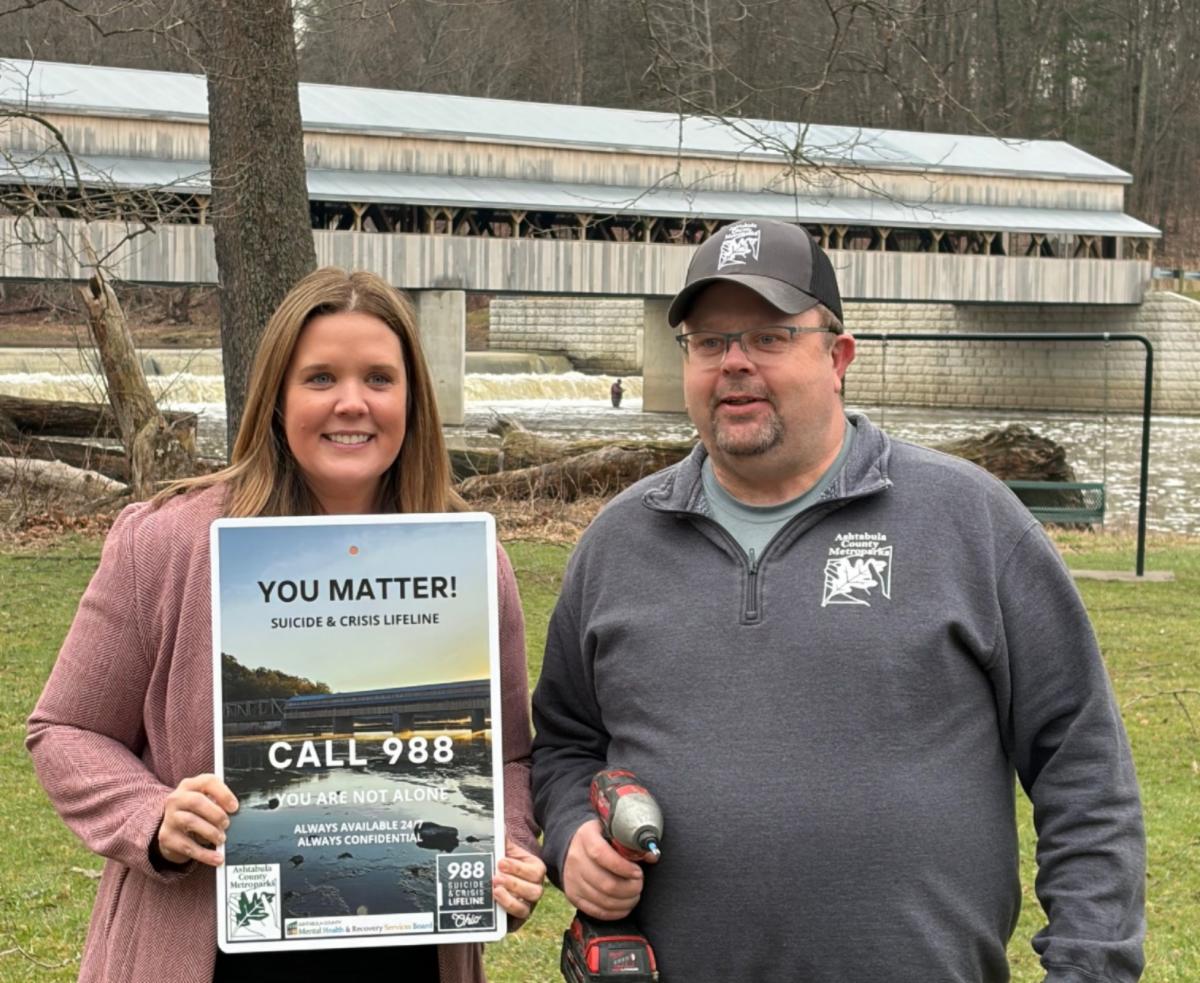
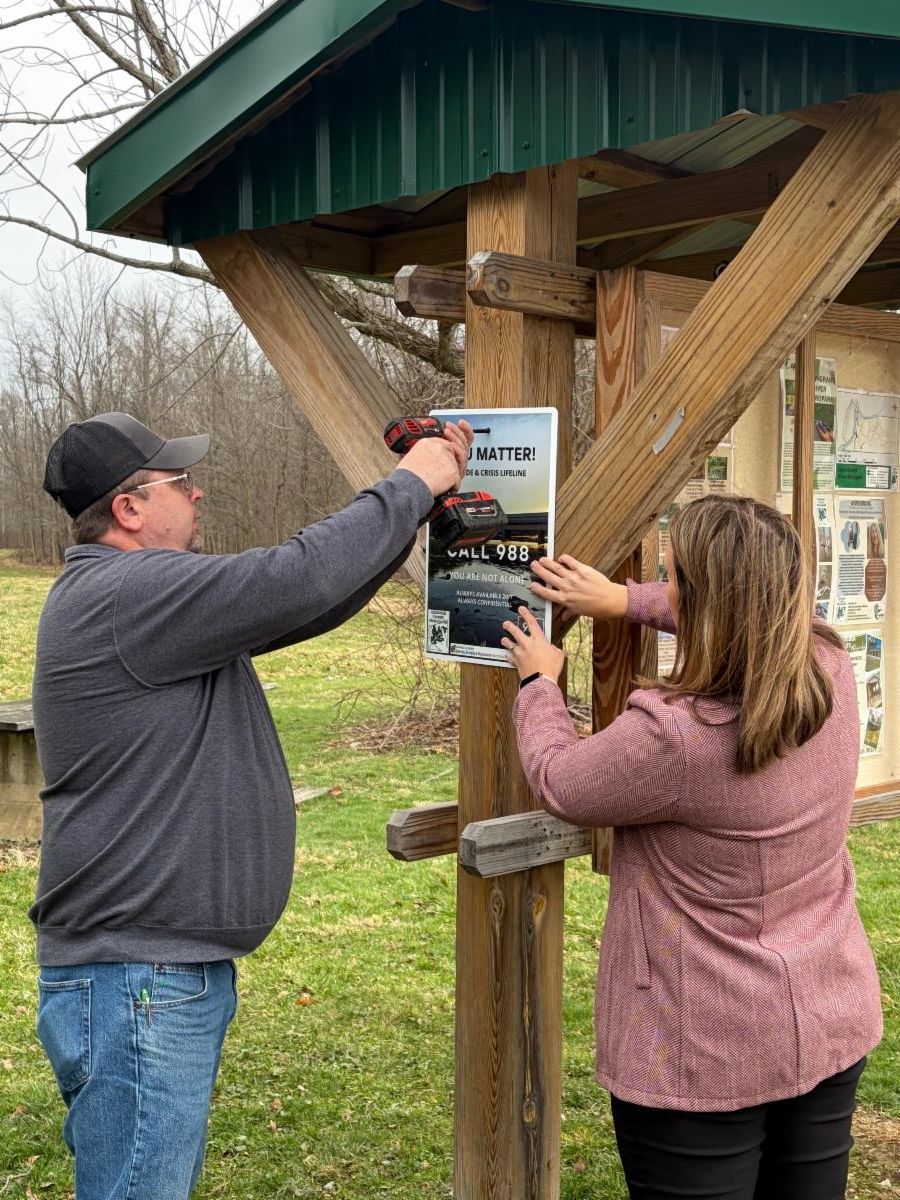
Featured in pictures above and below; Kaitie Hart from Ashtabula County MHRS Board and Brett Bellas from Ashtabula County Metroparks.
Thanks to a grant from the Ohio Association of County Behavioral Health Authorities and the Department of Behavioral Health, 25 Suicide and Crisis Lifeline- 988 signs with the heading, "You Matter" will be placed at parks and the bike trail in Ashtabula County.
Brett Bellas and his staff from the Ashtabula County Metroparks will be assisting the MHRS Board with installation of the signs helping ensure these important messages are visible and accessible in spaces where community members gather and spend time outdoors.
These signs serve as a visible reminder that support is always available, especially in moments when someone may feel alone or overwhelmed. By increasing awareness of the 988 Lifeline, this initiative helps normalize reaching out for help and reduces the stigma surrounding mental health challenges. The 988 Lifeline provides free, confidential support 24 hours a day, 7 days a week, connecting individuals to trained counselors when they need it most.
| | |
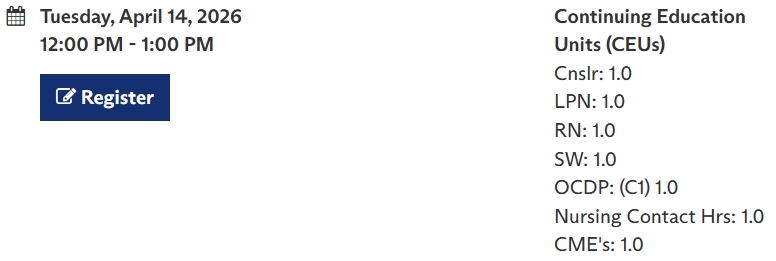
SUD COE: Women and Substance Use Disorder: Treatment Success and Barriers for Care - WEB [4.14.26]
Historically, Women’s treatment approaches were based on the experiences of men in treatment. There are unique needs that women carry that must be acknowledged and addressed to be successful in treatment. Psychological, biological, and socioeconomic experiences must be considered and integrated into gender-based treatment for women with substance use disorder (SUD). Decades of research have shown that the variables within the lives of women and the barriers for women's treatment, including child rearing, trauma, unstable housing, co-occurring mental illness, and medical issues being addressed along with SUD treatment, will help to improve retention and other positive outcomes for women. Additionally, contemporary research highlights that women experience distinct pathways into substance use, faster progression to dependence, and more complex recovery trajectories, often shaped by intersecting biological, psychological, and social determinants of health. For physical health, behavioral health clinicians, social workers, nurses, peer recovery specialists, and other allied professionals, understanding these gender-responsive factors is essential to improving engagement, retention, and long-term recovery outcomes.
1.0 CEUs
| |
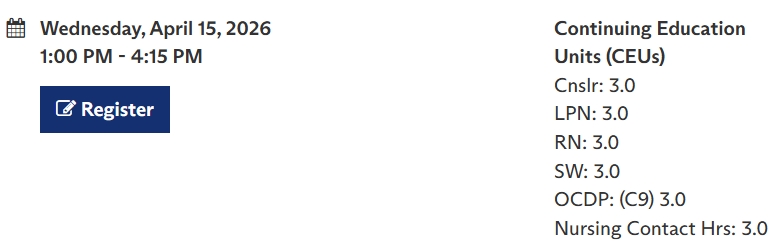
SUD COE: Ethics and Boundaries: Maintaining Professional Integrity in Behavioral Healthcare - WEB [4.15.26]
Maintaining high ethical standards and clear professional boundaries is essential for behavioral healthcare professionals to ensure client safety, foster trust, and promote effective treatment outcomes. Unethical behavior and blurred professional boundaries in behavioral healthcare can compromise client safety, erode trust, and negatively affect treatment outcomes. Research indicates that ethical lapses - including dual relationships, confidentiality breaches, and role confusion - are associated with reduced therapeutic engagement, higher rates of client dissatisfaction, and increased risk of harm (Gutheil & Gabbard, 1993; Barnett et al., 2007). Conversely, adherence to established ethical standards and clear professional boundaries has been shown to enhance the therapeutic alliance, improve client adherence, and foster positive clinical outcomes.
3.0 CEUs
| | |
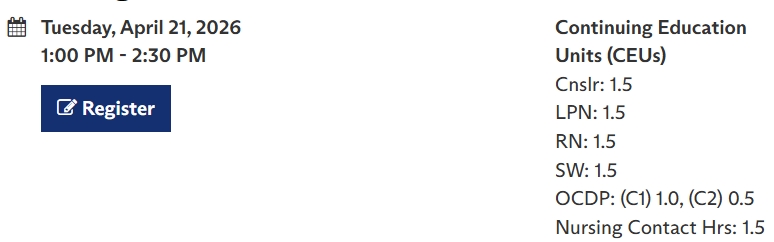
SUD COE: Reinforcing Recovery: A Practical Introduction to Contingency Management - WEB [4.21.26]
Contingency Management (CM) is a well-established, evidence-based intervention for treating a range of substance use disorders, supported by decades of rigorous research. Despite its strong empirical support, CM remains significantly underutilized due to common misconceptions, implementation challenges, and systems-level barriers. This training provides a comprehensive overview of CM, including its behavioral foundations in operant conditioning, the neurobiological mechanisms that explain its effectiveness, and practical strategies for implementing CM across varied treatment settings. Participants will examine current research reinforcing CM as a first-line, evidence-based approach and will learn how to address common barriers related to cost, ethics, and clinical integration. Designed for clinicians, supervisors, and administrators, this training offers a foundation for expanding person-centered, outcomes-driven care.
1.5 CEUs
| |
Ohio's 2026 Mental Health and Addiction Conference — June 1-2
The Ohio Association of County Behavioral Health Authorities (OACBHA), in partnership with DBH, will host the 2026 Mental Health and Addiction Conference on June 1-2 at the Hyatt Regency in Columbus. This year's theme is "Inspiring a Stronger Tomorrow." More than 1,000 participants are expected to attend the conference, which focuses on efforts related to mental health and addiction prevention, education, intervention, treatment, recovery, family supports, community engagement, and more. Conference Sponsor/Exhibitor registration is now open. Questions? Email Shelby Stutzman at sstutzman@oacbha.org.
Click HERE to learn more!
| |
Let Us Know How We Are Doing!
The Ashtabula County MHRS Board is interested in obtaining feedback from persons we serve, their family members, our providers, and partners. Your anonymous feedback will help the Board build upon its strengths and improve its services.
Please take a few minutes to complete the survey as your input will help the Board achieve continuing success!
| | | | |