Rapido UK Newsletter No. 37
©2023 Rapido Trains Ltd
|
|
We hope you are sitting down because this one’s a big one. Well, most of it is, some of it is about as small as modelling in OO Gauge could possibly get!
Without further ado - here are this year's Winter Announcements!
|
|
Rapido Trains UK finally reveals its number (O)1 open secret with the SECR 0-6-0 Class O1. |
|
At Rapido Trains UK we often talk about projects being a passion, or right up our street, however, few projects are as close to home as the O1. With three of our team being handsome Men of Kent and another two from the part of the County that can't decide they if are a Kentish Man or Man of Kent (there is a difference), it’s fair to say we are rather enthusiastic about our local locos. Eagle-eyed readers over the last six months may have noticed several references to, and photos of, the O1 in our newsletters - and here's why:
|
|
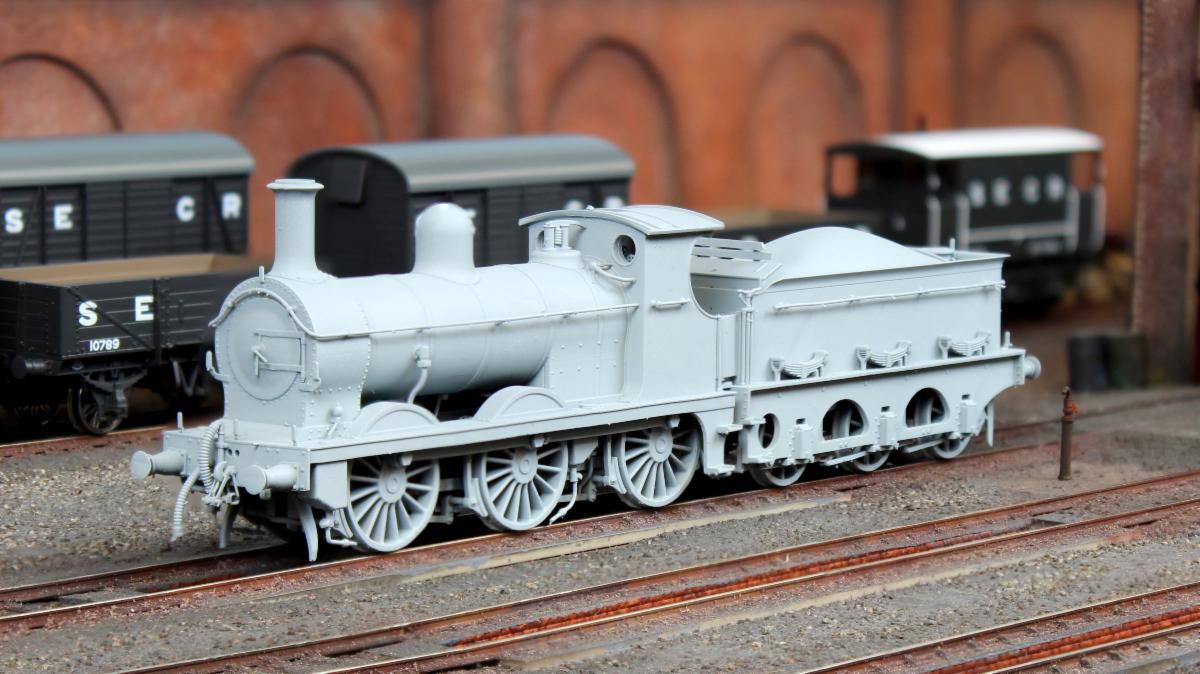
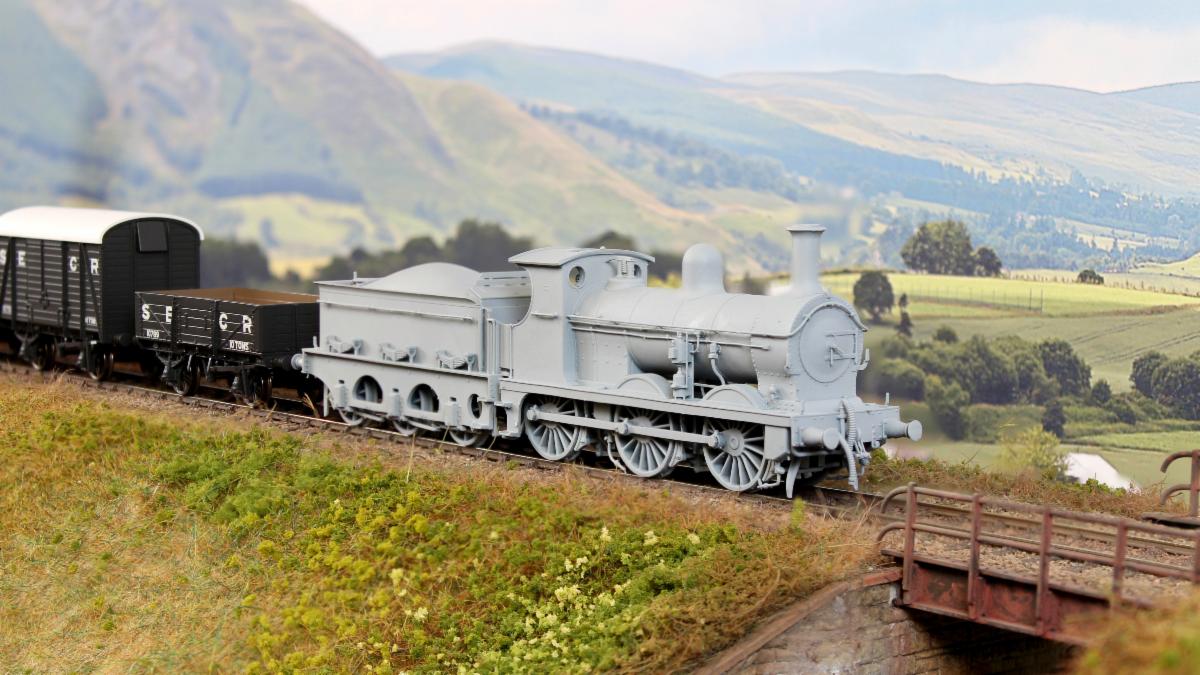
A taste of what is to come - a 3D print of No.65. |
|
Starting life before the SECR even existed, and designed by James Stirling, the O Class was conceived as an all-purpose freight locomotive to work across the entire South Eastern Railway.
Between 1878 and 1899 122 O Class locos were built. Following the first group of 20 that were built by Sharp, Stewart and Co., several more batches were completed, both by them and by the South Eastern Railways' own Ashford Works. The final five locos were built in 1899 under the South Eastern and Chatham Railway name, as the SER and LCDR had put aside their differences and sensibly merged into a single entity.
|
|
Outperforming its predecessors, the O lived up to its expectations, but with the amalgamation of the two railways, new skills and resources became available. As such, 59 of these locos were rebuilt, given larger boilers, and reclassified as the Class O1.
|
|
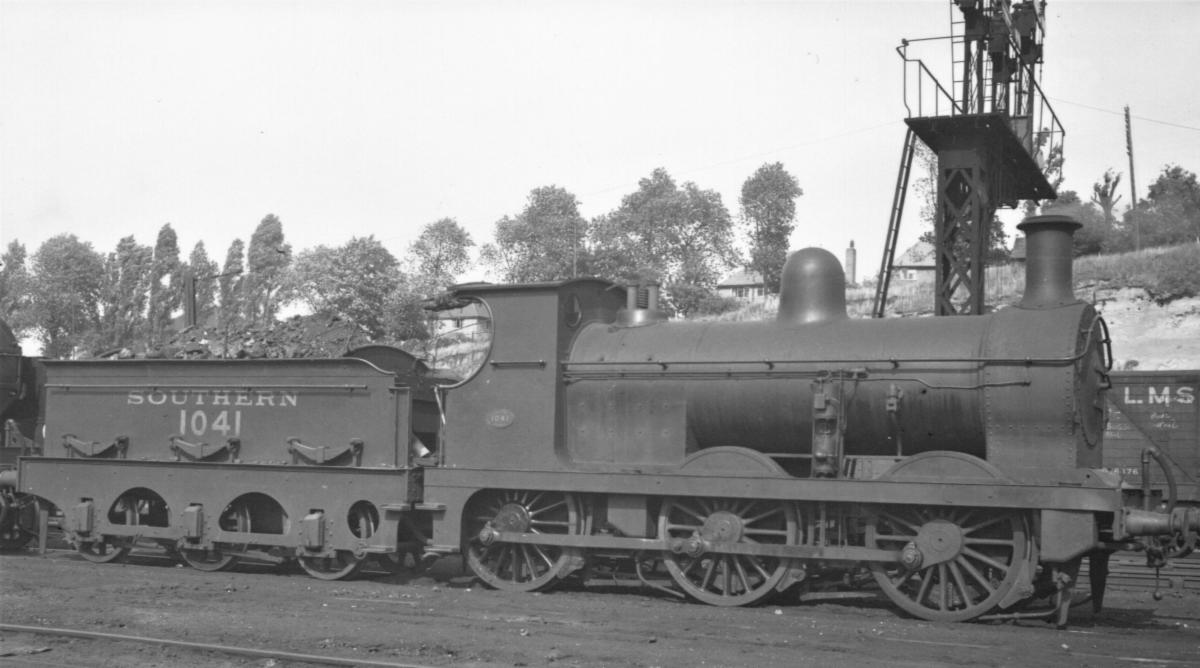
A workhorse of the Southern Railway - O1 No.1041 stands at Redhill in May 1939. Behind the loco is an ex-LNWR Diagram 88 van we announced last month in LMS livery.
|
|
Working alongside similar-sized locomotives, it became apparent that locos such as the new C class could outperform the Class O1 and O locos on freight duties. Though they remained spread across the county for many years, they were relegated to more modest branchline, shunting or light duties.
|
|
Many of the class survived both global conflicts, the ‘Big 4’ era and soldiered on until the last days of British mainline steam, working branch lines such as the Kent and East Sussex Railway and East Kent Railway. With the sun setting on the O1s' future, BR Class member No. 31065 earned one final claim to fame by leading the ‘Farewell to Steam’ railtour on the Hawkhurst Branch. The last of the class was sadly withdrawn from service in 1962.
|
|
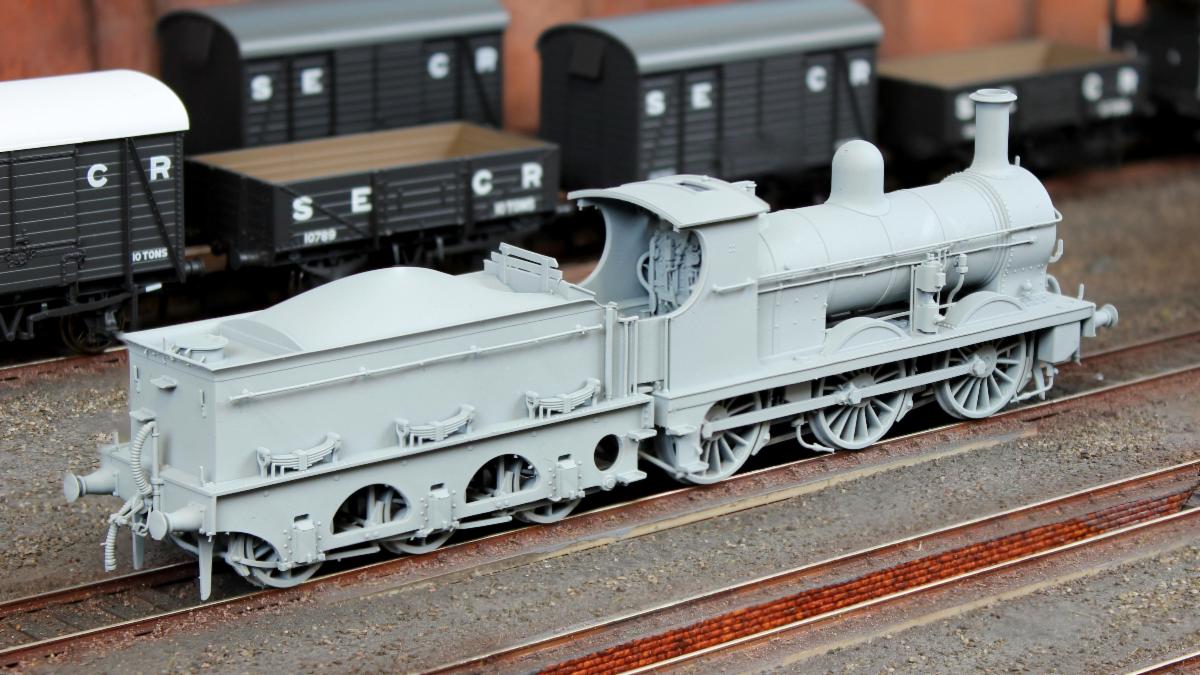
Even from the rear the O1 oozes elegance. The open cab and low tender allows every last footplate detail to be seen. |
|
Thankfully No. 31065 would live on. Esmond Lewis-Evans spotted it on a visit to Ashford, where it was being used to train apprentices. He saved it from the scrap heap, and it spent several years at the Ashford Steam Centre. When the museum failed to pay its rent, No.65 was dismantled and secretly dispersed in its component pieces across the Southeast, this determined display of preservation cunningly prevented British Rail from claiming it for repossession.
It wasn’t until 1996 that its parts were moved to the Bluebell Railway, where it was rebuilt for the centenary year of the SECR. You can still see it today!
|
|
With its gorgeous fully lined livery, open cab, exposed tender springs, and highly polished brass dome and fittings, No. 65 remains one of the most elegant freight locomotives to survive into preservation. |
|
Our model has been designed using a combination of archival materials and drawings, and an onsite survey of No.65 to ensure its accuracy. We would like to thank The Bluebell Railway who accommodated our comprehensive survey, and the Spa Valley Railway who gave us access to record accurate sounds of No.65 during its short visit to them earlier this year.
|
|
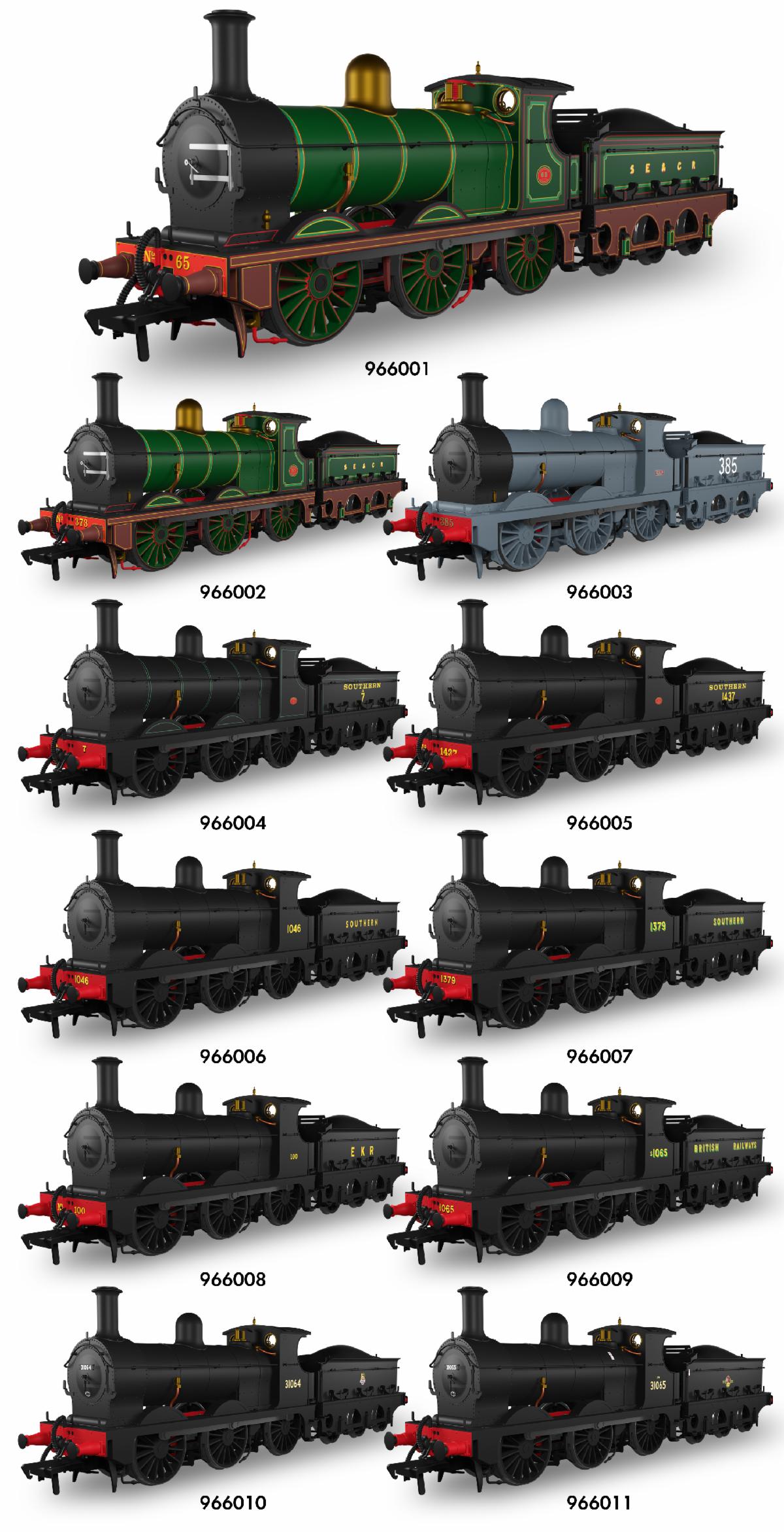
Our O1 will be available in 11 exciting physical and livery variations - covering their creation to preservation. |
|
Our model will be available in a variety of liveries covering the loco's history. Modellers can look forward to a smooth-running mechanism, a factory-installed speaker, a sleek tender connection and a firebox glow perfect for lighting up all that detailing.
The model is currently ready for tooling and we hope to have samples in the spring. RRP for this exciting new model is £199.95 for DCC Ready and £309.95 for DCC Sound Fitted.
|
|
There cannot be a better loco to haul our previously produced range of SECR wagons. |
|
Port of Par Bagnall 0-4-0ST (OO Gauge)
|
|
Mind your head! We’re announcing a new loco that is way above par. |
|
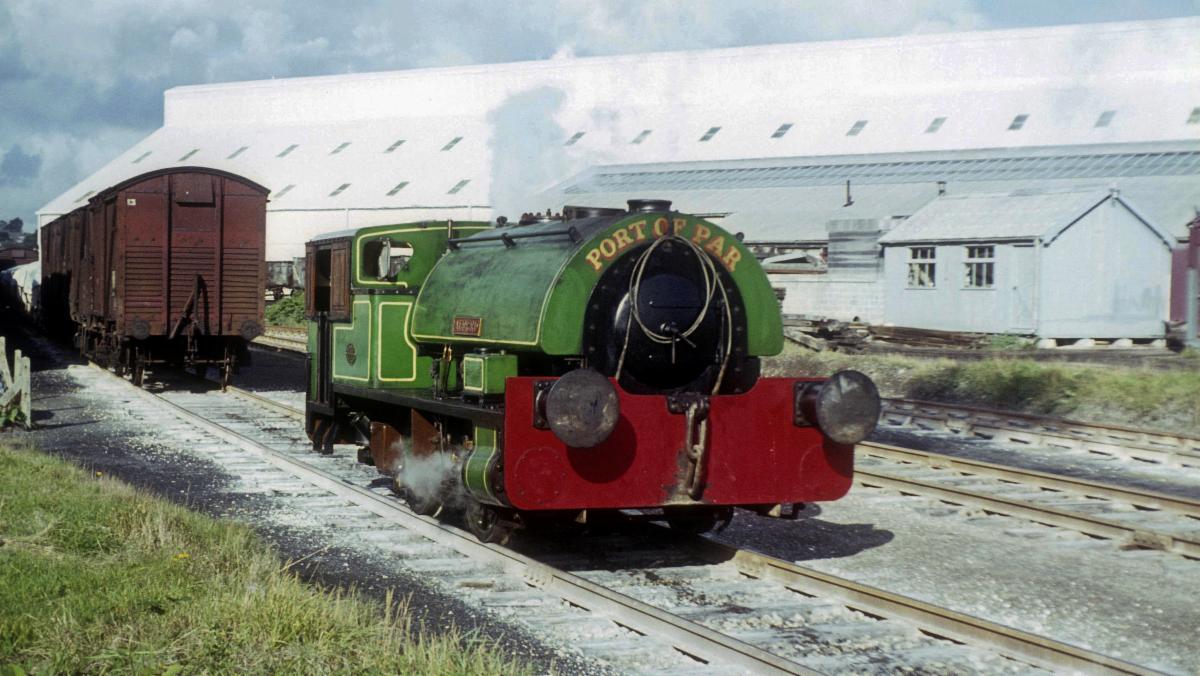
The Port of Par ‘twins’ Alfred and Judy are possibly some of the most recognisable small industrial steam locomotives to work in the UK. The reason these two locomotives were designed requires a look back in time.
|
|
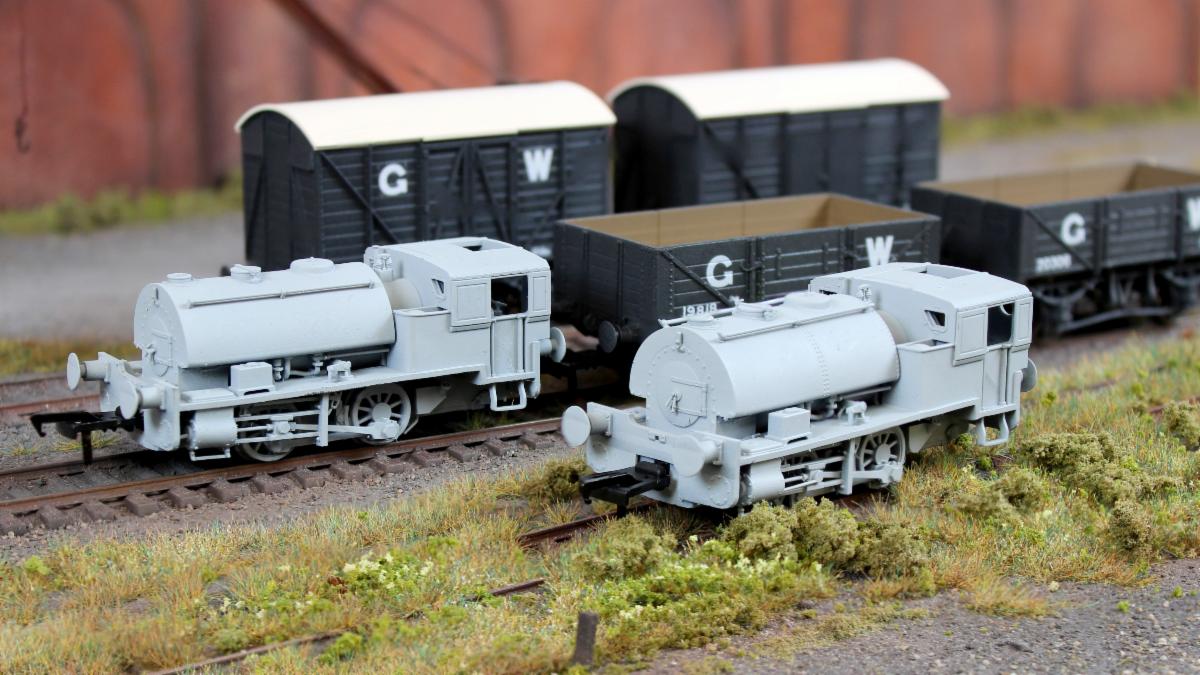
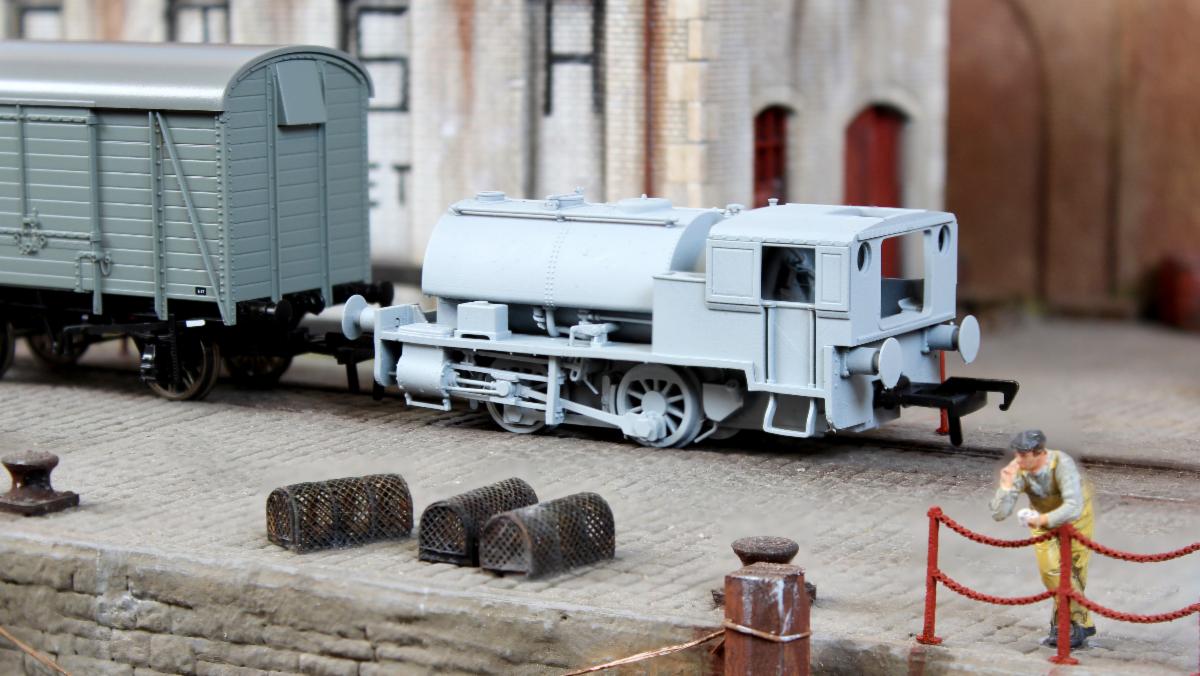
Isn't it tiny!? Its amazing to realise these little models contain a flywheel and factory fitted speaker - without losing any space in the cab allowing for all the detail to be present. |
|
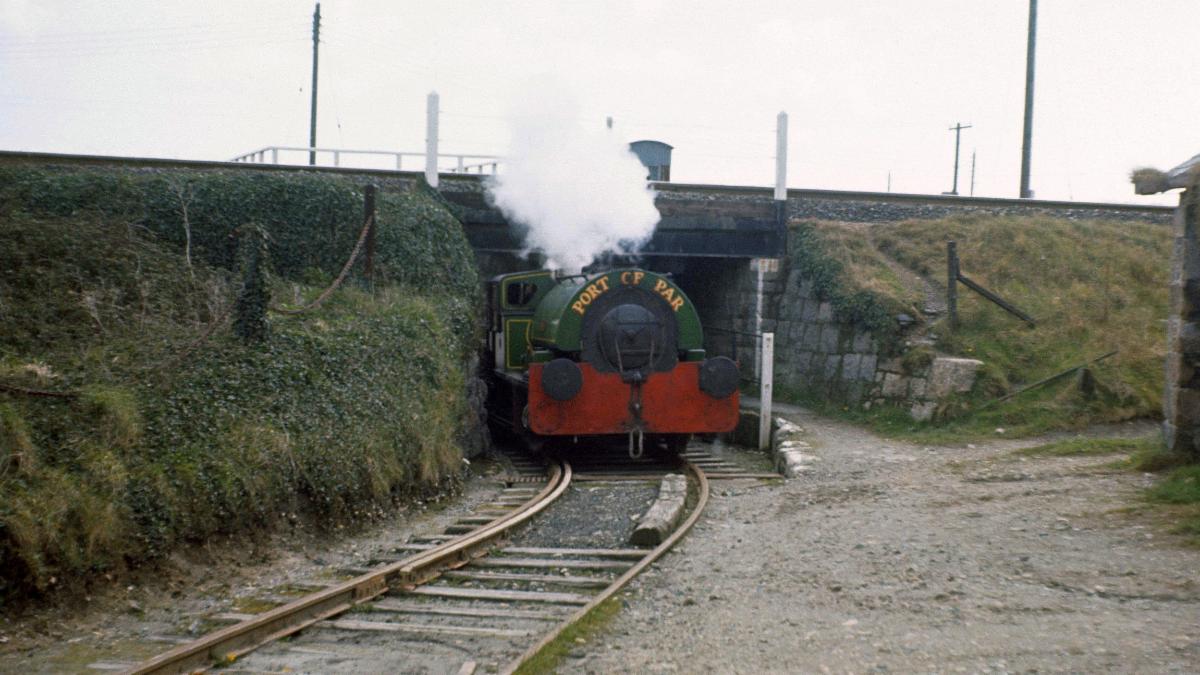
In 1829 Joseph Thomas Treffry started to build Par Harbour. His business interests required coal to be imported and copper, lead and granite to be exported. Other ports were too small or faced logistical obstructions – resulting in the creation of Par Harbour. However geographical restrictions meant that engines had to pass under an 8ft tall bridge under the Cornish Mainline to reach the china clay works along with operating on curves down to a 70’ radius. The port used a number of ramshackle and hand-me-down locomotives but in the mid-1930s it was decided that something better was needed. |
|
In September 1937 the new locomotive was delivered at a cost of £1200 carrying the works number 2572. It had originally been planned to name her Chough after the distinctive species of Cornish bird. The message was received by Bagnall as Cough, which they thought was rather strange and so she was sent to Par without a nameplate. She was finally given nameplates that read Judy after 1955.
|
|
Judy passes through the 8ft high bridge under the Cornish mainline. Courtesy Bernard Mills |
|
By 1952 the low-profile Sentinel Toby required replacement and an upturn in traffic meant an order was placed for another locomotive. In 1954 Alfred was delivered (named after the manager of the harbour Alfred Truscott). Whilst nominally the same, Alfred had some differences to Judy with different bunker style, tank and handrail alterations (such as a tank filler that opened in the opposite direction) and a different purchase price – this time £7500.
|
|
The engines had a hard-working life hauling thousands of tons of china clay with both engines in operation each day. However, during the 1960s modernisation of the port started and rail traffic started to diminish. The branch line to the china clay workings was lifted and replaced with a road for lorries. Judy had started to experience boiler troubles so was withdrawn from traffic in 1969 - her driver Del Robins taking her into the shed for one last time not only for Judy’s retirement but his own. Alfred soldiered on until 1977 when, rather unglamorously, shunting was taken over by tractors.
|
|
Alfred at work shunting a mixture of vans and china clay wagons in the 1960s. Courtesy Bernard Mills |
|
The locomotives gained a celebrity status not least because of their unusual size and stature. They were some of the last working steam engines in Cornwall and the site became a stronghold of visits by railway enthusiasts. The engines became so popular that they also inspired the Rev. W. Awdry to immortalise them in his Railway Series stories as Bill and Ben, carrying a striking yellow livery.
|
|
Judy was kept cleaned and oiled in the shed at Par whilst Alfred was in operation. With the cessation of rail traffic, new homes were sought for the engines. Judy first went to the recently established China Clay Museum at Wheal Martyn whilst Alfred, in operating condition, went to the Cornish Steam Locomotive Preservation Society.
|
|
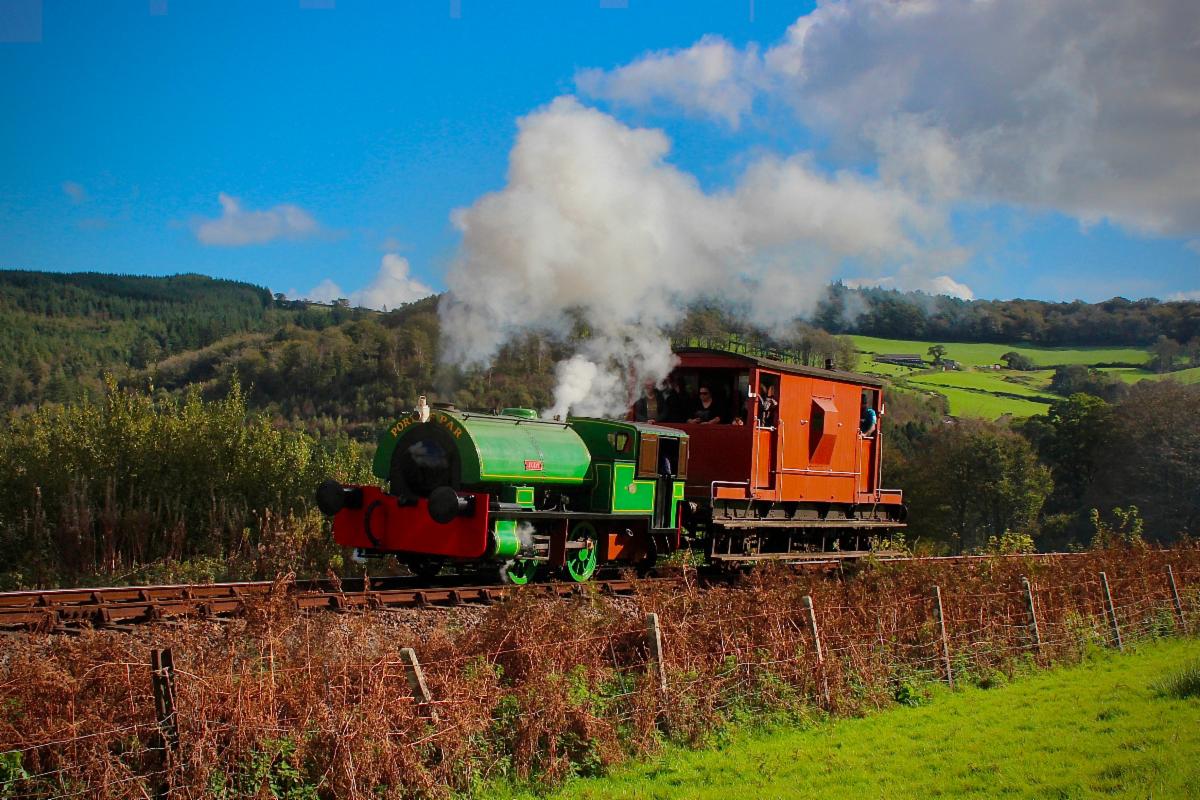
Both locomotives can now be found on the Bodmin and Wenford Railway. Judy was returned to operational condition in 2023 whilst plans for returning Alfred to operational condition are being finalised with the intention that both locomotives will be available to work together once again.
|
|
Judy is dwarfed by a standard BR brakevan as it trundles through the Cornish countryside on the Bodmin and Wenford Railway. Courtesy of Jon Hird.
|
|
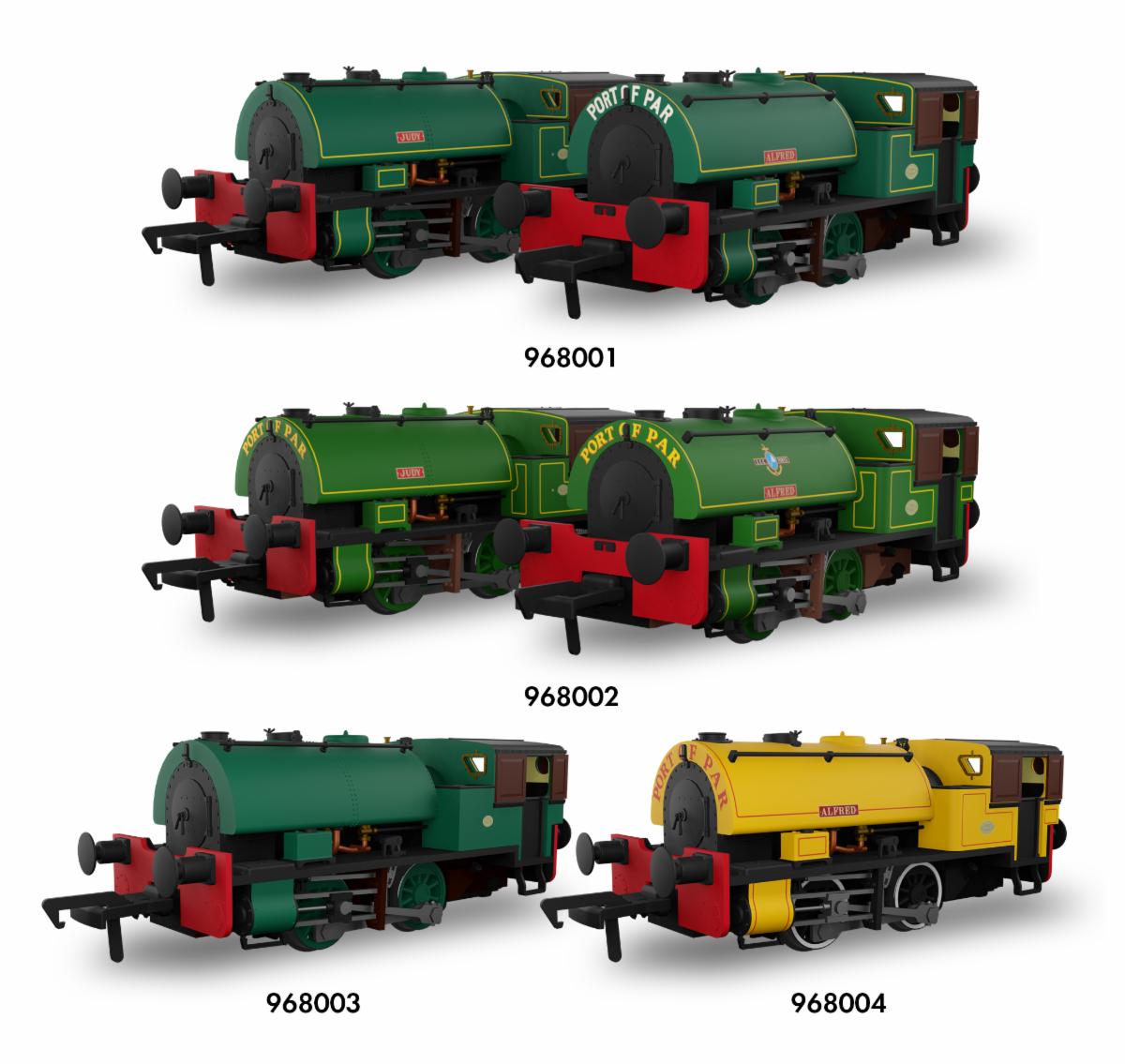
The Port of Par Bagnall models have been designed using works drawings to ensure accuracy and feature a variety of livery options covering their history, including those sported in preservation. |
|
‘As preserved’ lined light green and 1960s dark-lined green livery versions will be available as part of the Port of Par Twin Pack special editions. In addition to the two incredible models of Alfred and Judy, these packs will feature an Illustrated booklet describing the history of the locomotives, and a postcard print of an exclusive Jonathan Clay painting. All are beautifully presented in a charming wooden box. What a stylish way to house the King and Queen of Cornish preservation.
Two single locomotives will also be available in other liveries carried by the individual locomotives – this time in a standard box.
|
|
Two twin packs and two single packs are available covering all the liveries carried during the locomotives' working and preserved lives. |
|
Modellers can look forward to a smooth-running mechanism with flywheel, plunger pickups, a factory-installed speaker on all models, and a Next18 decoder socket fitted under the tank. There will also be separate tooling to accurately portray the slight differences between Alfred and Judy correctly. Sadly, it has not been possible to make the full Bagnall-Price valve gear operational due to the size and clearance of the parts - but we hope the few parts (that are mostly hidden) that don't move will not detract from the overall model.
|
|
The diminutive size of these models can clearly be seen when coupled to one of our ex-SECR vans!
|
|
ESU has been working with us since the start of the project, and the DCC Sound options will be fitted with an ESU Nano chip. ESU is also working on a bespoke electronic setup with us to help with smooth running on DCC. |
|
The model is currently in tooling and we hope to have some spectacularly small samples shortly.
Twin pack models are available with a RRP of £279.95 DCC Ready and £499.95 DCC Sound Fitted.
Single locos are available with a RRP of £139.95 DCC Ready and £249.95 DCC Sound Fitted.
|
|
In our last few newsletters we have been telling everyone that our LNER Y7 was the smallest loco to date - well that has now changed!
|
|
Stirling Single No.1 (OO Gauge)
A Stirling Northerner that’s single and ready to mingle.
|
|
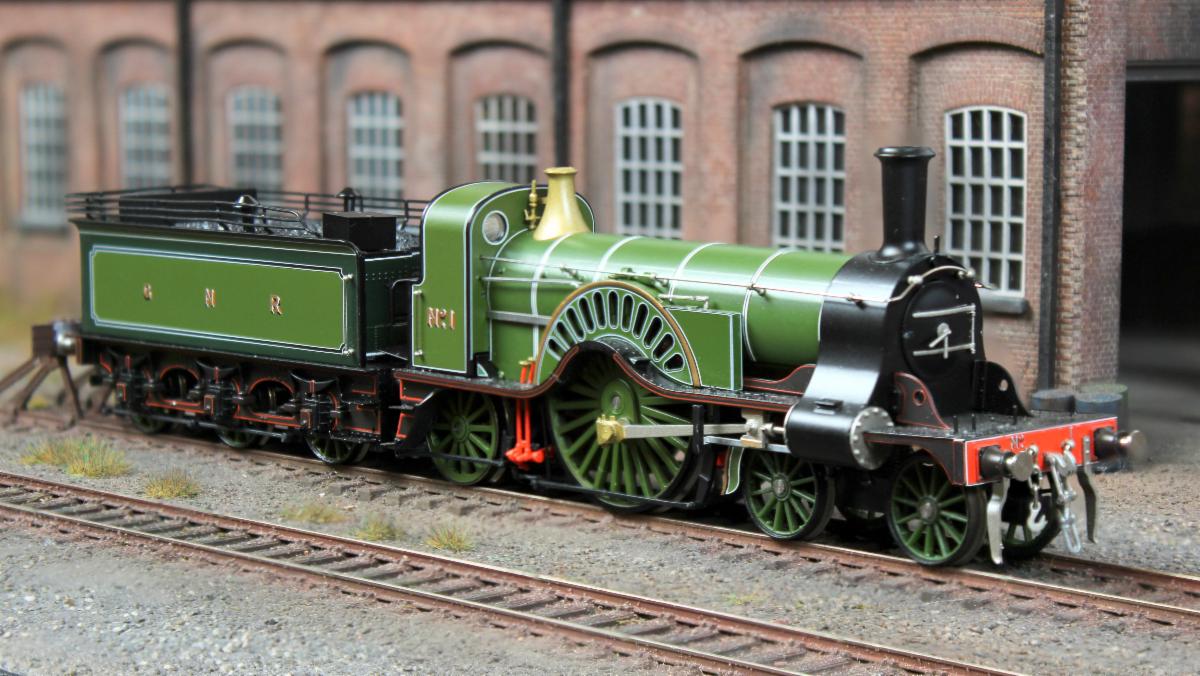
We are proud to announce that the OO Gauge GNR Stirling Single No.1 will be returning in all its glory and in an all-new small tender version.
|
|
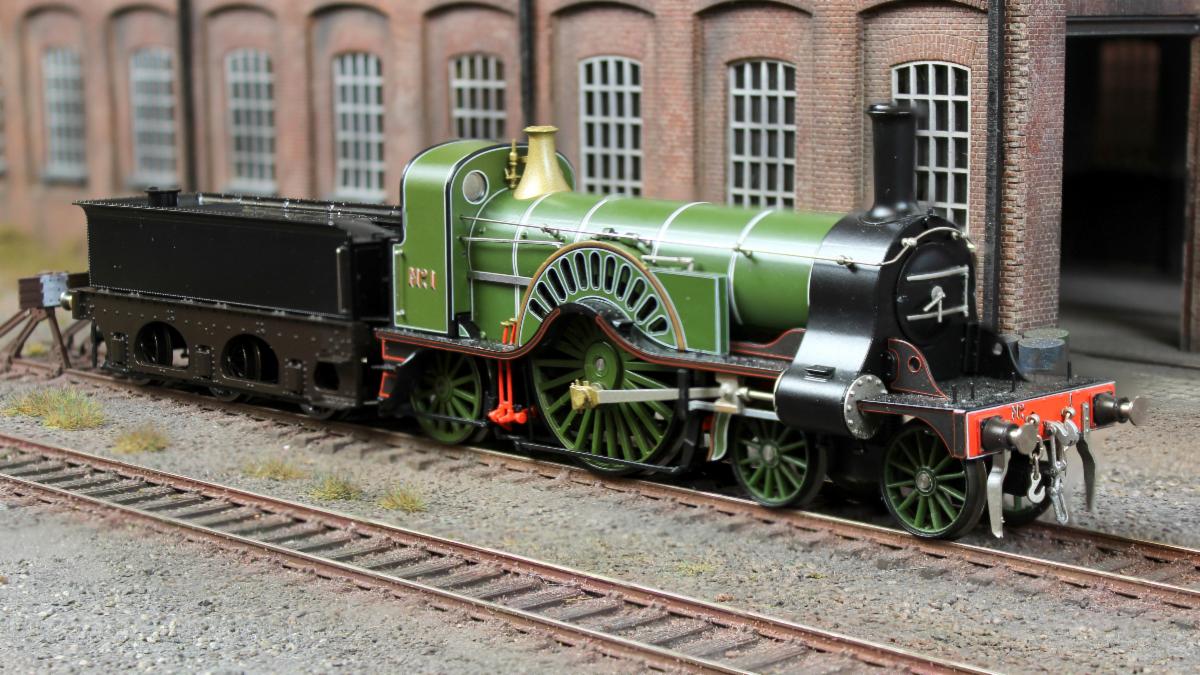
Back by popular demand - the Stirling Single is back on the track, but this time with the small 'Sturrock' tender. |
|
GNR and Pre-grouping fans will finally be able to get their hands on a ready-to-run model of No.1 in the same condition as it was restored to in the 1930s. Paired with a titchy Sturrock tender, No.1 had remained in this condition for most of its life in preservation. Despite it being discovered in the 1970s that this tender wasn't meant to be coupled to this railway icon, it wasn't until many years later, in 2014, that the Stirling Tender Project actually returned it to its prototypical and current preserved condition that we know it as today. |
|
Prior to withdrawal, No.1 had a standard large Stirling tender of 1891 design, but in preparation for the White City Exhibition of 1909 an old tender was found, which had previously been used behind the Doncaster Carriage Shunter, Hawthorn 0-4-2, No 112A. This consisted of a goods tender chassis with 3ft 7in wheels with a small well tank designed for a passenger tender. |
|
The 8-foot single wheelers originally used the chassis of this 1867 tender, which had 4ft 1in wheels and a larger tank. |
|
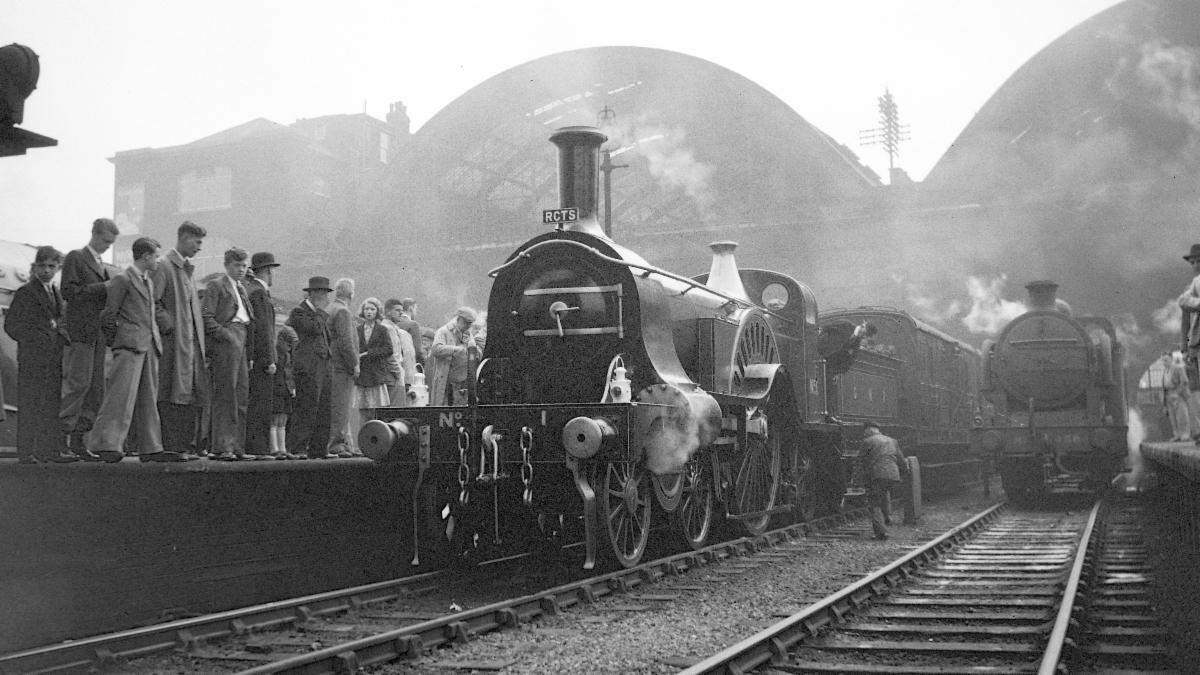
Waiting to leave Kings Cross on an RCTS railtour to Peterborough in 1938. |
|
So, the tender attached to No.1 had no historical claim to be paired with the locomotive prior to the White City Exhibition, but as it was thought no legitimate tender remained at this point, it sufficed. It did so for many years until a historically correct version was discovered. |
|
Incredibly it had been discarded rather unceremoniously in a siding just outside of Peterborough. |
|
With over 80 years being coupled to the smaller of the two tenders, it is fair to say that many enthusiasts associate No.1 with this longstanding low-profiled counterpart, remembering it fondly from visits to the National collection or enthusiast events. |
|
To quote Mr. Richard Gibbons, who penned the conservation report on the Stirling Single for the NRM:
“The Sturrock tender currently with the locomotive is an anachronism that has been perpetuated for so long now that it has acquired its own historical legitimacy.”
|
|
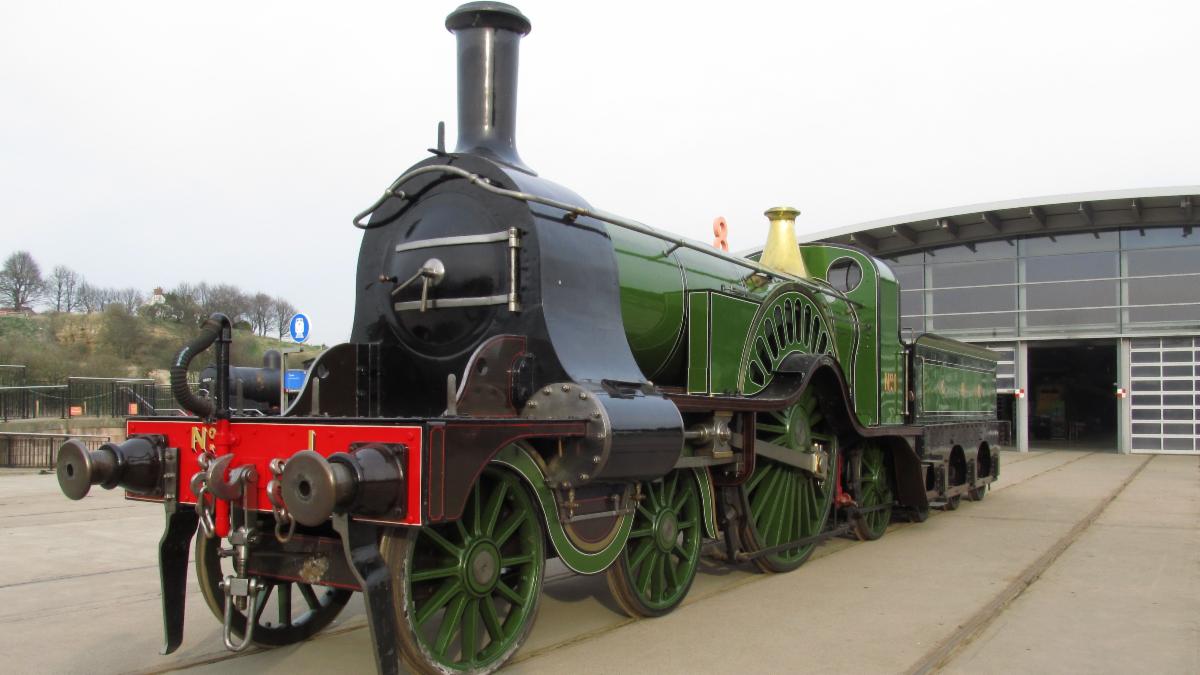
No.1 stands outside the display hall at Locomotion in Shildon. |
|
As keen railway enthusiasts, everyone at Rapido Trains UK is very pleased to be able to tell the full story of this beautiful machine in model form. We have worked in partnership with Locomotion Models and the National Railway Museum to produce a high-quality OO Gauge rendition of a truly special locomotive.
|
|
To cover the locomotive's full history Locomotion Models will also be stocking a small second run of the immensely popular Museum Condition, large tender, preserved variant that Rapido Trains Inc. produced several years ago.
|
|
A re-run of the "museum" condition locomotive with large original style tender is also available from Locomotion Models. |
|
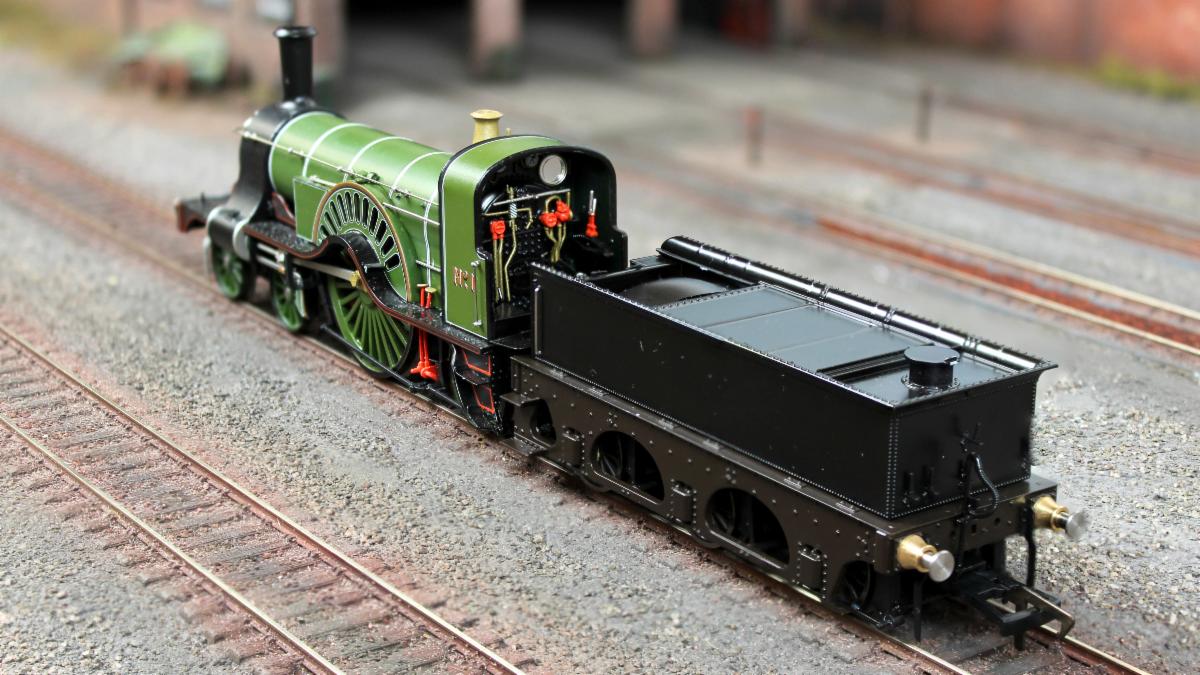
The Stirling Single model has been designed using a combination of archival materials and drawings, state-of-the-art laser 3D scanning techniques and CAD applications, which ensure its accuracy. It features a striking fine-scale precision GNR livery, a smooth-running mechanism, a factory-installed speaker and a firebox glow which can be seen easily thanks to the shallow tender. |
|
A cute behind? Whilst not prototypical for GNR days the small tender has become part of the locomotive's rich history. |
|
Engineering prototypes of the new tender have already arrived and been reviewed. The orderbook will close on Monday 4th March and we hope that both versions of Stirling Single No.1 will be available in Winter 2024. Pre-order your model from any Official Retailer or direct from us today. |
|
RRP for this exciting new version is £249.95 for DCC Ready and £349.95 for DCC Sound Fitted. |
|
LNER J52/2 0-6-0 (OO Gauge)
Saddle up for a spectacular stoic shunter.
|
|
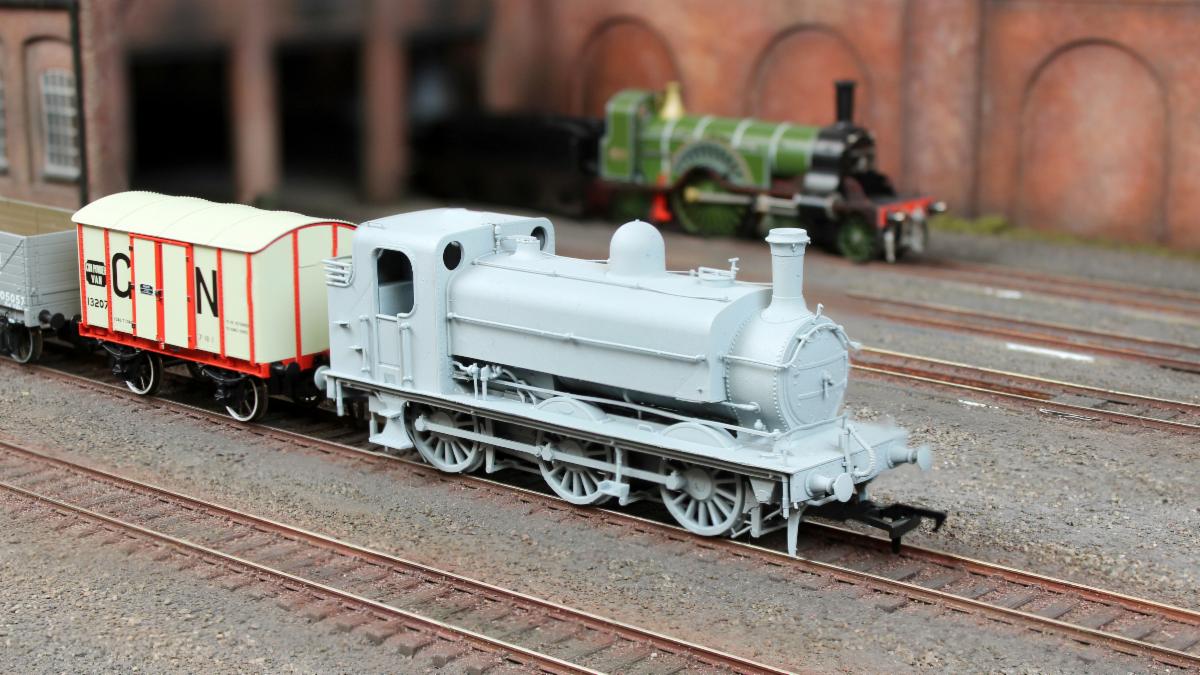
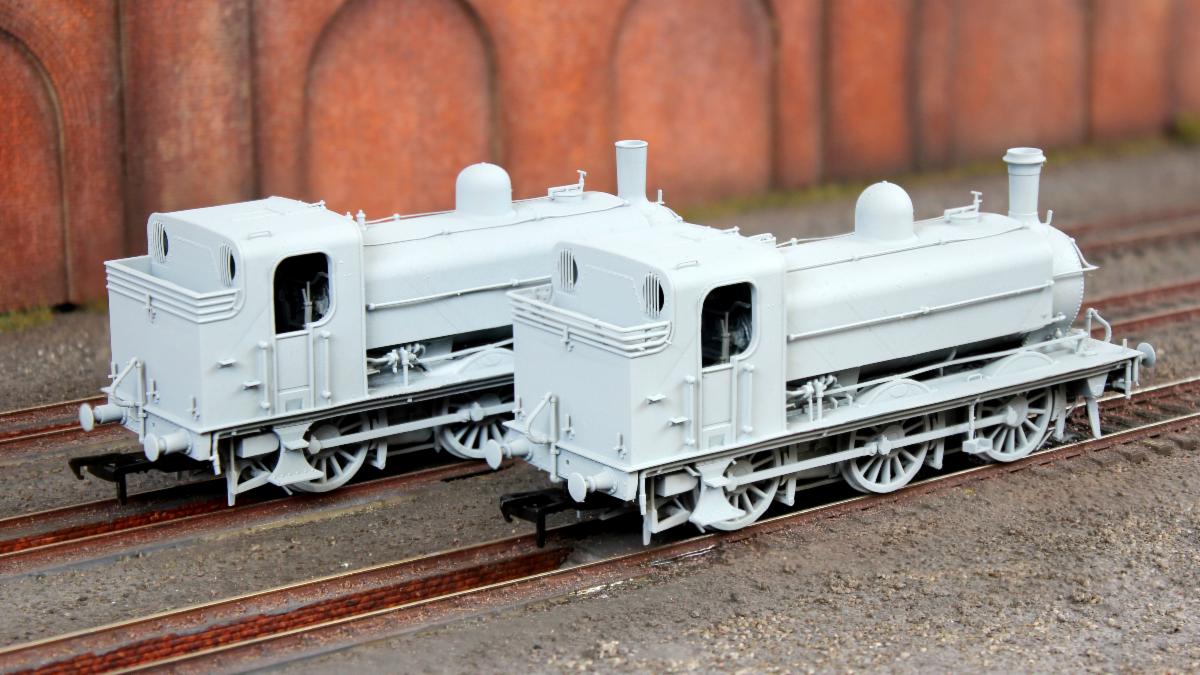
To coincide with our announcement of the wonderful Stirling Single No.1, we couldn’t think of a better time to reveal another much-needed Northern nicety - the LNER J52/2 0-6-0. This neat little shunter was seen the length and breadth of the GNR network, from North London to the Northeast of England.
|
|
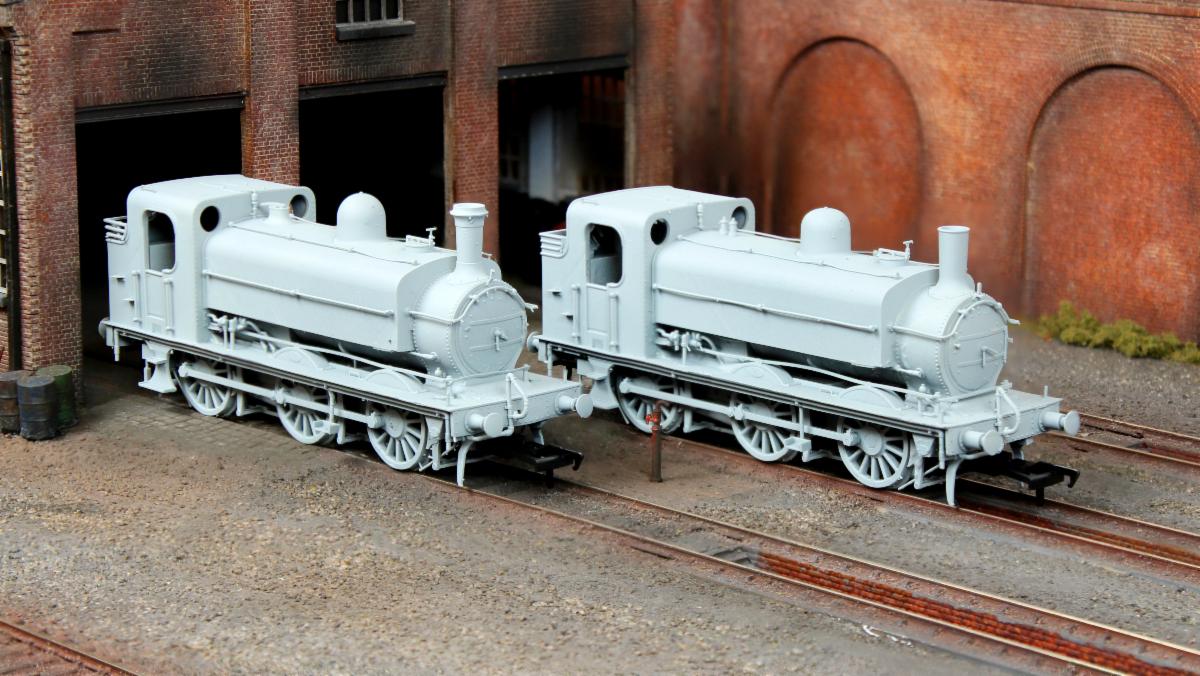
Whilst not perfect this 3D print gives a great impression of what is to come. |
|
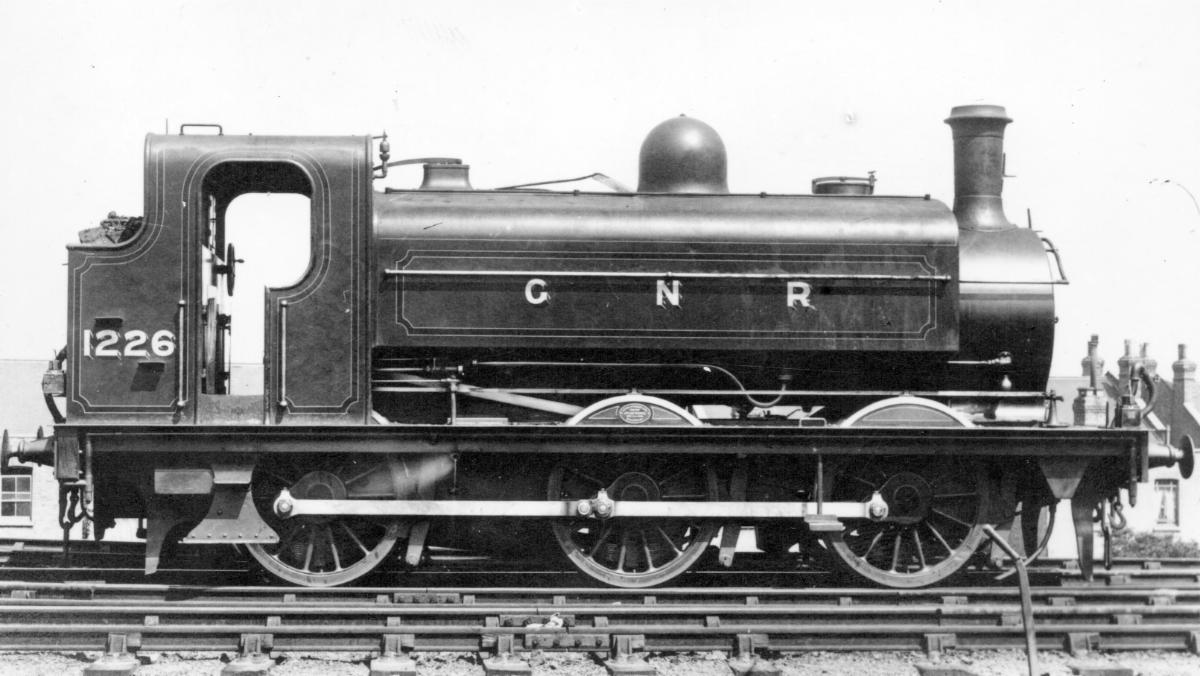
These started life on the GNR, where they were classified as J13 and based on the Stirling-designed J14 (which featured a domeless boiler). Of course, you can’t trust domeless engines, so Henry Ivatt refined this design with a more efficient and domed boiler variant. They would be fitted with a boiler the same length as the one on the J14, but had an increased diameter. The first J13s rolled off the factory floor in 1897 to work alongside their domeless counterparts on shunting duties. |
|
Between then and 1909, a total of 85 of the class were produced, some at the GNR’s works at Doncaster, and others at a variety of contractors, such as R. Stephenson & Co. The updated design proved effective and as locos moved into LNER ownership many of the J14s were rebuilt as J13s. |
|
No.1226 was built in April 1899 and is seen here shortly after sporting full GNR loco livery - a perfect match for the Stirling Single. |
|
Under the LNER the J13s that were domed from the day they were built were reclassified as the J52/2. The class became a common sight in North London, covering the North London Line, Kings Cross, and numerous marshalling yards up and down the country. |
|
Plans were put into motion to scrap the J52s in the mid-1930s, however, this cull ceased when the war broke out in 1939, as any functional locomotive was pressed into service. With the introduction of numerous diesel shunters under the modernisation plan, the withdrawal of the J52s sadly continued. |
|
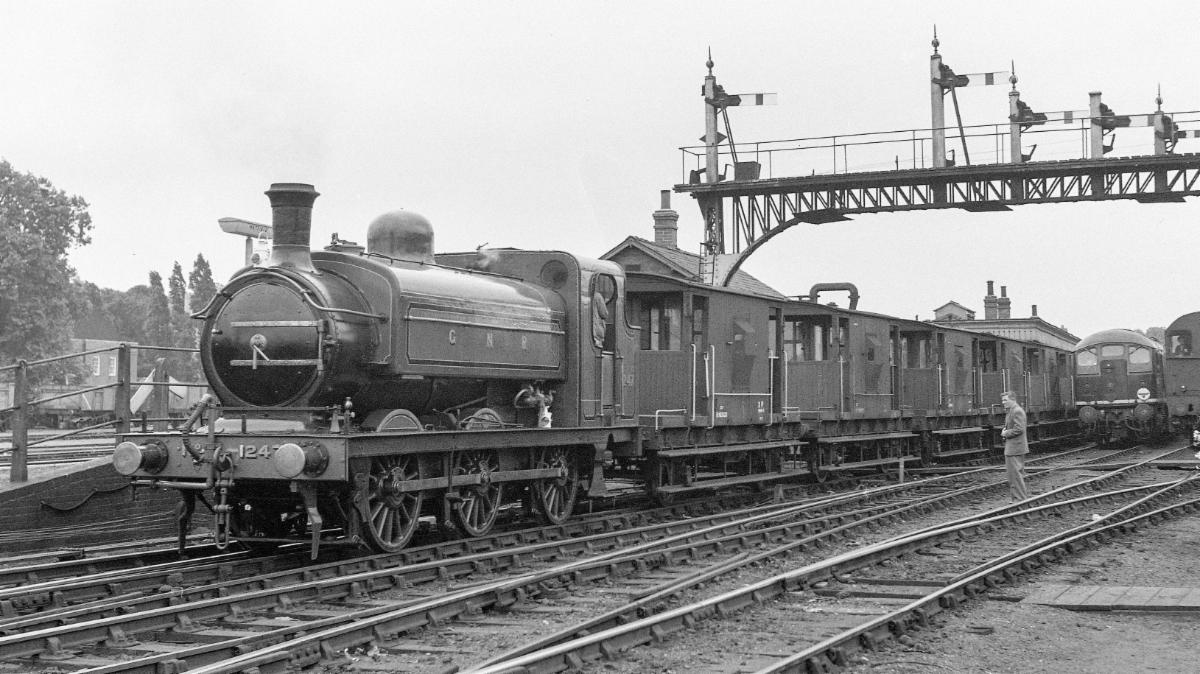
In 1959 and only a couple of years before the entire class were scrapped, Captain Bill Smith stepped in and saved loco No. 68846 from its inevitable fate. He became the owner of the World’s very first privately owned BR steam locomotive, and the J52/2 earned itself a permanent place in the annals of railway preservation history. The aptly and affectionately named Old Lady would live on. Once in his possession, she was repainted into her beautiful pre-grouping guise and renumbered to the iconic 1247.
|
|
Carrying GNR livery, No.1247 heads an enthusiasts brake van special for the Stephenson Locomotive Society in June 1961. |
|
With a gorgeous livery, long service history and historical claim to fame, 1247 will always have a fond place in the hearts of travelling enthusiasts and preservation modellers alike. The Captain's decisive action showed that preservation was possible, and sparked a wave of like-minded enthusiasts to follow suit. Eventually the locomotive was presented to the National Railway Museum where the locomotive can be seen on display today.
|
|
Different safety valve casings, coal rails, buffers, chimneys, steps and handrails mean lots of variety! |
|
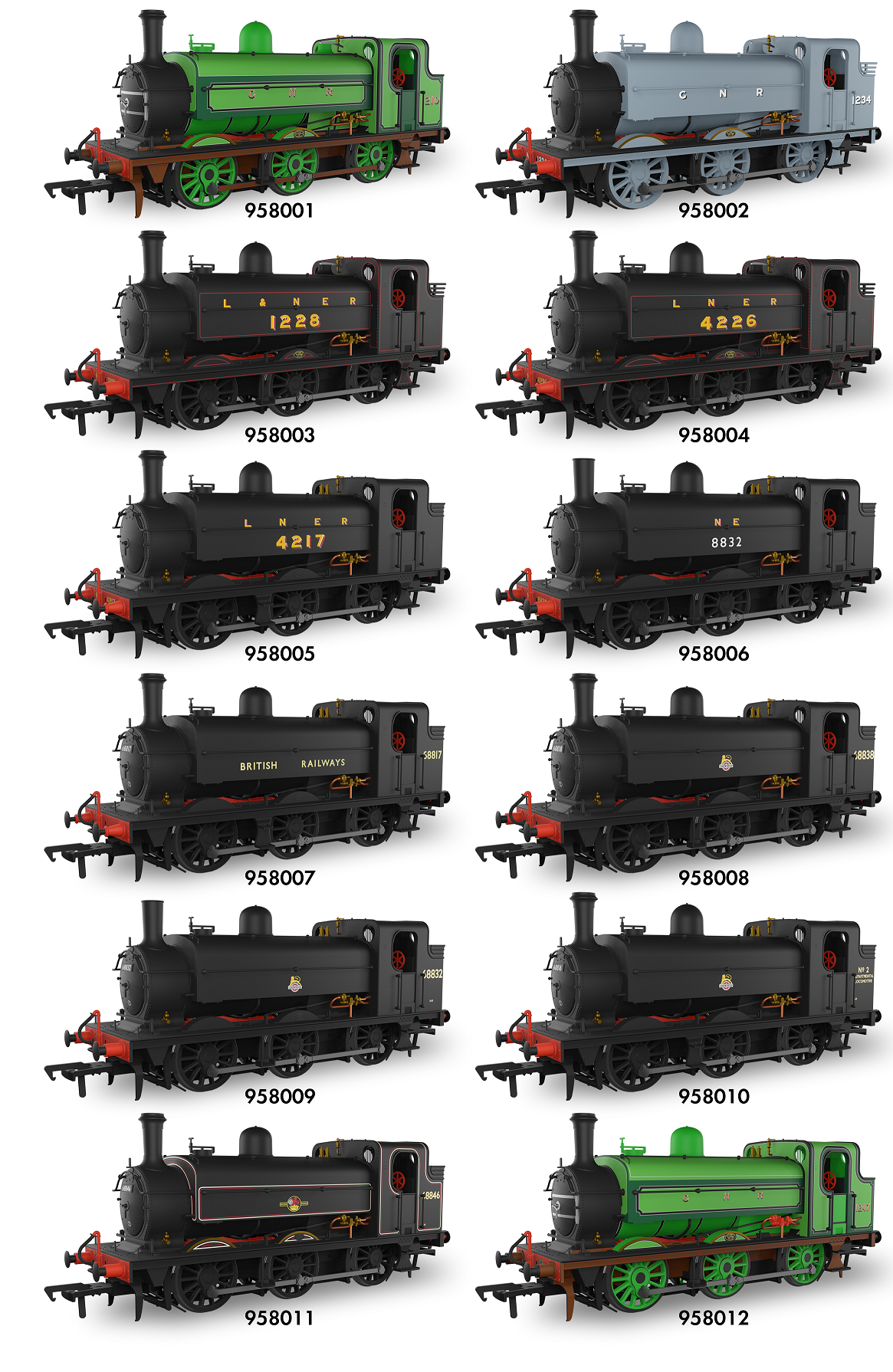
The J52/2 model has been designed using works drawings to ensure its accuracy and features a variety of liveries covering the loco's history, such as the bold pre-grouping colours of the GNR, through to various black liveries it sported in its final years. Modellers can look forward to a smooth-running mechanism a factory-installed speaker and a warming firebox glow. |
|
The model is currently in the last stage of development and will enter tooling shortly. RRP for DCC Ready models is £164.95 and DCC Sound Fitted is £279.95.
These exciting new models are available to order direct from us or from any Official Retailer now.
|
|
With twelve exciting livery and physical variations there is something for all GN section modellers. |
|
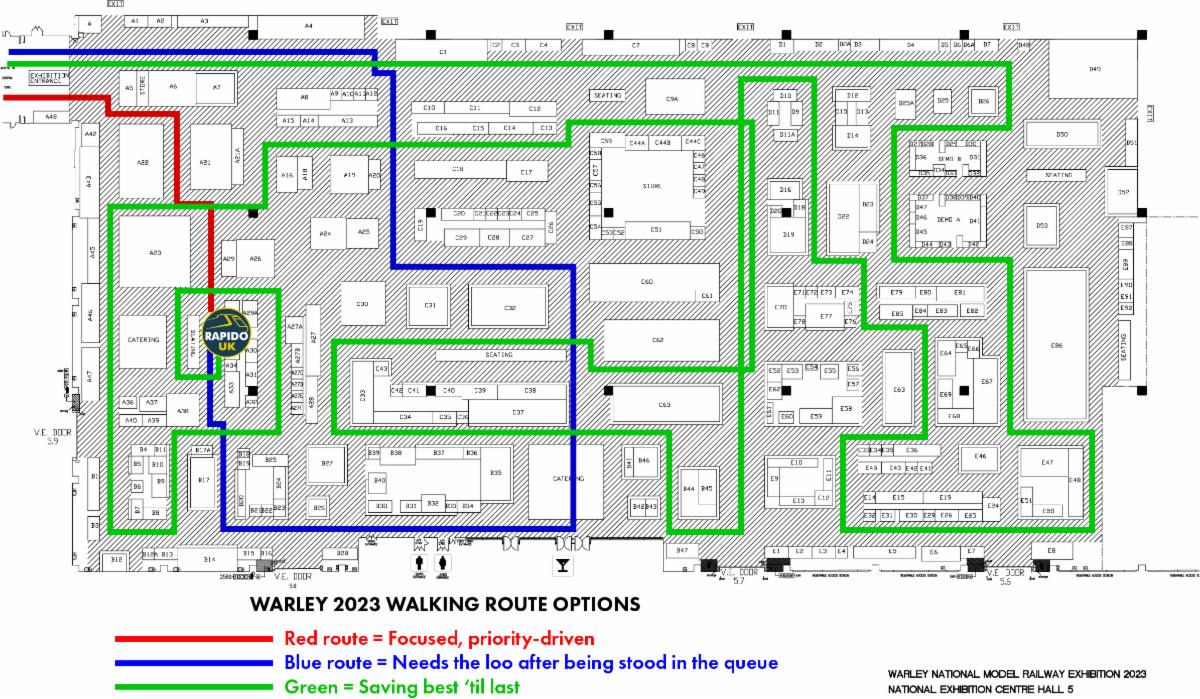
Come and see the 3D printed samples on our stand (A35) at Warley. |
|
Well, we told you it was going to be a big one, and we don’t think this disappoints!
The order books are now open, and you can pre-order all of them directly from www.RapidoTrains.co.uk today or from any Official Retailer. |
|
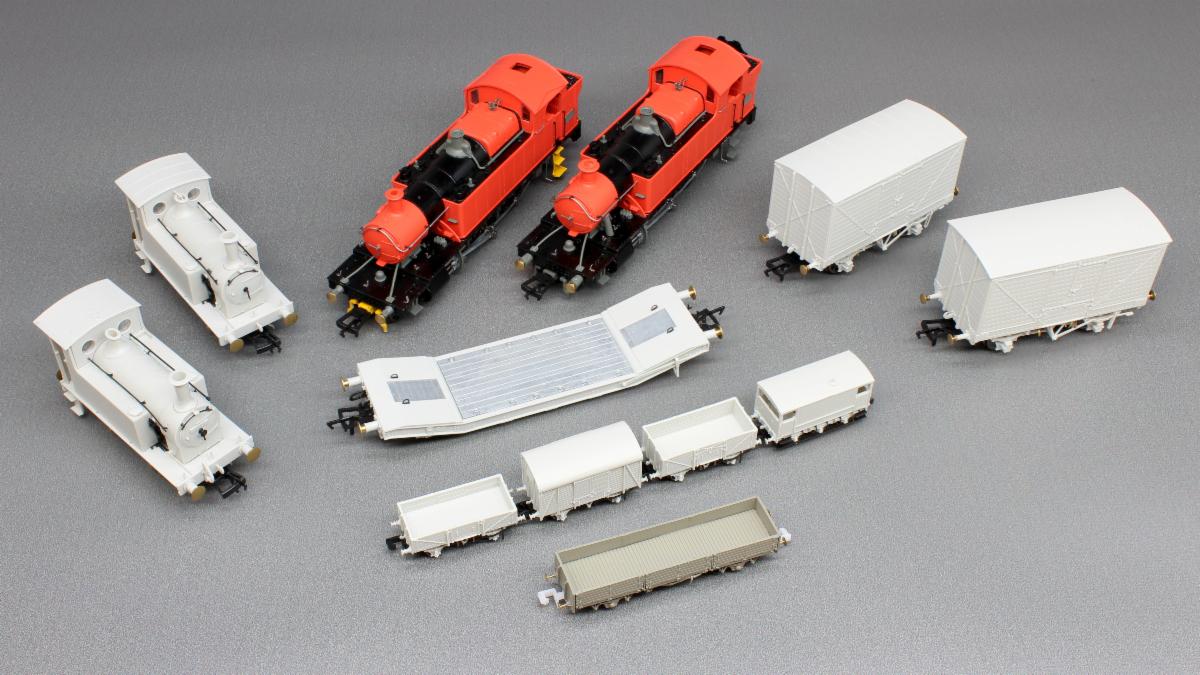
Locomotive and wagon samples galore - come and see them at Warley! |
|
We will have engineering samples or 3D prints of all our Winter Announcements (alongside many other previously announced items) on our stand at Warley. Make sure you come and find us at the show ( Stand number A35) to find out more. Keep an eye on our upcoming newsletters for further updates. We are looking forward to hearing how excited you all are for these incredible additions to our range.
See you at Warley!
The Rapido Trains UK Team
|
|
This useful map will help you find your way to stand A35 at the Warley exhibition to see all our latest announcements and more!
|
|
You can write to us at Rapido Trains UK, Unit 3, Clinton Business Centre, Lodge Road, Staplehurst, Kent TN12 0QF. Alternatively, you can call us on 03304 609496 or you can
e-mail us at customerservice@rapidotrains.co.uk
|
|
Check out our YouTube channel, Facebook page, Instagram and Twitter! |
|
|
|
|
|
|