Resilient Georgia Resiliency Trends

Growing Georgia's Mental Health Workforce

Too many Georgians face long wait times or lack access to licensed providers, particularly in rural and underserved areas. We’re working to change that.


This month’s newsletter highlights our collective progress to expand and strengthen Georgia’s mental health workforce. From investing in pipeline programs and supporting licensure pathways to increasing access to trauma-informed training and supervision, our goal is simple: ensure more Georgians can pursue—and thrive in—mental health careers that make a difference.


Resilient Georgia has been co-chairing the National Mental Health Workforce Acceleration Collaborative (NMHWAC) since August 2023. Through two innovative programs, Pre-Master's Fellowship and Post-Master's Candidate, Resilient Georgia is supporting the next generation of Georgia's mental health providers.


"Being part of the fellowship program significantly supported my path toward licensure in multiple ways...during moments when the preocess felt overwhelming or stressful, I felt genuinely supported." - Arianna Maldonado


➡️Keep reading to learn more about a new class of dedicated change-makers in the behavioral health field.


"The NMHWAC created access by offering resources, guidance, and a supportive community that helped me feel seen and equipped to continue this work. Because of this program, I'm walking toward licensure with more clarity, confidence, and connection." - Amber Jones


➡️Learn more below about workforce resources and support for post-masters students and loan forgiveness/loan repayment programs.


"Wellroot has been impressed with the added support therapists received from Resilient Georgia each month. They felt free to speak their truth, which is always helpful. It was very beneficial to have assistance with new staff salaries since it's difficult to pay therapists what they are worth as a nonprofit."


➡️We are so grateful to the more than 50 Site Partners who provide opportunities for these candidates to learn and advance in their journey to becoming licensed mental health professionals.


NMHWAC continues to expand its reach and impact. Currently, we are proud to partner with 29 clinical sites across the region, supporting 27 actively engaged Candidates. Collectively, these Candidates have delivered over 13,743 hours of care to 4,076 unique clients, addressing critical behavioral health needs in underserved communities. With 96% of participants saying they would recommend NMHWAC to a friend or colleague, our model is proving to be both effective and deeply valued by those on the front lines of care.


Thank you for walking with us as we work to build a future where every Georgian has the mental health support they need to heal, grow, and thrive.


The Resilient Georgia Team


p.s. Follow us on Facebook or Instagram for more resources, events and news.

This Issue: 6-Minute Read

6 things you need to know

Accelerating the Workforce

What’s new: We are thrilled to announce our 2024-2025 Pre-master’s Fellows!


  • In addition to achieving Masters-level Behavioral Health degrees, these hard-working individuals also received a certificate of completion for the Accelerator Program through the National Mental Health Workforce Acceleration Collaborative (NMHWAC) led by the National Council for Mental Wellbeing and Kaiser Permanente.


Why it matters: The Accelerator Program aims to expand access to mental health care by increasing the number of qualified licensed clinicians. Our Fellows received support during their final year of grad school as they progress toward clinical licensure.


❤️We are incredibly proud of our dedicated Fellows and excited to continue support them throughout their journey to becoming Behavioral Health Clinicians!

Workforce Financial Resources

What’s new: There are many financial aid programs to support the development of a skilled and diverse workforce available to provide mental health services.


Why it matters: Financial barriers can discourage individuals from pursuing a career in mental health or from practicing in underserved areas, which often has a disproportionate impact on minoritized communities. Scholarship and loan repayment programs address these barriers by helping individuals with the cost and debt from schooling, often in exchange for practicing in mental health shortage areas that may struggle to recruit new providers.


✅Check out the resources below.

Keeping Clinical Providers Safe

What's new: Together with the National Council, we developed a clinical provider safety brief to help foster a provider-first environment that is trauma-informed.


Why it matters: When clinical professionals are subjected to personally unsafe practice environments, several ethical implications arise, which can affect both the clinicians and the quality of care provided to clients.


Trauma in Technicolor

What’s new: Our July "Power of Healing" blog dives into the depths of Netflix’s newest summer miniseries, Sirens.


✨This show illustrates how storytelling, whether on screen or in real life, can open the door to deeper empathy, compassion, and healing in our own lives. Stories of childhood trauma, in any form, serve as powerful reminders of the truths we encounter daily in trauma-informed care: that behind most behaviors lies a lived experience, often shaped by pain, survival, and a deep desire to feel safe. 


Thank you to Nikki Warner, Regional Program Manager at Resilient Georgia, for sharing how Sirens unexpectedly mirrored her own healing journey.


❤️‍🩹This is the latest installment in our “Power of Healing" blog series, which explores powerful journeys of healing and recovery...and the resilience that fuels them.

Transforming Grief into Impact

What's new: In honor of Men’s Mental Health Month in June, we featured Derrick McElroy, Cobb County resident and founder of MentalFit, a mobile app supporting whole-person mental wellness. After losing his mother to suicide at 17, Derrick transformed his grief into action - creating MentalFit to help others navigate their mental health journeys.


🎯The Mentalfit app offers easy access to emotional, physical, and social well-being tools, whether you're just starting out, maintaining progress, or seeking professional support.

New Sector-Specific Resource Guides

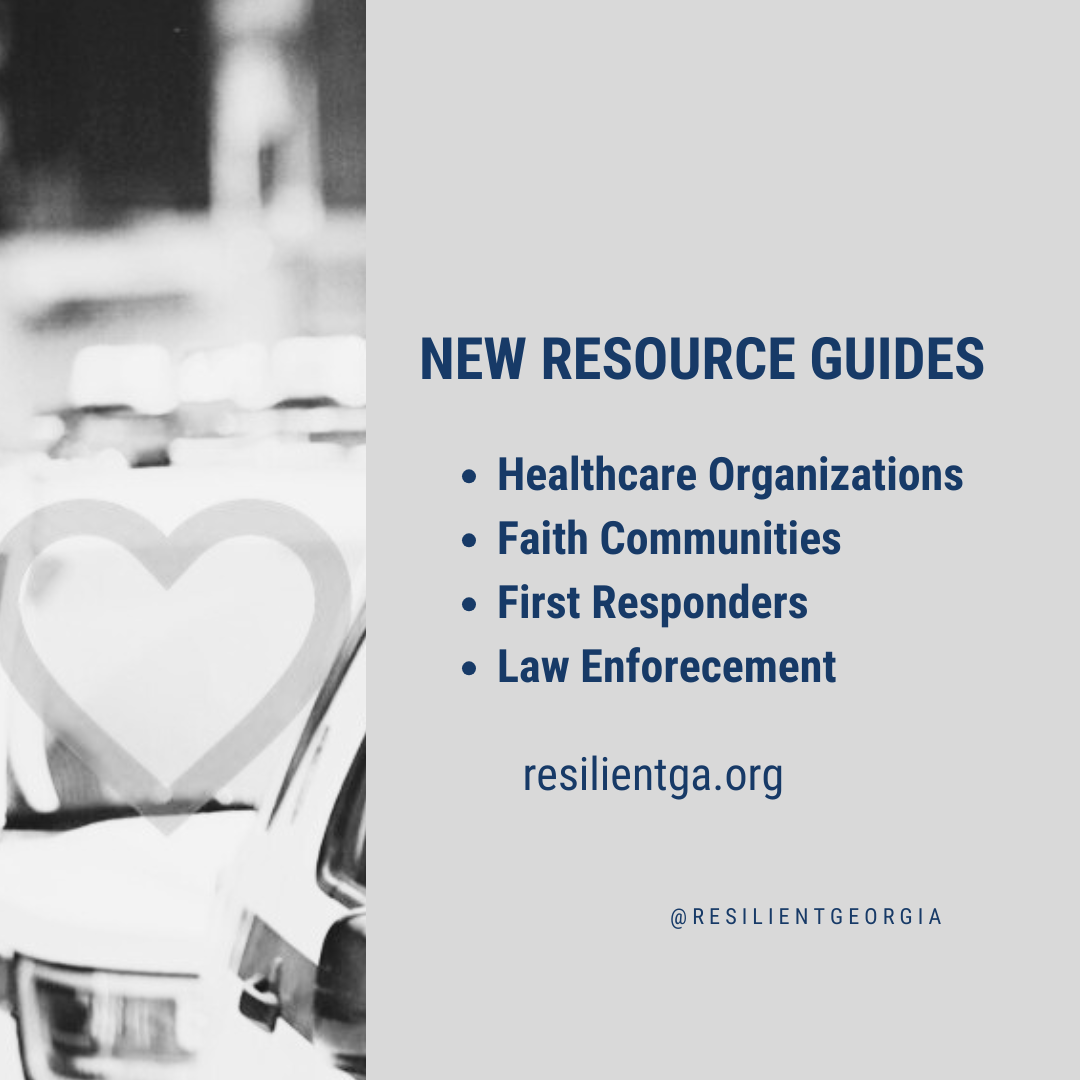
What's new: We've added four new sector-specific resource guides! These guides offer trauma-informed tools, training recommendations, and practical strategies to build resilience within each sector, including:


✅Healthcare Organizations

✅Faith Communities

✅First Responders

✅Law Enforcement


📌Share these resource guides with someone you know today.

Regional Coalition & Partner News

Workforce Partner Highlights

  • Kennesaw State University's Children and Family Programs developed a microcredentialing program that contributes to a trauma-informed emerging professional pipeline addressing the need to increase trauma-informed training in Georgia.
  • UGA's new Ralston Center for Behavioral Health and Developmental Disabilities will prepare future professionals for careers in the behavioral health and developmental and intellectual disabilities fields with the goal of creating a pipeline to provide a community-based system of care.
  • The HBCU Center for Excellence in Behavioral Health at Clark Atlanta University in Atlanta, Georgia launched its inaugural Pre-Career Footsteps Mentoring Corps through its SAMHSA-funded initiative, Leadership in Education, Awareness, and Preparation.
  • Resilient Teens is leading work with medical students/near-peer mentors to take a more trauma informed approach in their medical practice.
  • Resilient Chattahoochee Valley  is working on increasing access to mental health services through workforce development by partnering with a local behavioral health organization, The Pastoral Institute.

Regional Coalition and Partner Highlights

  • Shout out to Greater Valdosta United Way and the Resilient and United Communities of South Georgia coalition who are working to address the rising mental health needs in Lowndes County.
  • Congratulations student engagement expert Emily Rubin and Joy Schofield from Hall County Schools for being featured on the Georgia Partnership for Excellence in Education’s Ten-Minute Top Ten podcast in two episodes about how fostering social and emotional connections can enhance student engagement and how the Hall County district’s use of Dialectical Skills Groups helps students regulate emotions, build mindfulness, and strengthen relationships.
  • Congratulations to The Kids Alliance for Better Care (KidsABC), a joint initiative between Children’s Healthcare of Atlanta, Mercer University School of Medicine, and the Georgia Rural Health Innovation Center, who celebrated the opening of the Monroe County Hospital emergency department as part of the Pediatric Emergency Care project. 
  • We love this powerful PSA from the Love, Your Mind campaign, part of the Ad Council's national mental health initiative with support from The Arthur M. Blank Family Foundation.

Training Opportunities

Mark your calendar

  • Attend the 2025 Georgia CASA Conference Aug. 23 at the Renaissance Atlanta Waverly Hotel & Conference Center.
  • The Georgia Conference on Child Abuse & Neglect will take place Wednesday, Sept. 10, 2025 at the Hilton Peachtree City Conference Center.
  • Save the Date for the CSRA Regional School-Based Behavioral Health Forum Sept. 12, 2025 at Augusta University. Registration link available soon.
  • Become a Connections Matter Georgia Trainer. The Connections Matter Georgia Train-The-Trainer (TOT) offers professionals the knowledge and tools they need to train others, including parents, educators, child-serving professionals, healthcare, human services providers, faith leaders, and community members. The TOT consists of one full in-person day and one half-virtual day. The next session is Sept. 18.
  • The Zero to Three LEARN Conference will take place Oct. 8-9, 2025 in Baltimore, MD.
  • Join Compassionate Atlanta for Compassion Con & Be My Neighbor Day Oct. 26 at Historic Legacy Park in Decatur.
  • The Social Connection Conference, "Seeds of Connection," will take place Oct. 28-30 in Atlanta.
  • FREE COURSE for Georgia early childhood education centers! Developed in partnership with the Center for Interrelational Science and Pediatrics (CISP), this course features the latest science on child development during the first five years and incorporates the Community Resiliency Model (CRM) as a practical, trauma-informed wellness intervention. Participants can access self-guided modules with DECAL Approved Training Hours and a forum to connect with other early care educators and practitioners.

What's Happening at Resilient Georgia

Updates from us

🎤Andrea recently presented on NMHWAC to the Behavioral Health Reform and Innovation Commission Workforce Subcommittee, with efforts to promote and identify funding, state partnerships, and increased stakeholder engagement for the workforce initiatives.


📈Yasmine is analyzing survey data from our participants and using our evaluation findings to determine opportunities to mitigate licensure barriers, identify funding opportunities to reduce financial concerns, and provide more resources to support our pre- and post-Masters behavioral health clinicians.

“A hero is someone who has given his or her life to something bigger than oneself."


—Joseph Campbell


Facebook  Instagram  Linkedin