|
Wellness is Essential to Live Your Best Life
National Wellness Month, celebrated every August, encourages people to consider and prioritize their overall health and well-being. This concept aligns well with the Council's vision for enhancing the lives of individuals with developmental disabilities, ensuring our community members are living their best lives. We know that wellness is not just physical health but also includes mental, emotional, social aspects of life.
As a program funded by grants from the U.S. Department of Health and Human Services, the Council joins in the Department's efforts toward a healthier, stronger America. One of these efforts is called Healthy People 2030. Healthy People 2030 has a strong focus on eliminating health disparities and creating fair opportunities for people to live healthy lives. One of the Healthy People priority areas is Social Determinants of Health because social determinants of health (SDOH) have a major impact on people’s overall health, well-being, and quality of life.
What are the Social Determinants of Health (SDOH)?
SDOH are the conditions in the environments where people are born, live, learn, work, play, worship, and age that affect a wide range of health, functioning, and quality-of-life outcomes and risks.
SDOH can be grouped into 5 domains:
Economic Stability
Education Access and Quality
Health Care Access and Quality
Neighborhood and Built Environment
Social and Community Context
One of Healthy People 2030’s 5 overarching goals is specifically related to SDOH: “Create social, physical, and economic environments that promote attaining the full potential for health and well-being for all.”
We see opportunities for disability advocacy in each of these domains.
What is Well-being?
Well-being is a complex state of health, happiness, and prosperity, encompassing physical, mental, emotional, and social factors, as well as a sense of purpose and life satisfaction. Key aspects include a healthy lifestyle, supportive relationships, a sense of purpose, and the ability to manage stress, all contributing to a positive overall quality of life.
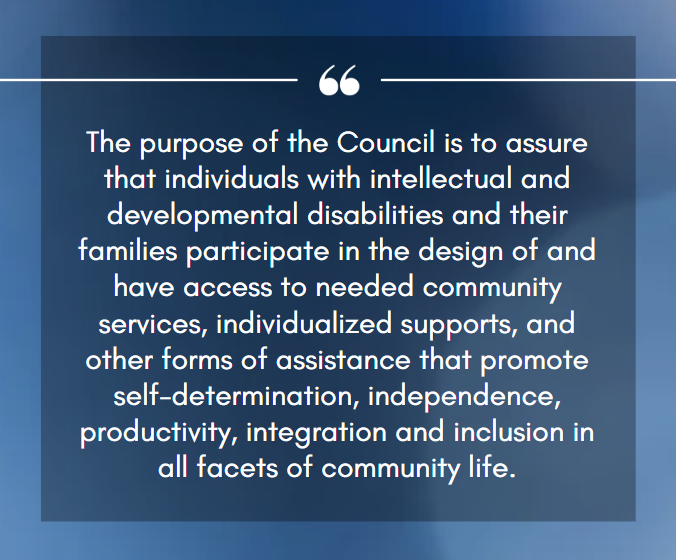
This brings us back to the Council's work to ensure well-being for ALL people, including individuals with intellectual and developmental disabilities.
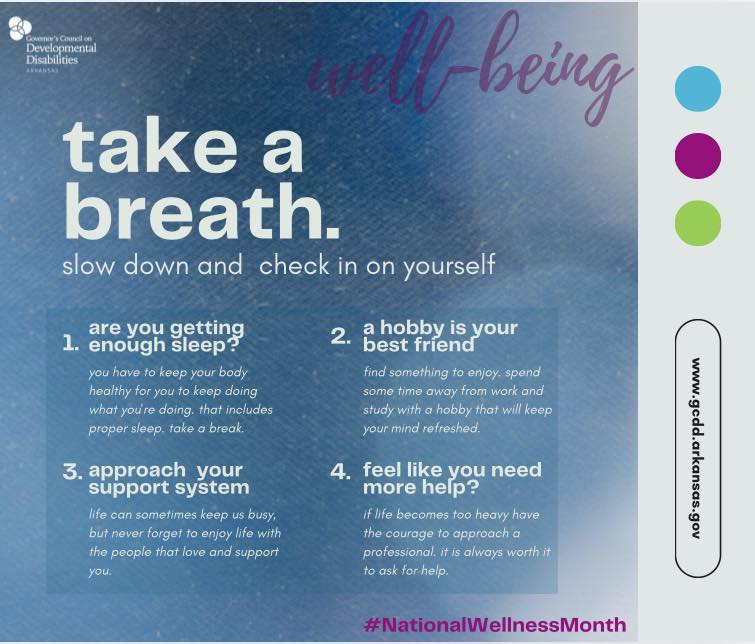
How do you maintain your well-being? We have some suggestions:
1. Get more sleep
2. Find a hobby
3. Use your personal support system
4. Ask for help
Click here to link to the National Institutes of Health "Your Healthiest Self: Wellness Toolkits" to find ways to improve your well-being.
|