Paul V. Sherlock Center on Disabilities

RIMAC & Sensory Connection Newsletter 

Supporting Students with Complex Needs 

Spring 2026

First Edition 


Produced by the RI Dual Sensory Impairment Project and RIMAC


Welcome to the first issue of the RIMAC & Sensory Connection Newsletter. We are excited to combine these two newsletters into one shared space for resources, updates, and ideas that support students with complex needs. We hope to provide educators, families, and service providers with helpful tools to support meaningful access and engagement for all students.  

AT in Action 


The Assistive Technology Industry Association (ATIA) held its annual conference on January 29-31 in Orlando, Florida. The event is held in person and virtually, bringing together all things technology for across the lifespan. Examples inlude augmentative and alternative communication (AAC), vision and mobility, classroom and educational tools, and AI. The conference features technology exhibits, workshops, and live sessions hosted by various vendors and professionals. It is a great opportunity to learn more about the community and discover new technologies. You can learn more about opportunities and view recorded sessions.


Tech in 20 is a free, virtual professional learning series offering quick, 20-minute weekly demos focused on assistive technology that supports math instruction for students with visual impairments. It provides practical, easy-to-implement strategies that help teachers build confidence in using and teaching AT in their classrooms. 

New and Noteworthy Kits at the RIMAC Library 


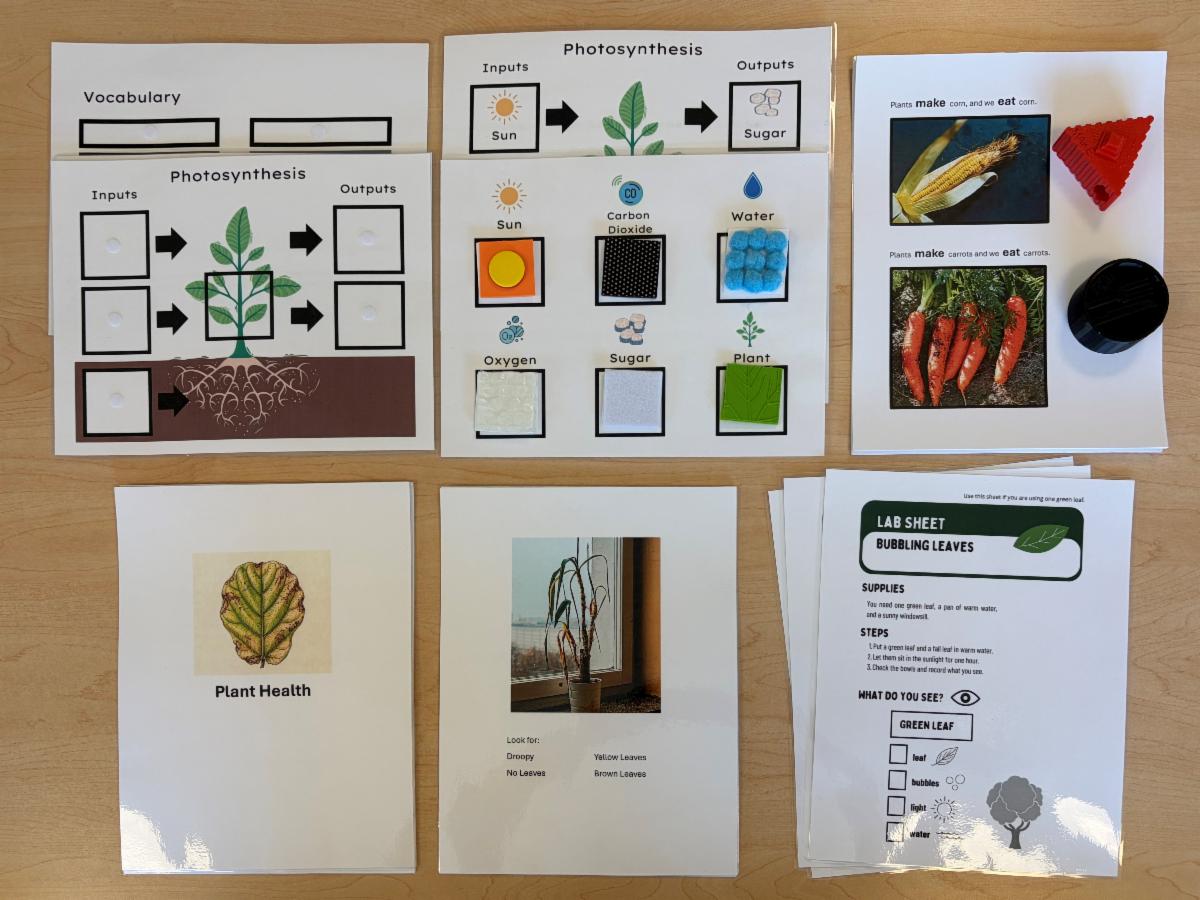
Photosynthesis (Grade 3-5 and 6-8) 


Standards: SCI.EE.2.LS.Plant-1; SCI.EE.5.LS.Plant; SCI.EE.8.LS.Plant ; NGSS 5-LS1-1; NGSS 5-PS3-1 

A kit on photosynthesis

Our new Photosynthesis Kit aids students in understanding the photosynthesis cycle through a hands-on chart and lab sheets. In the Plant Health activity, students identify signs indicating that a plant isn't receiving proper care. They also practice key vocabulary related to fruits and vegetables that plants produce to store sugar.  

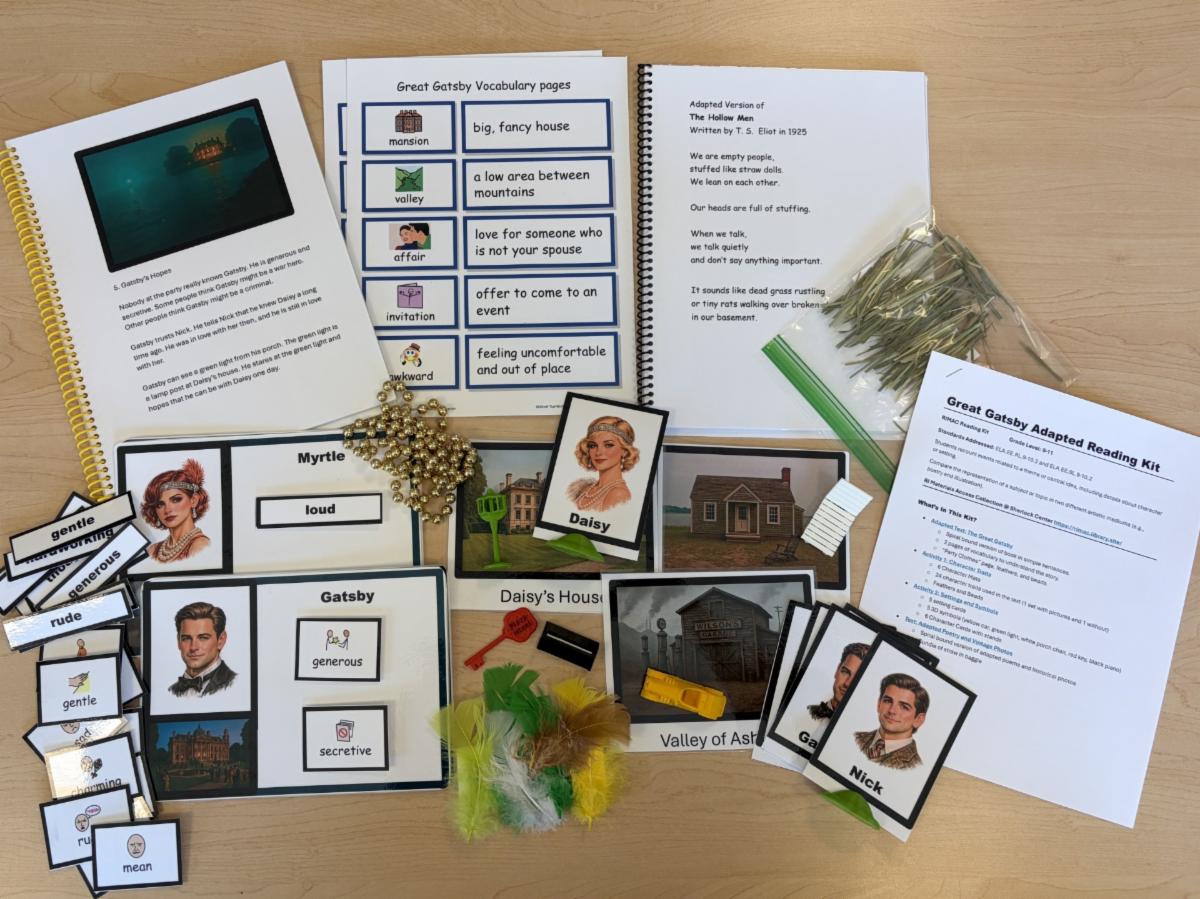
The Great Gatsby (Grade 9-10) 


Standards: ELA.EE.RL.9-10.2; ELA.EE.SL.9-10.2; RL.9‑10.3; RL.9‑10.7; RL8.2 

Great Gatsby kit

The Great Gatsby Reading Kit features a new adaptation of the book designed to help students understand the important settings and characters in the story. The kit includes character boards for adding traits. To assist with retelling and understanding the setting, students can arrange five locations from the kit and place objects and characters in their correct spots. Students can also explore the theme of The Great Gatsby by reading two poems from the era – “The Hollow Men” by T.S. Eliot and “A Day in the Country” by Dorothy Parker. These poems have been adapted for easy reading, and enrichment ideas are included. Did you know that "The Scarecrow" was a popular dance of the era? A video link is provided! 


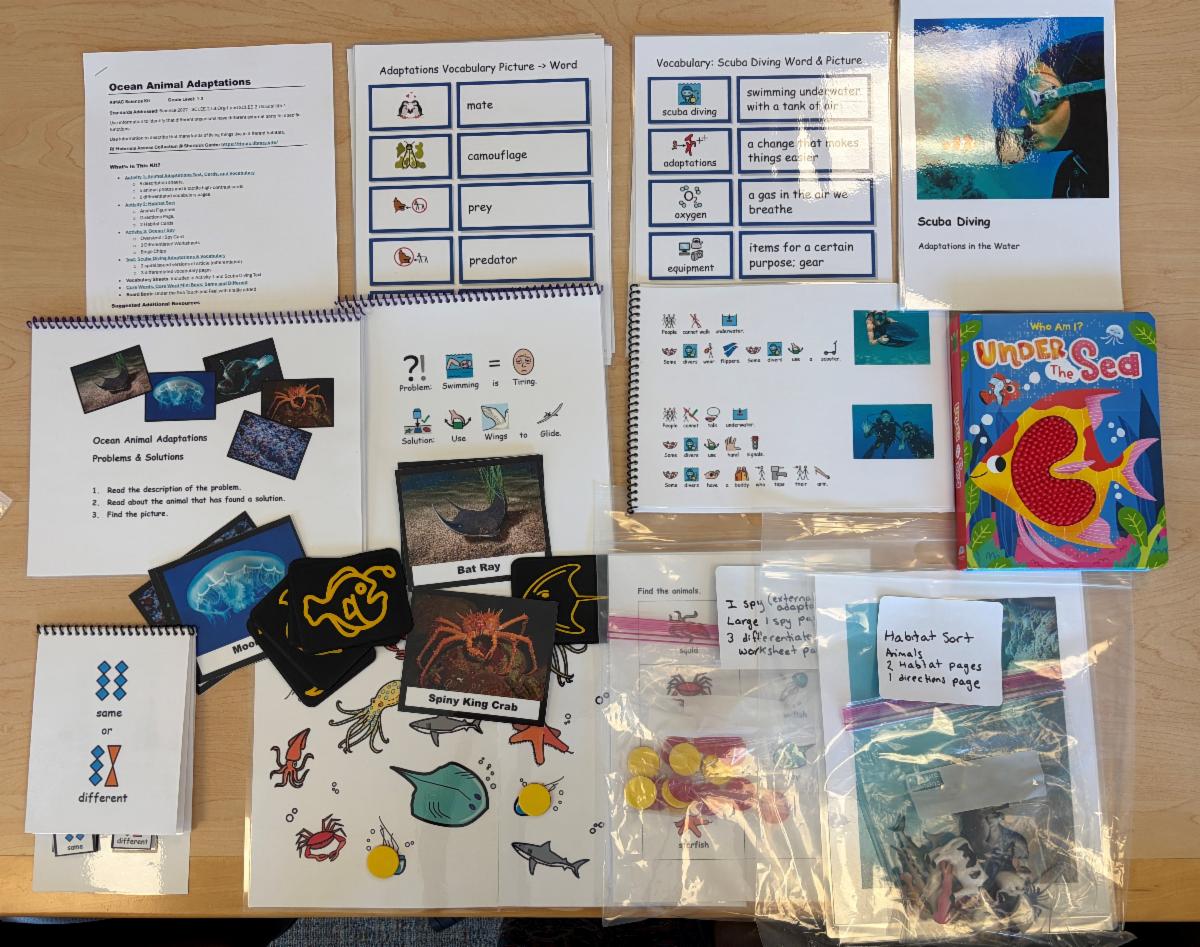
Ocean Animals Adaptations Science Kit (Grades K-2) 


Standards: SCI.EE.2.LS.Org-1; SCI.EE.2.LS.EcoHlth-1; NGSS K‑ESS3‑1; NGSS 1‑LS1‑1; NGSS 2‑LS4‑1 

Ocean kit

The Ocean Animal Adaptations Science Kit helps students see the connection between an animal's external features and its habitat. Students match animal cards to discover which animals have found ways to solve ocean challenges. They can expand this learning by reading about how humans have developed their own adaptations for scuba diving, including those that help divers with disabilities to participate. Other activities include a simplified “I Spy,” habitat sorting, core word practice, and a touch-and-feel board book.  


RIMAC Info 


Karen Morey Joins Sherlock Center


Adaptive Materials Specialist Karen Morey specializes in creating accessible, inclusive learning materials and supporting educators in K-12 and higher education environments to design instructional content that enhances students’ learning experience.


Most recently, Karen worked as an instructional technologist at Johnson & Wales University, where she collaborated with faculty to build accessible online courses, training resources and documentation. She brings extensive experience in assistive and emerging technologies to her role at the Sherlock Center, and enjoys helping educators view accessibility as an opportunity to better connect with all learners.


Karen holds a Master of Library and Information Science from the University of Rhode Island and a bachelor’s degree in political science from Bates College.

Featured App


BLV FirstSteps is an interactive, game-based app designed to teach young students who are blind or have low vision how to use screen readers and foundational iPad gestures like VoiceOver. It uses short, engaging lessons and games to build key skills such as navigation, spatial awareness, and understanding how audio feedback represents what’s on the screen. 


New Adapted Literature Titles 


Online Adapted Literature & Lessons from Paul V. Sherlock Center on Disabilities offers a collection of adapted books and instructional materials designed to support students with complex needs in accessing the general education curriculum. New titles will be posted soon! 


Brown Girl Dreaming by Jacqueline Woodson  

Touching Spirit Bear by Ben Mikaelsen 

Wicked by Gregory Maguire 

Out of My Mind by Sharon M. Draper 

The Great Gatsby by F. Scott Fitzgerald

The Most Magnificent Thing by Ashley Spires


Sensory Exploration Activity Ideas 

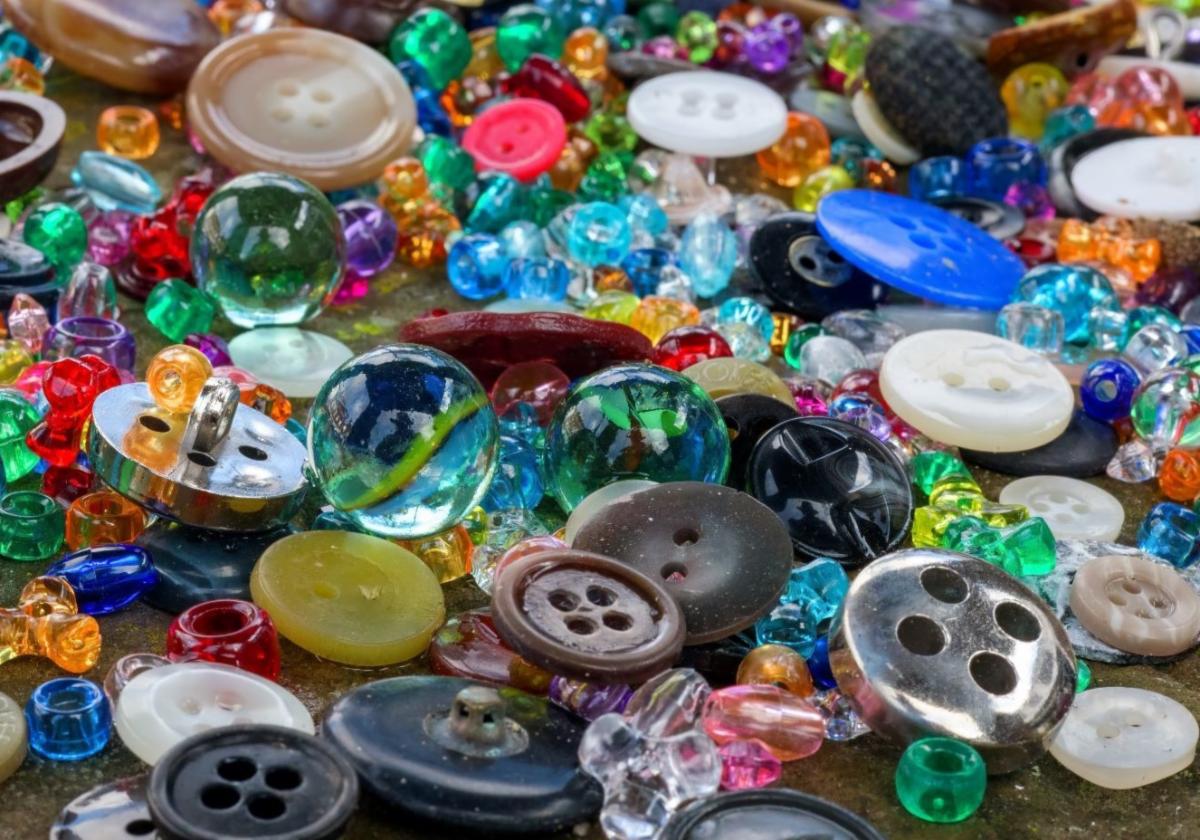
Buttons and beads

DIY Sensory Pouch 

What you need/what to do: Quart size freezer sandwich bag, items like buttons, beads, glitter, pom poms, shells, foam letters, confetti, tiny erasers, hair gel, strong tape (duct tape). Fill the bag with the small items, add hair gel to cover, seal tightly, secure edges with duct tape. The pouch can be used on a table, lap, or floor.  


DIY Sensory Hula Hoop 

What you need/What to do: Hula hoop, various textures (yarn, braided rope, pom poms, burlap, bubble wrap, cotton, ribbon) Wrap the hula hoop with fabric. Attach the ribbon and other fabrics by tying them on, or taping them in place. Continue adding materials. Mix materials and arrange! 


DIY Sensory Cube 

What you need/What to do: 4” x 4” foam cube, tacky glue/hot glue, textured materials (pom poms, mylar, curling ribbon, fur fabric, feathers) Glue a different item to each side of the cube. Let the cube dry before use. 


RI Dual Sensory Impairment Project 

The Sensory Connection newsletter is one of many ways the Rhode Island Dual Sensory Impairment (DSI) Project can assist educational teams and families supporting learners with deafblindness. For additional information on the DSI Project, to refer a new child, to contact project personnel, or view or additional resources, visit the project website.


The contents of this publication were developed under a grant from the US Department of Education, # H326T230002. However, these contents do not necessarily represent the policy of the U.S. Department of Education, and you should not assume endorsement by the Federal Government, Project Officer. 

Logos for Sherlock Center, RIDE and U.S. Department of Education
Facebook  LinkedIn