Snow Drought Update
Snow drought expands as the western U.S. is running out of time to replenish water supplies.
|
|
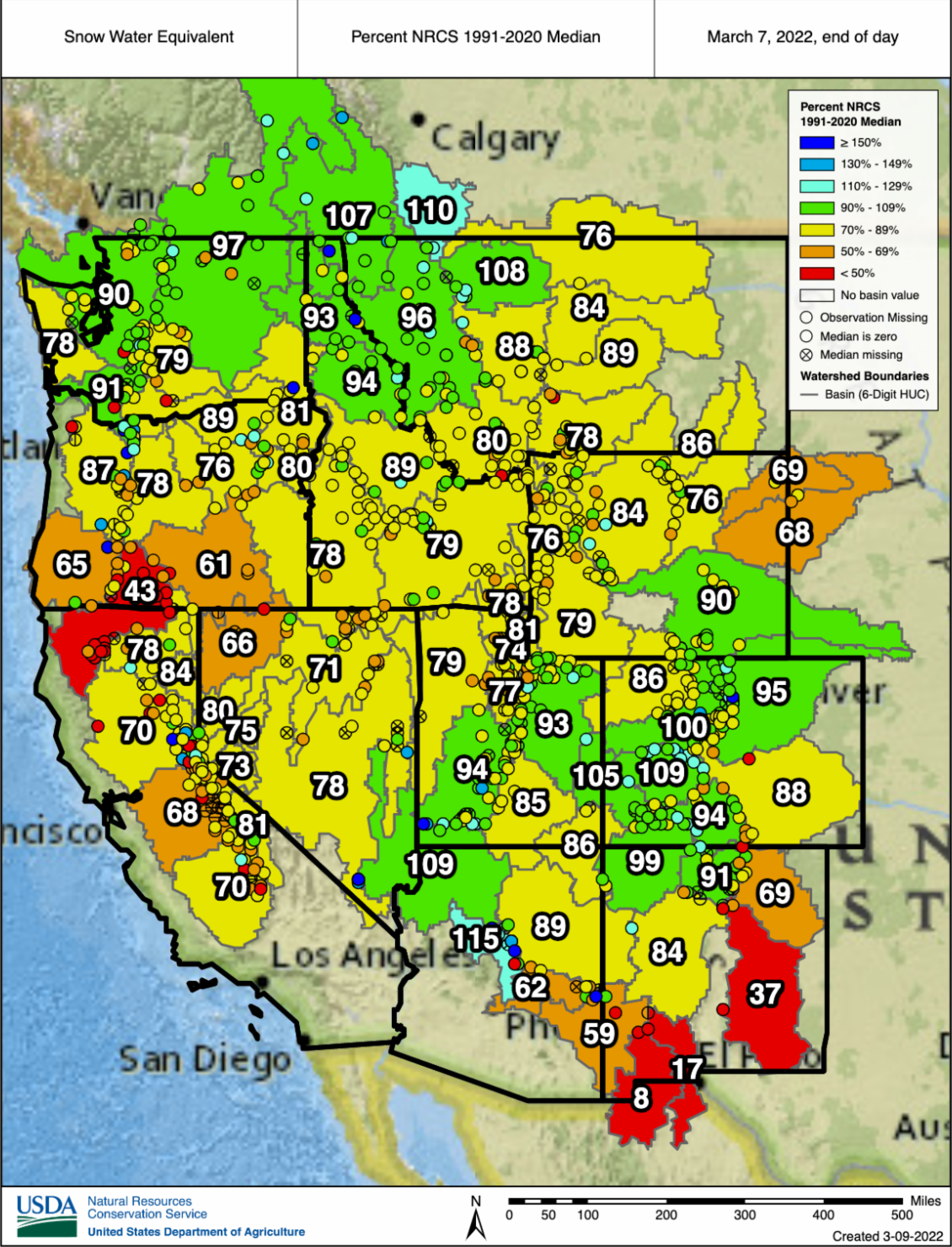
Most of the western U.S. has been exceptionally dry recently, with record low February total precipitation at over 200 SNOTEL sites. Exceptions include the northern Pacific Northwest and a large swath of the Colorado River Basin, where snowpack is close to or above normal. In California, the driest January and February in state history has led to a March 1 statewide snowpack of less than 70% of average, down from 160% at the start of the new year. Conditions in the Klamath Basin are especially dire. This region is currently in extreme (D3) and exceptional drought (D4), according to the U.S. Drought Monitor, and the low snowpack (less than 20% of normal) heading into spring will likely further intensify drought conditions. Given the transition into spring, the Western U.S. is running out of time to build the snowpack before the usual peak in seasonal snow accumulation around April 1. With low reservoir carryover, the impacts of snow drought will reach into summer and beyond.
|
|
2021 Drought Cost California Agriculture More Than $1 Billion, Thousands of Jobs
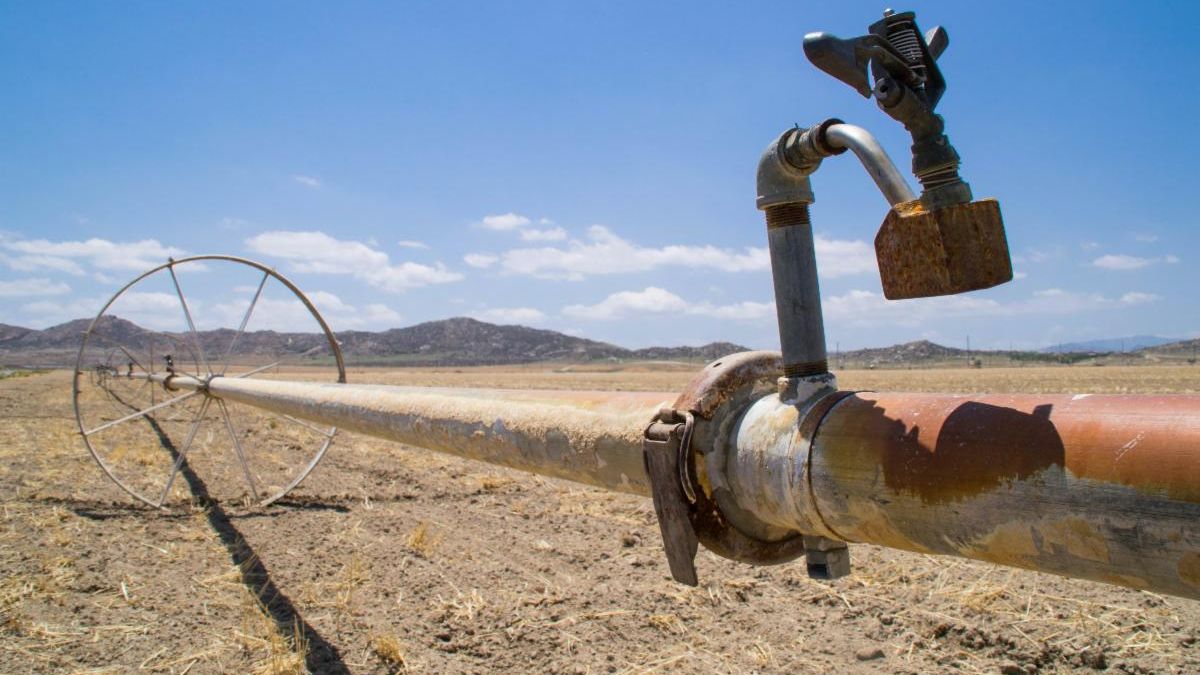
The current snow drought spells more trouble for California's agriculture sector. A new analysis by UC Merced puts a number on potential losses by looking back at 2021. The 2021 drought directly cost the California agriculture sector about $1.1 billion and nearly 8,750 full- and part-time jobs, according to estimates. Once the effects on other economic sectors are considered, total impacts are estimated at $1.7 billion and 14,634 full- and part-time jobs lost. The report, The Economic Impacts of the 2021 Drought on California Agriculture Preliminary Report, analyzes the impacts of last year’s drought in the Central Valley, the Russian River Basin and northern intermountain valley areas. Learn more >
|
|
February Capped Off a Warm, Dry Winter for U.S.
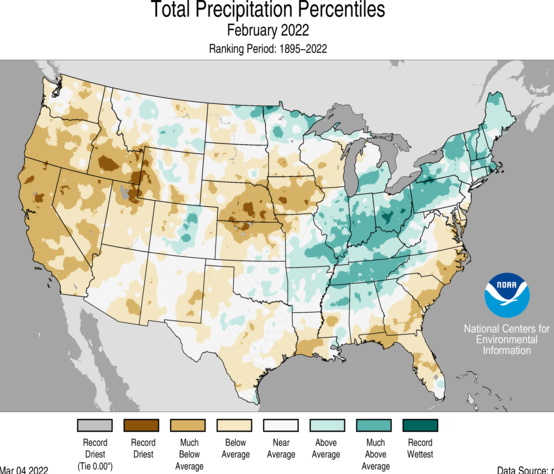
According to latest NOAA monthly report, February continued 2022’s relatively dry start, with the majority of the contiguous U.S. in drought. The end of the month also ushered in the end of meteorological winter, which ranked as the nation’s 12th-driest winter in 128 years. February’s average precipitation was 1.73 inches (0.40 of an inch below average), which ranked in the driest third of the historical climate record.
|
|
When Rivers Reach the Sky
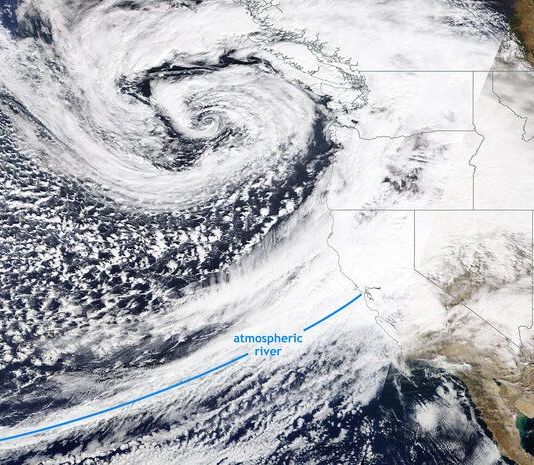
The potential for snow drought in the West Coast states is directly related to atmospheric river activity. For example, this past December, a mind-boggling 18 feet of snowfall fell in the California Sierra Nevada Mountains. But that was followed by little to no snow in the following months since then. Atmospheric rivers often bring both severe disruption and great benefit through the heavy rain and mountain snows that they produce. This blog post on climate.gov provides a brief primer on atmospheric rivers.
|
|
FEATURED MAPS + DATA
Taking Stock of Reservoir Storage in the West
|
|
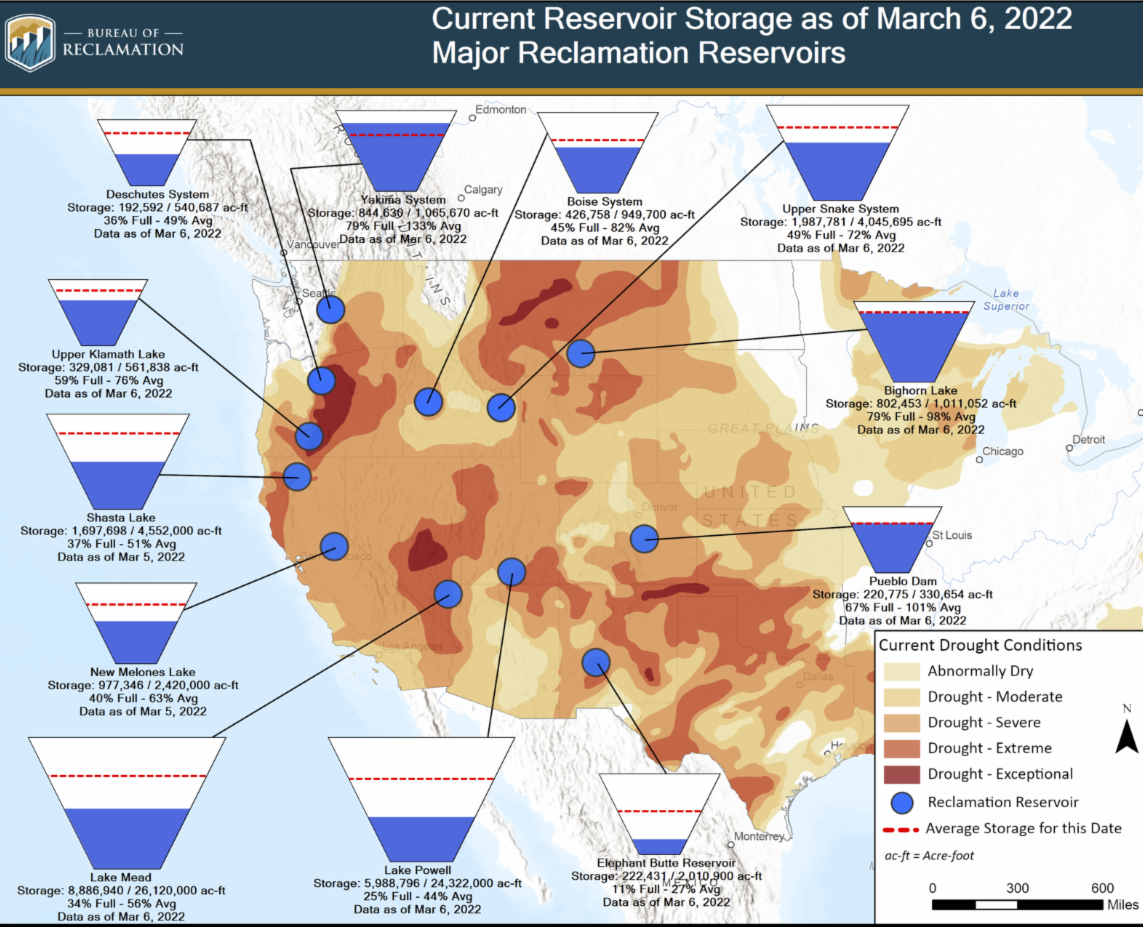
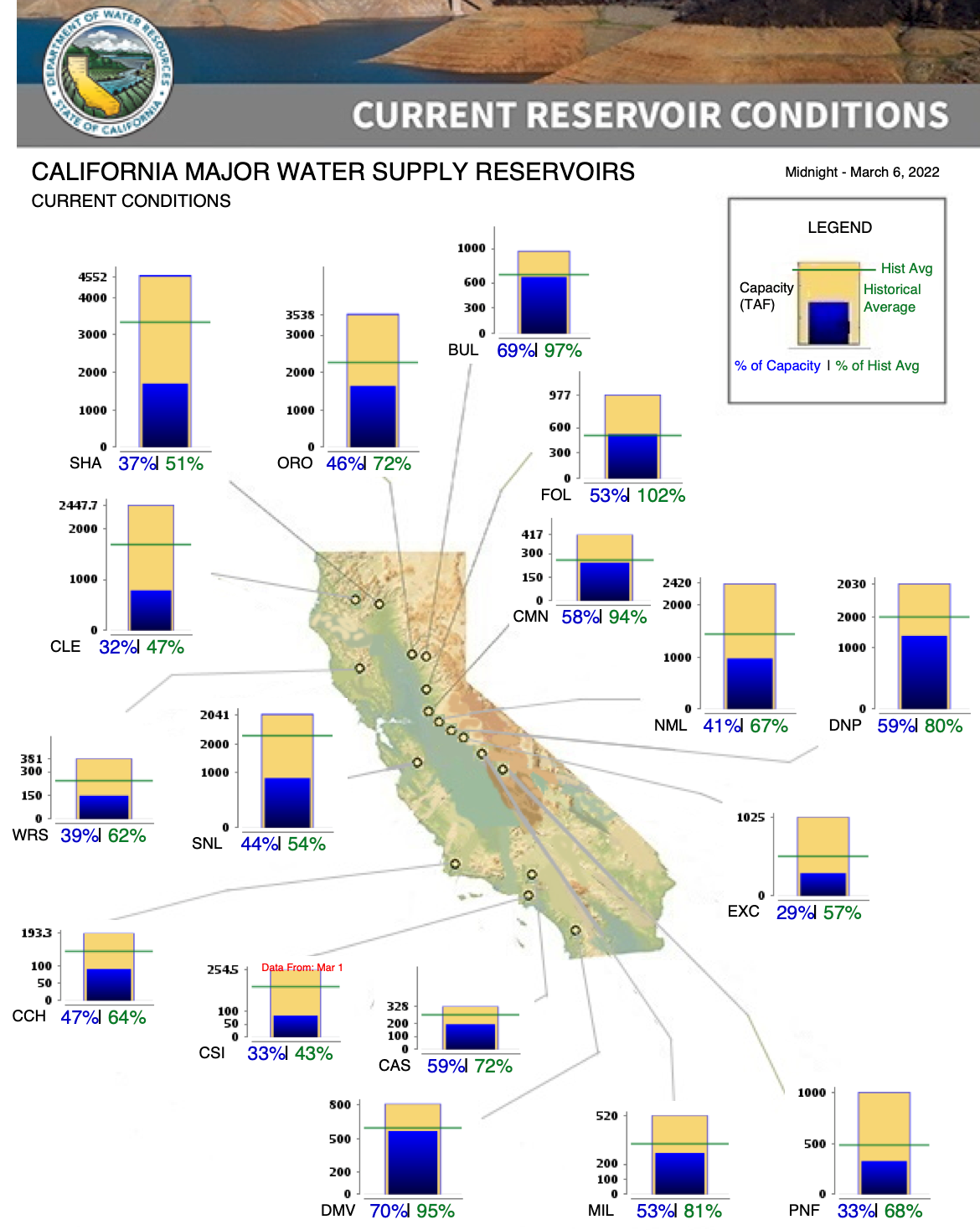
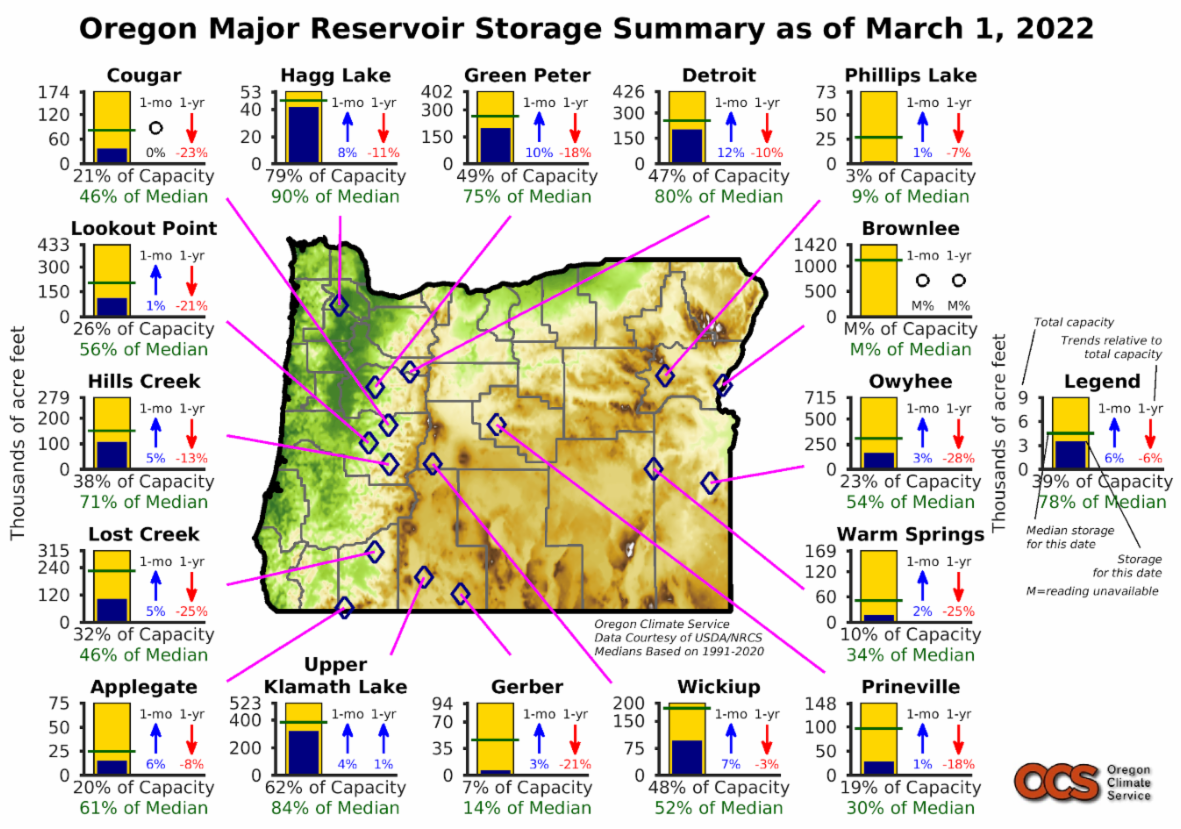
Snowpack is key to boosting reservoir levels in the western United States. A big issue for many reservoirs is some parts of the West, like most of California, have been in drought since 2020. The situation is even more perilous in the Southwest, which has been ensconced in a climate-change fueled 22-year megadrought. As of March 6, 2022, most reservoir levels in the West are below or much below normal. Lake Powell is at 25% capacity while Lake Mead is at 34% of capacity. In California, Lake Shasta is at 37% of capacity and Lake Oroville is at 46% of capacity. |
|
NIDIS Drought Alert Emails: Get Local Drought Conditions and Outlooks in Your Inbox |
|
Sign up to get automated email alerts when U.S. Drought Monitor conditions change for your location, or when NOAA’s Climate Prediction Center releases a new drought outlook, predicting whether drought will develop, persist, or improve. Sign up here >
|
|
About NIDIS
The National Oceanic and Atmospheric Administration’s (NOAA) National Integrated Drought Information System (NIDIS) was authorized by Congress in 2006 (Public Law 109-430) with an interagency mandate to develop and provide a national drought early warning information system, by coordinating and integrating drought research, and building upon existing federal, tribal, state, and local partnerships.
|
|
|
|
|
|
|