January 29, 2021
The Out-of-Pocket Health News Digest
|
|
Below you will find briefs about recent health policy news stories. Our hope is for students to have an information outlet at their fingertips to keep up-to-date with the most pressing news stories in health policy.
This compilation is produced by the HPSA Education Committee: Matthew Dunn, Magdalena Mihaylova, Atticus Raasch, and Brynna Thigpen
|
|
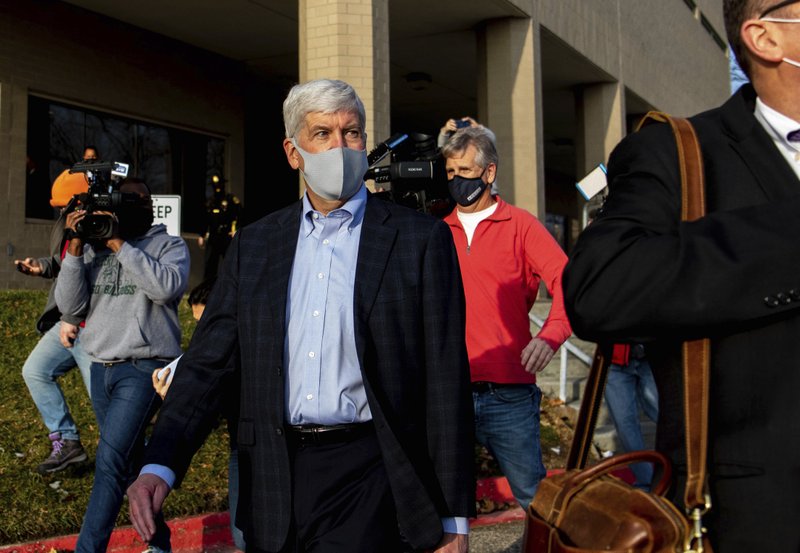
New investigation into Flint Water Crisis finds Snyder, eight others guilty
by Magdalena Mihaylova
|
|
In 2014, the city of Flint’s water supply was changed to that of the Flint River, leading to devastating, long-lasting effects: an estimated 140,000 people, many of them children, were exposed to lead and other contaminants. This exposure and its impacts has loomed over national, statewide, and city-level discourse, raising discussion not only about poor governance or public health practice, but about systemic racism and class. It was a human-made environmental disaster that is now largely resolved but has left many still seeking justice against those involved in the calamity.
Those people may have received just that—or at least part of it—this month, when a new case investigating the crisis found charges against nine involved individuals, including former Governor Rick Snyder. They are accused of a multitude of crimes, but all relate to the decision to change Flint’s water supply and the subsequent outbreak of Legionnaires disease, a form of atypical pneumonia caused by bacteria.
Most notably, Snyder was charged with two misdemeanors of “willful neglect of duty,” pointing to his lack of supervision of his officers and his disregard for calling a state of emergency when he knew of a health threat in Flint. He potentially faces a maximum of one year in jail and a $1,000 fine for each count.
You can read more about the other individuals charged in the case here.
Sources: NPR, NCBI, Detroit Free Press, Associated Press, CDC.
|
|
President Biden announces a new COVID-19 vaccine distribution plan
by Atticus Raasch
|
|
President Joe Biden has pledged to a vaccination overhaul which will expand access and increase distribution to the COVID-19 vaccine. In a speech on January 15, Biden pledged to ramp up vaccination ability in pharmacies, provide mobile vaccination sites, commit national guard troops to the vaccination effort and a federal push to increase production. Biden also pledges to make racial equity a priority in the effort.
Calling it “one of the most challenging operation efforts ever undertaken by our country,” Biden’s plan would supercharge vaccine access despite a slow first attempt at distribution.
President Biden recently criticized the initial distribution attempt under former President Donald Trump, calling the effort “a dismal effort.” The ultimate goal is to vaccinate 100 million people in his first 100 days in office, according to his speech.
The announcement was delivered one day after President Biden’s proposal for a $1.9 trillion dollar package to address COVID-19 relief and the subsequent economic downturn, an ambitious plan likely to be met with congressional backlash. The plan includes a $1,400 stimulus package, enhanced and extended unemployment aid, rental assistance and a freeze on evictions, more money for child tax credits and more
Now, with over 4,000 deaths a day and the emergence of a new, more contagious strain of the COVID-19 virus, President Biden must work quickly to address the issues surrounding the pandemic.
Sources: New York Times, KHN, CNN
|
|
Implications and reactions from the Keystone pipeline decision
by Matthew Dunn
|
|
Among a series of day-1 Executive Orders, the Biden Administration revoked the presidential permit for the Keystone XL (KXL) oil pipeline, immediately halting its construction. KXL is an extension to an existing pipeline, proposed in 2008 by the North American energy company TC Energy.
There has been an ongoing political and legal battle over this proposal. In 2015, the Obama Administration declined a permit for XXL construction, due to its risks to environmental health. That decision was later reversed by the Trump Administration, approving the permit and seemingly clearing the way for construction to proceed. However, in May 2020 a federal judge blocked the fast-tracking of the pipeline, and this was upheld by the Supreme Court in July. President Biden’s order will prevent TC Energy from building the KXL pipeline during his presidency, and legal experts predict the company will drop all efforts to continue this project.
This represents a significant victory for environmental advocates, Indigenous communities, and landowners whose property was threatened by the pipeline. If allowed to proceed, environmental scientists predicted XXL would eventually contaminate drinking water, bring harm to nearby residents, and contribute to acceleration of climate change.
However, this decision faced condemnation from industry groups and some political leaders, citing concerns that blocking the pipeline will cut construction jobs and prevent more efficient energy transport. Pushback was notable among Canadian leaders. Prime Minister Justin Trudeau conveyed his disappointment to Biden in a phone call, although most of the conversation was focused on the 2 countries' shared values and continued partnerships. The reaction from the conservative premier of Alberta Jason Kenney was far more hostile: he described the outcome as an “insult,” and argued that Canada should impose economic sanctions on the U.S - something the federal government of Canada has no interest in pursuing.
|
|
One-Liners
by Brynna Thigpen
|
|
-
Children in Prison: Ohio State Senate Bill 256, signed into law earlier this month, prevents children from being sentenced to life in prison without parole, and will take effect retroactively, giving Ohioans who went into prison as children the chance to earn parole. (The Appeal)
-
Healthcare: Illinois is building on its legacy of providing health care to low-income nonresidents, regardless of immigration status; following its decision to provide care to low-income children regardless of immigration status, it recently became the first state to provide public health insurance to all low-income seniors. (Kaiser Health News)
-
Harm Reduction Proposal Shot Down: After years of debate, a federal court judge ruled that Philadelphia cannot open a first-in-the-nation supervised injection site to prevent fatal overdoses among people who use injectable drugs, citing a 1986 federal law preventing locations from opening to allow people to use drugs. (NPR)
-
Maintaining Masking: The general public should consider the risks of ceasing mask-wearing after receiving the vaccine, including the following: no vaccine is 100% effective, the protective effect of vaccines takes time to develop within the body, vaccinated people may still be able to spread the disease, masks protect immunocompromised individuals and those who cannot get vaccinated, and masks protect against any future strain of the virus (in addition to other airborne diseases). (Kaiser Health News)
-
New COVID-19 Variant: The CDC warned in mid-January that the new COVID-19 variant, first identified in the UK, will overtake the original variant by March, and is projected to fuel potentially overwhelming spikes in infection rates if containment measures like mask wearing and social distancing are not followed. (New York Times)
-
Vaccine Uptake: Several U.S. employers, including Dollar General, Instacart, and Trader Joes, are offering incentives in the form of time off or stipends to get vaccinated, stating they hope to lower barriers for their workers to seek and receive the vaccine. (Wall Street Journal, CNBC)
|
|
|
|
|
|
|