|
The Feast of Unleavened Bread
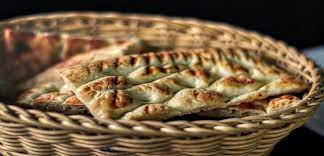
“The Lord’s Feast is to be celebrated on the seventh day, after eating unleavened bread for seven days.” (Exodus 13:6)
Just as God had told Moses in advance, an extraordinary event takes place (11:1). Pharaoh comes to know the fearsome aspect of the LORD, whom he had refused to acknowledge (5:2). Without placing any further restrictions, Pharaoh releases Israel. At last, the way to freedom is opened, and the Exodus (from the Greek Exodos, and the Latin Exodus) begins. The Exodus starts from Succoth, where the Israelites had suffered under forced labor. As God carries out the Exodus, He gives Israel the regulations concerning the Feast of Unleavened Bread. These regulations also include provisions for the many people of foreign origin who accompanied Israel, though they were not Israelites. While treatment differed according to their background, the crucial requirement of these regulations was circumcision.
Set Apart as Holy
God commanded Moses, “Consecrate to Me every firstborn, whatever opens the womb among the Israelites, whether human or animal; it belongs to Me.” To “consecrate” means to set something apart specifically for God and to present it as belonging to Him (“it belongs to Me,” 22:29). The Hebrew word translated as “consecrate” (qaddesh) is derived from qadash, which means “to be set apart from what is ordinary.” It carries the sense of “keep in a holy state” or “set apart and dedicate,” and it is given as a mandatory command.
Remembering What God Has Done
The Feast of Unleavened Bread is grounded in the remembrance of what God did at the time of the Exodus, although the text does not explicitly explain how the two are concretely connected (v. 8). Nevertheless, since this feast appears to coincide with the harvest season and places emphasis on the land (v. 5), it can be inferred that approaching God with gratitude to the One who gives the land and its produce was of great importance. Above all, this regularly repeated feast clearly served to remind the people of Israel of God’s foundational act of salvation.
Returning the Firstborn
Any living being that lives by God’s own breath rightfully belongs to God (Gen. 2:7). By returning the firstborn (that which is born first) to God, people acknowledge God as the Lord of life. Livestock were designated as sacrifices, or, if an animal was not suitable for sacrifice (such as a donkey), it was redeemed with another animal. In the case of human firstborns, a redemption offering was also presented (Num. 18:16 even allows redemption with money). The Levites, who were set apart for God’s work, are also regarded in a broad sense as a redemption offering (Num. 3:11–13). Because I am also a firstborn son, I naturally understood becoming a pastor as something expected of me. Emphasizing God’s right to the firstborn makes clear that God delivered Israel, and especially that the firstborn were preserved even during the final plague; therefore, they became wholly God’s possession.
Reflection
God declares that because He saved all the firstborn and eldest sons of Israel from death, they belong to Him. God’s claim of ownership over the firstborn is equivalent to His claim of ownership over the entire nation of Israel, because every firstborn—that is, every eldest son—represents the whole family. The God who claims ownership of Israel also leads us to realize that He has ownership over us today. This reminds us that our salvation is due to God’s grace and love. Therefore, welcoming God as our Lord, placing our hope in the kingdom of heaven, and removing leaven from our lives should not be an obligation, but rather a response of awe to God’s love and a privilege.
|