|
|
University of New Mexico
METALS
Superfund Center
Metals Exposure and Toxicity Assessment on Tribal Lands in the Southwest
| |
|
Welcome to our February Newsletter! | |
|
METALS SPOTLIGHT ON TRAINEES (1 of 2)
In the first of two editions of our newsletter in 2025, we are highlighting 9 of our METALS trainees, how they got where they are, and advice they have for other trainees. We hope you enjoy these special editions and getting to know our amazing trainees as much we enjoy working with them!
| |
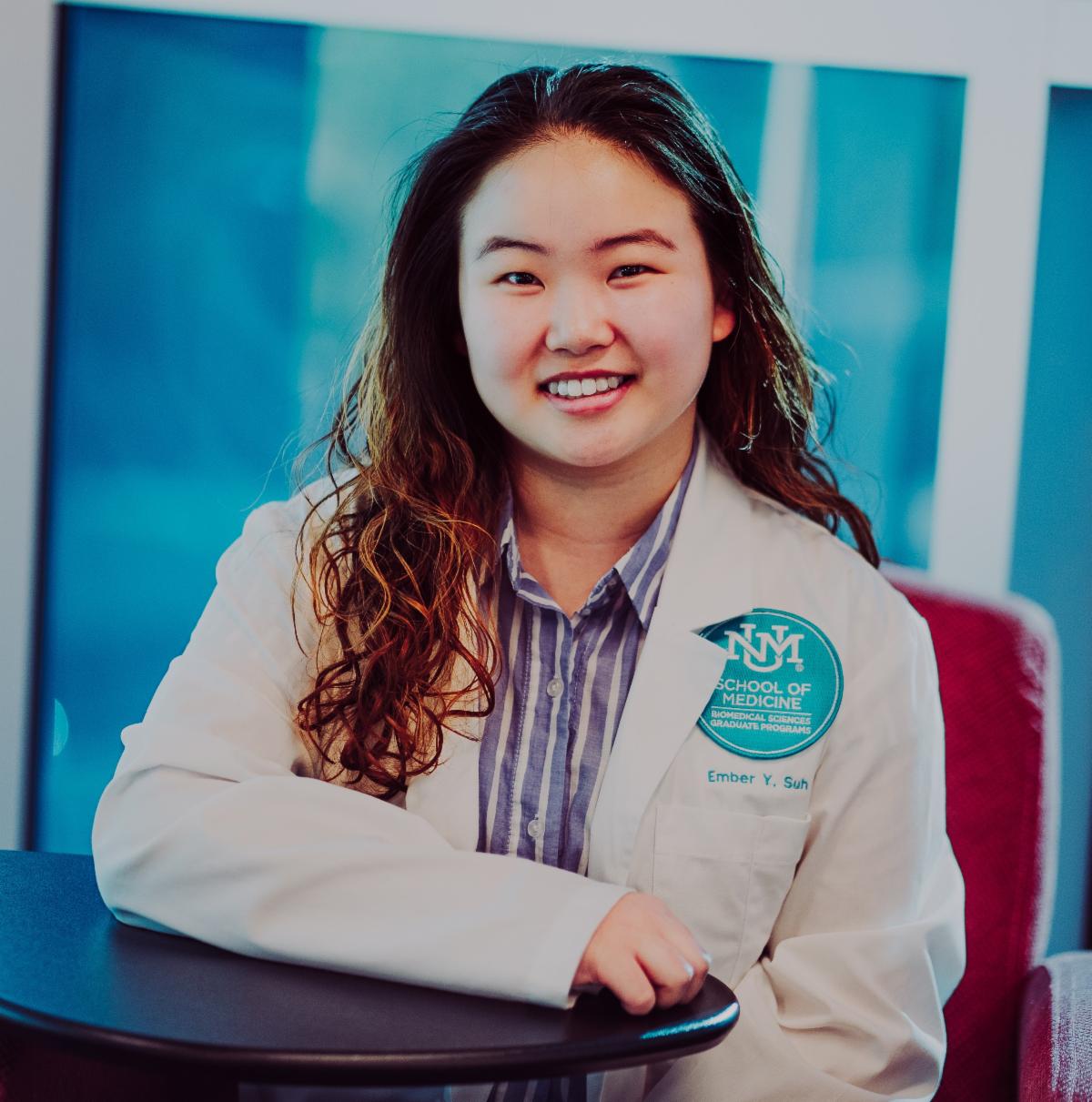
Ember Suh
I work in Dr. Matthew Campen’s lab as a second-year PhD student in the Biomedical Sciences Graduate Program (BSGP) studying neuroinflammatory responses and neurometabolic changes following exposure to wood smoke containing metal contaminants in mice.
As a forensic chemistry major at the University of Mississippi, I took a toxicology course and became interested in toxicology as a career. After I expressed my interest in the field, my toxicology professor introduced me to Dr. Campen and his research with microplastics and wildfire smoke, which persuaded me to move to New Mexico from Mississippi.
Ember's advice for fellow and future trainees: The advice I would like to share with other METALS trainees and colleagues is that they should visit different places, if they have the opportunity. I did not know that wildfires and abandoned uranium mine sites were huge concerns until I moved to New Mexico because Mississippi does not have either.
| |
|
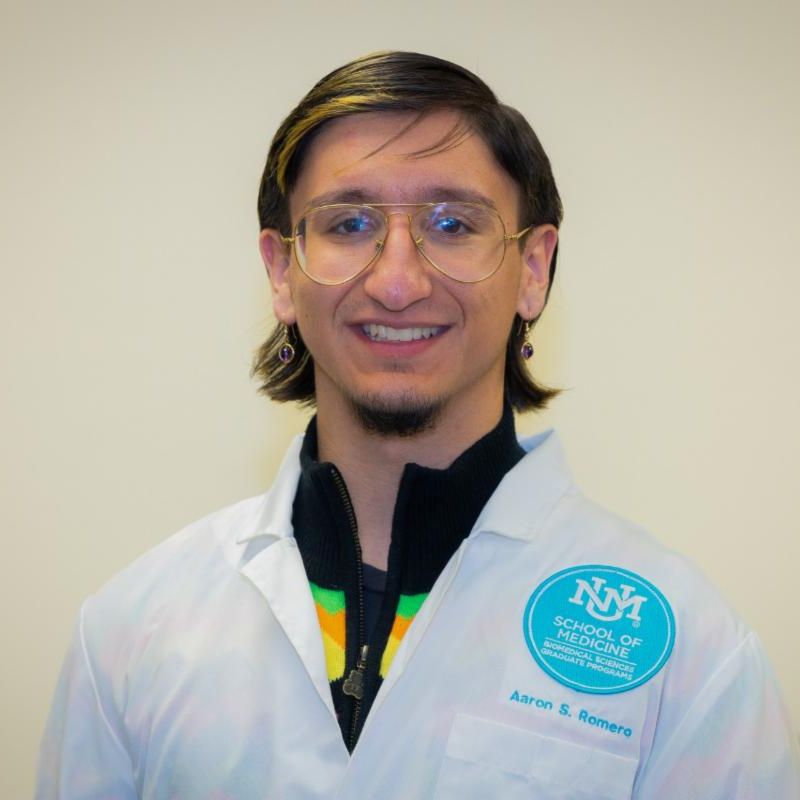
Aaron Romero
I am a fourth-year PhD candidate with Dr. Eliseo Castillo investigating the effects of heavy metals, such as arsenic and uranium, on the colonic microenvironment and overall GI health.
I have lived in New Mexico for most of my life and ended up at the University of New Mexico (UNM) after I graduated high school. I got into undergraduate research at UNM and ended up wanting to further my education and pursue a PhD.
Aaron's advice for fellow and future trainees: Have perseverance for your science, because although there are many failures, there is also an equal amount of knowledge and skills gained within those failures, which ultimately creates greater successes.
| |
|
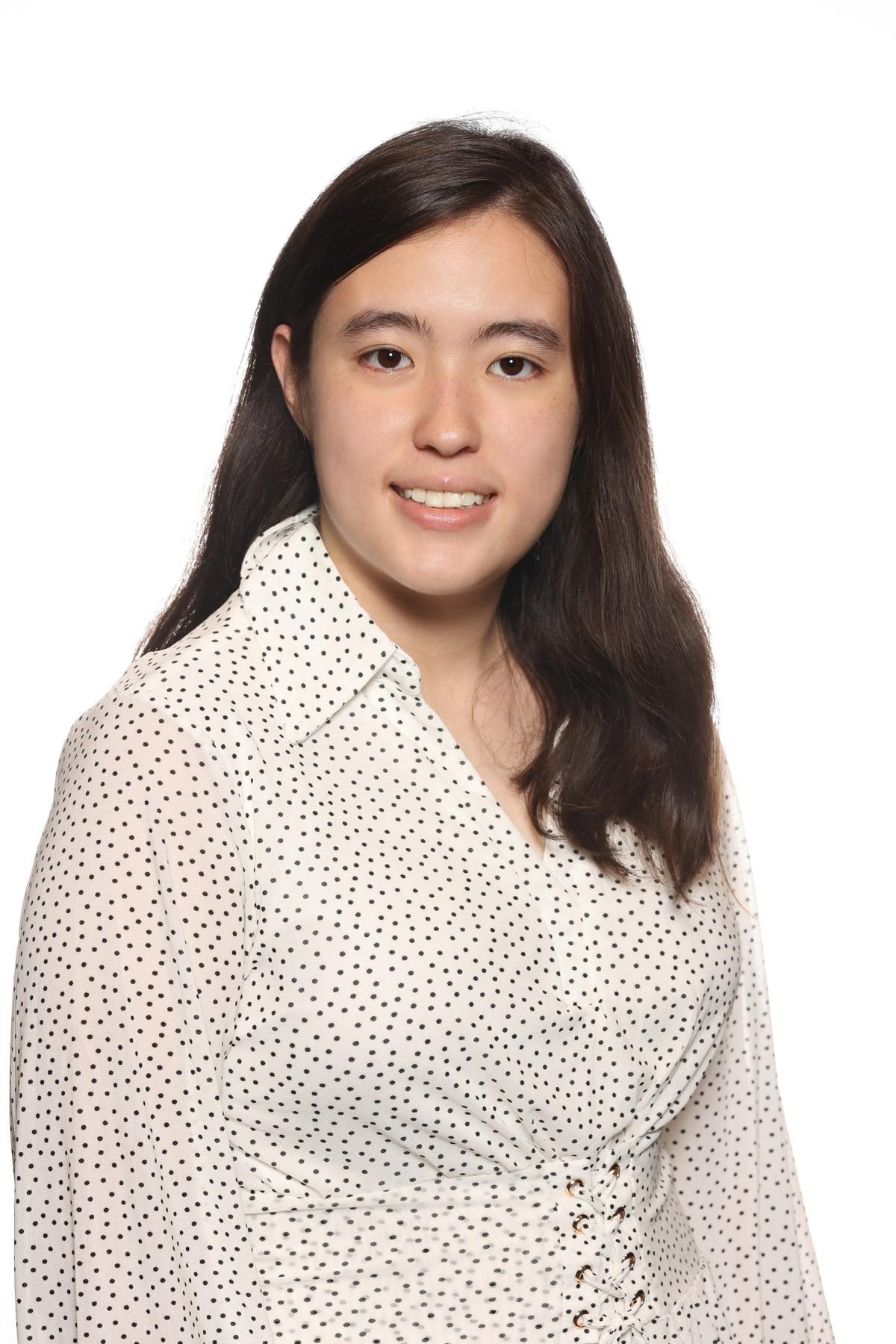
Kaelin Gagnon
I work with Dr. Jose Cerrato on the fungal removal of lead and arsenic project as a second-year Master’s student in Environmental Engineering.
I originally wanted to be a toxicologist, but I found that biomedical research was not a good fit for me. So, switching interests to environmental toxicology, I started to read some papers, and stumbled upon Dr. Cerrato’s work. I reached out to his colleague who introduced us, and I started working with his PhD student on the simultaneous removal of arsenic and uranium onto limestone grains. After the PhD student graduated, I switched to working on a similar project involving the uptake of arsenic into fungi, and I have been here ever since.
Kaelin's advice for fellow and future trainees: Persistence and perseverance are key in research. There are going to be times when it feels impossible to keep going, but stick with it because the end result and satisfaction in yourself and furthering the goal of METALS will be worth it.
| |
|
Theodros M. Woldeyohannes
I am a fourth-year PhD candidate in geography working in the Health and Environmental Research GIS lab under Drs. Yan Lin and Joseph Hoover. In addition to being a METALS Trainee, I also work with the UNM's P50 Center and the New Mexico Integrative Science Program Incorporating Research in Environmental Sciences (NM-INSPIRES).
My doctoral research focuses on the investigation of environmental impacts from mining and waste management industries through community-engaged multi-scale geospatial analysis. I am passionate about the research the METALS Center conducts as it works with communities to address environmental injustices, such as contamination related to uranium mining.
Theodros' advice for fellow and future trainees: I would advise new METALS trainees to come in with an open mind and take advantage of the many opportunities at our center for growing yourself as a researcher.
| |
|
Mackenzie Freeman
I am master’s student in geology in the Department of Earth and Planetary Sciences at the University of New Mexico under the guidance of Drs. Adrian Brearley and Eliane El Hayek working on using lichens to evaluate the legacy environmental dust released from the Jackpile mine. This work involves analyzing the mineralogy and make up of dust particles accumulated by lichens that have grown on rocks in and around the mine to understand how toxic metals may have been transported in windblown particulate matter during the active period of mining.
I am passionate about METALS research because I believe that environmental research is vital for communities to live in safe and healthy spaces where everyone has the opportunity to thrive.
Mackenzie's advice for fellow and future trainees: Advice I would like to share with other trainees is to stay on top of all the events and where you are in your research.
| |
|
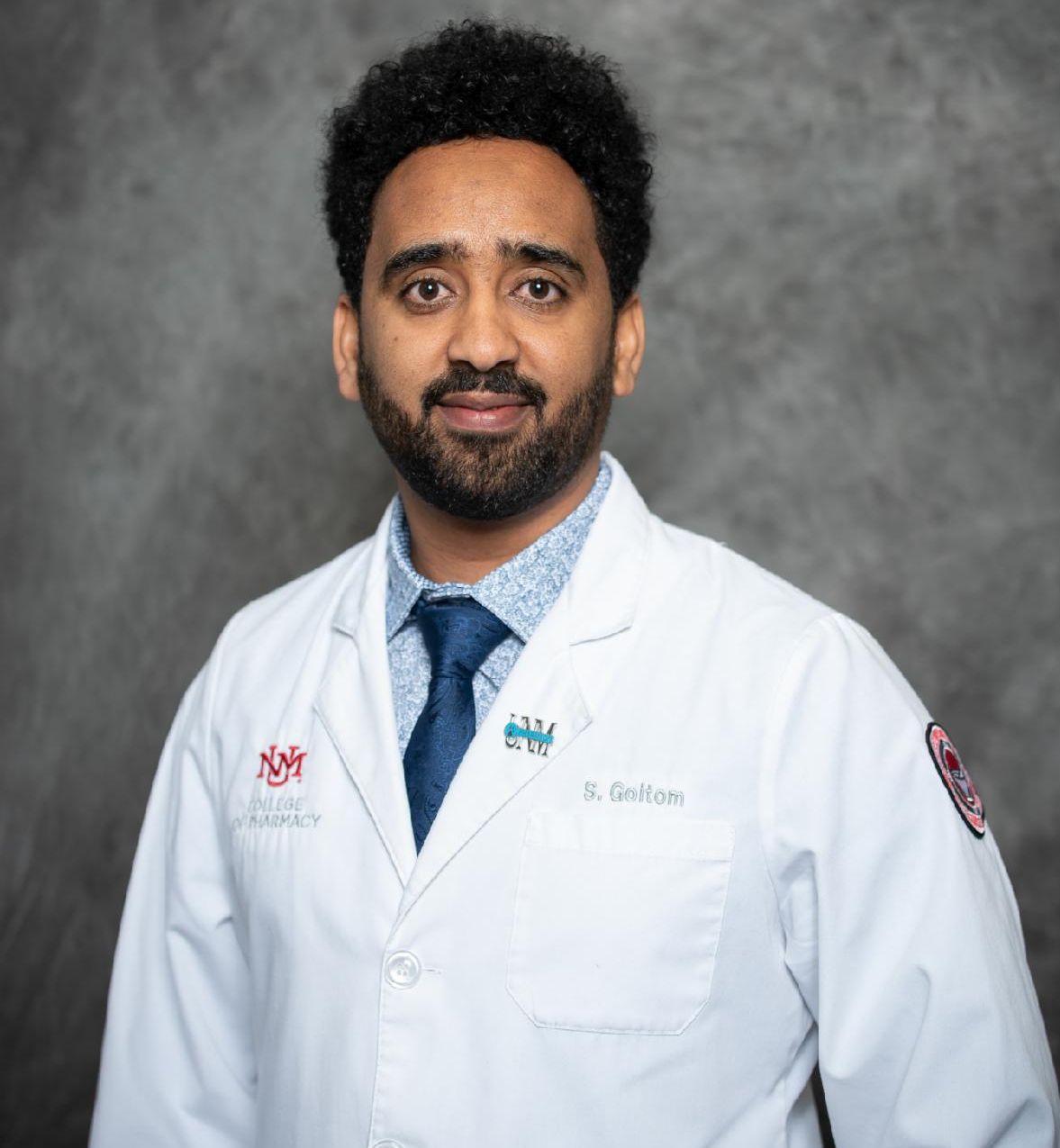
Siem Goitom
I am an ASERT Postdoctoral Fellow in the Department of Internal Medicine, Division of Gastroenterology and Hepatology, working with Drs. Eliseo Castillo and Julie In. My research explores the impact of uranium exposure on the gut, particularly its effects on enteroendocrine cells.
It is alarming how little we know about the short- and long-term effects of toxicants on human health, and I am grateful to be part of the effort to uncover these mysteries.
Siem's advice for fellow and future trainees: To all METALS Trainees—research can feel frustrating at times, but remember, the work we do is shaping the future of science. Stay persistent, stay curious, and trust that your contributions are part of something extraordinary. Keep pushing forward!
| |
|
Yanhong Huang
I am fourth-year PhD student working with Dr. Li Luo in the Department of Geography & Environmental Studies at the University of New Mexico. My research focuses on environmental health using geospatial data science, with a specific emphasis on exploring associations between environmental risk factors and health outcomes in spatial big data.
My early research experiences introduced me to spatial analysis, and I quickly realized its potential for addressing pressing public health challenges. This led me to focus on environmental health, where I now use big geospatial data to study the relationships between environmental exposures and health outcomes.
Yanhong's advice for fellow and future trainees: For METALS trainees, my biggest advice is to embrace interdisciplinary collaboration. Some of the best discoveries happen when you step outside your primary field and integrate new perspectives and methods.
| |
|
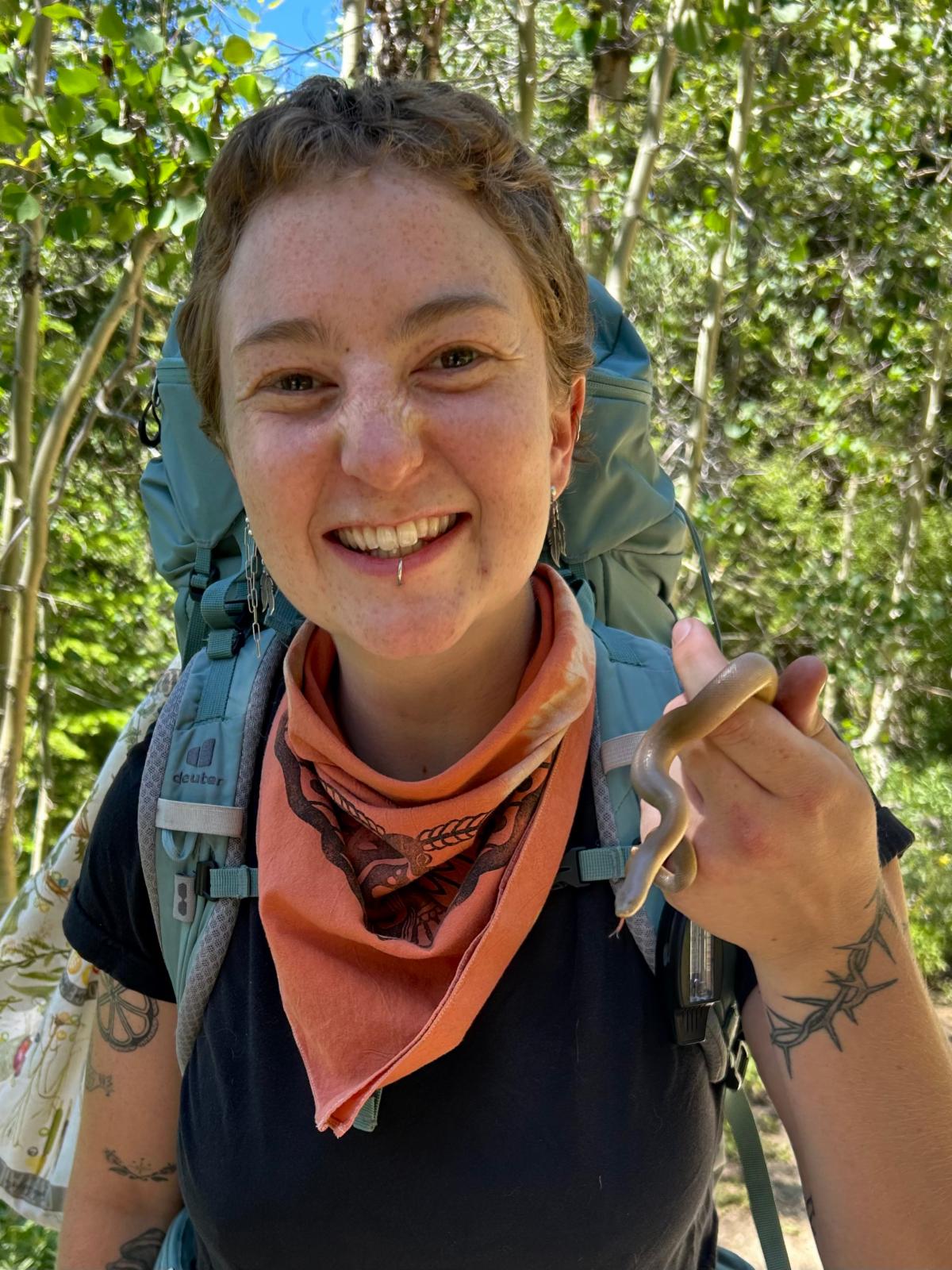
Charlotte M. McVeigh
I am a fourthyear PhD candidate in the Biomedical Sciences Graduate Program (BSGP) under the direction of Dr. Alicia Bolt. My project is entitled “Investigation of the role of bone marrow adipocytes in tungsten enhanced breast cancer metastasis.” I started as a technician with my PI, and I always knew I wanted to do something related to cancer or autoimmune research based on my family history. But being in the field of toxicology and metals research is an avenue that I have found I love, bridging cancer research and environmental/toxicology research with metals.
Charlotte's advice for fellow and future trainees: The advice I would like to share with other Trainees is to utilize all the opportunities given to you. Go to different conferences, talks or anything offered. You never know what you might love, and it gives exposure to routes that other Trainees in other fields might not know or have access to.
| |
|
Abigail Granath
I am a second-year PhD student in the Biology Department at UNM working in Dr. Jennifer Rudgers’ lab where I investigate how symbiotic relationships between plants and fungi contribute to the bioremediation of heavy metals in areas affected by the legacy of uranium mining. I focus on plants and fungi native to these areas and their natural adapted abilities to tolerate and uptake toxic heavy metals, like arsenic.
I am constantly inspired by the mutualistic relationships between plants and fungi that create networks of resource sharing and community support – exemplifying how a strong community can help individuals thrive in stressful environments.
Abigail's advice for fellow and future trainees: My advice to other METALS trainees is to create positive relationships with the people in your community early in your time here. Building a network of support with people in your program, other trainees, METALS personnel, and your community partners will help you thrive in your work.
| |
|
|
Latest Publications
Nihart AJ, Garcia MA, El Hayek E, Liu R, Olewine M, Kingston JD, Castillo EF, Gullapalli RR, Howard T, Bleske B, Scott J, Gonzalez-Estrella J, …& Campen M. Bioaccumulation of microplastics in decedent human brains. Nature Medicine. 2025 Feb 3:1-6. https://doi.org/10.1038/s41591-024-03453-1
Press Release: UNM Researchers Find Alarmingly High Levels of Microplastics in Human Brains – and Concentrations are Growing Over Time.
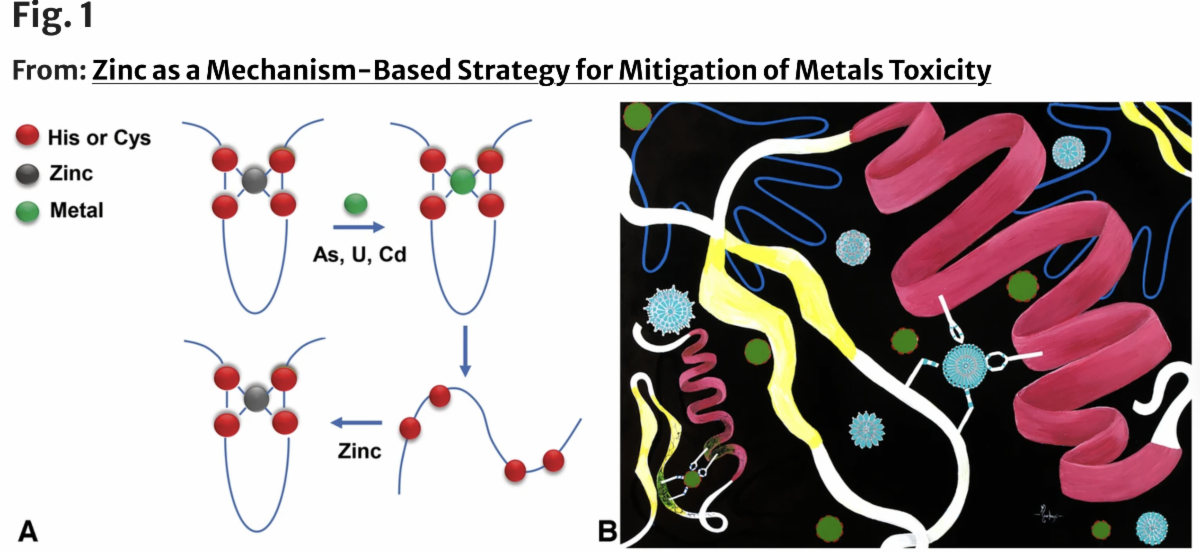
Hudson, Dashner-Titus, MacKenzie. Zinc as a Mechanism-Based Strategy for Mitigation of Metals Toxicity. Current Env Health Reports. 2025 Jan https://doi.org/10.1007/s40572-025-00474-x
| | |
|  |
NIH/NIEHS P42 ES025589 (UNM METALS) This material was developed in part under cited research awards to the University of New Mexico. It has not been formally reviewed by the funding agencies. The views expressed are solely those of the speakers and do not necessarily reflect those of the agencies. The funders do not endorse any products or commercial services mentioned in this presentation.
| | | | |