|
The California Asphalt Pavement Association
Vol. 19, Issue 24 || June 15, 2026
| | |
Greetings!
This weekly report contains news and information of interest to the asphalt pavement industry, customers and agency partners in California. Please feel free to distribute this newsletter to others who may be interested in asphalt pavements. To subscribe to the newsletter click HERE. To provide feedback or story ideas click HERE. Having difficulty viewing this newsletter? View as Webpage
| |
New pocket resource: Asphalt reference manual and instructional videos available on a free smart phone app | | |
Getting fast and easy access to asphalt-related questions and guidance in the field is now a whole lot easier as thanks to an innovative industry-agency partnership. You'll never look at your phone the same way again.
The Airport Asphalt Pavement Technology Program (AAPTP) has transformed the essential Asphalt Paving Handbook into a fully searchable website and mobile app powered by Artificial Intelligence to assist with queries. Built to function completely offline, the new platforms give crews on-demand access to field-tested solutions, interactive checklists, and training videos—ensuring quality and accuracy even in areas with no cell service. It is ideal for field personnel, including paving crews, engineers, designers and inspectors.
The free platforms feature several tools for finding and applying information in real time:
- An AI-powered Handbook Assistant follows prompts from the user to quickly find information or to help with troubleshooting in the field.
- Interactive checklists for plant and roller operations support quality control and consistent paving practices.
- Companion videos demonstrate techniques.
- Field resources empower workers in the field.
The handbook was developed by the Asphalt Institute in collaboration with the Federal Aviation Administration, the CalAPA-supported Asphalt Pavement Alliance, the Federal Highway Administration, the U.S. Army Corps of Engineers, and the National Asphalt Pavement Association. The handbook covers roadway and airfield paving guidance. It includes topics such as materials, mix design, plant production, surface preparation, placement, compaction, joint construction, segregation prevention, and quality assurance.
“The Asphalt Paving Handbook has long been a trusted resource for the paving industry,” said Dave Johnson, Senior Regional Engineer at the Asphalt Institute, in a product-launch announcement. “By making it available through a searchable website and mobile app, we're putting practical guidance, best practices, and troubleshooting tools directly into the hands of the people building pavements every day.”
To access the website of these interactive resources, click HERE. The mobile app is a free download and available from various app stores. A link with more information, including direct links to the various app stores, is HERE.
| |
Students learn about asphalt pavements and careers at summer workshop at CSU Chico | | |
A group of college students from across the state gathered at California State University, Chico last week for the sixth annual Summer Asphalt Workshop, which is supported by CalAPA and the association's workforce-centric charity, the California Asphalt Research & Education (CARE) Foundation.
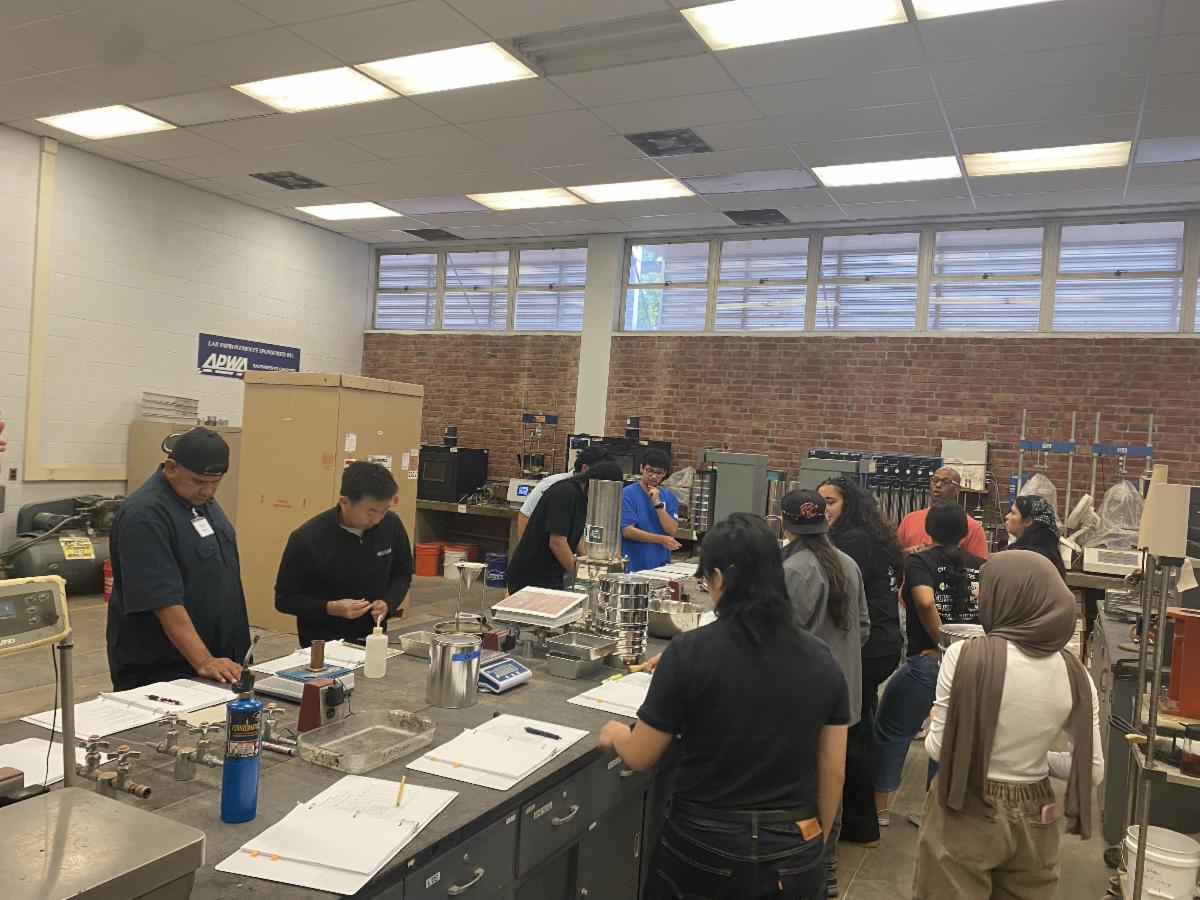
The June 8-10 workshop, sponsored by the American Public Works Association Sacramento chapter, focused on providing college students with a thorough introduction to asphalt mixes and pavements. Dr. Kun Zhang, Associate Professor of Civil Engineering, said the workshop maximizes student engagement through classroom discussions, hands-on laboratory activities, and field events.
"This year marks the sixth consecutive year that Chico State has hosted the APWA Summer Asphalt Workshop," Kun told Asphalt Insider. "Over the past six years, nearly 100 participants have attended the workshop to learn about asphalt materials testing and asphalt paving technology. Participants have included students from Butte, Shasta, Mendocino, Yuba, and Woodland community colleges; College of the Desert; University of Nevada, Reno; UC Berkeley; UC Davis; Sac State; Chico State; Cal Poly Pomona; and Chico High School (K12). Young professionals, engineers, agency representatives, and industry partners have also joined the workshop to expand their knowledge and skills."
As part of the classroom discussions, guest speakers were invited to share their experience and to provide the students with a first-hand account on how the activities they will encounter through this workshop are applicable in real-world settings. The first day included discussions on asphalt pavement and the various asphalt mixture components. Industry was well represented with an opening presentation by Richard Liptak (Dokken Engineering & APWA). His presentation covered the broad impact that civil engineers have on the construction and maintenance of public works infrastructure. He shared his wisdom with the students from his many decades of experience, and provided the students with impactful messages on considerations for project success.
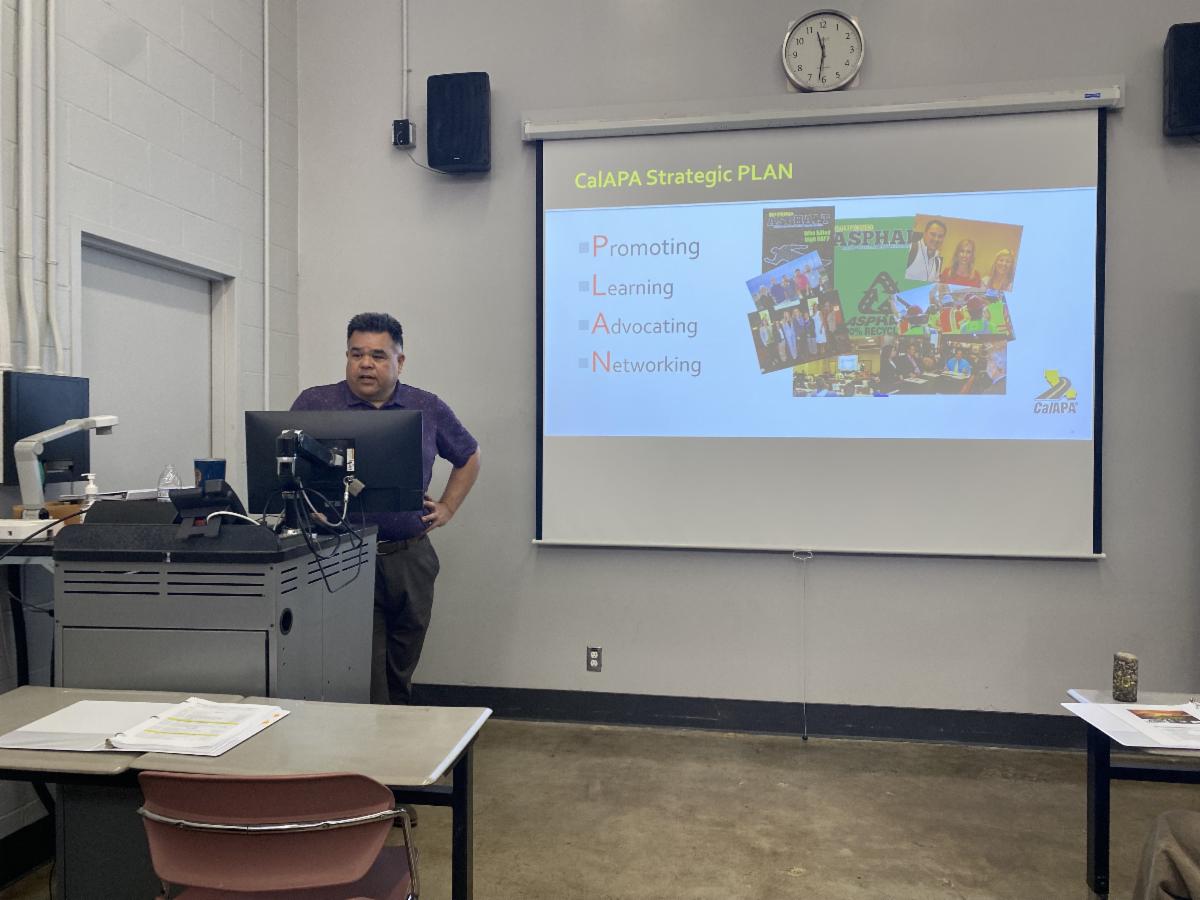
Brandon Milar, P.E., CalAPA's Technical Director (pictured during his presentation at the Chico workshop), provided an overview of the importance of asphalt pavements in our communities and how the collaboration between agency engineers and the asphalt pavement industry results in efficient management of California's pavement infrastructure. The presentation also included the innovative efforts in California to increase recycling, improve performance, and utilize innovative technologies.
The California Asphalt Research & Education (CARE) Foundation once again provided lunch on the first day of the Asphalt Workshop. The CARE Foundation is a workforce-centric charity formed by CalAPA to provide educational support to current or future workers in the industry. The CARE Foundation Board of Trustees has supported the CSU Chico Summer Asphalt Workshop for the past two years. More information about the CARE Foundation is HERE.
"We sincerely appreciate the APWA Sacramento Chapter for sponsoring the asphalt workshop over the past six years and for its continued support in the years ahead," Kun said, adding that the university "also gratefully acknowledges the support and lunch provided by the California Asphalt Research & Education (CARE) Foundation and CalAPA this year, which have helped promote the success of this event."
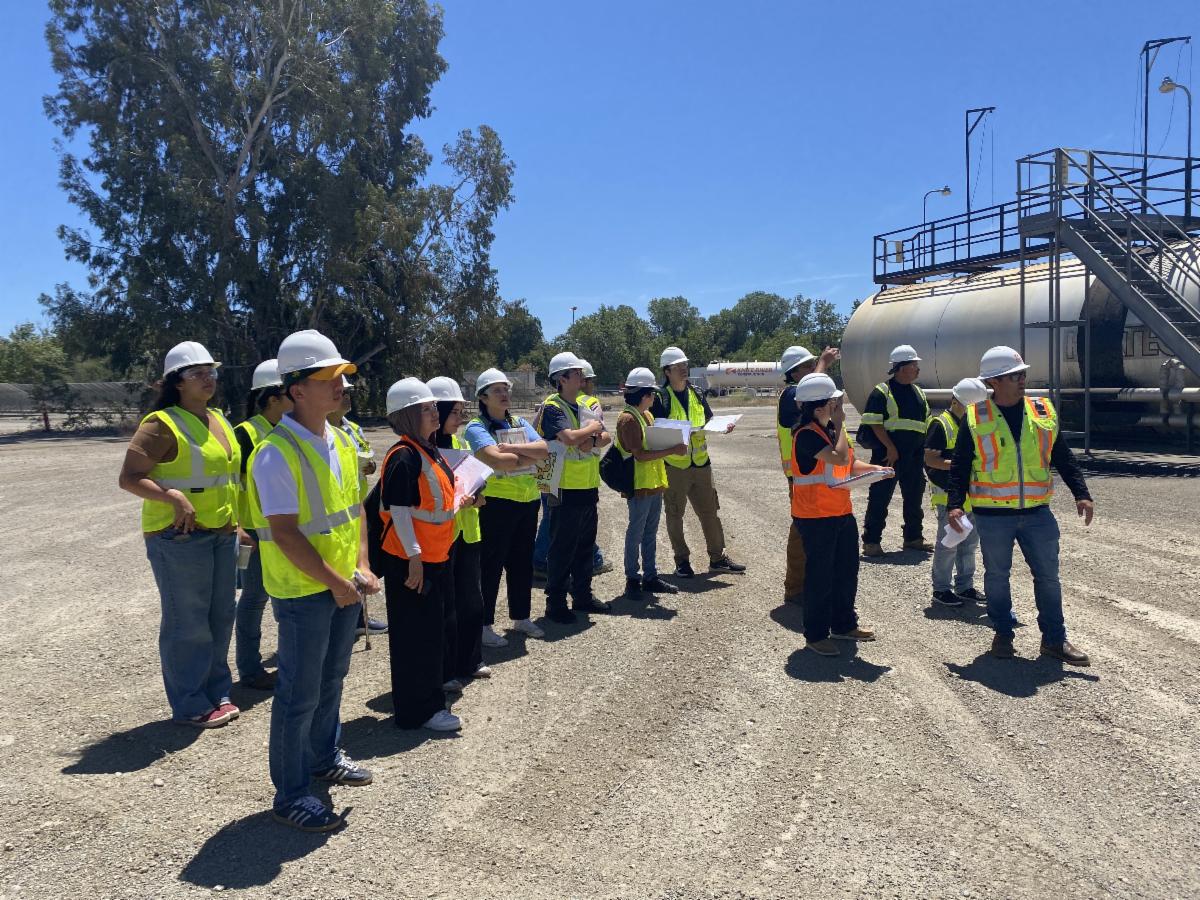
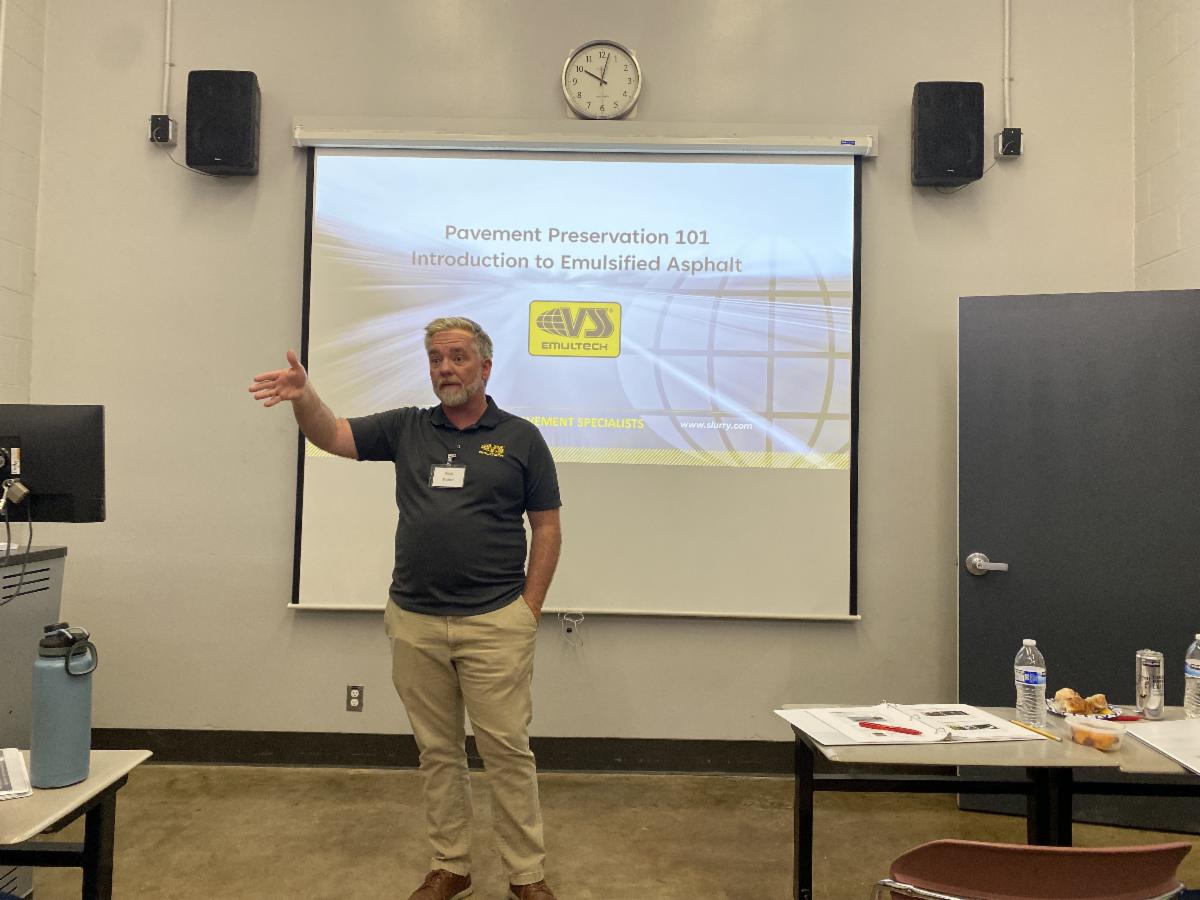
The workshop utilized field events that present the attendees with an application of what they have learned. The students left the classroom on the last day for a hosted lunch by CalAPA member Knife River Construction. The students were invited to tour of the Knife River HMA Plant in Chico. The tour introduced them to the scale of HMA production, how the aggregates and binder are proportioned and blended to meet the specifications and requirements of a public works project. Another workshop presentation was delivered by NIck Fisher with VSS, a Reed Family Company and also a CalAPA member.
A story about the summer workshop was previously featured in CalAPA's official association magazine, California Asphalt. That issue may be viewed HERE.
| | Students at the Summer Asphalt Workshop at CSU Chico participate in a tour of the Knife River asphalt plant in Chico. One of the hosts was Mason Richardson. Photo courtesy of CSU Chico. | | Nick Fisher with VSS, a Reed Family Company, delivered a presentation at last week's asphalt workshop at CSU Chico. Photo courtesy of CSU Chico. | | Students at the summer asphalt workshop at CSU Chico participated in activities at the campus construction materials laboratory. Photo courtesy of CSU Chico. | |
Caltrans recognizes participants in Reference Sample Program | |
Special to California Asphalt Insider
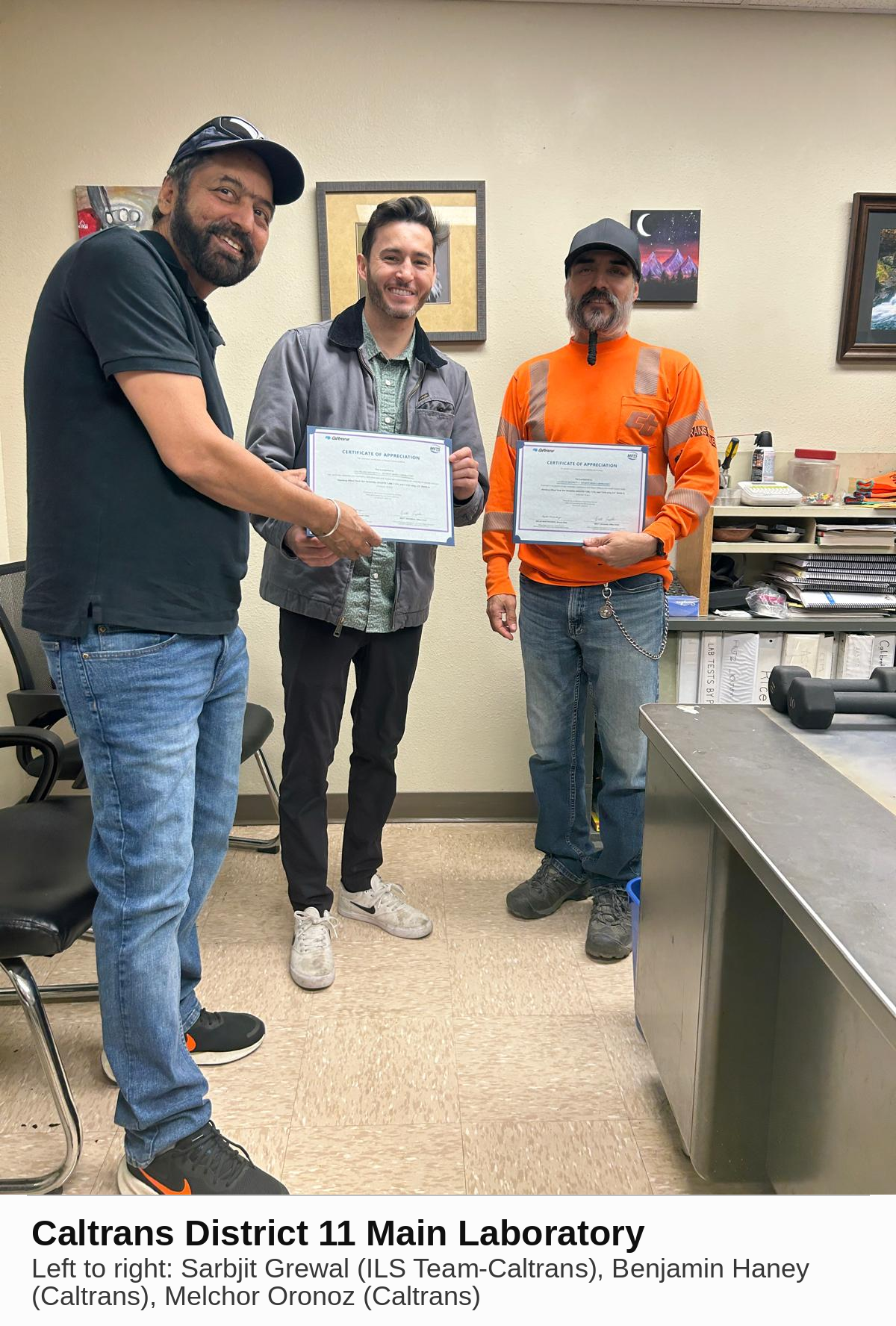
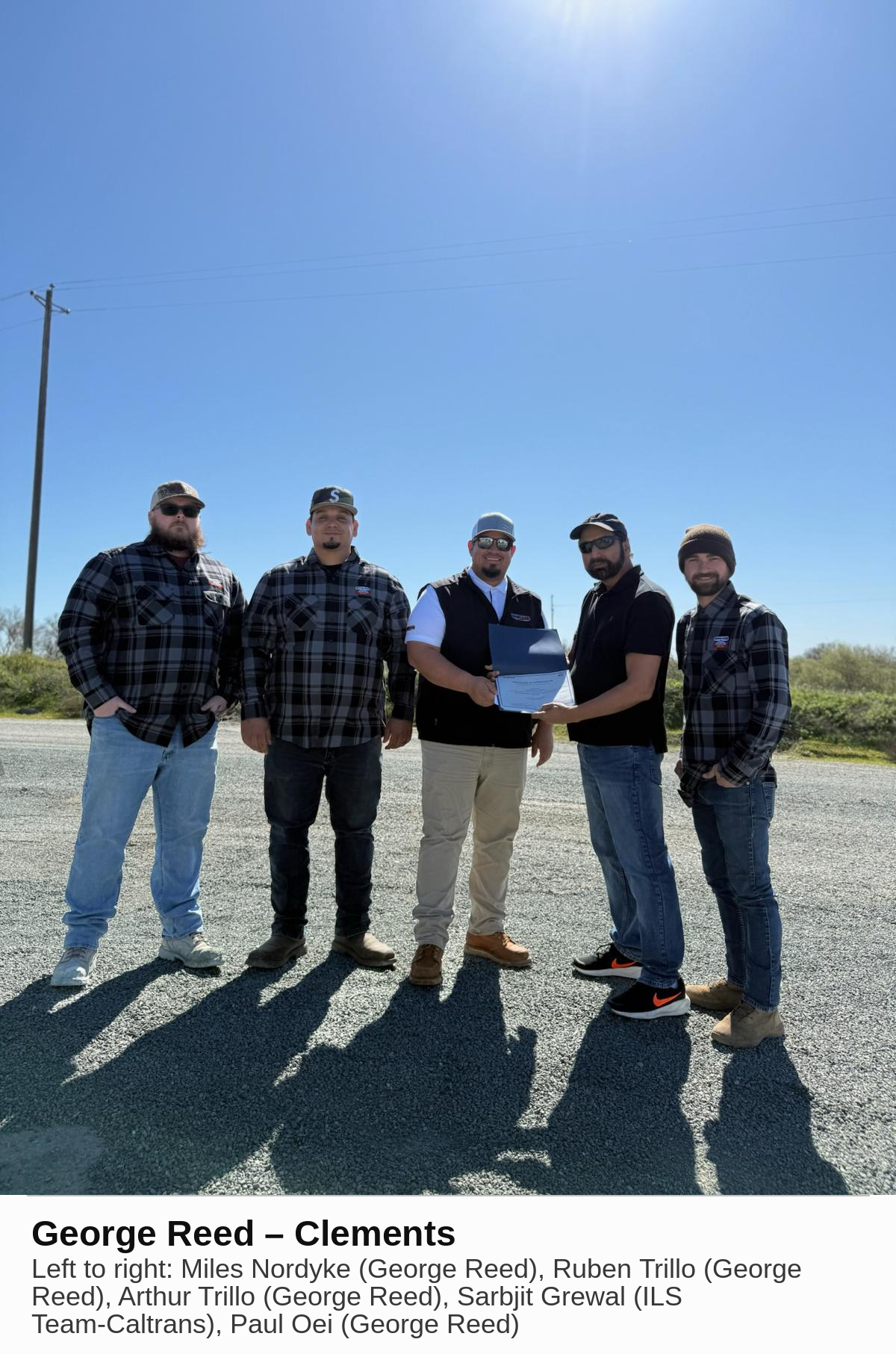
Caltrans Independent Assurance (IA) Central Branch is responsible for administering the IA Program, which includes the Reference Sample Program (RSP). As part of Caltrans’ responsibilities under Code of Federal Regulations (CFR) 23 Part 637, laboratories are required to participate in the RSP to maintain accreditation in acceptance test methods. While the RSP is primarily intended for proficiency testing, the established network of participating laboratories has also provided an effective resource for supporting separate interlaboratory studies (ILS).
Beginning in 2019, the ILS team within IA Central Branch leveraged this laboratory network to conduct ILS efforts aimed at evaluating test method variability. Of particular interest was determining single-operator and multi-laboratory precision for tests performed on rubberized hot mix asphalt gap-graded (RHMA-G) mixtures. RHMA-G mixes typically have higher binder content and include tire rubber as a significant component. Because existing AASHTO precision statements are generally based on traditional dense-graded hot mix asphalt (HMA), the ILS team was interested in evaluating how test precision may compare when RHMA-G materials are used.
Some of these studies were conducted as part of the RSP, while others were completed with a smaller group of participating laboratories. Several studies were also initiated in support of the Pavement and Materials Partnering Committee (PMPC).
To conduct these studies, both Industry and Caltrans laboratories were asked to volunteer to participate. Participation required significant commitment, as many studies involved multiple replicates and several different test methods. Since 2019, the ILS team has completed 15 major ILS efforts, resulting in several supporting reports and publications. In total, 72 laboratories have participated, contributing thousands of hours toward improving understanding of test method variability.
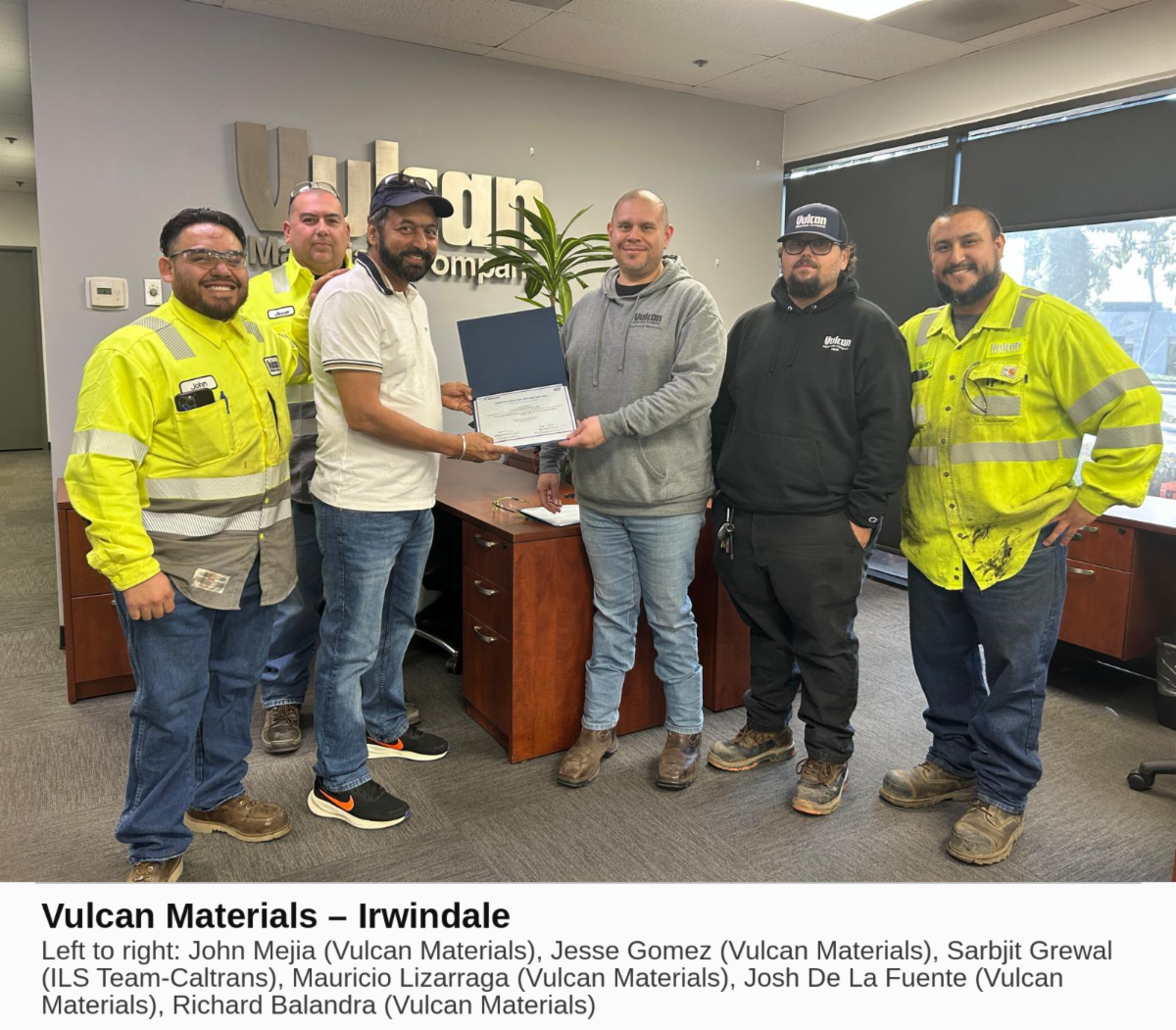
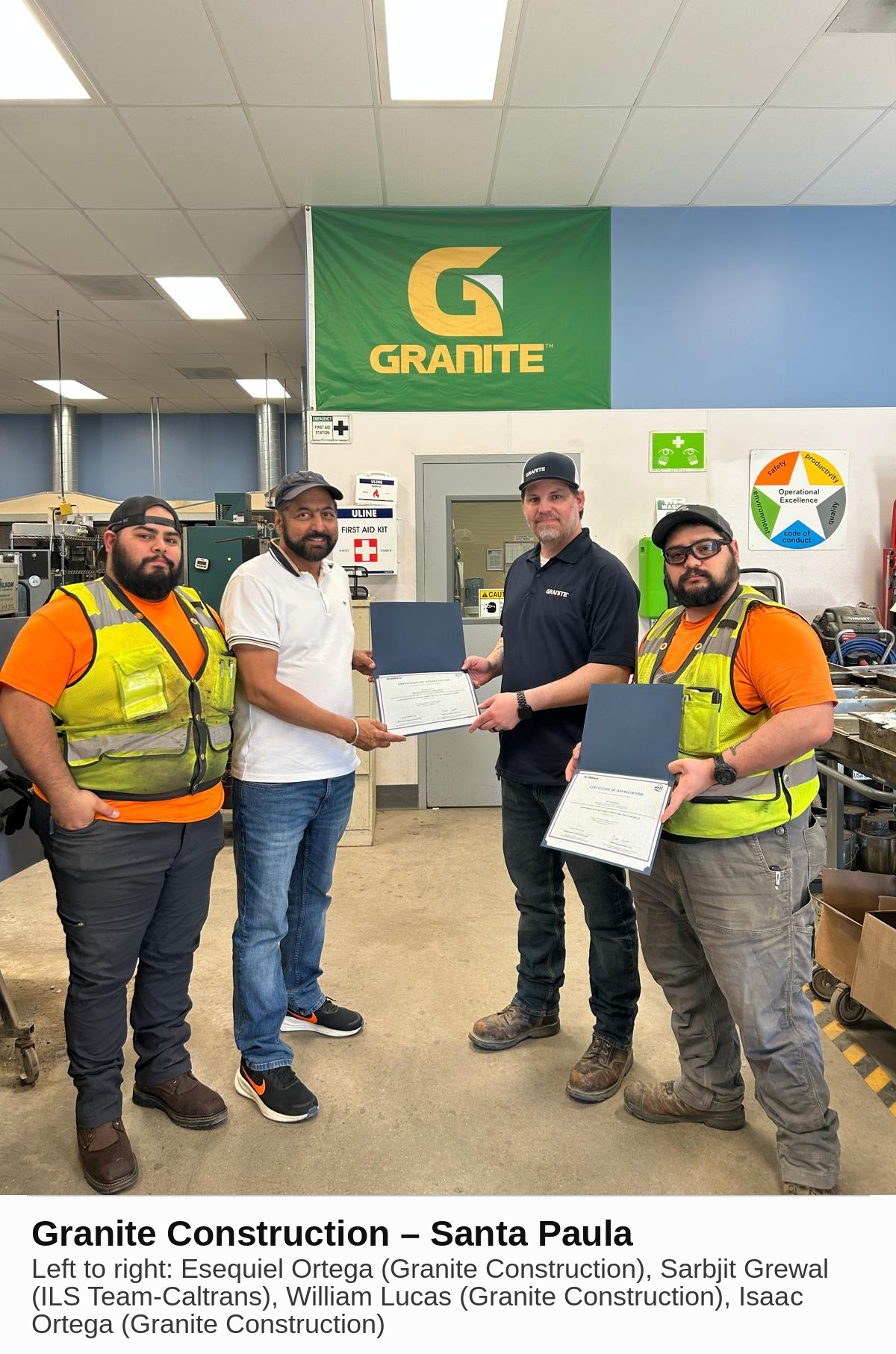
The tremendous effort provided by participating laboratories and material suppliers has not gone unnoticed by Caltrans management. In recognition of these contributions, the ILS team has distributed Certificates of Appreciation to material suppliers/plants and participating industry and Caltrans laboratories. These acknowledgements help foster and strengthen the ongoing partnership between Caltrans and industry. Moving forward, Certificates of Appreciation will continue to be provided upon completion of each study.
Editor's Note: This article was prepared for inclusion in this newsletter by Biplab Bhattacharya and Aemero Hailemichael of Caltrans. The photos and photo captions also were provided by Caltrans and are used with permission.
| |
High-polymer binder mixes fact sheet released in advance of July 7 educational webinar | |
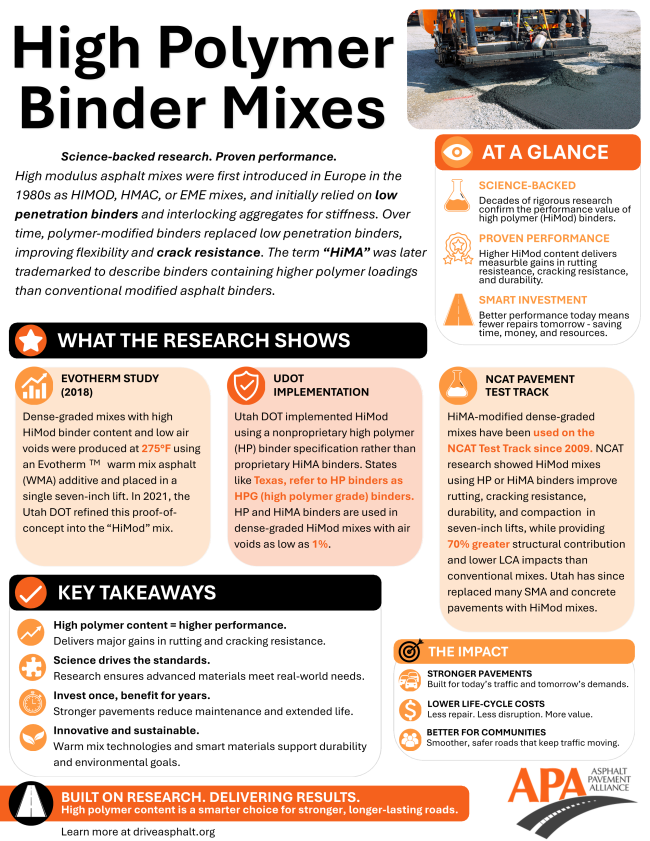
The Asphalt Pavement Alliance, supported by CalAPA, has released a one-page high-polymer binder fact sheet in advance of a July 7 educational webinar on the subject. The fact sheet can be downloaded HERE.
The resource is a high-level summary of the pavement strategy to help introduce the topic to those who may not be familiar with HiMod mixes.
For those seeking a deeper dive on the subject, the Asphalt Pavement Alliance, a CalAPA-supported partner, will be holding a free educational webinar July 7 focusing on a key element of highly modified asphalt pavement mixes: the role and characteristics of high-polymer binders. Details and on-line registration can be found HERE.
High polymer (HP) binder and highly modified (HiMod) asphalt mixes are proven innovations that have been demonstrated to provide unbeatable life-cycle value when implemented properly. Confusion in terminology, regional differences between PG (M 320) and MSCR (M 332) binder specifications, and difficulty in capturing value through pavement thickness design (M-E versus layer coefficients) can all be barriers to implementation. The goal of the webinar is to equip practitioners to bid and build successful projects using HP binder and HiMod asphalt mixes.
The stated Learning Objectives of the webinar include:
- Define essential terms/requirements necessary for HP binder and HiMod asphalt mix implementation.
- Identify/address challenges and opportunities in designing, specifying, and utilizing HP binder and HiMod asphalt mix.
- Transfer knowledge and skills to ensure successful deployment of HP binder and HiMod asphalt mix.
The webinar will be conducted by Dr. Buzz Powell, the Technical Director of the APA and a highly-rated presenter at previous CalAPA conferences. The 90-minute webinar will take place July 7 beginning at 11 a.m. PDT. To learn more about the Asphalt Pavement Alliance, click HERE.
| |
|
Each week we highlight a word, acronym or other term commonly used in the asphalt pavement industry in California.
DRUM PLANT: A continuous-feed asphalt plant that can produce large quantities of asphalt.
| |
Paving Pointer of the Week | |
Each week we highlight a key point or best practice of interest to asphalt paving crews, inspectors and others working in the field. We welcome suggestions. More tips can be found in our "Asphalt Parking Lot Construction Checklist" HERE. Information on the CalAPA "Quality Paving Certificate" program is HERE.
COMPACTION/DENSITY: The plans and specifications should specify how density is tested. The inspector needs to monitor the specified compaction density with a gauge to ensure that final target densities are achieved. Regular visual inspection of the mat during compaction is also required: look for segregation, indentations, properly sealed joints, and under-compacted areas.
| | |
Each week we highlight a term that is specific to climate-change issues related to the asphalt pavement industry. This feature is intended to raise awareness of the asphalt industry's climate-change initiatives and the specialized terminology that goes with them. More information on "The Road Forward" asphalt industry climate initiative can be found HERE. A recent CalAPA magazine story on the topic is HERE.
DOWNSTREAM SCOPE THREE EMISSIONS: Emissions (indirect) from the use of a company's product.
| |
Caltrans Statewide Crude Oil Price Index | |
Editor's Note: As a convenience to our readers, Asphalt Insider reports the most current Caltrans "Statewide Crude Oil Price Index" posting. The department posts this monthly on its public website HERE. The index is used to calculate payment adjustments for paving asphalt under special provisions section "Payment Adjustments for Price Index Fluctuations" in those projects containing the section. The department posts the index on or about the first business day of the month using the daily Brent crude oil prices from the previous month as reported by Business Insider. Inquiries about the index should be directed to Caltrans at: Oil.Index@dot.ca.gov .
June 2026: $565.2 ($/ton)
Last month: $557.3
1 year ago: $344.7
| |
|
"I'm not a human being. I'm a human doing."
– Dennis Quaid
| | |
We hope you enjoy CalAPA's Asphalt Insider newsletter, widely regarded as the most influential publication of its type in California. We are committed to providing you with the most up-to-date information on technical issues, regulation, news, analysis, people, events and trends in California that is of interest to the asphalt pavement industry and our various agency partners. To subscribe to the newsletter, click HERE. For comments, questions or to suggest a story idea, click HERE. We are committed to promptly notifying our readers of any errors in this publication. Please click on the comment link above to alert the editor of any errors or omissions.
Sincerely,
Russell W. Snyder, CAE
Executive Director
The California Asphalt Pavement Association (CalAPA)®
| | The "Asphalt Insider" is an official publication of the California Asphalt Pavement Association. For more information or to inquire about membership, call (916) 791-5044, or click HERE to contact us. Copyright © 2026 California Asphalt Pavement Association -- All Rights Reserved. The CalAPA name (No. 5,621,794) and logo (No. 5,621,795) are registered trademarks with the U.S. Patent & Trademark Office. | | | | |