OCTOBER 5, 2026

KEEP THIS NEWSLETTER COMING TO YOUR INBOX

Your Ballot Is Coming — Your Voice Matters


Election season is about to become very real. Arizona early ballots will begin hitting mailboxes shortly after they are mailed on October 7, and Election Day is November 3. The deadline to register to vote is October 5.


Regardless of how you vote, one of the most important things we can do as citizens is participate.


When your ballot arrives, don't simply put it on the counter and tell yourself you'll get to it later. Take the time to learn about the candidates and issues. Read beyond campaign mailers and social-media posts. Look at candidates' records and positions, read the ballot measures, ask questions and seek information from multiple sources.


Then help others participate.


Ask your friends and neighbors whether they've voted. If an elderly neighbor or someone without transportation needs a ride to a voting location, offer to help. If you know someone confused by the ballot, point them toward reliable information about the candidates and propositions.


We all know someone who follows politics closely. Maybe that person is you. Share what you know, but don't beat people over the head with your opinions. Give them information, encourage them to do their own research, and respect their right to reach their own conclusions.


Our elections work best when more citizens are informed and engaged. Decisions made this November will affect our schools, communities, state and country. Those decisions are too important to leave to someone else.


If you are concerned about the direction of Arizona or our nation, voting is your opportunity to make your voice heard.


Educate yourself. Help others get informed. Help someone get to the polls if they need it. And most importantly, VOTE.


For voters using a ballot by mail, Arizona election officials recommend returning it by mail 7–10 days before Election Day. After that, voters can return it at an authorized drop-off or voting location. Ballots must be received by 7:00 p.m. on November 3 to be counted

When I Report the Facts, It Doesn't Mean I Like Them, But They Are Facts


First, thank you for reading my newsletter, sharing my articles and occasionally challenging me. I started this newsletter to cover stories that don't always receive the attention they deserve and to provide information you may not find elsewhere.


But I want to make something clear: Reporting a fact doesn't mean I like it. Reporting what someone says doesn't mean I agree with them.


I work to separate facts from opinions. When I share my personal views, I try to make that distinction clear.


And I certainly have opinions!


I want Republicans to win elections, but I expect them to follow the same rules as everyone else. I support responsibly developed data centers and battery energy storage. I believe law enforcement needs effective technology, including license-plate readers, with appropriate safeguards.


I am unapologetically pro-life. I support secure borders, enforcement of immigration laws and treating people as individuals rather than labels. Above all, I have tremendous respect for the United States Constitution.


Those are my beliefs, and I don't hide them. But not everything I report reflects my personal opinion.


We cannot criticize the mainstream media for ignoring inconvenient facts and then do the same thing ourselves. Facts don't change simply because we dislike them or because they challenge what we've heard from our favorite news sources.


My goal is to provide information, offer context and distinguish between what happened and what I think about it.


You don't have to agree with me. In fact, healthy disagreement is important. But please don't assume that reporting something means I endorse it.


I'm here to provide information, not affirmation. What you do with that information is entirely up to you.


Thank you for continuing to read, question and share my newsletter.

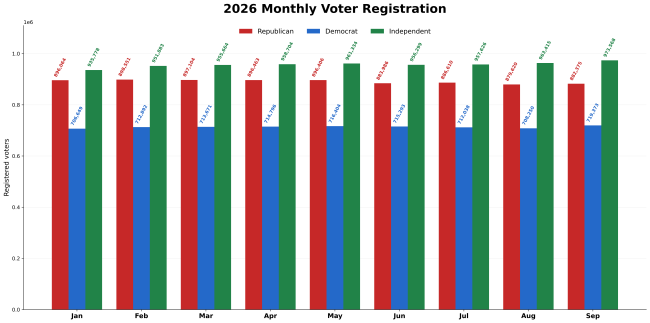
Maricopa County Voter Registration: Are Voters Moving Away From Both Political Parties?


Independent voter registration continues to grow in Maricopa County, raising important questions about the direction of both major political parties.


From January through September 2026, independent registration increased by 37,790 voters. During that same period, Republican registration declined by 13,689, while Democratic registration increased by 12,724.


By September, independents accounted for the largest of these three voter-registration groups, with 973,568 voters, compared with 882,375 Republicans and 719,373 Democrats.

These numbers deserve attention, particularly as we approach the November election.


Maricopa County Voter Registration — 2026

Month Republicans Democrats Independents

January 896,064 706,649 935,778

February 898,551 712,892 951,883

March 897,104 713,671 955,664

April 896,463 714,796 958,704

May 896,406 716,404 961,334

June 883,986 715,293 956,299

July 886,610 712,038 957,626

August 879,620 708,250 963,415

September 882,375 719,373 973,568

Net change −13,689 +12,724 +37,790


Source: Monthly registration figures supplied for this article. Maricopa County also publishes official historical registration reports.

What Are These Numbers Telling Us?

Independent registration has grown substantially, while Republican registration has declined and Democratic registration has experienced comparatively modest growth.


However, registration numbers alone cannot tell us why voters choose to register as independents. Some may be dissatisfied with both parties, while others may simply prefer not to affiliate with a political organization.


Nevertheless, these trends raise an important question: Are voters growing tired of political extremes and the constant attacks coming from both sides?

Where Do We Go From Here?

I believe Americans are increasingly frustrated with political dysfunction. We spend too much time attacking one another and too little time finding solutions.


Republicans and Democrats alike should pay attention to voters who do not identify with either major party. Those voters have diverse political beliefs, and neither party should assume it has their support.


We need candidates willing to listen, work across disagreements and address the issues affecting our communities.


The political middle should not be ignored simply because the loudest voices often come from the extremes.


My belief is simple: If candidates continue appealing only to their extreme political base while attacking everyone who disagrees with them, we risk perpetuating the very dysfunction voters want to escape.


We can stand by our principles without treating everyone who disagrees with us as the enemy.

It's time to focus less on political attacks and more on governing.

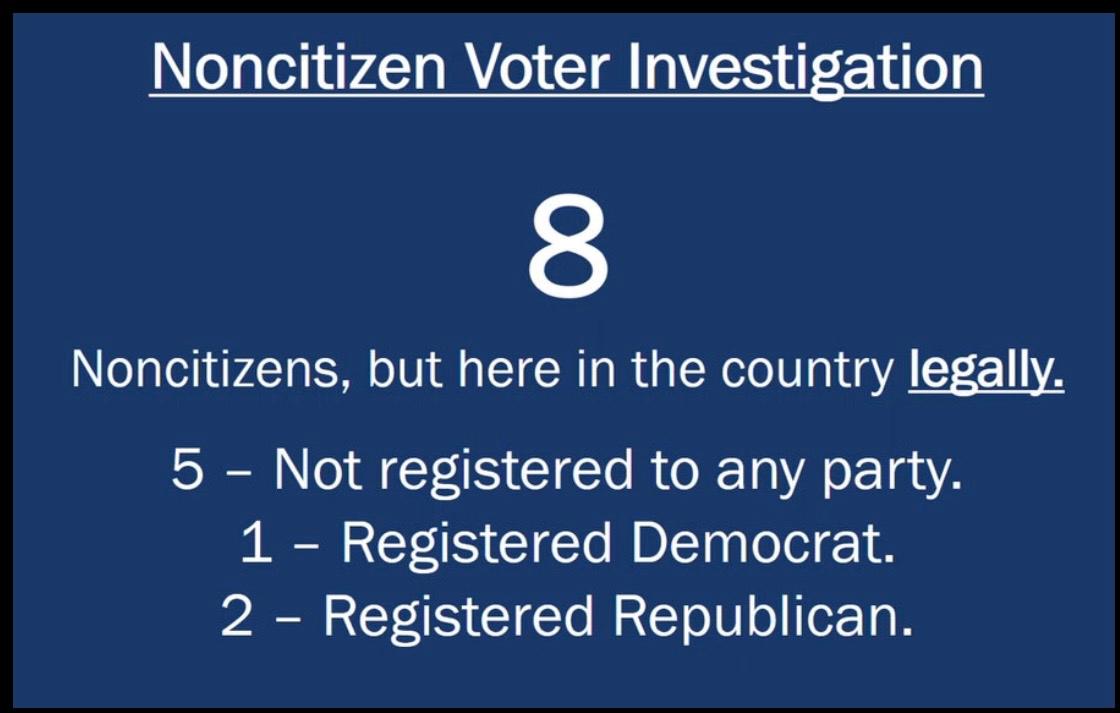
Eight Noncitizens Voted in Maricopa County — But 52 Flagged Voters Were Citizens


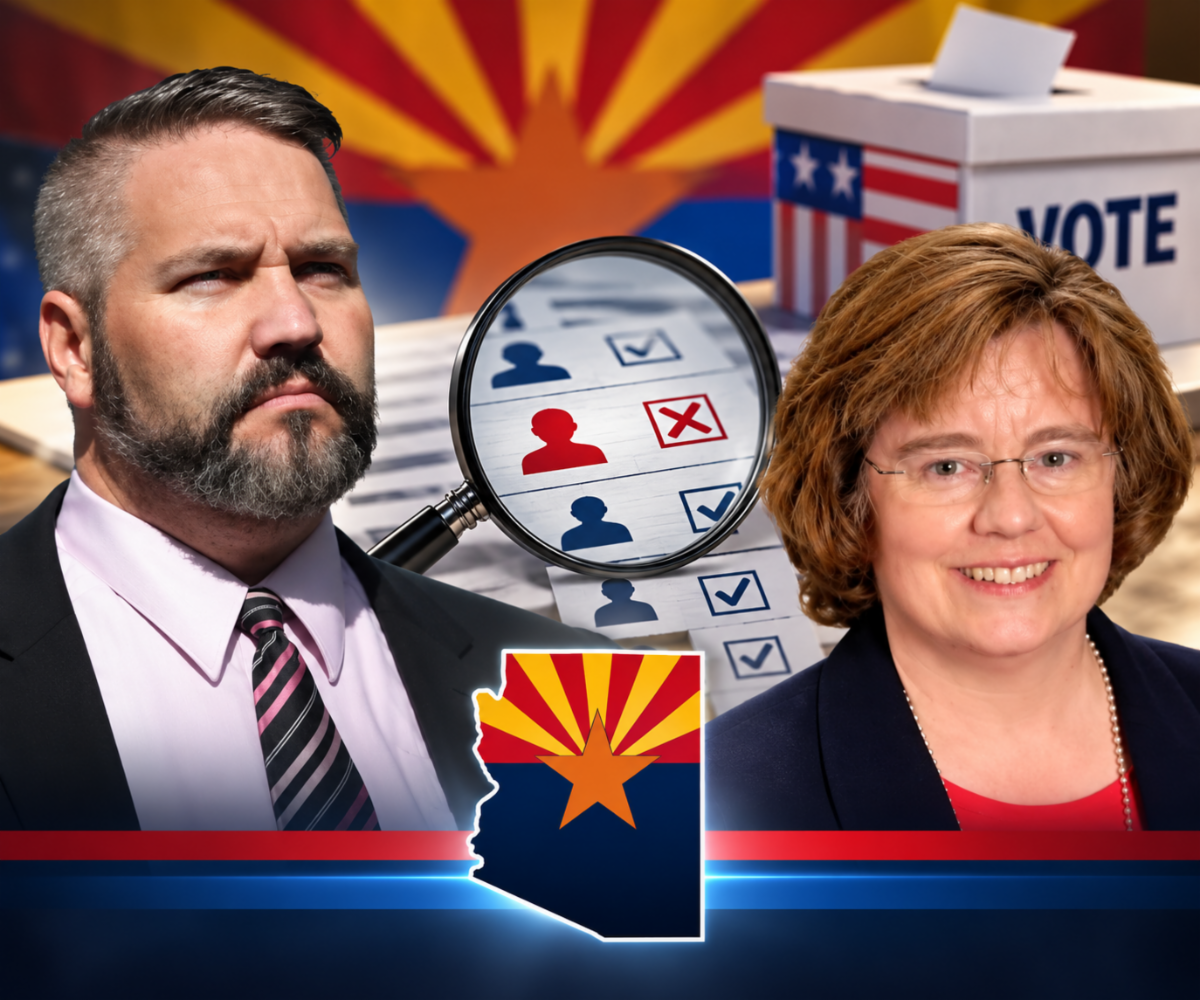
Maricopa County Attorney Rachel Mitchell released findings from her investigation into 207 registered voters referred by County Recorder Justin Heap over citizenship concerns.

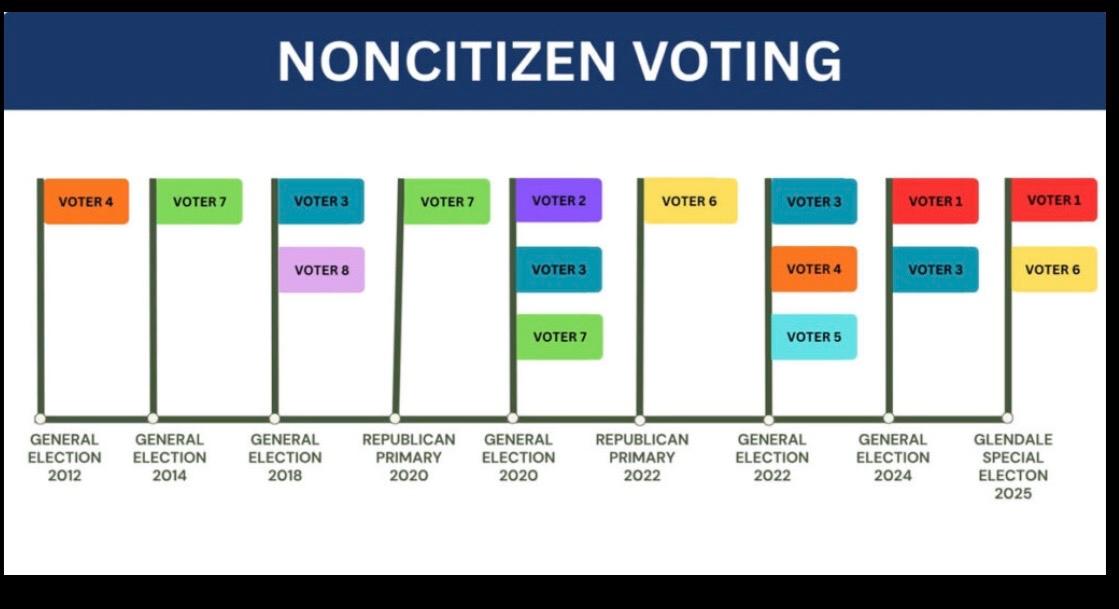
Of the 60 individuals investigated who had previously voted, 52 were confirmed U.S. citizens, while eight were noncitizens.


The eight noncitizens cast a combined 16 ballots dating back to 2012, with no more than three voting in any single election. Mitchell stated that these votes would not have changed the outcome of any past election.


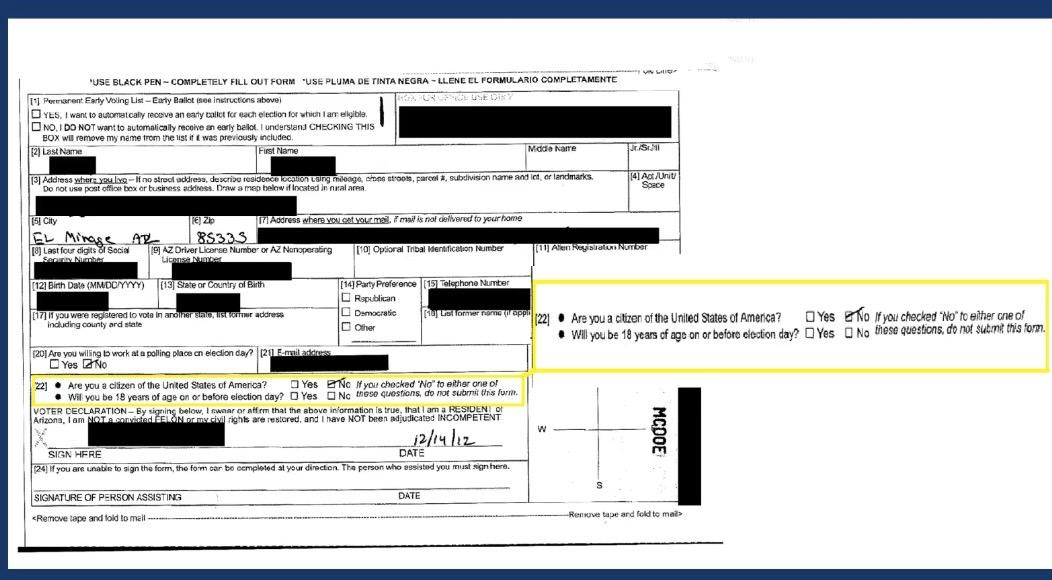
Seven of the eight were connected to Arizona's longstanding Motor Vehicle Division records problem involving citizenship documentation. The eighth reportedly completed a voter-registration form indicating they were not a citizen, yet their registration was processed anyway.


These are problems that deserve attention and correction.

However, another number is equally important: 87% of the voters investigated were American citizens.


Other states have encountered similar problems with citizenship verification. Texas initially flagged 2,724 registered voters through the federal SAVE system. By September, 578 had demonstrated U.S. citizenship, illustrating why database results must be independently verified before eligible voters are removed.


The Maricopa County investigation is not entirely finished. The remaining 147 individuals referred by Heap still require review.


There are two important lessons here.


Noncitizens should not be voting, and Arizona must correct the registration problems that allowed these eight individuals to cast ballots. However, eligible American citizens must also be protected from being incorrectly identified as noncitizens.


With more than 2.5 million registered voters in Maricopa County, these findings do not establish widespread noncitizen voting. But they do identify problems that need to be fixed.

Election integrity means maintaining accurate voter rolls, preventing ineligible voting and protecting every eligible citizen's right to vote.


We can accomplish all three without exaggerating the problem or dismissing it.

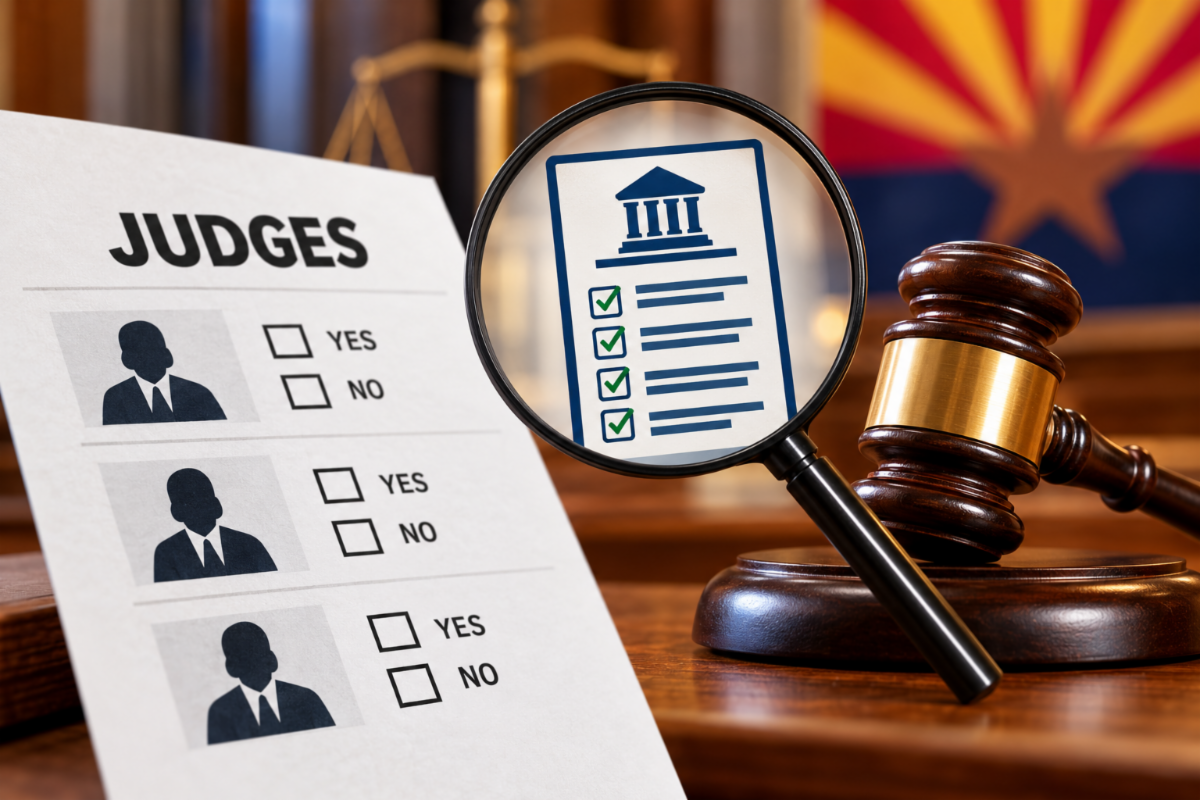
How Do You Know Which Judges to Vote For? Arizona Has a Resource to Help


I am always asked, "What do you know about the judges, and who should I vote for?" Here is a great resource to help us make that decision.


Every election, voters see a list of judges on their ballots and are asked whether those judges should remain in office. Most of us know very little about them. Fortunately, Arizona has a system designed to give voters information about judicial performance before they cast their ballots.

In 1992, Arizona voters amended the state Constitution to establish a judicial performance evaluation process. The Commission on Judicial Performance Review (JPR) evaluates judges appointed through merit selection and publishes its findings before general elections.


How Are Judges Evaluated?

The Commission gathers information from people who have firsthand experience with judges, including attorneys, jurors, witnesses, litigants, court employees and individuals who represent themselves in court.


Judges are evaluated on five important standards:


  1. Knowledge of the law and courtroom procedures.
  2. Impartiality and fairness.
  3. Clear written and verbal communication.
  4. Professionalism, temperament and respect for others.
  5. Administrative skills, efficiency and work ethic.


Judges undergo performance reviews twice during their terms: once at midterm and again before their retention elections.

How Does the Commission Protect the Process?

An independent data center collects surveys and compiles the results. Judges are assigned identification numbers so Commission members generally review performance information without knowing which judge is being evaluated.


The Commission also considers public comments, hearing testimony, information from the Commission on Judicial Conduct and other relevant materials.

After reviewing the information, the Commission votes on whether each judge "Meets" or "Does Not Meet" judicial performance standards.


Judges also participate in a separate self-evaluation process intended to identify areas for improvement.

Where Can You Find the Results?

The Commission publishes its findings and supporting performance data before the general election. Voters can review the information rather than relying on political advertisements, social media opinions or recommendations from someone who may never have observed the judge.

These evaluations are a resource, not an instruction on how to vote. The final decision belongs to each voter.

Data Centers Are Not the Problem. How and Where We Build Them Matters


The debate over data centers is becoming increasingly polarized. But supporting technology and economic development doesn't mean we must sacrifice our neighborhoods, water supplies or quality of life.


Two recent examinations of data center development offer valuable lessons for Arizona.

Virginia: Residents Want a Voice


A 2025 survey of 1,004 Virginia residents found that 47% supported local data center development, 25% were neutral and 27% opposed it.


Residents overwhelmingly wanted greater control over development, including restrictions near homes, schools and parks, underground transmission lines, energy and water reporting, and meaningful public participation.


Loudoun County, home to much of Virginia's data center industry, ended automatic zoning approval for new data centers in early 2025, requiring public hearings instead.

In Prince William County, developers withdrew plans in July 2026 for a 2,100-acre project that could have included 37 data centers. Officials subsequently rejected another proposal involving approximately 2,000 acres.


The lesson? Communities want a seat at the table.


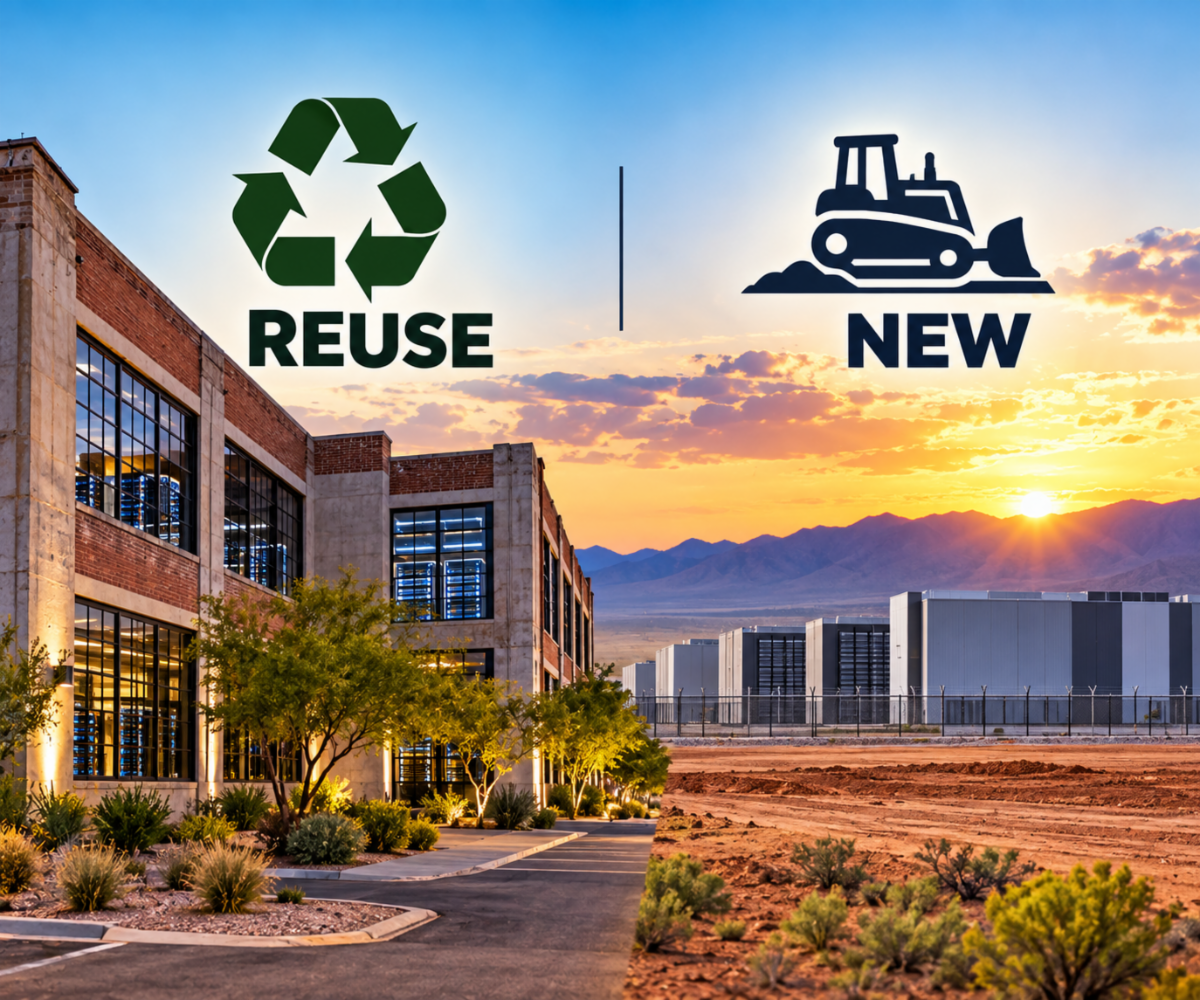
Why Not Reuse Existing Buildings?


Another approach deserves consideration: converting existing commercial and industrial properties into data centers.


Rafi Golberstein, CEO of PACE Loan Group, argues that developers should consider adaptive reuse before building massive facilities on undeveloped land.


The former Kansas City Star printing plant is being converted into a data center with community workspace. In Dallas, an obsolete data center became a warehouse and is now being converted back into a data center, taking advantage of its existing infrastructure.

Imagine the possibilities for aging industrial properties, warehouses and commercial buildings.

Not every building is suitable. Power, fiber connectivity, cooling requirements and structural limitations matter. But redevelopment could reduce the need to consume additional undeveloped land.


Technology Is Changing


We also need to stop treating every data center as identical.

Some use substantial amounts of water, while others employ closed-loop or air-cooled systems. Some depend on the electrical grid, while others incorporate dedicated or on-site power generation.


Technology continues to evolve, and today's enormous facilities could eventually become obsolete. Developers and lenders should consider whether these buildings can be repurposed decades from now.


What Arizona Can Learn


Arizona has an opportunity to learn from Virginia's experience rather than repeat its mistakes.

Before approving projects, we should ask important questions. Where will the power come from? Who pays for infrastructure? How much water will be consumed? What cooling technology will be used? How close are surrounding neighborhoods and schools? Could existing buildings be reused? What happens if the facility becomes obsolete?


Most importantly, residents deserve factual answers and opportunities to participate before decisions are made.


Data centers support artificial intelligence, healthcare, financial systems, cloud computing and our increasingly digital economy. We need this infrastructure, but communities also deserve responsible development.


The question shouldn't be whether we support data centers. It should be how we build the data centers we need while protecting the communities where we build them.

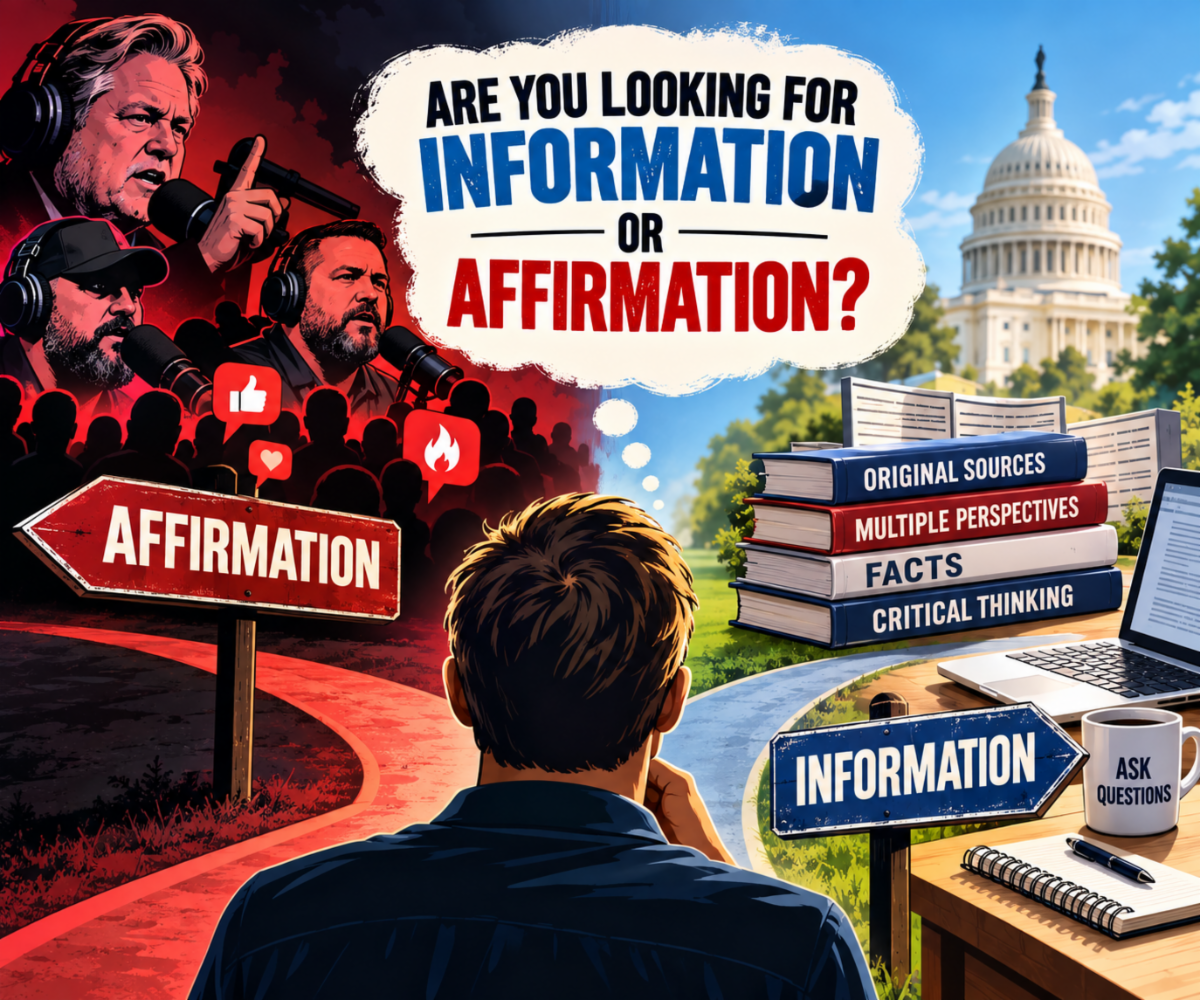
When One Voice Becomes Your Only Voice: Are You Looking for Information or Affirmation?


We often talk about people on the political left becoming radicalized by consuming information that reinforces what they already believe. But conservatives should be willing to ask the same question about ourselves.


Are you looking for information—or affirmation?


There is a big difference.


Information may challenge you. It may make you uncomfortable. It may force you to reconsider something you believed was true. Affirmation simply tells you what you already want to hear.

What happens when someone gets virtually all of their political information from one podcast, one radio host, one social-media ecosystem or a group of commentators who continually reinforce one another?


Research gives us reason to take that question seriously. Studies of political echo chambers have found that homogeneous political discussion can contribute to greater polarization and more negative attitudes toward people on the other side. That doesn't mean listening to a particular podcast automatically radicalizes someone. Radicalization is far more complicated than that.


The concern is what happens when an echo chamber replaces independent thought.

Conservatives Aren't Immune

The right has developed its own powerful alternative-media ecosystem. Some conservative podcasts and commentators provide valuable information and perspectives that aren't always found in traditional media.


But conservative audiences should scrutinize these sources just as closely as we scrutinize CNN, MSNBC or other mainstream outlets.


Many podcasts use highly combative political rhetoric and actively encourages its audience to become involved in political battles.


The more important question is: Are they one of several sources you consume, or have they become the source through which you interpret everything else?


My point isn't that you shouldn't listen to only one or two sources and no one else. Listen to them if you find them informative. But don't allow any political personality to become your entire window into the world.


And that includes me.


Don't read my newsletter because you expect me to tell you what you already believe. Read it for information, then check my sources and reach your own conclusions.

Outrage Is Good for Business

We also need to understand the economics of modern political media.


Your attention has value.


Clicks, downloads, subscriptions, advertising and social-media engagement reward content that keeps audiences coming back. Anger and outrage can be especially effective at doing that.

That doesn't mean every commentator using strong rhetoric is deliberately manipulating an audience. Many undoubtedly believe what they're saying. But audiences should still recognize the incentives.


If every disagreement is described as betrayal, every compromise is surrender and every Republican who disagrees becomes a "RINO," eventually politics stops being a debate about ideas.


It becomes tribal.


And once that happens, people can become more interested in having their beliefs affirmed than discovering whether those beliefs are actually correct.

Challenge the People You Agree With

Here's a simple test.


The next time you turn on your favorite podcast or radio program, ask yourself:


Am I listening because I want to learn something—or because I want someone to tell me I'm right?


Then ask another question: When was the last time this person said something I strongly disagreed with?


If the answer is "never," you may not be consuming information. You may be consuming affirmation.


Read the original legislation. Watch the entire government meeting instead of a 30-second clip. Read court decisions. Look at government records. Compare multiple news organizations. Go directly to the source whenever possible.


And don't automatically dismiss information simply because it comes from someone you don't like.


Likewise, don't automatically believe something simply because it comes from someone you do like.

Think for Yourself

Conservatism, in my opinion, should never require unquestioning loyalty to a podcast host, politician, organization or political personality.


You can support someone and criticize them when they're wrong. You can read my newsletter and decide that I got something wrong.


In fact, I hope you question me.


That's how we become better informed.


So the next time a headline makes you furious or a commentator tells you exactly what you wanted to hear, stop for a moment and ask:

Am I looking for information—or affirmation?

Political commentators should give us information and arguments to consider. They should never do our thinking for us.


Listen widely. Verify what you hear. Question people you agree with as vigorously as you question people you don't.


Because the goal shouldn't be to find someone who always tells us we're right.


The goal should be to find the truth—even when the truth challenges us.

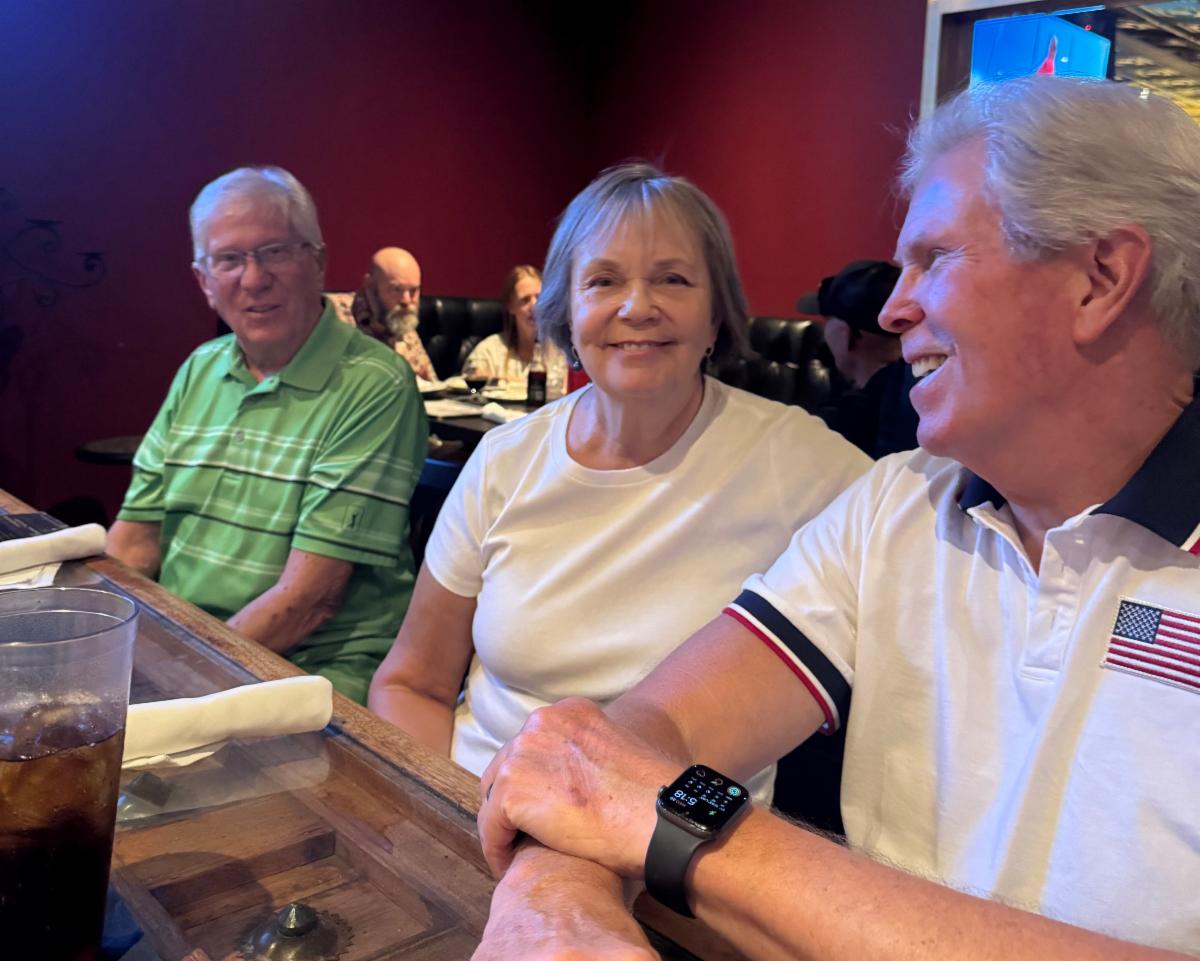
Another Successful Patriot Happy Hour: Building Friendships and Strengthening Our Community


We had another successful Patriot Happy Hour, and once again, it reminded me why these gatherings are so important.


It is always good to get together with like-minded friends, enjoy a few hours away from the noise of everyday politics, and simply have a great time. There was plenty of laughter, but there were also some meaningful conversations about the issues that matter to us.


We talked about the upcoming elections, our local school board races, and the importance of staying involved in our communities. We also spent time discussing something that unites everyone in the room: our respect for the United States Constitution and the principles on which our country was founded.


We love America, and we want to preserve the American ideals of liberty, opportunity, individual rights and representative government for our children and grandchildren.


One way we can do our part is simply by connecting with one another.


Politics has become incredibly divisive, including within our own political circles. Patriot Happy Hour isn't about agreeing on every candidate or every issue. It is about building relationships, exchanging ideas, learning from one another and remembering that we have far more in common than we sometimes realize.


Those relationships matter. Strong communities aren't built entirely through social media posts or political meetings. They're built when people sit across the table from one another, talk, listen, laugh and discover ways they can work together.


If you've been thinking about attending but aren't sure whether you want to make the drive, consider this your personal invitation.


Our next Patriot Happy Hour will be October 28th.


Come meet some new people, reconnect with old friends and enjoy an evening with others who care deeply about their communities and their country.


Because of the holidays, our November and December gatherings will be held earlier in those months, so watch for the dates and details.


Thank you to everyone who continues to attend and make these gatherings successful.


America is worth preserving—and friendships, conversations and community are a pretty good place to start.

Thank you,

Lisa Everett


www.patriotnheels.com


Follow me on:

X - @patriotnheels

Facebook - @patriotnheels

Instagram - @patriotnheels