|
From 1980s Grants to Today:
How Two Rivers’ Revolving Loan Fund Keeps Working for the Community
You may occasionally see the City's Economic Development Revolving Loan Fund (RLF) referenced in a City budget, development agreement or economic development project. There has been much chatter on local social media pages about the RLF so it is worth explaining where this money came from, as the fund has a unique history and it is not funded through the City's property tax levy.
A $1.25 Million Investment That Started in the 1980s
Two Rivers' Economic Development Revolving Loan Fund, known in the City budget as Fund 290, dates back to the 1980s.
The fund was originally capitalized through two Community Development Block Grants (CDBG’s). This was federal CDBG funding that was awarded originally to the State of Wisconsin and then to the City of Two Rivers. Those grants funded loans of $750,000 to Paragon Electric and $500,000 to Eggers Industries.
That's $1.25 million in outside funding that came to Two Rivers roughly 40 years ago to support local economic development.
But here's what makes a revolving loan fund different: the money doesn't disappear when it is used.
As businesses repay their loans (with interest) the money returns to the fund and can be loaned or invested again. For more than 25 years, City Hall has recycled these resources to assist local businesses with startup and expansion projects.
An Important Change in 2019
In 2019, the Wisconsin Department of Administration undertook an initiative to close locally administered CDBG revolving loan programs.
Because Two Rivers had received its original CDBG grant funding back in the 1980’s, the City was allowed to retain its fund locally. The State approved the "defederalization" of Fund 290 in February 2019.
That was significant for Two Rivers!
Instead of returning these resources, Two Rivers retained them as a locally controlled economic development asset, giving the City greater flexibility to put the money to work for the community.
Recycling the Money Again and Again
The history of the former Paragon Electric property provides a good example of how this works.
A substantial amount of RLF money became tied up following the default of a loan made in 2014 and the City's subsequent foreclosure and ownership of the former Paragon property. Rather than simply writing off that investment, the City ultimately sold the property in May 2022, returning approximately $1.2 million to the Revolving Loan Fund.
Those dollars could then go back to work.
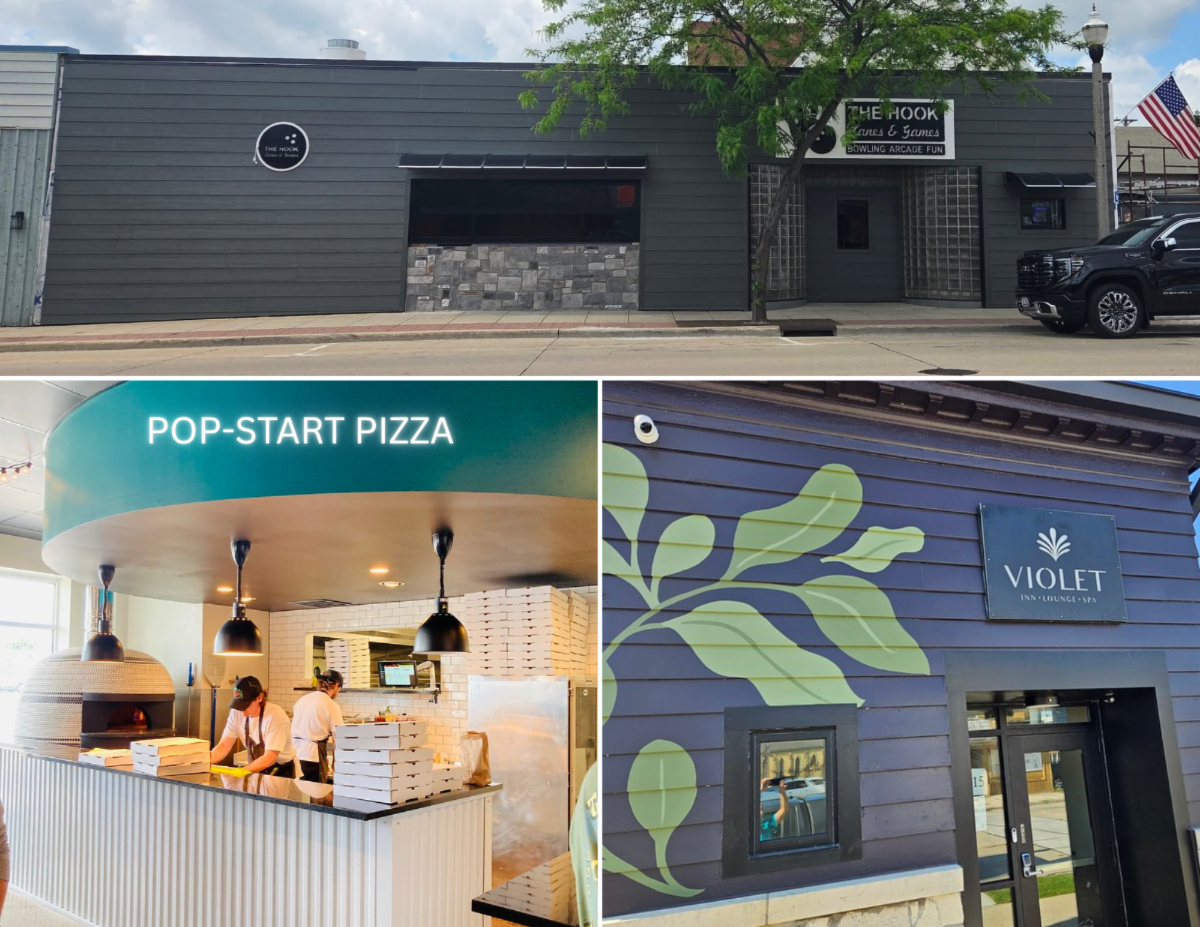
Since then, RLF financing has helped support projects including a new 12,000-square-foot industrial facility at Woodland Industrial Park, The Hook Lanes and Games, the approximately $2 million Violet Inn project, and redevelopment of the former Luigi's Restaurant property into Pop- Start Pizza.
The City's active RLF loans continue making payments back into the fund. Based on the current 2026 loan portfolio, approximately $48,784 in scheduled loan payments will return to the fund this year alone.
And those dollars can eventually be put to work again.
Why Does City Hall Do This?
Economic development often requires financing that doesn't fit neatly into conventional lending.
A promising business may have a solid project but face a financing gap. An older property may require significant redevelopment before it can become productive again. A growing manufacturer may need assistance getting an expansion across the finish line.
The RLF gives Two Rivers another tool to help make those projects happen.
Importantly, the City's goal isn't to replace banks or private investment. The RLF is intended to help leverage private investment. A relatively small City investment can sometimes help unlock a much larger private project, thus creating jobs, redeveloping property and adding value to the City's tax base.
Loan-making and collection decisions are overseen by the City's Business and Industrial Development Committee (BIDC).
Is This Property Tax Money?
This is an important distinction.
Fund 290 is not funded through the City's annual property tax levy.
Its original capitalization came from the $1.25 million in CDBG funding received in the 1980s. Over the decades, loan principal, interest, property proceeds and other revenues have been recycled through the fund.
These are still public dollars, and they should absolutely be managed carefully and transparently. Residents have every right to ask whether a particular investment is worthwhile.
But using Fund 290 does not mean the City is adding that amount to residents' property tax bills.
In fact, when appropriate economic-development activities can be supported through Fund 290, it can reduce pressure on the City's property-tax-supported General Fund.
The Bottom Line
The Revolving Loan Fund is a good example of taking an outside investment made in Two Rivers decades ago and continuing to make it work for the community today.
An original $1.25 million investment from the 1980s has been recycled for roughly four decades, helping businesses start, businesses expand, properties redevelop and new investment occur in Two Rivers.
The measure of success isn't simply how much money sits in the account.
The goal is to put those dollars to productive use, protect the City's investment, bring money back into the fund whenever possible, and then put it to work again.
That's why it's called a Revolving Loan Fund and why it remains an important economic-development tool for Two Rivers.
|