new newsletter header.png
Connect with us
 

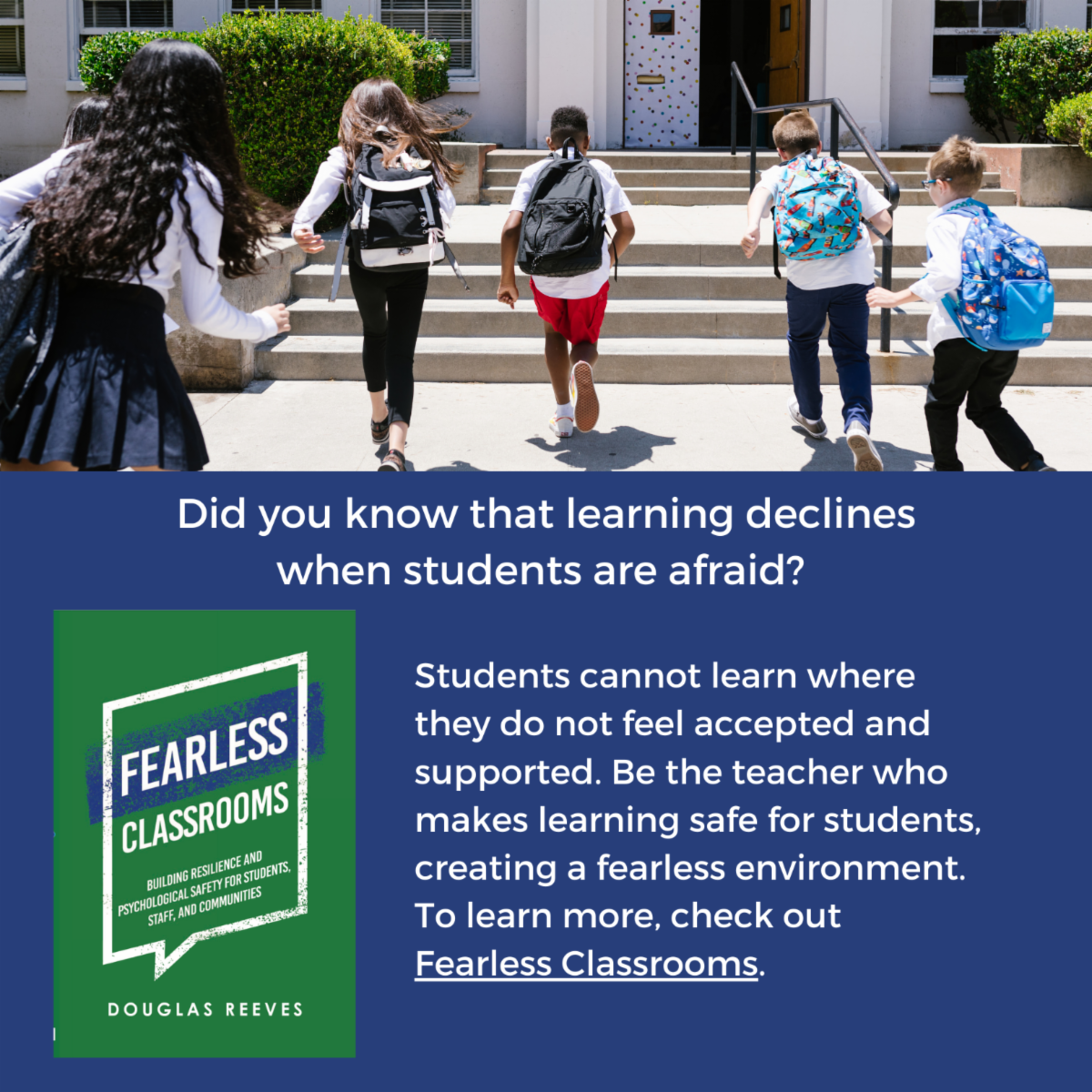
Fearless Classrooms

Here’s the latest from Creative Leadership Solutions, where we believe in evidence, passion, and results. We value respect, trust, service, collaboration, and reason. This month, we discuss fearless classrooms.


FEATURED CONTENT

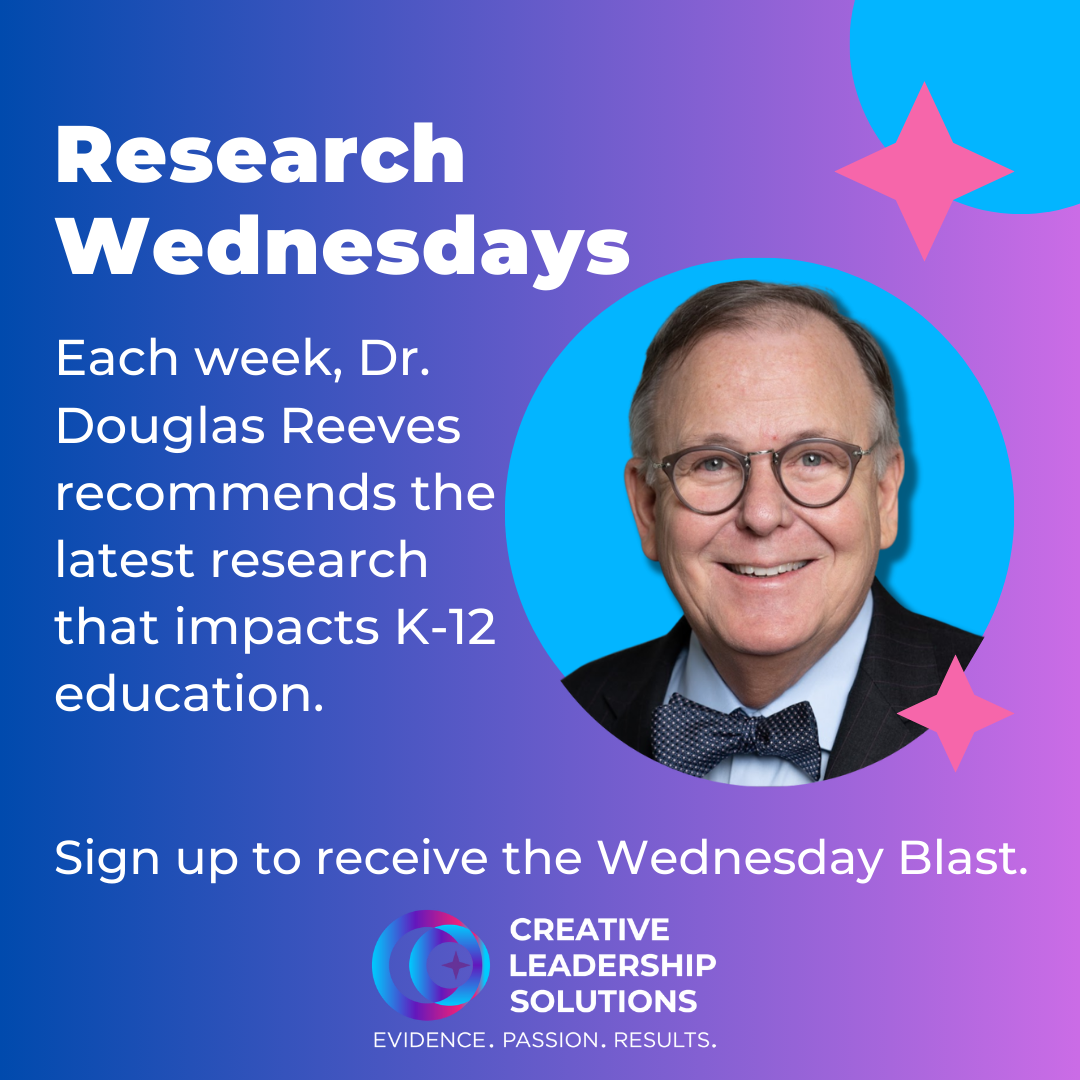
Research Wednesday |

May 29th, 2024


Every week, Dr. Douglas Reeves recommends the latest research that impacts K-12 Education. In this featured publication, Dr. Reeves discusses some key strategies for encouraging students to challenge themselves.

Read the publication here
Sign up to receive the Wednesday Blast

Learn More

Further watching and reading that emphasize people and practices over products

CASCD Webinar | Getting Grading Reform Unstuck

Schools around the nation have been attempting to implement changes in grading systems for many years. Most of these efforts have resulted in more talk than action. In this interactive webinar, participants will learn how to streamline grading reform, eliminate unnecessary and time-wasting arguments, and implement grading reforms that improve student achievement, attendance, and behavior.

Register Here

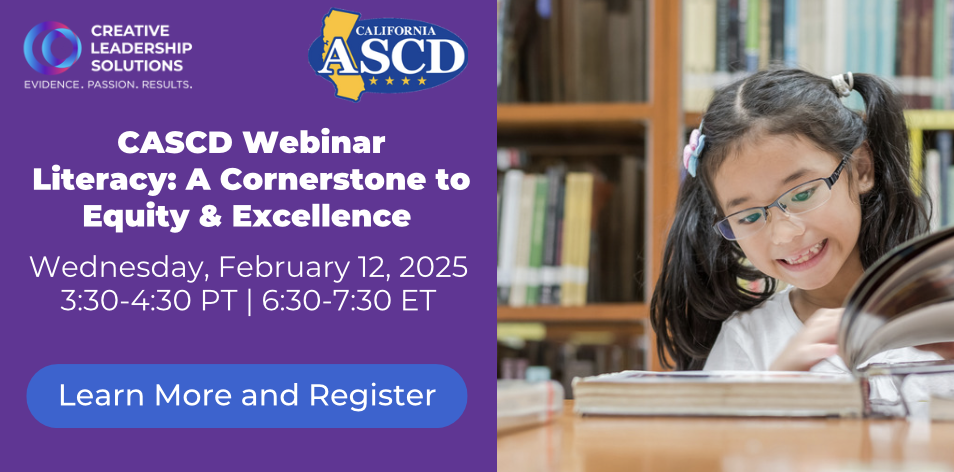
Literacy: A Cornerstone to Equity & Excellence will emphasize the critical role literacy plays in our children’s lives as well as our own. Participants will learn how kids learn to read and why what they read matters. We will explore how every adult in a school community can contribute to the literacy development for the young people in their lives.

Register Here

Click below to read the first chapter of Fearless Classrooms. Contact service@creativeleadership.net to pre-order copies for future book studies and receive a complimentary virtual author's talk with a bulk purchase.

Fearless Classrooms Chapter 1

Service Highlight

Just one of the many services we offer

Keynote

Fearless Classrooms: Building Resilience and Psychological Safety for Students, Staff, and Communities

Fearless Classrooms is an interactive seminar that will equip teachers, instructional coaches, and leaders at every level with the tools necessary to encourage and sustain the professional practices of the fearless classroom. Participants will have the opportunity to practice giving and receiving feedback based on realistic classroom scenarios. Participants will receive reproducible forms, checklists, rubrics, and other tools so that they can engage in a process of continuous improvement in their journey toward a fearless classroom. 

Contact us to request a proposal

CLS Associates understand that the right people make all the difference.

Find the right Associate for your school.

IN THE SPOTLIGHT

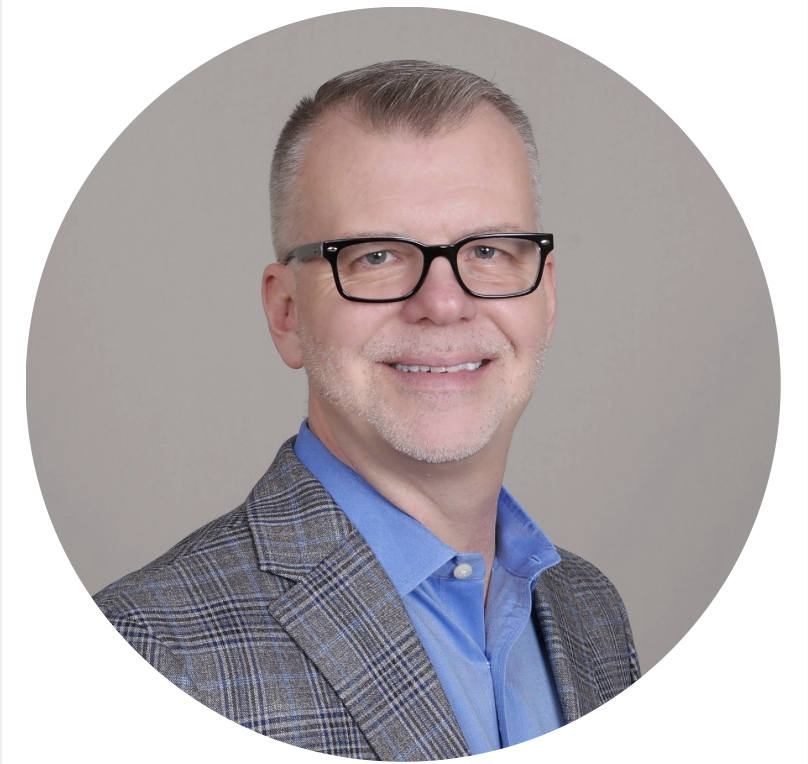
Kirk Dolson is in his 25th year of public school education. His teaching career began in Fulton County, Georgia as a high school English teacher. He then returned home to Northern Virginia and began teaching English in Loudoun County, Virginia. Mr. Dolson has since then served in administrative roles at both the middle and high school levels as dean, assistant principal, and principal, and, in addition, has also served in administrative roles at the district level. 


Currently he serves as an Executive Principal for high schools, in which he supervises and coaches principals and assistant principals across 13 high schools and education centers. He served on the Executive Board of the Virginia Association of Teachers of English (VATE) as was President of the association in 2013. He has presented at multiple local, state, national, and international conferences focusing on literacy, school improvement, grading and assessment, instruction, and professional learning community practices focusing on students’ success.  


Kirk serves as an adjunct faculty member at Shenandoah University preparing prospective teachers, and is currently serving as one of Cognia’s Virginia State Advisory Council members.

How can school leaders ensure that their classrooms are “Fearless”, especially for our multilingual students?

People do not learn when there is fear, and let’s face it, even the best teachers struggle to teach in fear. 


I led an amazing Title 1 high school in Northern Virginia for seven years - a majority of the students were Hispanic and over 35% were English Learners.  When I left the school, the staff was more focused and dedicated than ever on doing whatever it took to provide meaningful learning opportunities for ALL kids. When I began my leadership and turnaround journey in this school, teachers feared teaching multilingual learners because they did not want to be unsuccessful, and the multilingual students feared being in those classrooms because they were unwelcoming and inequitable. 


When you think about it, education itself is multilingual and we know that it is multifaceted.  However, the ironic truth is that many monolingual teachers fear teaching multilingual students, which is detrimental to student outcomes, school culture and climate.  Because the demographics of the high school I led was unique in our district, I had to lean on the elementary and middle school principal colleagues in my cluster for experience on improving classroom climate and instruction.  


In Fearless Classrooms, Dr. Douglas Reeves reminds us how much educators can glean from our Pre-K and Kindergarten classrooms, “where mistakes result in giggles rather than shame.”  I never liked a quiet classroom, even as an English teacher. I wanted my classroom to have the sound of organized chaos, where it was safe for students to create and connect with content, with one another, and with me as their teacher.  What I saw and heard as principal of this school was way too much “teacher talk” and not enough “student talk”.  Many traditional high school classrooms are not physically planned to foster student collaboration.  Recall your own eleventh grade English or Algebra 2 classrooms; I’m sure your mind’s eye sees rows of desks and a podium at the front.


In an effort to be revolutionary, I sent some of my core content teachers on field trips to observe our neighboring elementary teachers’ classrooms.  I did this for two main reasons - the demographics were the same, and the teachers were teaching kids and not just content.  I asked my high school teachers to notice how new content was introduced and  how the elementary teachers received feedback about students’ learning.  All of the teachers came back with the same message, “They were teaching in small groups a lot of the time.”


I purchased flexible seating, student and teacher desks on wheels, and used the mantra, “Say NO to the ROW” when I observed teachers teaching.  We began a school-wide implementation of personalized learning focusing on literacies (speaking, reading, writing, and listening) within content areas.  Teachers used stations (much like they observed in their elementary colleagues’ classes) for students to engage in new material in smaller groups, extending the opportunities for students to ask questions, take risks, and make mistakes in safer, more intimate settings.  Non-fiction writing was infused in all classes.  Additionally, in these smaller groups, bilingual students were able to assist their newcomer peers by explaining directions and procedures simultaneously assisting their monolingual teachers.  Teachers were then freed up to examine student work and provide feedback in English as the bilingual students acted as translator, at times.  Simply, teachers and students were all engaged in student learning, and no one was afraid.


Finally, many of these high school teachers began using simple, consistent classroom routines, such as entrance tickets and exit tickets at the beginning and end of every class, to check for student understanding and to collect important formative data on the quality of their own teaching.  In doing so, the learning of both students and teachers flourished because both were seeing progress and receiving constant feedback.  


It was nothing revolutionary, and slowly, the classrooms in my high school became “fearless”, where making mistakes became part of the learning process, and ALL students, especially the multilingual students, flourished in knowledge and not fear.


Webinar | Fearless Classrooms for Mulitlingual Learners

Fearlessness is essential to learning. A zero-risk environment is a zero-learning environment. In the fearless classroom, students can make mistakes, learn from those mistakes, and share their learning with others without fear of embarrassment. Students routinely take risks, express ideas, and accept constructive criticism without defensiveness.


Our services include remote and on-site coaching for building leaders and teachers seeking to refine their instructional practice to increase the achievement of students.

How are you supporting your leaders?


Everyone benefits from a coach and a thought partner with a different perspective. Creative Leadership Solutions offers on-site executive leadership coaching. To learn more, connect with us directly:

service@creativeleadership.net or 617-952-8542


Creative Leadership Solutions | Website

Facebook  X  LinkedIn  Instagram