2025-2026 Legislative Bulletin | | |
In this edition of the League's Legislative Bulletin, you'll find:
- Major Budget Action Supports Municipal Utility Projects
- Recently Introduced Legislation of Municipal Importance
- Hearings Tuesday on the Budget and Talent Recruitment
- Summary of the Federal Reconciliation Bill in Congress
- Agency Anecdotes on Planning Grants, the MOE, and More
| | |
Major Budget Action Supports Municipal Utility Projects
While preparing the League’s 2025-2026 Legislative Session Agenda and 2025-2027 State Budget Requests, one of our top priorities centered around increased funding for infrastructure. A major part of this priority was a request for a substantial increase for the Clean Water Fund Program and Safe Drinking Water Loan Program, collectively known as the Environmental Improvement Fund. Last week, our agenda was put into action with a major victory for municipalities across the state as that substantial increase was approved in committee.
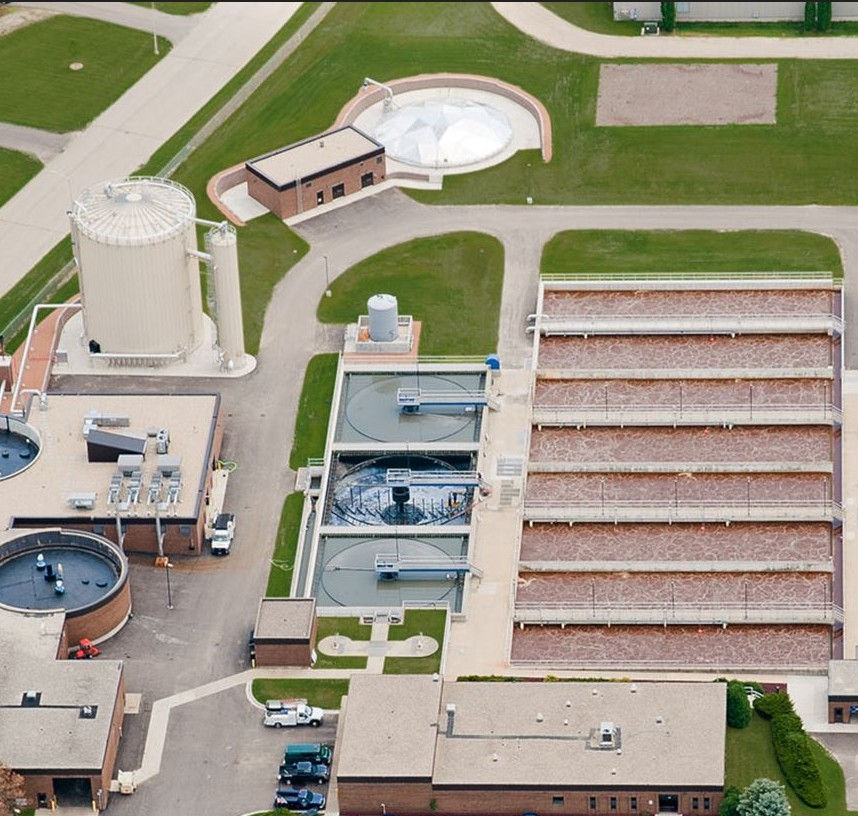
| | The Environmental Improvement Fund provides low-interest loans to water and wastewater utilities in municipalities of all sizes across the state for capital projects necessary to address aging infrastructure, growing communities, and regulatory compliance. Until Fiscal Year 2023-2024, an eligible applicant had never been denied funding in the 30+ year history of this program. However, due to an unanticipated surge in demand, $216.5 million in projects went unfunded over the past two years, necessitating this as a high priority for the League. | | | |
The League’s request was $725.9 million in revenue obligation bonding authority, compared to $46 million authorized in the last budget. This was a tall order, but after months of advocacy by the League and our coalition partners along with member contacts to their legislators regarding this need, last Thursday, the Joint Finance Committee approved $732,250,100 in revenue obligation bonding authority on a bipartisan 16-0 vote. We’re grateful for this unanimous action which promotes the interests of municipal taxpayers and ratepayers, economic development, public health, clean water, and Wisconsin’s local governments.
We’d like to thank the authors of budget motions calling for this increase, Representative Novak (R-Dodgeville) and Senator Wimberger (R-Oconto), and the co-signers of these motions, Representatives Kaufert (R-Neenah) and Franklin (R-De Pere). Additionally, thank you to the Co-Chairs, Senator Marklein (R-Spring Green) and Representative Born (R-Beaver Dam), along with Representative McGuire (D-Kenosha) who seconded Representative Born’s motion. Finally, thank you to the members of the Joint Finance Committee who approved the authorization on a 16-0 vote.
Toni Herkert, the League’s Government Affairs Director, issued a press release about this major budget action which can be read on the League’s website. Additionally, the League joined a coalition press release which may be read here. Finally, if you’re interested in learning more about these programs and their recent history, you can read Toni’s article in the March edition of The Municipality magazine starting on page five.
| | |
Recently Introduced Legislation of Municipal Importance
The following bills were recently introduced in the Wisconsin State Legislature and have been added to the list of those being monitored by the League. Unless otherwise indicated, no formal position has been taken on these proposals to date.
Senate Bill (SB) 310: Limitations on Local Emergency Power Proclamations - Sen. Tomczyk (R-Mosinee) and Reps. Jacobson (R-Mosinee) and Ortiz-Velez (D-Milwaukee) - In the event of an emergency, under current law, if the governing body of a local government is unable to promptly meet, the chief executive of that local government may exercise their emergency powers by proclamation until the governing body can meet. This legislation limits those proclamations to 60 days and defines who acts as the chief executive in different units of government, including allowing for persons to temporarily act as a chief executive. The League appreciates the authors working with us to limit the impact of this legislation.
SB 291: Childcare Expenses in the Business Development Tax Credit - Sen. Marklein (R-Spring Green) and Rep. Hurd (R-Withee) - 2023 Wisconsin Act 143, which the League supported, allows certain capital investments in childcare to be eligible for the Business Development Tax Credit. This legislation expands the tax credit to include an amount up to 15% of the business’s costs to provide childcare services for employees, including establishing and operating a childcare program for employees, purchasing slots on behalf of employees, reimbursement to employees for childcare expenses, and other similar investments.
SB 290: Reconsideration of Failed Ordinances and Resolutions - Sen. Jacque (R-New Franken) and Rep. Sortwell (R-Two Rivers) - This legislation requires that local governments may not prohibit the governing body from taking up an ordinance or resolution that is identical or substantially similar to an earlier ordinance or resolution that was taken up and voted on but not enacted or adopted if the later proposal is taken up at least two years after the earlier. The League worked with the authors of this proposal to limit its impact on municipal functions.
SB 285: Talent Recruitment Grants - Sen. Testin (R-Stevens Point) and Rep. Armstrong (R-Rice Lake) - This legislation creates a Talent Recruitment Grant Program to incentivize households outside of Wisconsin to relocate to municipalities in this state. Local governments and certain nonprofits will be eligible under this legislation to apply to the Wisconsin Economic Development Corporation by submitting a plan identifying estimated costs and economic impacts of their efforts to get households to relocate to their municipality. The applicant must match costs by 20% and may not receive more than $500,000 per year. Half of the award would be provided up front and half upon achieving 50% of its goal.
| | ⭐If you would like to contact your legislators on any bills mentioned in the Legislative Bulletin, you can find contact information for all legislators here. To find out which legislators represent your community, use the "Find Your Legislator" function on the right side of the page. | | |
Hearings Tuesday on the Budget and Talent Recruitment
After the second executive session was held last Thursday to craft the 2025-2027 State Budget, the Joint Finance Committee (JFC) will continue its work this Tuesday, June 10, at 1:00pm. JFC takes up each agency individually and adopts motions to incorporate individual provisions in the final budget which will be cumulatively voted on by each chamber of the Legislature.
On Tuesday, JFC has noticed the Department of Revenue, Department of Workforce Development, and Department of Agriculture, Trade and Consumer Protection, among other agencies to vote on this week. It is expected that JFC will meet again, likely multiple times, over the next two weeks as it continues its work on the 2025-2027 State Budget.
Also on Tuesday, both the Senate Committee on Transportation and Local Government and the Assembly Committee on Jobs and Economy will hold separate public hearings (Senate, Assembly) at noon to accept testimony on Senate Bill 285 and Assembly Bill 279 which creates a Talent Recruitment Grant Program. These grants, described in the section above, would allow municipalities to receive funding to attract out-of-state working-aged individuals and families to their communities.
| | |
Summary of Federal Reconciliation Bill
The League’s federal partner, the National League of Cities (NLC), has prepared a brief summary of the federal reconciliation bill known as “The One Big Beautiful Bill.” While the bill is still working its way through the process and may change before it reaches enactment, the article highlights ten things municipal leaders may want to know about the items included in the bill and the process for the bill to pass. To read about the reconciliation bill, visit NLC’s website.
| | |
Agency Anecdotes
Final Round of Innovation Planning Grants Awarded
Innovation Planning Grants, a creation of 2023 Wisconsin Act 12 (the historic shared revenue legislation), were available to local governments with populations under 5,000 to plan for the transfer of eligible services by hiring a consultant or funding internal staff work. Of the $3 million allocated, nearly the full allocation was exhausted with just about $2,000 remaining after 68 requests were funded over five award cycles.
More than half of all funded requests went to cities and villages, with additional awards to towns being utilized to explore shared or transferred services with neighboring cities and villages. With the Innovation Planning Grants funding distributed and award cycle closed, it’s now time to begin planning for the Innovation Fund Program. Set to launch in mid-July, $300 million is available to local governments who merge services and realize cost savings. More on the Innovation Grants will be discussed in an upcoming Legislative Bulletin.
MOE Webinar Recording Now Available
The last Legislative Bulletin included registration information for a webinar on Maintenance of Effort (MOE) requirements hosted by the Wisconsin Department of Revenue (DOR). A recording of the webinar is now posted on DOR's website. Remember, we’re just a week away from the June 15 deadline for those in charge of law enforcement, fire, and EMS to have their forms submitted to the municipal clerk and three weeks away from the July 1 deadline for clerks to submit their complete MOE report to DOR.
WEC Decision on Use of Ballot Machines
The Wisconsin Elections Commission (WEC), in response to a complaint filed with the body, recently ruled that municipalities under 7,500 in population are not required to use voting machines in every election. While at least one voting machine must be provided for accessibility to comply with federal Help America Vote Act requirements, paper ballots may be utilized even if voting machines were utilized in previous elections, per the WEC decision. The draft decision, approved on a 5-1 vote by the Commissioners, may be read on page 181 of their meeting packet.
WisDOT Local Program Symposium Webinar
If you missed the Wisconsin Department of Transportation’s (WisDOT) Statewide Local Program Symposium held last month, the webinar recording is available on YouTube. This webinar covered the basics of transportation funding and a myriad of updates relevant to these programs. In addition to the recording, presentation materials are now available on WisDOT’s website.
| | | | |