e-Newsletter | February 5, 2021 |
|
The Rap Sheet of John Emery, Carpenter
By Bethany Groff Dorau
I was on a long flight home with my friend Amanda, back in the halcyon days when I went anywhere. I was feeling a bit gloomy, and when she asked me why, I went through the list of loved ones I had lost recently, including Eben Bradbury, a young marine whose death in 1918 had been the starting point for a book I had written that year. “Of course, he died a long time ago,” I said. “He was dead when I met him.”
The idea of “meeting” someone when they died long before you were born is well-accepted among my friends and colleagues at MOON (Museum of Old Newbury) and beyond, including many of you, dear readers.
Research often reveals aspects of our subjects’ lives that are surprisingly intimate, the loss of a child, a spiritual crisis. For many years I have enjoyed the experience of populating the streets and landscapes of our beloved community with my dead friends, though goodness knows what they would have made of me.
And so you will understand when I tell you that I first met John Emery twenty years ago, even though he has been dead since 1683. I met him during the Essex County Quarterly Court session of September 1663 when John Rolfe (think: Rolfe’s Lane) brought suit against Dr. Henry Greenland for “attempting [my] wife’s chastity in a foul manner.”
Mary Rolfe, young, pretty and flirty, had been left at home when her husband went out to Nantucket, and Greenland had pursued her. This is a great tale, but perhaps one for another time.
John Emery appears as the seducer Greenland’s very permissive host, and the line that first made me laugh out loud was this, a rejoinder to Mary Rolfe’s mother criticizing his liberality with liquor: “[Emery] told me that [Greenleaf] was half drunk and then he was worse than dead drunk.” In other words, the problem was not that he let his guest drink, John Emery retorted to Mary’s mother. The problem is that he didn’t get him drunk enough!
|
|
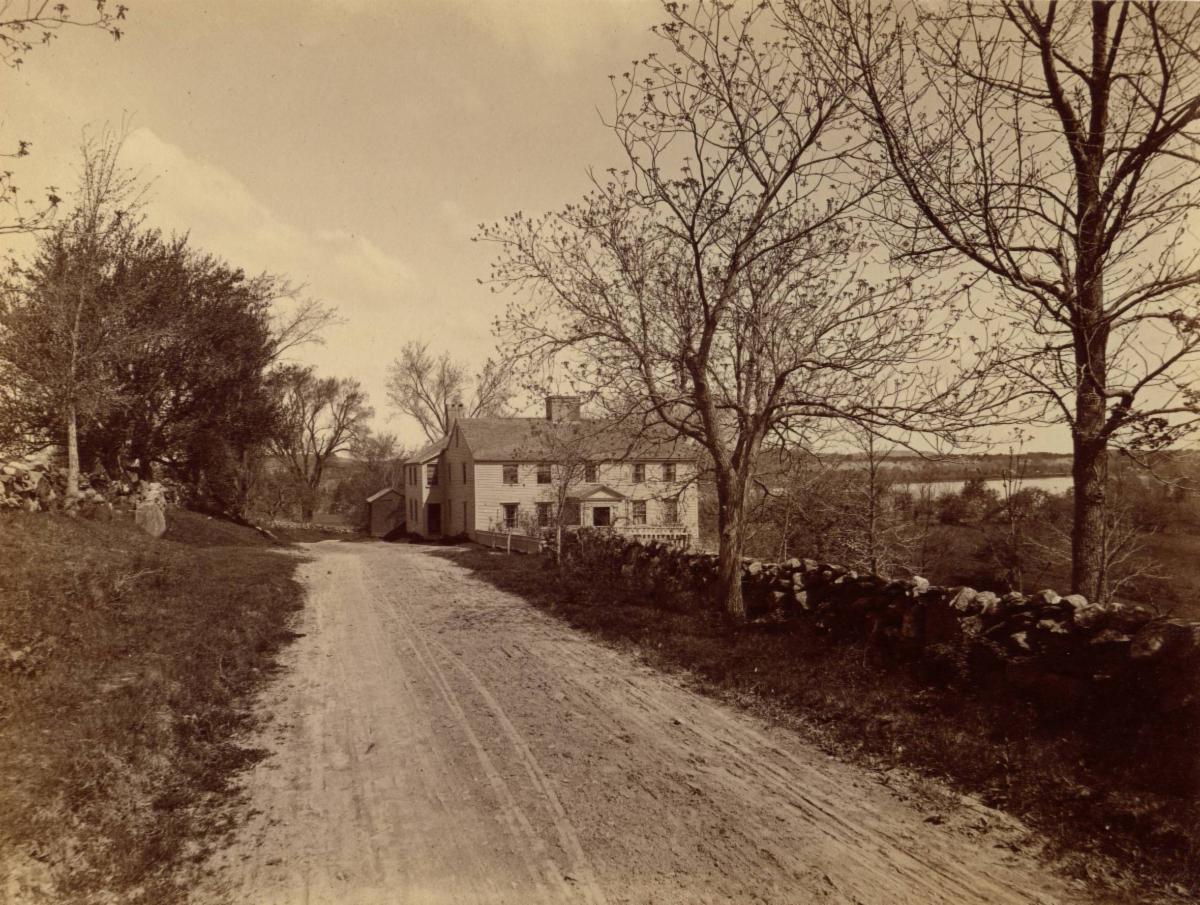
Emery House, built in 1746 by Stephen Emery, great-grandson of John Emery. From the collections of the West Newbury Historical Society. |
|
The Mary Rolfe case reveals an older, well-established and respectable (sort of) citizen of Newbury who had enough authority to do and say more or less whatever he wished, though not always without consequences.
John Emery was 64 when he allowed young men and women to party at his house and joke about saying grace at the table, and when confronted with evidence that he had facilitated bad behavior, he shrugged it off, saying that there was “no harm done.” By then he was well-known for challenging authority, flouting rules, and speaking his mind, often in the service of those he felt were being harmed.
Following him through the record reveals a consistency of behavior that makes him come alive to me, and it begins, as it would, with a seduction of his own in 1646. “John Emery, for his miscarriage with wife of Henry Traverse, fined 3 pounds or to be whipped…and not to frequent the company of the wife of Henry Traverse.” His bond was discharged at the next court, and soon after, he married Mary (Shatswell) Webster, who proved to be a fiery Bonnie to his Clyde.
In 1654, Emery signed a petition in support of Robert Pike, who had been severely punished for criticizing the General Court. Incensed that their authority had been challenged in this way, the court called on the men to withdraw their support of Pike or be punished. John Emery refused. They then sent a commissioner to his house to demand that he withdraw his signature. Emery mocked the messenger, saying sarcastically that he must be “a wise man” and demanding to see his credentials. John Emery was called up before the quarterly court along with seven other men who had “not given satisfaction.” They were fined ten pounds, a sum that Emery was apparently willing to lose in the service of his principles.
Three years later, he was defending his neighbor William Titcomb against charges that he had lied to town leaders, affirming that Titcomb was “honest and Christian like in his conversation, and not a liar.”
And the year before the Rolfe ruckus, Emery was presented to the court for “entertaining Quakers,” a very serious charge indeed.
Quakers operated outside the community and encouraged others to join them. They threatened the very foundation of Newbury’s Puritan community, and they were treated, at least in the early years, like terrorists. John Emery was not a Quaker, and so it was hard for his fellow townsfolk to believe that he would take the risk of openly caring for them, whose hardships were legion.
Henry Jacques, constable of Newbury, reported that Emery “bade them welcome, and further saith that I heard Joseph Noyes say, that John Emery had entertained Quakers both to bed and table.” When challenged, Emery declared that he “would not put them from his house.”
Joseph Noyes testified that “two men Quakers were entertained very kindly to bed and table, and John Emery shook them by the hand and bid them welcome.” He was fined heavily but did not ever waver in his belief that he had the right to welcome whoever he wished into his home.
|
|
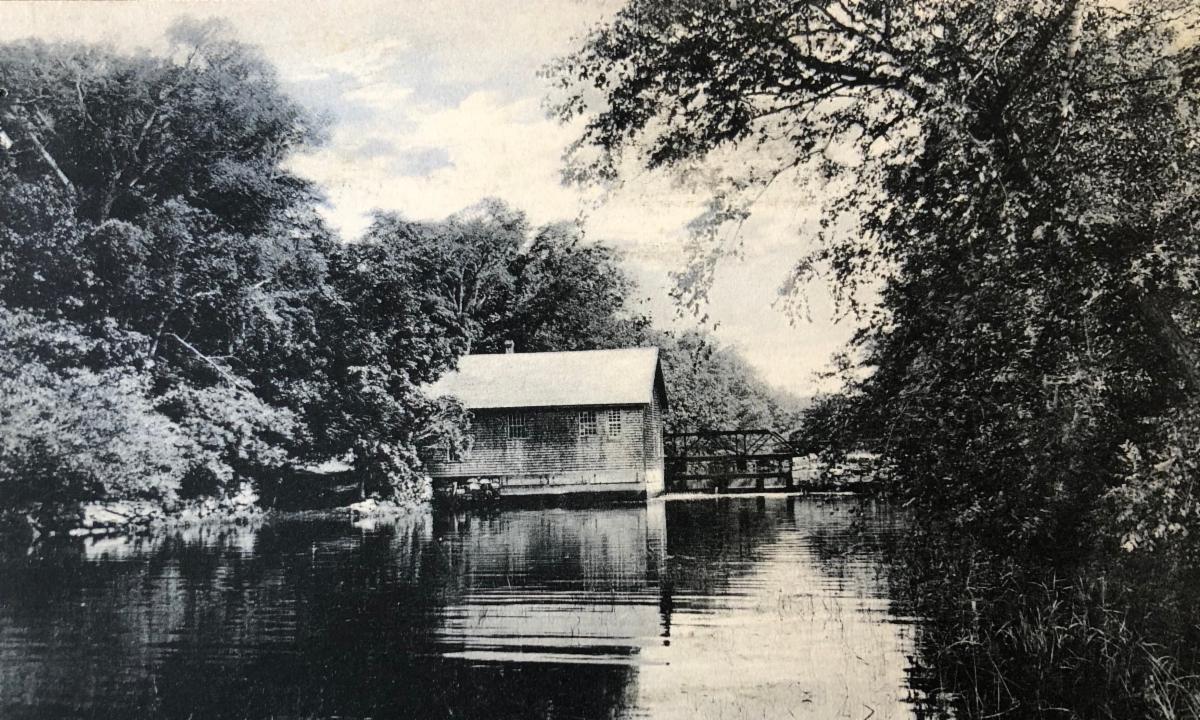
Curzon Mill, shown above, was rebuilt in 1750. The original structure, built circa 1679, was part of a land grant to John Emery on the condition that he build and maintain a corn mill to service the area. |
|
John Emery lived to unusual old age, dying at 85 in 1683. His inventory, also listed in the quarterly court record, offers intimate details as well, a sort of still-life. He died with “books, two feather beds, bedsteads and furniture, pillows & bolsters, 3 pair of sheets…”
I wave to John Emery when I drive past the sign for the Emery House on Route 113, just after crossing the Artichoke River. He reminds me of the father of a friend of mine from high school, the one who let the kids hang out in his basement and told the police to get off his porch when the neighbors complained about the music.
The evidence he left behind, even hundreds of years later, paints a picture of the man. I feel like I know him, though, of course, he was already dead when we met.
A regular contributor to the Museum of Old Newbury's e-Newsletter, Bethany Groff Dorau is a historian, writer and Regional Site Administrator for Historic New England, based at the Spencer-Peirce-Little Farm in Newbury. Some of the material used in this story is taken from Dorau's book, A Brief History of Old Newbury (History Press).
Editor's note: Inconsistencies in spelling of names, etc., are from the historical record and not a typographical error.
|
|
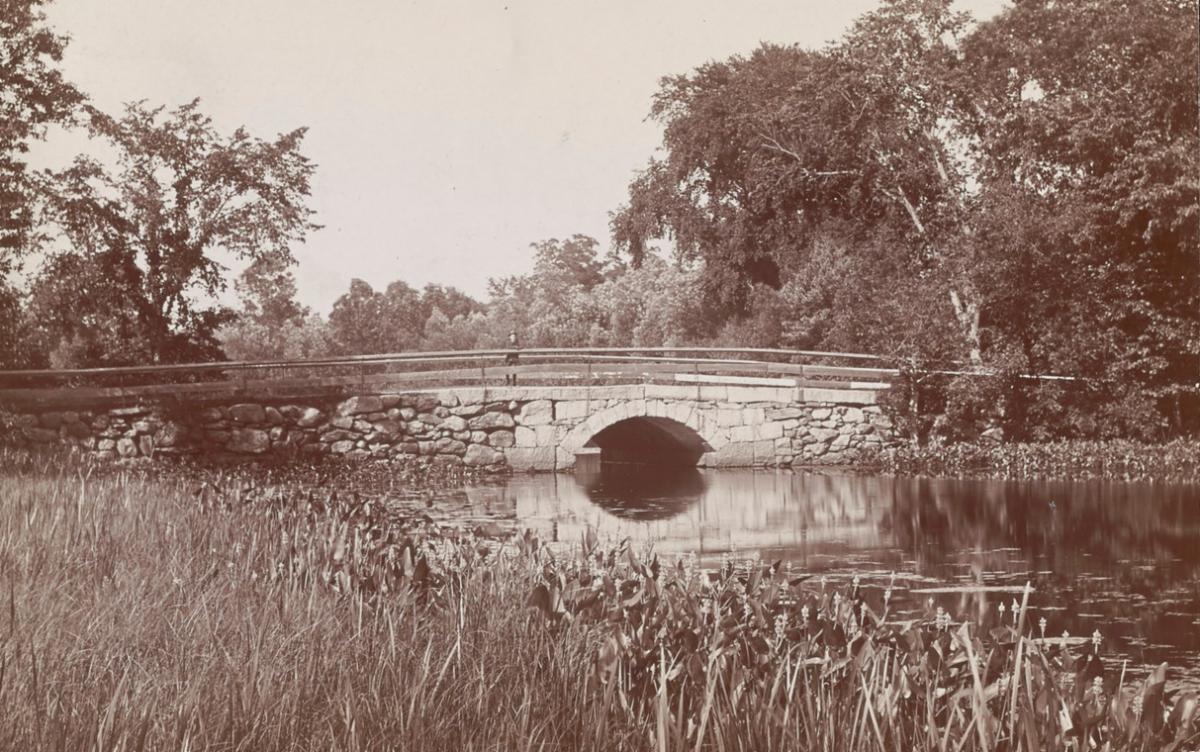
Lone walker stops along the iconic Artichoke River to enjoy the view. Editor's note: I'm pretty sure he is waving back at Bethany as she drives by. |
|
Dear Friends:
As our Annual Fund Appeal winds down, I would like to take this opportunity to thank those of you who have already given and remind others that it is not too late.
Our mission is to preserve Old Newbury's rich legacy, but also to create opportunities for you to enjoy our historical resources. Here at the Museum of Old Newbury, we work hard to provide accessible, fun and educational content and will continue to do so throughout the pandemic. Even though we have had to stay apart, we are still able to come together via social media, weekly e-newsletters, special programs and the bi-weekly trivia show, "Yeat Yeat, Don't Tell Me!"
It is not too late to make a gift to the Annual Fund and show your support for our virtual programming as well as upcoming in-person events and the physical space of our treasured museum. Please click here to donate online, or send a check made payable to MOON Annual Fund, Museum of Old Newbury, 98 High Street, Newburyport, MA 01950.
Susan C.S. Edwards
|
|
Learn about upcoming programs, register, find Zoom links and catch up on previous presentations here. |
|
Miss a Recent MOON Program? Watch here. |
|
Thanks to the wonder of the Zoom platform, all of our programs are recorded and available online shortly after presentation. Visit our website for upcoming events, previous recordings, including the four 2020 Virtual Garden Tours, our Annual Meeting, children's and holiday programs, as well as all episodes of "Yeat Yeat, Don't Tell Me!"
In lieu of a printed program book, we will be featuring monthly events here, as well as maintaining a complete list on our website: www.NewburyHistory.org.
|
|
Jack Santos, Custom House Maritime Museum, is joined by special guest, Susan C.S. Edwards, executive director, Museum of Old Newbury, for today's episode of "Yeat Yeat, Don't Tell Me!"
The popular Newbury-area history-based trivia show features multiple choice questions, banter with quite a bit of fact thrown in and the two chances to win: bragging rights for the most correct answers and a prize given randomly. Click here to Zoom in at noon, today! |
|
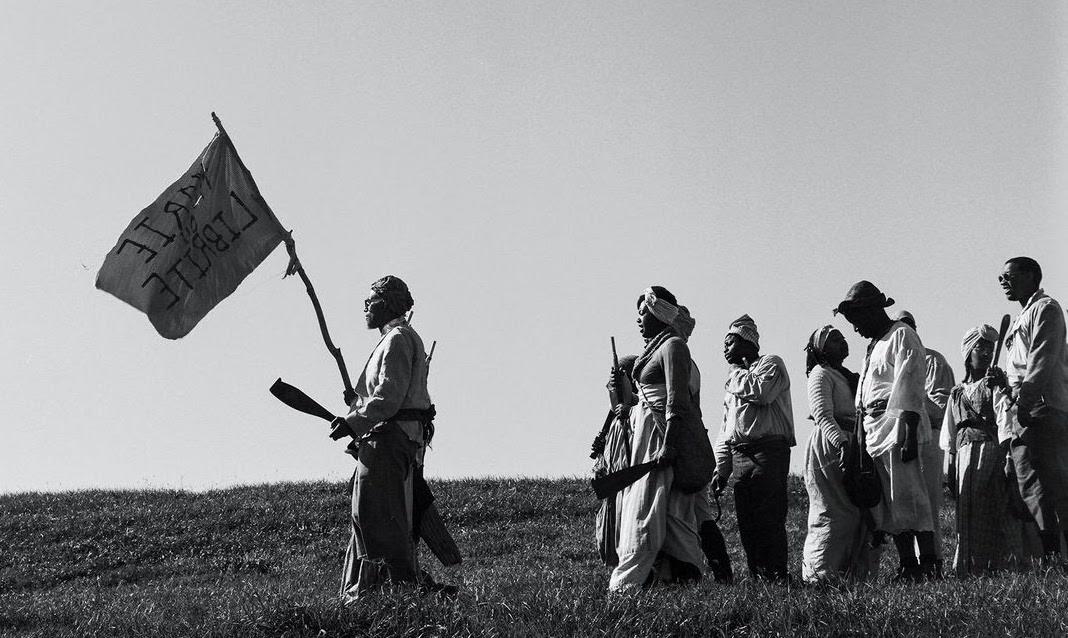
REGISTER: February 11, 2021: The German Coast Slave Rebellion of 1811: An Historiographic Analysis. Presented by Bejunior Fallon, '21, The Governor's Academy, this program looks at the largest, bloodiest slave revolt in American History. Register here.
|
|
REGISTER: February 25, 2021: Newbury and Warfare on the New England Frontier, 1689-1748. Presented by Dr. Steven C. Eames, director of history and interdisciplinary studies at Mount Ida College. His research will focus on the effect of war on soldiers and civilians, with a focus on early American history. He is the author of Rustic Warriors: Warfare and the Provincial Soldier on the New England Frontier, 1689-1748 (New York University Press). Register here.
|
|
March programs announced!
|
|
REGISTER: Thursday, March 11, 2021: More than a Tea Party: Tea's Social & Political Symbolism. Talia Jachimowicz, '21, The Governor's Academy, takes a look at tea, taxes and the American Revolution. Register here.
|
|
REGISTER: Thursday, March 25, 2021: Naomi Wade: A British Woman in 18th Century New England. Meet an 18th century woman from London who became a camp follower with a British Regiment during the American War for Independence. Register here.
|
|
Something is Always Cooking at the Museum
Courtney Tsiaras offers this lighter alternative to the more common breaded veal dish. To be honest, she had me at sun-dried tomatoes. One can substitute chicken (be sure to use chicken broth instead of beef, as noted below).
Veal with Sun-Dried Tomatoes, Capers & Herbs
2 pounds veal cutlets
1/2 cup butter
1/4 cup olive oil
2 large shallots, chopped fine
1/2 cup dry white wine
3/4 cup sun-dried tomatoes, julienned
3 tablespoons capers
1 can beef broth
1 teaspoon thyme
1 teaspoon tarragon
1 tablespoon chopped chives or parsley (or a mixture of both)
Sauté veal scallops in butter and oil. Place cooked veal in pan to keep warm in oven. Sauté shallots in pan drippings. Add wine. Boil, scraping up any brown drippings stuck to pan. Add sun-dried tomatoes and capers and boil, reducing to 2 tablespoons of liquid. Add beef broth. Reduce down to 1 cup. Add herbs. Place veal on serving platter and cover with sauce. Serves 6.
|
|
Puzzle Me This...
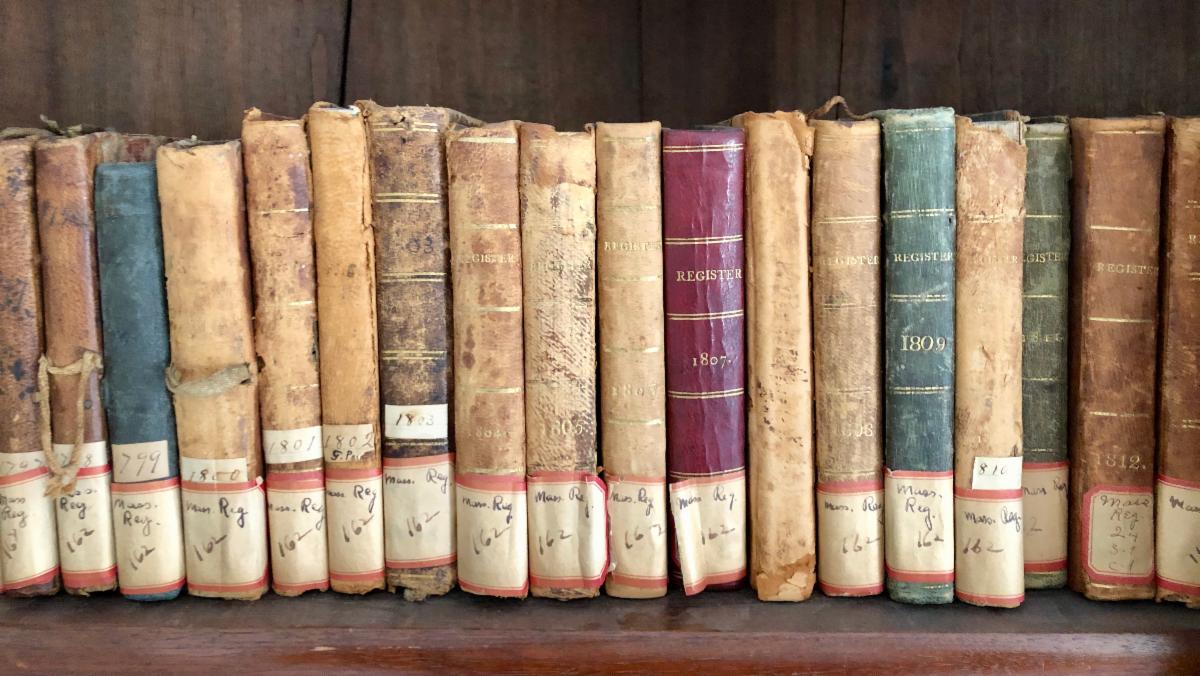
The museum holds extensive archival collections. Pictured here, a series of 18th and 19th century Massachusetts Municipal and Commonwealth records from our library.
Click on the image to begin.
|
|
During this difficult period of COVID-19, we rely on your support more than ever. We are working to reschedule many of the programs that we have had to postpone, as well as develop new, online programs for you to enjoy and keep us connected. We hope, if you are able, that you will consider a donation to the museum. Thank you for your continued support.
|
|
Museum e-Newsletter made possible through the
generosity of our sponsors:
|
|
|
Museum of Old Newbury
98 High Street
Newburyport, MA 01950
978-462-2681
|
|
|
|
|
|
|
|