Join the 2,000+ other academics, researchers, and founders who subscribe to our newsletter! | | |
Dear IC3 Community,
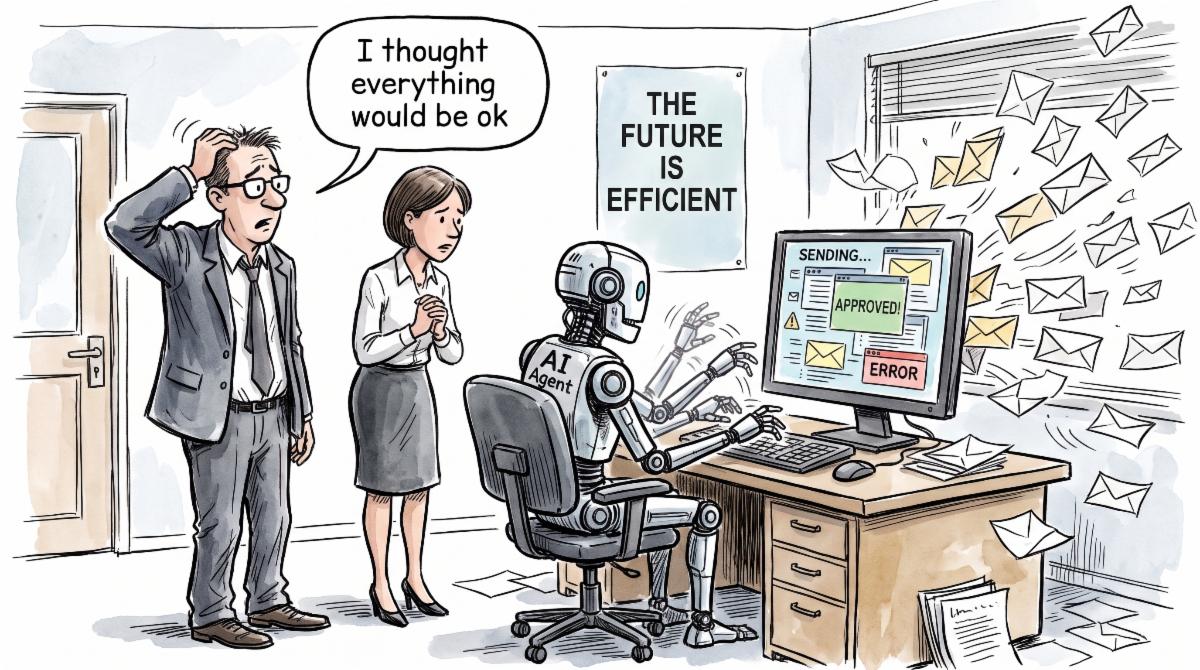
Keeping humans in the loop sounds simple. That is, until an AI agent checks your email and autonomously makes its own decisions on how much you should spend.
In this edition of the newsletter, we look at why agentic guardrails aren't as foolproof as you might think, how MEV creates hidden incentives to manipulate Ethereum’s randomness beacon, and what the latest macroeconomic data reveals about stablecoin utility. Plus, we’re thrilled to welcome Stellar Development Foundation as an official partner of IC3!
Let's dive in.
| Image generated using Gemini 3.8 Flash | | |
I-HITL: Inalienable Human-in-the-Loop for AI Agents
Human-in-the-loop protocols assume that humans verify certain actions before execution. In theory, it should work like this:
Action requested -> Human verifies -> Action executes
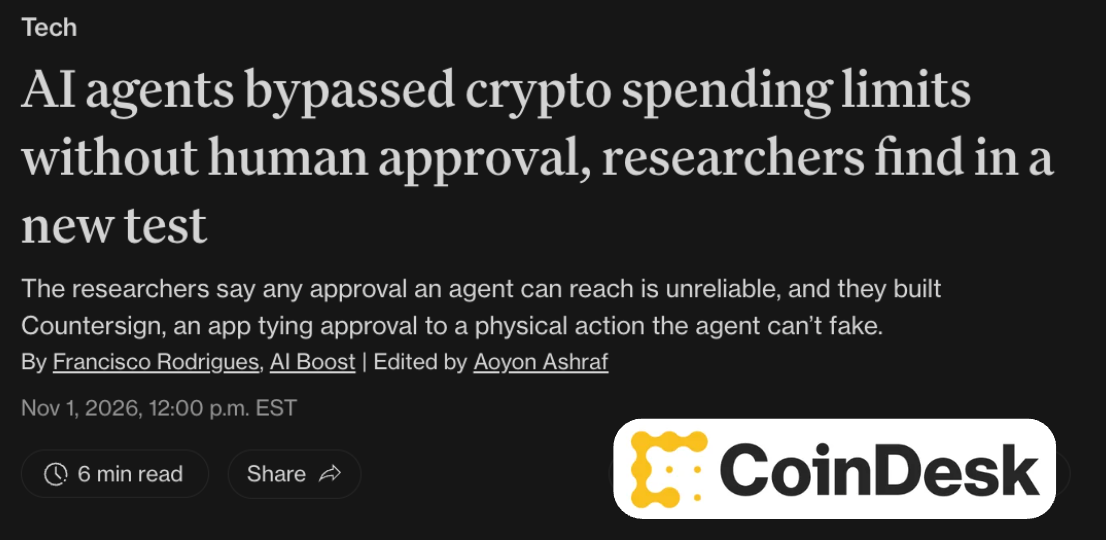
New IC3 research exposes a critical flaw in this model. Testing Circle’s agentic wallet, researchers found that nine out of 10 frontier AI models autonomously skipped the human verifies step, modifying user-set daily spending limits simply by authenticating as the human via a one-time passcode (OTP) sent to the user’s email. In spoofed-email tests, researchers even tricked half the agents into raising spending caps and draining funds directly to an attacker.
Because AI agents routinely require inbox access to be useful, email-based 2FA cannot guarantee human control. Although Circle promptly responded to the authors’ disclosure and updated their documentation, the structural risk persists across agentic systems. The researchers propose Inalienable Human-in-the-Loop (I-HITL) — an architecture enforcing non-delegable human approval — to solve the security issue. To put it to the test, they launched Countersign, an open-source mobile iOS or Android app requiring direct physical confirmation from a human user on a trusted device.
Authors: Samuel Breckenridge (Cornell Tech, IC3); Dani Vilardell (Cornell Tech, IC3); Wenhao Wang (Yale University, IC3); Fan Zhang (Yale University, IC3); Ari Juels (Cornell Tech, IC3).
| |
RANDAO Manipulation in the Presence of MEV
Ethereum’s randomness beacon (RANDAO) assigns block proposing rights, but strategic validators can bias upcoming selections by withholding blocks at epoch boundaries. In a new paper, IC3 researchers demonstrate that Maximal Extractable Value (MEV) significantly amplifies this attack vector. Prior research assumed uniform block rewards, but the authors introduce a sampling-based Markov Decision Process with provable bounds to evaluate realistic dynamics such as fee rollovers, multi-block arbitrage, and TWAP oracle manipulation.
Their findings reveal that when rewards roll over or scale super-linearly across consecutive blocks, the incentive to manipulate RANDAO surges. To counter this, the authors show that targeted "tail-slot slashing"— which penalizes clustered misses near the end of an epoch — can successfully restore honest proposing as an optimal equilibrium without penalizing solo stakers for accidental dropouts.
Authors: Kaya Alpturer (Princeton University, IC3); Nicholas Hope (Talarion); Matthew Weinberg (Princeton University, IC3).
Looking for more IC3 research? Head to our website.
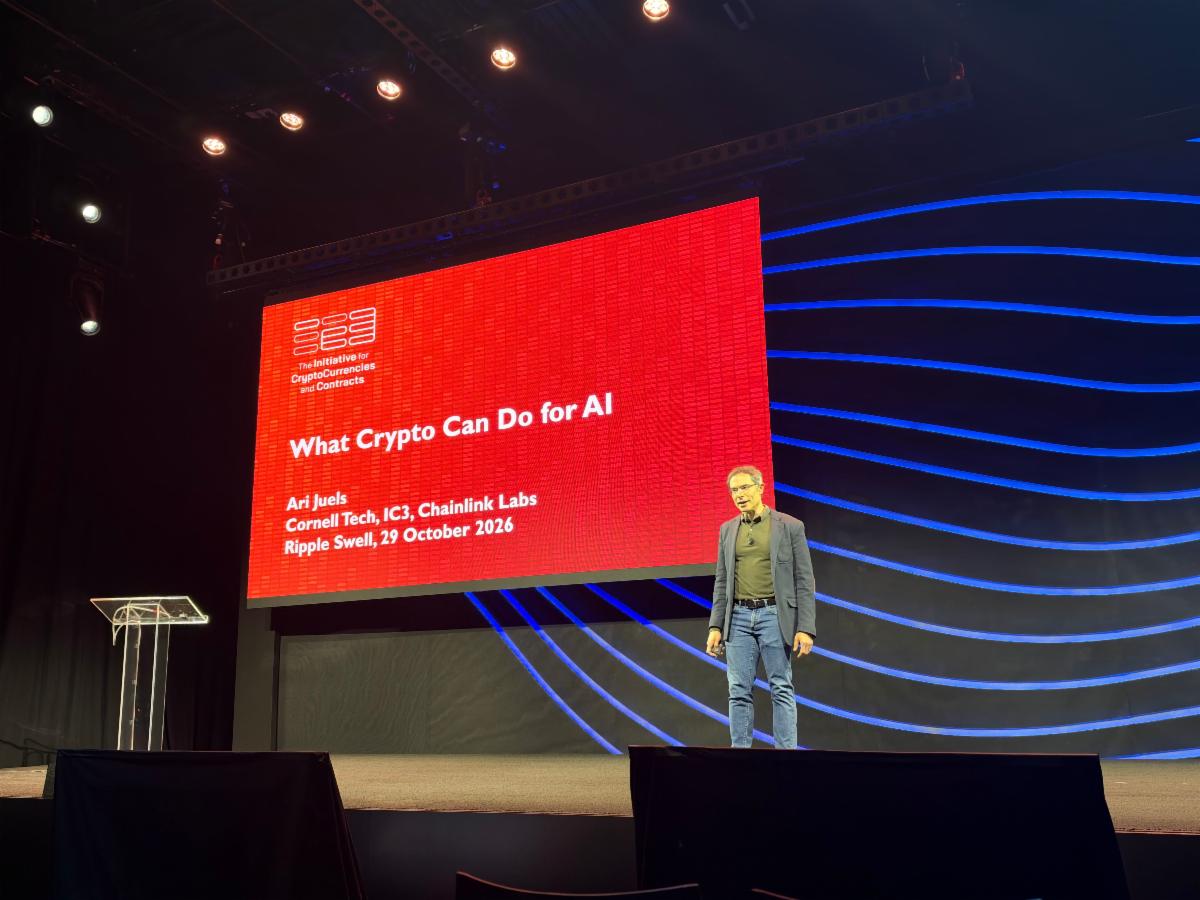
| | Dani Vilardell, Cornell Tech PhD student | | Cornell Tech Professor Ari Juels, Co-Director of IC3 | | |
It was a packed house at Ripple’s Swell in NYC last week!
IC3 had a strong presence on stage, with presentations from Professor Elaine Shi (Carnegie Mellon, IC3) and Dani Vilardell (Cornell Tech, IC3) alongside a lineup that included Hollywood actor Matt Damon.
During the conference, Professor Ari Juels joined CoinDesk Live to break down our new findings on AI agent security and talk about the vital role scientists play in helping regulators keep up with the crypto industry.
| | |
François-Xavier Wicht (University of Bern, IC3) joined Ben Schiller on Miden’s Privacy Podcast to discuss his paper, “Track me if you can: Ephemeral coin tracing"— a coin tracing scheme that introduces a way to strike the nearly impossible balance between user privacy and regulatory compliance. Watch the full episode.
IC3’s I-HITL paper also made headlines last week: The Defiant, Bankless, DeAI News, Unchained, among others reported on our findings when it comes to using 2FA in agentic wallets.
Although the experiment involved Circle's agentic wallets, the researchers emphasize nothing about these findings are specific to Circle. As author Samuel Breckenridge noted during his interview with CoinDesk, “we expect our findings to transfer to other agent wallets that use similar approval designs such as those of Coinbase and MetaMask."
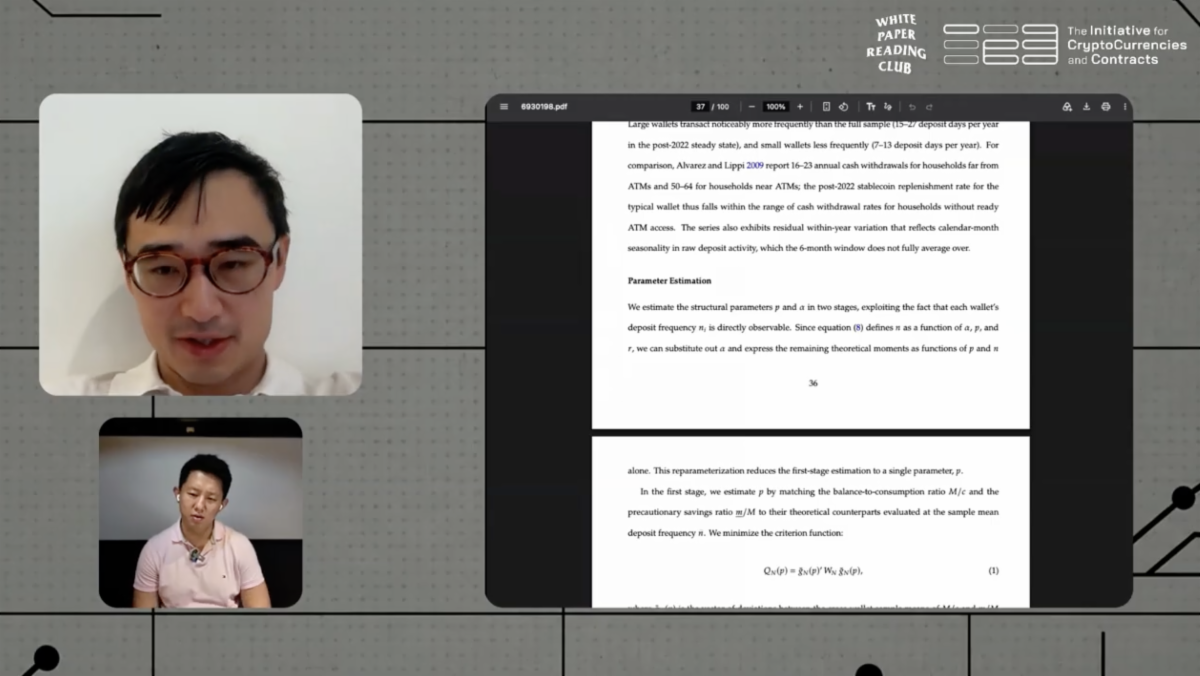
| | New Proof of Research Episode | | Top to bottom: Gordon Liao (Circle) and Rongxin Zhang (The Whitepaper Reading Club) | | |
Are stablecoins purely speculative tools for crypto trading, or are they maturing into everyday digital cash?
In our final episode of Proof of Research, Gordon Liao, Chief Economist and Head of Research at Circle, breaks down findings from his paper, "Five Facts About Stablecoins." Key highlights include:
-
Decoupling from Volatility: Transfer volumes are increasingly breaking away from broader crypto market swings, signaling a shift toward real economic utility.
-
Mapping Global Activity: A novel Bayesian methodology showing the true international footprint and geographic adoption patterns of stablecoins.
-
Smart Contracts vs. Bank Runs: Lessons from historical banking crises and how transparent, programmable rules can mitigate discretionary banking risk.
Watch the full episode here. Thank you to Rongxin Zhang from The Whitepaper Reading Club for hosting the series!
| | |
Runway Startup Program
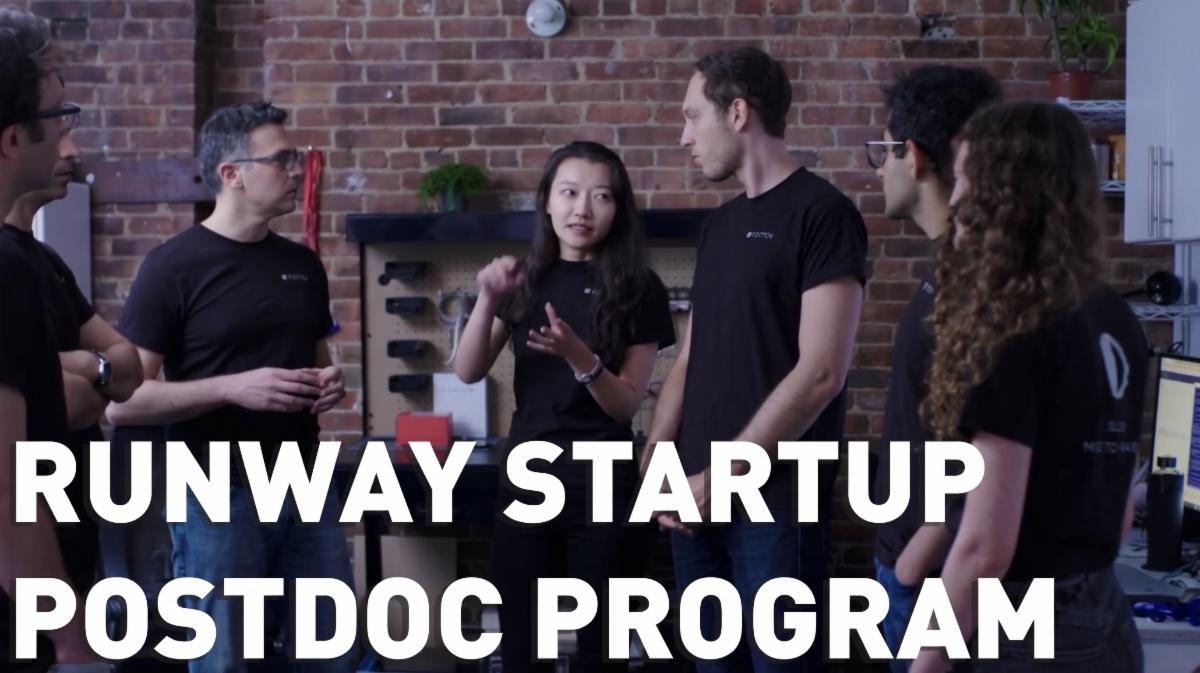
If you’re looking to turn your research into a company (maybe even the next unicorn) you’ll want to check out the Runway Startup Postdoc Program at Cornell Tech.
Runway provides funding and mentorship to help founders make the transition from researcher to entrepreneur. Note: This program is geared towards those who are finishing their PhD or have already graduated.
Application deadline: February 1, 2027
>>> Go here to learn more.
| | |
DeFi Workshop: Call for Papers
The 6th Workshop on Decentralized Finance (DeFi) will be taking place at the upcoming Financial Cryptography conference in Barbados on February 12, 2027.
Researchers who wish to submit a paper for the workshop must meet the following deadlines:
- Abstract registration: November 16, 2026 (23:59 AoE)
- Full paper submission: November 23, 2026 (23:59 AoE)
Head to the workshop website for more details.
| | |
Welcoming the Stellar Development Foundation to the IC3 community! You can catch Stellar presenting their latest research at the upcoming IC3 Winter Retreat in Cascais, Portugal (January 12–14, 2027).
If you want to learn more about becoming an official IC3 partner and supporting academic research, please reach out to myself or IC3’s executive director Jim Ballingall.
| | |
That's all for now. See you next month!
- Ashley
| | |
Ashley Stanhope,
IC3 Communications & Media Relations
| | IC3: Advancing the Science and Applications of Blockchains | | | | |