Bright Spot
 

BRIGHT SPOTS


Bethany House, a nonprofit that serves people experiencing homelessness in Cincinnati, is opening an on-site child care center to help provide consistent care so that parents can work.


QUOTABLE & NOTABLE

“Ohio’s preschool system is improving, but it remains uneven. Unlike K–12 education, preschool does not receive guaranteed per-pupil funding. Access often depends on grants, capped enrollment slots, and a patchwork of short-term funding sources. As state leaders debate education priorities and funding levels, early childhood learning should remain central to the conversation.”

Who:

Rebecca Thompson

Where:

“Planting the seeds with Ohio preschoolers ready to grow” — opinion piece published on Cleveland.com


FACT OF THE WEEK

 
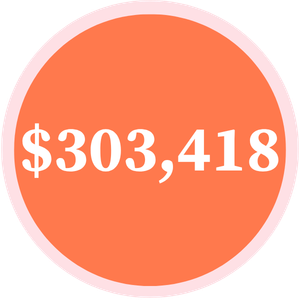
$303418

Financial services marketplace LendingTree quantified the average cost of raising a child from birth to 18 in 2026 in the U.S. at a record $303,000. This is a significant jump in cost from even a few years ago (a 28% increase since 2023’s analysis). As ABC News reports, “For parents, this is not just a statistic. It is the quiet recalculating at the grocery store, the pause before signing up for another activity, the constant reshuffling of what fits into the monthly budget.” The analysis breaks down costs by states and expenditure area, with an interactive tool enabling cross-state comparisons and rankings by category.


CRANE IN THE NEWS/NEW FROM CRANE

A new research brief from Crane highlights a study from Ohio State researchers on supporting workforce retention among early educators.

Crane faculty associate Dr. Arya Ansari spoke with Spectrum News 1 about chronic absenteeism as part of a story on Newark High School’s student-run coffee shop that acts as a creative solution to motivate students to get to school on time.

Check out the Schoenbaum and Crane Centers’ 2025 Impact Report, which describes our collective contributions to early childhood research, practice, and policy last year.


BEYOND THE BUCKEYE STATE

Indiana Gov. Mike Braun proposed a transfer of $200 million from the state’s general fund to provide child care vouchers for almost 14,000 more children. The Hoosier State currently has a significant waitlist for families in need of child care.

Last week, the National Institute for Early Education Research (NIEER) released its 2025 State of Preschool Yearbook. Georgia is the first state with a universal state preschool program to meet all ten of NIEER’s quality benchmarks for state-funded preschool. Ohio continues to meet five of the NIEER quality indicators and ranked 32 in the nation for state-resource spending per child enrolled (note that these rankings only include Ohio’s spending via the state Early Childhood Education Grant program, and does not include state spending on Publicly Funded Child Care and Head Start).


WHAT WE’RE READING

The National Collaborative for Infant and Toddlers (NCIT) created a toolkit sharing research-based communication strategies for advocates to highlight the importance of early childhood and increase support among policy makers. NCIT hosted a webinar outlining best practices for using the toolkit.

The American Lung Association (ALA) released the 27th annual “State of the Air” report and identified the Columbus-Marion-Zanesville metro area as ranking 110th among U.S. cities (defined in the report as Metropolitan Statistical Areas) in ozone pollution (smog), and 34th in spikes of particle pollution (soot). The report emphasizes that infants, children, and elderly populations are most at risk for health concerns related to pollution. For children, this could mean preterm birth, severe asthma attacks, and delays in cognitive development. Advocates from the ALA call on Ohio policymakers to prioritize improving air quality for the safety of all citizens.


RESEARCH ROUNDUP

A new study published in the journal Nature Communications by researchers at the University of Maryland quantified investments in children (birth to age 18), examining trends by subgroups (i.e., sex, age, family income, and race/ethnicity) and by investment type. The researchers used nationally representative data from 10 surveys over a 13-year period (2010 to 2023), capturing a wide range of public, private, and individual family time investments in areas including child care, education (both formal and informal), clothing and material resources, housing, health and nutrition, and transportation. Some of these domains were heavily driven by parent/family time, which was converted into units of time (hours, minutes) over a year — with average wage per hour calculated by profession (e.g., teacher, coach, tutor) but given a “generalist” wage if the time expenditure was by a parent or family member. They observed an average investment across children from birth to age 18 of just over half a million dollars ($502,152). The largest investment domains were informal educational experiences (representing 23% of the average investment total), nutrition (22%), housing (16%), and formal education (15%). Informal educational experiences included family time-investments on activities like reading, telling stories, doing crafts, or experiences like going to the zoo; formal education encompassed expenditures on schooling, whether public or private. Child care was among the smallest three observed investments as a proportion of the total, at less than 5%, but the researchers only included investments in this area that were an outright expenditure — i.e., when families pay or use a subsidy for center-based or home-based care rather than provide it themselves. The study authors excluded the time investment of child care provided by relatives, noting it “is likely duplicative with informal educational experiences” facilitated by families.


Overall, the research findings highlight important inequities and the time periods they are most pronounced. The gap between children from the top household income quartile and bottom quartile amounted to $86,000, with gaps also observed between racial subgroups. The investment gap was most significant during early childhood (birth to age 5), with children from high-income households and white children receiving substantially more investments, and with formal schooling around age 5 having an equalizing effect among different groups of children. (However, the impact of those early childhood investment gaps likely persists at school age and throughout K-12.) Lead study author Dr. David Blazar encourages that investments for children be considered as a “bundle,” noting “it’s not just about housing, it’s not just about early childhood. It’s about the investment we make altogether.”


This edition was written by Jamie O’Leary and Janelle Williamson.

If you like this newsletter, forward to a friend! Subscribe here.


crane.osu.edu

X  LinkedIn