AIVRTTAC Updates and Announcements | |
Medicaid Community Engagement Requirements Resource
PRESS RELEASE: CMS Approves Traditional Healing Waivers in Utah and Maine, Inclusion of Utah Urban Indian Organizations
Reducing Burnout in Social Services - Case Amplify Free Webinar (Oct 20th)
Finds Their Way: Nurturing Resilience within Communities for Native Youth Transition (Oct 28th)
Hidden Harms: Recognizing and Responding to Brain Injury in Intimate Partner Violence (Oct 29th)
2026 CANAR Annual Conference Call for Presentations (Oct 30th)
U.S. Census Bureau Consultation Summary and Resources (Nov 2nd)
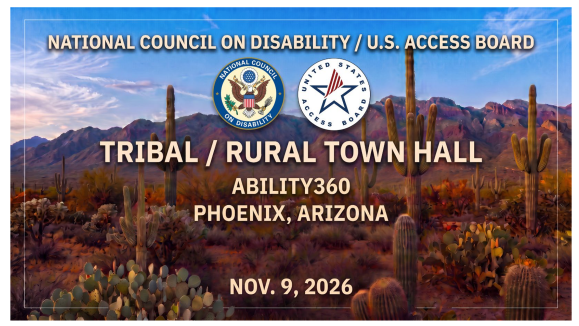
National Council on Disability and U.S. Access Board Tribal and Rural Community Town Hall (Nov 9th)
NSEN Kickoff: Key Components of Successful Self-Employment Initiatives (Nov 10th)
| |
Medicaid Community Engagement Requirements Resource
Under Medicaid community engagement requirements, some beneficiaries must take part in qualifying activities like work, school, job training, or community service, or meet the criteria for an exemption, to keep their coverage.
At the State of the States in Brain Injury Conference, the National Association of State Head Injury Administrators (NASHIA) released a new resource to help states and partners account for brain injury as they implement these requirements. It outlines considerations for those with brain injury, recognizing that it can affect memory, communication, organization, behavior, and the ability to navigate complex systems.
NASHIA encourages partners to utilize this resource and to reach out to Jill Ferrington (jferrington@nashia.org) or Zaida Ricker (zricker@nashia.org) on the NASHIA team with any questions.
The resource tailors information for:
-
States: Considerations for designing and implementing policies, processes, exemptions, and supports that reflect the needs of people with brain injury.
-
Organizations supporting people with brain injury: Steps organizations can take to educate individuals, help them understand and meet requirements, and address potential barriers to maintaining Medicaid coverage.
-
Advocates: Opportunities to inform implementation, seek transparency, and elevate the experiences of people with brain injury.
| |
PRESS RELEASE: CMS Approves Traditional Healing Waivers in Utah and Maine, Inclusion of Utah Urban Indian Organizations
FOR IMMEDIATE RELEASE
WASHINGTON, D.C. (September 25, 2026) – U.S. Department of Health and Human Services (HHS) Secretary Robert F. Kennedy Jr. announced that the Centers for Medicare and Medicaid Services (CMS) has approved section 1115 applications from Utah and Maine to provide reimbursement for Traditional Healing for eligible beneficiaries. The approvals advance recognition of traditional health care practices for American Indian and Alaska Native people.
| |
Reducing Burnout in Social Services
Documentation, compliance, and chasing down case information add to an already demanding job and contribute heavily to burnout.
Join Case Amplify for a practical webinar on lightening that load, including a demonstration of how our trauma-aware AI can support documentation, simplify complex case information, and help organize daily priorities.
Tuesday, October 20th | 11 a.m.– noon Pacific
| Can’t attend? Watch the replay on the Case Amplify YouTube channel afterward. | |
UPCOMING WEBINAR
Finds Their Way: Nurturing Resilience within Communities for Native Youth Transition
Wednesday, October 28th, 2026
11:00 a.m. - 12:00 p.m. MST
Join us to learn about the Finds Their Way program. The programs goal is to increase access for Native students with intellectual and developmental disabilities and help grow their skills, knowledge, services, and supports to participate in long-term competitive integrated employment careers. This webinar will cover how the Sonoran Center designed a Native American-led transition to employment framework for Tribal youth responsive to culture, highlight promising practices, and the development of Wayfinder, a culturally adapted Pre-Employment Transition (PreETS) curriculum.
| |
Objectives
- Explore how tribal, state, and educational institutions can collaboratively work together to provide Pre-Employment Transition services to native youth with intellectual and developmental disabilities.
- Understand how to increase support and transition services for native youth with intellectual and developmental disabilities
- Discuss how to incorporate culturally relevant activities and practice-based evidence into transition services.
| | |
FREE WEBINAR
Hidden Harms: Recognizing and Responding to Brain Injury in Intimate Partner Violence
October 29, 2026
2:00pm - 3:00pm ET
Who is this training for?
This specialized session is designed for professionals across all resource and support systems who encounter individuals at the intersection of brain injury and intimate partner violence. It is ideal for:
- Behavioral Health Professionals & Counselors (SWs, LPCs, LMFTs)
- Domestic Violence Advocates & Crisis Intervention Staff
- Justice System & Law Enforcement Personnel
- Case Managers & Care Coordinators
- State Agency Administrators & Policy-Makers
Is this just for NASHIA Members?
This training is open to everyone! NASHIA Members receive discounts on certificates and CEs.
Cost
NASHIA webinar attendance is always FREE!
Certificate
Social Work CEs available:
$10 NASHIA Members
$15 Non-members
General Certificate available:
Free for NASHIA Members
$15 Non-members
|
2026 CANAR Annual Conference Call for Presentations
CANAR aims to gather experts, practitioners, and stakeholders in the field of Tribal Vocational Rehabilitation (TVR) to share insights, strategies, and best practices for enhancing the well-being and employment outcomes of individuals within Tribal communities.
The overarching goal of our conference is to explore current and proposed policies within tribal VR programs that prioritize the mental, psychological, and physical wellness of consumers, and staff. We seek to showcase innovative models and strategies aimed at improving and expanding TVR practices, as well as fostering the exchange of ideas to design and enhance culturally appropriate VR services for consumers.
We are currently seeking presenters who can contribute to our conference program.
If you have experience or insights to offer in any of the following areas or related topics, we encourage you to submit a proposal for consideration:
Click on the link below to submit your presentation
• VR 101
• Case Management
• VR Services
• Ethics
• Self-Care
• Culturally Relevant Services
• Difficult Cases/Repeat Consumers
• Fiscal Management/Overall Program Management
• Transition Services
• Self-Employment Topics
• TVR Policies and Procedures
• Job Development/Placement
• Mental Health Topics
• AI
Deadline for a Submission is
October 30, 2026 at 5:00 PM PT
| |
U.S. Census Bureau Consultation Summary and Resources for November 2 Comment Deadline
The United States Census Bureau held a Tribal consultation on October 2, 2026, about the Notice of Proposed Rulemaking issued on September 10, 2026. If adopted, the rule would fundamentally change how the 2030 census counts every person in the United States.
NCAI has compiled a summary document covering the October 2 consultation and select slides shown by the Census Bureau during the consultation.
All comments, including public comment, are due Monday, November 2.
In addition, NCAI sent a letter asking for additional consultation and has not heard back from the Census Bureau. The Census Bureau provided only two weeks’ notice of the consultation, rather than its standard 30-day notice, citing operational deadlines for the 2030 Census and ongoing litigation related to the 2020 Census. NCAI strongly encourages Tribal Nations and Tribal organizations to request additional Tribal consultation using NCAI’s letter as a template.
Submit comments electronically:
Visit Regulations.gov, search for docket number USBC-2026-0628, select the “Comment” option, and enter or attach your comments.
Submit comments by mail:
U.S. Census Bureau
4600 Silver Hill Road
Designation: ADDEMO/FRN
Washington, DC 20746
Questions for the U.S. Census Bureau may be directed to Census Bureau Tribal Affairs Coordinator Dee Alexander at (301) 763-9335 or Dee.A.Alexander@census.gov.
Questions for NCAI? Please contact vote@ncai.org.
| |
Join the National Council on Disability and the U.S. Access Board for a Tribal and Rural Community Town Hall in Phoenix, Arizona.
Date: Nov. 9, 2026
Time: 8:30 a.m. - 4:30 p.m. Mountain Standard Time (MST)
Location: Ability 360, 5025 E. Washington St. Phoenix, AZ 85034
Provide your public comments on Housing, Employment, Education, Independent Living, Healthcare, and Transportation. Virtual attendance is also available. Lunch is provided for in-person attendees.
Space is limited so register today.
| |
NSEN Kickoff: Key Components of Successful Self-Employment Initiatives
Tuesday, November 10, 2026
3:00 p.m. - 4:30 p.m. Eastern Time (ET)
November is National Entrepreneurship Month, and DETAC is celebrating the unique and valuable opportunities that self-employment presents for people with disabilities. Addressing challenges that entrepreneurs with disabilities face requires collaboration among disability, workforce, business development, and entrepreneurial support partners. Join the NSEN as we bring together national, state, and local stakeholders to explore the key components of successful self-employment initiatives to strengthen self-employment pathways for people with disabilities.
National self-employment experts from NSEN conveners will share resources, promising practices, and scalable strategies for launching, growing, and sustaining successful businesses. The NSEN’s Entrepreneur Advisors from John’s Crazy Socks will share lessons learned from their business journey, highlighting key elements that have contributed to their success. Attendees will leave with practical insights, resources, and connections to strengthen self-employment pathways in their own states and local communities.
| |
Links to recent editions of the AIVRTTAC Weekly Update are now available
| | The contents of this newsletter were developed under a grant from the Department of Education (PR/Award #H250Z150002). However, the contents do not necessarily represent the policy of the Department of Education, and you should not assume endorsement by the Federal Government. (Authority: 20 U.S.C. 1221e-3 and 3474) | | Our Company | Contact Us | FAQs | Privacy Policy |
| | | |