the Breakwater

A newsletter from the Prince William Sound Science Center

January 6, 2026

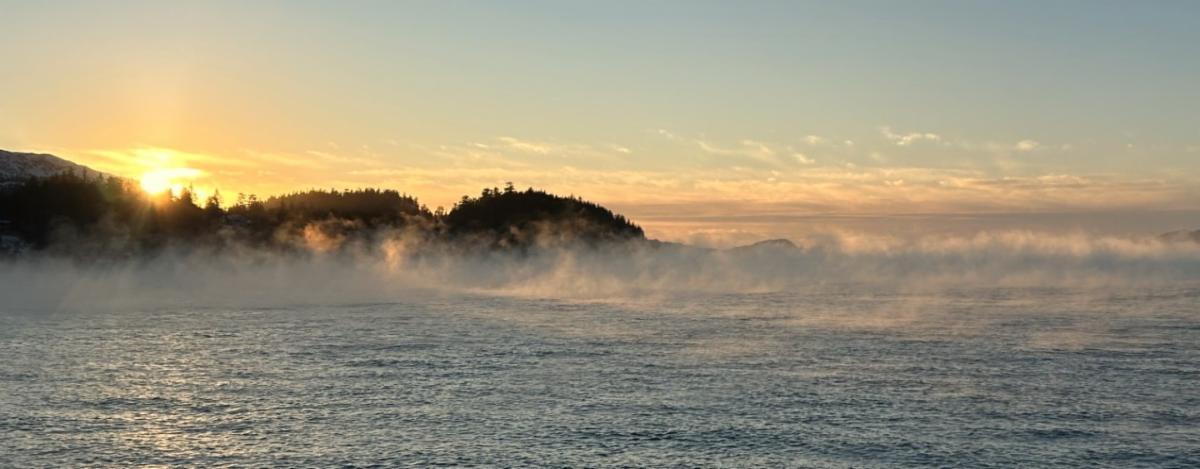
Steam fog over Odiak Slough. Photograph by Lucas Garrett.

Community Events for January

Sea Squirts - Whoooo’s There: Monday, January 12, 2-3 pm

Explore the adaptations that make owls the unique bird that they are. We will dissect owl pellets, touch taxidermy owls, make owl viewers, and play in a kid-sized nest. This session is a partnership with Imagination Library. All kids who attend will leave with a free owl-themed book. Sea Squirts is a free monthly preschool program that will get your tot thinking like a scientist. The program is designed for kids ages 3 - 5. Each session starts with a story and then leads into discovery stations for you and your child to do together.


Science and Snacks: Monday, January 12th, 3:30-5:00 pm

Looking for an extra hour after school? The Science Center is here to offer Science and Snacks, our after-school program where your children will be transported from Mt Eccles to PWSSC, be given a snack, and partake in fun and educational activities centered around science. The theme for January is “Owls”. We will explore owl adaptations, sketch owls using taxidermy specimens, and dissect owl pellets. 


This program is FREE but limited to 15 children in grades 1st-6th. Registration in advance is required. Included in your child’s program registration: PWSSC pick up from Mt Eccles Elementary School at the end of the school day (3:30 pm) and transportation to the Prince William Sound Science Center, fun science-related activities, care/supervision of your child, and a snack. Your child will need to be picked up from the Science Center at 5:00 pm. To register, please email education@pwssc.org with your child(ren)’s name and grade level. We will respond with confirmation about available space and send you a permission form. 


Tuesday Night Talk: January 13th, 5:30-6:30 pm

Join the Prince William Sound Science Center every Tuesday to hear different speakers from your Alaskan community. Join Charlotte Westing from the Alaska Department of Fish and Game to learn more about Sitka black tail deer populations in the Prince William Sound. Charlotte will be discussing what we think we know, what we don’t know, what we wish we knew and what we are doing about it, regarding Sitka black tail deer. This talk will take place on Tuesday, January 13th at the Prince William Sound Science Center from 5:30 to 6:30 pm.


Tuesday Night Talk: January 20th, 5:30-6:30 pm

Join the Prince William Sound Science Center every Tuesday to hear different speakers from your Alaskan community as part of the Tuesday Night Talk lecture series. This night's talk will be a presentation by the Prince William Sound Audubon Society. This meeting is open to the public. This Tuesday Night Talk will occur on Tuesday, January 20th, at the Prince William Sound Science Center from 5:30-6:30 pm. 


Composting Workshop: January 22nd 6-8 pm

Are you wondering how you can reduce your waste with composting? Join Lee Collins for an evening of composting how-tos. Lee will share how to create an outdoor compost bin. Afterwards participants will have a chance to make indoor vermicomposting bins (worm bins). This program is free and open to everyone. If you would like materials for the worm bins please email education@pwssc.org. Registration is not required, but the first 15 people to sign up will have materials reserved for them. If you want to bring your own materials for a worm bin you will need two 5 gallon buckets or 2 totes that stack. 


Tuesday Night Talk: January 27th, 5:30-6:30 pm

Join the Prince William Sound Science Center every Tuesday at 7 pm to hear different speakers from your Alaskan community as part of the Tuesday Night Talk lecture series. Tonight, we will be joined by Josh Smith who will be leading a presentation about propagating native Alaska berries. Join us to learn about the processes and procedures for growing your favorite native berry plants This Tuesday Night Talk will occur on Tuesday, January 27th, at the Prince William Sound Science Center from 5:30-6:30 pm.


Mar ReCon & CORaL Network Present: Mariculture Science Night in Homer

The Mariculture Research and Restoration Consortium (Mariculture ReCon) has partnered with the Community Organized Restoration and Learning (CORaL) Network to bring Mariculture Science Night to Homer, Alaska on January 7 from 6:00-8:00 pm. If you find yourself in Homer on January 7, please join us at the Alaska Maritime National Wildlife Refuge Visitor’s Center to learn about current research being conducted by the Mariculture ReCon team in Prince William Sound, Kachemak Bay, and the Kodiak Archipelago.

2026 Food Security Workshop Series

The Prince William Sound Science Center has been awarded a grant from the Alaska Department of Natural Resources for food security workshops. This grant will cover four workshops throughout the winter and early spring facilitated by the Science Center and the Prince William Sound Economic Development District. Workshops will be free and open to the public. Workshop topics will include composting, creating your own soil, growing microgreens, and table top hydroponics.


The first workshop will be on January 22nd from 6-8 pm as part of our Tuesday Night Talk series. Join Lee Collins from the Prince William Sound Economic Development District for an evening of composting how-tos. Lee will share how to create an outdoor compost bin. Afterwards participants will have a chance to make indoor vermicomposting bins (worm bins). This program is free and open to everyone. If you would like materials for the worm bins please email education@pwssc.org. Registration is not required, but the first 15 people to sign up will have materials reserved for them. If you want to bring your own materials for a worm bin you will need two 5 gallon buckets or totes that stack. The Science Center will provide starter compost, red wigglers, and the power tools needed to construct the worm bins.

Apply for the Community Coastal Experience!

The Community Organized Restoration and Learning (CORaL) Network is excited to host our annual four-week Community Coastal Experience this summer. This is an incredible, paid opportunity for Alaskan adults to explore career and internship pathways in marine & coastal research, environmental monitoring, archaeology, and Alaska Native cultural history & arts.


In 2026, participants will travel with program leaders to Seward and Kodiak to participate in environmental monitoring, connect with local knowledge-bearers, attain job-related skills, and build relationships with science and community organizations that offer jobs and internships. Program participants will earn a stipend of $3500 for their time. All travel, lodging, and food will also be provided.


Anyone who lives within or who holds strong ties to the region affected by the Exxon Valdez Oil Spill is eligible for this program. More information and the application can be found here. Applications will be accepted on a rolling basis until February 6, 2026.


Council members, community leaders, teachers, and mentors can nominate participants through this form!


The Community Coastal Experience will occur from June 8 - July 3, 2026.


Applications will be accepted on a rolling basis until February 6, 2026.


The Community Coastal Experience is a program of the CORaL Network. This program is made possible through funding from the Exxon Valdez Oil Spill Trustee Council.

Cordova Students Participate in Environmental Data Collection

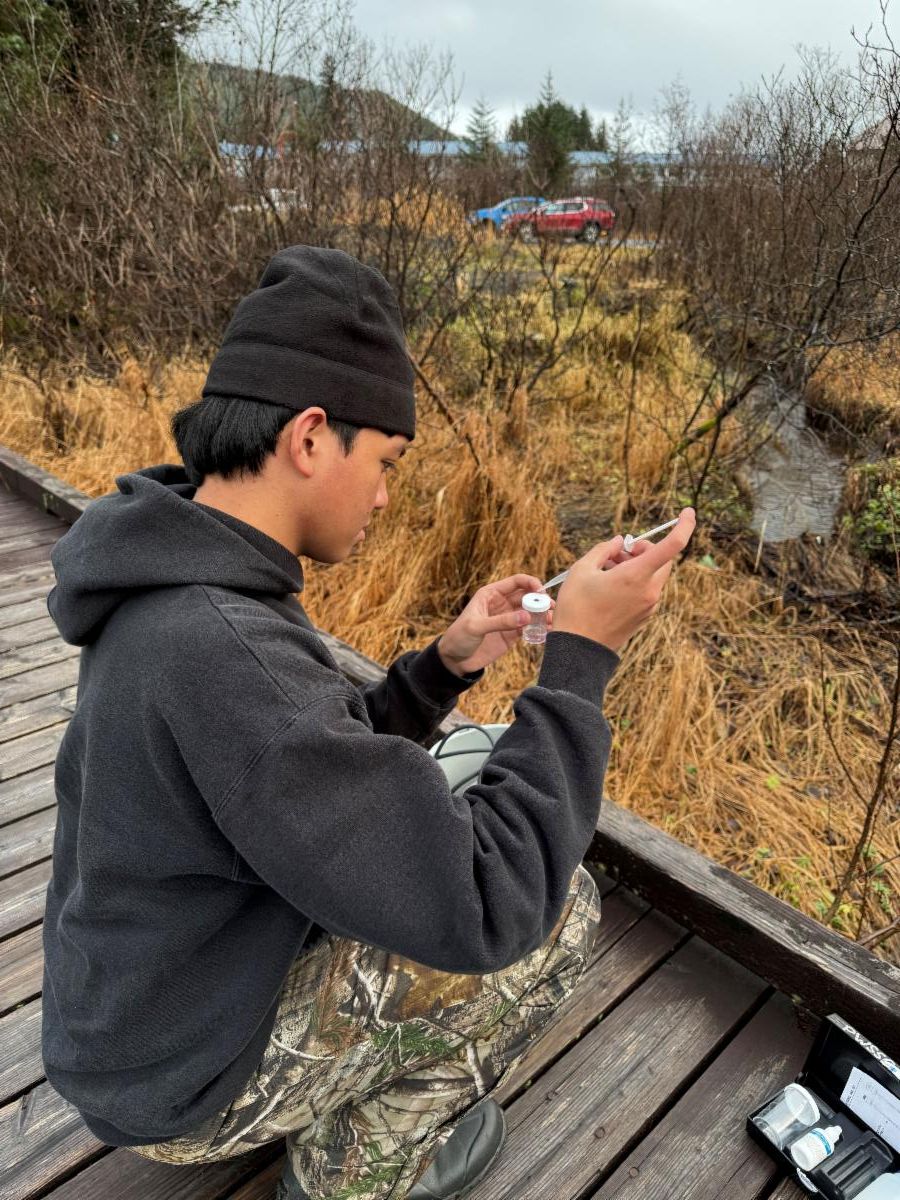
A student collects water samples at Odiak Pond. Photograph by Cristina Reo.

For the 2025-2026 school year, PWSSC CORaL Network educators Lauren Bien and Cristina Reo are partnering with science teachers from Cordova Jr/Sr High School to facilitate monthly environmental sampling at Odiak pond and the local harbor.


Students are collecting data from two different stations at Odiak Pond – one with running water and one with still water – and two sites at the community T-Dock – one at surface, and one at depth – measuring for dissolved oxygen, dissolved carbon dioxide, temperature, pH, and more. So far, we have successfully completed two months of sampling and are looking forward to continuing our data collection through the spring.


As part of the Community Organized Restoration and Learning (CORaL) Network, Community Pathways to Student Science (COMPASS) was launched to support STEM education by building a regional network of partnerships while gathering crucial data in the Gulf of Alaska ecosystem.


By connecting communities, researchers, teachers, and students, COMPASS fosters a deeper understanding of the scientific process and local environmental issues, all while contributing to impactful research. Inspired by the success of the Seward-based SeeBird High School student science project, COMPASS expands this foundation to other communities and an array of

ecosystem components, including injured species, intertidal invertebrates, and ocean conditions.

PWSSC Education:

December in Review

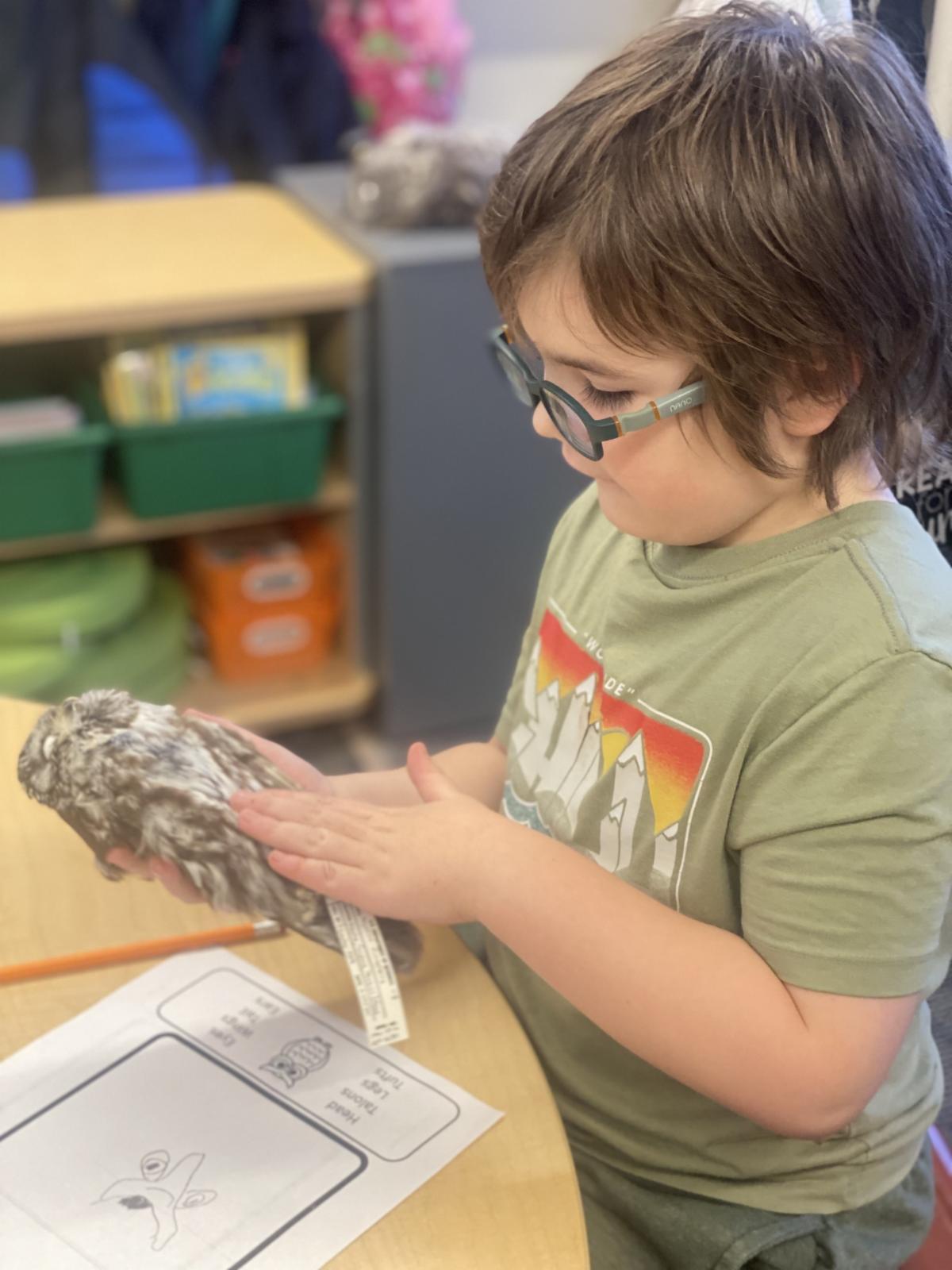
A first grader draws an owl specimen during December's Discovery Room. Photograph by Kate Trudeau.

Our educators have been in the bustle all December long. Take a peek at some of their updates below from a fun-filled month of Science Center programs.


Preschool Programs


Sea Squirts partnered with the Imagination Library for an out-of-this-world learning session. Preschoolers explored the moon phases, created craters in the sandbox, learned how to use a telescope, made constellations, and pretended to travel to the moon in their imaginary rocket ship. Thanks to Dolly Parton’s Imagination Library, all participants went home with a space-themed book.


The Little Dippers December session met four times last month and experienced freezing cold winter weather while exploring their natural environment and using their 5 senses.


After-School Programs


Science & Snacks participants practiced the 3 Rs–Reduce, Reuse, Recycle–by turning trash into holiday decorations.


Adult Programs


Are you curious about what lectures were held in December at our Tuesday Night Talk lecture series? You can catch up on all of them by visiting our YouTube Channel and clicking on the Lecture Series playlist. See below for a summary of December’s talks.


School Programs


In December, our educators were able to meet with grades K-6 as part of our Discovery Room program.


  • Kindergarten learned about the second step of the water cycle: precipitation. They practiced their fine motor skills by using pipettes to fill rain gauges and crafted rain sticks.
  • First Grade explored how animals survive the winter through migration, hibernation, and adaptation. They made bird feeders to help the birds that stay in Cordova for the winter, competed in a migration race, and practiced some hibernation yoga.
  • Second Grade tasted their way through the “parts of a plant” lesson. They identified roots, stems, leaves, fruits, flowers, and seeds, and sampled each of them. December was also harvest time for their hydroponic lettuce, and they enjoyed eating a salad they grew themselves.
  • Third Grade is on the “egg laying” step of the nesting cycle. They investigated the arch shape of an egg, which creates an incredibly strong shape capable of holding up 28 books! Students also learned about the cultural practice of gull egg subsistence harvest through a game designed by the Native Village of Eyak.
  • Fourth Grade investigated the function of different structures on marine invertebrates. The Science Center brought a touch tank to the classroom to help students observe adaptations that allow these creatures to survive in their aquatic habitat.
  • Fifth Grade experienced the interaction of the hydrosphere and cryosphere and explored different forms of data presentation. Their favorite form was presenting data through sonification. Students converted data about glaciers into notes and then modified the tempo, key, and instruments to make songs about glacier recession.
  • Sixth Grade participated in a friendly debate over the breakdown of eight common marine debris items. They worked as a team to create a timeline in which the items would break down and included their best estimate of how long each item would take to break down. They were surprised at how long some items actually take to break down, once given the correct answers.


PWSSC educators also provided astronomy activities for our local elementary school’s enrichment program. December’s theme was constellations. Activities varied by grade but included constructing a constellation wheel, a challenge that required building constellations out of toothpicks and marshmallows, as well as a scientific test of the zodiac signs.


The Prince William Sound Science Center is committed to resilient communities and healthy ecosystems. We need your help now more than ever. If you believe in our mission and care about what we do, please consider donating today.

Facebook  Instagram  YouTube  LinkedIn