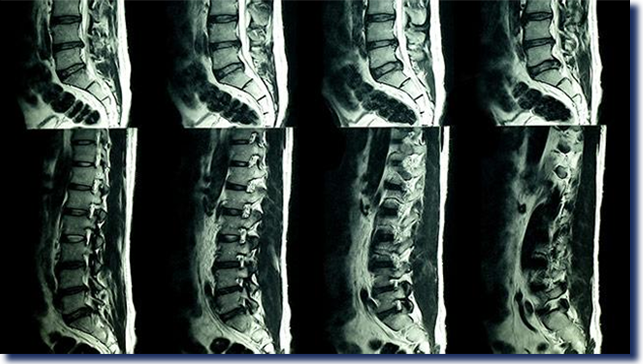
In a trial, patients with low back pain and their clinicians received additional context about imaging findings in pain-free people.
Your spine deteriorates naturally over time, even if you tread lightly and are mindful of good posture. Radiologists are keenly aware of this truth due to an endless queue of patients with low back pain whose imaging scans reveal no acute injury but, instead, show typical signs of activity, gravity, and aging.
Nevertheless many patients pursue medical opinions until they get the injury diagnosis they believe they deserve, as well as opioid prescriptions and/or spinal procedures to speed relief that might otherwise result from anti-inflammatory medication and rest.
|
|
New rules for data collection, fixing the "rural glitch" among the issues cited
Doctors in accountable care organizations (ACOs), and those thinking of starting or joining one, have had their hands full keeping up with changes in the way Medicare is administering them.
ACOs are groups of doctors, hospitals, and/or other healthcare providers that work together with a goal of providing better care at lower cost. As part of the Centers for Medicare & Medicaid Services' (CMS) drive to get more providers paid based on value rather than on volume of services, payments to ACOs are based not on how many office visits their doctors participate in, but on whether the ACO meets certain cost and quality benchmarks. Providers wishing to form or join ACOs have a variety of models to choose from, some of which involve taking a financial risk in order to possibly achieve a greater financial reward.
Changes to Data Collection
One change that has concerned several healthcare groups involves the quality data that ACOs are expected to collect as part of meeting quality benchmarks. The changes, announced in the Medicare Physician Fee Schedule final rule published at the end of 2020, require ACOs to collect data from the electronic health records (EHRs) of all their practices' patients, regardless of whether or not these patients were actually part of the ACO. The rule also requires that ACOs change where they report their quality data, using something called Alternative Payment Model Performance Pathway instead of the CMS website.
|
|
ASIPP® is pleased to offer a new feature for
its members to help provide value to you and your practice.
Click here to visit ASIPP®'s newly created site where you can
make purchases on our Amazon Store, learn more about and
join the ASIPP® GPO and ASIPP®’s partnership with
Fedora Billing & Revenue Cycle Management Company.
|
|
Here's the latest on transmissibility, virulence, vaccine efficacy, and more
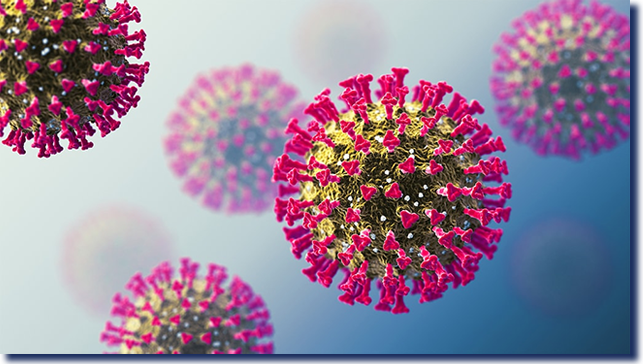
With reports about the more transmissible Delta variant, and now "Delta plus," taking the media by storm, here are the essential facts when it comes to the latest variant in the spotlight.
What Is the Delta Variant?
B.1.617.2 is a variant of the first "India" variant, B.1.617 (named Kappa and only a variant of interest). There's also B.1.617.3 (variant of interest) and more recently, B.1.617.2.1, which has been called "Delta plus" in the media and doesn't yet have a spot on the CDC or WHO lists.
|
|
The agency should revisit its latest guidance to maximize benefits and minimize risks
Last week, the CDC's Advisory Committee on Immunization Practices (ACIP) met to discuss the safety signal of myocarditis among young people who receive mRNA vaccination against COVID-19. This dialogue has been months in the making. Ultimately, the panel continued to endorse a two-dose mRNA strategy for all ages. We are concerned with this recommendation and offer five alternative considerations. But first, let's review how we got to this moment in order to make sense of vaccine-induced myocarditis.
A Recent History of Vaccine-Induced Myocarditis
The potential risk for vaccine-induced myocarditis was first raised on February 1 in the Jerusalem Post, which reported the hospitalization and intensive-care admission of a healthy 19-year old male 5 days after receiving his second dose of the Pfizer vaccine. This was followed by a nationwide report in the Times of Israel on April 23, later picked up by Reuters on April 25. These news reports suggested that Israel had seen elevated rates of this event after young men were vaccinated with the Pfizer vaccine, almost always after the second dose (56 out of 62 cases or 90%).
The European Medicines Agency announced an investigation on May 7, which was the same day several of us cautioned against FDA's use of emergency use authorization (EUA) to expedite the availability of COVID-19 vaccines to U.S. kids ages 12 to 15.
|
|
How safe is it to be a patient in the United States today? Compared with what? Being a patient in another country? It depends on the country. Compared with not being a patient? Not very safe at all.
Being a patient can be hazardous to your health. I first recognized that fact at the autopsy table even before medical school. A young child in Tuscaloosa, Alabama, dead after a tonsillectomy/adenoidectomy in 1953, asphyxiated on her own blood. As a pathology resident in San Antonio from 1958 to 1962, I autopsied many patients with cancer who were killed by their chemotherapy treatment, not by their cancer.
In 1976, when my friend and colleague Don Harper Mills, MD, JD, learned from me that I was moving to Sacramento to become professor and chair of pathology at UC Davis, he cautioned me that the Sacramento Medical Center (SMC, a county hospital) was a dangerous hospital. An expert in medical malpractice prevention and defense, Don had just completed a large review study of hospital records commissioned by the California Medical Association about "potentially compensable events" — medical injuries for which a jury might award malpractice money compensation. His examination of more than 20,000 patient charts from 23 California hospitals in 1974 found that nearly 5% of patients had suffered compensable injuries during their hospitalizations. I thanked him and said that the ongoing transition of the SMC to a University of California Medical Center had identified the improvement of quality of care as a key goal.
|
|
Hospitals or corporate entities now employ nearly 7 in 10 of the nation's doctors, according to a recent survey conducted by healthcare consulting firm Avalere for the Physicians Advocacy Institute (PAI).
Between January 1, 2019, and January 1, 2021, 48,000 physicians chose employment with hospitals and health systems or corporate entities. The survey defines corporate entities as health insurers and private equity firms. Hospitals and corporate entities acquired 20,900 physician practices during the 2 years studied; the result is a 25% increase in corporation-owned practices.
From 2019 to 2021, the percentage of physicians employed by hospitals or corporate entities grew 12%. In total, 69% of US physicians are employed by hospitals or corporate entities. Of these physicians, 18,600 joined hospitals or health networks, and 29,800 began work at corporate entities during the 2 years studied. Since the start of the pandemic, 11,300 physicians landed employment with corporate entities, and 11,400 physicians secured employment with hospitals or health networks.
|
|
Great News!
The Annual Meeting of the Ohio & Kentucky Societies of Interventional Pain Physicians is back!
Designated for 15 AMA PRA Category 1 Credits™
|
|
This year, included in the cost of your baseball ticket,
enjoy a post-game "I Love the '90s" live concert featuring
Vanilla Ice, Naughty by Nature, Tone Loc and Rob Base!
|
|
Pain Medicine Case Reports (PMCR) and Editor-in-Chief Alaa Abd-Elsayed, MD, PhD would like to invite you to submit case reports and case series to the PMCR journal. Your article will be published free of charge.
Open access journals are freely available online for immediate worldwide open access to the full text of published articles. There is no subscription fee for open access journals. Open access journals are no different from traditional subscription-based journals: they undergo the same peer-review and quality control as any other scholarly journal.
Interested in becoming a member of the PMCR Editorial Board?
Editorial board members are asked to review 2-6 manuscripts per year. Please submit your most up-to-date CV to sgold@asipp.org for consideration.
For more information or to submit your articles, click here.
|
|
| CASE REPORT |
Philippa Hawley, FRCPC, Julia Ridley, MD, and Marc Youngson
Abstract
BACKGROUND: Traumatic brachial plexus avulsion injury (tBPI) can cause a severe chronic pain syndrome that is very difficult to treat. Though lidocaine has been shown to be effective for other pain syndromes, effectiveness in tBPI has not previously been reported.
CASE REPORT: A 55-year-old man with tBPI had severe pain and minimal relief with numerous analgesic agents. He was able to access intravenous lidocaine as he was being treated at a cancer center, and had a sustained response to 7 mg/kg given over an hour.
|
|
| SYSTEMATIC REVIEW |
Amol Soin, MD, Yasmeen Soin, JD, Tammy Dann, MD,
Ricardo Buenaventura, MD, Kris Ferguson, MD, Sairam Atluri, MD,
Harsh Sachdeva, MD, Gururau Sudarshan, MD, Humam Akbik, MD,
and Jordan Italiano, BS
Abstract
BACKGROUND: Complex regional pain syndrome is a rare, neuropathic disorder that affects fewer than 200,000 individuals in the United States annually. Current treatments often focus on pain management and fall short of relieving symptoms of pain and dystonia in patients.
OBJECTIVE: The goal of this systematic qualitative review is to evaluate the evidence for the use of low-dose naltrexone in the treatment of chronic pain syndromes.
|
|
| SYSTEMATIC REVIEW |
Fei-Long Wei, MD, Cheng-Pei Zhou, MD, Kai-Long Zhu, MD, Ming-Rui Du, MD, Ya Liu, BN, Wei Heng, MD, Huan Wang, MD, Xiao-Dong Yan, MD,
Li-Li Sun, BN, and Ji-Xian Qian, MD
Abstract
BACKGROUND: New approaches and technologies can be beneficial for patients but also bring corresponding complications. Traditional pairwise meta-analyses cannot be used to comprehensively rank all surgical approaches.
OBJECTIVES: The purpose of this systematic review and network meta-analysis (NMA) was to compare the outcomes of different surgical approaches for lumbar disc herniation (LDH).
|
|
|
|
CALSIPP
ANNUAL MEETING
Registration & Agenda
|
|
Since this malpractice insurance program officially launched in November 2018, ASIPP has signed up hundreds of providers with an average savings of 30%. This is professional liability insurance tailored to our specialty and will stand up for us and defend our practices.
Norcal Mutual is 'A' Rated by AM best and is license in all 50 states. To read a few important points to keep in mind about the program, including discounts, administrative defense, cyber coverage, aggressive claims handling, and complimentary award-winning risk management CME activities, click here.
|
|
ASIPP® is now offering our members the benefit of a unique revenue cycle management/ billing service. We have received a tremendous amount of interest in the ASIPP® billing and coding program.
Click here to learn more about the negotiated rate for practices and more!
|
ASIPP® has formed a partnership with Henry Schein and PedsPal, a national GPO that has a successful history of negotiating better prices on medical supplies and creating value-added services for the independent physician. Working with MedAssets, PedsPal provides excellent pricing on products like contrast media that alleviate some of the financial pressures you experience today.
|
|
up-to-date news related to you, your practice, and your patients!
|
|
|
|
|
|
|