ASI Led Lamb Import Investigation Gains Strong
Producer Support | |
ASI’s efforts to address the impact of lamb imports on U.S. sheep producers moves toward the first phase of the International Trade Commission’s global safeguard investigation. ASI asked the U.S. Trade Representative (USTR) to investigate the impact of lamb imports on U.S. producers in October 2025. U.S. lamb imports grew from 213.6 million pounds in 2020 to 309.3 million pounds in 2024, a nearly 45 percent increase. This significant increase reduced U.S. sheep producers’ market share and processing capacity.
On July 13, 2026, the U.S.Trade Representative requested an investigation. The investigation will include fresh, chilled, and frozen lamb meat imports but excludes live sheep, live lambs, and mutton from mature animals.
Investigators will now collect information from domestic producers, processors, and importers to determine whether imports surged and whether those shipments caused serious injury or threatened further damage to the U.S. sheep industry. An affirmative finding could lead the commission to recommend temporary tariffs, quotas, or other safeguards. The recommendation would return to the trade office and President Trump, who would decide whether action is appropriate.
| | USDA Announces Phased Reopening of Southern
Livestock Ports | | On Friday, July 24, the U.S. Department of Agriculture (USDA) announced plans to begin a phased reopening of southern livestock ports, contingent on Mexico’s compliance with a joint New World screwworm (NWS) action plan. USDA will reopen Douglas, Arizona, port of entry exclusively for cattle trade effective August 24, 2026, allowing cattle imports from Sonora and Chihuahua to resume following a year-long closure. Every animal entering through the reopened ports will undergo a full USDA inspection to ensure inspected animals are free of any signs of NWS. After assessing the initial reopening and any changes in disease risk, USDA’s Animal and Plant Health Inspection Service (APHIS) will consider reopening both the Santa Teresa and Columbus ports in New Mexico to cattle, bison, and horses. USDA has expressed that the phased opening of southern ports may be adjusted or paused if Mexico fails to meet action plan milestones or if APHIS identifies increased risk in Sonora or Chihuahua. | | |
ASI continues to be in regular communications with federal leaders at USDA's Animal and Plant Health Inspection Service (APHIS) and the FDA's Center for Veterinary Medicine (CVM) regarding issues that have arisen since the first detection.
ASI developed a NWS sheep producer guide and treatment info resource that you may access here. The guide is also available in Spanish. All of ASI’s resources and links to additional information at USDA and FDA can be found on our website here.
Current Status (as of July 29):
- 8 active cases
- 34 inactive cases
- Most recent detection: July 21, 2026
Find more information at screwworm.gov.
| | ASI & California Sheep Producers Warn H-2A Wage Rule Could Threaten Operations | | |
A proposed change to California sheep producers’ labor costs is raising concerns across the state’s sheep industry, with leaders warning it could have far-reaching consequences for ranchers and wildfire prevention efforts. A recent report highlighted concerns from ASI about differences in H-2A wage requirements for sheep and goat herders.
ASI’s executive director, Mike Michener, said the issue centers on California’s differing wage classifications for sheep and goat herders. Because many sheep operations also utilize goats for grazing, producers could face dramatically higher labor costs if the discrepancy is not addressed.
| | ASI Builds on Longstanding Partnership with University of Wyoming American Heritage Center | | |
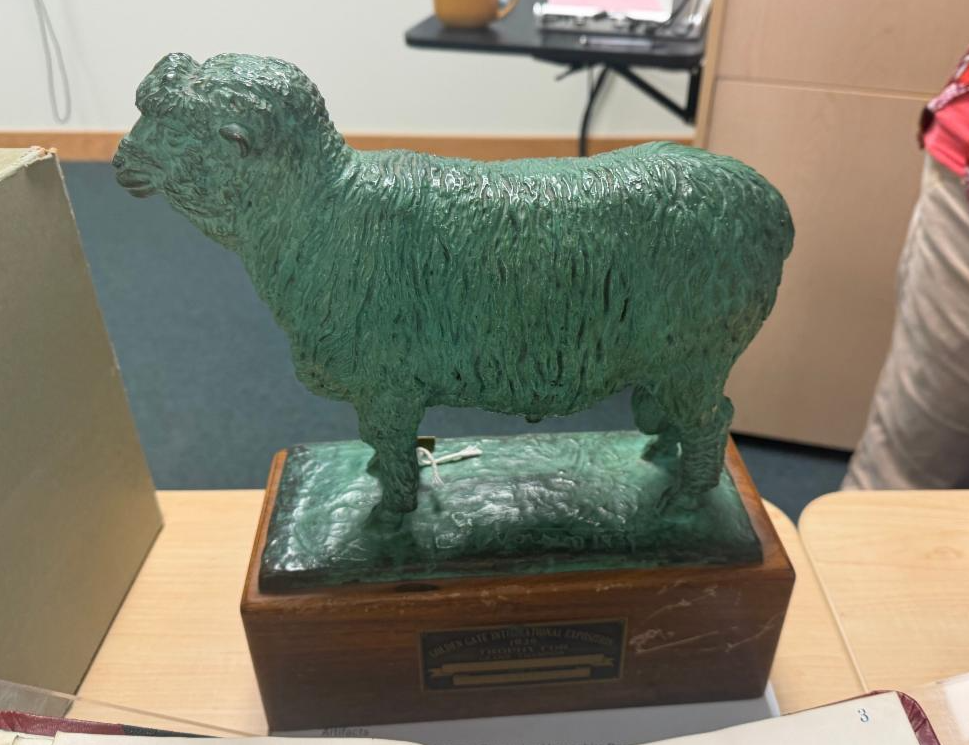
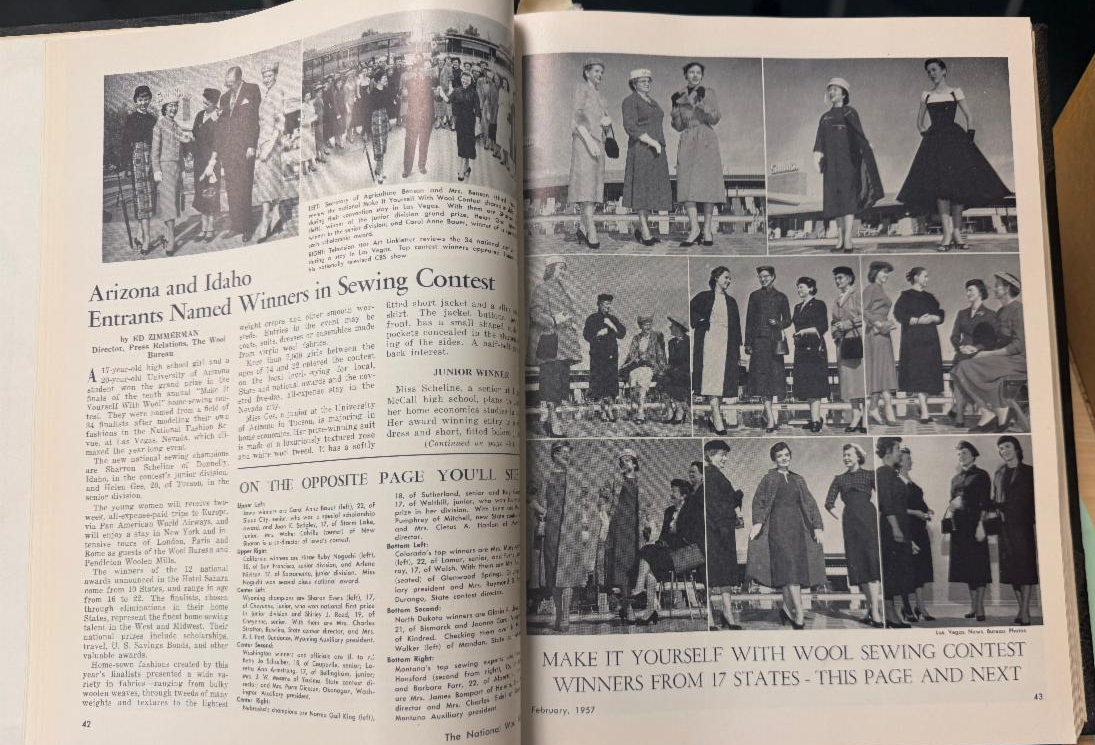
ASI is pleased to renew its longstanding relationship with the University of Wyoming’s American Heritage Center, which serves as an important archival home for the history of the American sheep industry.
Founded in 1865, ASI is America’s oldest livestock association, and its records tell a story that reaches across more than 160 years of producer leadership, policy advocacy, wool and lamb marketing, public lands stewardship, predator management, research, and service to American agriculture.
ASI Executive Director Mike Michener recently visited the American Heritage Center in Laramie and met with Director Dr. Paul Flesher and members of the AHC team to discuss ASI’s historical records and the Center’s broader sheep industry collections. The visit reaffirmed the importance of preserving the records, stories, and institutional memory of the sheep industry for future generations of producers, researchers, and industry leaders.
“The American Heritage Center has done an impressive job preserving the history of this industry,” Michener said. “Seeing these materials firsthand was a reminder that ASI’s work today is part of a much longer story of producer leadership, resilience, and service to American agriculture. We are grateful to Dr. Flesher and the AHC team for their stewardship and look forward to strengthening this partnership.”
The American Heritage Center holds a number of important sheep industry collections, and ASI looks forward to working with the Center to ensure that historically significant records remain available to researchers and future generations interested in the story of sheep, wool, and lamb production in the United States.
| |
Former Ag Leaders Urge Hearings On Farm Policy | |
A group of former agricultural leaders will send a letter to the chairs and ranking members of the House and Senate agriculture committees today, urging them to hold hearings and develop policies to reverse what they see as the decline in American agriculture.
The group, now numbering 45, noted that “many of us” wrote a letter in February, but the problems facing farmers have worsened.
“The limited response by Congress does not match the extent and severity of the difficulties farmers are encountering every day,” the group wrote. “The Feb. 3 letter asked that you hold hearings on the farm crisis. This has not happened. More than ever before, Congress needs to seek out and listen to the hardships American farmers are facing, seriously engage with farmers on the causes and solutions, and exercise bipartisan oversight and legislative authority to reverse the decline and restore our nation’s agricultural economy.”
| |
Legal Issues With USDA? Submit Your Concerns to Lawfare Portal. | |
If you are experiencing issues related to grazing permits or other federal land management, please contact your state affiliates or the Public Lands Council. We are here to help navigate challenges.
For legal or regulatory disputes involving federal agencies, producers also have access to USDA's Lawfare Portal. The portal was created to help farmers and ranchers report instances of regulatory overreach, burdensome enforcement actions, or other concerns involving federal agencies. Through a newly announced partnership between USDA and the SBA, complaints submitted through the portal can now be coordinated across multiple agencies, including efforts to investigate concerns, seek resolution, and identify broader patterns that may warrant policy or regulatory reforms.
| | Firm to Farm: Supreme Court Ruling Gives Farmers More Time to Challenge FSA Actions | |
One of the recurring issues in Farm Service Agency (FSA) litigation concerns the time within which a producer may challenge agency action that exceeds the authority granted by Congress or the agency’s own regulations.
While many FSA disputes center on factual determinations or the agency’s exercise of discretion, others involve a more fundamental question — whether agency officials acted beyond the authority delegated to them by statute or regulation. Those cases are governed by different legal principles and, in some circumstances, may present stronger claims for judicial relief.
| | ASI is working year-round to advance producer priorities across the country. Here’s what’s happening, what it means, and what’s next. | | Senate Ag Committee Eyes Farm Bill Markup Next Week | | Reports earlier this week indicated that Senate Agriculture Committee Chairman John Boozman (R-AR) still hopes to mark up the majority’s farm bill before the Senate adjourns for the August recess. Boozman is tentatively targeting Thursday, August 6, though the timing remains uncertain, largely because Committee member Sen. Mitch McConnell (R-KY) is still absent from the Senate for health-related reasons. On Monday, McConnell’s office released an update stating the Senator had been discharged from the hospital but remained in a rehabilitation facility, with no return date specified. Without McConnell’s attendance and full GOP participation, the Committee will likely struggle to advance the proposed Agricultural Adjustment Act of 2026 in its current form. Senate Agriculture Democrats continue to push for inclusion of a delayed cost-share provision for the Supplemental Nutrition Assistance Program (SNAP). Boozman and Ranking Member Amy Klobuchar (D-MN) have been negotiating a path toward a bipartisan bill, but no compromises have been made public at this point in time. As of now, the Senate is scheduled to remain in session until August 7 unless Republican leadership adjourns early for the five-week recess. You can find a link to the Senate’s farm bill text and supporting materials below: | | Trump Administration Replaces Section 122 Tariffs With New Section 301 Forced Labor Duties And Proposes Section 338 Tariff On Canada | | |
At 12:01 a.m. on July 24, 2026, the 10 percent global reciprocal import surcharges promulgated under Section 122 of the Trade Act of 1974 officially expired upon reaching their statutory 150-day time limit. To replace these expiring duties, the Office of the United States Trade Representative (USTR) issued a Notice of Final Action under Section 301 of the Trade Act of 1974 imposing new tariffs on 60 national economics due to failures to enforce prohibitions on goods produced with forced labor. From a sheep industry perspective, the new Section 301 action applies 12.5 percent tariffs to Australia and New Zealand. Almost simultaneously, the Executive Branch announced a separate proposal under Section 338 of the Tariff Act of 1930 to levy an additional 50 percent ad valorem tariff on certain Canadian goods, including dairy, beginning on August 19, 2026. Importantly for agricultural and food clients, products originating under the United States-Mexico-Canada Agreement (USMCA) receive distinct treatment under these two regulatory actions.
SECTION 301 FORCED LABOR TARIFFS
Effective July 24, 2026, USTR modified Subchapter III of the Harmonized Tariff Schedule of the United States (HTSUS) establishing four duty categories to be applied to 60 investigated economies:
-
10 Percent Baseline Duty Rate: Applies to 17 economies that have enacted forced-labor import prohibitions or entered into Agreements on Reciprocal Trade (ART) with the United States, including Argentina, Bangladesh, Cambodia, Canada, Ecuador, El Salvador, Guatemala, Honduras, India, Indonesia, Jordan, Malaysia, Mexico, Pakistan, Sri Lanka, Trinidad and Tobago, and the United Kingdom.
-
12.5 Percent Baseline Duty Rate: Applies to 38 remaining investigated economies, including: Algeria, Angola, Australia, the Bahamas, Bahrain, Brazil, Chile, China, Colombia, Costa Rica, the Dominican Republic, Egypt, Guyana, Hong Kong, Iraq, Israel, Kazakhstan, Kuwait, Libya, Morocco, New Zealand, Nicaragua, Nigeria, Norway, Oman, Peru, the Philippines, Qatar, Russia, Saudi Arabia, Singapore, South Africa, Thailand, Türkeye, the United Arab Emirates, Uruguay, Venezuela, and Vietnam. (See HTSUS Chapter 99, Subchapter III, Headings 9903.05.20–9903.05.84.)
-
10 Percent Net-MFN Additive Rate: Applies to Most-Favored-Nation (MFN) trading partners, specifically: the European Union member states and Taiwan. If an imported product’s standard MFN duty rate is less than 10 percent, a Section 301 duty is added to achieve a combined 10 percent rate. If the applicable MFN rate is 10 percent or higher the additional Section 301 duty is zero.
-
12.5 Percent Net-MFN Additive Rate: Applies to Japan, South Korea, and Switzerland under the same additive formula up to a combined 12.5 percent cap.
EXEMPTIONS FOR USMCA GOODS AND AG INPUTS
Products qualifying for preferential tariff treatment under USMCA are exempted from the new Section 301 forced labor duties:
- USMCA Duty-Free Exemption: Additional Section 301 duties do not apply to originating products of Canada or Mexico that enter free of duty under USMCA (codified under HTSUS Chapter 99, U.S. Notes 52(g) and 52(h)).
- Specific Product Exceptions: Annexes I and II of USTR’s Notice exempt certain product categories to prevent domestic supply chain disruptions. These include raw agricultural inputs, fertilizer ingredients, and pesticide ingredients (codified under HTSUS Chapter 99, U.S. Note 52).
- Goods in transit. Products loaded onto a vessel and in transit prior to 12:01 a.m. on July 24, 2026 and entered in the U.S before July 28, 2026 are exempt from Section 301 duties.
(See Notice of Actions in Section 301 Investigations, Docket Nos. USTR-2026-0265, USTR-2026-0266, Doc. No. 2026-15181 (Off. U.S. Trade Rep. July 23, 2026))
PROPOSED SECTION 338 TARIFFS ON CANADIAN IMPORTS
In addition to the Section 301 Notice, the Executive Branch announced its intent to invoke Section 338 of the Tariff Act of 1930 to impose an extraordinary 50 percent ad valorem tariff on Canadian goods, including dairy products, beginning on August 19, 2026. This is in response to alleged Canadian trade discrimination against the United States. Unlike the Section 301 duties, the Section 338 announcement does not contain an exemption for USMCA goods. However, the Executive Branch indicated that certain energy products, potash, fish, and other products will be excluded. You can find the White House’s fact sheet on the proposed Section 338 tariffs on Canadian goods here.
| |
|
Strong Lamb Prices Continue Despite Drought and Economic Pressures
The U.S. lamb industry continues to demonstrate resilience in 2026, with strong live lamb and lamb meat prices supported by tight supplies and steady consumer demand. While sheep producers continue to face significant challenges from widespread drought, higher production costs, and broader economic uncertainty, the lamb market has remained remarkably strong through the first half of the year.
Federally inspected sheep and lamb slaughter through June declined nearly 3% compared to the same period in 2025, while lighter average dressed weights have reduced overall lamb production by an estimated 8%. Strong market prices and drought conditions have encouraged producers to market lighter-weight lambs, contributing to lower production volumes.
Read the American Lamb Board’s newsletter here: https://lambboard.com/
| | | | Your weekly snapshot of key market rates and reports (U.S. and global) to help you stay ahead of pricing and demand shifts. | | |
Wool Market Recess
The market will now pause for a three-week recess, with reports resuming the week of August 17.
About the EMI: The AWEX Eastern Market Indicator (EMI) is the key benchmark index of Australian wool auction prices and is widely used as a global wool market indicator.
| | LDP Payments Available This Week | | Graded Wool, Clean Prices in $ Per Pound | | | Micron | LDP Available | | >29 micron | No LDP Available | | | Ungraded Wool, Grease Prices in $ Per Pound | | | Ungraded Wool | $0.2662 LDP Available | | | Unshorn Pelts, Prices in $ Per Pelt | | | Unshorn Pelt | $1.827 LDP Available | | | Note: Producers must visit their Farm Service Agency office and fill out the appropriate paperwork before the wool or unshorn lambs are sold to claim the Wool LDP (when available). | |
|
USDA Weekly Sheep, Lamb, & Wool Market Summary
The report is generally updated on Friday afternoon.
| | |
ASI Wool Calculator
Adjust micron, yield and quality of wool percentage with ASI's Wool Calculator to estimate the value of your wool today, or the potential value of wool if genetics or management practices were changed.
| | |
July 30: Katahdin Hair Sheep International Expo & Sale, Cookeville, TN - More info
July 31: Wyoming Sheep & Wool Festival, Powell, WY - More info
Aug 13: Hand Dyeing Wool & Other Fiber, Claremore, OK - More info
Aug 13: Washing Fiber Class, Claremore, OK - More info
Aug 22: 51st Annual Virginia Performance Tested Ram Lamb & Ewe Lamb Sale and Sheep Field Day, VA Sheep Evaluation Station - More info
Aug 25: South Dakota Sheep Growers Yearling Ewe Sale, Huron, SD - More info
| |
| |
|
Experience Wool is ASI’s consumer hub: wool education, product inspiration, and American wool stories in one place.
Explore at americanwool.org and follow @experiencewool.
| | | | | | |
Get educational info, industry contacts, policy updates, breeder information, and more at sheepusa.org
| | | ASI operates in accordance with Federal civil rights law and U.S. Department of Agriculture civil rights regulations and policies, and complies with all equal opportunity, non-discrimination and affirmative action measures applicable to it under these. ASI is an equal opportunity employer and provider. |
| | | |