NPR features an interesting look at the origin of the jungle gym – which just turned 100 years old.

Quotable & Notable

“It’s important to remember that the benefits of early childhood education extend far beyond individual children and families. A well-educated and emotionally resilient population contributes to a stronger, more prosperous society. 


As we navigate the complexities of the modern world, investing in the earliest years of a child’s life is not just a choice — it’s a necessity.” 


Who:

Natisha Bowling, vice president for youth development at the YMCA of Greater Cleveland


Where: “Early childhood education sets the stage for bright futures: Natisha Bowling” — opinion piece published by Cleveland.com

Fact of the Week


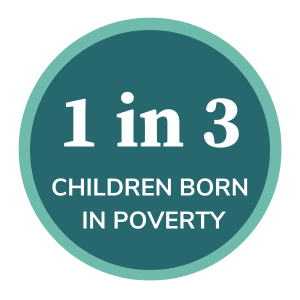
A new report from the National Academies of Science finds that over 1 in 3 children born in families with low incomes in the 1980s remained poor as adults. The study suggests that schools (and more holistic policy in general) can play a critical role in buffering the effects of poverty for current generations including supporting children and families through early learning.

Beyond the Buckeye State

Funds from an existing marijuana tax in Alaska will now be directed toward young children and families. New America describes the strategy behind the ballot proposition that made this possible. 


Here’s an early childhood revenue source we’ve not heard of before: Ten communities in Colorado earmark a portion of lodging taxes to go toward child care. The latest community to put this before voters, Pueblo, did not succeed.

What We're Reading

States seeking to improve their preschool systems ideally have access to good data to understand enrollment, demographics and other key trends — and to measure change over time. However, states collect different types of data, and often these data are not widely available.  


The Early Childhood Data Collaborative at Child Trends recently published a report that analyzes the data capacity of state-funded preschool programs across the U.S. Some keys findings are that 93% of states had access to child-level (i.e., demographics) and program-level (i.e., location and accreditation) data, while 74% of states had access to workforce-level data (i.e., wages). And 84% of states could report on characteristics of their preschool programs like fundings streams. Far fewer states were able to report on policies that affect the early childhood workforce, like access to health care and benefits. The report includes state-specific profiles as a resource to early childhood leaders.  

Research Round-Up

A study published in the International Journal of Child Care and Education Policy examined long-term impacts of pre-K in New Mexico. Researchers accessed archival student data for those who had participated in the state’s pre-K program (NMPK) to assess whether participation in the program improved outcomes on state exams in both ELA and math, and to evaluate whether NMPK participation increased the odds of high school graduation. They used propensity score matching, a statistical technique enabling a quasi-experimental design by constructing an artificial “control” group and treatment group. Researchers created matched sets of control and treatment subjects — who are as close to similar as possible on indicators available — and compared them with respect to exam scores and high school graduation.


The researchers found that NMPK participants significantly outperformed their matched nonparticipants in both ELA and math in third, sixth and eighth grade, but not 11th grade — suggesting potential fadeout effects. Additionally, there were significant associations between NMPK participation and the probability of high school graduation. The study authors note that researchers and policymakers should use caution in generalizing results from studies such as this, and that “The study of the effects of quality, program design and other program inputs in future studies is essential for understanding why some programs like NMPK see significant long-term gains, whereas other programs, such as Tennessee’s Prekindergarten program, do not.”  

This edition written by: Jamie O'Leary and Janelle Williamson

• • • • • • •

If you like this newsletter, forward to a friend! Subscribe here.

• • • • • • •

crane.osu.edu

Twitter  Linkedin