|
What Now should I do? How Now Shall I Live?
Last Sunday I preached about respecting, caring for, and developing an intentional relationship with creation. I related how I like to talk to the trees and think out loud as I walk through a woodland, through fields and meadows, or alongside streams and shorelines. It is easy to talk about lovely walks (or bike rides) and relate stories interacting with nature and creation. It’s perhaps easy to see the issues around climate change but be left wondering and worrying about what is going to happen. Who will make decisions about dealing with the changing conditions? What will governments do? Will there be cooperation? We watch, read, and listen to the news about all these issues. We talk about it amongst our friends and family. There are huge stresses upon us in our day to day lives regarding climate change. What do we do when there seems to be such a paralysis regarding necessary changes to begin a rebalancing of receiving from and giving back to the natural world. I hear people say, ‘Why should I bother if I am the only one to do something? Whatever I can do, won’t turn things around.’ A sense of despair can set in. Is there a cure or something for that ordinary people can change in their own lives that can break this kind of paralysis? Are there actions in which we can engage in ourselves that might make others sit up and take notice? How do we talk about these things in our community to find our what others are thinking and saying and doing?
So often we are left as spectators to big plans, decisions and projects by governments, industry, and technology. Many are intended for the good especially when there is a need but the prime reason that something will go ahead seems to have more to do with whether it will be profitable for the investors. There is nothing wrong with expecting a return on an investment but there are projects that, in the end, turn out to be more harmful than good. Some of these projects go ahead even when it is known there will likely be consequences to the environment but the plan is pushed through because the investors demand that return. ‘We can deal with the fallout at a later date’. Few want to pause for finding a new way. There are times that we do not want to move forward with new technology. We want to hold on to the old ways so that we do not unsettle people or worry them about jobs, livelihoods and other events that bring any kind of disruption. We continue on a path that leads to greater calamities. We see it coming but there are no brakes to stop us driving over a cliff. Now we are indeed dealing with the fallout.
In the Gospel of Luke in Chapter 3, John the Baptist is preparing the way of the Lord in how he lives his life, and in his preaching, particularly the call to ‘bear fruits worthy of repentance’ (Luke 3:8). He is seen as someone to listen to and ask questions of about ‘how now shall I live’ and ‘what should I do’. But refers to attending to all the small things in our lives over which we do have control, that when rolled together make a huge difference to us and the people around us. Others begin to take notice not because we are forcing them to make choices but because they can see the difference our choices make to life and living and would like that for themselves.
In Luke 3:10-14, what did John say to the people when they asked him ‘Now that we are baptized, what now?’
10 And the crowds asked him, “What, then, should we do?” 11 In reply he said to them, “Whoever has two coats must share with anyone who has none, and whoever has food must do likewise.” 12 Even tax collectors came to be baptized, and they asked him, “Teacher, what should we do?” 13 He said to them, “Collect no more than the amount prescribed for you.” 14 Soldiers also asked him, “And we, what should we do?” He said to them, “Do not extort money from anyone by threats or false accusation, and be satisfied with your wages.”
We can all work toward this, but like any athlete who wants to stay in top form in their discipline, if we do not remain mindful, if we lose the focus of our intentions, we can quickly fall back and away.
Almost everyone I know will speak about how much they enjoy the time they spend nature. It brings peace and harmony, slows the heart rate and lowers blood pressure. It can change our state of mind and bring more creative thinking to our day-to-day life and relationships. Nature is a friend who welcomes our presence. It is a place where we can listen to its whispers, see its beauty, and walk in, swim in, and sit it. We let it massage our soul and bring us the rest that we need.
Spending time in nature may help us think more clearly regarding the climate crisis. It may help us be creative about the changes we can make in our lives that respect creation. It is not simply a place to go to get away from it all. It is a friend who we bring back home with us and perhaps help to realign our thinking about our relationship and stewardship of creation.
Our faith tells us that we are a part of creation. We are not above it. We cannot live outside nature, and we cannot live outside of creation. We all want to see that nature and creation are cared for, healed, and restored. This brings us to the questions of these pastoral musings. What now shall I do? How now shall I live?
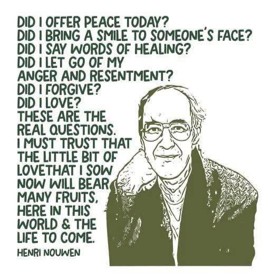
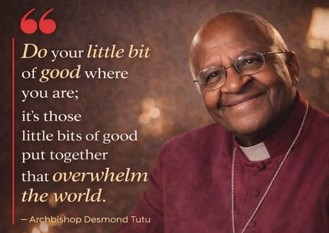
The spiritual writer Henri Nouwen listed a few things about how we might go about exercising and building up our spiritual strengths as we reflect on how we lived out our day. The image asks a number of questions we can ask ourselves. Archbishop Desmond Tutu states what we might do in active, deliberate ways with these simple words: ‘Do your little bit of good where you are…’ Here are a few ways to begin remind ourselves to seek a renewed relationship with creation and others around us:
Pray everyday. Take a few moments several times during the day to remind yourself that the Lord walks alongside you. Ask that your intentions, may be to do your little bit of good where you are: that love and forgiveness may be ever-present to you, in your thoughts in your speech and in your actions. Ask that you may see the plight of others right around you and offer a coat or food or whatever the need is. Check in with yourself over the day regarding these. At the end of the day reflect with the questions Henri Nouwen suggests.
Attend to the Scriptures. Read from the words of Jesus in the Gospels, put yourself in the story. How do you see yourself there listening. Read the Psalms and other passages of scripture that speak about how you might live your faith that day.
Allow Yourself to be Transformed. Allow what you experience in the changes you make take root in your life. Take walks in nature or sit in nature every day, even for a few minutes for the purpose of seeing and listening what it has to each you, to ease you, and listen to you as you listen to it. Bathe in its gentleness as well as its strength and power to help bring you to yourself.
Learn more about Caring for Creation. Share conversations with friends about the little things that can be done. Discipline yourself regarding what you take from creation and what you give back. Can you make changes in your lifestyle that will benefit creation. Do what little thing you can do yourself. Don’t wait for governments or industry or other groups who are focussed on return of investment and trying to find wiggle room to get out of responsibilities to see the light. Use the light that is within you and take the action you can.
With grace and peace,
Rev. Stephen
|