The STARR News: January 2023 |
|
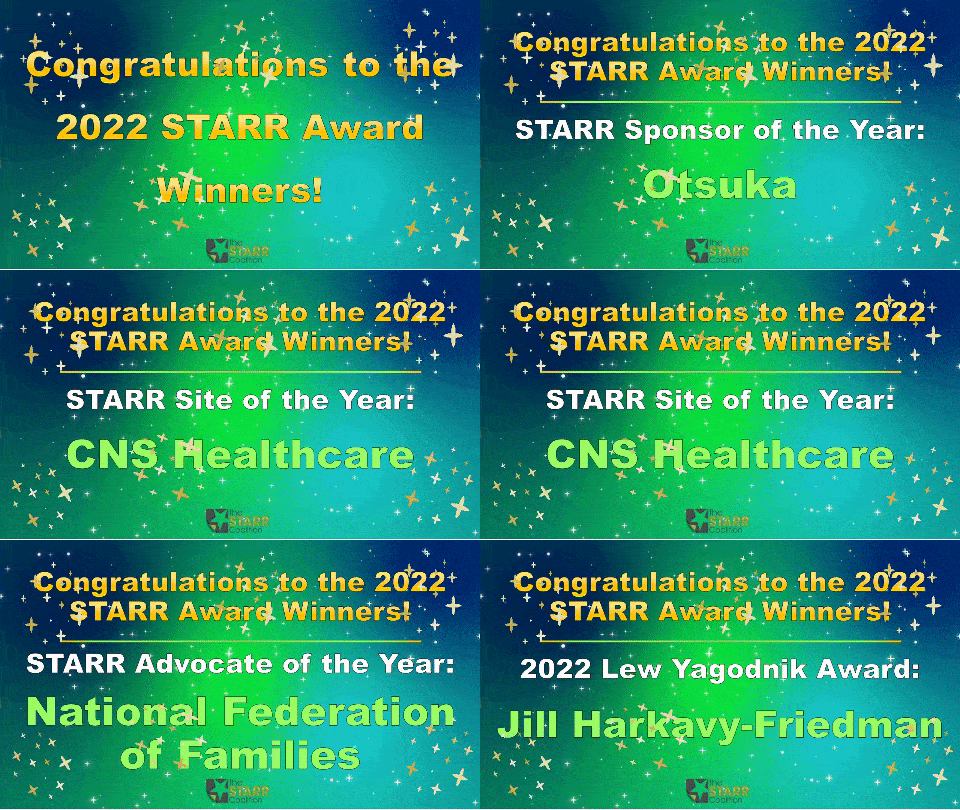
Did you miss the Annual STARR Awards Celebration?
Not to worry -- you can watch the video HERE.
|
|
January is
National Mentoring
Month
January is recognized as National Mentoring Month, a month-long opportunity to focus on being a mentor and raising awareness of mentoring. Founded in 2002, National Mentoring Month celebrates mentoring and the positive effect it can have, particularly on young people. Its goals are to:
- Raise awareness of mentoring in its various forms.
- Recruit individuals to mentor, especially in programs that have waiting lists of young people.
- Promote the rapid growth of mentoring by recruiting organizations to engage their constituents in mentoring.
This month, take time out to mentor or share some wisdom with someone, whether it's a young person, a friend, or a colleague. ❤
|
|
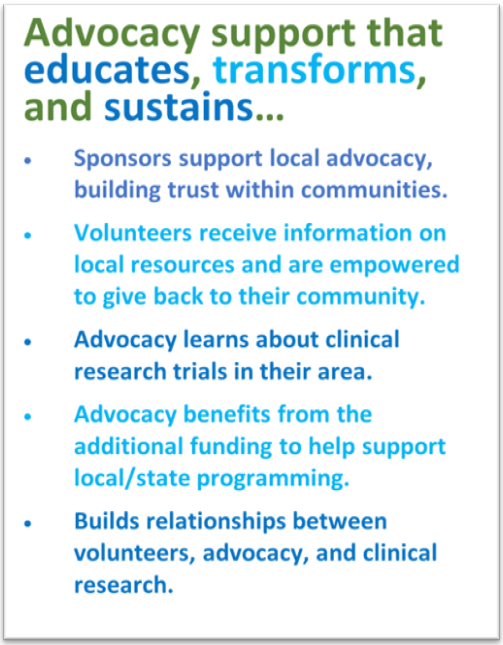
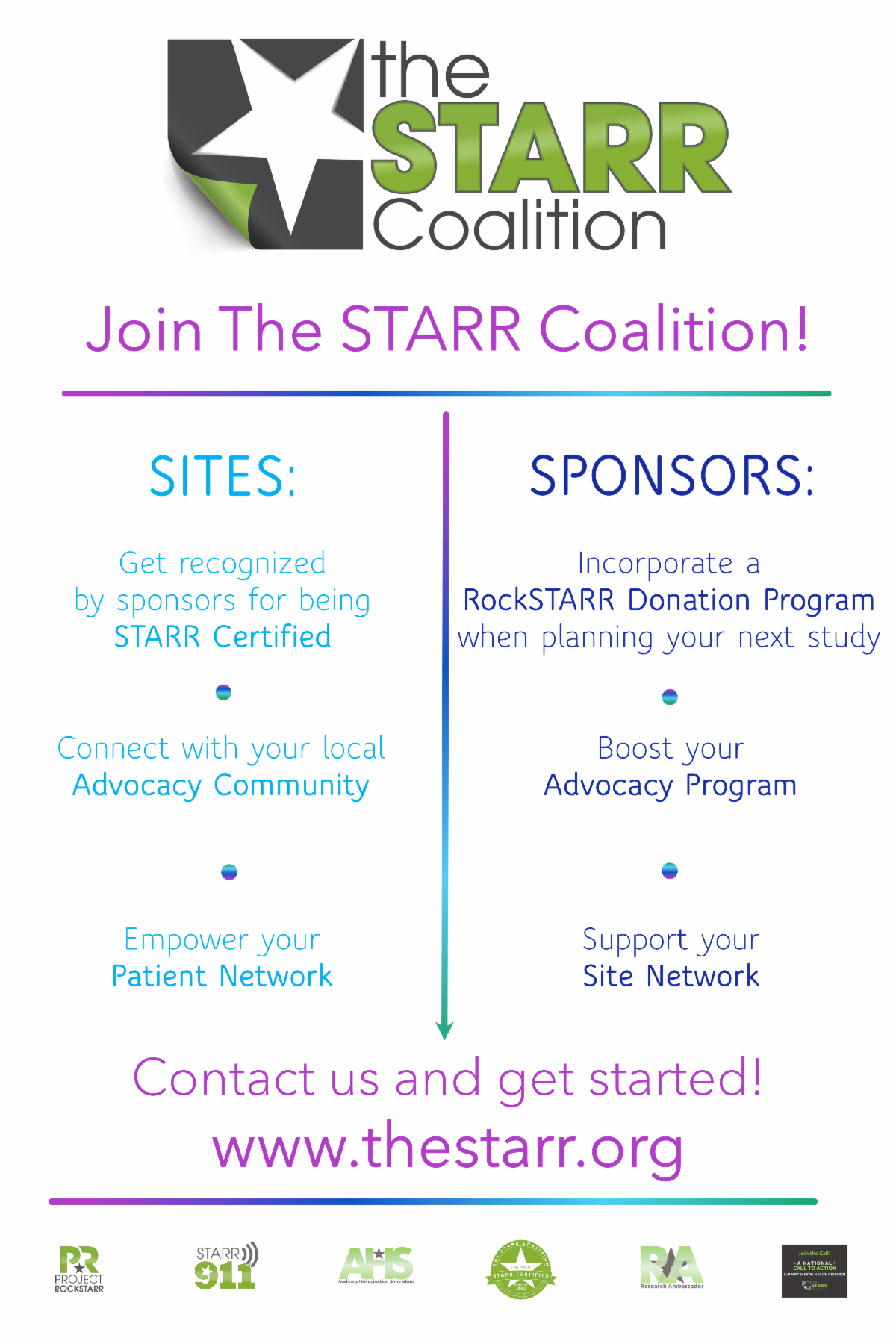
Project RockSTARR is a donation program that puts sponsors' advocacy support to work building relationships between advocacy and research at the local level, and supporting community efforts to help those living with mental illnesses. |
|
The RockSTARR program is simple: when a volunteer screens for a study, they are given information about the advocacy organizations and resources within their community. At that moment, the volunteer is given the opportunity to allocate a donation (provided by the Sponsor) to a local advocacy group.
This is a great way to empower volunteers to give back to their community and for the sponsor to support the volunteer beyond their research participation.
Contact us today to discuss how you can incorporate a RockSTARR program into an ongoing or upcoming study!
|
|
Spotlight on Four Pharma Social Media Campaigns
In November, PharmaVoice highlighted a few social media campaigns from 2022 that pharma ran with an aim to reach new audiences. By now, we're all familiar with the immense impact potential of social media, and even given the stringent communication regulations that pharma is bound by, these campaigns hit the mark, creating good will and brand recognition within the patient and provider communities.
|
|
Astellas Pharma’s TikTok Pulse venture
In August, Astellas took on TikTok for an unbranded campaign about menopause that was unique in nearly every way. Notably, it was the first campaign from the life sciences industry to utilize TikTok Pulse, a new monetization program on the platform that allows companies to place ads among the top 4% of videos.
And while the topic might seem like an odd fit for the platform, which is commonly thought to be dominated by Gen-Z, in reality over 35% of TikTok users are over age 30, and many are women.
After running for an initial 10 days and remaining on the platform through September, Astellas’ campaign garnered over 40 million views.
|
|
Janssen launched a Facebook Live series for nurses
Janssen's Facebook Live campaign aims to educate healthcare providers, and particularly nurses, about pulmonary hypertension. The “PHrontline Conversations,” campaign features a series of Facebook Live video discussions aimed at increasing awareness among nurses about issues facing patients with PH. Each episode hosts a panel of nurses and other experts from across the country who have firsthand experience caring for PH patients, and who talk about challenges in treating the disease.
|
|
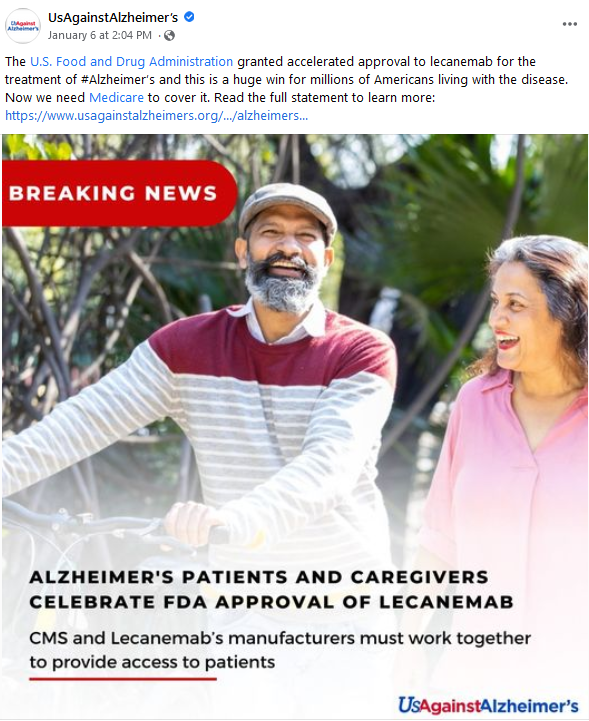
US Against Alzheimer’s targets decision makers
US Against Alzheimer’s used the tagline “Alzheimer’s patients can’t wait,” and blanketed television airways, digital news sites and social media platforms to influence the public conversation around whether Medicare should cover controversial treatments like Aduhelm when no other options are available. It used storytelling and emotional appeals, including videos of patient stories, to grab viewers’ attention. The technique also helped raise patient voices higher in what became a loud, national conversation.
|
|
Amgen’s story-based campaign
Great storytelling and a focus on patient voices are major factors bringing social media campaigns from good to great. Amgen’s “Every Patient Counts, Every Story Matters” series from the summer relies on empathy to convince people to open those metaphorical doors. The campaign, in partnership with the nonprofit StoryCorps, aims to increase understanding about different types of cancer by sharing audio and video diaries of patients’ personal stories. Each story was posted on the company’s YouTube channel, and many were shared on Twitter as 40 second clips.
|
|
ASENT Annual Meeting 2023, being held March 13-15, 2023, will be virtual and free to attend. Learn about the latest in neurotherapeutics including innovations across disease states, novel delivery systems, gene therapy and biomarkers, and drug therapies and devices. Learn more here.
The ADAA 2023 Conference will be held on April 13-16, 2023, in Washington, DC at the Renaissance Washington, Downtown DC. The theme for the conference is From Science and Technology to Evidence-Based Practice: Enhancing Access Through Integration. For more information, click here.
ACRP 2023 is being held April 28-May 1 in Dallas. The Association of Clinical Research Professionals (ACRP) invites clinical research professionals to join them to learn strategies, best practices, and creative solutions for improving clinical trial quality and advancing your career. Learn more here.
Save the date for the American Psychological Association (APA) 2023 Annual Meeting, May 20-24, 2023 in San Francisco, CA. When information becomes available, you can find it here.
|
|
The Annual Meeting of the American Society of Clinical Psychopharmacology (ASCP) to be held at the Loews Miami Beach Hotel on May 30 – June 02, 2023. Submissions are open for presentations and posters. Details can be found here.
|
|
NAMI's State Mental Health Legislation Report (2020-2021) -- On December 16th, NAMI released a new publication: the State Mental Health Legislation Report (2020-2021), which highlights and summarizes significant state mental health legislation from 2020-2021. This report can be used as a guide for mental health advocates and policymakers when looking to create comprehensive mental health policies in their states. Get more info and the report here.
Stress Link in the Brain Confirmed -- A new study out of the University of Iowa confirms a neural circuit that links the caudal medial prefrontal cortex to the midbrain dorsolateral periaqueductal gray which governs stress response. Through experiments with rats, the researchers showed how rats responded to a threat either passively or actively—and linked each reaction to a specific pathway in the brain. Clinching the connection, and how it regulates stress, is important, due to the known physical- and mental-health impacts of chronic stress.
Huge Unveiling of Schizophrenia Brain Cells Show New Treatment Targets -- The study out of the University of Copenhagen reveals a “hotspot” for schizophrenia in the upper prefrontal cortex of the brain. In this area, researchers identified distinct neural networks that may be responsible for the overall symptoms of schizophrenia. The researchers specifically studied post mortem brain tissue from adult patients with schizophrenia using control samples from non-schizophrenic brains.
Old Antipsychotic Drugs May Offer New Option to Treat Type 2 Diabetes -- Researchers at the University of Alberta have found that a class of older antipsychotic drugs -- Diphenylbutylpiperidines (DPBPs) -- could be a promising new therapeutic option for people with type 2 diabetes, helping fill a need among patients who aren’t able to take other currently available treatments.
|
|
CALL FOR SITES: TD STUDY PARTICIPATION
The STARR Certified sites have have received an email from us regarding Teva’s new study to assess the impact of tardive dyskinesia (TD) and real-world treatment patterns and outcomes. The Phase 4, multicenter, prospective, observational two-part study is the largest-ever study of its kind for TD and will collect information from both patients and physicians on TD. The study will evaluate how the condition progresses over time and impacts a person’s quality of life, as well as outcomes related to treatment with AUSTEDO (deutetrabenazine) tablets.
Read the press release HERE for a quick overview or visit the TD Impact Registry HERE.
|
|
Sites -- please share your feedback!
We are working with FCD on a clinical research site staff training program meant to quickly provide fundamental, practical skills for research site staff. The first part of this training will focus on newly hired staff that has little or no experience in clinical research.
Please help us by answering the following question:
What are the three greatest challenges for newly hired research assistants (select up to 3):
|
|
|
Please select up to 3 responses:
|
|
General understanding of the roles of sponsors, CROs, and regulators.
|
|
|
|
|
General understanding of site staff’s roles and responsibilities
|
|
|
|
|
Coming up to speed on research lingo/terms/language
|
|
|
|
|
Screening patients so that they will want to participate in the study
|
|
|
|
|
Engaging patients in an empathy-based, welcoming manner
|
|
|
|
|
Understanding the protocol / protocol comprehension
|
|
|
|
|
Documentation (what to write and what not to write)
|
|
|
|
|
Something else not listed
|
|
|
|
|
|
|
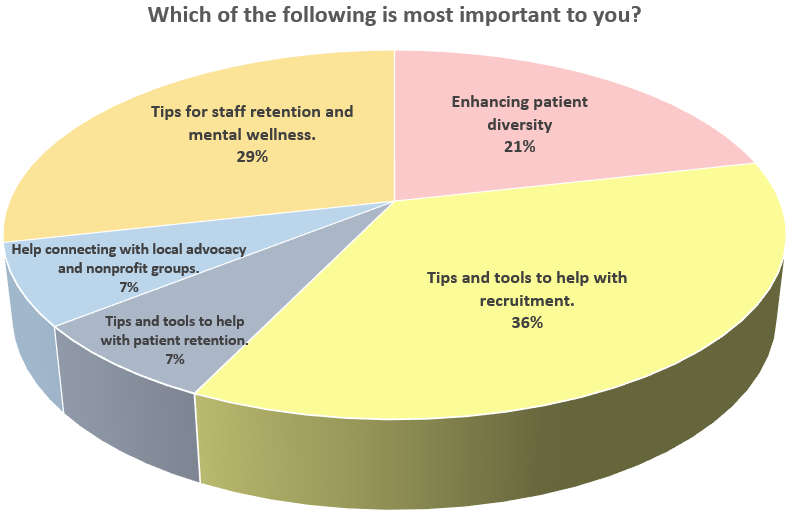
Results from last month's survey to sites: |
|
Thank you for reading!
If you have questions, comments, or would like to submit an item to be included in an upcoming newsletter, please email erica@thestarr.org.
|
|
The STARR Coalition is a 501(c)(3) nonprofit organization, our Tax ID # is 47-4634007.
|
|
The STARR Coalition | phone: 501-725-8890 | www.thestarr.org |
|
SHARE, CARE, AND BE KIND. |
|
|
|
|
|
|