|
|
Defending wildlife and habitat through:
Advocacy
Conservation
Education
|
|
|
News & Updates: June 2023 |
|
In this issue:
- AOK is growing! We are hiring a Sanctuary Manager
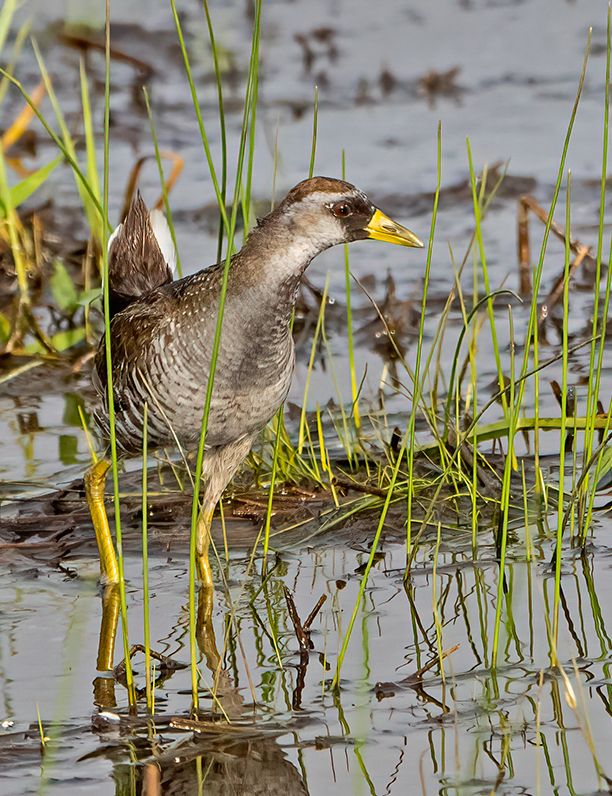
- Drought reduced numbers of secretive rails at Hutton
- What to do when you find an orphaned bird
-
Last Call for Volunteers at our Hutton
Work FUN Week!
-
Philanthropy Central: Donate stocks instead of cash to increase your tax deduction
- Save the date!
-
Chapter Spotlight: Smoky Hills Audubon Society celebrated National Prairie Day with hay rides, a native plant sale, and guided hikes
-
AOK Nature Walk Recommendations: Elk River Trail in southeast Kansas is one of the best trails in the state
|
|
|
Thanks to a generous endowment, we are able to add a full-time permanent position - a Sanctuary Manager! Our Sanctuary Manager will conduct hands-on habitat management, monitor wildlife to determine the effects of management, support ecotourism efforts, and contribute to a growing organization. The manager will need to reside near Bassett, Nebraska adjacent to our 5000-acre Hutton Niobrara Ranch Wildlife Sanctuary, and be willing to make several trips per year to Kansas for habitat management and monitoring and board meetings. Benefits include a flexible schedule, truck for travel and ranch use, 401k match, and more!
If you know someone interested in working for a small, but powerful nonprofit where they can really make a difference, please let them know about this opportunity. Maybe that person is you!
|
|
|
Drought reduced numbers of secretive rails at Hutton |
|
Like much of the Midwest, Nebraska experienced a prolonged drought which started in early summer of last year. Although there have been some recent rain events in Rock County, the location of the Hutton Niobrara Ranch Wildlife Sanctuary, the area is still under 'severe drought' conditions.
We knew that this would likely have an effect on our waterbirds that depended upon rain-filled marshes to breed, but we did not know how much of an effect it would have. Luckily, we had data from last year, the first year of our marsh bird surveys.
Last year, we detected 15 Virginia Rail and 7 Sora using the wetlands. This year, we detected 7 Virginia Rail and only 1 Sora using the same protocols.
These results just validate the need to make the wetlands more extensive, as we were already planning on doing this summer in cooperation with the US Fish and Wildlife Service as part of our wetland easement. By increasing the size of the existing berms and adding water control structures, we can better control water levels in order to ensure that these birds will have adequate marsh habitat, even in dry years.
|
|
|
What to do when you find an orphaned bird |
|
It's nesting season and we wanted to repost the information we shared in the spring about what to do when you find a bird you think has been abandoned.
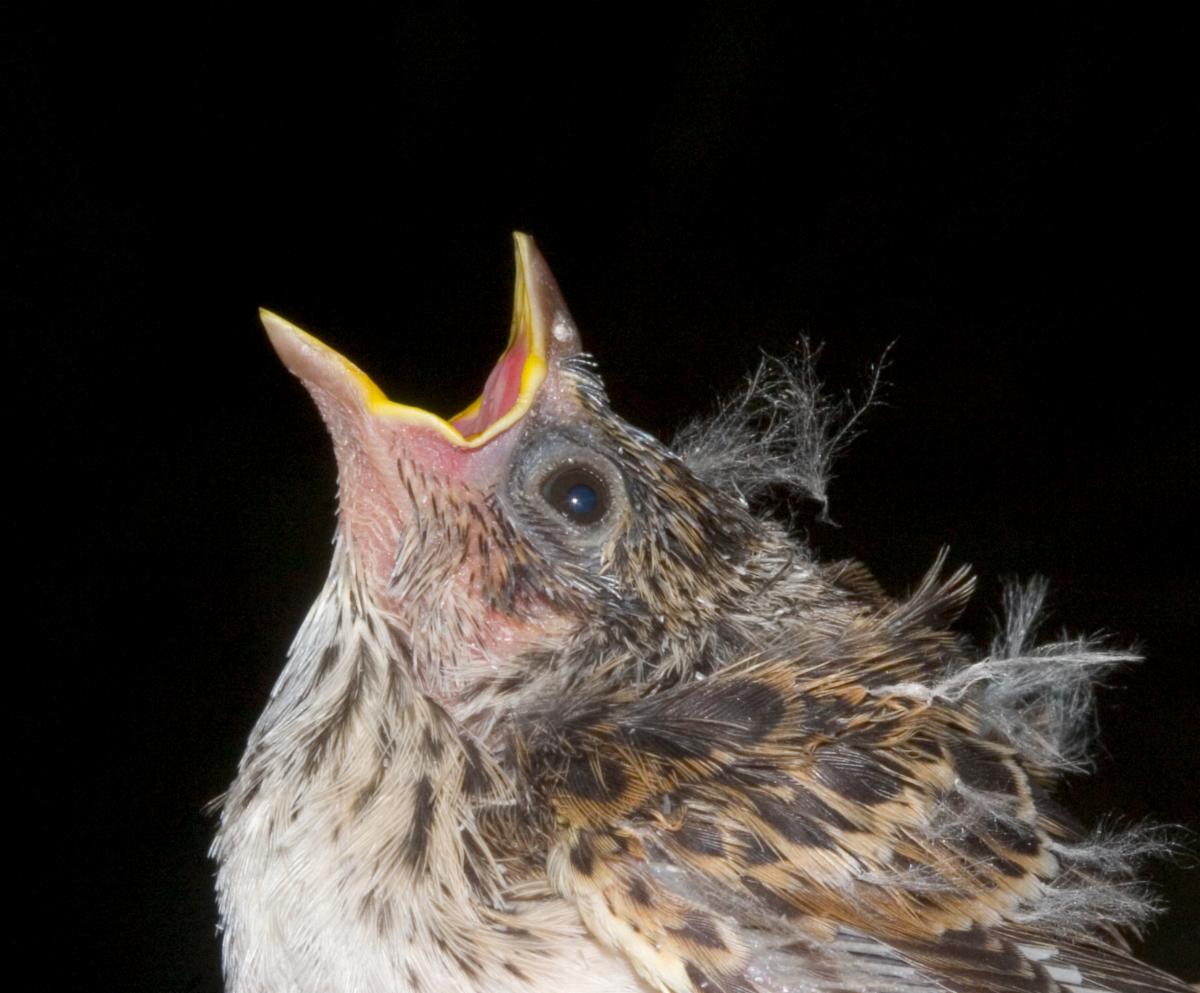
In most cases, worry not. If you see a baby bird hopping on the ground with parents fluttering nearby, it is a fledgling and does not need help from humans (such as the bird pictures to the right). If you see a baby bird only partially feathered and unable to walk or fly, it may indeed need help. Your first choice should be to locate the nest it fell from and, if possible, place it back in. It’s a myth that an adult bird will reject a baby touched by humans, and a baby bird stands the best chance of recovery being raised by its parents. If the nest is on the ground, you have another opportunity to keep it in the care of its parents. You can place the nest in a small plastic tub with holes about the diameter of a pencil cut in its bottom for drainage, put the babies back inside, and secure it back in the tree in the general vicinity. Watch closely; it’s very likely the parents will accept the new nest and continue to raise their babies in it.
If these attempts have failed, it’s possible you’ll need to take the orphaned birds to a local wildlife rehabilitation shelters or drop-off locations. In appreciation for their work to save such orphaned and/or injured birds, Jayhawk Audubon has recently made gifts of $500 each to the following local organizations in the Lawrence area: Operation Wildlife, Northeast Kansas Wildlife Rescue, and Prairie Park Nature Center (a drop-off site for Northeast Kansas Wildlife Rescue). We hope you will support them, too!
To find a licensed wildlife rehabilitator near you, look through THIS LIST of wildlife rehabilitators.
|
|
|
Last Call for Volunteers at our Hutton Work FUN Week! |
|
Our 'work' weeks are growing in popularity! And who wouldn't want to come? You get access to a 5000 acre wildlife sanctuary that is not open to the public. You feel good doing habitat improvements for wildlife and making the place more comfortable for visitors. Most importantly, you get to hang out with others that love nature - just like you!
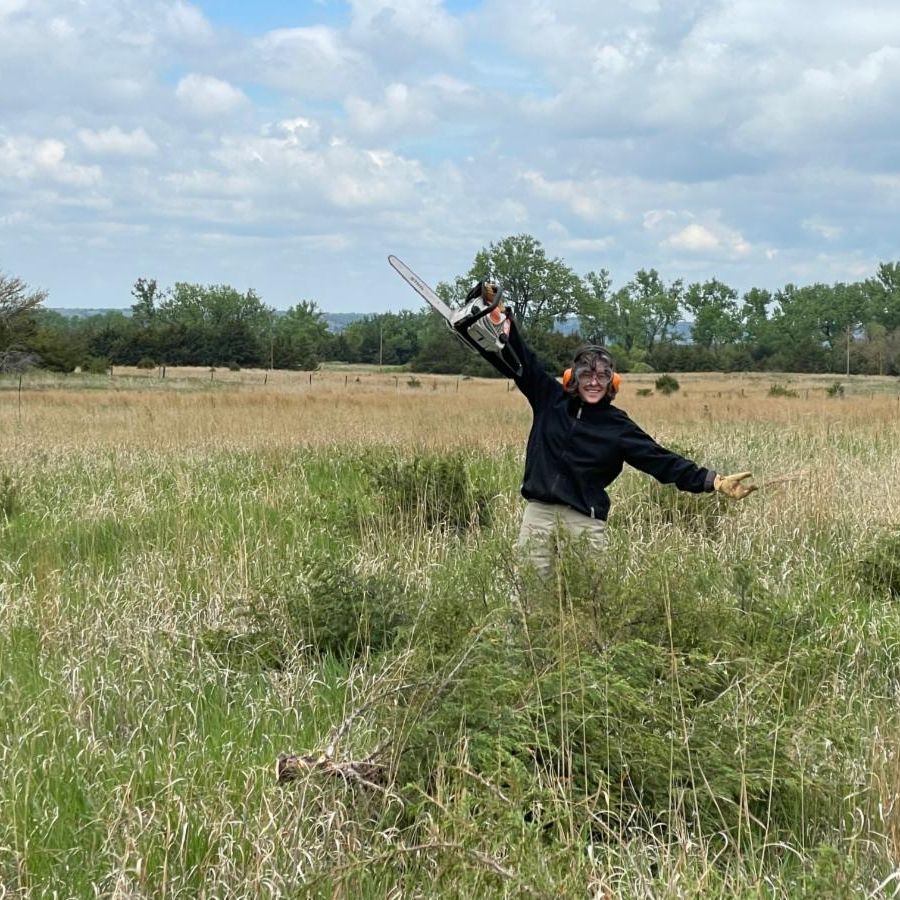
Volunteers generally arrive Monday afternoon. There is an orientation to the place and a nice dinner. Tuesday through Thursday, we start our day with doing 'work' while the temperatures are tolerable outside. We have a variety of work so that all skill levels can participate. Work generally involves cutting cedars for habitat improvement, painting inside areas of guest houses to make them feel more welcoming, sorting and documenting Hutton artifacts, and other odd jobs.
In the afternoons, we may visit nearby wild places to get ideas for habitat management, visit a museum for inspiration in improving our Hutton displays, or walk in a creek looking for mollusks.
The evenings, you are on your own. You can go for a hike, look for wildlife, or just relax on the porch.
Free lodging will be provided to volunteers in our two guest houses. They are complete with a full kitchen with pots and pans, a private bedroom, shared bathrooms, and plenty of space to relax. AOK will provide dinners, but volunteers should bring their own food for breakfast and lunch. Volunteers may also want to bring work gloves, hiking shoes, binoculars, insect repellent, sunscreen, and any other equipment needed for a safe and comfortable time outside.
Hutton is near Bassett, NE. Opportunities to carpool may be available. Directions provided when RSVP received. Volunteers can help out for longer or shorter periods of time if they cannot stay the entire week. RSVP is required to participate in this event. Call, text, or email Jackie at jackie AT audubonofkansas DOT org or 537-4385 (area code 785).
Photo: Elizabeth Dodd showing off her chainsaw skills
|
|
|
Philanthropy Central:
Donate stocks instead of cash to increase your tax deduction
|
|
Many donors say they would contribute more if they could take an increased tax deduction—but most aren’t taking full advantage of the deductions that are already available. One way to make donations without touching your cash is by giving appreciated assets such as stocks directly to a nonprofit instead of liquidating them first. In doing so, you may not need to pay capital gains taxes on the stock’s appreciation, and thus increasing your donation while decreasing your tax exposure. To find out more, contact your tax advisor, broker or financial planner. |
|
|
Audubon of Kansas is planning events for the coming year. Mark these events on your calendar!
July 24-28: Hutton Work Week
September 10: Achterberg Work Day 10am-3pm
September 25-29: Hutton Work Week
Oct 1: Open House at Hutton
Oct 21: Bird banding demonstration at Achterberg *NEW*
November 3-5: Celebration of Cranes at Quivira National Wildlife Refuge
February 25-March 10, 2024: AOK-sponsored trip to Guatemala
Hutton is AOK's sanctuary near Bassett, Nebraska
Achterberg is AOK's sanctuary near Lincoln, Kansas
|
|
|
Chapter Spotlight: Smoky Hills Audubon Society celebrated National Prairie Day with hay rides,
a native plant sale, and guided hikes
|
|
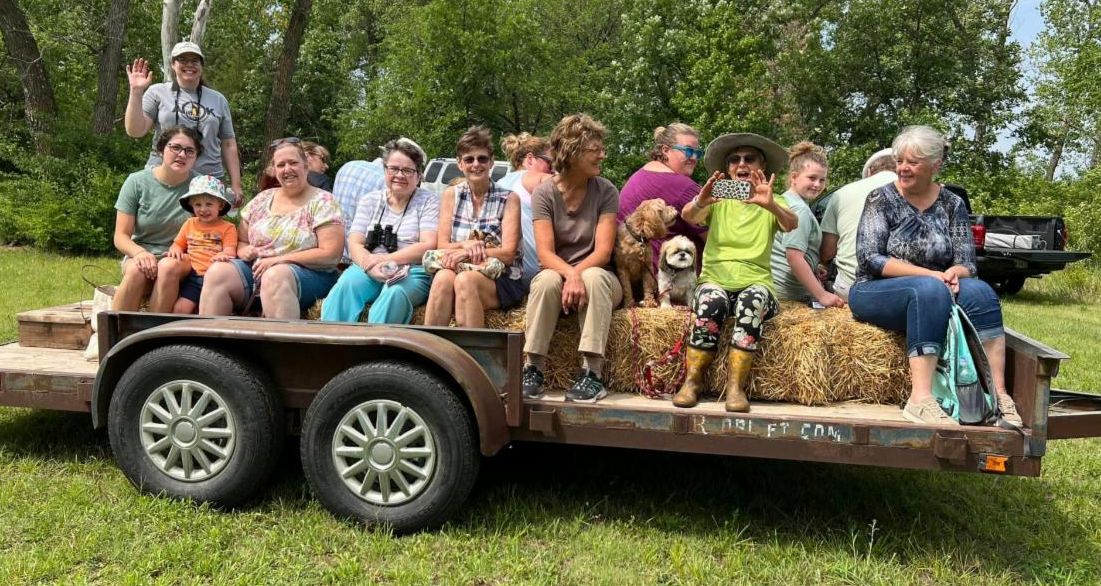
Over 50 people attended Smoky Hills Audubon's celebration of National Prairie Day at their sanctuary at 2700 West Stimmel Road in Salina. National Prairie Day is celebrated annually on the first Saturday of June. It was created by the Missouri Prairie Foundation to raise awareness of a North American ecosystem that has significant biodiversity value and needs preservation.
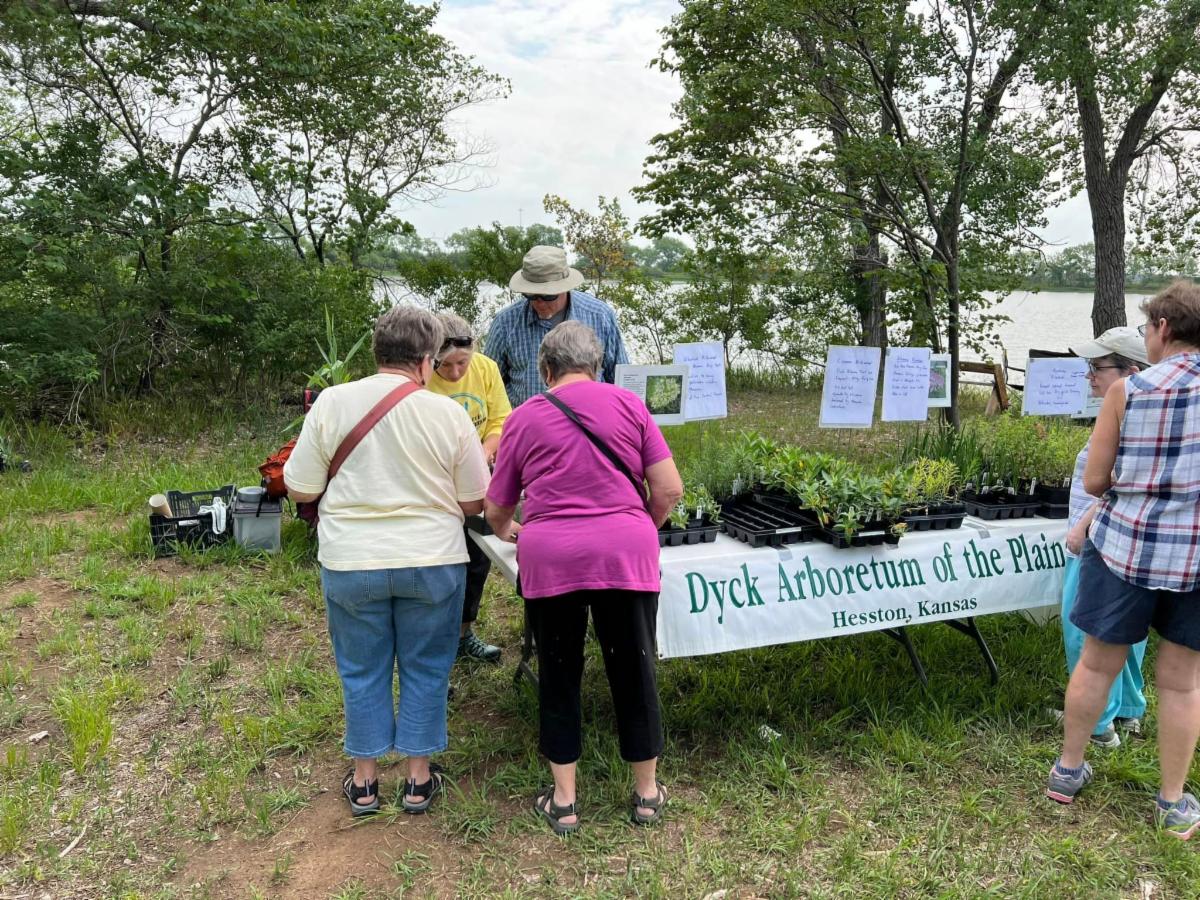
The celebration included hayrack rides for people to tour the prairie without having to walk. Dyck Arboretum sold native plants, including many hard-to-find prairie species. Jackie Augustine, Executive Director for AOK, provided guided bird walks focusing on bird identification by sound. Everyone had a great time!
|
|
|
AOK shares favorite walks,
hikes and birding spots!
|
|
Elk River Trail in southeast Kansas is one of the best trails in the state
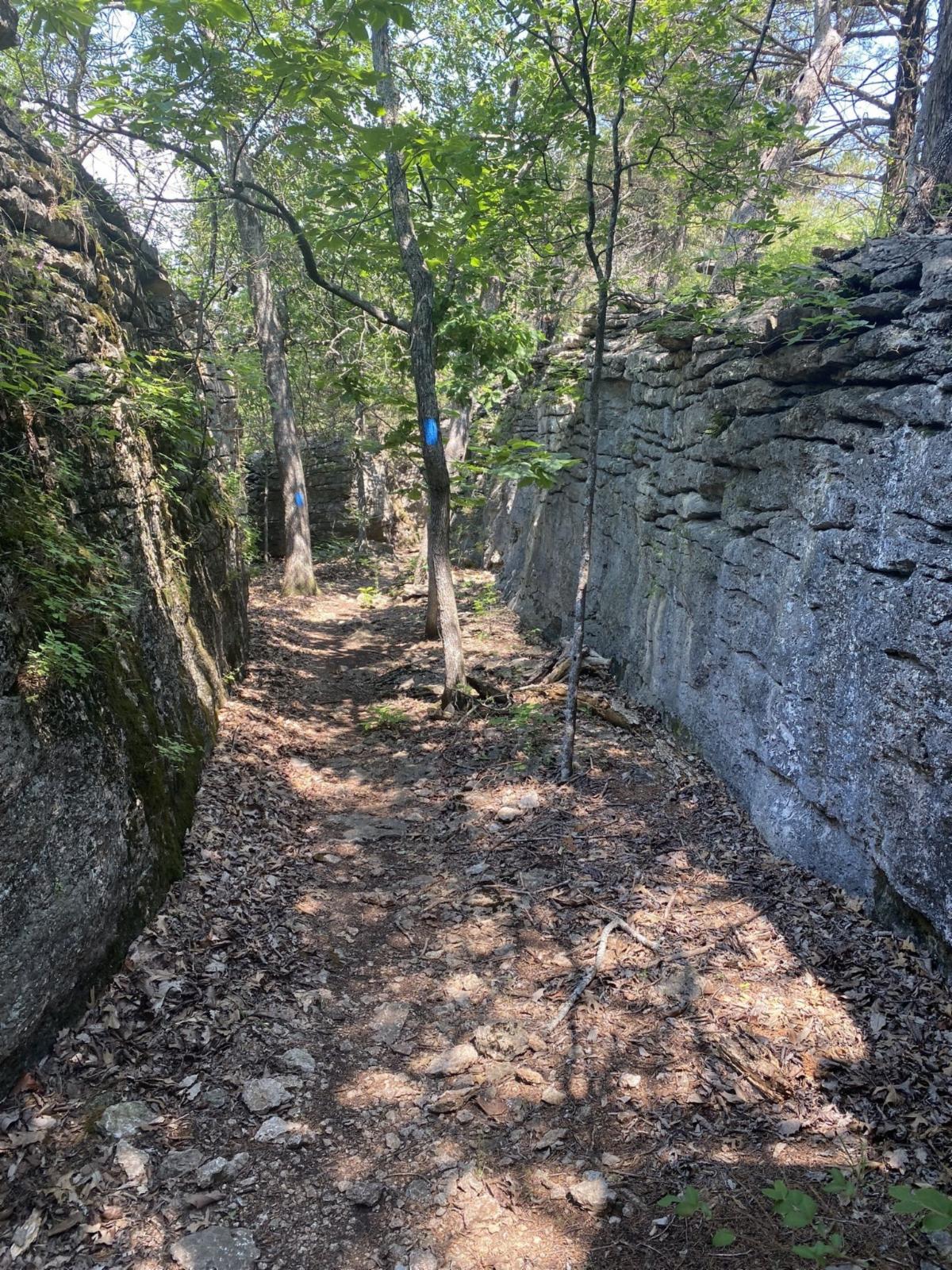
The Kansas Trail Guide by Jonathan and Kristin Conard lists the Elk River Trail as one of the Top 10 Trails in Kansas. This trail is not for the faint of heart! It is 15 miles, one way, and is set up for backpackers. However, the trail is accessible at three trailheads, and you just have to turn around and return to your starting point when you think you have traveled far enough. What attracts people to this trail are the spectacular views and the rock formations that make up the Osage Cuestas. The beauty of this trail is in the rock formations
The Conards describe these highlights in their book: From the east trailhead, the trail climbs upward through a deep corridor in the rock bluffs and over giant ledges and shelves where you are rewarded with wonderful views of the lake. From the middle trailhead 9.5 miles from the east trailhead, you could head east a couple miles to see picturesque Pennsylvanian limestone rock formations or west to see a rock ledge overhanging a brook and "soak in the wilderness experience." About 2.5 miles east from the west trailhead, there is a waterfall in addition to limestone outcroppings.
The east trailhead is located at 37.281618, -95.800167, across the street from the Elk City Fish and Wildlife Office at 5089 County Road 2925, Independence, KS 67301.
The middle trailhead can be found at 37.259532, -95.860598 and can be reached via Elk City by going east on 5250, south on 2100, east on 5000, and south on 2175.
The west trailhead is much easier to find. It is about 2 miles south of Elk City on Highway 160 (37.267964, -95.900660) before the road crosses the Elk River.
If the Elk River Trail is too intimidating, you may opt for the Green Thumb Nature Trail, also at Elk City State Park. This 0.6 mile trail is perfect for a leisurely stroll. This trail is located at 37.258664, -95.779072 on the east side of the lake near the Timber Road Campground.
Trail recommended by Cindy Ford from Sperry-Galligar Audubon. She was struck by the impressive rock outcrops.
|
|
|
Lana Arrowsmith - Hutton Niobrara Coordinator - Hutton Sanctuary Management & Reservations lanamicheel@gmail.com
Audubon of Kansas
PO Box 1106 - Manhattan, KS 66505
785-537-4385
|
|
|
|
|
|
|