e-Newsletter | May 7, 2021 |
|
PART II: The Amazing Abolitionist Adventures of
Grumpy Josh(ua) Coffin
by Bethany Groff Dorau
|
|
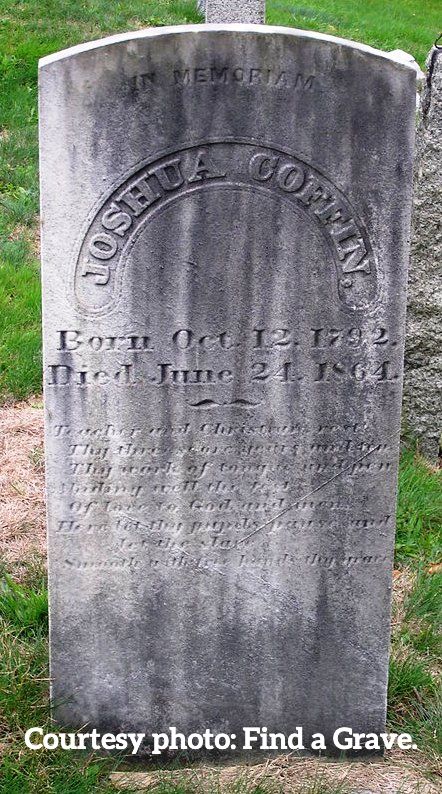
It began at the end – with an epitaph.
"Teacher and Christian rest!
Thy threescore years and ten
Thy work of tongue and pen
Abiding well the test of love to God and men.
Here let thy pupils pause
And let the slave smooth with free hands, thy grave."
But no, it began when I found the picture of John Greenleaf Whittier that used to hang over my great-grandmother’s bed.
Or maybe it began in 1999 when I started giving tours of the Coffin House and learned that Whittier was a dear friend of Joshua Coffin, who was his schoolteacher, the man who introduced him to poetry.
And because of the picture that used to hang over the bed of Mary Dyer (Noyes) Poore, I knew exactly who Whittier was and had fought my way through several volumes of his poetry (a slog at times, but such beauty in those archaic lines). And this is how, four years ago, after many hours of looking for Joshua Coffin’s grave in the First Parish Burying Ground, I knew at once that these lines were written by his old friend, with genuine admiration, gratitude and grief.
I introduced you to Joshua the cranky antiquarian in last month’s newsletter. He was a man in love with history, with the meat and marrow of the past.
|
|
Whittier wrote “Thou art walking with the dead,” “Tabernacled in the Past.”
Joshua would understand exactly what I meant when I say I met him long after his death. Because of this, he also knew that his great-great grandfather Nathaniel had enslaved an African American man named Jack, who was then passed on, along with his property, to his son, Edmund. He would surely have known that in 1771, his great-grandfather, Joseph Coffin, had enslaved a woman named Lucy, who was divided up between his daughters, Joshua’s great-aunts, each half of her life valued at 45 pounds.
Joshua was born in 1792, just nine years after slavery was abolished in Massachusetts, and though he may not have met Lucy or Jack, he certainly knew of them. The graves of Nathaniel, Edmund and Joseph Coffin, along with the rest of the family, hug the hill across the street from the Coffin House. It took me years to find Joshua, his plain white stone clear across the burying ground. It is possible that the family plot was full, though his cousin, who died thirty years later, is buried with the others. I find it more likely that in death, as in life, Joshua’s grave is a symbol of his separation from his enslaving ancestors.
|
|
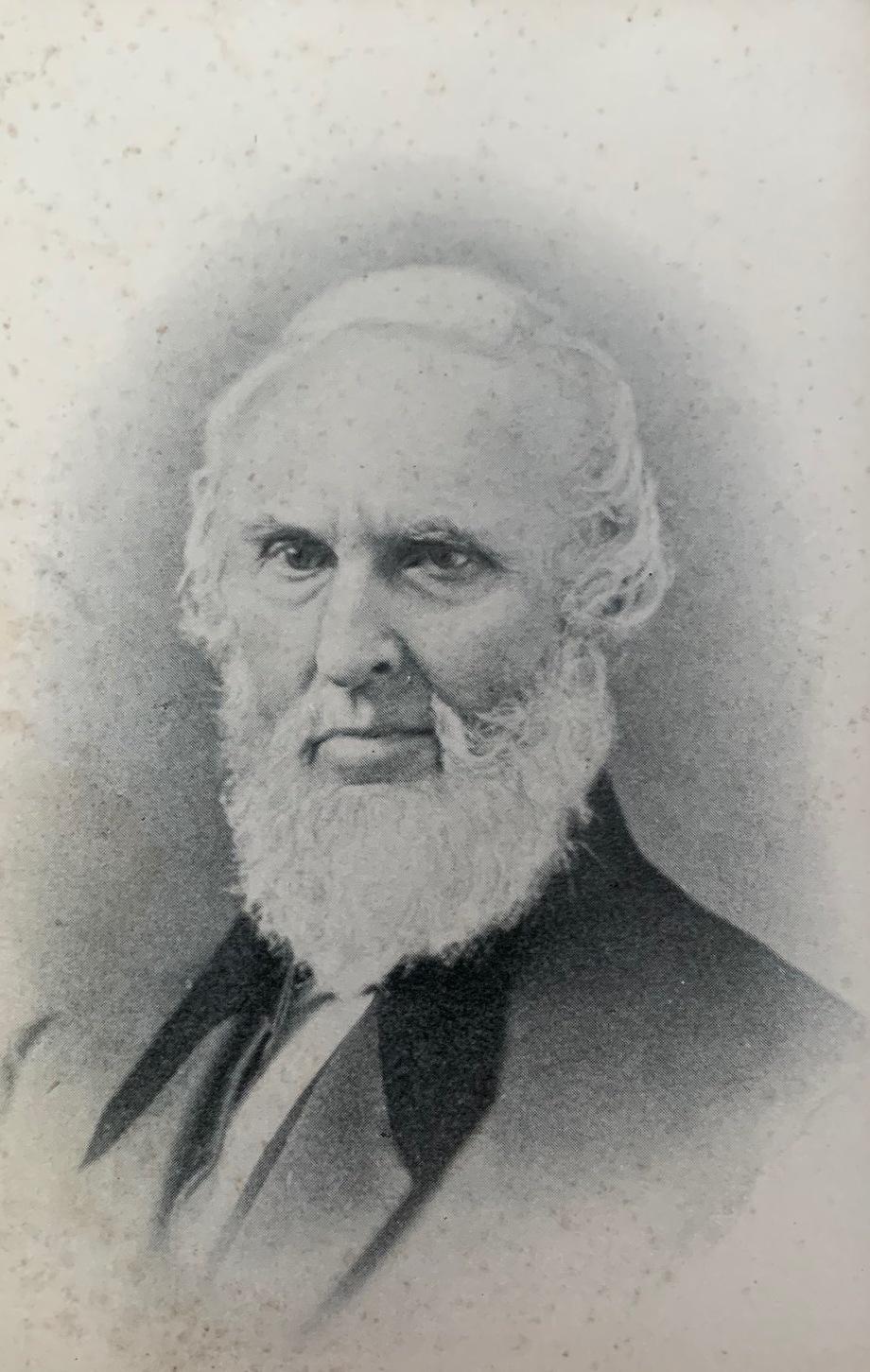
John Greenleaf Whittier portrait from above Mary Dyer (Noyes) Poore's bed. Courtesy photo, Bethany Groff Dorau. |
|
“And let the slave smooth with free hands, thy grave."
It was another two years before I came upon Joshua Coffin’s obituary on the front page of the July 1, 1864 issue of William Lloyd Garrison’s abolitionist newspaper The Liberator.
Garrison writes of Coffin that he was one of the twelve “apostles of the cause” who founded the first abolition organization in Massachusetts, and “set in motion that ball which now shakes the world.”. He “ever after ardently acted in behalf of the slave.”
Joshua Coffin, despite his scholarly credentials, was a man of action in the cause of abolition. He pressed insistently for immediate abolition, at a time when gradual emancipation or resettlement was considered a more reasonable approach to ending slavery.
When the New England Anti-Slavery Society was founded in 1832, he was one of the loudest voices insisting on a platform of immediate emancipation. One year later he had moved to Philadelphia, where he would craft and sign the groundbreaking Declaration of Sentiments of the fledgling American Anti-Slavery Society.
Coffin and his fellow abolitionists made it clear that they would accept no half-measures. “We regard as delusive, cruel and dangerous, any scheme of expatriation which pretends to aid, either directly or indirectly, in the emancipation of the slaves, or to be a substitute for the immediate and total abolition of slavery.”
From 1834 to 1837, Coffin was the manager of the American Anti-Slavery Society, helping to organize branches across the country, distributing Garrison’s newspapers, raising money to feed and clothe the formerly enslaved people who passed through Philadelphia, many in transit to Canada.
But make no mistake – Joshua Coffin was not a paper abolitionist. He had been teaching school since he was seventeen, and in Philadelphia he taught at a school for the children of the formerly enslaved. He also worked at the post office, his position there under constant threat from anti-abolition forces.
Even before the Fugitive Slave Act of 1850, African Americans living in free states were in danger of being kidnapped and enslaved, and when two men were kidnapped in Philadelphia in 1838 and shipped to New Orleans, Coffin followed them. He drove freedom wagons through Maryland, and stood in the woods of Tennessee at midnight, whistling messages of safety and friendship to fleeing families.
Coffin had no illusions about the culpability of so-called free states, and even in Philadelphia, abolitionists were hated by many racist residents who resented the presence of African Americans who settled there. He was nearly killed when an anti-abolition mob burned Pennsylvania Hall to the ground in 1838, and lost his job in 1840, when the postmaster was forced to fire him.
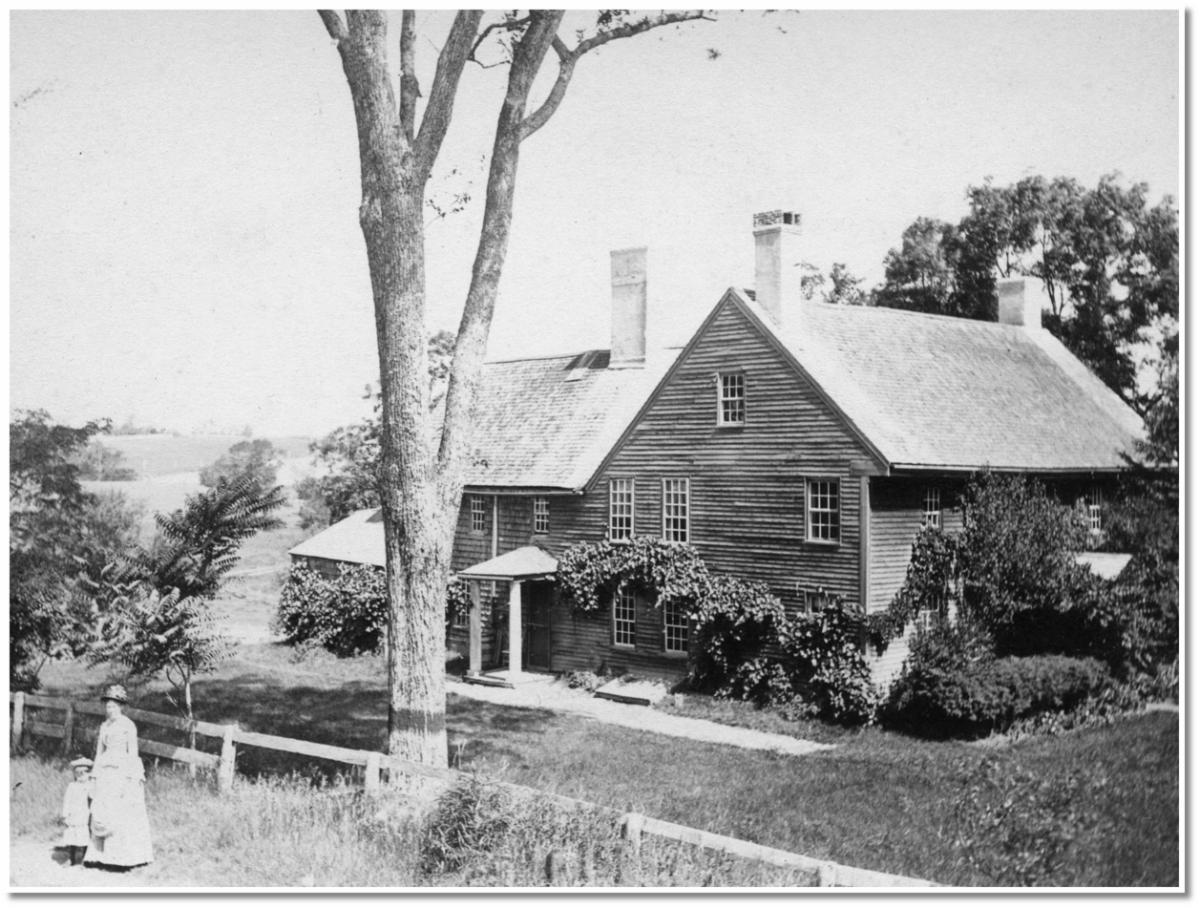
Coffin left Philadelphia in 1843 in poor health and came back to Newbury, to the house where he was born.
|
|
Tristram Coffin House, Newbury, Mass., built 1652. From the collections of the Museum of Old Newbury. |
|
Though he continued to be deeply involved in abolitionist work, he turned his energy to research and writing, intending to prove, in part, that the institution of slavery was rejected by influential Puritans, particularly those associated with his beloved Newbury.
He completed his magnum opus, A Sketch of the History of Newbury, Newburyport and West Newbury, in 1845, along with family histories of early Newbury settlers.
In 1860, fighting depression and dementia, and with the nation on the cusp of the Civil War, he completed a book that brought into sharp focus the other great love of his life. An Account of Some of the Principal Slave Insurrections was Coffin’s answer to those who claimed that emancipation was dangerous.
Not so, Coffin argued. It is enslavement that is dangerous, and those who have risen against it were fully justified. “The consequences of holding slaves in bondage…have always been disastrous.”
The next time you are wandering around the First Parish Burying Ground, please stop at his grave as Whittier instructed, and tell him I’m glad to know him a bit more fully, after all this time.
|
|
A regular contributor to the Museum of Old Newbury's e-Newsletter, Bethany Groff Dorau is a historian, writer and Regional Site Administrator for Historic New England, based at the Spencer-Peirce-Little Farm in Newbury. Some of the material used in this story is taken from Dorau's book, A Brief History of Old Newbury (History Press).
Editor's note: Inconsistencies in spelling of names, etc., are from the historical record and not a typographical error.
|
|
|
|
...We Need Volunteers!
Saturday, June 12 and Sunday June 13, 2021, from 10 a.m. – 4 p.m., the Museum of Old Newbury will host its 42nd annual Garden Tour: Sowing the Seeds: A Season of Renewal.
Due to ever-changing COVID protocols, this year's tour is a “hybrid.” The tour itself will be in-person, but all tickets will be sold online, in advance (none will be available at the gardens, but you can order online the day of the event).
Those who purchase a "ticket" will be provided a secure link to access the digital program book on their cell phone or tablet (this link will include all addresses, garden owner information and more).
|
|
Our highest priority this year is to keep everyone safe, while also offering our community a chance to comfortably enjoy this wonderful, long standing tradition.
We have nine gardens on this year’s tour, so we need many volunteers to make tour successful! There will be a mandatory training (online or by phone) for all volunteers. This year, we ask that each volunteer help us to maintain COVID protocols by ensuring all attendees:
- Wear a mask;
- Stay six feet apart; and
- Adhere to garden occupancy limits.
In addition to the above, we ask that as a volunteer, you stroll the gardens periodically to ensure that there are no problems. We are offering 3-hour shifts and a free garden tour ticket to each sitter.
Still digging around for a Mother's Day Gift?
Consider spending an afternoon touring the beautiful gardens featured in this year's Annual Garden Tour "Sowing the Seeds: A Season of Renewal." Or buy her (and yourself) a membership to the Museum of Old Newbury ($40) and receive 2-for-1 Garden Tour ticket pricing!
|
|
Puzzle Me This...
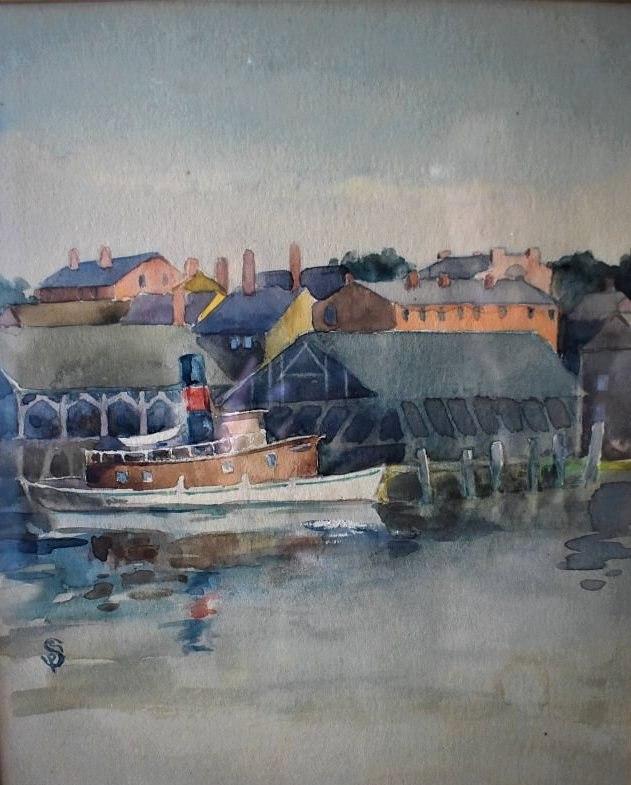
Tugboat on the Merrimack
Water color on paper
Cornelia Perrin Stone (1855-1940) was an American watercolor artist popular in the early part of the 20th century. She grew up in a stately brick dwelling house on the northwest corner of State and Greenleaf Streets and descended from an old Newburyport family. The Museum of Old Newbury holds a sizable collection of her watercolors of local and regional landmarks.
Click on image to begin.
|
|
Miss a Recent MOON Program? Watch here. |
|
Thanks to the wonder of the Zoom platform, all of our programs are recorded and available online shortly after presentation. Visit our website for upcoming events, previous recordings, including the four 2020 Virtual Garden Tours, our Annual Meeting, children's and holiday programs, as well as all episodes of "Yeat Yeat, Don't Tell Me!"
In lieu of a printed program book, we will be featuring monthly events here, as well as maintaining a complete list on our website: www.NewburyHistory.org.
All of our virtual programs are free, however donations are gratefully accepted to help defray speaker fees.
|
|
"Yeat Yeat, Don't Tell Me!" Airs 25th Show; Dynamic Duo Celebrates 1 year on May 14! |
|
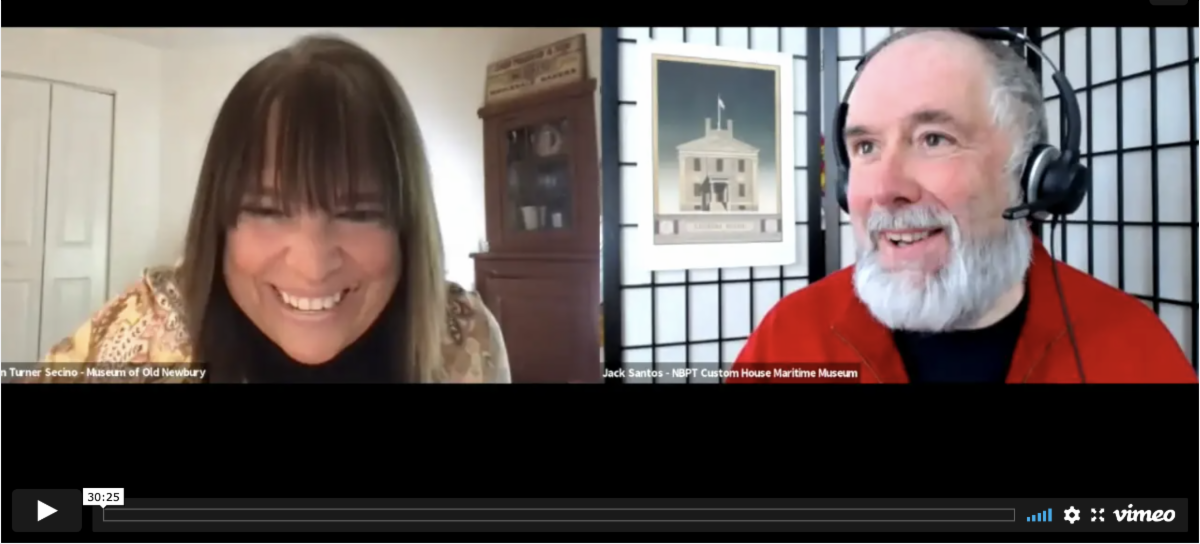
Jack Santos, Custom House Maritime Museum, and Colleen Turner Secino, Museum of Old Newbury, hosted the 25th episode of the fast-paced Newbury-area historical trivia show this past Friday, April 30 (watch here) and will celebrate their first complete year on Friday, May 14, 2021.
Whether you want bragging rights or the chance to win some great prizes, "Yeat Yeat, Don't Tell Me!" has something for everyone.
Add to your calendar and plan to join us at noon on Friday, May 14, 2021, by Zooming in here.
|
|
REGISTER:
Thursday, May 20, 2021 @ 7:00 p.m.
Lucinda A. Brockway is the Program Director for Cultural Resources at The Trustees of Reservations where she is responsible for 112 properties and 25,000 acres of Massachusetts cultural landscape.
Join us for her online presentation, Cushing House Garden: A Closer Look, when she shares the history, restoration and evolution of the MOON's Cushing House Garden. A Zoom link will be sent closer to the date. Registration closes at 4:30 p.m. on day of the event.
|
|
|
|
REGISTER:
Thursday, June 10, 2021 @ 7:00 p.m.
The East India Marine Society Museum was one of the most influential collecting institutions in 19th-century America.
"Collecting the Globe" presents the first in-depth exploration of the Museum, the precursor to the internationally acclaimed Peabody Essex Museum (PEM).
Join PEM Associate Curator George Schwartz as he explores the practices of collecting, exhibiting, and interpreting a diversity of international objects and art in the early United States.
This is a virtual event. Register here and a Zoom link will be sent closer to the date. Registration closes at 4:30 p.m. on day of the event.
|
|
Something is Always Cooking at the Museum
Mother's Day is Sunday, May 9...and she deserves a treat! Katie Haried's stuffed toast will dazzle and delight the most important woman in your life.
Banana Stuffed French Toast
1 firm ripe banana
3/4 cup half-and-half
2 large eggs
1 teaspoon vanilla
1/4 teaspoon cinnamon
1/4 teaspoon freshly grated nutmeg
4 (1-inch) thick slices day-old challah or brioche
2 tablespoons unsalted butter
Confectioners' sugar for dusting
Warm maple syrup
In a bowl, whisk together half-and-half, eggs, vanilla, cinnamon and nutmeg. Set aside. Make a pocket in each slice of bread by slicing horizontally through the bottom edge and gently pushing through to the crust without piercing the sides or top. Slice the banana in 1/4-inch slices. Stuff each pocket with 4-6 banana slices (do not overstuff). In a baking dish just large enough to hold bread slices in one layer, arrange slices and pour egg mixture over. Soak slices, turning then over once or twice to allow bread to absorb all liquid, about 15 minutes. In a 12-inch nonstick skillet, melt butter over low heat until foam subsides and cook slices until golden, about 5 minutes per side. Dust French toast with confectioners' sugar and serve with syrup. Serves 2.
|
|
During this difficult period of COVID-19, we rely on your support more than ever. We continue to develop new, online programs for you to enjoy and keep us connected and look forward to in-person events as protocols for safety loosen. We hope, if you are able, that you will consider a donation to the museum. Thank you for your continued support.
|
|
Museum e-Newsletter made possible through the
generosity of our sponsors:
|
|
|
Museum of Old Newbury
98 High Street
Newburyport, MA 01950
978-462-2681
|
|
|
|
|
|
|
|