August 19, 2020
Top stories
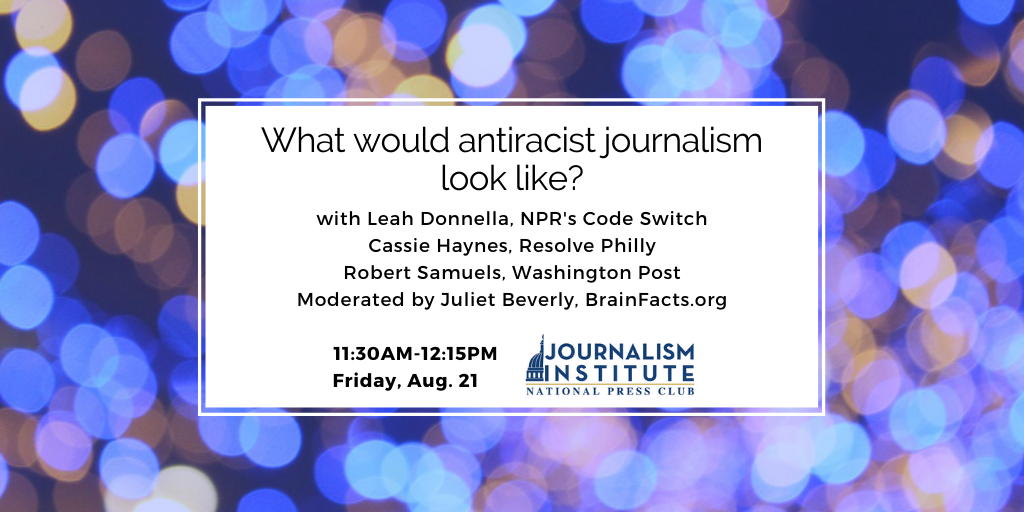
As racism and the treatment of people of color in and out of newsrooms has surged to the forefront of conversations, against the backdrop of a pandemic that disproportionately impacts people of color, journalists face many questions: When do ‘objectivity’ and ‘neutrality’ mask inequity? How do journalists move from covering protests to systemically telling stories that root out racist treatment in health care, education and other social spheres? And how can journalists practice antiracism in their everyday work?

Join us as Leah Donnella of NPR’s Code Switch, Cassie Haynes of Resolve Philly and Robert Samuels of The Washington Post discuss “What would antiracist journalism look like?” Juliet Beverly of BrainFacts.org will moderate.

Registration is open for this program, which will take place on Friday, Aug. 21, 2020.
Until this month, the United States Postal Service didn’t make many headlines. Now, Motherboard senior writer Aaron Gordon devotes an entire beat to the mail. 

Gordon started covering the USPS after learning last year that mail trucks were catching on fire. His reporting eventually sparked an idea to launch The Mail, a weekly newsletter focusing on the USPS as a crucial component to American democracy, delivering both mail-in ballots during a pandemic and vital supplies and information that help hold society together.

The newsletter is free, and there is an option for printed zines to be mailed to paid subscribers. Content is a mix of historical context and current issues facing the institution. 

We reached out to Gordon by email to find out more about The Mail’s goals, freemium model and what’s next.
 
How did the USPS become your beat?

Gordon: Last year, I filed a public records request with the USPS regarding their iconic Long Life Vehicles catching on fire. Around May, I got about 4,000 pages of documents back that resulted in this story. After publication, I heard from dozens of postal workers not only about the truck fires, but about other problems at the USPS too. It became immediately clear to me, given its importance in the upcoming election, that the USPS was woefully under-covered given its size and importance. So we decided to do something about that.

What are you hoping to achieve with The Mail?

Gordon: I suspect most people are not that different from me in that they only started paying attention to the post office relatively recently. We, as Americans, typically ignore the post office. Not to say we ignore postal workers or the services they provide, but as a political issue, the administration and laws governing the post office’s existence are hardly on anyone’s radar. But that’s not because everything is fine at the post office. Far from it. I hope The Mail helps people think about why this is and what they want the post office to be going forward, even after it delivers our ballots by Election Day.

What will you be keeping an eye on in the newsletter?

Gordon: The newsletter will be a mix of current events and historical context. I am a firm believer that we cannot understand anything that is currently happening without understanding how it came to be. History matters. I am a reporter, and I fully understand why we cannot include as much historical context in every article as I may think is warranted. The news moves fast and our job is to tell people what’s going on. That’s why I like the weekly newsletter format, selectively deployed. It gives time and space to step back and take a broader view about issues and institutions that warrant it. Hopefully, readers come away feeling a bit more knowledgeable about an institution that they interact with every single day.

People are carrying heavy loads you might not know about from a distance. Anxiety or depression — often hidden disabilities — may grow. People may be feeling guilt about being away from family or feeling overwhelmed by being with family 24/7. Your staff members or those close to them may have medical histories that make them more susceptible to COVID-19 and they’re on edge. They may be lonely. We know they’re tired. Some members of your team may be laughing in the face of overwork and uncertainty, while others are losing sleep. Now’s the time to ramp up your emotional intelligence and rely on others on your team to alert you when they sense someone needs support. Ask: “How are you doing?” And listen. 

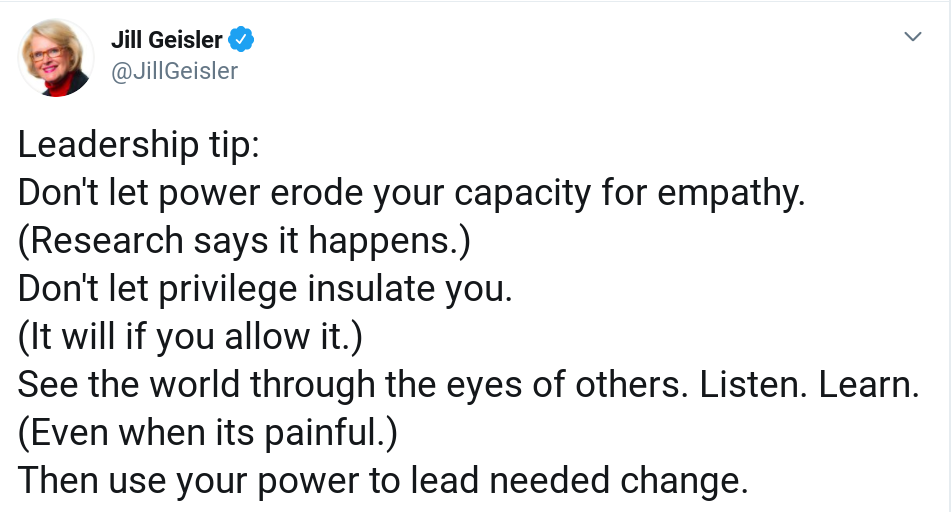
Advice from Jill Geisler, Bill Plante Chair in Leadership & Media Integrity, Loyola University Chicago, Freedom Forum Fellow in Women’s Leadership
Do you qualify as an ally? Join Jill for the next Freedom Forum Institute Power Shift Project program on August 20 at 1 p.m. EDT. Registration is now open.
Whatever your new normal has become, one thing is certain: It’s bound to change as fall approaches. 

Working parents will juggle a host of different challenges at home as students return to the classroom (virtually or in-person). As the weather changes, so will outdoor workout routines or time with your furry friends. And with the presidential election nearing, newsroom demands are sure to ramp up.  

Humans are creatures of habit, which is why establishing routines is essential to self-care. Consistently evaluating your routines — and communicating when they need to change — is an important way to manage stress and anxiety during uncertain times. 

If you anticipate your at-home routines will change come fall, now is a good time to:

Understand that change is inevitable — be patient with yourself, your family and your employer as you experiment with what works best for you and yours.

Read on for more self-care tips, or share your own.
Resources
This newsletter is written & edited by the National Press Club Journalism Institute staff: Beth Francesco, Holly Butcher Grant, and Julie Moos. Send us your questions and suggestions for topics to cover.

Get this from a friend? Subscribe, and view the archives.