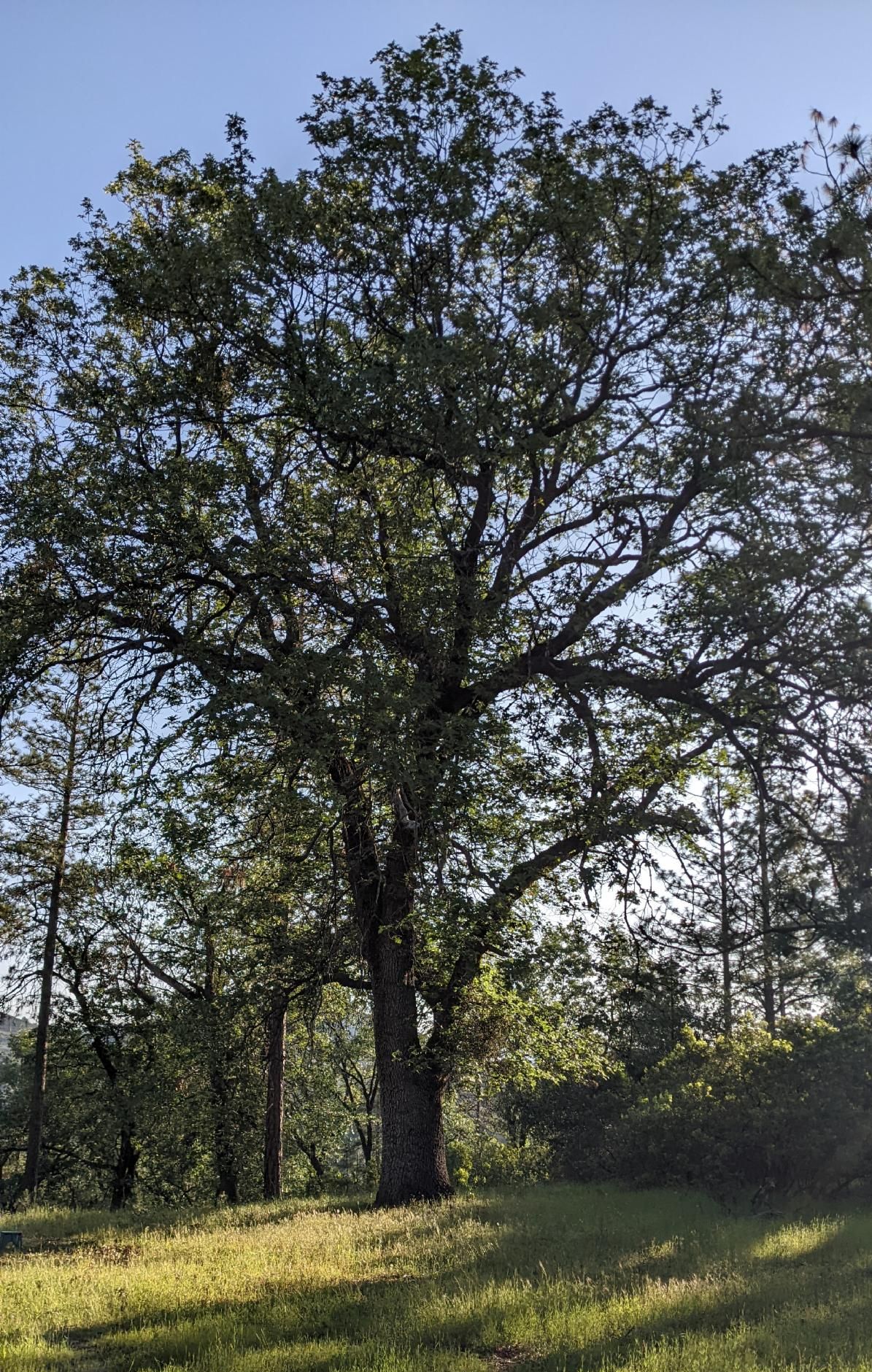
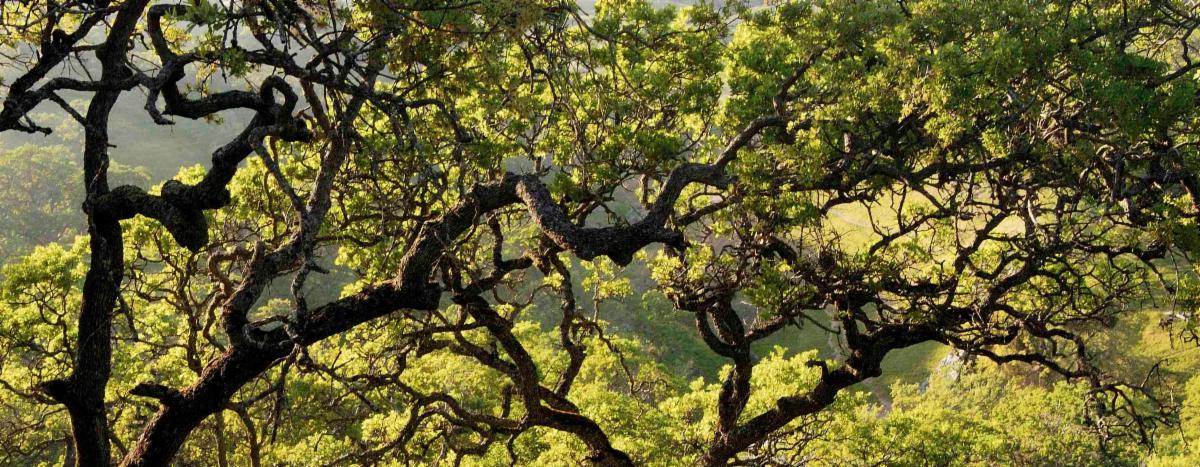
Oaks are ambassadors of time. —Lillian (Lolly) Mello Grady. © photo courtesy of Tom Gaman.
|
|
Download oak mapping report
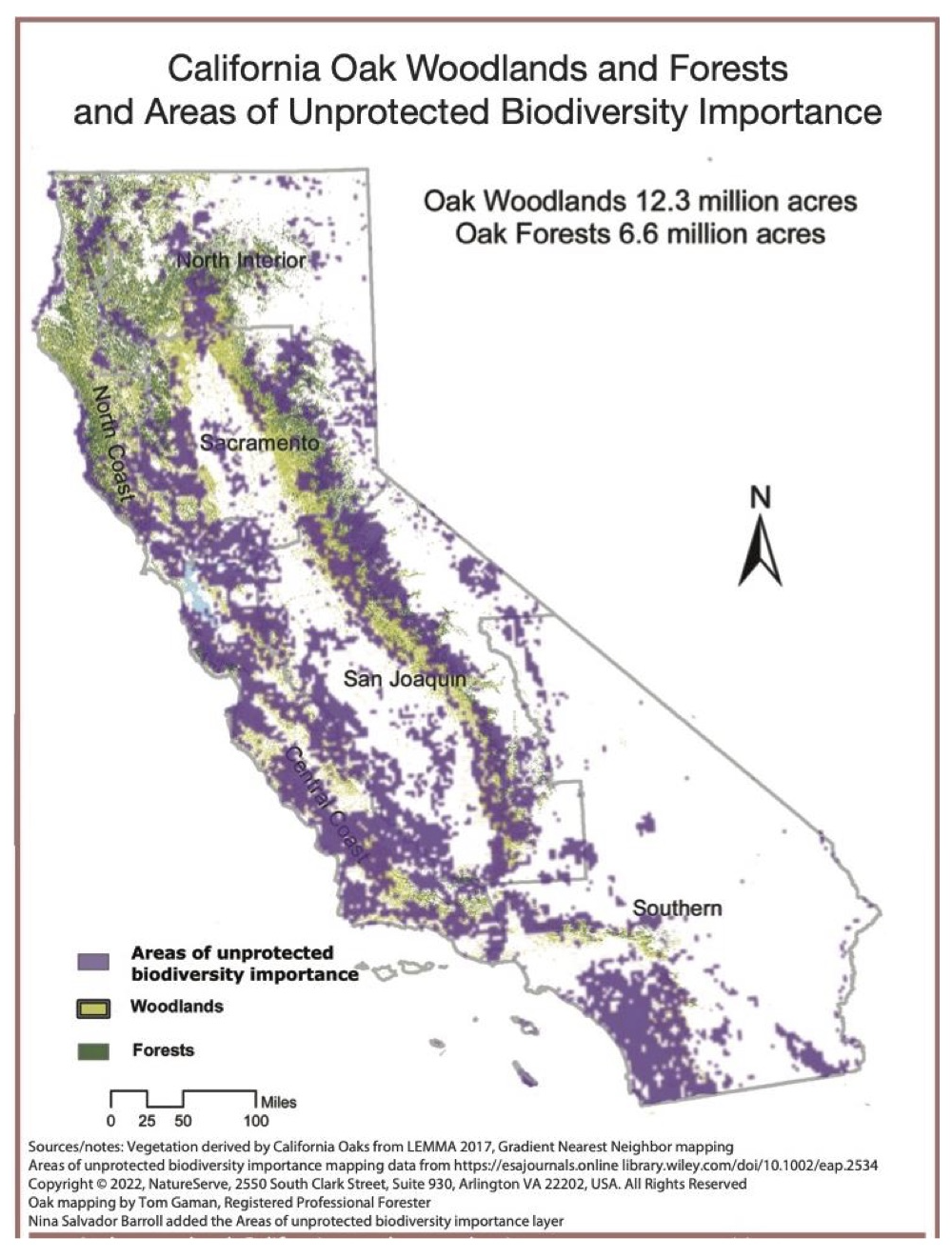
The Spring–Summer 2022 Oaks newsletter features an oak mapping report that estimates oak woodland and oak-forested lands in California where nine oak species are present with a minimum basal area of 10-square-feet per acre.
The newsletter also includes a map of Areas of Unprotected Biodiversity (below), which is overlaid on a map that estimates oak woodlands and oak-forested lands.
|
|
Take Action at 2:30 P.M. today against Senate Bill 396
Senate Bill 396, authored by Senator Dahle, facilitates tree-cutting by Investor-Owned Utilities.
The bill will be heard today at the Assembly Committee on Natural Resources. It is currently the first on the agenda. The summary language, below, about the legislation is from the analysis prepared by the committee in advance of today's hearing:
SUBJECT: Forestry: electrical transmission or distribution lines: clearances: notice and opportunity to be heard.
SUMMARY: Establishes a process for an electrical corporation that owns, controls, operates, or maintains an electrical transmission and distribution line to cut, fell, or trim trees where the electrical corporation does not have existing rights or express permission to do so.
THIS BILL:
1) Authorizes, notwithstanding any other law, an electrical corporation to traverse lands in High Fire-Threat Districts and the the State Responsibility Area, regardless of property ownership and without property owner permission, to cut, fell or trim trees to maintain clearance around electrical transmission and distribution lines.
2) Requires an electrical corporation to provide notice to the land owner and an opportunity for the land owner to be heard before cutting, trimming, or felling trees.
3) Requires the electrical corporation’s compliance with Public Resources Code Sec. 4293, which requires specified clearances in all directions between all vegetation and all conductors, which are carrying electric current, and, if applicable, Rule 35 of the Public Utilities Commission’s (PUC) General Order 95, which specifies vegetation clearance requirements for overhead electrical supply and communication facilities.
4) Requires the wood resulting from the cut, trimmed, or felled trees to remain on the property unless the land owner requests the electrical corporation to treat the resultant wood via onsite chipping, or requests the electrical corporation to remove the wood from the property.
5) Requires an electrical corporation, in response to a timely request from the landowner, to, at no cost to the landowner, treat the wood, unless the wood is not safely accessible for treatment.
6) Requires the PUC, on or before January 1, 2025, to develop standardized content for a letter, door hanger, or other means of notification an electrical corporation can provide a property owner before cutting, trimming, or felling trees.
7) Requires an electrical corporation to make a good faith effort to communicate the process for cutting, trimming, or felling trees to the property owner.
8) Sunsets the provisions of this bill on January 1, 2026.
9) Establishes an urgency clause in order to establish clear forest management practices for the prevention of, and protection against, wildfires.
Call-in instructions:
Dial (877) 692-8957 (PIN: 1315447)
• You will be placed in a “waiting room” when your call is answered. Your phone line will be muted (but you can listen to the committee hearing).
• When the committee moves to public comments on SB 396 , a moderator will ask for anyone wishing to testify in support of the bill to press 1-0. The moderator will similarly prompt those waiting in opposition, later. Be sure to listen for “support” or “opposition” and DO NOT press 1-0 until the proper position has been asked for. (Note: if you press 1-0 a second time, you will be removed from the queue and you will not be called to testify.)
• When you press 1-0 on your phone, you will be assigned a line number and your call be placed in the queue for identification. Remember your line number to be ready when the moderator calls out your number for your testimony. The numbers are not always called in order.
• Once your line is opened by the operator, you can say the following: “I’m [name] from [organization or community] and I strongly Oppose SB 396." Note: unlike other public comments, there is not an opportunity to elaborate on your position. Please limit your comment to a quick message of opposition.
|
|
Oak protection legislation held in Senate Appropriations Committee
Senator Henry Stern (District 27) introduced SB 1404 on February 18, 2022. The legislation seeks to expand California Environmental Quality Act (CEQA) protections for oaks beyond the county level and to establish a uniform threshold of significance. It also includes definitions of oak woodland and oak savanna. Unfortunately, the bill is held in the Senate Appropriations Committee under submission.
California Wildlife Foundation/California Oaks thanks the many members of California Oaks Coalition that submitted letters and provided testimony in support of the legislation.
Click here to read the letter submitted by California Wildlife Foundation/California Oaks.
|
|
California Oaks Coalition reports |
|
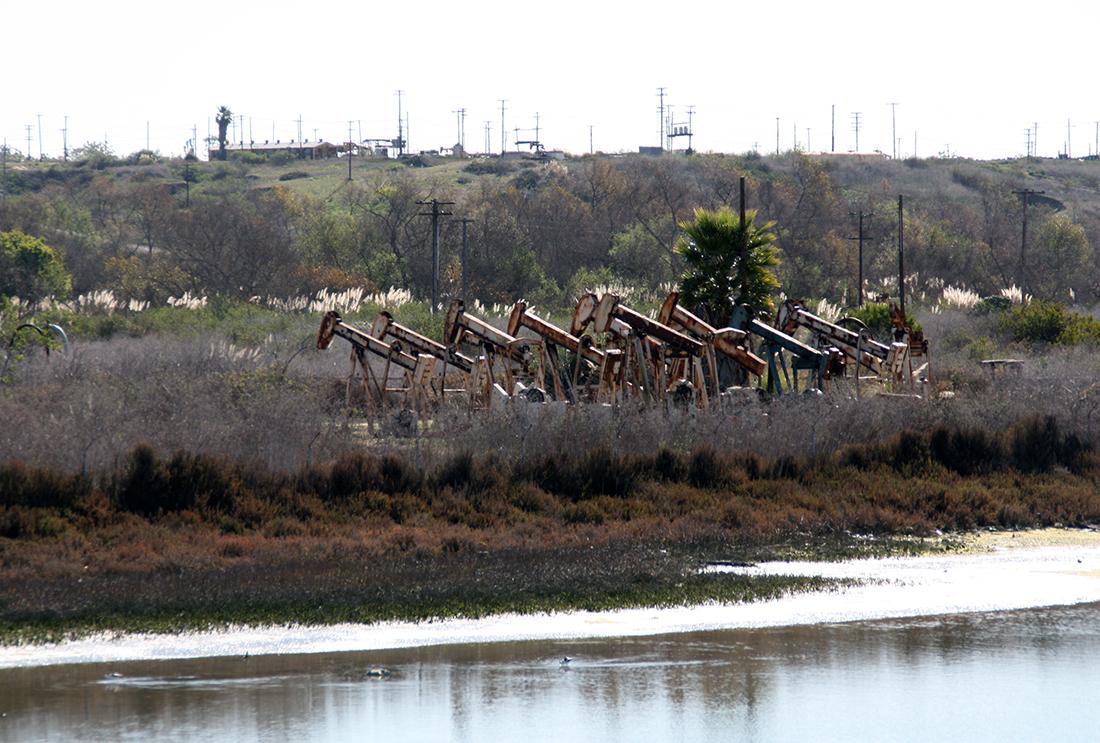
Oil jacks on Banning Ranch. © Photo courtesy of Banning Ranch Conservancy. |
|
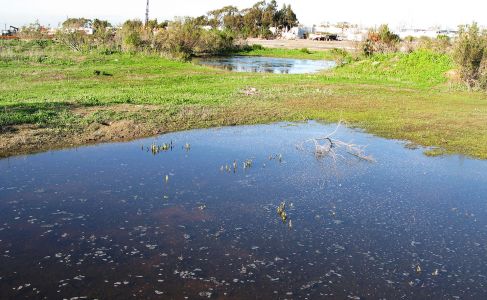
Vernal pools on Banning Ranch. © Photo courtesy of Banning Ranch Conservancy. |
|
This has been a team effort, and we have kept our eyes on the prize. It is an historic moment for our coast, and for nature lovers and park lovers everywhere ... Thanks to everyone, from the landowners, to Frank and Joann Randall, and Assemblywoman Petrie-Norris. —Terry Welsh M.D., President of Banning Ranch Conservancy.
|
|
Funds secured to protect Banning Ranch
Congratulations to California Oaks Coalition member Banning Ranch Conservancy for raising the needed funds to acquire and permanently protect Banning Ranch in Orange County. This milestone was reached when California’s Wildlife Conservation Board voted on May 26, 2021, to approve a grant of up to $15.5 million to The Trust for Public Land to help fund the purchase of Banning Ranch.
Banning Ranch Conservancy is a local nonprofit organization working to preserve, acquire, conserve, and manage the land as permanent public open space, park, and coastal nature preserve. Over the last two decades Conservancy volunteers, activists, consultants, partnering nonprofits, and tribal and elected leaders have worked strategically and collaboratively to protect this biologically rich coastal gem from potential development.
Banning Ranch is one of the last remaining parcels of privately owned land along the Southern California coast. It is within the ancestral homelands of local California Native American tribes and people, and holds important cultural significance. About 385 acres of the 401-acre property will be protected, but the entire property has been an active oil field. The land includes coastal wetlands, vernal pools, marsh lands, arroyos, and coastal sage scrub. It offers opportunities to protect cultural and natural resources, address climate change, and create park access for millions.
Endangered, threatened, and fully protected species and sub-species occurring at Banning Ranch include Belding's savannah sparrow (Passerculus sandwichensis beldingi, state endangered), Coastal California gnatcatcher (Polioptila californica californica, federally threatened), least Bell’s vireo (Vireo bellii pusillus, federally endangered), peregrine falcon (Falco peregrinus anatum, California fully protected), San Diego fairy shrimp (Branchinecta sandiegonensis, federally endangered), western snowy plover (Charadrius nivosus nivosus, state threatened), and white-tailed kite (Elanus leucurus, fully protected). Additionally, California least tern (Sterna antillarum browni, federally endangered) and light-footed clapper rail (Rallus longirostris levipes, federally endangered) are present next to Banning Ranch and the property is within Pacific pocket mouse (Perognathus longimembris pacificus, state endangered) territory.
With full funding secured, the Mountains Recreation and Conservation Authority—the future land steward—must still review, finalize, and approve all transactional documents before escrow closes. After close of escrow, the next phase is the remediation plan that removes oil facilities and infrastructure and cleans up the land. Project partners will also work with management agencies on a public engagement process to envision park trails, low-cost camping and picnic sites, and cultural access. The land is within a nearly 1,000-acre network of parks and open space, and is easily accessed by public transportation and the Santa Ana River Trail.
Click here to read the press release Banning Ranch Conservancy issued with The Trust for Public Land.
|
|
At a time when more native trees should be planted to reduce the effects of climate change and bad air quality throughout the region, the County of Los Angeles is instead making it easier to cut them down without replacing them. One can only wonder why the county is taking a step backwards in native tree protection. —Lynne Plambeck, President, Santa Clarita Organization for Planning and the Environment
|
|
Legal challenges to changes in Los Angeles County Oak Tree Ordinance
California Oaks Coalition member Santa Clarita Organization for Planning and the Environment (SCOPE) filed a Petition for Writ of Mandate in Superior Court of the State of California on April 27, 2022 alleging violations of California Environmental Quality Act (CEQA) by Los Angeles County in revisions of the county's Oak Tree Ordinance.
The petition, filed on April 27, 2022, challenges an amendment to the County of Los Angeles’ zoning code. The county referred to the amendment as the “Title 22 Tune Up Ordinance” and stated that the ordinance was needed in order to “make modifications where necessary to correct discrepancies and typographical errors, clarify provisions, remove redundant language, streamline procedures, remove outdated provisions, reformat/reorganize a limited number of sections for readability, and be consistent with State law and other County regulations.” The county characterizes these changes as technical in nature rather than policy changes. SCOPE filed a separate complaint alleging this title ("Tune Up") violates the Brown Act by not disclosing that substantive changes would be made to the ordinance, thereby obfuscating new policies that members of the public may oppose.
According to the CEQA petition, the amendments result in the following changes:
- The removal of the notification requirement.
- The exclusion of findings for Administrative Oak Tree Permits. The ordinance removed the following sentence from Section 22.174.040(D)(2) of the zoning code: “Prior to making a decision, the Director shall review the application for compliance with Section 22.174.060 (Findings and Decision) and Section 22.174.070 (Conditions of Approval).” The code had previously required that findings be made, even for a project that was eligible for an Administrative Oak Tree Permit. These findings placed important limitations on the issuance of permits authorizing the removal of oak trees.
-
A change in language from “the Director shall require replacement” to “the Director may require replacement,” thus making replacement subject to the discretion of the Planning Director.
An earlier “tune up” eliminated the ability of the public to appeal discretionary permits, so affected neighbors or members of the public would now have no opportunity to challenge neighborhood trees removals.
The proposed changes were adopted by the Board of Supervisors on February 15, 2022. The supervisors also determined that the project was exempt from CEQA, concluding that it qualified for a categorical exemption under CEQA Guidelines Section 15305 (Class 5 exemption for minor alterations in land use limitations) and the common-sense exemption found at CEQA Guidelines Section 15061(b)(3).
Members of the public and interested organizations objected to the proposed CEQA exemption on the grounds that the changes to the Oak Tree Ordinance would cause a significant effect on the environment by facilitating the loss of drought-tolerant native tree canopy. Further, they argued that there was no discussion of the extent of tree loss that would occur as a result of these changes. In addition to SCOPE, organizations that objected to the ordinance were Endangered Habitats League (California Oaks coalition member), Sierra Club Angeles Chapter—Wildland Urban Wildfire Committee, Los Angeles Audubon Society, Urban Wildlands Group, and Friends of the Santa Clara River.
SCOPE submitted several comment letters to the county and testified at public hearings before the Regional Planning Commission and Board of Supervisors. The county filed a Notice of Exemption with the County Recorder on March 24, 2022. SCOPE's legal action was taken within 35 days of this filing. Channel Law LLC is representing SCOPE.
|
|
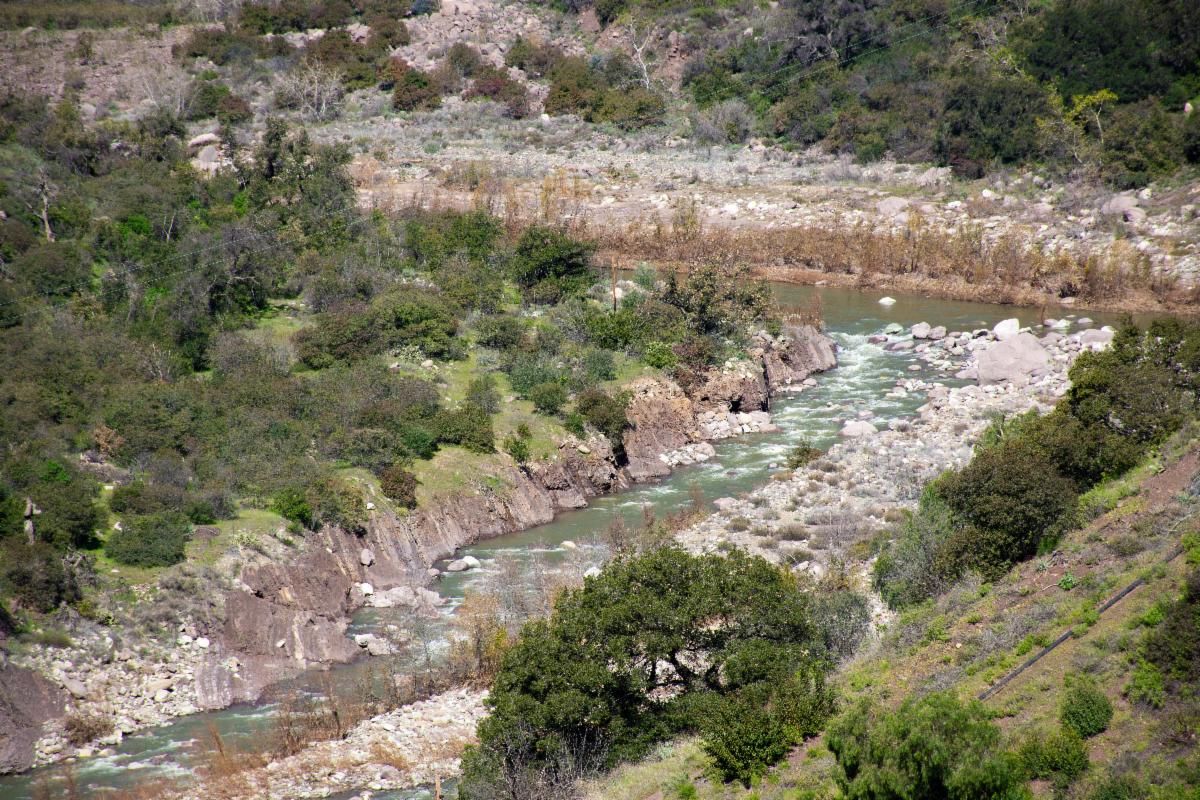
Sespe Creek wildlife corridor in Ventura County. © Photo courtesy of Bryant Baker, Los Padres ForestWatch.
Protecting pathways for wildlife is critical for their survival ... We’re hopeful that these science-based measures will remain in place and serve as a model to protect mountain lions, bears, deer, and other iconic wildlife throughout the state. —Jeff Kuyper, Executive Director, Los Padres ForestWatch
Communities across California should take a look at what Ventura County has done to protect wildlife hemmed in by overdevelopment ...These ordinances have stood up to legal challenges, and they’ll go a long way toward fighting the extinction crisis. —J.P. Rose, Senior Attorney, Center for Biological Diversity
|
|
Ventura County connectivity ordinances upheld in legal challenge
Congratulations to California Oaks Coalition members Los Padres Forest Watch and Center for Biological Diversity for a legal victory that upholds two Ventura County habitat connectivity ordinances that increase protections for wildlife corridors. The rulings, finalized on April 22, 2022, uphold Ordinance No. 4537 and Ordinance No. 4539, which were approved by the board of supervisors in 2019. The ordinances designate standards for development and require environmental review for projects that may hinder wildlife connectivity. They are the first ordinances of their kind in California.
The ordinances help protect the wildlife corridors that connect the Los Padres National Forest, Santa Monica Mountains, and Simi Hills. Habitat connectivity is crucial for the survival of mountain lions (Puma concolor: Southern California and Central Coastal Evolutionarily Significant Units are candidates for California Endangered Species Act listing), gray foxes, California red-legged frogs (Rana draytonii: federally listed as threatened), and other wildlife in the region. Wildlife corridors also reduce wildlife-vehicle collisions, preserve genetic diversity, and provide habitat for recovering populations in fire-damaged areas.
Ventura County Superior Court Judge Mark S. Borrell issued the ruling in response to a legal challenge to the ordinances by the Ventura County Coalition of Labor, Agriculture and Business and the California Construction and Industrial Materials Association. Los Padres ForestWatch, the Center for Biological Diversity, Defenders of Wildlife, and the National Parks Conservation Association intervened to defend the ordinances. The groups were represented by the Environmental Law Clinic at the University of California, Irvine, School of Law.
Many hard-won environmental battles require years of persistence. Plaintiffs recently filed a notice of appeal, so the current victory may not be the final chapter of the effort to enact and uphold Ventura County's connectivity ordinances.
|
|
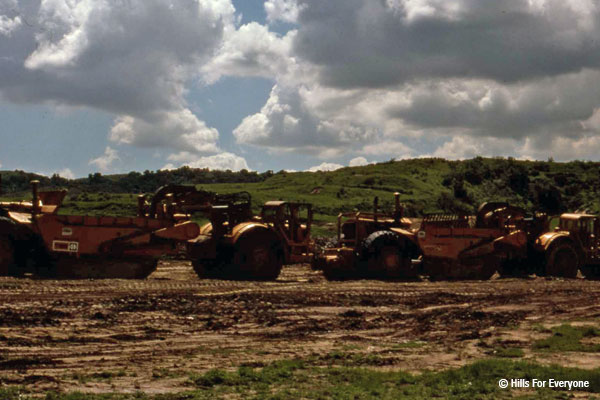
Hills For Everyone opposes proposal to build homes in fire-prone woodland
California Oaks Coalition member Hills For Everyone recently submitted comments in response to a Notice of Preparation to complete an environmental impact for the Paradise Ranch development in Chino Hills (San Bernardino County). The project proposes the subdivision of 52 lots (51 houses and one open space lot) on an 85-acre parcel that includes coast live oak, scrub oak, California black walnut, and western sycamore. There are 1,287 protected native trees on site. Of these, 254 will be impacted by the project.
Click here for more information.
|
|
© Photo courtesy of Professor Janet Morrison, The College of New Jersey. |
|
Oaks in Golden State Naturalist podcast |
|
Oak trees with Zarah Wyly
New oak endeavor: Wyly has since moved on from Sacramento Tree Foundation, where she worked for 17 years, and is currently focused on acorn harvesting, native California oak propagation, and ranch land oak conservation. Her work includes harvesting of acorns and growing of genetically diverse native oaks for use in urban environments and reforestation to perpetuate California's oaks during increased drought conditions, hotter temperatures, and more devastating fires.
Many oak species are fire-adapted, yet increased fire severity and frequency, combined with late-season timing of fire, has devastated some oak populations. Wyly seeks to coordinate and optimize efforts across the state to gather acorns and grow seedlings to provide locally derived plant material to use for recovery as a climate-smart adaptation strategy.
To learn more or to connect with Wyly, please send an email.
|
|
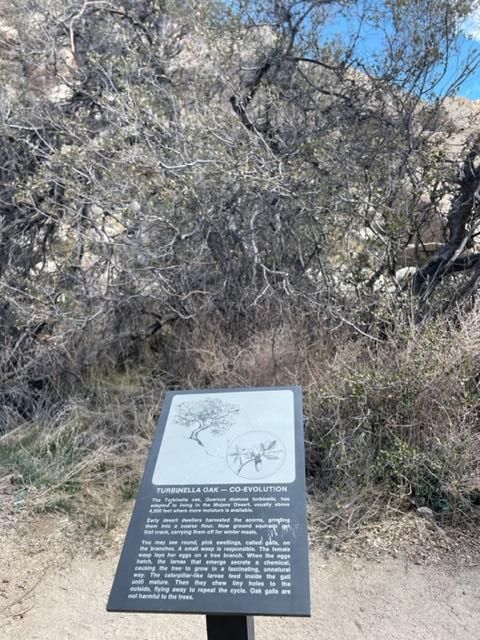
Quercus turbinella photographed at Joshua Tree National Park. © Photo courtesy of Janet Byron
|
|
Winery faces multimillion dollar fine for watershed impacts of tree removal and land disturbance
Click here to read Andrew Chaming's SFGATE report about a potential $3.75 million fine from the North Coast Regional Water Board for damage to streams and wetlands caused by the removal of 80-acres of oak woodlands, grading, ripping, and other activities near tributaries to Little Sulphur Creek, Big Sulphur Creek and Crocker Creek in the Russian River watershed.
|
|
Invasive Plant Management from Cities to Wildlands
2022 Cal-IPC Symposium
Cal Poly Pomona, June 13
California State University East Bay (Concord), July 18
Online, November 1-3
|
|
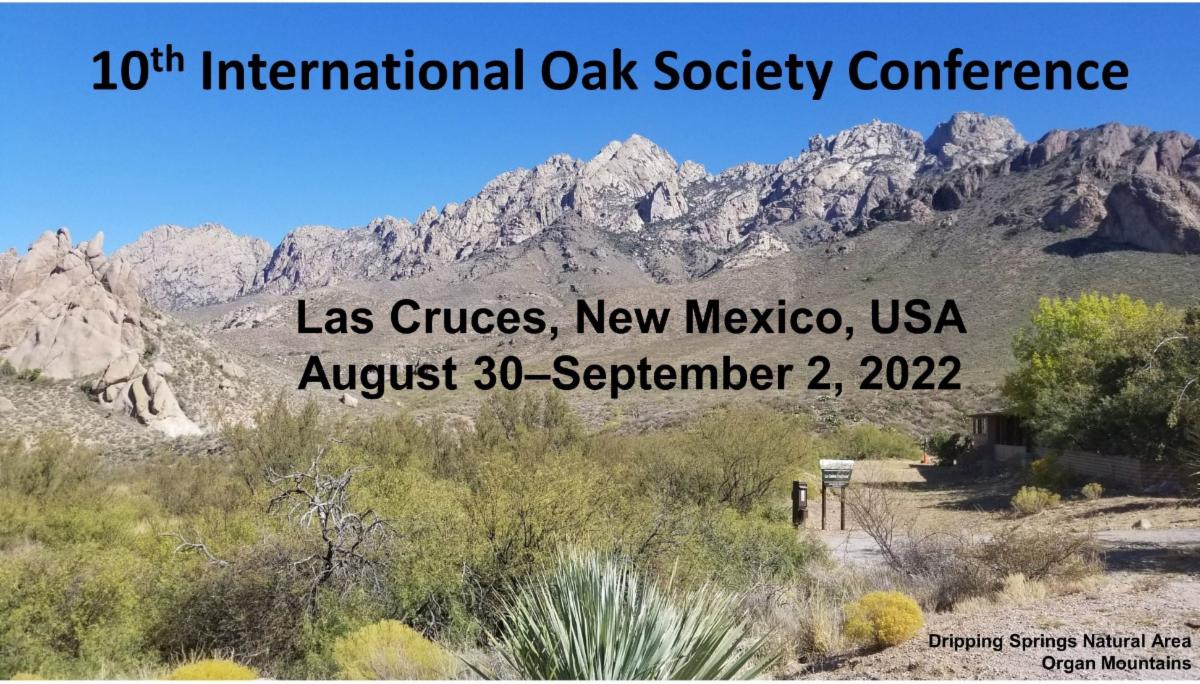
Las Cruces Convention Center
Las Cruces, New Mexico,
August 31 to September 2, 2022
Pre-conference tours August 26-30
Post-conference tour, September 3-7
The upcoming International Oak Society (IOS) conference will provide an opportunity to connect and network with other oak experts, share ideas and information on new studies and research, and identify collaborations for future oak conservation projects. The 10th IOS Conference will be held at the Las Cruces Convention Center and will focus on a range of topics including conservation, restoration, urban forestry, horticulture/arboriculture, climate modeling, and oak culture and utilization. Additionally, the conference will host hands-on workshops, poster sessions, and a day trip to view local oak species in situ. The pre- and post-conference tours are scheduled to take place over four days before and after the conference. The conference committee is working to make it possible to attend presentations virtually, so that members who are unable to travel to New Mexico can participate in the event.
|
|
California Oaks Coalition member Global Conservation Consortium for Oak (GCCO) will be hosting the conference on September 1, with potential plans to have session presentations and workshops for each of the GCCO focused regions (U.S., Mexico and Central America, Southeast Asia and China, and Europe).
|
|
California Oak Symposium
October 31-November 3, 2022
Embassy Suites, San Luis Obispo, California
Click here for information on the conference.
|
|
California Native Plant Society 2022 Conference
October 20-22 (Workshops and Field Trips October 18-19)
DoubleTree by Hilton
San José, CA
Conference sessions are organized under four broad themes: Conservation, Plant Science, Horticulture, and Education. The Plant Science track includes an Oaks and Oak Woodlands session.
Registration will open in June.
|
|
|
California Islands Symposium
The 10th California Islands Symposium has been postponed until 2023 (dates TBD).
Click here for more information.
|
|
Black oak at Big Sur. © Photo courtesy of Tom Gaman.
|
|
California Oaks Coalition
Amah Mutsun Land Trust; American River Conservancy; American River Watershed Institute; AquAlliance; Banning Ranch Conservancy; Butte Environmental Council; Canopy; California Institute for Biodiversity (CIB); California Invasive Plant Council (Cal-IPC); California Native Plant Society (CNPS), including CNPS Dorothy King Young Chapter, CNPS San Diego Restoration Committee, and CNPS Sanhedrin Chapter; California Rangeland Trust; California State University Chico Ecological Reserves; California Water Impact Network (C-WIN); California Wilderness Coalition (CalWild); Californians for Western Wilderness (CalUWild); Center for Biological Diversity; Central Coast Heritage Tree Foundation; Chimineas Ranch Foundation; Clover Valley Foundation; Conejo Oak Advocates; Confluence West; Dumbarton Oaks Park Conservancy; Elder Creek Oak Sanctuary; Endangered Habitats Conservancy; Endangered Habitats League; Environmental Defense Center; Environmental Protection Information Center (EPIC); Environmental Water Caucus; Foothill Conservancy; Forests Forever; Friends of Harbors, Beaches and Parks; Friends of the Richmond Hills; Friends of Spenceville; Global Conservation Consortium for Oak; Hills For Everyone; Laguna de Santa Rosa Foundation; Lomakatsi Restoration Project; Los Padres ForestWatch; Lower Kings River Association; Northern California Regional Land Trust; Planning and Conservation League; Redbud Audubon Society–Lake County; Redlands Conservancy; Resource Conservation District of Santa Monica Mountains; River Partners; River Ridge Institute; Rural Communities United; Sacramento Tree Foundation; Santa Clarita Organization for Planning and the Environment (SCOPE); Save Lafayette Trees; Save Napa Valley; Sequoia Riverlands Trust; Shasta Environmental Alliance; Sierra Club Northern California Forest Committee–Oak Woodland Subcommittee; Sierra Club Placer County; Sierra Foothill Conservancy; Tejon Ranch Conservancy; Tending the Ancient Shoreline Hill; Tuleyome; Tuolumne River Trust; University of California Los Angeles Mildred E. Mathias Botanical Garden; and Woodland Tree Foundation are among the groups partnering with California Oaks to conserve oak woodlands and oak-forested lands for future generations.
|
|
|
©2022, California Wildlife Foundation/California Oaks. Please feel free to share this e-newsletter and reprint after providing notice. |
|
|
|
|
|
|