Center for the Developing Mind May 2023 Newsletter

Center for the Developing Mind

Center for the Developing Mind celebrates Preparing Children with Challenges for Summer!

Despite what by all accounts was an usually wet and cold Winter, Spring has arrived with the timely blooming of flowers and a renewed sense of energy. Believe it or not, it's not too early to start thinking about Summer plans for your child with challenges. This month's thoughtful and informative article was written by our colleague Dr. Rachel Busman, current president of the selective mutism association, the nation's largest network of professionals, families and individuals with selective mutism. Selective mutism is the most extreme form of social anxiety of children and adolescents, impacting about 1 in every 140th child. This disorder reflects an individual's inability to speak in select situations (typically in more social circumstances like school). The author provides information and specific tips for parents on how to prepare your child for a positive summer experience. With that in mind, we've included a secondary article on how to help prepare your child with special needs to travel by air. Information includes how to successfully navigate the transition from leaving home to getting through TSA. Wishing all of our readers a successful start to Summer. 


Sending best wishes for your health and safety,


Esther Hess, Ph.D. and the staff at Center for the Developing Mind

Transitioning our Children with Selective Mutism into Summer

Happy child against blue sky background. Summer vacation concept

By Rachel Busman


While it’s just the beginning of spring and most of us are thinking about summer as something far in the future, when planning for kids, and especially kids with SM, it’s good to think ahead. The summer is often seen as a well-deserved break from the stresses that come with school. However, summer can also bring a loss of structure and the routine opportunities for brave talking practice that are really important. Below are some suggestions and tips that you can think about now as you transition into the summer.


1. School: Speak with your child’s school before the end of the year to identify tasks related to transition planning. When possible, finding out which teachers and staff will be working with your child will be greatly helpful. If your child can meet next year’s teacher, or even a few teachers in the next grade, that’s a wonderful opportunity to start the relationship. Often, a school counselor or speech therapist can help your child meet a new person at school. Before the end of the school year, request that your child be placed in a class with 1-2 familiar peers with whom your child is comfortable. If they speak to that peer, even better! Finally, find out if there are opportunities to visit the school over the summer. If the building is closed, plan to have a visit with your child alone with their new teacher before the next year starts (ideally a week before).


2. Summer camps/recreation: Some families consider whether an intensive SM treatment program might be a good fit during the summer. In addition to treatment programs, local summer camps and other structured activities are a great place for your child to have opportunities to interact with same age peers. There are often affordable options through a town’s recreation department, along with private programs. In order for camp to be enjoyable and to help your child maintain gains, it will be helpful to talk with the camp staff in advance, so that you can provide information on your child and how they can best support them. Local camps are often run by older teens or college students and the staffing patterns do not always allow for lengthy conversations or training. However, a tip sheet that highlights specific skills to use with your child may be greatly beneficial (e.g., asking forced choice questions, waiting 5+ seconds after asking a question and using specific praise). Sometimes camps also are open to meeting with a child one on one before camp, which may help your child establish speech and comfort with at least one counselor.


3. Plan activities (exposures) in your community that encourage speaking: It’s important to consider daily activities like going to stores or parks as exposures, or opportunities for your child to practice facing fears. Similarly, playdates, visits to the beach, or swimming at a friend’s pool are all situations where you can help your child continue their brave talking. Here are some examples of things you can do as exposure practice. You can tailor the activity as your child needs; for example, if your child is not yet ready to order directly to a clerk, they can tell you what they want in front of the other person:


  • Create a scavenger hunt to bring to the pool, beach, park, or other destination 
  • Set up a lemonade stand or yard sale
  • Play Bravery Bingo using these cards with simple or advanced bravery practices, or create-your-own card using this template
  • Order ice cream or other food at a counter 
  • Visit the library and have your child practice speaking with the librarian or set up a summer reading group
  • Set up regular play dates
  • Schedule a visit with extended family or friends
  • Attend the local farmer’s market or carnival


4. Get active! Children with SM often become less inhibited when they are behaviorally engaged in high-energy activities. Bring out some bubbles, jump rope, have a catch, or set up a relay race in the backyard or the park with other kids.


It is never too early to start planning for a rewarding summer. Whatever you choose to do, remember to incorporate speaking opportunities. Get creative and have fun!

Helping your Child with Autism Prepare to Fly

Autism and Air Travel


Traveling, especially autism and air travel can be anxiety-producing for parents (and kids!). This change in routine can be even more difficult for autistic children and children with other special needs. I’ve put together some tips for how to fly with an autistic child and I hope they are helpful to your family!


1. PREPARE


Prepare your child with autism by writing a little story about air travel (it can be handwritten with stick figure people). Be sure to keep it simple, yet informational. You can even role-play at home!    

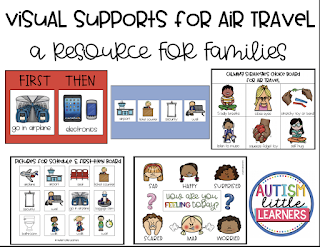
2. USE VISUAL SUPPORTS


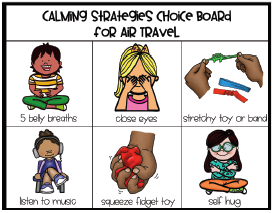
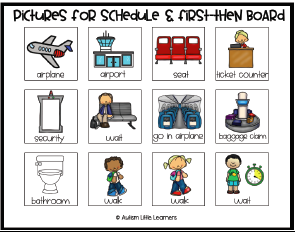
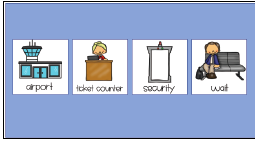
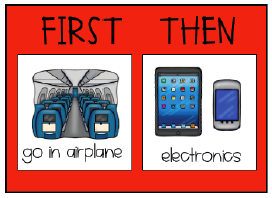
A social story will prepare your child ahead of time and can be re-read during the trip. It is also important to bring an easy-to-use visual schedule. I created one for you! You can use the visual schedule, as well as a first-then board to show children what is going to happen at the airport and on the airplane. A first-then board can help with tricky situations. For example, if you know going through security might be difficult, you can put pictures on the first-then board and show your child “first security, then iPad”. First – Then boards can be magical!

3. BRING HEADPHONES


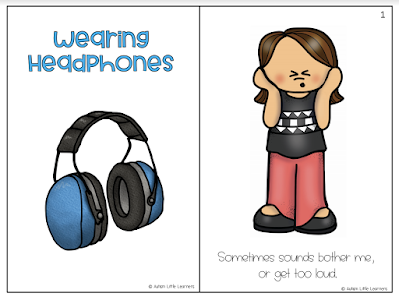
For children who are sound sensitive, practice wearing headphones or earplugs before your trip. You can use either noise-blocking headphones or headphones that play music. Headphones can really be a life-saver for your child with autism when it comes to air travel. If you need a story about wearing headphones, you can write a simple social story to go with this directive.

4. FAVORITE FOOD


We know that there are not a lot of options for food on airplanes. Combine that with children who are picky eaters or have a limited diet, it might lead to hangry kiddos. So, be sure to stock up and bring all the favorites with several options to choose from. You will be so happy you did!


5. TOYS


Give some thought to what toys your child likes (that are kind of quiet). Bring a few things so there are some choices. Crayons and paper, books, small toys to hold (little cars and trains), dolls are great in addition to reliable electronic devices. Give thought to what activities on the electronic devices may need to have something downloaded before you leave the house. Sometimes when there is no internet, certain apps/games won’t be accessible. So, try to think ahead about how to avoid meltdowns if there is no internet. Planning ahead can really help when you are figuring out how to fly with an autistic child. Plan A, Plan B, Plan C. Be prepared.


Safe travels!!!

Announcements

paris_city_night.jpg

May 3-14: Dr. Hess and Allen Samson are going to visit Paris, the City of Lights. Their plans include meeting with Jean Francois Guthman, head of Paris's Special Needs Community Services at OSC. Stay tune for additional details of Dr. Hess's latest international mission of care in Paris, France.

Ongoing: Dr. Hess is continuing her work with the special needs community in Lodz, Poland. She now meets virtually on a weekly basis with the staff and parents associated with the Centrum Futurum Pre-School.

Groups
Friends Hipster Teenager Buddies Concept

Mr. Allen Samson continues to facilitate an in-person young adult Men's Group for Neuro-Diverse Men ages 25-40 years at Center for the Developing Mind. This month's topic discussion include finding and keeping a job; extensive opportunity to role play social scenarios. New timely topics include; how to successfully plan for a vacation on the spectrum! 


For more information and to register please contact Allen at http://www.centerforthedevelopingmind.com.

BY POPULAR DEMAND: Dr. Hess has expanded the original support group for parents/grandparents of children newly diagnosed with ASD/ADHD to a regular support series on Tuesday evenings. There are both in-person and virtual options for attendance. Topics covered include the first 100 days after the initial diagnosis and how to thoughtfully choose therapeutic supports for your child. For additional information please contact Dr. Hess directly at Drhess@centerforthedevelopingmind.com.

New social skills group for Children impacted by SM returns to Center for the Developing Mind! Dr. Hess and staff will be facilitating a social support group for parents and their children impacted by selective mutism. The group will focus on children ages 5-8. For more information and to register, please contact Dr. Hess at Drhess@centerforthedevelopingmind.com

Dr. Hess continues to facilitate a Thursday morning social support group for caregivers sponsored by Ogden Manor Home Care. For more information and to join this group, please contact Dr. Hess at Drhess@centerforthedevelopingmind.com.

New JWRC Concert!

Dr. Hess continues to show off her healthy mental health strategies with her involvement in musical/choral experiences. She will be one of the featured singers in the Jewish Women's Repertory Company's rendition of 'Rogers and Hamstein In Concert', June 1st & 4th, 2023 at the Museum of Tolerance, Los Angeles, CA.


As always, we continue to encourage you to contact us at the Center to share your healthy mental health strategies at Drhess@centerforthedevelopingmind.com.

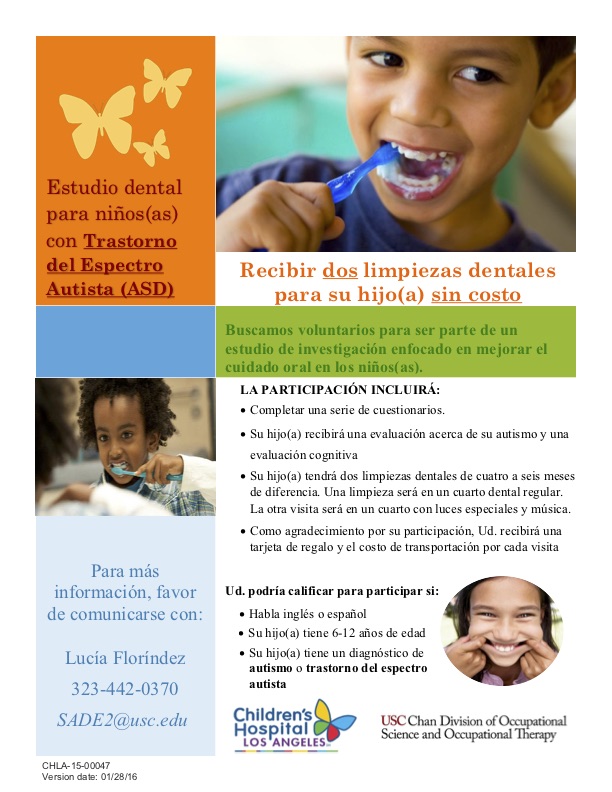
FREE Dental Cleanings for Children
Career Opportunities

Center for the Developing Mind is Seeking Occupational Therapists

There are immediate openings at Center for the Developing Mind for California licensed occupational/physical therapists. Ability to work weekends, a plus. Salary and benefits are compensatory to experience.


For more information, please contact Dr. Esther Hess at (310) 652-7581 and/or Drhess@centerforthedevelopingmind.com

Center for the Developing Mind is Seeking Speech and Language Therapists

Center for the Developing Mind is Expanding It's Speech and Language Services. We are looking for licensed SLPs to work in our state of the art facility. Treatment model based on DIR/Floor Time. Ability to work weekends, a plus. Salary and benefits are compensatory to experience.


For more information, please contact Dr. Esther Hess at (310) 652-7581 and/or Drhess@centerforthedevelopingmind.com.

Are You Looking To Expand Your Own Private Practice While Being Part of a State of the Art Team For Children?
Center for the Developing Mind is now licensing space within a multidisciplinary facility. Suites available for speech pathologists, occupational therapists, physical therapists, and educators. For more information please contact Dr. Esther Hess: (310) 652-7581
Support Center for the Developing Mind

Center for the Developing Mind Foundation is the non-profit arm of our clinic, servicing children, adolescents and young adults with developmental and/or regulatory delays who might otherwise not get the support they need. Your donation during these precarious times can make all the difference in the world.


Thank you, in advance.


To learn more or to make a donation please visit centerforthedevelopingmind.com/non-profit.