Dear Ones,
We are living in difficult times where we are simultaneously distressed, distracted and confused.
We are conditioned to blame ourselves or “them.” But the problem is systemic, a system that is set up contrary to natural laws of the earth, of human development, and of nurturing children. To realign ourselves, we must let go of junk food, junk teachings and junk ideas.
In this edition, we have multiple interviews about the dominant culture, Indigenous wisdom, and infant circumcision. Let such information and insights seep into you. Together we can build a different world as we let go of this system’s dominations, grieve the trauma we have all experienced, and give ourselves permission to move into a new space of being.
Please join the party. Look up the extensive resources on Kindred, for which I am now president.
In peace,
Darcia Narvaez, PhD
Evolved Nest, Founder
Photo: Wherever we are on the earth, the sun rises on us each day. We are grateful.
|
|
|
An extraterrestrial being, newly arrived on Earth – scrutinizing what we mainly present to our children in television, radio, movies, newspapers, magazines, the comics, and many books--might easily conclude that we are intent on teaching them murder, rape, cruelty, superstition, credulity, and consumerism. We keep at it, and through constant repetition many of them finally get it. What kind of society could we create if, instead, we drummed into them science and a sense of hope?
|
|
|
|
New Film from Consortium of Environmental Philosophers |
|
About the Video
Darcia Narvaez and Four Arrows discuss their work together on Indigenous wisdom about living sustainably with other humans and with the other than human. They describe a series of Indigenous worldview precepts that represent different dimensions of life as guidelines for behavior and living a good life. They draw on their book: Indigenous Eloquence and Kincentric Flourishing (Berkeley: North Atlantic Books). To find out more, visit www.thinkingintheworld.com.
|
|
Creating a Compassionate World: Addressing the Conflicts Between Sharing and Caring Versus Controlling and Holding Evolved Strategies
|
Paul Gilbert, Centre for Compassion Research and Training, University of Derby, UK.
Abstract: For thousands of years, various spiritual traditions and social activists have appealed to humans to adopt compassionate ways of living to address the suffering of life. Yet, along with our potential for compassion and self-sacrifice, the last few thousand years of wars, slavery, tortures, and holocausts have shown humans can be extraordinarily selfish, callous, vicious, and cruel. While there has been considerable engagement with these issues, particularly in the area of moral psychology and ethics, this paper explores an evolutionary analysis relating to evolved resource-regulation strategies that can be called “care and share” versus “control and hold.” Control and hold are typical of primates that operate through intimidatory social hierarchies. Care and share are less common in non-human primates, but evolved radically in humans during our hunter-gatherer stage when our ancestors lived in relatively interdependent, small, mobile groups. In these groups, individualistic, self-focus, and self-promoting control and hold strategies (trying to secure and accumulate more than others) were shunned and shamed. These caring and sharing hunter-gatherer lifestyles also created the social contexts for the evolution of new forms of childcare and complex human competencies for language, reasoning, planning, empathy, and self-awareness. As a result of our new ‘intelligence’, our ancestors developed agriculture that reduced mobility, increased group size, resource availability and storage, and resource competition. These re-introduced competing for, rather than sharing of, resources and advantaged those who now pursue (often aggressively) control and hold strategies. Many of our most typical forms of oppressive and anti-compassionate behavior are the result of these strategies. Rather than (just) thinking about individuals competing with one another, we can also consider these different resource regulation strategies as competing within populations shaping psychophysiological patterns; both wealth and poverty change the brain. One of the challenges to creating a more compassionate society is to find ways to create the social and economic conditions that regulate control and hold strategies and promote care and share. No easy task.
|
|
|
|
The Evolved Nest's Child Care Checklist |
|
|
|
The Evolved Nest's Child Care Checklist |
We are excited to unveil Evolved Nest’s Child Care Center Checklist. The Checklist has been created to help parents and guardians determine how well a child care center matches up with the components of the Evolved Nest. The checklist is intended to be supplemental to the other protocols a center has (e.g., infection prevention, abuse prevention, diaper change frequency).
NOTE: This updated version contains music and arts sections!
Please share widely.
|
|
|
|
|
|
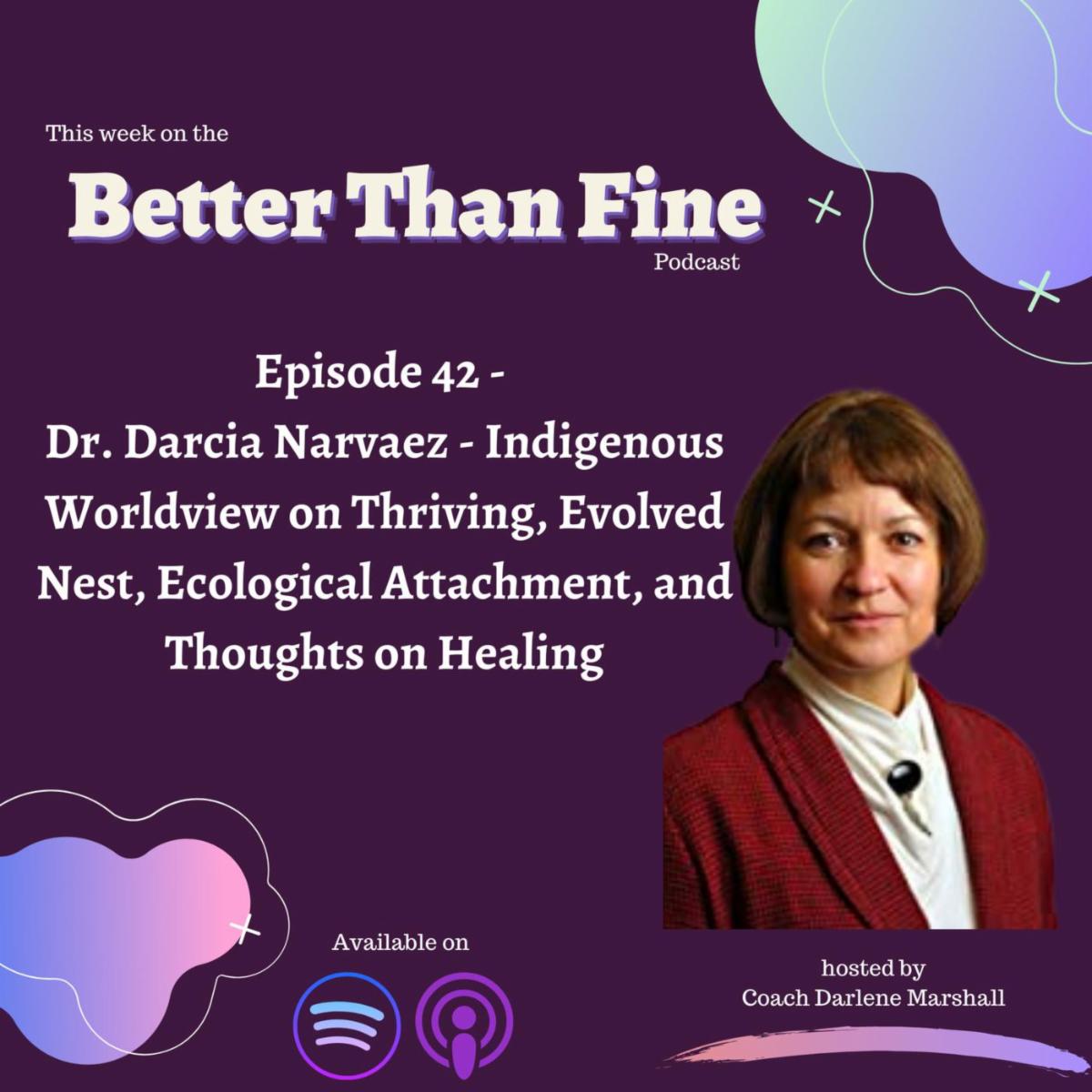
Indigenous Worldview on Thriving, Evolved Nest, Ecological Attachment, and Thoughts on Healing |
In this episode, Better Than Fine explores the indigenous worldview on thriving, how that effects child rearing and the evidence that indigenous childrearing practices are more closely aligned with most of human history and evolution. Along the way we explore a variety of subjects directly relevant to this moment in climate, COVID, well-being, human connection, and our interconnected existence.
|
|
|
|
"How to Talk Policy and Influence People" Video Podcast with Jane Mulcahy |
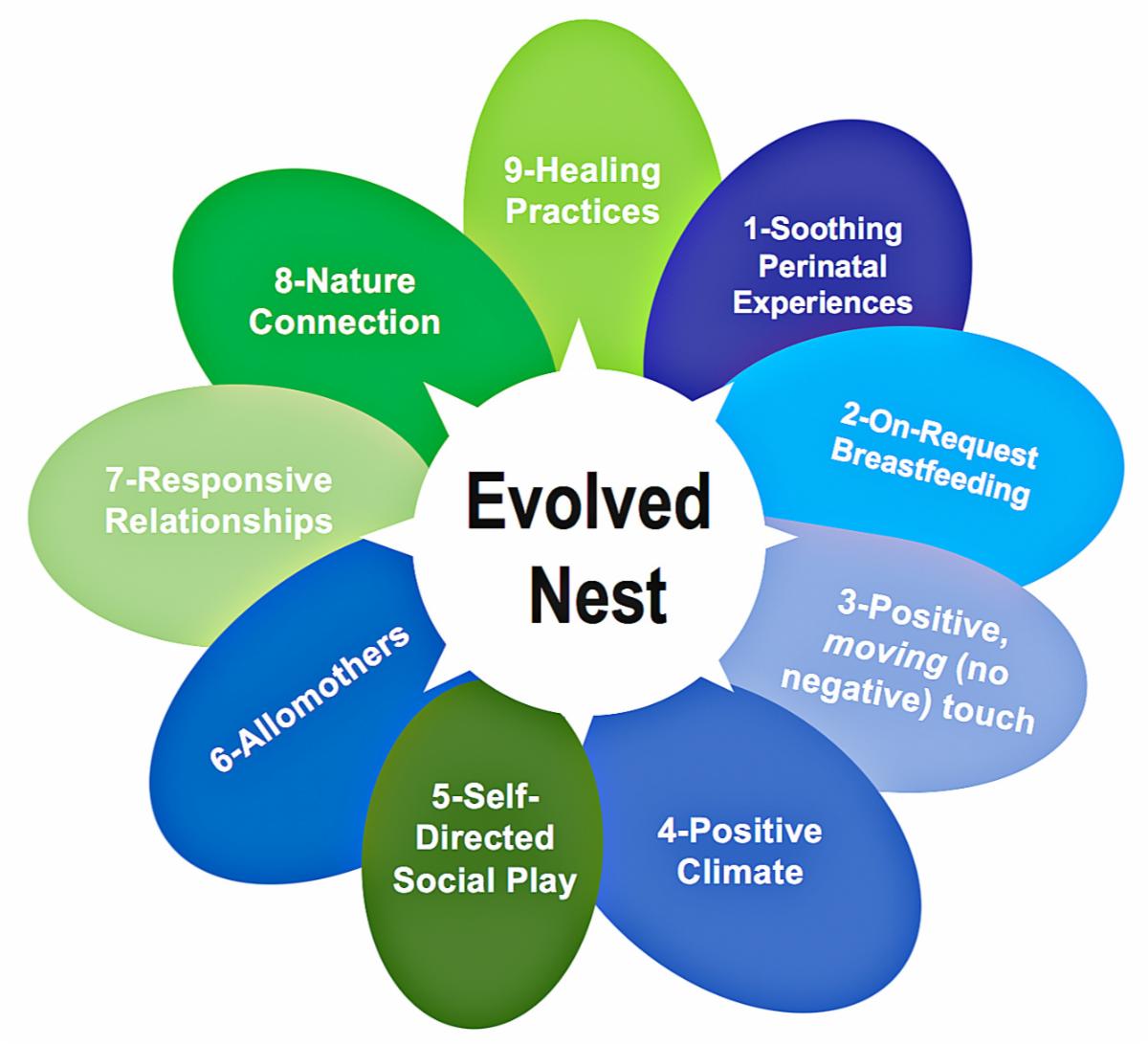
Jane Mulcahy and Darcia talk about the “evolved nest” and how it is linked to healthy child development, including the role of breast-feeding and allo-parental support. We discuss how we can better support care-givers of babies in order to be the best parents they can be. We examine the negative ramifications of unbridled capitalism and money-making, the impact of hospital birthing policies, the absence of generous paid maternity leave and individualism on social cohesion, morality and wellbeing in America. We consider why public policy-makers and human service providers becoming aware of child development, interpersonal neurobiology and the impact of trauma. We also consider the importance of attending to culture and race in responding effectively to trauma. We discuss indigenous wisdom and healing rituals, the role of community and the myth of western “progress”. Regarding the youth justice system, we talk about how practitioners might engage more constructively with mistrustful and defensive teens.
|
|
|
|
|
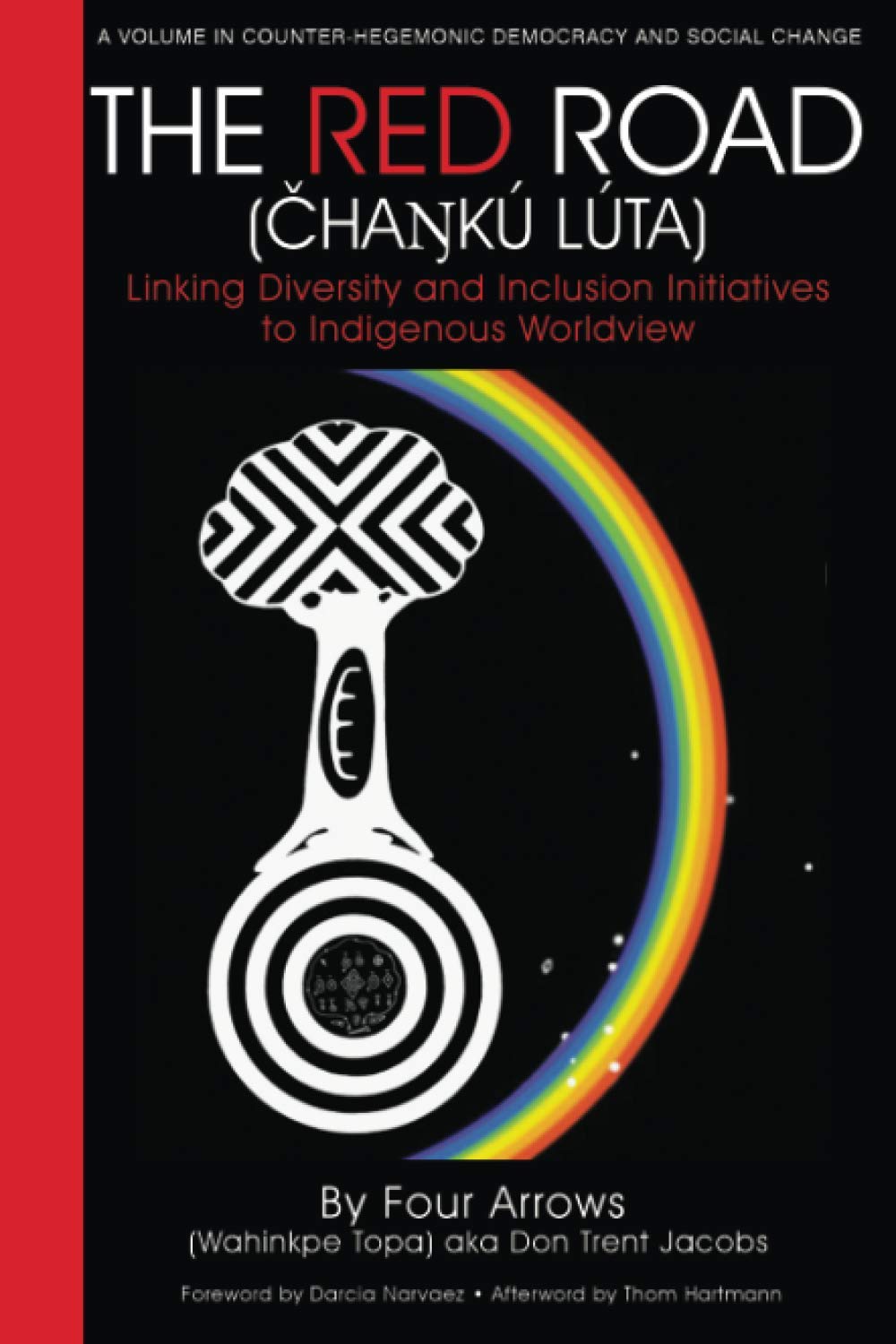
The Red Road (Čhaŋkú Lúta): Linking Diversity and Inclusion Initiatives to Indigenous Worldview |
By Four Arrows
The diversity and Inclusion movement in corporations and higher education has mostly fallen short of its most authentic goals. This is because it relies upon the dominant worldview that created and creates the problems it attempts to address. Rediscovering and applying our original Indigenous worldview offers a remedy that can bring forth a deeper and broader respect for diversity, and a different way to understand and honor it. This book offers a transformative learning opportunity for preserving diverse environments at every level, one that may be a matter of human survival.
The foreword is written by Darcia Narvaez.
|
|
|
|
|
|
The Evolved Nest: Attachment When It Goes Wrong |
What happens when you do not receive what you need in early life? The effects of a nonresponsive and insensitive childhood are discussed.
This podcast is part seven of the 24-part Evolved Nest Introduction and Podcast Series. Read a review of the series in the adjacent graphic.
Listen to the podcast here.
|
|
|
|
This Month's Notable Activist: John Geisheker |
|
The Evolved Nest Explained: Circumcision |
Darcia Narvaez interviews John Geisheker, Executive Director and General Counsel of Doctors Opposing Circumcision (D.O.C.), about what parents should know about infant circumcision.
John V. Geisheker, JD, LL.M, is Executive Director and General Counsel of Doctors Opposing Circumcision (D.O.C.). He has published several articles on the widespread problem of forcible foreskin retraction that doctors sometimes do (from ignorance about how to take care of an intact penis) and helped hundreds of families deal with the issue. John is from New Zealand where they abandoned the 'medicalized’ male genital mutilation (infant circumcision) in the 1960s, which is still widely pushed by medical personnel in the USA. He is a member of the Board of Directors at Your Whole Baby.
|
|
FRESH EYES: Young People's Take On The Nest |
|
John Bowlby and the Need for Attachment |
By Lauren Heller
We are living in a state of social poverty.” These words have been echoing in the back of my mind all weekend. It makes me wonder what it’s going to take to encourage people to let their guard down and admit that they have needs to fulfill for their children, and that every single person has needs of their own. I think that a big part of the solution can be expressed in one word: vulnerability. It makes me wonder how humans today, who have grown to be so detached from each other, can mimic our hunter-gatherer ancestors in their ability to rally together and both admit that they need help and provide help for others.
|
|
|
|
28 Days of Care for Babies |
There is a lot of misinformation about babies and their needs, and parents are often encouraged to ignore baby’s signals. Bad idea. Babies are “half-baked” at birth and have much to learn with the help of physical and emotional support from caregivers.
Taking care of baby’s needs is an investment that pays off with a happier, healthier child and adult. Here are 28 days of reminders about babies and their needs.
|
|
|
|
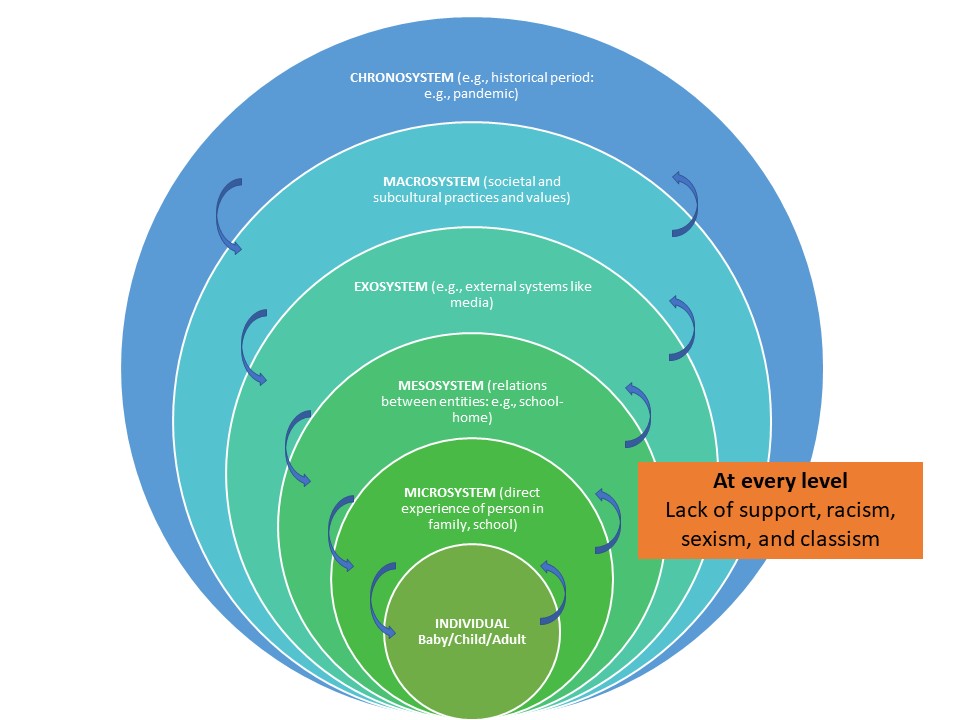
The Layers Of Structures That Support Individuals, Families – And How The Pandemic Changed Them |
What supports has the pandemic damaged and what can we do?
In today’s world, we often feel disconnected from community and from nature, from the world. In an individualistic society like the USA, it is sometimes hard to realize that disconnection is contrary to the evolution of our species. We evolved to develop well when supported within a network of connections. Here is an “ecological systems theory” that helps explain why we are all so miserable, and suggestions for what we can do.
|
|
|
|
Moral Landscapes Blog from Psychology Today |
I write typically about research findings related to moral functioning and living a good life. Sometimes I muse on things that I puzzle about (politics). I am very concerned about how much our society doesn't seem to know about how to raise good, healthy and happy children, so I spend a great deal of time on parenting. I also write about things that I am working on myself--the endless quest for virtue! This is an opinion blog, not a set of research articles, intended for the public not scientists. For more nuanced and highly referenced work, look at my academic work.
In order to avoid being a sucker for manipulators and their statements, it's important to understand how to detect BS. Carl Sagan pointed the way.
We evolved to need social supports of all kinds. The layers of support have been identified by psychological science. What can we do when they have fallen away due to a pandemic?
Kaufman uses the metaphor of a sailboat (security, growth, and transcendence) and presents 20 “growth challenge” activities and seven principles for becoming a whole person.
Psychological archeology gives us insight into human behavior, including the construction of human nature and human potential.
|
|
|
|
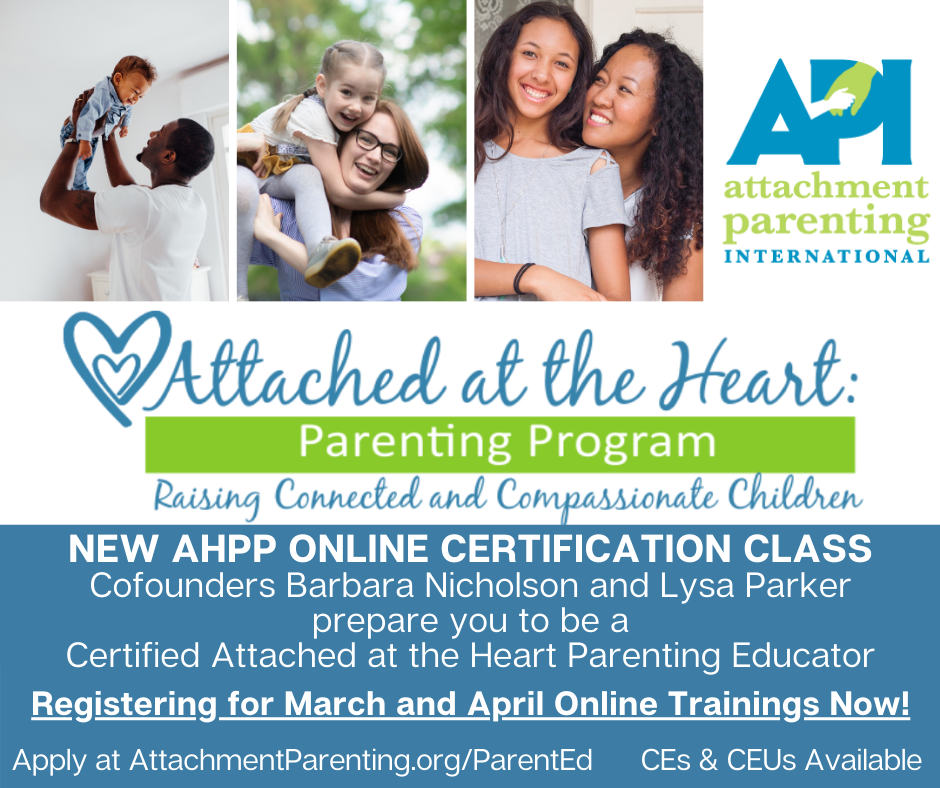
ATTACHED AT THE HEART:
AHPP Online Parenting Educator Training
|
Attachment Parenting International cofounders Barbara Nicholson and Lysa Parker prepare you to be a Certified Attached at the Heart Parenting Educator.
Apply today to take advantage of this rare opportunity to expand your knowledge base and join the growing community of Certified Attached at the Heart Parenting Educators.
Registering now for March and April Online Trainings!
|
|
|
|
|
|
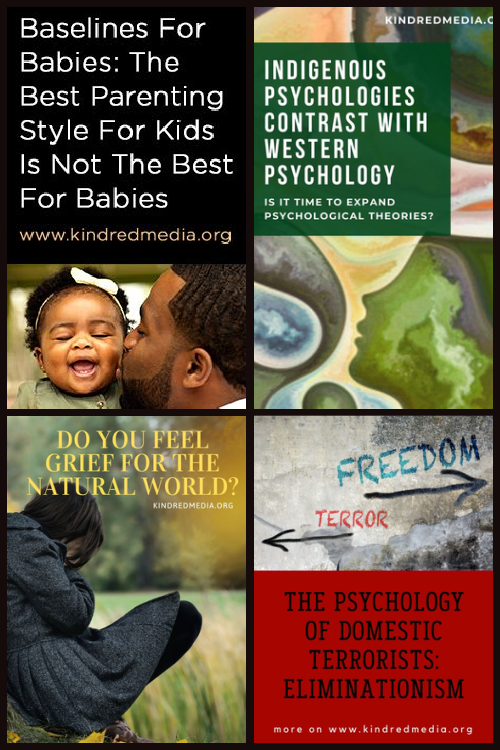
Find The Evolved Nest on Kindred |
Kindred has served as the platform international New Story of Childhood, Parenthood, and the Human Family since 2002.
You can now find all of the Evolved Nest's posts on Kindred on its own dedicated page. Many of these posts, podcasts, and interviews are not found elsewhere.
See the Evolved Nest's reviews and support our nonprofit work with your tax-deductible donation below.
|
|
|
|
We Won Great Nonprofit's Top-Rated Award, Again! |
Thank you to everyone who has supported The Evolved Nest's work over these past two years. Read our reviews and support our ongoing nonprofit work with your tax-deductible donation at our Great Nonprofits page.
"Kindred World helps bridge the vast gap between scientific research and practice, what is happening within the culture that often cuts against scientific evidence regarding ways to promote human thriving and flourishing. Parents and families deserve to know the best ways to raise healthy, happy, socio-emotionally developed, loving children and this is exactly what Kindred provides!" - Mary Tarsha
|
|
|
The Evolved Nest - www.EvolvedNest.org |
|
|
|
|
|
|
|