Long Island Swimming Officials Association 
Serving Long Island Swimmers for 66 years! 
June 2023
Let's See how this goes...

Do you recall last year Section VIII contracted with a new platform for us to use to enter our availability and assign our contests? And how we all complained that it was so difficult to learn and use. Well they listened to us and they have moved the assigning platform from RefView to ZebraWeb.

In my post-season meeting with the section directors, they said that Refiew was not working out and be prepared for another change.

So this year we will have training on another new program to assign and track our meets. I already hear the moaning, but like last year, Cathy Smith and Geoff Tripp will be helping us become comfortable with the new technology.

Last year proved that we can "learn new tricks". And, hopefully, eight months from now, we will have mastered ZebraWeb for our Section VIII officials assigning process.

Thank you,
George Fleckenstein
president 
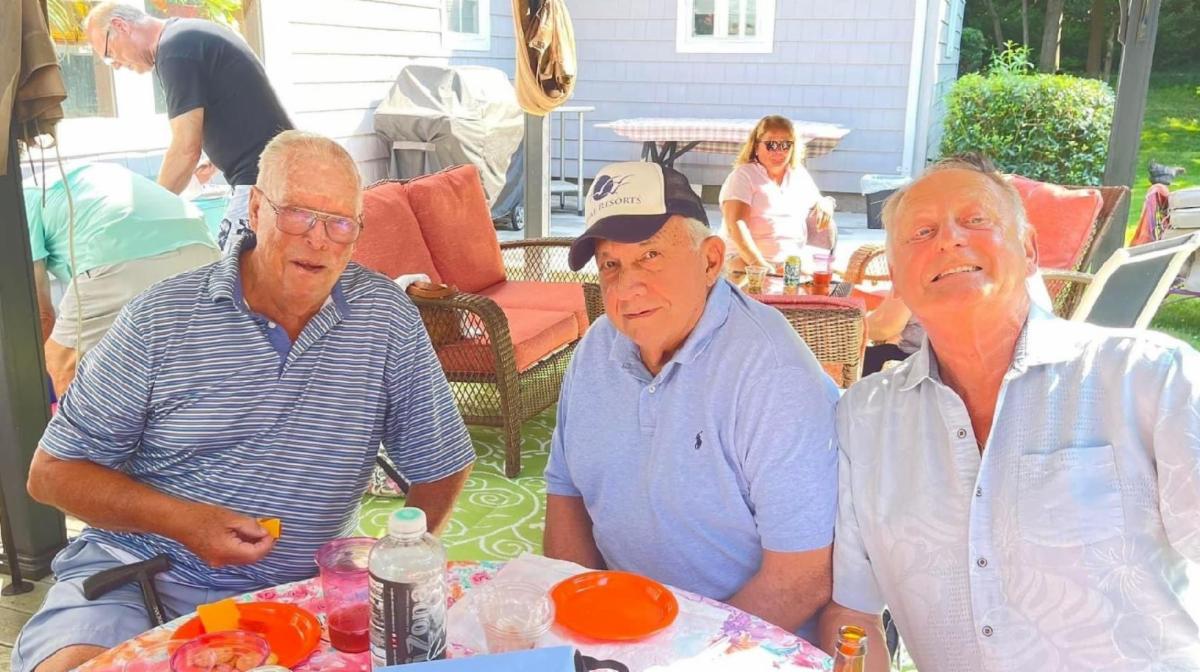
LISOA ANNUAL SUMMER PARTY

Sunday, July 9, 2023
2:00 p.m. - 6:00 p.m.
23 Westbrook Court, Greenlawn, NY

Hot Dogs Hamburgers Salads Desserts
Beverages Beer Wine

 No Charge, Nothing to Bring 
Spouses and Children are Welcome!
Lawn Games Swimming Fellowship

Come for a while or stay the whole time!
 
Will you be attending?

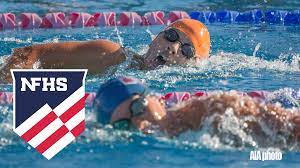
Risk minimization and national trends were the reasoning behind the eight 2023-2024 NFHS rule changes made by the NFHS Swimming and Diving Rules Committee meeting in March.

The two changes in butterfly and breaststroke, were done in order to provide clarity, consistency, and alignment with national trends.

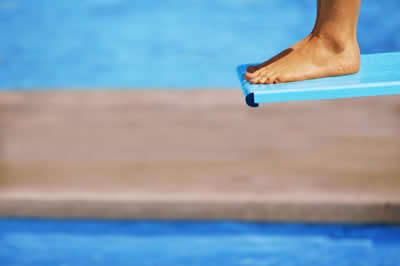
Regarding the diving change imposing a penalty if the diver’s head is too close to the board, Sandy Searcy, NFHS director of sports and liaison to the Swimming and Diving Rules Committee said, “We wanted to make it clear that safety is paramount and that we have a penalty in place that elevates the divers’ and coaches’ awareness of entering the water from an appropriate distance from the board.” 

The committee determined that performing three dives - 104A, 304A and 402A - was too dangerous at the high school level due to the close placement of the diver’s head in relation to the board. When each dive is performed slightly short of vertical, the diver’s head may be precariously close to the diving board. The risk of hitting the board in these cases is far greater than other dives on the table.

“Factors at the forefront of our discussions were fair play, risk minimization and awareness of national trends,” said Rod Garman, chair of the NFHS Swimming and Diving Rules Committee.
Buffalo State Eliminates Men's and Women's Swimming & Diving
SwimSwam

The school said that one of the reasons for the decision was the “decreasing swimming and diving participation trends at the high school level and the increasing challenge associated with fielding competitive rosters that meet NCAA sport sponsorship minimums.”

According to the NFHS, high school swimming & diving participation rates, like most sports, fell coming out of the pandemic; however, swimming & diving participation rates also fell from the 2017-2018 to 2018-2019 seasons.

In 2021, swimming and diving participation fell by about 11.87%. Girls recorded a 13% decrease, though it remains the 8th most popular girls sport. Boys recorded a decrease of 9.8% as the 10th most popular boy's sport nationally.
diving-board.jpg
Things Every Diving Judge Should Know...

... obviously, knowledge of the sport is essential. However, no person is born with it. It can be acquired by learning to dive under good instruction, studying the NFHS Rules Book and other texts/rules, participating in judging seminars, discussing the sport with knowledgeable persons, and most importantly, by observation in person and by viewing videotapes, films, and other media.

A great deal can be learned about the sport by studying videos of all levels of diving and getting exposure to as many diving competitions as possible. No judge, however seasoned, should stop studying and observing.

Even the real experts lose their “diving eye” after several months without contact with diving. It is very important to stay up to date on the rules and developments of this dynamic sport.

Many divers in high school diving programs also participate in USA Diving affiliated clubs; there are some differences in rules and judging standards that, on occasion, athletes, coaches and parents do not understand. 

The art of judging diving is not only a question of having sufficient knowledge of the NFHS Rules Book as, in reality, the written rules are the easiest part of judging. The difficulty is in mastering the unwritten rules and factors which influence all diving judges, both consciously and unconsciously.
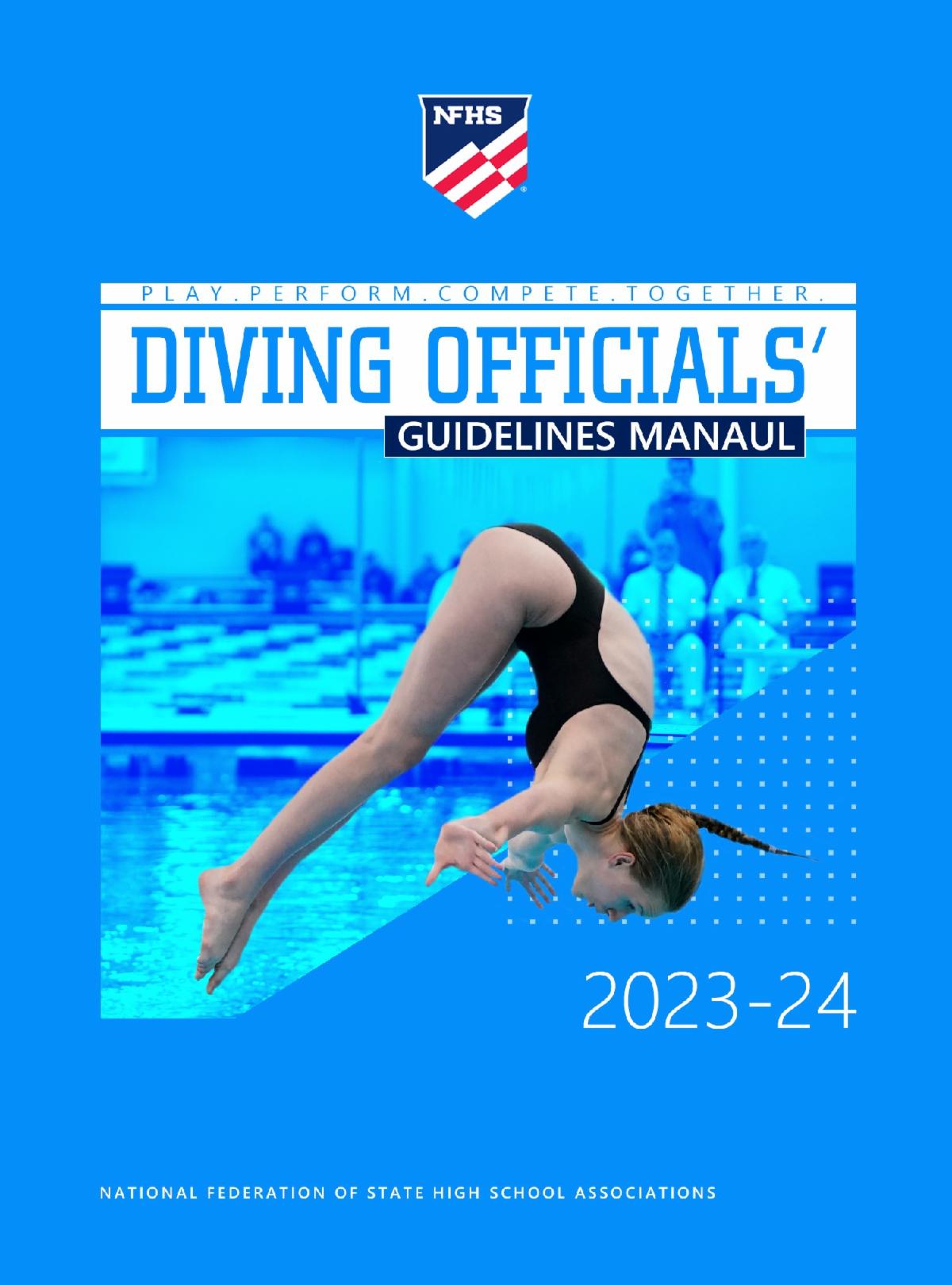
This 36-page NFHS Diving manual is published to improve the consistency of officiating high school diving. It is based on the premise that the purpose of diving judges at a meet is to ensure fair competition for all participants in accordance with the rules established by the NFHS. In order to accomplish this, officials must understand the rules and enforce all rules without regard for the outcome of the competition.
 
This manual is not meant to be “another rules book.” Rather, it is designed to assist all officials in understanding their role in conducting competition. While it should be especially useful for new and less experienced diving judges, it will also help the veteran judge hone the individual’s organizational skills along with the mechanics of officiating the event of one-meter diving.

NFHS Swimming & Diving Exam

August 1 - September 17


Rules Interpreter Bob Kersch will send to you, (if you are primary with LISOA and are current with your association membership) the 2023-24 NFHS Swimming and Diving Rules Book so that you can complete the annual test.
Maintain Professional Communication With Coaches
Referee Magazine - June 2023

In today’s society, too many people in the workplace have forgotten why they go to work. For most, it seems, the paycheck is the only reason to get up in the morning. Passion for their profession and the end goal of a job well done seem to be ideals that have faded over time.

All too often we see officials who have a negative attitude appearing on the field or court. Many articles have been written concerning the reasons why we officiate. Most officials will tell you they do so for the love of the game, but when we watch some of them work, that attitude is not what is seen.

In our daily lives, we are often the consumer or receiver of others’ attitudes. When we enter a business, don’t we expect to be treated like we are the most important person in the building? Don’t we want our friends to make us feel welcome and happy that we visited their home? When we arrive to officiate a game, don’t we want to be treated like they are glad we came?

All of those questions can be tied together in a simple phrase: customer service. That is one of the most important attitudes we can bring to our assignments. It is assumed we all know the rules and mechanics. There are several procedures to let coaches, players and game management know they are our clients and deserve to be treated as such. After all, without those “customers” we would not be needed.

Here are some mantras for keeping things in perspective.

Appearance
That means both how you look and how you act. Arrive early. Look neat and presentable. If you have facial hair, have it trimmed neatly. Otherwise be clean-shaven. You don’t need to show up in a three-piece suit; at least don’t look like you just got out of bed.
Have clean, unwrinkled uniforms that fit properly. Polish your shoes. You’d be surprised how often coaches notice seemingly small details such as your shoes. Most importantly, we represent the community of officials every time we put on the uniform. Our actions dictate how the next officials will be perceived.

Courtesy
Greet the people who invited you into their building. Thank them for the opportunity to do what you love. That includes game management, ticket takers and concession workers. Show them with your actions you are thankful for their efforts.

Professionalism
We have a job to do. Whether it is a youth, high school, college or pro game, regardless of the teams’ records, we should strive to be the best at what we do. We made a commitment when we accepted the game. We agreed to show up early, prepared to call a good game and leave our personal issues outside the gym or field.
No matter how we feel emotionally, we need to remember the players and coaches worked hard to prepare for that game. It is the most important game of the season every time they play. They deserve our best effort at all times.

Service
Remember, we are there to officiate the game impartially. Fans come to watch the players. They are going to disagree with calls from time to time. That’s OK, as long as their comments aren’t overly abusive or personal. It is part of the game. Let game management handle unruly fans.

We are there to serve the game, not have the game serve us. Respect is a two-way street. Respect the coaches, fans, players and the game. Do not act superior or talk down to anyone. Treat everyone as you would want to be treated.
Communicate calmly with coaches and players. There is no need to be over officious. Call what needs to be called.

Use preventive officiating techniques to prevent minor rule violations. That is especially true at the lower levels.

Attitude
Act like you want to be there. Too many officials try to hurry games along. Pace of play is important, but speed is not. If you are in a hurry to get the game done, collect your paycheck and go on to something else, it will show in your performance. If you are in a hurry because you are thinking of another engagement or just want to go home, you will not be focused on the game and might miss a crucial call. Slow down, let the plays develop and — most importantly — have fun.

When we treat everyone with great customer service, we will be treated well and be invited back. Act like you are only there for the money and it may be the last paycheck you receive from that school.
John Tesh - Intelligence For Your Life
What we eat throughout the day can help us sleep better at night. So here are foods to help you get better quality sleep……
  • For starters, get more magnesium. According to the Journal of Research in Medical Sciences, people who get enough magnesium in their daily diet are less likely to have trouble sleeping. That’s because it’s an important mineral for relaxation. It helps neurotransmitters in the brain shut things down at night, so we can rest. To get the optimal amount, all you need is a handful of nuts or seeds daily.
  • Another sleep-booster: Eat more high-fiber foods. They digest more slowly, so you won’t have blood sugar spikes that can disrupt sleep. So, think oatmeal, whole fruits, lentils, or 100% whole grain toast. 
One final sleep-booster: Sprinkle the spice turmeric on your dinner. It’s a powerful anti-inflammatory that promotes a sense of calm and boosts sleep quality.
The primary role of the official is to ensure fair competition which is conducted in a positive, safe and healthy environment and that actions of the competitors, coaches and other team personnel are in compliance with the rules.
The purpose and goals of the LISOA and its members shall be to:  
Officiate all meets in a competent and professional manner.
Have its members actively work to improve interscholastic swimming and diving officiating.
Provide a consistent interpretation and administration of interscholastic swimming and diving rules.
Service and collaborate with the swimming and diving community for the improvement of swimming and diving.
The official must establish the best possible competitive climate for fair competition with the attention on the athletes, rather than on the official. The conduct of each official affects the public’s attitude toward all officials. Therefore, every official must uphold the honor, integrity and dignity of the profession.
OUR OFFICERS
President:
George Fleckenstein
Vice President:
Nelson Gonzalez
Secretary:
Jeff Lewis
Treasurer:
Jeff Chu
Directors:
Barbara Wendt
Cyna Buckley
Rules Interpreter:
Bob Kersch
Past President:
Frank Dowd
OUR CHARTER MEMBERS (1957)

Charlie Schlegal
George Columbo
Jim McAllister
Dick Atwater
Jack Reilly
Frank Krayer

NYSCSO Distinguished Service Award Members

Frank Dowd (2022)
Laurette Tekverk (2020)
Jim McAllister (2019)
Doug Virkus (2011)
Mush Masters (2008)
Pete Moeschen (2004)
Stan Adler (1993)
Bob Kersch (1990)

liswimofficials.com